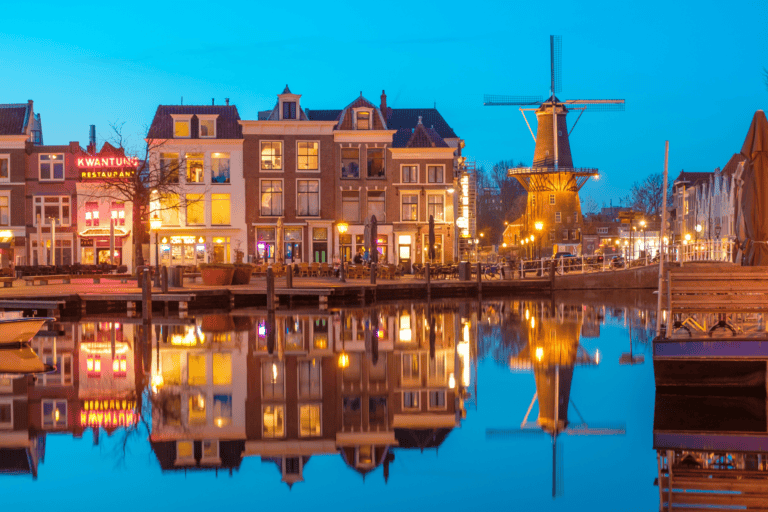
Everything you need to know about using the public transport system in the Netherlands, how to keep it budget-friendly, and how to keep it simple.
The public transport system in the Netherlands can be confusing. Trust me, I was born in the Netherlands, and when I had to start using it regularly, I was overwhelmed and a bit scared. So I can imagine how confusing it can be for tourists and expats. And that’s why I wrote this guide; to help you make sense of it and prevent any (costly) mistakes.
By the end of this post, you’ll know exactly how to travel anywhere in the Netherlands without stress.
Disclosure: This post may contain affiliate links, which means that if you purchase through one of the product links, we’ll receive a small commission at no cost to you. We only promote products and services we 100% believe in. Thank you so much for supporting us! Read more about it in our disclosure policy.
Overview of Public Transport in the Netherlands
Types of transport
In the Netherlands, several types of transport are available for everyone to use. These are:
- Trains
- Buses
- Metros
- Trams
- Ferries
- Public bikes
All these types of transport are, however, run by different companies that work together very well.
How the system is structured
Even though the different types of transport are run by different companies, they all use the same system for paying. It doesn’t matter if it’s a train, bus, or tram you are traveling with; the system is the same. It may, however, look different, but I will tell you about that in more detail.
How to Pay for Public Transport in the Netherlands
OV-chipkaart
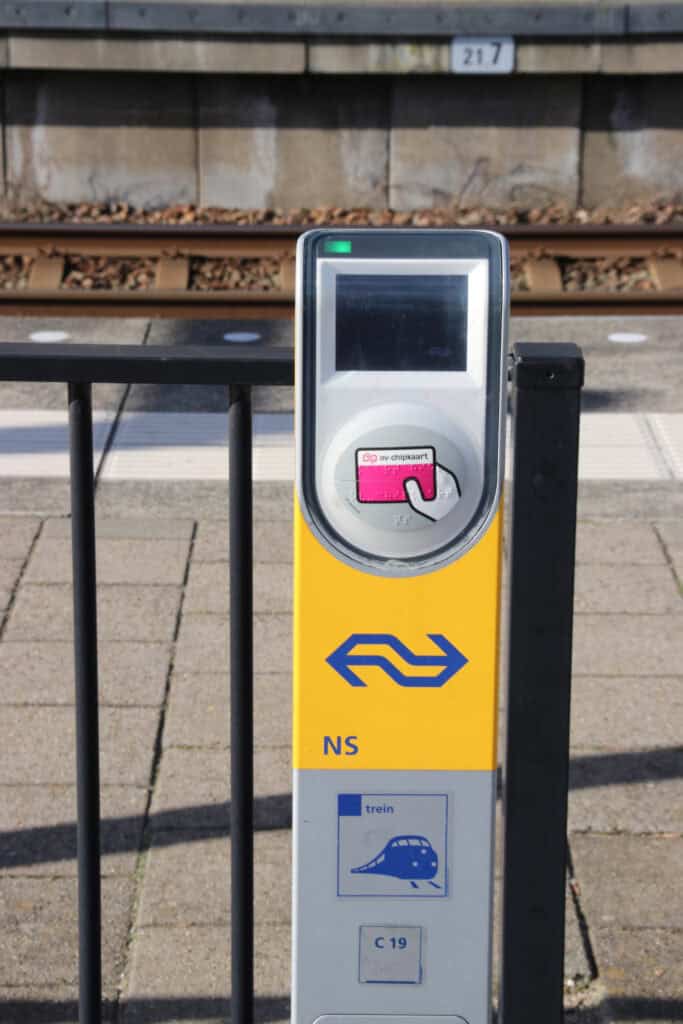
For a really long time, the OV-chipkaart used to be the easiest method to pay for public transport. You would have a personal card, load money on it, and check in and out of trains and buses easily.
However, in the last couple of years, things have changed. People still use the OV-chipkaart, but only when they have certain subscriptions. For example, students travel with this card because the government lets them travel for free. Or people who work in a different city, often opt for a subscription that gives them discounts in certain timeframes.
That said, as a tourist, you don’t need an OV-chipkaart. But if you’re an expat, using the trains regularly, I would recommend taking a look at this website to see if you can save on your transport costs.
Related: 13 Amazing Day Trips from Amsterdam by Train: Complete Travel Guide
Contactless payment (OVpay)
And the reason that many people have stopped using the OV-chipkaart is because of OVpay. This was introduced in 2023, and means that you can check in with your bank card. Debit or credit, both are possible. You can check in at the train station, hop on the train, check out at a different train station, and pay exactly what you are supposed to.
And it works the same for buses, trams, and metros. You hop into the bus, hold your card against the reader to check in, and do the same before getting off the bus. No need to buy tickets, get an OV-chipkaart, or anything else. You only need your bank card.
Buying a ticket
However, if you love a good deal, I do recommend checking ticket prices before your journey. I unfortunately don’t get any discounts on public transport, so I always check ticket prices in advance. And here’s why:
Sometimes, you get a great discount when purchasing your ticket in advance. You already save €1,50 on printing cost (that you would pay at the train station), but if you also travel in certain timeframes, sometimes you can get a discount of up to 40%!
I love buying my train tickets in advance, because I have saved so much money doing it. You won’t automatically get these discounts if you travel and pay with OVpay.
This only works for trains, and if you book your ticket in advance. You can do that on the NS website.
Checking in and out (most important rule)
I already mentioned this, but I want to tell you again. In the Netherlands, it’s very important that you check in AND out, everywhere. With trains, buses, trams, everything. If you don’t check out, the meter of your journey can keep running, and you’ll pay a lot more than you should.
Of course, this can often be resolved afterwards, but it’s annoying.
So, do make sure to check in AND out every time. Even if a train station does not have gates, you still need to check out at the scanner poles.
Planning Your Journey
Best apps to use (9292, NS app, Google Maps)
Some apps that are permanently installed on my phone, that helps me a lot with planning my journeys, are:
9292 – This is a special app for complete journeys. It’s completely up to date, to the minute. It shows you which buses and train connections will get you to your destination the fastest, and how much it’s going to cost. It shows you the times, platforms, delays, and any other important information.
NS app – The NS app is also very important if you’re a big fan of buying train tickets in advance (like I always do, for discounts). When buying your ticket, you can either print it or load it on your NS app. This app keeps all your tickets organized, and you can also plan your train journey easily.
Google Maps – Even if you’re not using the apps above, Google Maps could also be a lifesaver. Here you can also just type in your journey and select public transport as travel mode. It will show you exactly which buses and trains to take. However, delays are not loaded as quickly on Google Maps, so you might still run into surprises. I never had any problems with it, but I do know people who have.
Related: 13 Incredible Hidden Gems in the Netherlands You MUST Visit
How to read routes, platforms, and connections
My travels within the Netherlands are always led by the apps above, which works great. You only have to check the times and platforms, and the rest goes pretty automatic.
With buses, the platforms are often made up of letters (A, B, C, D, etc.). When with trains it’s always numbers (platform 1, 2, 3, 4, etc). However, one thing that was very confusing to me, is that very often a platform as an A and a B side. So do check this on your app, and in the train station, keep your eyes open for the different sides, and all should be well.
Taking the Train in the Netherlands
Intercity vs Sprinter trains
There are two different trains in the Netherlands: Intercity and Sprinters. But what is the difference?
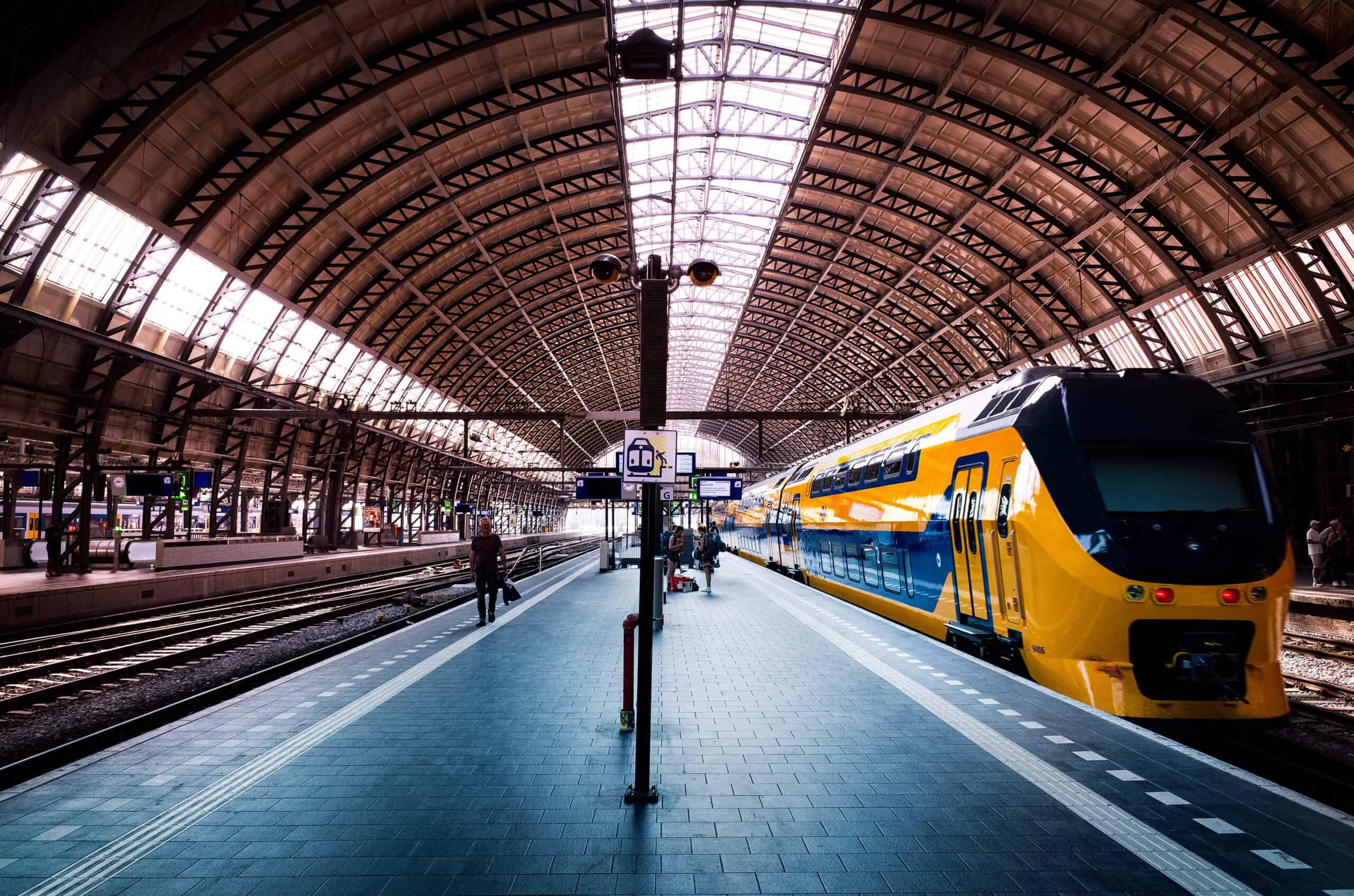
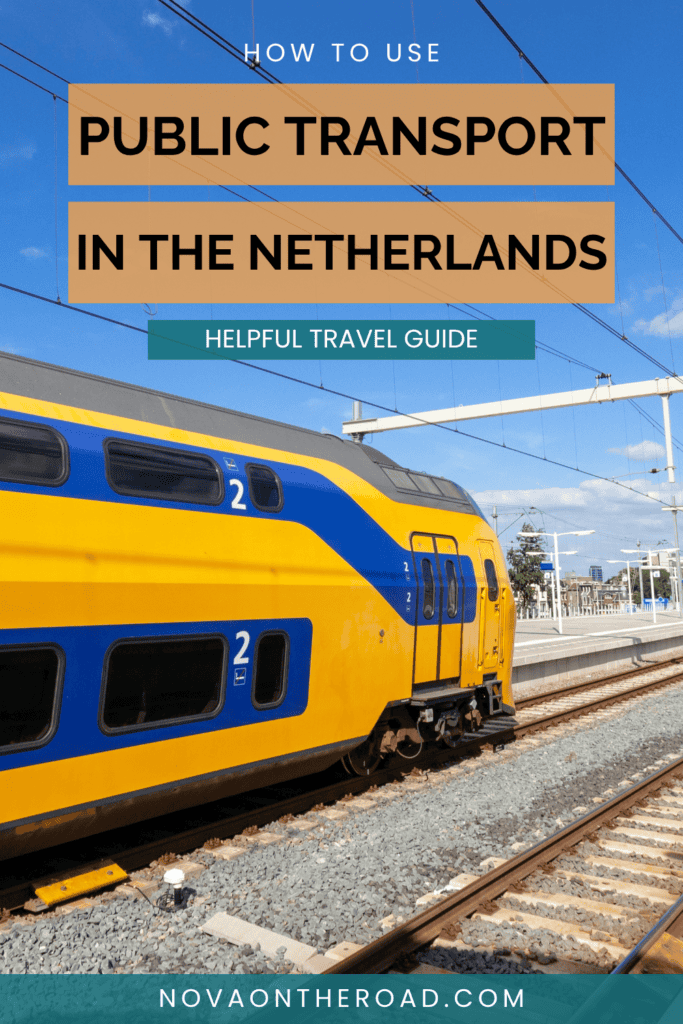
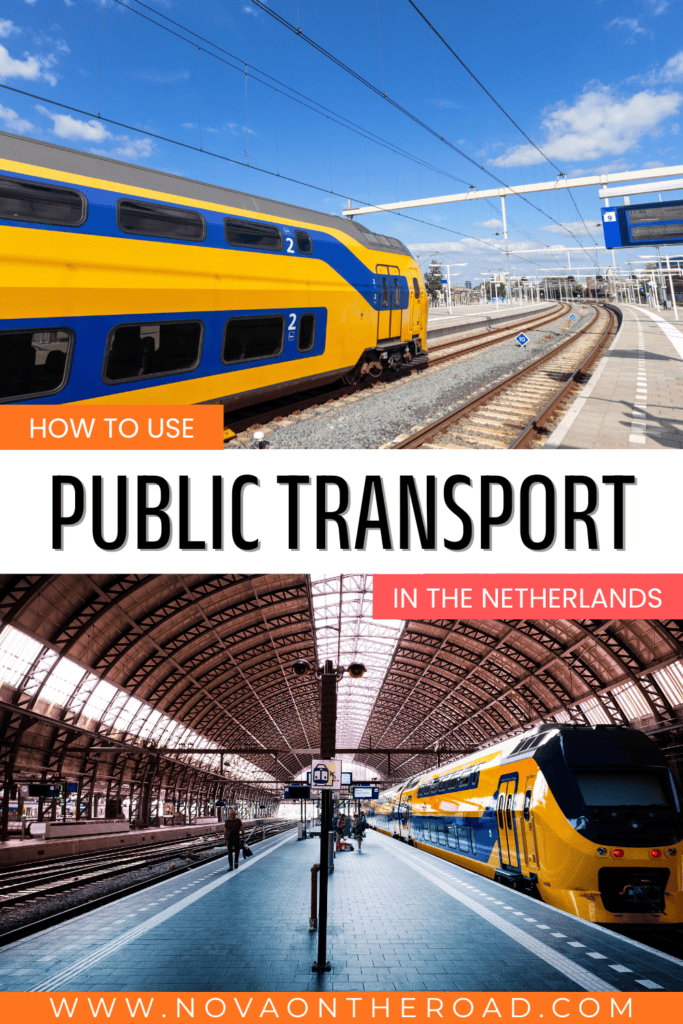
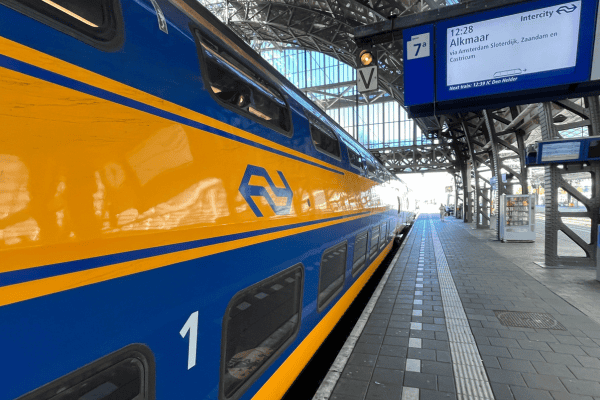
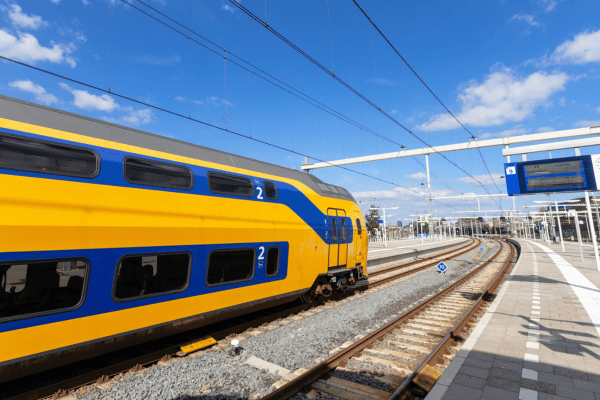
Intercity trains (IC) are the yellow and blue trains. These are the fast, long-distance trains. As the name suggests, it connects the bigger cities, and doesn’t stop at smaller stations. These trains are ideal for travel between cities.
Sprinter trains, the white and blue trains, stop at every station. They sprint in between stations, but stop in even the smallest towns. This means the train is slower, but it does get you to more places. This is great for shorter trips or commutes.
I often travel between Leiden and Utrecht. Both trains run on these rails, and sometimes I hop onto the wrong one (the Sprinter), which takes a lot longer. For this connection, the Intercity is the better option.
But let’s say you need to go to Amsterdam from Sassenheim, you will always have to take a Sprinter, because Intercity trains don’t stop at this station.
Related: The 30 Most Amazing Things To Do in Leiden, The Netherlands
Train stations and platforms
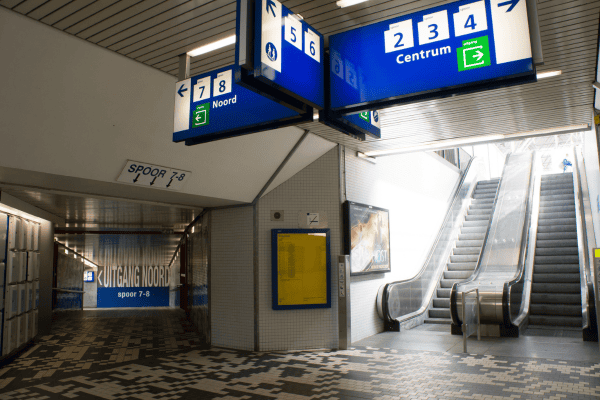
On train stations in the big cities, you always have to enter the station through gates, where you check in. Then you can see on the large overhead signs, where the platforms are, and which train leaves from it next.
On smaller stations, you often don’t have gates, but scanner poles, where you need to check in. If you don’t check in, you risk getting a fine. There are usually 2-6 platforms on smaller stations, connected by tunnels or bridges.
Important things to keep in mind with train travel
Don’t board without a valid check-in: Conductors very often check your ticket (if you checked in with your bank card, you can just tap it to their little computer, and they’ll see you checked in). No check-in = a fine. Even if you didn’t mean for it.
Seat reservation is not required: You can just board and sit anywhere in 2nd class. 1st class is clearly marked and more expensive.
Bikes are allowed, but with rules: You need a separate bike ticket (not during rush hour in many cases). There are designated bike spaces in certain train cars.
Trains run on a strict timetable: Trains are usually very punctual. If you miss one, the next one often comes within 10–15 minutes on busy routes.
Platform changes can happen last minute: Always check the departure screens at the station again before boarding. Especially at big stations like Amsterdam Centraal or Utrecht Centraal.
Related: Awesome Netherlands Itinerary for 7 days: Recommendations from a Dutchy
Getting Around Cities
Trams and buses
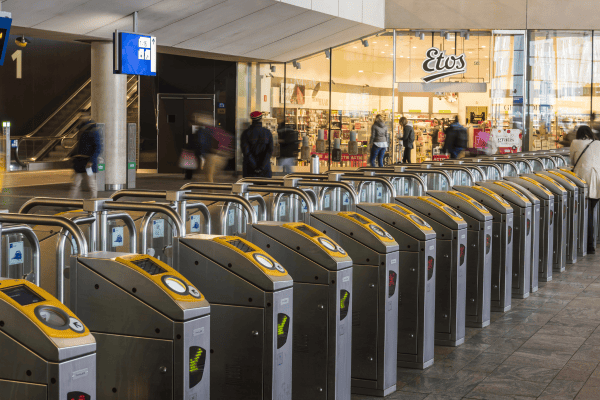
Now that we’ve covered how to travel in between cities, let’s talk about travel within cities. Often enough, you can walk or bike anywhere. But if you don’t have the time or equipment for that, public transportation may be easier and a lot quicker. In many cities, you can find buses and trams.
But how do you know which bus or tram to take? Just use one of the apps I recommended. Google Maps or 9292 work best, to see how to reach your destination the fastest.
Metro systems
In cities like Amsterdam and Rotterdam, there are also metro systems. To use this is the same as the other methods; you just check in with your OV-chipkaart or your bank card, and make sure to check out again at your destination. With the apps, you can also see if the metro might be best for you.
Tickets, Prices & Common Mistakes
Single tickets vs OV-chipkaart vs OVpay
Like I said, some options can be cheaper than others. Let’s break it down:
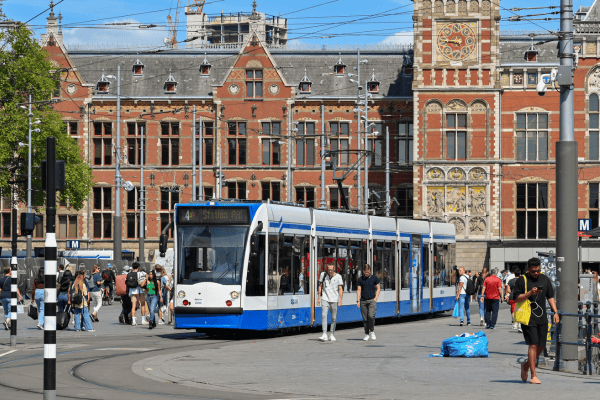
For buses, trams, and metros, it’s always cheapest to use OVpay or your OV-chipkaart.
For trains, several subscriptions can help you save some money. This is great for regular travelers who travel outside peak hours. If you don’t travel often, it’s always wise to check ticket prices on the NS website or the app beforehand to see if there’s a discount for your train. Otherwise, OVpay works fine. But don’t buy a ticket at the train station. It’s unnecessary, and you will pay high printing costs.
Most common tourist mistakes
Do avoid making these mistakes:
Forgetting to check out – This is by far the most common (and costly) mistake.
People tap in, travel, and then walk out of the station without checking out.But then you will get charged the maximum fare.
Not checking in at all – Some tourists assume buying a ticket is enough, but in the Netherlands, you always need to check in
Taking a Sprinter instead of an Intercity – It has longer travel times and more stops than you need.
Getting on the wrong train direction – Trains are labeled by their final destination, not your stop. If you don’t check: You might take the same train line… but in the wrong direction
Not checking the platform screens last minute – Platforms can change shortly before departure.
Sitting in first class by accident – First class looks nicer and quieter, but it’s clearly marked. If you sit there with a second-class ticket, you can get fined
Assuming trains run all night – The Netherlands is great… but not 24/7 everywhere. There are a lot fewer trains at night, and sometimes only night buses are available.
Bringing a bike during rush hour – Yes, bikes are allowed, but not during peak hours.
Related: A Practical Guide on Spending Spring in the Netherlands + Incredible Activities
Night Transport & Disruptions
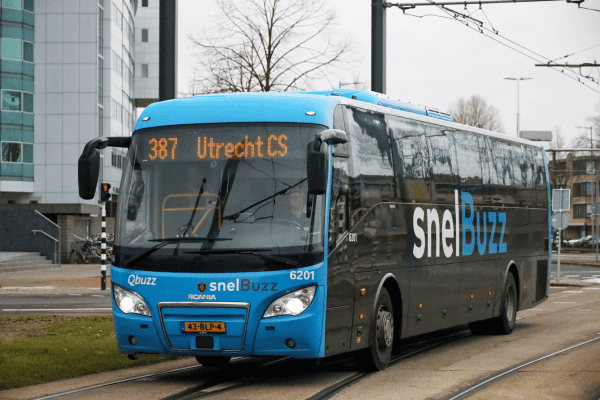
Night buses and limited train services
As I’ve said, trains don’t run all night. In between the major cities, you might find trains at night, but sometimes you’ll have to wait until the morning. There can also be night buses.
Unfortunately, this can be so diverse that I cannot tell you for sure what’s possible and what is not. It’s always wise to check your apps to see what’s possible.
Strikes and maintenance works
Another reason why it’s important to use apps and stay up to date on your journey is that of unforeseen circumstances. Sometimes the public transport staff go on a strike, which means that very limited buses and trains run on that day. If you’re not Dutch, this can get you by surprise. The apps, however, are always up to date and will show you the important things.
Also, maintenance works can make your trip a bit more difficult. Sometimes a rail is closed on the exact direct line you need. If that’s the case, there are always other trains you can take, but it’ll take you longer. Sometimes there are buses that will drive between the stations.
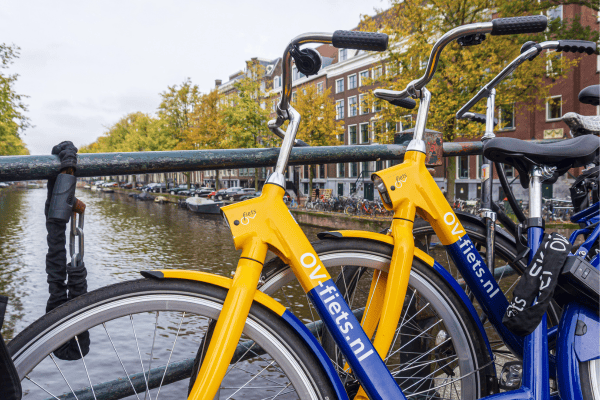
OV-fiets (public bikes)
On every major train station, you will also find a place where you can basically rent a bike with your OV-chipkaart. Here’s how
First, you need a personal OV-chipkaart with the OV-fiets subscription activated (you can add this online).
When you arrive at a train station, look for the OV-fiets rental point (usually near the station exit or bike parking). Go to the desk or use the self-service machine, tap your OV-chipkaart, and you’ll get a bike.
You pay a fixed price per 24 hours (very affordable), and you can keep the bike for a few days if needed.
When you’re done, return the bike to the same or another participating station and check it back in.
Tip: Always lock the bike properly when you park it. If it gets stolen, you’re responsible.
I have never used this, but it might be ideal for you.
Final thoughts on public transport in the Netherlands
I hope that this guide was helpful for you and now you know exactly how to use the Dutch public transport system and where to save money and avoid mistakes! And remember: if you’re lost, just ask a local. They are very kind and usually understand the system very well 😊
Happy travels!
Related posts
- 13 Amazing Day Trips from Amsterdam by Train: Complete Travel Guide
- The 30 Most Amazing Things To Do in Leiden, The Netherlands
- Awesome Netherlands Itinerary for 7 days: Recommendations from a Dutchy
- The Most Beautiful Flower Fields in The Netherlands (More than Tulips)
- A Practical Guide on Spending Spring in the Netherlands + Incredible Activities
- 13 Incredible Hidden Gems in the Netherlands You MUST Visit
How To Use Public Transport in The Netherlands