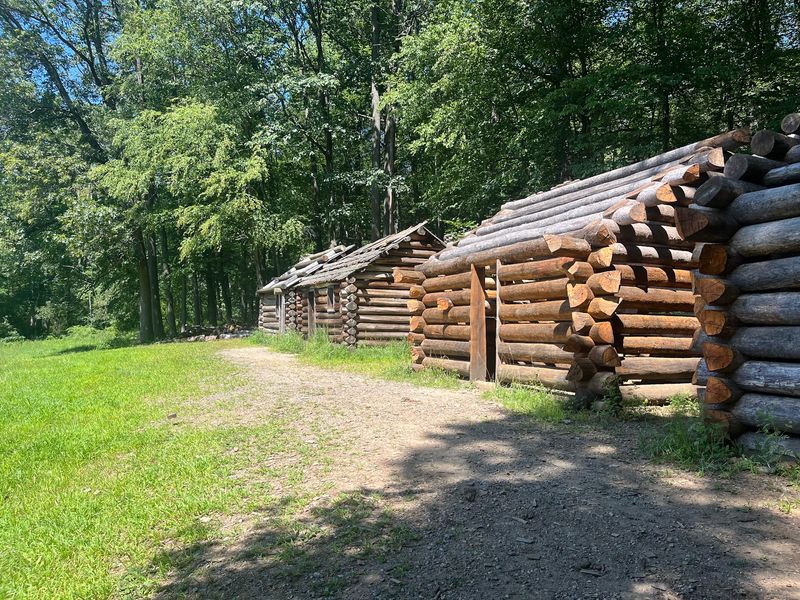
More than 1,000 log huts once covered these wooded hills, each one packed with about a dozen soldiers. Each hut measured roughly 14 by 16 feet.
That’s smaller than plenty of modern bedrooms.
The winter of 1779 to 1780 brought storm after storm. Historians often call it the harshest winter of the whole Revolution, even rougher than Valley Forge.
Around 10,000 Continental soldiers rode it out right here in New Jersey.
Today you can stand beside rebuilt huts on that same hillside. You can follow quiet trails, peek into an old farmhouse, and read the story on signs along the way.
I like how the woods do most of the talking.
The best part? Getting in won’t cost your family a dime.
So how did a frozen army hold together through all that snow?
A Frozen Log City Hiding In Morris County’s Woods
Jockey Hollow sits just outside Morristown, and it’s a unit of Morristown National Historical Park. Founded in 1933, that park holds the title of America’s first National Historical Park.
From December 1779 until June 1780, roughly 10,000 Continental soldiers camped on these slopes. They built what’s often called a log house city, with more than 1,000 huts lined up across the hills.
Think about that number for a second. A whole town of soldiers appeared in the woods, built by hand, in the middle of a brutal winter.
General George Washington chose this spot for good reasons. The hills and forest offered timber, firewood, and natural protection from British forces near New York.
The park lists its location as Morristown, NJ 07960. Signs from Routes 287 and 202 help guide drivers in, which makes finding it pretty painless.
Today the land feels calm and green for much of the year. Rolling paths, open fields, and markers now fill the space where smoke once rose from hundreds of chimneys.
For New Jersey families, it’s a big piece of national history close to home. You can visit in an afternoon and still feel the scale of what happened here.
The Winter That Tested Every Soldier On This Hill
Snowstorm after snowstorm hit the camp that season. The winter of 1779 to 1780 is widely called the harshest of the Revolutionary War, and it topped the struggles at Valley Forge.
Supplies ran short again and again. Food, clothing, and blankets were hard to come by while the cold refused to quit.
Here’s the surprising part. Even with all that hardship, fewer than 100 soldiers were lost during the encampment.
Why so few? The army had learned from earlier winter camps, and better hut building and planning paid off on this hillside.
Picturing it today takes some effort. Kids playing in the snow at home might struggle to grasp months of it with thin coats and little food.
That’s what makes Jockey Hollow so powerful for families. The story is about patience, teamwork, and sticking together when quitting looked easier.
The soldiers came out of that winter more disciplined and more unified. Many historians see the camp as a moment that proved the army could endure almost anything.
Not bad for a crowd living in tiny wooden boxes. Their grit is the real reason this land is preserved today.
Twelve Men, One Tiny Hut, Zero Personal Space
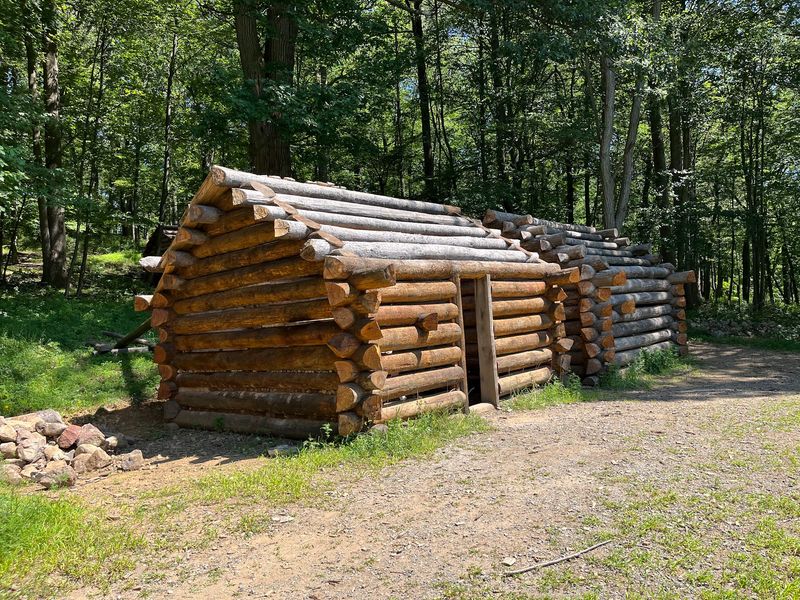
Twelve grown men shared each hut. Each one measured about 14 by 16 feet, so nobody got a corner office.
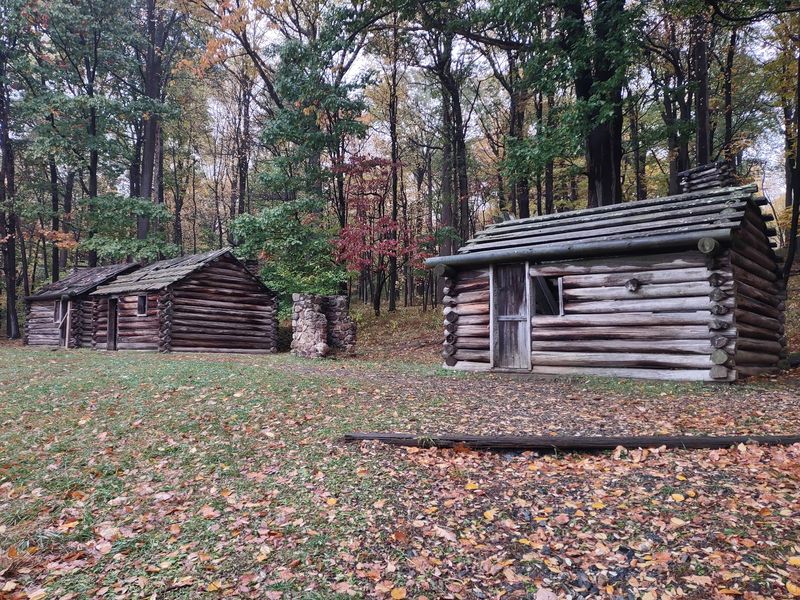
On Sugar Loaf Hill, you can see reconstructed soldier huts standing among the trees. The replica cabins were first built in 1964, and they show just how tight life got that winter.
Seeing them in person changes things. Reading about cramped quarters is one thing, but standing beside the actual size is another.
The huts sit along the Yellow Trail, roughly halfway around its loop. You can also reach the area from the paved Tour Road if walking far isn’t in the plans.
Yes, they’re replicas, not original buildings. Still, they help kids and adults picture the rows that once stretched across these slopes.
An officer’s hut is part of the scene too. That gives you a small peek at how rank shaped living space, even in the deep woods.
Bring a camera and a little imagination. Multiply what you see by more than 1,000, and the old log city suddenly feels real.
A Farmhouse Where A General Bunked Down
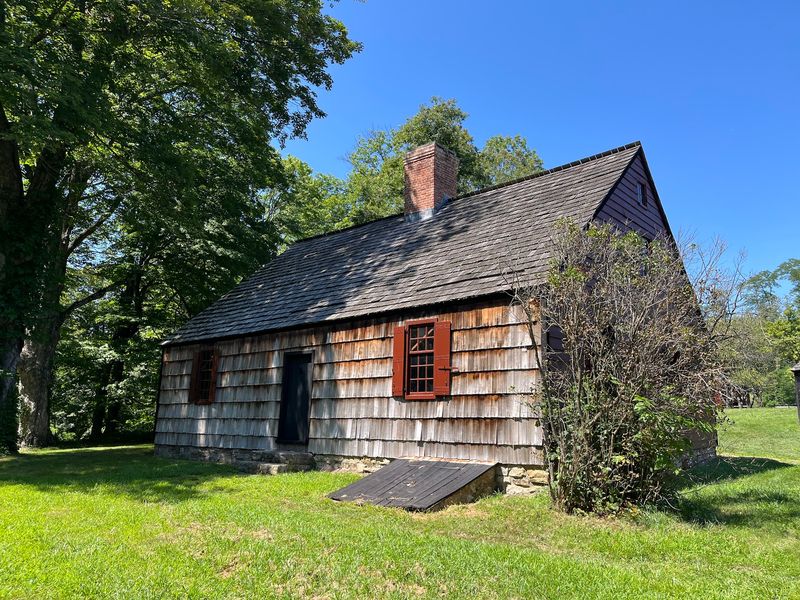
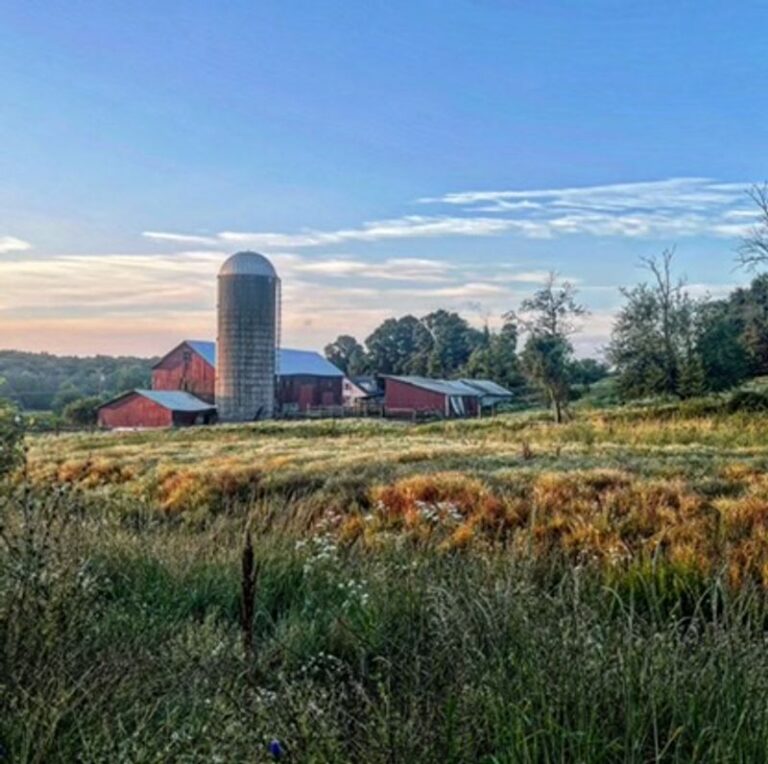
Built around 1750, the Wick House still stands in Jockey Hollow. It’s a Cape Cod-style farmhouse, and it once served as headquarters for Major General Arthur St. Clair.
St. Clair commanded about 2,000 Pennsylvania soldiers that winter. His quarters were cozier than a hut, though nobody was exactly living in luxury.
The Wick family owned a farm of around 1,400 acres. Much of it was thick forest, and that timber helped build huts and keep fires burning.
So the family’s land kept an army going. That’s a pretty big contribution for one New Jersey farm.
Today the house is furnished to show how it looked as a general’s quarters. Rangers lead tours at times, and admission to the park is free.
Tour schedules can shift, especially during the colder months. Checking with the park before you go is a smart move.
Outside, the garden and orchard area add a gentle, homey feel. It’s a lovely contrast to the rugged hut story just up the hill.
Trails That Follow An Army’s Footsteps
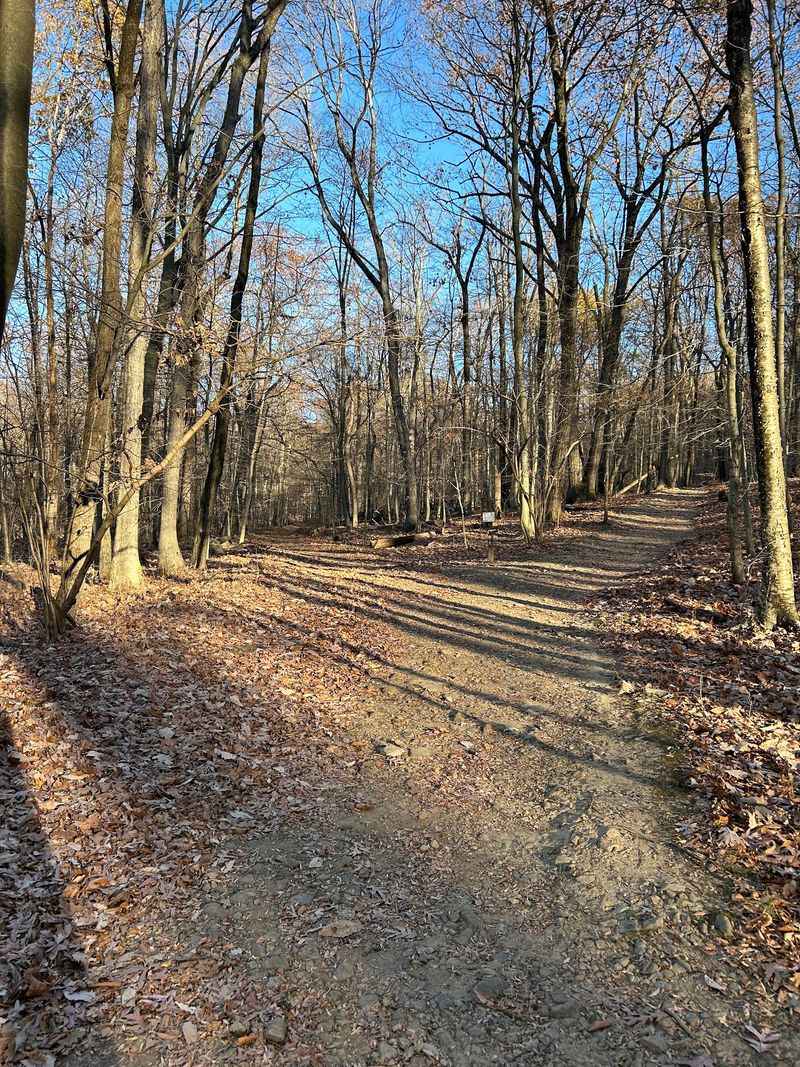
About 27 miles of trails wind through the park. That’s plenty of room for a quick stroll or a long, leg-burning ramble.
The Yellow Trail runs roughly 2.25 miles and connects many key historic spots. It passes the Wick Farm area, the soldier huts, and the Grand Parade.
Want more of a workout? The White Trail, also called the Grand Loop Trail, stretches for 6.5 miles through the historic landscape.
Most paths stay easy to moderate, with rolling slopes rather than steep climbs. Some can get rocky or muddy, so sturdy shoes can help after rain.
Bikes stick to the 3-mile paved Tour Road. That keeps the woodland paths peaceful for walkers and hikers.
Leashed dogs are a common sight on the trails too. That makes it a nice option for families who bring the four-legged crew along.
Autumn here can be stunning when the leaves turn. Go early in the season, though, since the color may fade by early November.
Where Thousands Once Lined Up For Morning Drills
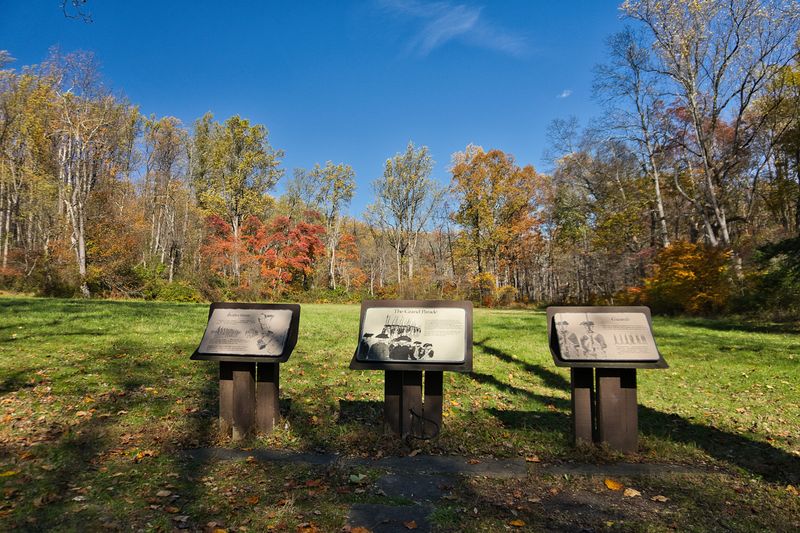
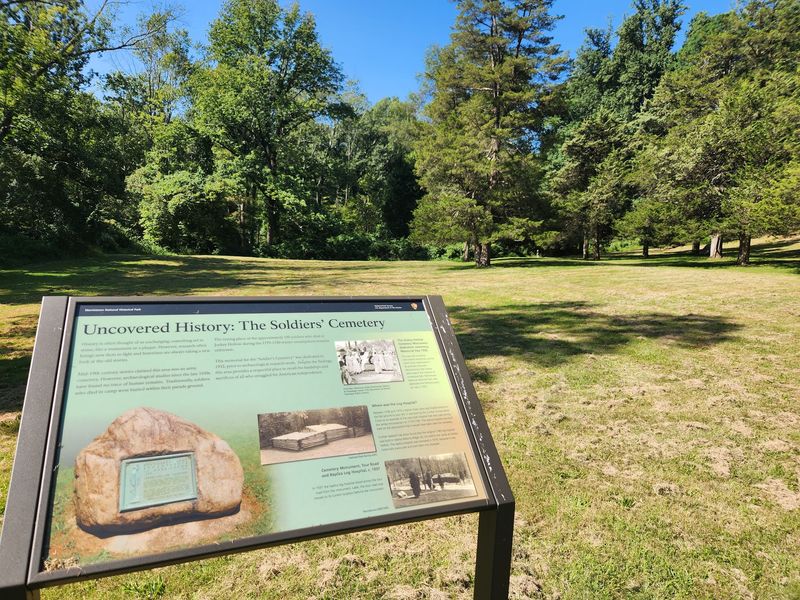
Quiet now, but not back then. The Grand Parade was a field about 400 yards long and 100 yards wide.
It worked as the ceremonial and administrative heart of the camp. Soldiers gathered for drills, and guards assembled for daily inspections.
A two-room log cabin called the Orderly Office stood here. Orders went out from that spot, and reports came back in.
Think of it as camp headquarters for paperwork. Even in a frozen forest, the army ran on schedules and rules.
Today the field looks like a peaceful meadow. Signs along the way help fill in the details your eyes can’t see.
The Yellow Trail loops near the Grand Parade, so it’s easy to work into a hike. Watch the blazes in this area, since a turn or two may feel less obvious.
Kids may love the scale of it. Ask them to imagine rows of soldiers marching across the grass in the snow.
Your Starting Point Before Hitting The Woods
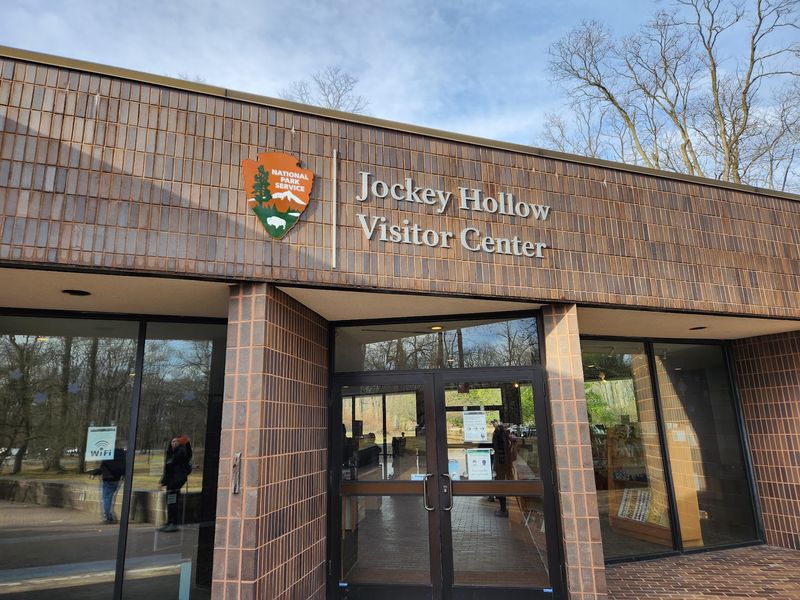
Rangers staff the Jockey Hollow Visitor Center, and it makes a smart first stop. The building dates to the mid-1970s.
Inside, you’ll find trail maps, brochures, and people ready to answer questions. A short film covers the 1779 to 1780 encampment.
There’s also a full-scale model of a soldier’s hut and a large mural of the camp. Hands-on exhibits give younger visitors something to touch and explore.
A small gift shop carries books, postcards, and items for all ages. It’s handy for a souvenir that sparks more questions at home.
The park grounds are generally open year-round from 8 AM to sunset. Visitor center hours can vary, so check before heading out.
Admission is free, and parking is plentiful. Restrooms sit beside the visitor center, with portable ones in some lots.
Some areas, including trails, may close at times for work. A quick look at the park’s updates can save a disappointing drive.
A Free Afternoon Packed With Real New Jersey History
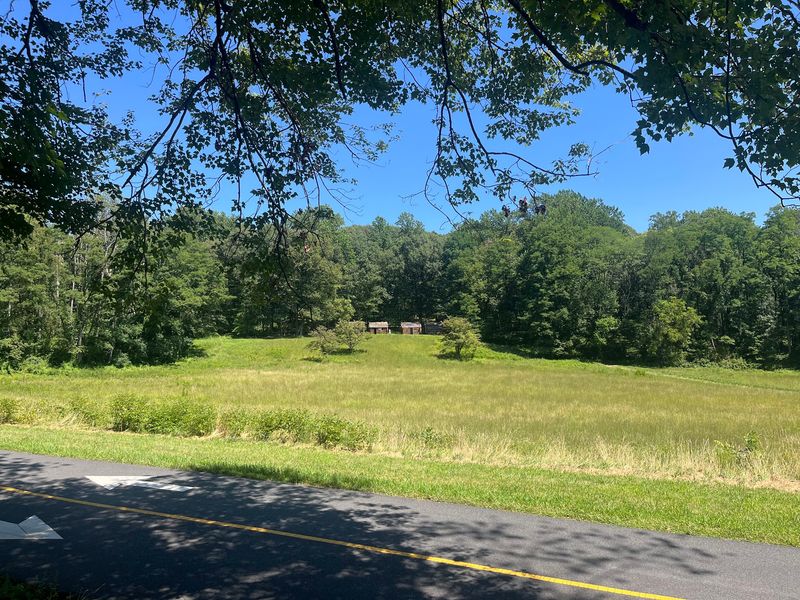
Free admission, miles of trails, and a story bigger than most textbooks can hold. That’s a pretty great deal for a Saturday.
History fans get huts, a historic farmhouse, and a field full of meaning. Hikers get wooded paths that suit short walks or longer loops.
Not a big hiker? The paved Tour Road lets you drive past key stops and read signs along the way.
Want more of the story? Washington’s Headquarters Museum and the Ford Mansion sit about five miles away in Morristown.
Washington stayed at that mansion during the same hard winter. Pairing both stops gives you the general’s side and the soldiers’ side.
Every season offers something here in New Jersey. Spring brings early greens, summer brings shade, and fall can bring brilliant color.
I believe this place deserves a spot on every family’s list. Those soldiers held on through an awful winter, and now you can walk their hillside for free.