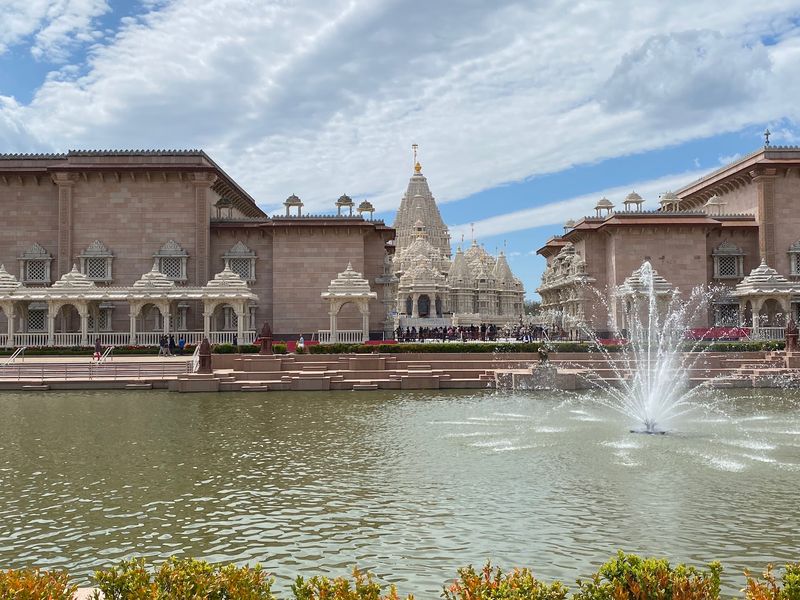
Ninety-one marble elephants line the base of one building here, and that’s only the bottom row. Somewhere in the carvings above them, you’ll even find tributes to Abraham Lincoln and Martin Luther King Jr.
The whole structure rises 191 feet without a single steel support. Every stone was hand-carved in India, then shipped across an ocean and pieced together in New Jersey.
Over 12,500 volunteers helped make it happen.
I like how a place this grand asks nothing at the door. Admission is free, and so is parking.
You just cover your shoulders and knees, slip off your shoes, and look up.
I can’t imagine a better way to spend a quiet afternoon. So how does a temple this size end up in a former farm town in Central Jersey?
A Marble Giant Rising From Former Farmland
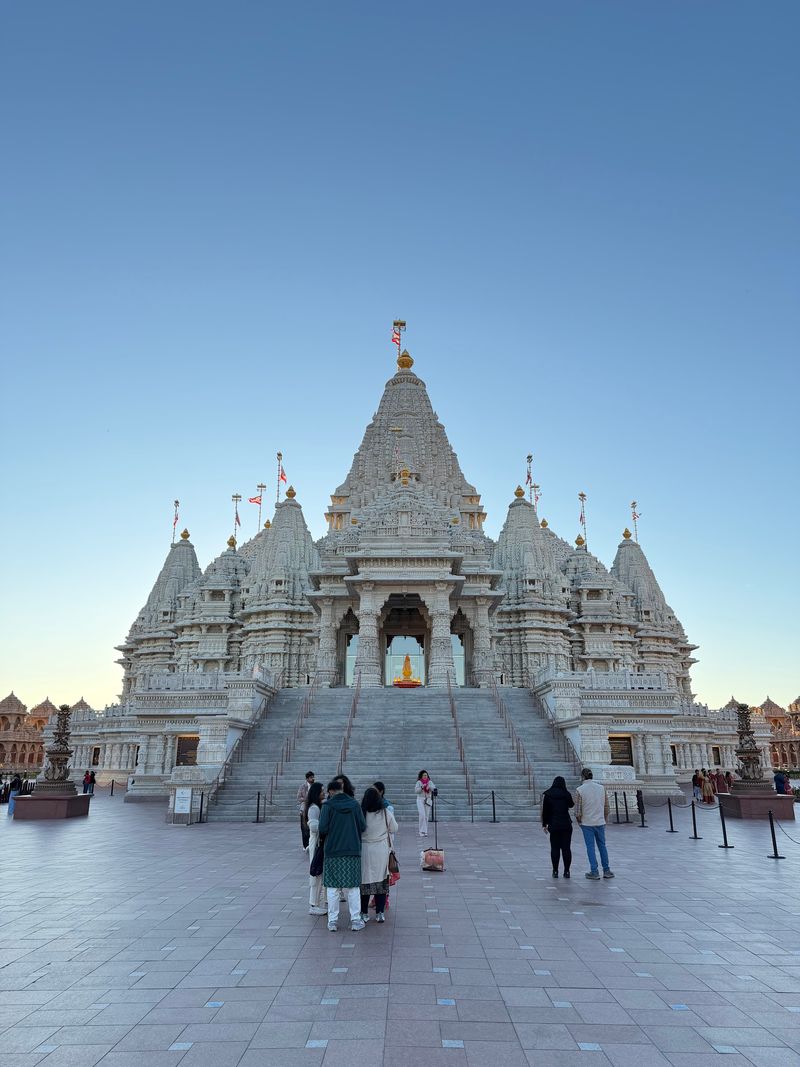
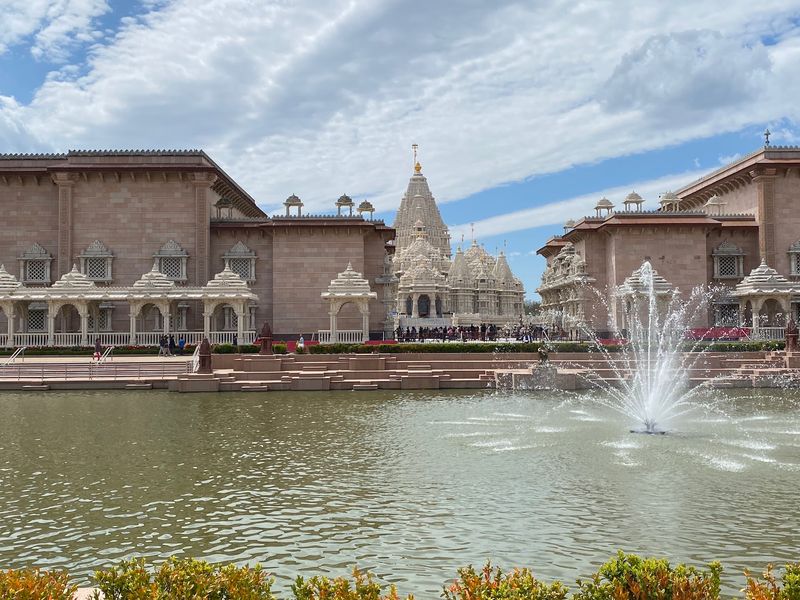
Few people expect Central Jersey farmland to hold the largest Hindu temple in the United States. BAPS Swaminarayan Akshardham sits on roughly 183 acres in Robbinsville, and it’s often called the second-largest Hindu temple in the world.
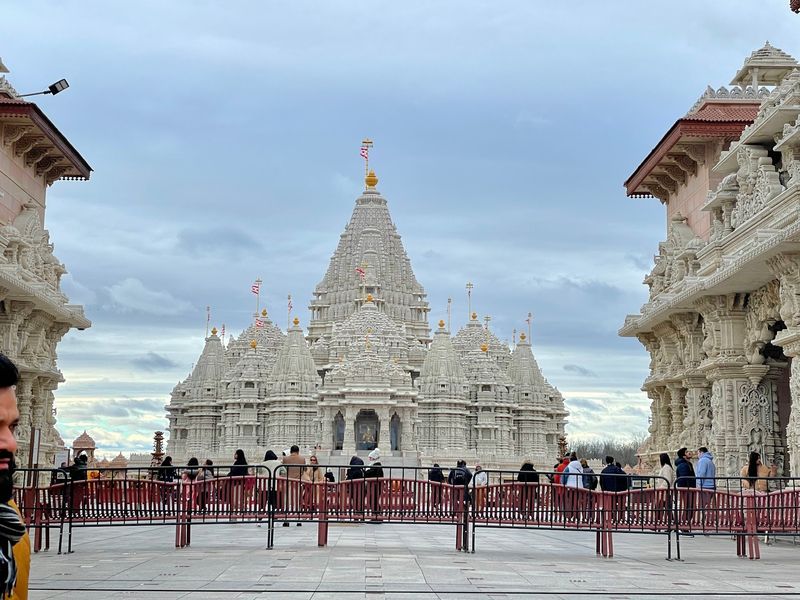
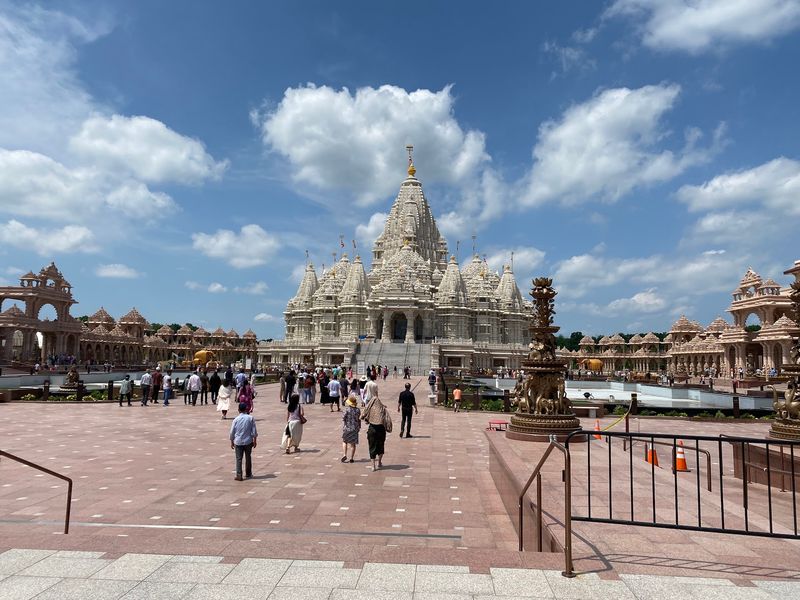
The star of the campus is the Akshardham Mahamandir, which opened in October 2023. It stands 191 feet tall, 345 feet long, and 255 feet wide.
That’s a lot of temple for a quiet stretch of Mercer County.
The campus holds far more than one building, though. You’ll also find a smaller, older mandir, a Welcome Center, cultural exhibits, and a research institute.
Think of it as a whole neighborhood devoted to art, faith, and learning.
Akshardham is a working place of worship first. Still, visitors of every background are welcome to wander, learn, and soak in the craftsmanship.
Respect is the only real price of entry.
I believe that balance is what makes it so special. Devotees come to pray, while curious travelers come to stare at ceilings.
Both groups leave with plenty to talk about on the drive home.
Twelve Years And 12,500 Volunteers Made This Possible
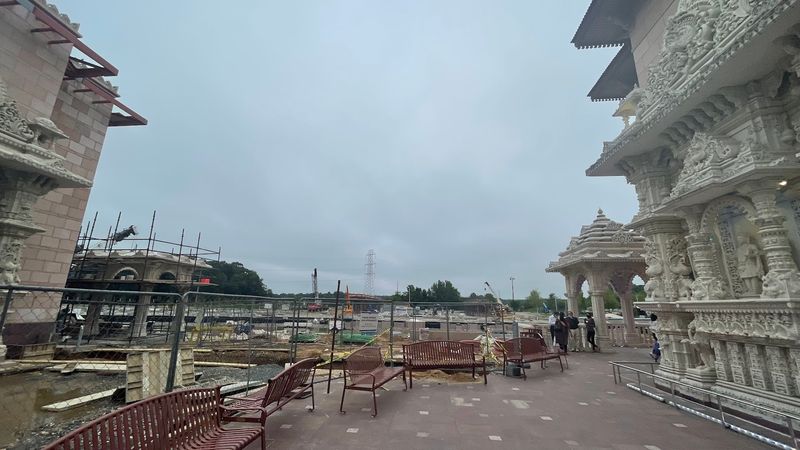
The idea goes back to 1997, when Pramukh Swami Maharaj first proposed it. Work on the site didn’t begin until 2010, which tells you this was never a rush job.
The smaller BAPS Shri Swaminarayan Mandir came first, finished in 2014. Construction on the big Mahamandir started the following year.
It took until October 2023 for the doors to open.
Here’s the part that floors most people. More than 12,500 volunteers contributed to the 12-year effort.
Everyday people gave their time to help raise a monument.
Every stone carving was crafted by hand in India first. Then the pieces traveled to New Jersey for assembly, like the world’s most delicate puzzle.
No pressure on whoever packed those crates.
That volunteer spirit still shapes the place today. Many of the friendly folks guiding visitors and answering questions are donating their time.
It explains the warm, patient mood across the grounds.
Knowing all this changes how you see each pillar. You’re looking at years of patience, not just pretty stone.
And somehow, it all fits together perfectly.
No Steel, No Metal, Just Ancient Building Rules
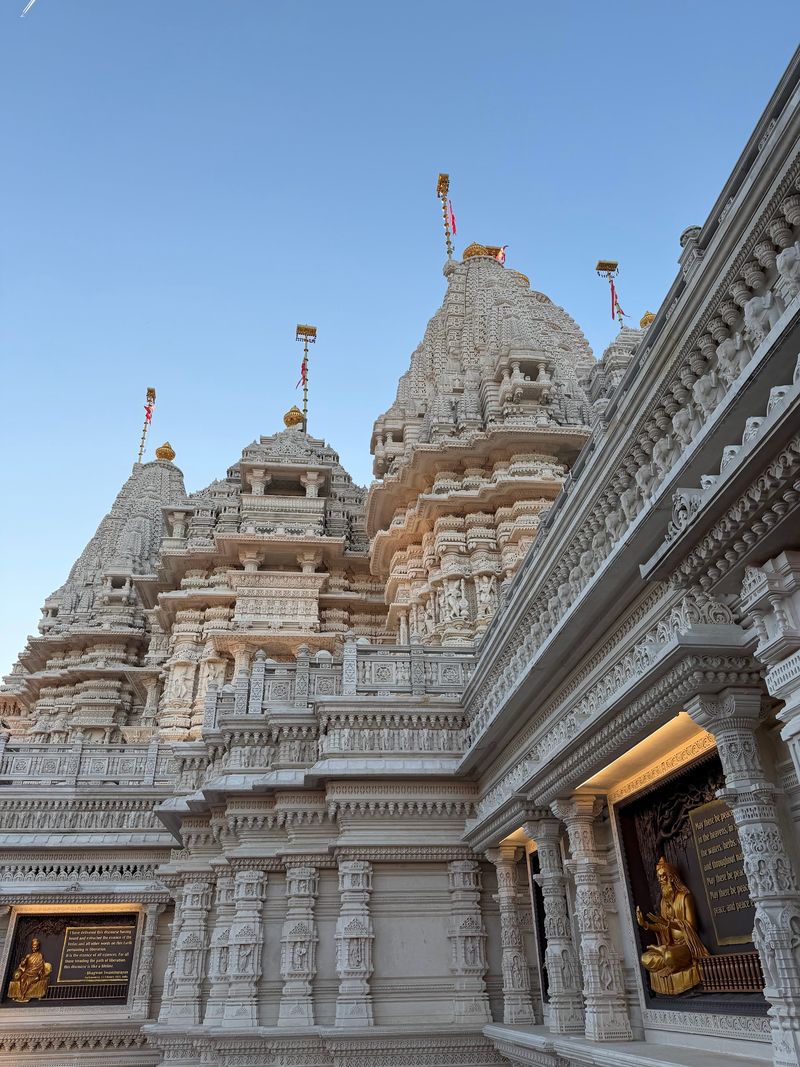
Most buildings this size lean on steel beams. The Akshardham Mahamandir uses none at all, and no metal supports either.
Instead, builders followed the Nagaradi style of traditional Hindu architecture. That approach relies on carefully fitted stone to carry the load.
It’s an old method holding up a brand-new landmark.
The materials come from three main sources. Italian Carrara marble, Indian pink stone, and limestone make up the structure.
The mix gives the temple its soft glow of white and rose tones.
Why skip metal? Traditional temple design favors natural materials built to last for generations.
Stone doesn’t rust, and that matters when you’re planning for centuries.
Standing near the base, the scale gets real fast. Those 191 feet of height are all stacked, carved, and balanced rock.
Engineers and history buffs will both get a kick out of that fact.
Next time someone complains about assembling flat-pack furniture, mention this place. Thousands of hand-carved pieces came together without a single bolt doing the heavy lifting.
Count The Elephants, Then Give Up Counting Everything Else
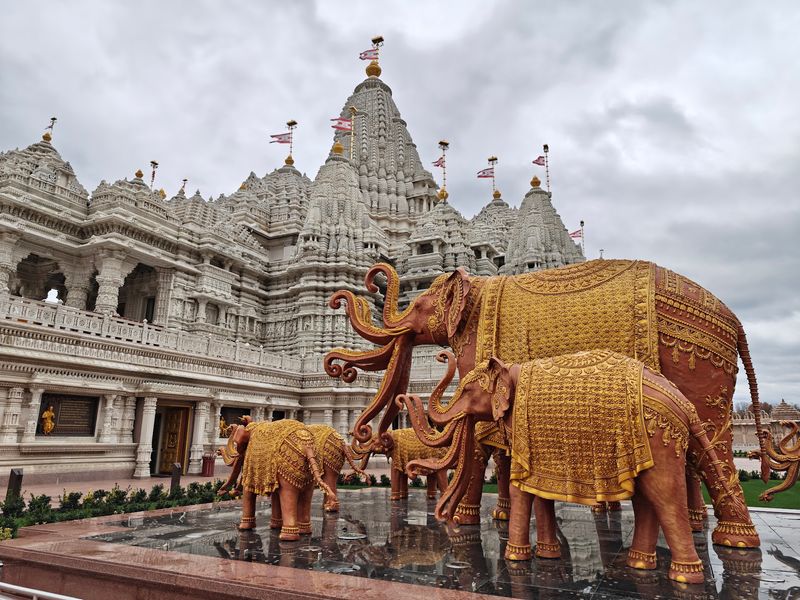
Ninety-one marble elephants parade along the base of the Mahamandir. Each one is carved in stone, and together they seem to carry the whole temple on their backs.
Look up and the numbers keep climbing. The temple holds 98 pillars and 66 arches inspired by peacock feathers.
There are also 58 unique ceiling designs to crane your neck at.
Then come the figures. You’ll find 144 statues of deities and devotees placed throughout.
Each has its own pose and meaning.
The surprises don’t stop at Hindu tradition. Some carvings honor historical figures like Abraham Lincoln, Martin Luther King Jr., and Socrates.
Spotting them feels a bit like a stone scavenger hunt.
Informative plaques help explain what you’re seeing in each section. That’s handy when every surface seems to tell a different story.
My advice? Pick one pillar and really study it before moving on.
Trying to absorb everything at once is like reading a library in an hour. The detail rewards slow eyes and patient feet.
A 49-Foot Yogi Greets You On Arrival
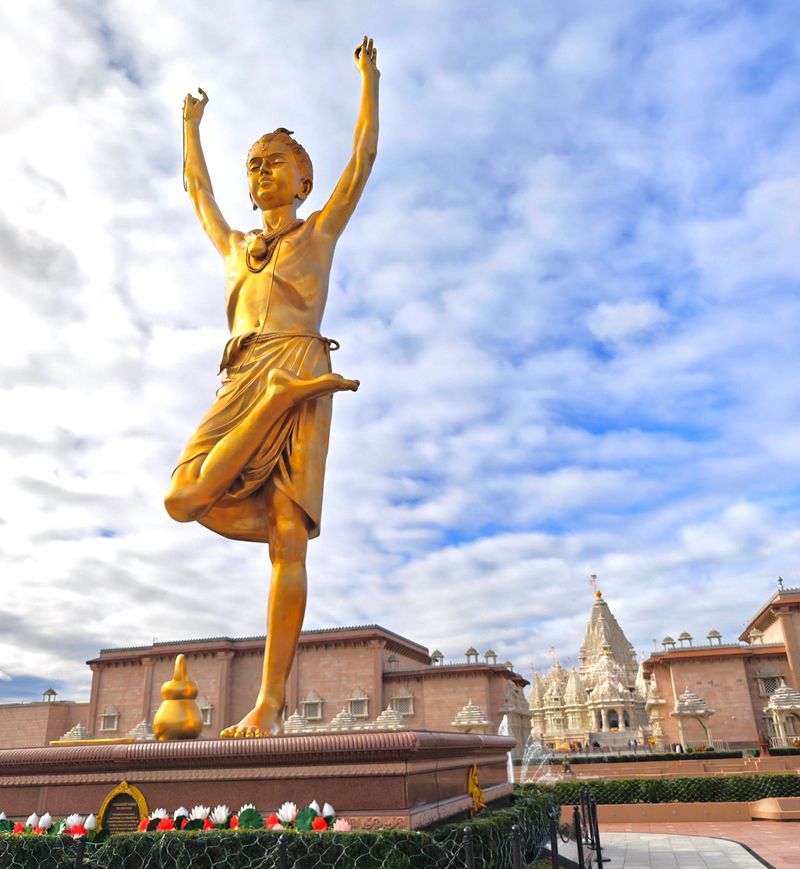
Talk about a welcome committee. Nilkanth Plaza opens with a 49-foot bronze statue of Nilkanth Varni, the young yogi form of Swaminarayan.
He’s shown in a yoga pose, balanced and calm. The statue hints at the scale waiting further inside.
It also makes for a memorable first photo of the day.
Nearby sits the Brahma Kund, a traditional Indian stepwell. Stepwells use descending stairs that lead down toward the water.
It’s a beautiful design with deep roots in India.
The water itself carries a remarkable story. It comes from 108 holy rivers in India.
It also includes water from rivers in all 50 U.S. states.
I love that detail most of all. Two homelands, mixed together in one quiet pool in New Jersey.
It’s a lovely symbol of where this community comes from and where it lives now.
Take a slow lap around the plaza before heading in. Outdoor photos are allowed, so this is your moment.
Once inside the temple sanctuary, cameras stay tucked away.
Carved Wood And Haveli Charm At The Welcome Center
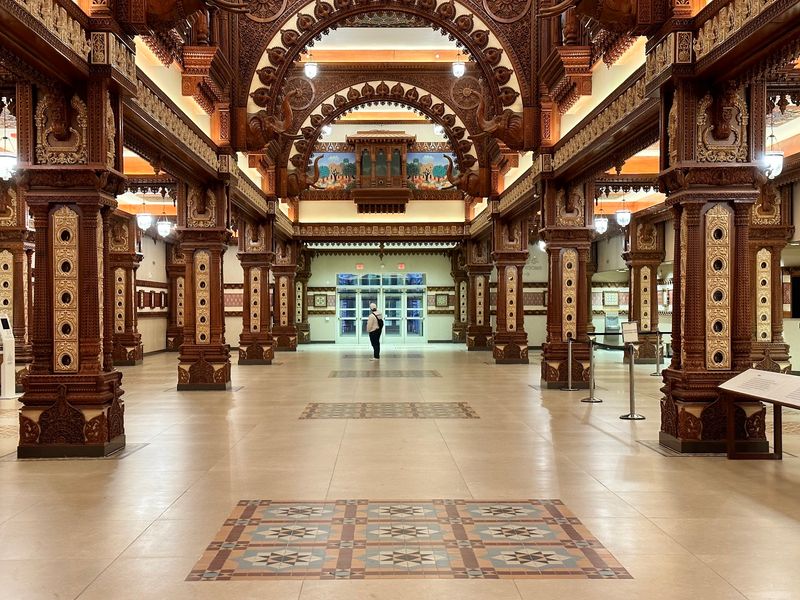
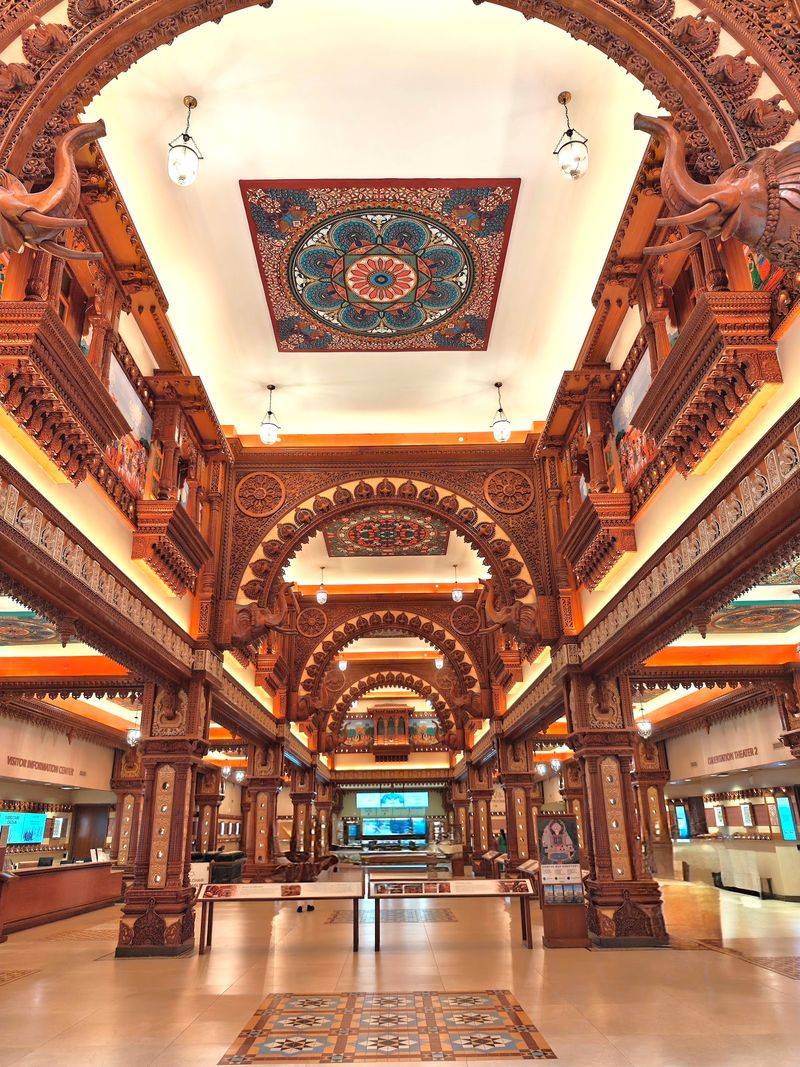
Stone gets the headlines, but wood steals a few scenes too. The Welcome Center borrows its look from 17th-century Indian Haveli architecture.
Havelis were grand traditional mansions known for ornate courtyards and carving. This hall carries that same handcrafted warmth.
It feels cozy despite its impressive size.
It’s also the main information hub for the campus. Stop here to get your bearings, ask questions, and plan your route.
Volunteers are usually around to help point the way.
Many visitors start with a short orientation film before exploring. It covers the history, meaning, and architecture of the mandir.
Those few minutes make the carvings far easier to appreciate later.
Guided tours are another smart option. They run hourly on Mondays, Wednesdays, Thursdays, and Fridays from 10 AM to 3 PM.
Availability depends on guides, so flexibility helps.
Honestly, skipping the intro would be like reading the last chapter first. You’d still enjoy it, sure.
But knowing the backstory turns pretty stonework into a story you can follow.
The Little Mandir Deserves Your Attention Too
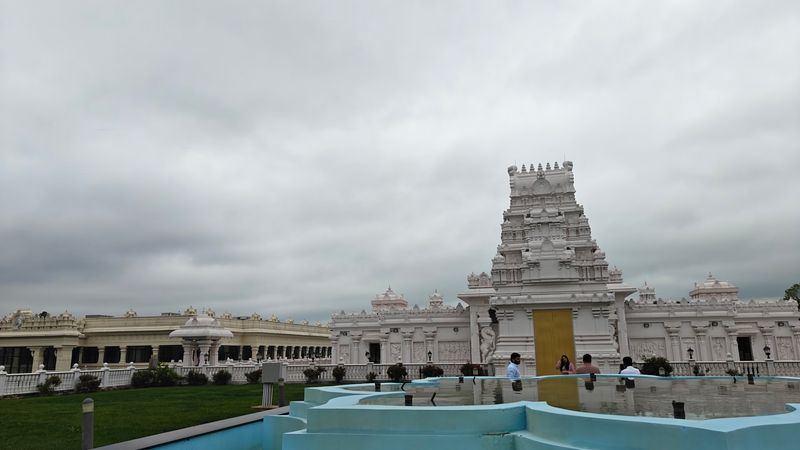
Big siblings tend to hog the spotlight. On this campus, the smaller BAPS Shri Swaminarayan Mandir quietly holds its own.
Completed in 2014, it came well before the Mahamandir. It’s ornate and beautiful in a more intimate way.
Many find it carries a different feel than its giant neighbor.
One timing tip matters here. The smaller mandir has closed between noon and 4 PM, so check before you go.
Plan around that window if seeing inside is important to you.
Nearby, the campus also houses the BAPS Swaminarayan Research Institute. It opened in June 2022 as the first center of its kind in the country.
Its focus is Indian languages and Hindu scriptures in the Swaminarayan tradition.
That’s a scholarly side most day-trippers never expect. It adds real depth to a place famous mainly for its looks.
So budget a little extra time beyond the main temple. Two buildings, two moods, one campus.
You’ll want to see how they compare for yourself.
Samosas, Dosas, And A Pizza Plot Twist
All that walking builds an appetite, and Shayona Café is ready for it. The menu is pure vegetarian Indian food, from quick snacks to full meals.
Popular picks include samosas, dosas, and thalis. A thali brings a spread of small dishes on one platter.
It’s a great choice if you can’t decide.
Then comes the surprise. There’s a signature pizza topped with cottage cheese and pesto.
Nobody said a temple café couldn’t have a little fun.
Sweets are on the menu too, naturally. Ending a visit with something sugary just feels right.
The café runs from 11 AM to 8 PM, except Tuesdays. That’s handy, since it stays open after the campus’s last entry.
You can linger over a meal without rushing.
Visitors mention both a smaller snack spot and a larger seated café toward the end of the route. Either way, refueling is easy.
Families with hungry kids will be especially grateful for that.
Souvenirs, Sweets, And Something To Take Home
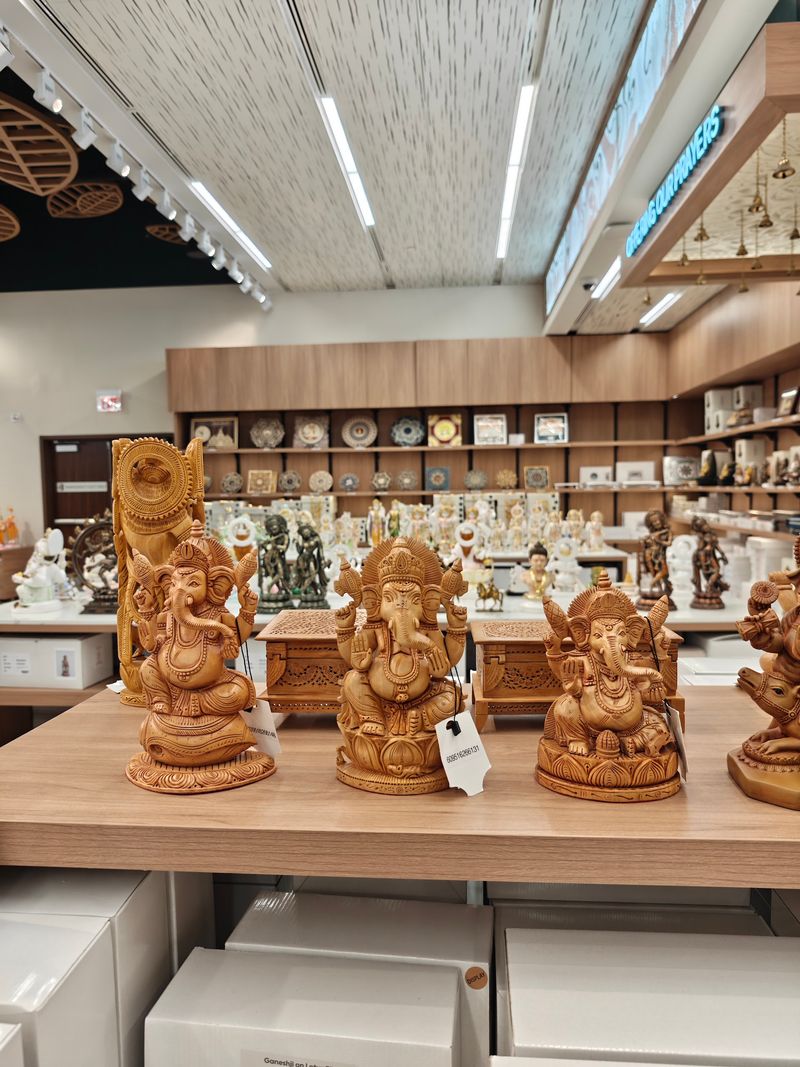
Leaving empty-handed feels almost impossible after a day like this. The Akshardham Souvenir Store makes sure you don’t have to.
Shelves hold books, devotional items, sweets, and souvenirs. Readers can pick up something to learn more about the traditions they just saw.
Others might simply grab a treat for the car ride.
The shop keeps hours from 9:30 AM to 8:30 PM. Like the rest of the campus, it closes on Tuesdays.
Books make especially good keepsakes here. The temple packs in so much meaning that one visit barely scratches the surface.
A little reading afterward helps the details stick.
Sweets, meanwhile, are the easy crowd-pleaser. They’re perfect for bringing home to family who missed the trip.
Bonus points if you share before opening the box yourself.
Since admission is free, the shop is one way to support the place. Donations are accepted on site too.
Either way, it’s a nice gesture toward the volunteers who keep everything running so smoothly.
Dress Codes, Bare Feet, And Quiet Respect
Shoulders, chest, back, and knees all need to be covered here. It’s a place of worship, and modest dress shows respect.
Forgot the long pants? Free sarongs have been offered to visitors who need them.
That’s a thoughtful touch for anyone caught off guard by a summer outfit.
Shoes come off before entering the main temple. Socks are fine, so wear a clean, comfy pair.
Marble floors and fresh socks make a great team.
Photography is allowed outside but not inside the sanctuary. Phones should also be silenced.
Think of it as a mini digital detox with stunning scenery.
Accessibility is strong across the campus. The grounds are fully wheelchair accessible, with handicapped parking available.
Wheelchairs can be borrowed with a driver’s license as collateral.
None of these rules feel like hurdles once you’re there. They help keep the mood calm for everyone, worshippers and sightseers alike.
A little preparation goes a long way toward a smooth visit.
Plan Around Tuesdays And Holiday Reservations
Tuesday is the one day to avoid. The entire campus, including the Mahamandir, café, and gift shop, closes that day.
Every other day, hours run from 9 AM to 7:30 PM. Aim to arrive before 7 PM, which is typically the last entry.
Most visits take about two to two and a half hours.
Admission is free, and parking is free too. That’s rare for an attraction of this scale anywhere in New Jersey.
Reservations aren’t usually needed, with some key exceptions. Timed-entry slots are required on New Year’s Day, Memorial Day, Independence Day, Labor Day, Thanksgiving, and Christmas.
Diwali also requires a reservation.
Plug 112 N Main St, Windsor, NJ 08561 into your GPS. The temple sits in the Robbinsville area of Mercer County.
It’s an easy drive for much of Central Jersey and nearby Pennsylvania.
Wear good walking shoes for the grounds, even though they come off inside. You’ll be on your feet a while.
Trust me, your arches will appreciate the planning.
Why This Free Wonder Belongs On Your Weekend List
A 4.8-star rating across more than 22,000 Google reviews says plenty on its own. Few places anywhere hold numbers like that.
BAPS Swaminarayan Akshardham works for nearly everyone. Spiritual seekers find a place to pray and reflect.
Architecture fans find a lifetime of detail to study.
Families get a calm, educational outing with a café waiting at the end. Photographers get gorgeous exterior angles from almost every direction.
Curious travelers simply get to see something remarkable without spending a cent on admission.
I believe the best part is the generosity behind it all. Volunteers built it, volunteers welcome you, and the doors stay open freely.
That spirit is hard to find these days.
For New Jersey locals, this landmark sits practically in the backyard. Skipping it would be like living near the ocean and never seeing the beach.
So pick a non-Tuesday, pack some socks, and go. Count a few elephants and find Lincoln in the carvings.
Then grab a samosa and decide when you’re coming back.