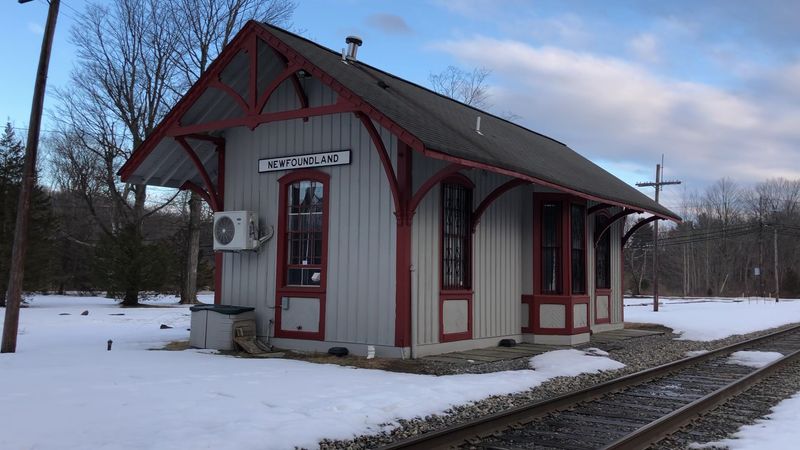
A little wooden depot built in 1872 became the lonely home of Peter Dinklage’s character in a 2003 indie film. More than twenty years later, fans still show up just to stand near it.
The station sits beside a working freight line. A red caboose and a few old rail relics keep it company.
It’s free to wander, and it’s technically open 24 hours.
I like how a movie this quiet still pulls people across New Jersey. No gift shop, no tour, no ticket booth.
Just a restored depot, a strip of track and a story that clearly stuck with a lot of viewers.
I can’t imagine a more low-key film pilgrimage. So what makes a tiny station worth the drive?
The Tiny Depot That Stole A Movie
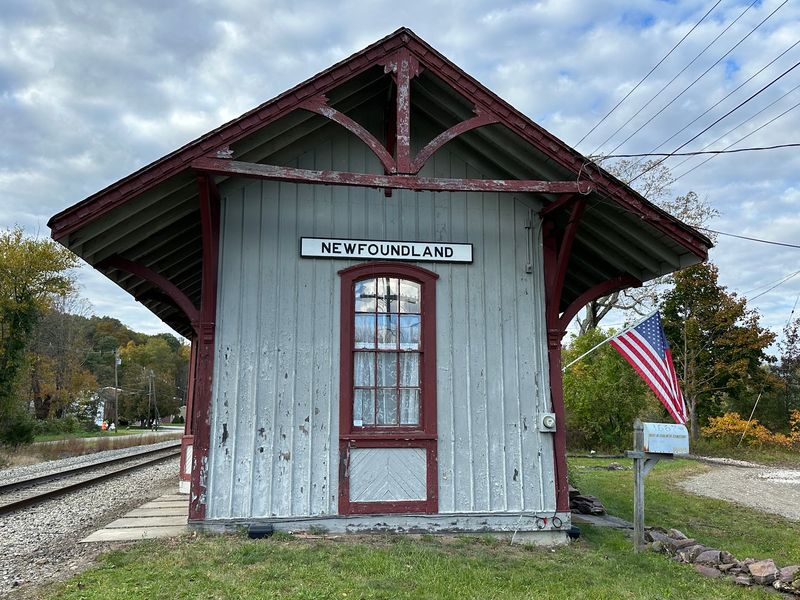
Some movie stars need trailers and assistants. The Newfoundland RR Station only needed a quiet spot beside the tracks in Newfoundland, New Jersey.
The depot played a starring role in The Station Agent, the 2003 indie film. Peter Dinklage plays Finbar McBride, a quiet man who inherits the old depot and moves in for some solitude.
Of course, solitude doesn’t last long. Patricia Clarkson and Bobby Cannavale play the neighbors who keep wandering into his life.
The station sits at the center of it all, almost like a fourth character.
Today the site is listed as a historical landmark in the Newfoundland section of Jefferson Township. It holds a strong 4.6-star rating on Google from about 40 reviews.
That’s impressive for a building you can’t even go inside.
What draws people is simple. Fans want to see the real place behind a film they loved.
Railfans want to see an old depot that survived well over a century. Both groups end up standing on the same patch of gravel, cameras out.
Not bad for a small wooden building in a corner of Morris County.
A Station Older Than Most Of The State’s Towns Feel
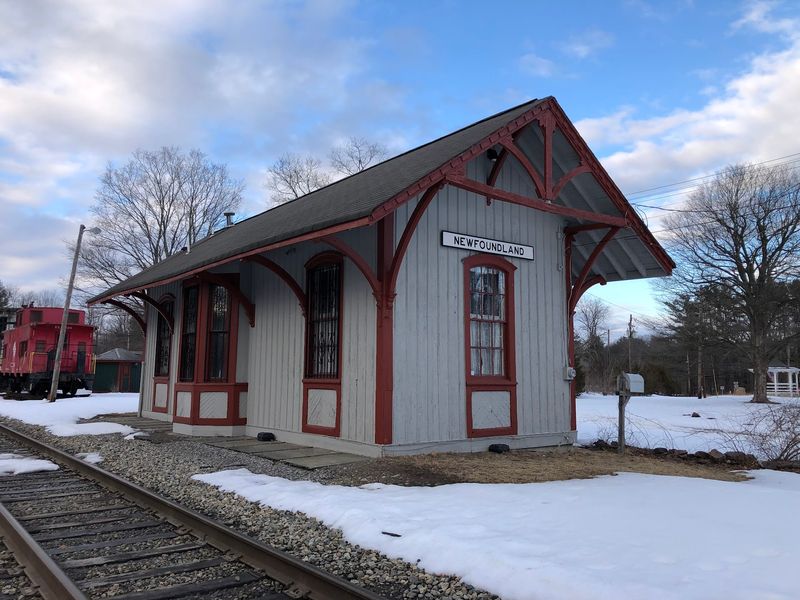
Here’s a fun one for trivia night. The Newfoundland station dates to 1872, built for the New Jersey Midland Railway.
It isn’t the oldest railroad station in New Jersey. Still, it ranks among the oldest ones still standing today.
Older county and township maps from the 1850s and 1860s show no railroad here at all.
The New Jersey Midland later became part of the New York, Susquehanna and Western Railroad in 1881. An 1887 township map shows the NYS&W with both a station and a freight station in Newfoundland.
Passenger service is where the story gets a bit fuzzy. Some sources say the station itself closed in 1944.
Passenger trains, though, kept running on the line through 1966.
Historic photos also show two tracks here once. Only a single track remains now.
A small freight depot once stood between the station and the road crossing, but it was removed around 1970.
So when fans visit for the movie, they’re also visiting a survivor. The building outlasted passenger trains, a second track and its freight neighbor.
Then Hollywood came knocking, and suddenly a whole new crowd cared.
Freight Trains Still Rumble Right Past
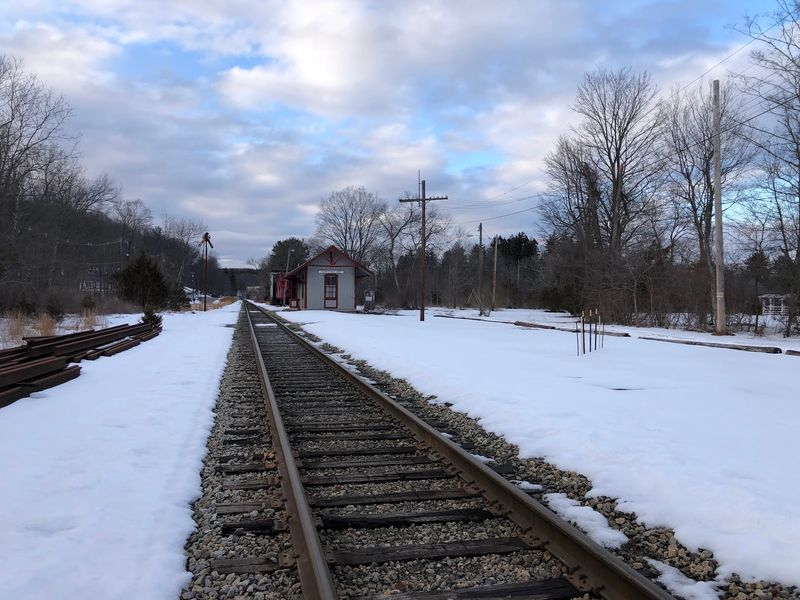
Plenty of movie locations are frozen in time. This one still has trains.
The track beside the station remains active for freight, part of the New York, Susquehanna and Western line. You won’t catch a passenger train pulling up.
But a working freight train may roll through while you’re snapping photos.
Railfans will appreciate a nerdy detail. The track still uses wooden ties, now paired with upgraded continuous welded rail.
That’s old-school meets modern, right at your feet.
A working line also means a little common sense. Stay well clear of the tracks and enjoy any passing train from a safe distance.
No photo is worth getting close to moving freight.
Think of it as a bonus feature. Fans of The Station Agent will remember how much trains mattered to Finbar.
He walked the rails, timed trains and watched them with real devotion.
Hearing a freight train out here can make the film feel oddly present. One minute it’s quiet, birds and breeze.
The next, the line comes alive. It’s a nice reminder that this isn’t a museum piece.
The railroad here still has a job to do.
Spruced Up Since Its Big-Screen Close-Up
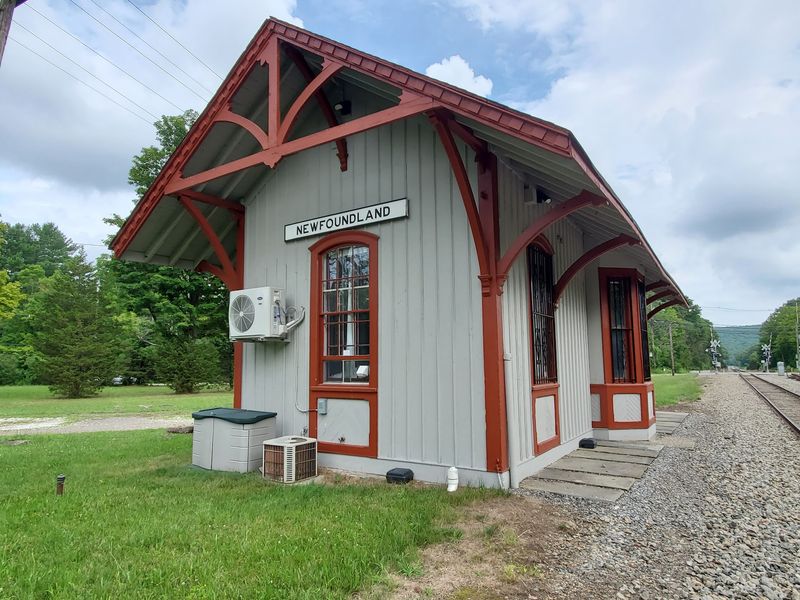
In the movie, the depot looks lonely and a little forgotten. In real life, it’s had a glow-up.
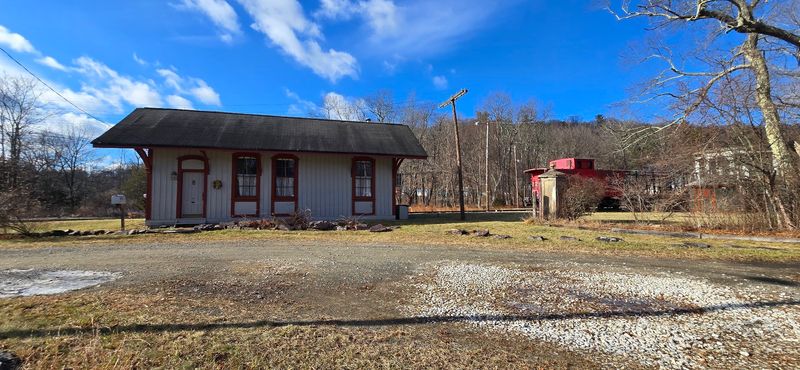
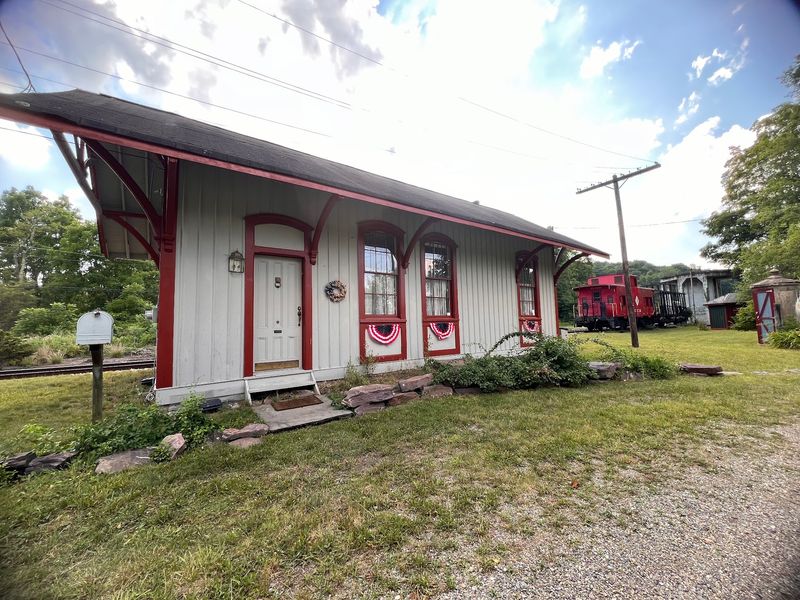
The original wooden station has been restored. It looks well preserved and well maintained today, which surprises some fans expecting a weathered shell.
One online note even thanks the people who keep this charming piece of railroad history in shape.
That care matters. Wooden buildings from the 1870s don’t survive on luck alone.
Someone clearly decided this little depot deserved another chapter.
Fans who rewatch the film before visiting often say the building still feels just like it does on screen. Same shape, same modest size, same sense of a place set slightly apart from everything.
The difference is mostly mood. On film, it’s a hideaway for a man who wants to be left alone.
In person, it reads more like a proud little landmark.
Bring the movie with you in your head, then compare. Spot the angles you remember.
Notice what’s sharper and brighter now. It’s a rare case where the real thing may look a bit happier than its screen double, and honestly, that seems fitting.
Meet The Red Caboose Holding Court
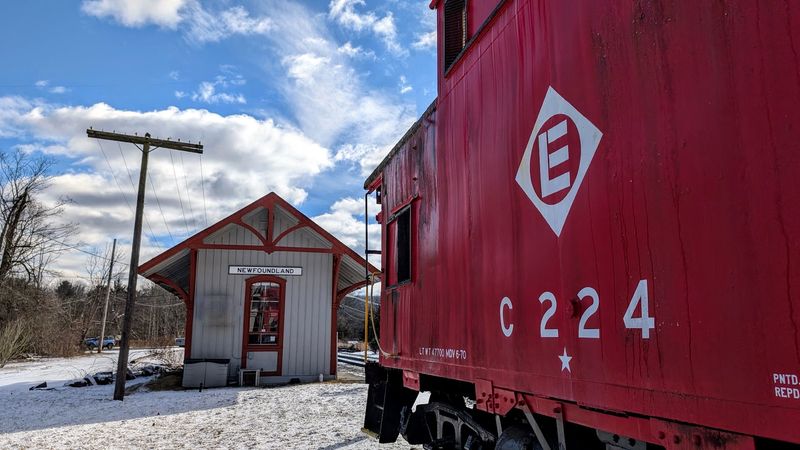
Every good railroad scene needs a red caboose. Newfoundland delivers.
The caboose parked at the site is a 1946 Dunmore. It’s named for the Erie Railroad shops where it was built.
That little name tag connects it to a whole chapter of East Coast rail history.
It’s probably the most photographed thing here after the depot itself. The bright color pops against the trees and the wooden station.
Even people who say trains aren’t their thing tend to grab a picture.
Families with young kids may find this the highlight. One parent online mentioned their kid really enjoyed the station and rail cars.
A caboose is basically a giant toy in the best possible way.
Remember that these pieces are historic, not playground gear. Admire the details, the windows, the steps and the paint.
Let little ones point and ask questions instead of climbing.
Pair the caboose with the depot in one frame and you’ve got a postcard. It’s an easy shot, and it captures the spirit of the place.
Small, classic and a little bit storybook.
Odd Rail Relics Worth A Slow Look
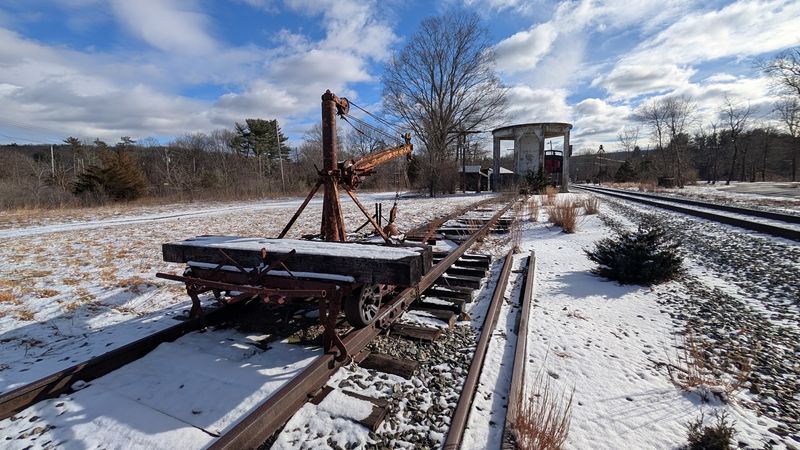
Look past the depot and the caboose, and the site starts to feel like a scavenger hunt.
There’s a concrete railroad phone booth, a quirky survivor from another era. Nearby sits the skeleton of a second caboose, stripped down to its frame.
A very small crane car rounds out the collection.
Then there are the supports for an old water tower. Steam locomotives needed water to run, and towers like this kept them going.
Only the supports remain, but they hint at how busy this spot once was.
Railfans will likely spend the most time here. Each piece tells a tiny piece of the line’s working story.
Casual visitors may just enjoy the strange shapes and textures for photos.
One past resident has moved on. The Morris County Central Coach No. 1001 sat here for years.
It was removed in 2021 and now lives at the Whippany Railway Museum.
So if older photos show a passenger car, that’s why. The collection has changed over time.
What’s left still rewards a slow, curious walk around the grounds.
Why A Quiet Film Inspires Such Devotion
A small story with three characters doesn’t sound like pilgrimage material. Yet here we are.
The Station Agent follows three people facing big life changes. They keep bumping into each other, then slowly learn to enjoy each other’s company.
Plenty of fans call it a film worth watching before any visit.
That’s really the secret. People don’t come for spectacle.
They come because the movie made loneliness and friendship feel honest, and the depot was where it happened.
Peter Dinklage, who plays Finbar, is a Morristown native. That gives the film an extra hometown feel for New Jersey viewers.
A local actor, a local depot and a story about finding your people.
Some visitors describe standing here as feeling like being inside the film. One even compared it favorably to visiting the Mystic Pizza spot in Connecticut.
High praise in the movie-location world.
Others admit trains aren’t their thing at all. They simply loved the idea of living in an old depot.
Turns out it’s a real place, which seems to delight people every time they discover it.
A Free Outing That Suits Movie Buffs And Railfans
Good news for your wallet. The site is free to walk around and explore.
That makes it an easy add-on to a day trip through northern New Jersey. No tickets, no reservations and no pressure to stay long.
Google lists it as open 24 hours, though daylight is clearly the smart choice.
It works best for a few types of people. Fans of The Station Agent, obviously.
Railfans who love old depots and rolling stock. Photographers looking for classic small-town railroad scenes.
Families with train-loving kids can have a nice short stop here too. A caboose and an active freight line can win over a young audience fast.
Set expectations, though. This is a small site, and some visitors honestly say there isn’t much else to do.
One online wish was for more historical signage on the grounds.
That’s part of the charm. You look, you wander, you take pictures, you head on.
One fan summed it up well, saying it was exactly what they wanted. Sometimes a modest stop is the whole point.
Finding The Depot Behind The Gazebo
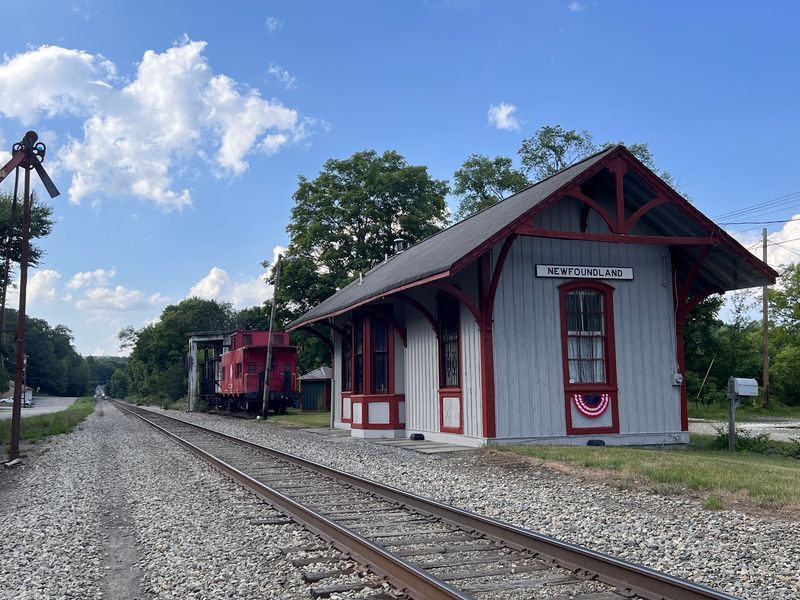
Directions are refreshingly simple. Look for the gazebo, and the station sits right behind it.
The Newfoundland RR Station is in Newfoundland, NJ 07435, in the Newfoundland section of Jefferson Township. It sits off Green Pond Road near Route 23, which makes it easy to reach from much of North Jersey.
Parking is easy too. There’s a nearby gravel lot where visitors can pull in.
If that lot is still buried in snow, Bigelow Road offers another place to park.
Once you’re here, keep the ground rules in mind. The restored station is not open to the public.
Enjoy it from the outside, and treat the building and relics with care.
The track is active freight line, so keep your distance from the rails. Kids should stay close and well back from the track at all times.
Plan for a short visit, maybe enough time for a stroll and plenty of photos. Spring through fall offers comfortable weather for wandering.
Winter can look lovely too, just watch your footing on any snow.
A Corner Of Jersey Far From The Turnpike
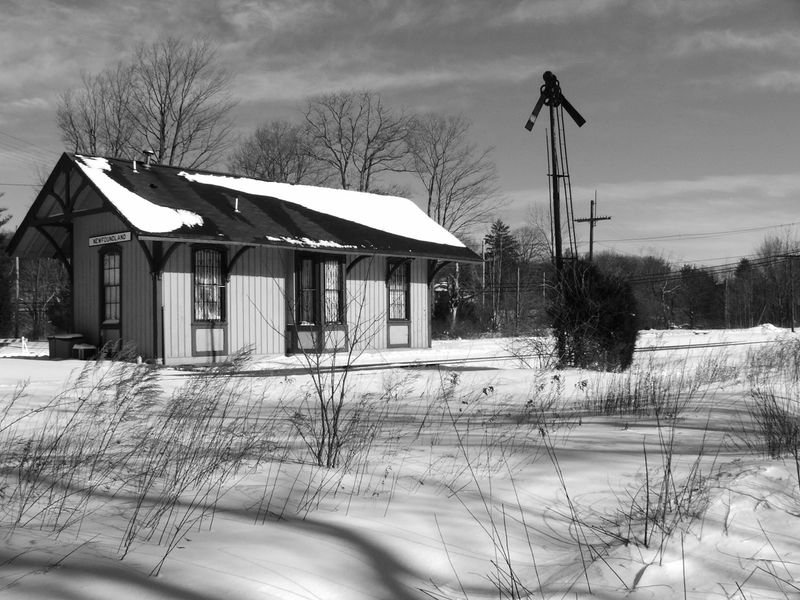
Newfoundland doesn’t feel like the New Jersey people joke about. And that’s exactly why it works.
The station sits in Jefferson Township, a wooded part of Morris County. A single track, a little depot and a caboose under the trees feel far removed from malls and traffic jams.
That setting helped the film too. The Station Agent needed a place that felt quiet and a bit out of the way.
Newfoundland played that role convincingly.
For proud New Jerseyans, there’s a sweet payoff here. An indie movie loved by critics and audiences was shot in our backyard.
Its main location still stands, cared for and free to see.
Some visitors have a personal tie to the area too. One shared joy at returning after 55 years, with a family name matching nearby Bigelow Road.
Moments like that give the spot real heart.
Bring a slower mindset. Listen for trains, notice the trees and enjoy the calm.
It’s the kind of outing that reminds you New Jersey still has plenty of quiet corners worth knowing.
Watch The Movie First, Then Go Say Hello
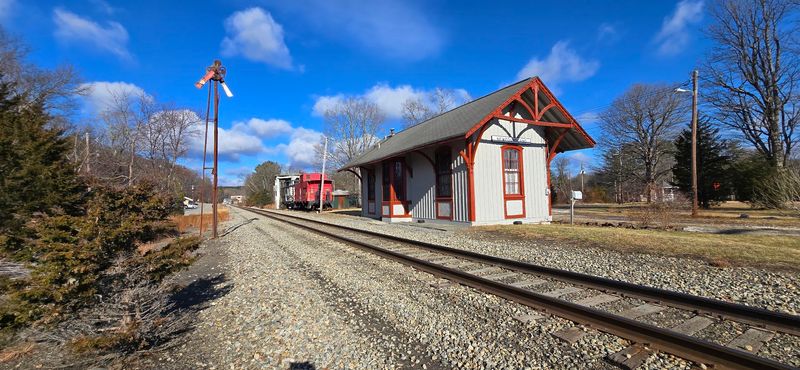
Homework rarely sounds this fun. Watch The Station Agent before you go.
Fans repeat that tip often, and it makes sense. The depot is lovely on its own.
But knowing Finbar’s story turns a quick stop into something more meaningful.
After that, the visit almost plans itself. Park, find the gazebo, admire the restored depot and say hello to the red caboose.
Wander past the phone booth, the crane car and the old water tower supports.
If a freight train passes, consider it a lucky bonus. Keep a safe distance and enjoy the show.
I believe this is one of the sweetest low-cost outings in New Jersey. It’s free, it’s easy and it connects a great film to real history.
Few places offer both in such a small package.
Is it a full-day destination? Not really.
Pair it with a scenic drive or another nearby stop. But as a pilgrimage, it delivers exactly what fans hope for.
A tiny 1872 depot, a quiet movie with a big heart and a track still in use. That’s a pretty good reason to hit the road.