You turn a corner in a busy Texas city, expecting nothing but traffic, glass towers, and maybe a spot to grab lunch. Then you hear it before you see it, a deep roar that sounds like a river where no river should be.
A giant wall of water rises up, sending a cool mist over everyone nearby, and suddenly the whole day feels different. It costs nothing to walk in, and it might just become your favorite surprise stop in the Lone Star State.
A Waterfall Hiding Among Houston Skyscrapers
Picture the Uptown district of Houston, with shoppers heading to the Galleria and cars crowding Post Oak Boulevard. Right in the thick of it, at 2800 Post Oak Blvd, sits Gerald D.
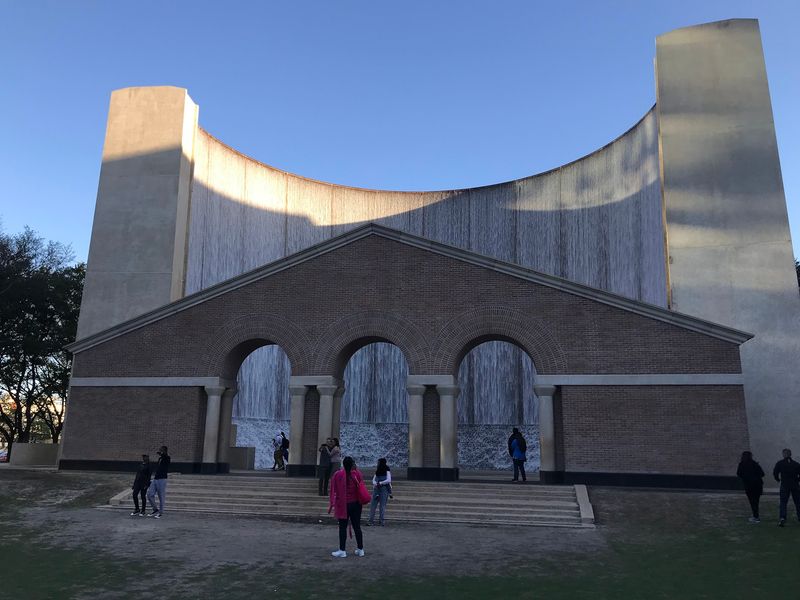
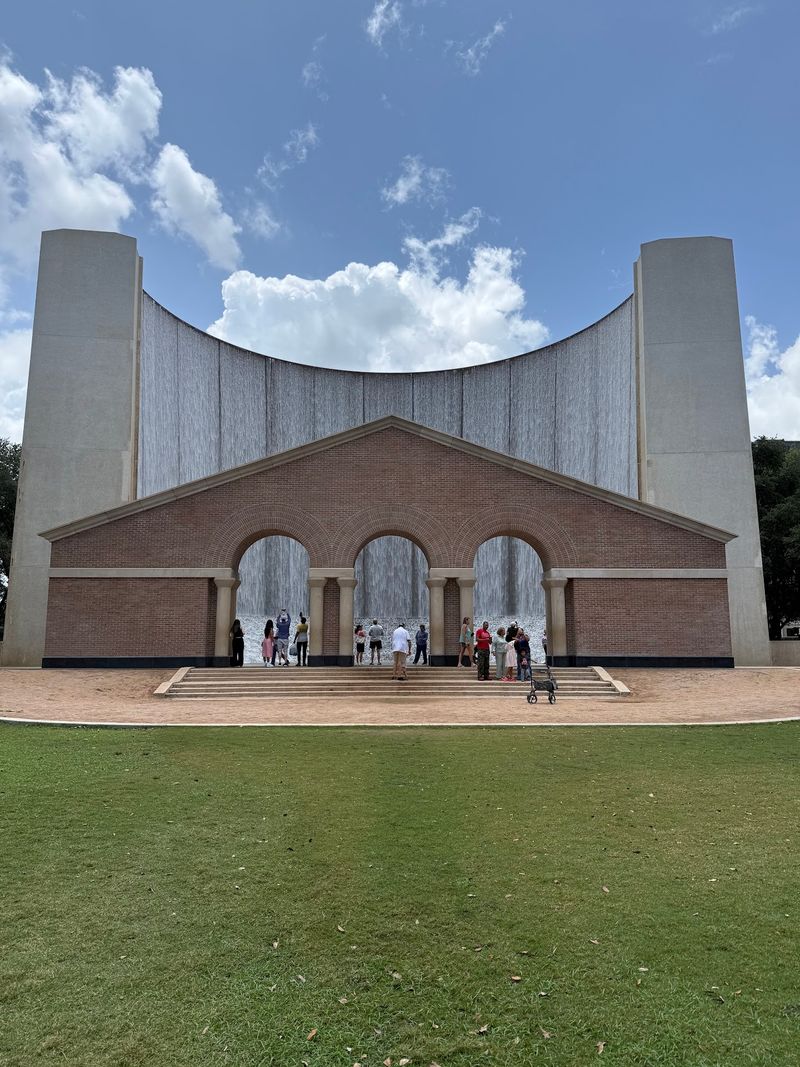
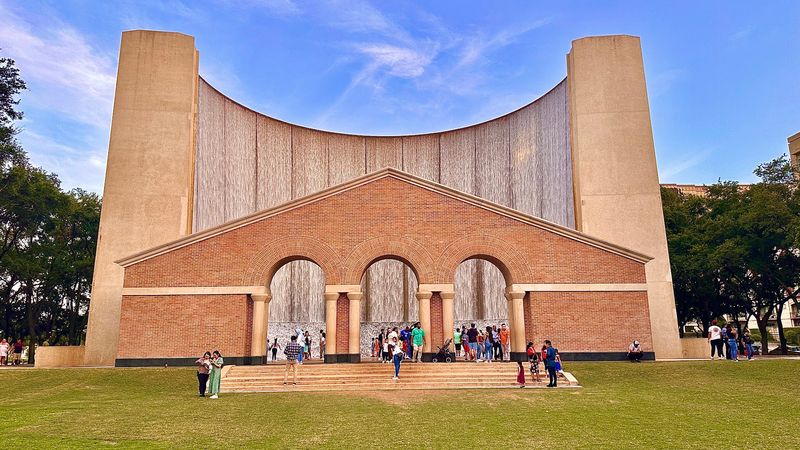
Hines Waterwall Park. It is a public green space built around one star attraction, a 64-foot fountain shaped like a horseshoe.
The park sits between Hidalgo Street and Westheimer Road, tucked beside the soaring Williams Tower. From the street, you mostly see trees and a long lawn.
Walk a little farther, though, and the roar of falling water starts to take over.
Visitors often describe the feeling as surreal, like stumbling onto a little slice of calm in the middle of concrete. Families, photographers, couples, and curious drivers passing through all end up here.
Some folks even admit they were just cruising by, spotted it, and pulled over on a whim.
Entry is free, and the grounds are open daily. That makes it one of the easiest wins on any Houston day trip, whether you live across town or drove in from the Hill Country.
Few places in Texas give you this much wow without asking a dime for the gate.
Built in 1985 to Match a 64-Story Tower
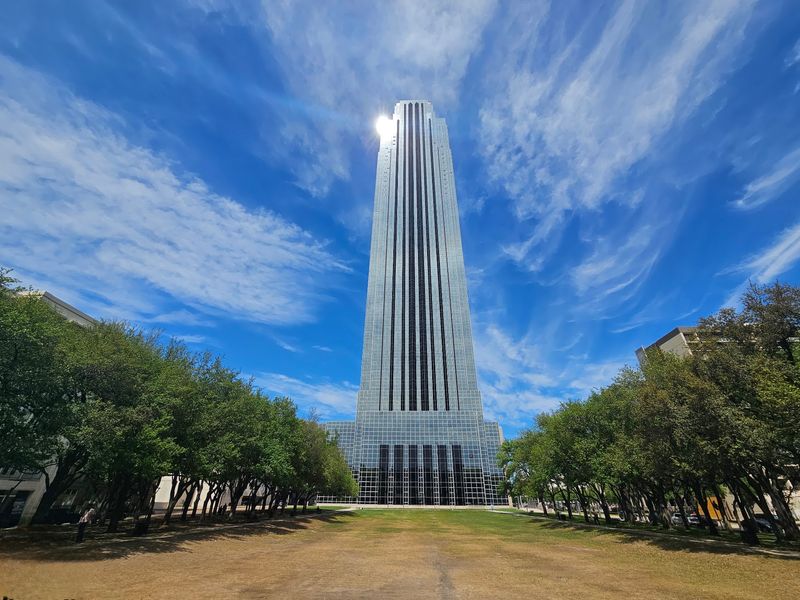
Here is a fun detail that makes people grin: the fountain is 64 feet tall on purpose. The height mirrors the 64 stories of the tower next door.
Back then it was called Transco Tower, and today it carries the Williams name.
Famed architects Philip Johnson and John Burgee designed the waterfall, and the plans came together in 1985. It was meant as a showpiece for the skyscraper, a kind of grand front porch for the office tower.
Developer Gerald Hines, whose Houston company built projects around the world, was behind the tower, the fountain, and the nearby Galleria.
Think about that for a second. One local developer shaped the skyline, the shopping, and the city’s favorite fountain all at once.
That kind of Houston ambition is part of what makes the place feel so rooted in Texas.
The tower remains one of the tallest in the city, and the waterfall still answers it like a loyal sidekick. Stand at the base and look up from water to glass.
The connection between the two starts to make perfect sense.
How a Private Fountain Became Everyone’s Park
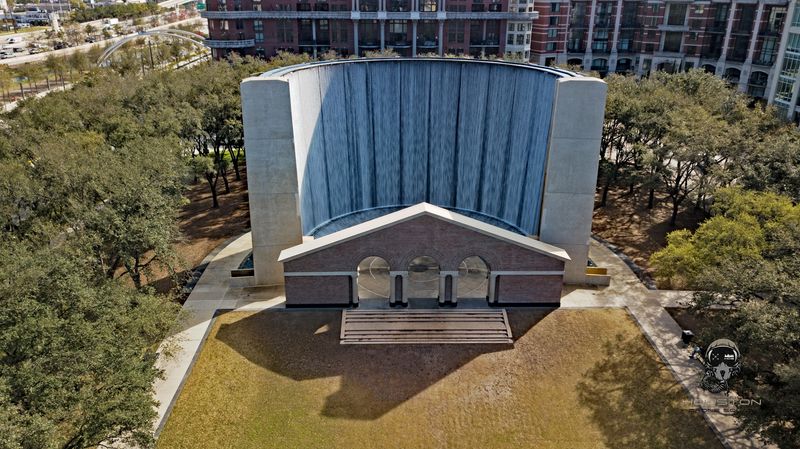
Not every corporate landmark ends up belonging to the public. This one did, and Houstonians are better for it.
In 2008, the Uptown Houston Tax Increment Reinvestment Zone, a semi-governmental group, bought the fountain and the land around it.
The goal was simple: keep the park free and open for everyone, for good. A year later, in 2009, it was renamed to honor Gerald D.
Hines, the developer who started it all. The name stuck, though plenty of locals still just call it the Water Wall.
That decision matters more than it might seem. Many grand plazas tied to office buildings slowly fade or close off over time.
Here, the opposite happened, and the space became one of the most photographed sites in the city.
Families who have been coming for decades say it still feels special. Some call it a part of their family history, a backdrop for birthdays, graduations, and quiet Sunday walks.
A fountain that started as a building feature now feels like a hometown treasure.
Eleven Thousand Gallons Every Minute
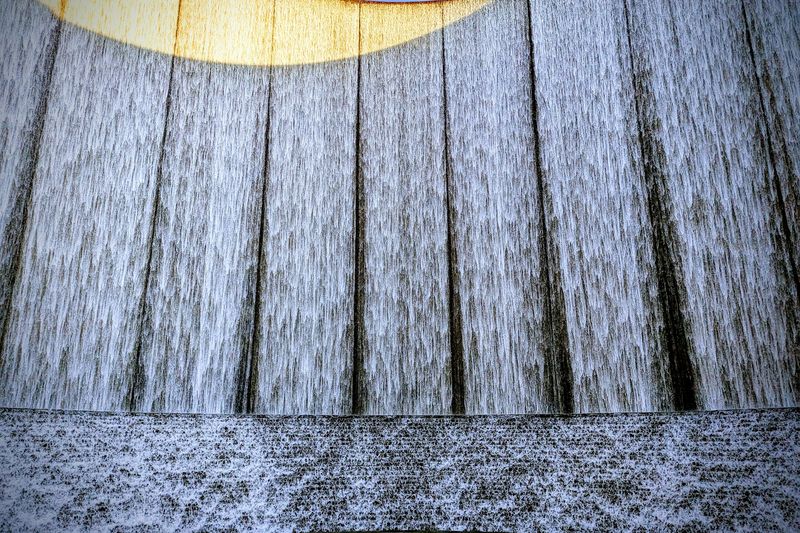
Eleven thousand gallons. Every single minute.
That is how much water tumbles down the Waterwall, and visitors regularly say the number sounds unbelievable until they see it in person.
The water flows down both the inner and outer surfaces of the horseshoe in thick, rippling sheets. It is recycled rather than wasted, filtered through the system again and again.
Roughly 80,000 gallons pass through the filters about every three and a half hours.
Up close, the motion is almost hypnotic. Ridges on the wall break the water into lines that shimmer as they fall.
Kids tend to stare, grown-ups pull out their phones, and nobody seems in a hurry to leave.
The fountain typically runs from early morning into the evening, though schedules can shift. Occasionally the water gets turned off for cleaning.
If you are planning a special photo session, a quick call to the park office at 713-850-8841 could save a disappointing trip.
Black Obsidian and a Roman Stage
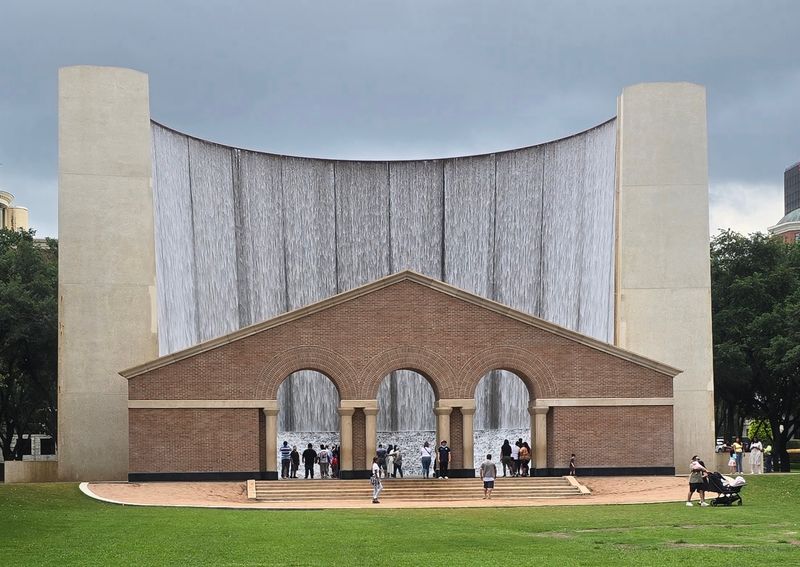
Architecture fans, this one is for you. The inside of the horseshoe is coated in black obsidian aggregate.
Against that dark surface, the white water practically glows.
In front of the fountain stand three archways. They form what designers call a scaenae frons, pronounced roughly skay-nigh fronz.
The idea comes from the permanent stage backdrop of an ancient Roman theater.
So when you step through those arches, you are walking onto a stage of sorts. The waterfall becomes the show, and every visitor gets a front-row seat.
It is clever, a little theatrical, and very much in keeping with Philip Johnson’s bold style.
Architecture comes up again and again when people talk about this park. Even folks who never think about design find themselves noticing the curves and contrasts.
It is proof that a smart idea from 1985 can still feel fresh decades later.
The Mist That Beats Houston Heat
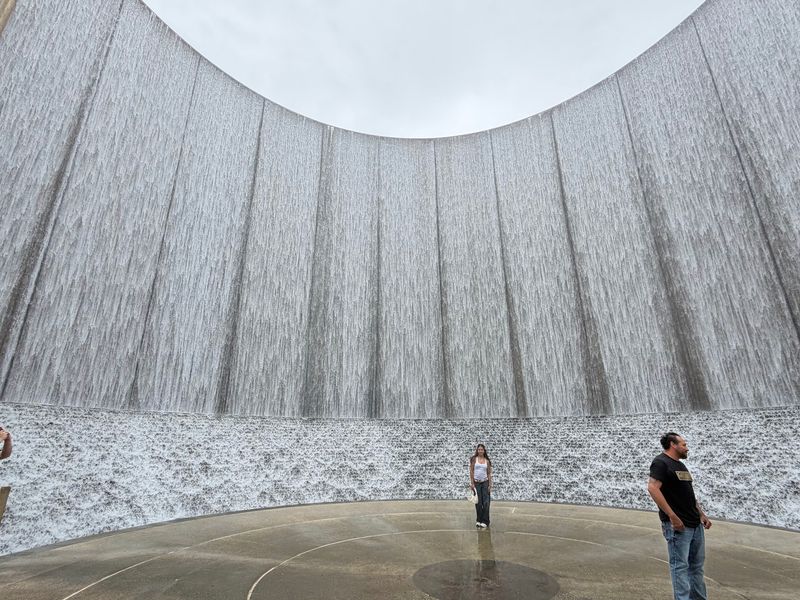
Fair warning: you are going to get damp. Step inside the curve of the wall and a fine spray drifts over you almost right away.
On a sticky Houston afternoon, that is the best news you will hear all day.
Plenty of visitors call the mist a lifesaver during summer trips. They show up sweating from the parking walk and leave refreshed.
One family noted it kept everyone cool during an outdoor photo shoot that might otherwise have been miserable.
Closer means wetter, of course. Some folks get light drizzles on their faces, while others come away with spotted shirts.
Kids usually treat it like a bonus splash zone.
A few easy tips help. Protect your phone or camera lens with a cloth, and skip the suede shoes.
In peak summer, early morning or evening visits tend to feel most comfortable.
A Football Field of Lawn Under Live Oaks
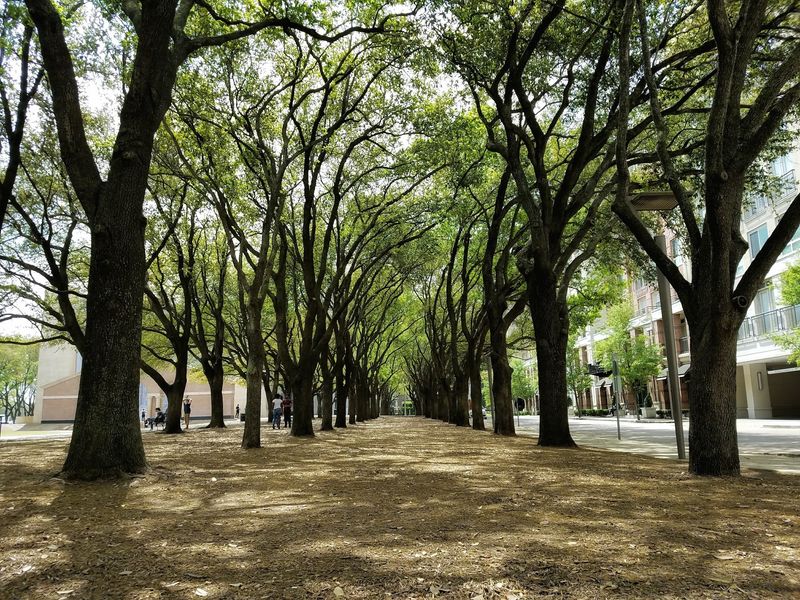
Before the waterfall ever comes into view, the lawn sets the mood. Stretching around 360 feet, it is about the length of a football field.
Ballgames are not allowed, which keeps things relaxed.
Rows of Texas live oaks line both sides, forming a shady canopy over wide sidewalks. Counts vary depending on the source, but either way, there are more than a hundred trees.
Their branches soften the hard edges of the surrounding high-rises.
Shade is a big deal in Houston, and these trees deliver. You can stroll slowly, sit on a bench, or stretch out on the grass.
Visitors frequently praise how well the grounds are kept, from the trim lawn to the tidy paths.
The walk itself builds anticipation. With each step, the roar grows louder until the fountain finally fills your view.
It is a simple design trick, and it works every time.
Picture-Perfect Moments for Every Occasion
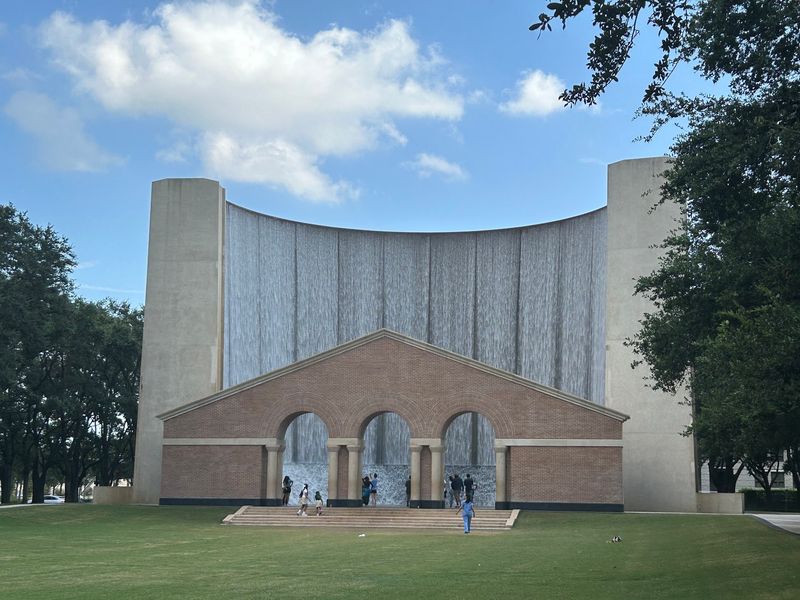
Bring the camera, because everyone else will. Photo opportunities may be the single most talked-about part of the park.
Graduation portraits, engagement shoots, family snapshots, and quinceañera-style celebrations all happen here.
The huge curved wall makes a dramatic backdrop that works for wide shots and close portraits alike. Photographers also like the oak-lined paths, the benches, and the views toward nearby buildings.
One parent described finding great angles all over the grounds, not just at the fountain.
Timing helps. Weekday middays can be surprisingly quiet, with some guests reporting they had the place nearly to themselves.
Weekends bring bigger crowds, so arrive early for cleaner frames.
Out-of-town guests love it too. Locals often bring visitors here as a must-see before they leave Houston.
It is the kind of picture that says you were really there.
After Dark, the Water Glows
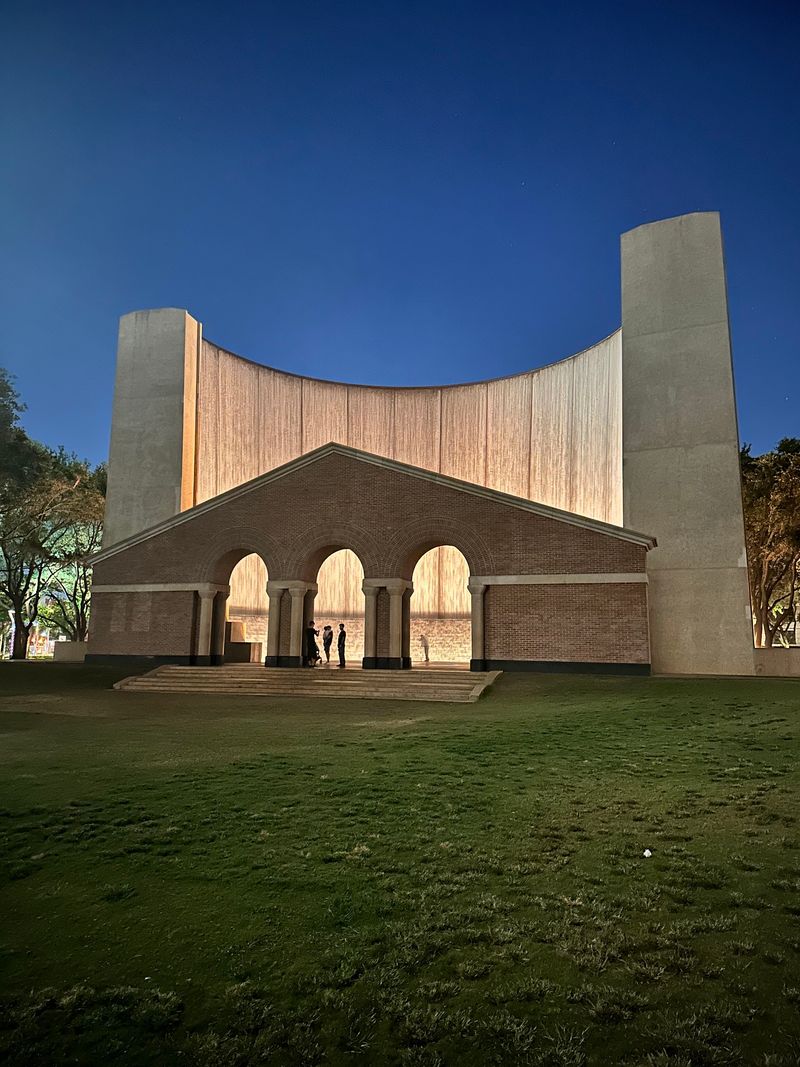
Sunset changes everything here. As the sky darkens, lights come up and the falling water takes on a soft glow.
The whole space starts to feel more like a stage set than a city park.
Evening visits bring cooler air, which matters a lot from May through September. The mist feels gentler, the crowds can thin, and the sound seems even louder against the quieter streets.
Couples often linger on the lawn after dinner nearby.
Photographers chase this time of day too. The lit water against a dusky sky makes for striking shots without harsh shadows.
A tripod can help, though phones do a solid job now.
The park lists hours from 9 AM to 8 PM daily, while the fountain itself has been reported to run a bit longer. Schedules may change, so check before planning a late visit.
Even a short evening stop leaves a lasting impression.
Room for Grandkids, Picnics, and Leashed Pups
Grandparents with little ones, college friends, folks walking the family dog: this park welcomes them all. Family-friendly comes up constantly when people describe it.
One grandparent mentioned the grandkids loved it as much as the grown-ups did.
Picnics are a favorite move. Spread a blanket under the oaks, pack sandwiches from home, and let the white noise of the waterfall do its thing.
It is an easy, budget-minded outing in a city full of pricey options.
Well-behaved dogs on leashes are welcome too. Pups seem just as curious about the roaring water as the kids.
Bring water for them on hot days.
The vibe stays peaceful even when it is busy. People describe celebrations, families, and quiet loners all sharing the space comfortably.
That easygoing mix is a big part of the charm.
Parking Smarts That Save Your Day
Listen closely, because this tip may save you real money. Visitors repeatedly warn against parking in the front areas or unmarked spots near the park.
Towing happens quickly, and guests report fees well over a hundred dollars.
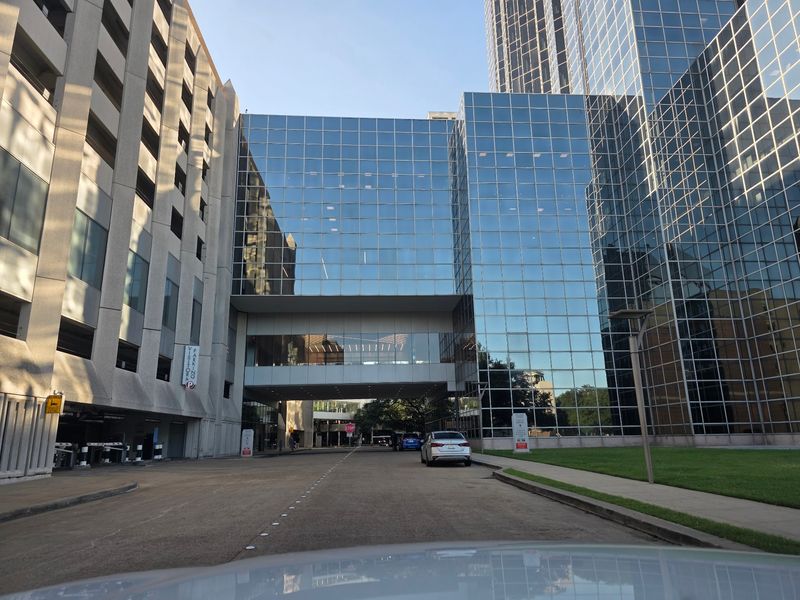
The smarter play is a garage. Paid public parking is available in the garage next to Williams Tower.
Some visitors mention around $5 for an hour, though rates can change.
Another popular option is parking at the Galleria, including the Nordstrom garage, and walking over. One visitor even spotted a free garage about a block away, so it pays to look around.
Metered street spots exist but fill fast.
Weekends and peak hours call for a little extra planning. Give yourself time to park and stroll in.
The short walk is far better than chasing a tow truck.
Hours, Costs, and Pairing It With the Galleria
Good news first: admission is completely free. Your only likely cost is parking.
In a world of ticketed attractions, that feels downright refreshing.
The park is listed as open every day from 9 AM to 8 PM. Hours could shift for maintenance or special events.
The office phone is 713-850-8841 if you want to double-check.
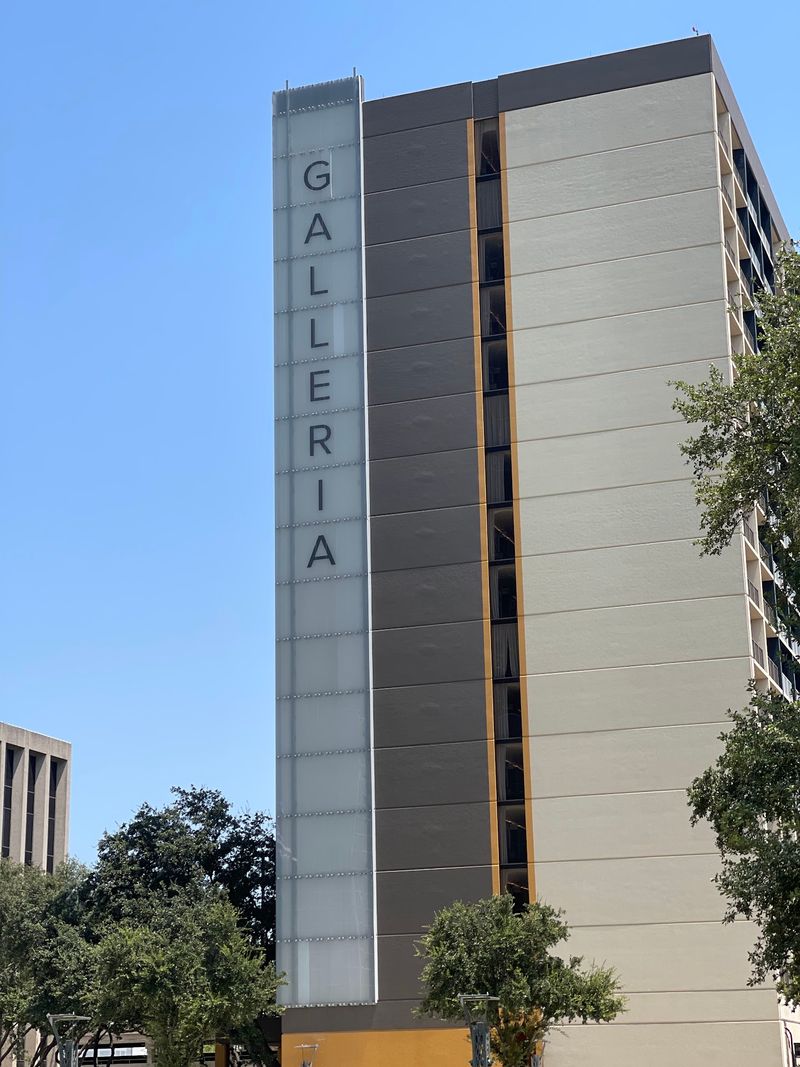
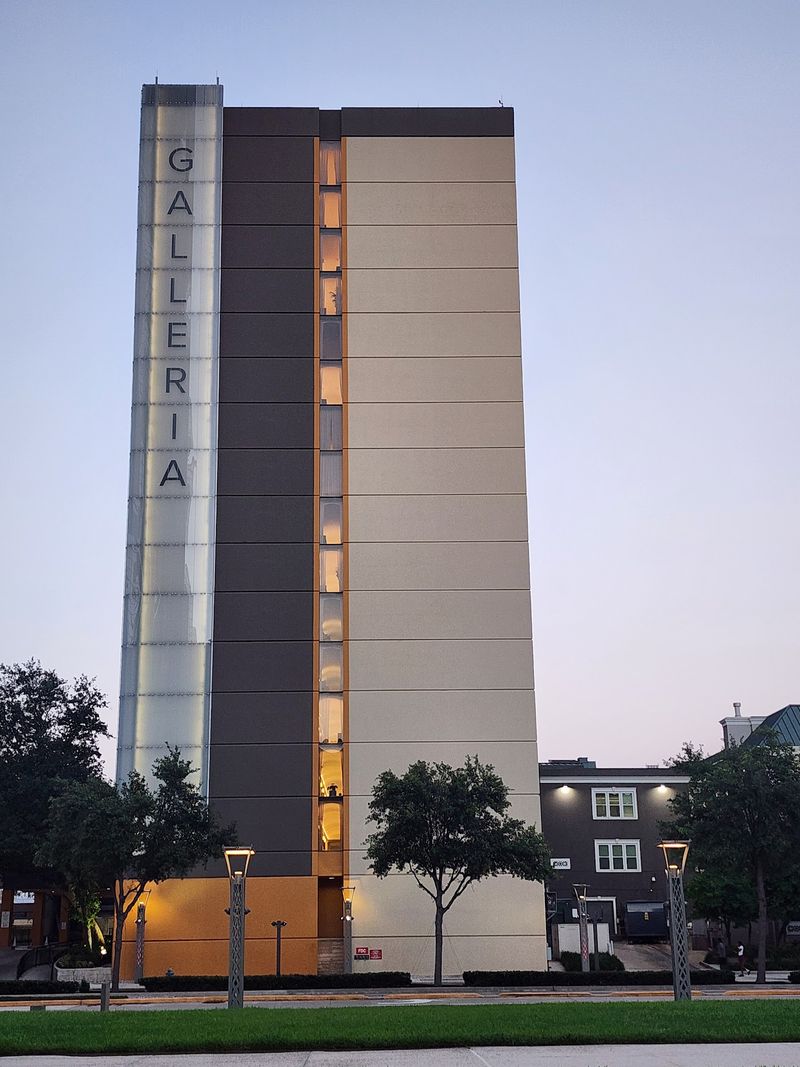
Since it sits steps from the Galleria, it pairs nicely with a shopping or lunch outing. Many visitors combine both, parking once and walking between them.
That makes it an easy add-on for a weekend drive into Houston.
Plan on 30 minutes for a quick look, or a couple of hours for a picnic and photos. Spring brings comfortable weather, while summer rewards early or late visits.
Holiday family trips work great too, especially when relatives want a classic Houston snapshot.
Why It Earns a Spot on Your Next Texas Drive
Some places shout for attention with neon and gimmicks. The Waterwall just keeps pouring, the same as it has since 1985.
No frills, no admission booth, no trendy reinvention.
That steady, unbothered quality is exactly why people keep coming back. Couples who have visited for years say it never disappoints.
First-timers often walk away calling it one of the coolest things they have seen in Texas.
It offers a little bit of everything: history, bold design, cool mist, shady oaks, and a free seat at one of Houston’s great shows. Park smart, bring a towel for your lens, and give yourself time to just listen.
Next time a road trip brings you through Houston, swing by Post Oak Boulevard. You may only plan a quick stop.
Odds are you will stay longer than you expected.