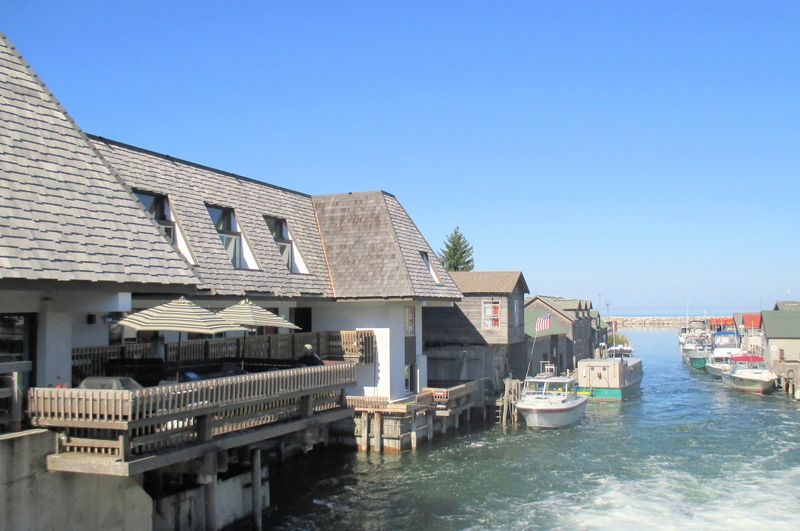
Two working fish tugs named Joy and Janice Sue still chug out of a tiny river harbor to check commercial nets. They aren’t props.
A nonprofit owns them, and they head out once or twice a week from spring through fall.
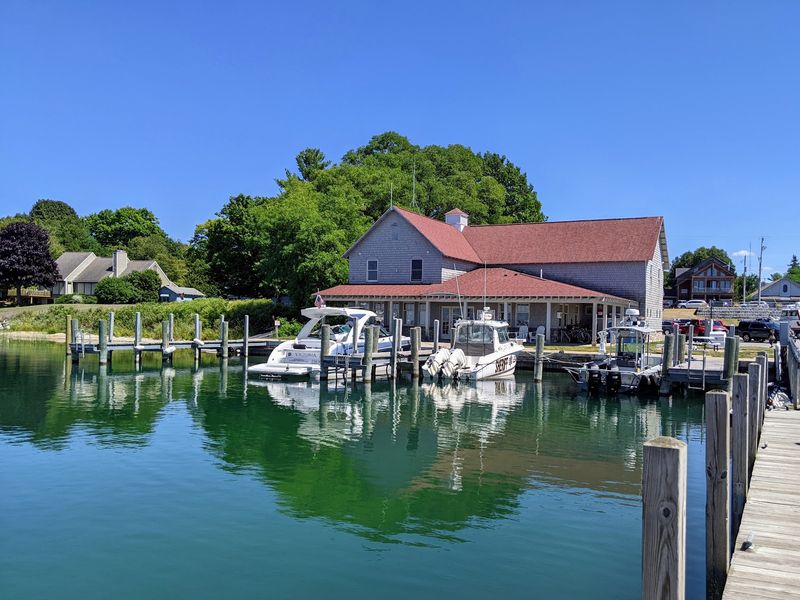
Around them sit weathered gray shanties, old smokehouses, and docks that hang right over the water. Some shanties still serve fishermen.
Others now hold galleries, candy, sandwiches, and smoked fish.
I like how this little corner of northern Michigan refuses to become a museum behind glass. You can wander the docks at any hour of any day, and the fishing life keeps going right beside you.
Then there’s the ferry dock down the road, the gateway to two wild islands. It comes with a 2026 twist worth knowing.
Ready to see why this village keeps tugging people back?
A Pocket-Sized Harbor Where Two Lakes Shake Hands
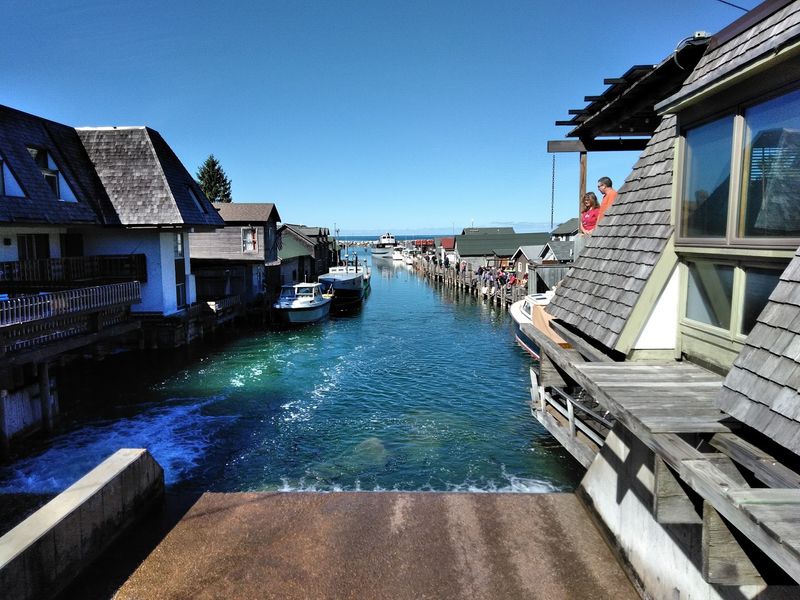
Leland is small enough to miss if you blink on M-22. Its waterfront district, officially called Fishtown, is the reason you shouldn’t blink.
The village sits in Leelanau County, on the northwestern edge of Michigan’s Lower Peninsula. Leland is an unincorporated community, and the 2020 census counted just 410 residents.
What makes the spot special is a short, busy river. The Leland River, also known as the Carp River, links Lake Leelanau to Lake Michigan.
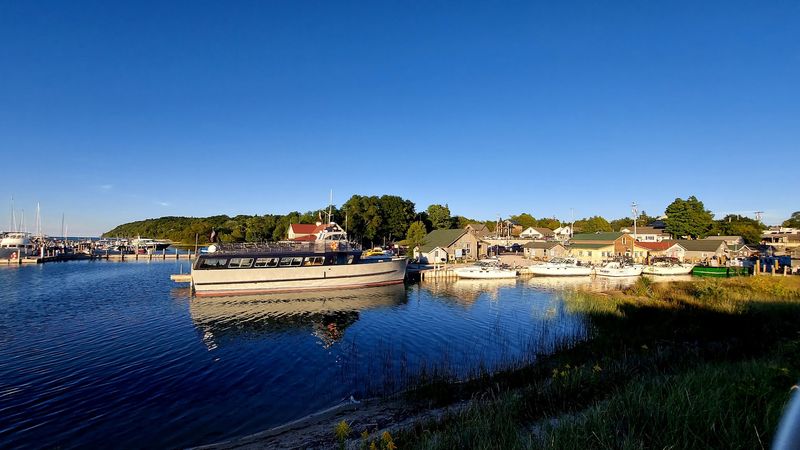
Fishtown lines that river right where it meets the big lake. Weathered shanties, smokehouses, and docks crowd its banks in a tight, photogenic cluster.
Here’s the part that wins people over. Fishtown is still a working waterfront and one of the few active fishing districts left on the Great Lakes.
So the boats you see aren’t parked for decoration. They go out, they come back, and the nets they haul are real.
Leland also serves as the departure point for ferries to the Manitou Islands, at least in normal years. More on that wrinkle later, because 2026 brings a big exception.
Nets, Immigrants, and an 1853 Dam Behind the Story
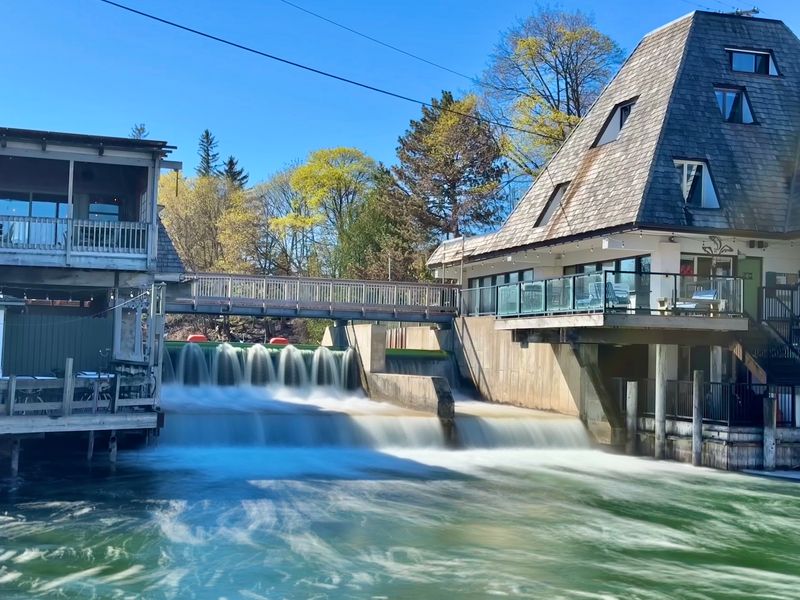
Long before anyone painted a shanty, Native Americans lived and fished along this shoreline. They knew the value of this river mouth first.
European settlement arrived in the 1850s. Scandinavian and other European immigrants built a thriving commercial fishing industry here.
In 1853, Antoine Manseau built a dam across the Carp River. That dam became a major step in the growth of the early settlement.
The river below the dam turned into a natural workspace. Fishermen set up shanties, smokehouses, and docks to process and sell their catch.
Funny enough, the famous nickname came much later. The name Fishtown came into common use around the 1940s.
I love that the label stuck because it was simply true. Nobody needed a marketing team when the whole place smelled like the day’s work.
That immigrant thread matters to anyone who cares about Michigan heritage. Families from across the ocean shaped this harbor, and their trade still runs here today.
Few places keep that kind of continuity. Here, the past isn’t just remembered, it still clocks in.
How a Nonprofit Kept the Shanties From Slipping Away
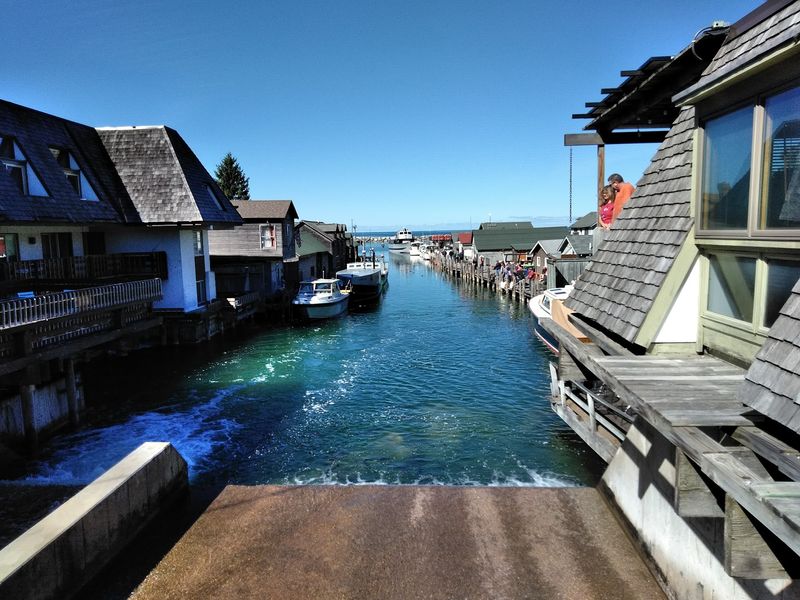
Historic waterfronts often vanish one condo at a time. Fishtown dodged that fate thanks to a group of people who decided it was worth saving.
The Fishtown Preservation Society formed in 2001 as a nonprofit. Its mission is to protect the integrity of the historic site and keep it open to the public.
In 2007, the society acquired the Fishtown property. That purchase gave the village’s most famous stretch a steady caretaker.
Official recognition has piled up too. Leland became a Michigan State Historic Site in 1973.
Fishtown first landed on the National Register of Historic Places in 1975 as part of the Leland Historic District. In 2022, it earned its own separate listing as the Fishtown Historic District.
That’s a lot of paperwork for a cluster of gray shanties. Then again, few gray shanties carry this much history.
I believe that public access piece is the real gift. Plenty of preserved sites lock their gates at five, but this one stays open to everyone.
It feels less like a museum and more like a shared front porch.
Joy and Janice Sue Still Go Out to Check the Nets
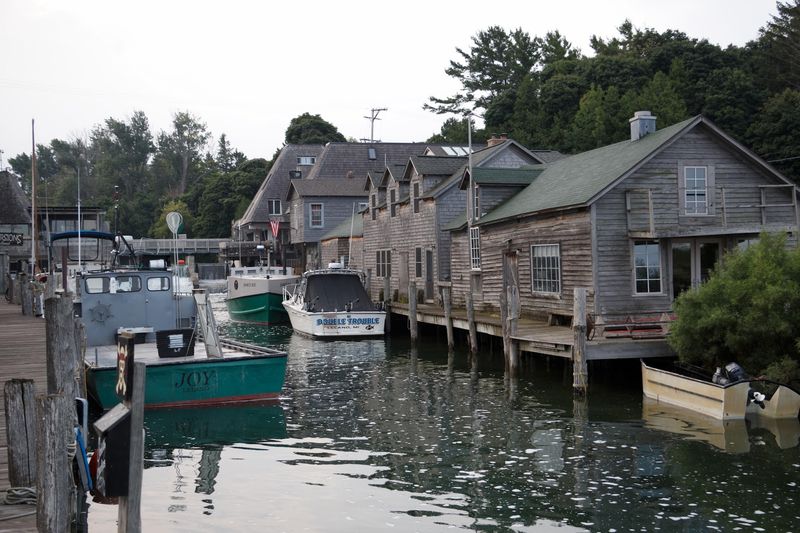
Most boats with names this sweet are pleasure cruisers. Joy and Janice Sue are commercial fish tugs, and they have jobs to do.
The Fishtown Preservation Society owns and operates both tugs. They’re fully working vessels, not floating exhibits.
From spring through fall, the tugs typically head out once or twice a week. Their task is checking commercial fishing nets on Lake Michigan.
That schedule means catching one in motion takes a little luck. Timing can vary with weather and the fishing season, so treat a departure as a bonus.
Even tied up, the tugs are the stars of the harbor. Their enclosed hulls look nothing like the sleek sailboats you’ll spot elsewhere on Michigan’s coast.
Great Lakes fish tugs were built for rough water and cold work. Seeing two still in service feels like spotting a vintage truck that never stopped hauling.
Kids tend to understand the appeal instantly. A boat that actually catches fish beats a boat that just sits there.
Grab a spot along the docks and watch the river. You might get the full show.
Gray Shanties That Wear Their Age Like a Badge
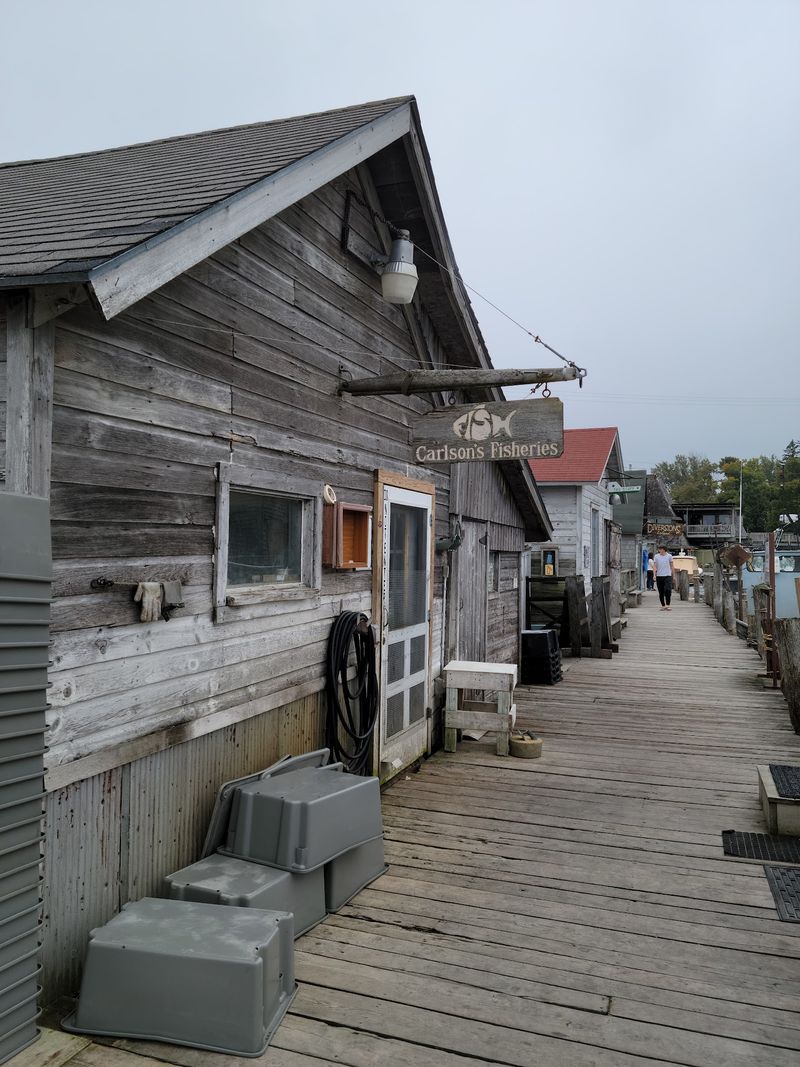
Paint is optional in Fishtown. The shanties wear a silvery, weather-beaten look that only decades of lake wind can create.
These buildings once handled the gritty side of fishing. Smokehouses, net sheds, and work shanties lined the river for processing the catch.
Many still stand on overhanging docks above the water. That setup made sense for fishermen who needed boats, nets, and fish within arm’s reach.
Today, a lot of the shanties have new roles. Preserved and adapted, they now hold shops, art galleries, and places to eat.
What I appreciate is that the makeover stayed gentle. The outsides still look like working buildings rather than shiny boutiques pretending to be old.
Fishing nets still appear around the docks too. Those details keep the scene honest and remind you whose waterfront this really is.
Photographers will have a field day with the textures. Weathered boards, rope, and river light make almost every angle look like a postcard.
Just remember people still work here. A little patience around the docks goes a long way.
Smoked Fish Straight From an Active Fishery
Some souvenirs come in a gift bag. The best ones in Fishtown come wrapped from a working fishery.
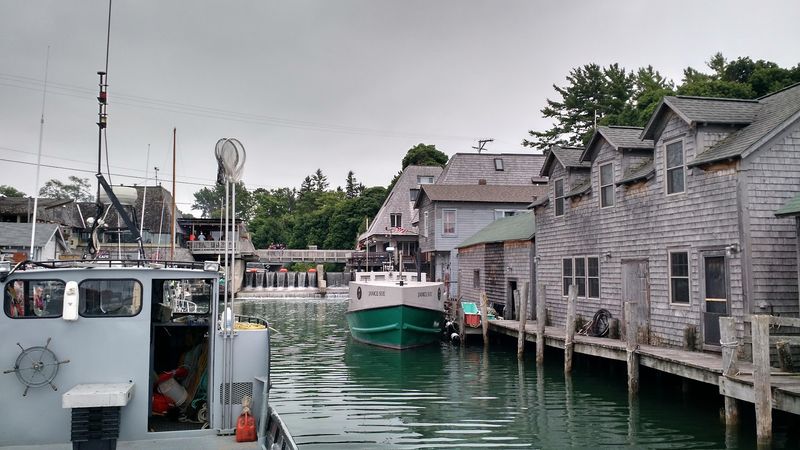
Carlson’s Fishery operates right in the historic district. It’s an active commercial fishery, which keeps the harbor’s original purpose alive and well.
That matters more than it might seem. Plenty of old fishing towns kept the buildings but lost the fishermen.
Here, the trade and the setting still match. You’re buying from a business tied to the same waters you’re staring at.
Smoked fish has deep roots along Michigan’s northern shoreline. The smokehouses in Fishtown exist because preserving the catch was always part of the job.
A stop at the fishery makes a natural pairing with a dock stroll. Think of it as tasting the history instead of just reading the plaques.
Product selection can change with the season and the catch. Checking what’s available that day is the safest plan.
Cooler in the car? Smart move if you’re driving home from northern Michigan.
Nobody wants a long ride with a warm fish.
Sandwiches, Seafood, and a Candy Counter Worth the Detour
Lake air builds an appetite fast. Luckily, Fishtown keeps a few good answers within easy walking distance.
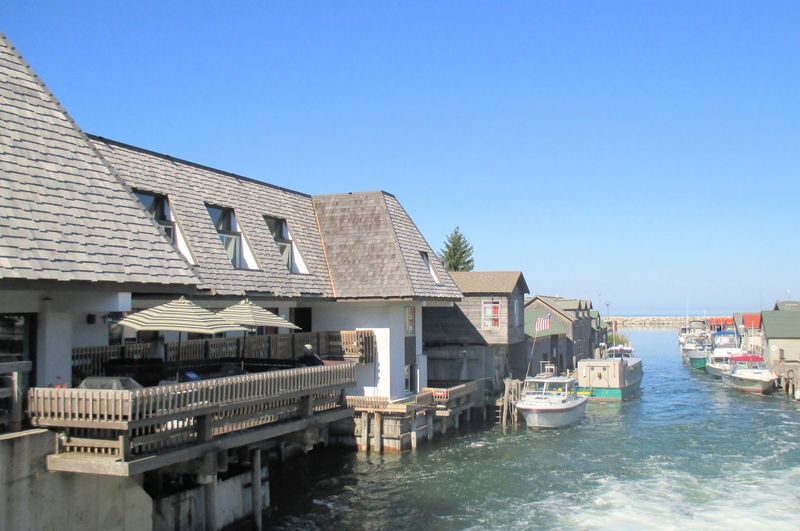
The Cove serves fresh seafood, salads, and sandwiches in the heart of the district. Eating near the water where fish are actually caught feels pretty fitting.
For something grab-and-go, the Village Cheese Shanty is known for its sandwiches. It’s a popular pick for packing an island picnic in a normal ferry season.
Then there’s the Dam Candy Store. Yes, that’s the name, and yes, it pairs perfectly with the dam just upstream.
The shop leans into nostalgic sweets. It’s the kind of stop that turns adults into kids comparing loot on the dock.
I can’t imagine a better dessert plan after a fish-heavy lunch. A paper bag of old-school candy just fits the setting.
Hours and menus can shift through the seasons. Many waterfront businesses in northern Michigan scale back after summer, so a quick check ahead may save disappointment.
Show up hungry, leave sticky. That’s a fair trade.
Boutiques and a Rotating Art Shanty Along the Boardwalk
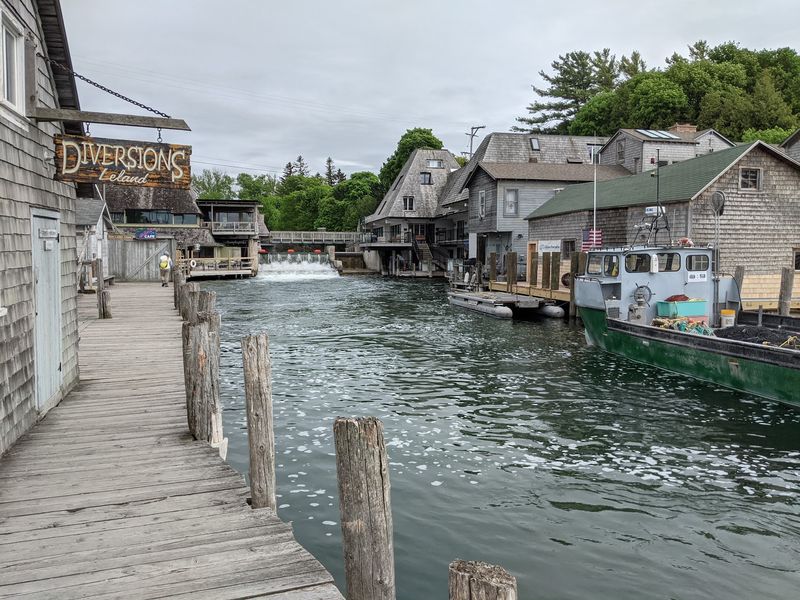
Shopping in a former fish shanty beats any mall corridor. The setting alone makes browsing feel like a treasure hunt.
Fishtown’s general address is 203 E Cedar St, Leland, MI 49654. The Fishtown Preservation Society keeps its offices at that same spot.
From there, the shops spread along the river. Wild Lettie and Leland Gal are two of the boutiques found in the district.
Art lovers get their own stop too. The Fishtown Art Shanty hosts a rotating gallery, so what’s on the walls can change.
That rotation gives repeat visitors a reason to poke their heads back in. It’s a nice twist for a place rooted in tradition.
Don’t overlook Leland Blue while you browse. This bluish slag is a man-made byproduct of early iron smelting, and it washes up on local beaches.
Its colors range from blue and purple to gray and green. People collect it and turn it into jewelry.
A piece of Leland Blue makes a souvenir with a real backstory. Far better than another fridge magnet.
The River Rushes, the Docks Creak, and Lake Michigan Waits
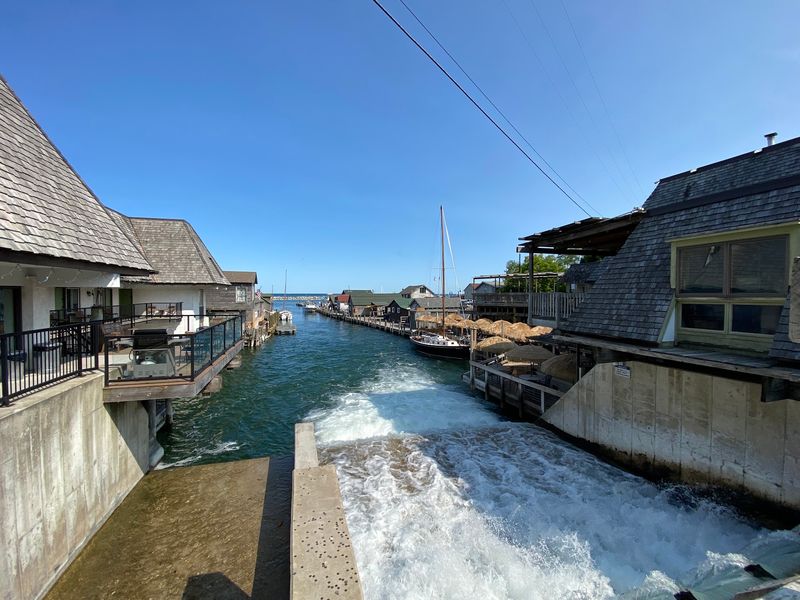
Sound comes first here. Water spills over the dam and hurries past the shanties toward Lake Michigan.
The Leland River is short, but it carries plenty of personality. It connects inland Lake Leelanau with the big lake in one quick run.
Fishtown’s docks follow that run closely. Strolling them puts you right above the current with boats, nets, and shanties on every side.
Views open up toward Lake Michigan as you walk. On a clear day, that blue horizon makes the little harbor feel even cozier.
Fishing nets still show up around the docks. They’re quiet proof that this river remains a workplace, not just a pretty backdrop.
Families with small kids should keep a hand nearby. Docks over moving water and curious little feet deserve some caution.
Sunset can be an especially good time for a slow loop. The weathered boards seem to soak up the warm light.
No ticket is needed for any of this. The river show runs for free, every single day.
Riverside Rooms and a Museum Two Blocks Away
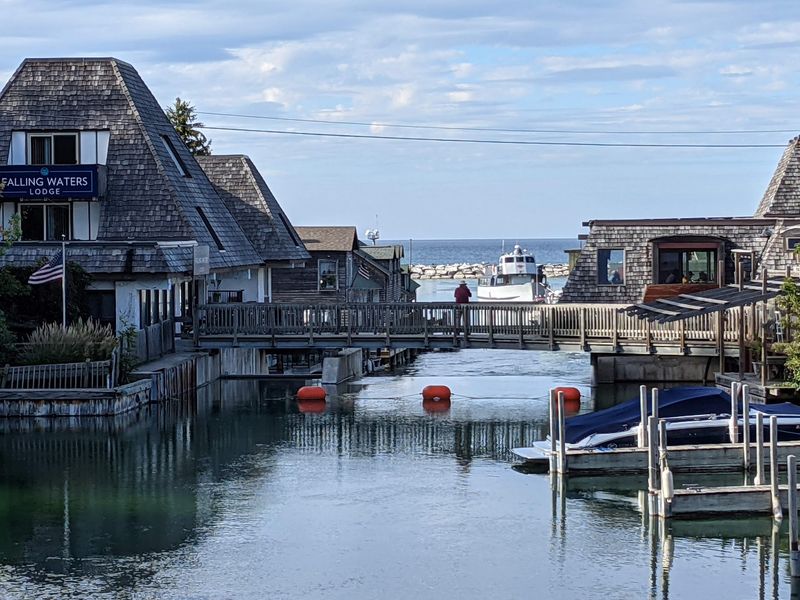
Want to fall asleep to the sound of the dam? Falling Waters Lodge sits directly on the river within Fishtown.
The lodge offers views of the waterfalls and Lake Michigan. That’s about as close to the action as an overnight stay gets.
Staying the night also lets you see the harbor after day-trippers head home. Early mornings bring a quieter Fishtown, which suits slow coffee and dock walks.
History fans have another stop within easy reach. The Leelanau Historical Society Museum sits about two blocks from Fishtown.
Its exhibits cover the county’s maritime heritage. That makes it a smart companion to everything you just saw on the docks.
I like pairing the two in one afternoon. The museum adds context, and the shanties make that context feel alive.
Hours at the museum and lodge availability can vary by season. Planning ahead is wise, especially during peak summer weeks in northern Michigan.
Either way, Leland rewards an unhurried pace. Two blocks never felt so full.
Two Wild Islands Wait Out on the Horizon
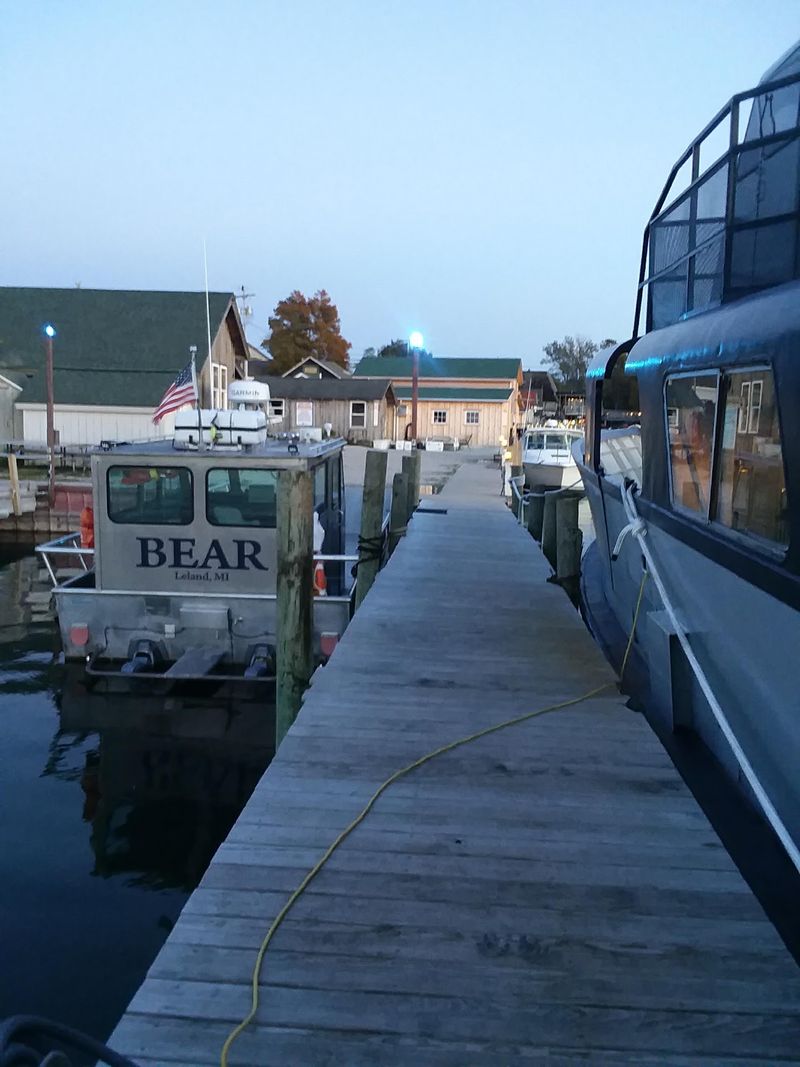
Look west from the harbor and two islands hover on the lake. North and South Manitou belong to Sleeping Bear Dunes National Lakeshore.
Manitou Island Transit runs the ferry service from Leland. Its dock sits at 207 West River Street.
In a normal season, boats operate from May to October. Day trips head to South Manitou, while North Manitou trips serve backpackers and overnight campers.
South Manitou is the friendlier introduction. Visitors can explore a lighthouse, hike trails, and see natural and cultural areas, with guided wagon tours available.
North Manitou is the wilder sibling. Its larger, rugged landscape suits experienced hikers and backpackers who like real solitude.
The pairing is what makes Leland unusual. Few villages let you buy smoked fish in the morning and stand on a wild island by lunch.
Packing a sandwich from the shanties before boarding was a classic move. It still will be once the ferries return.
And yes, there’s a catch for 2026. The next section explains it.
Know Before You Go: Hours, Seasons, and the 2026 Ferry Pause
Good news first. Fishtown is open to the public every day of the year, 24 hours a day.
That means a sunrise stroll or an off-season visit is fair game. Individual shops and restaurants keep their own hours, which can shrink outside summer.
The fish tugs work from spring through fall. Expect them to head out roughly once or twice a week, though weather may change plans.
Now the important update. For the entire 2026 season, the National Park Service has closed the docks on both North and South Manitou Islands.
As a result, Manitou Island Transit isn’t running island trips in 2026. Crews are building new docks better protected from sand buildup.
That work is expected to continue into 2027. Checking with the ferry operator before planning a future trip is a smart idea.
The upside? Leland itself still delivers a full day without the boat ride.
Fall can be a lovely window here too. Cooler air, fewer crowds, and color along the Leelanau Peninsula make the drive extra rewarding.
Why This Harbor Deserves a Spot on Your Michigan Day-Trip List
Plenty of towns sell a fishing village look. Leland still runs the real thing, nets and all.
Fishtown offers working tugs, weathered shanties, and a fishery that never quit. It’s living Michigan heritage with the doors left wide open.
History buffs get immigrant roots, an 1853 dam, and a 2022 historic listing. Shoppers get boutiques, Leland Blue, and a rotating art shanty.
Food lovers have seafood, sandwiches, and that gloriously named candy store. Island dreamers have a ferry to plan around once the new docks open.
I believe the best part is how unforced it all feels. Joy and Janice Sue don’t perform for anyone, and that’s exactly the charm.
Couples, families, photographers, and history fans all find something here. Even folks who just want to sit and watch a river will be content.
Skip the islands this year if you must. The harbor alone justifies the drive up M-22.
Go for the tugs, stay for the shanties, and come back for the ferry. Leland will be ready.