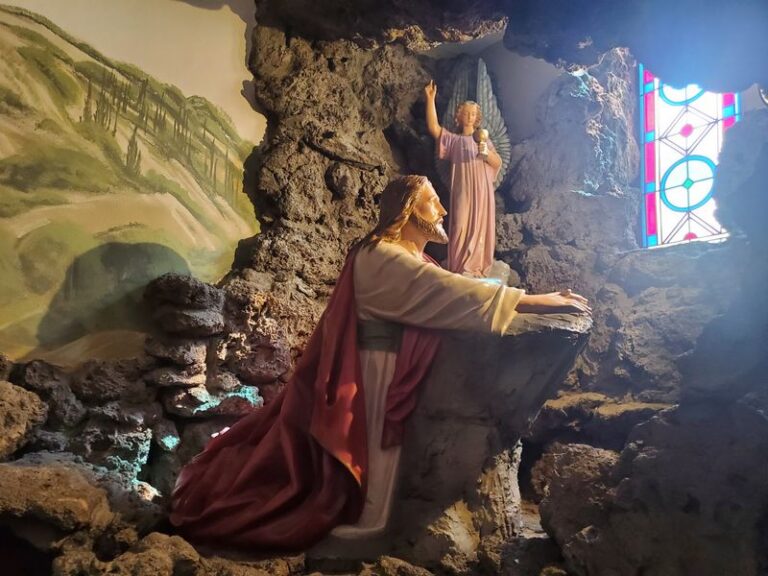
A Michigan museum holds roughly 100,000 ancient objects, and it doesn’t charge a single cent at the door. Wait, a world-class collection of Roman treasures, completely free?
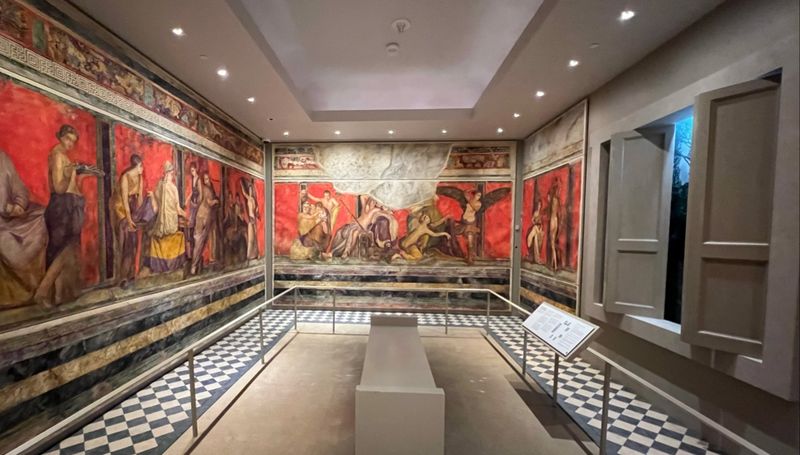
Inside, a giant recreation of a famous painted room from Pompeii glows in deep reds and golds. Nearby, display drawers slide open to reveal even more pieces from Rome, Greece, Egypt and the ancient Near East.
I like how personal it all feels. Glass bottles, clay lamps and carved stone sit just inches away, and many were dug up by university expeditions about a century ago.
I can’t imagine a better rainy-day plan for curious kids or history-loving grown-ups. No passport is required, and no plane ticket either.
So why do so many Michiganders still drive right past it without knowing what waits inside?
A Pocket-Sized Rome Sitting On A Michigan Campus
Roughly 100,000 artifacts live inside the Kelsey Museum of Archaeology, and admission is free for everyone. That alone deserves a road trip to Ann Arbor, Michigan.
The museum sits on the University of Michigan’s central campus as part of the College of Literature, Science, and the Arts. Its collections focus on the ancient Mediterranean, North Africa and the Middle East.
Not everything is on display at once, of course. A collection that size could fill a small town, so the galleries share carefully chosen highlights while the rest supports teaching and research.
Still, the public galleries pack a serious punch. You’ll find Roman glass, Greek pottery, carved stone, Egyptian objects and pieces from the Near East, all arranged so you can study them closely.
Entry works on a donation basis, which means you can give what feels right. Every gift helps support the museum’s exhibits and programs for future visitors.
I love the idea that ancient history sits a short walk from campus coffee shops and bookstores. It feels like Michigan’s best-kept classroom, only nobody hands you a quiz at the end.
That’s the kind of field trip worth repeating.
One Latin Professor’s Big Idea About Old Objects
Francis W. Kelsey taught Latin at the University of Michigan, but he wanted students to do more than read about the past.
He believed real objects could connect people today with people who lived thousands of years ago.
So he did something bold. Kelsey helped organize some of the university’s earliest archaeological expeditions across the Mediterranean and the Near East.
Those digs reached important sites in places like Egypt and Carthage during the 1920s. Thousands of artifacts eventually made their way back to Ann Arbor for study.
The museum officially took shape in 1928, shortly after Kelsey’s passing. Naming it in his honor made perfect sense, since his vision built the foundation of everything inside.
Keep an eye out for small touches that tell this backstory. Some display cases include old postcards and records from the excavations, which make the discoveries feel surprisingly close and human.
The museum is also open about where its objects came from. That honest approach adds real weight to the visit, because you learn how each piece traveled from a dig site to a Michigan gallery.
History, it turns out, has its own travel diary.
Stone Walls That Carry Their Own Stories

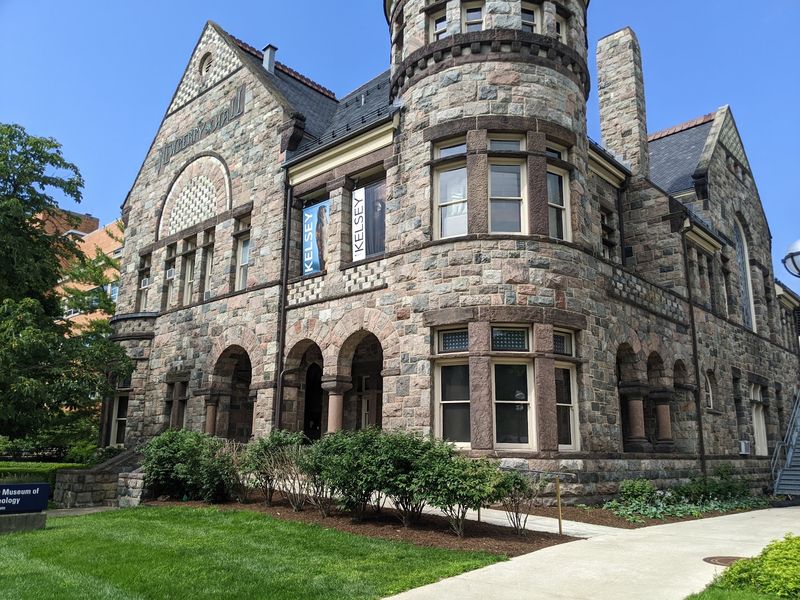
Old treasures deserve an old home, and Newberry Hall delivers. The historic stone building has housed the Kelsey Museum of Archaeology for generations.
Its sturdy arches and heavy masonry feel right at home among the university’s classic buildings. You might even pass it several times before realizing what’s tucked behind those walls.
Back in 2009, the museum opened the William E. Upjohn Exhibit Wing.
That addition gave the collection far more room to shine in modern gallery space.
The result is a nice blend of past and present. You enter through a building with real character, then explore bright galleries designed for close looking.
The galleries spread across two floors, so plan to climb a little. Upstairs spaces may occasionally close for renovation or new installations, which is part of a living museum’s rhythm.
I appreciate that the size never feels overwhelming. You can take your time without needing a map, a snack break and a nap halfway through.
That makes it a smart pick for anyone who loves museums but dreads marathon visits. Michigan has bigger museums, sure, but few feel this approachable.
You Will Stop In Your Tracks At The Villa Of The Mysteries
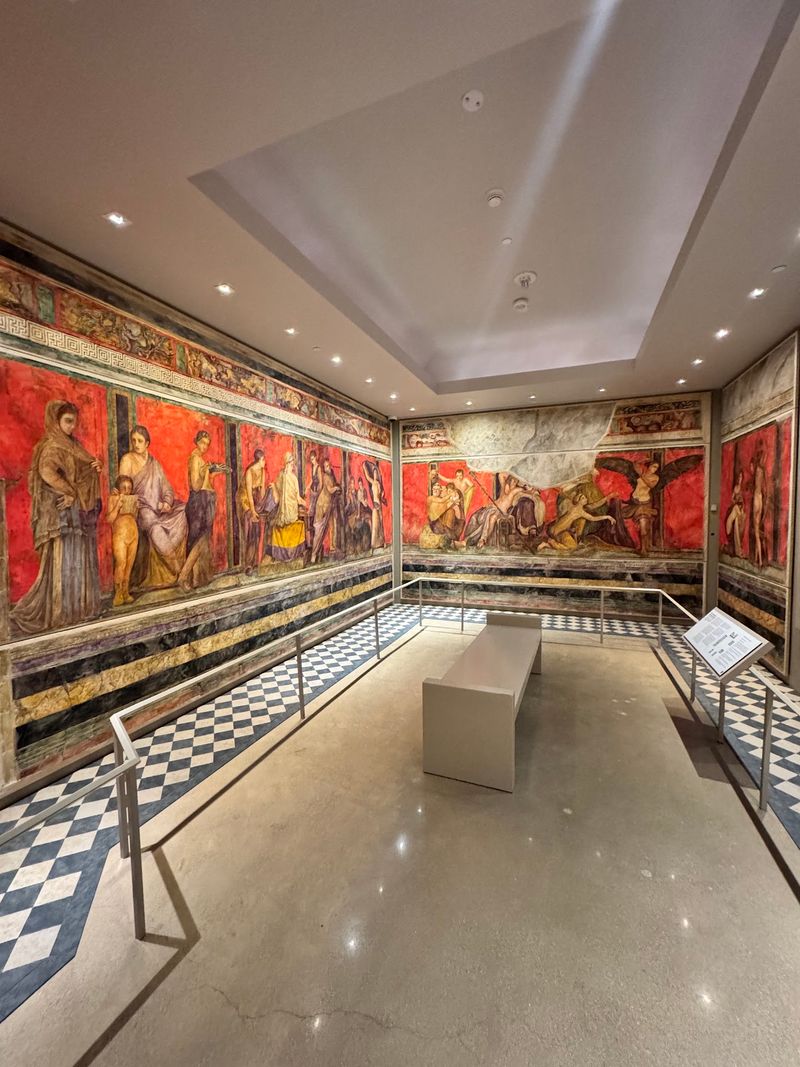
Deep red walls. Life-size painted figures.
A scene first created in ancient Pompeii, now waiting for you in Michigan.
One of the Kelsey Museum’s showstoppers is a large painted reproduction of frescoes from the famous Villa of the Mysteries. The original room survives in Pompeii, buried long ago by the eruption of Mount Vesuvius.
The reproduction is huge, and that scale matters. Standing in front of it gives you a real sense of how wealthy Romans decorated their homes.
The colors may change how you picture ancient Rome forever. Forget plain white marble, because Romans clearly loved bold reds, rich golds and dramatic figures.
The story of how the copy was made is fascinating too. Learning about the painting process adds a second layer of craftsmanship to an already impressive piece.
Take a few minutes here instead of rushing ahead. The details reward patience, from the poses of the figures to the way the scenes flow around the wall.
I believe this single gallery is worth the drive on its own. Good luck getting your phone back in your pocket.
Everyday Romans Get Their Moment In The Spotlight
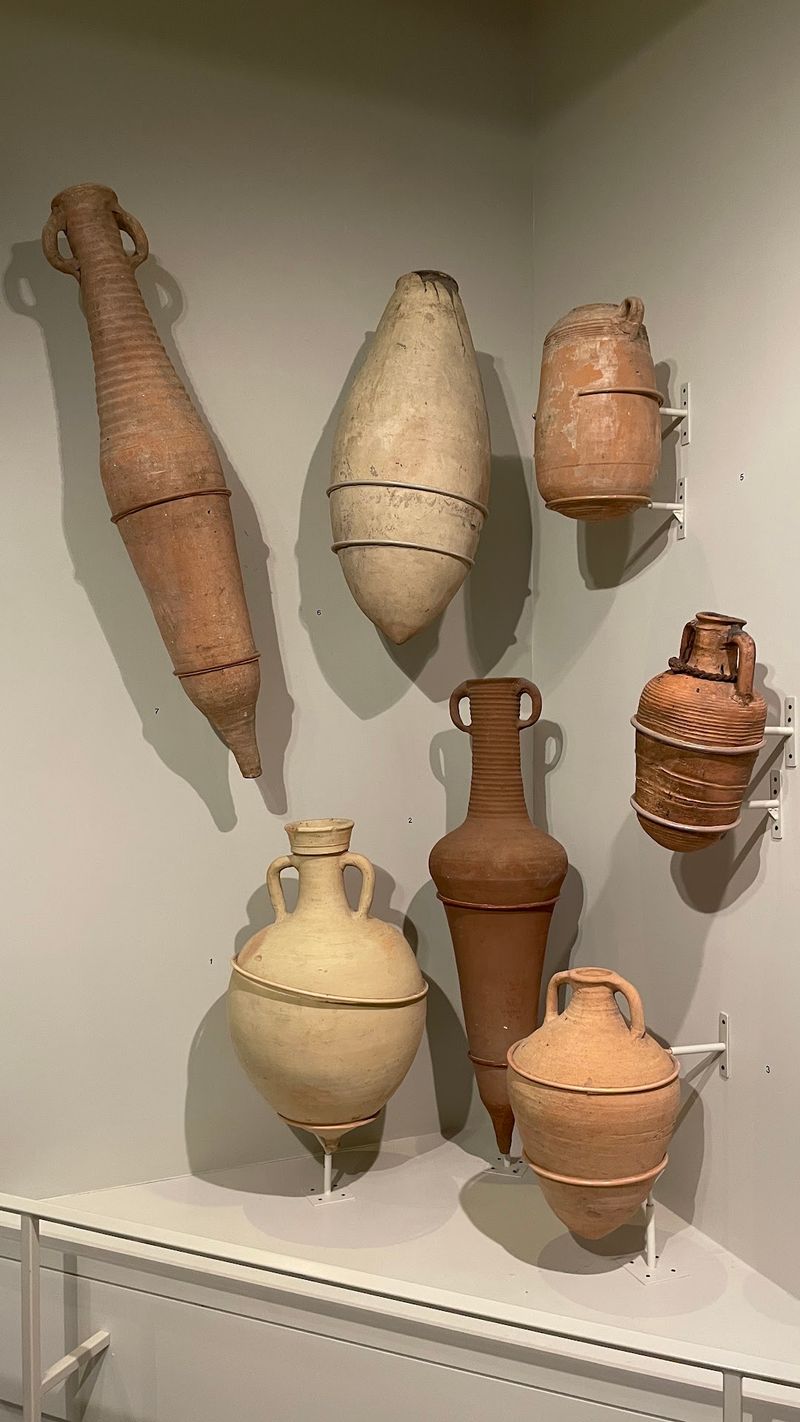
Emperors get the movies, but regular Romans get the drawers. Some displays at the Kelsey Museum have pull-out drawers packed with even more artifacts, so open them up.
That small habit can double what you see. Coins, small tools and delicate objects hide in places many first-timers simply walk past.
The museum puts real focus on daily life in the ancient world. Pottery, lamps and glass show how people cooked, lit their homes and stored their belongings.
Roman glass deserves extra attention. The craftsmanship is remarkable when you remember these pieces were shaped by hand nearly two thousand years ago.
Anyone who loves making things will find plenty to admire. Glassblowing, pottery firing, carving and metalwork all appear across the galleries in one form or another.
Here’s a fun thought to carry along. Many of these treasures were once ordinary household items, and some may even have been tossed aside as trash.
Now they sit under careful lighting in Michigan. Somewhere, an ancient Roman would probably laugh at their old lamp becoming a museum star.
Egypt, Greece And The Near East Share The Stage
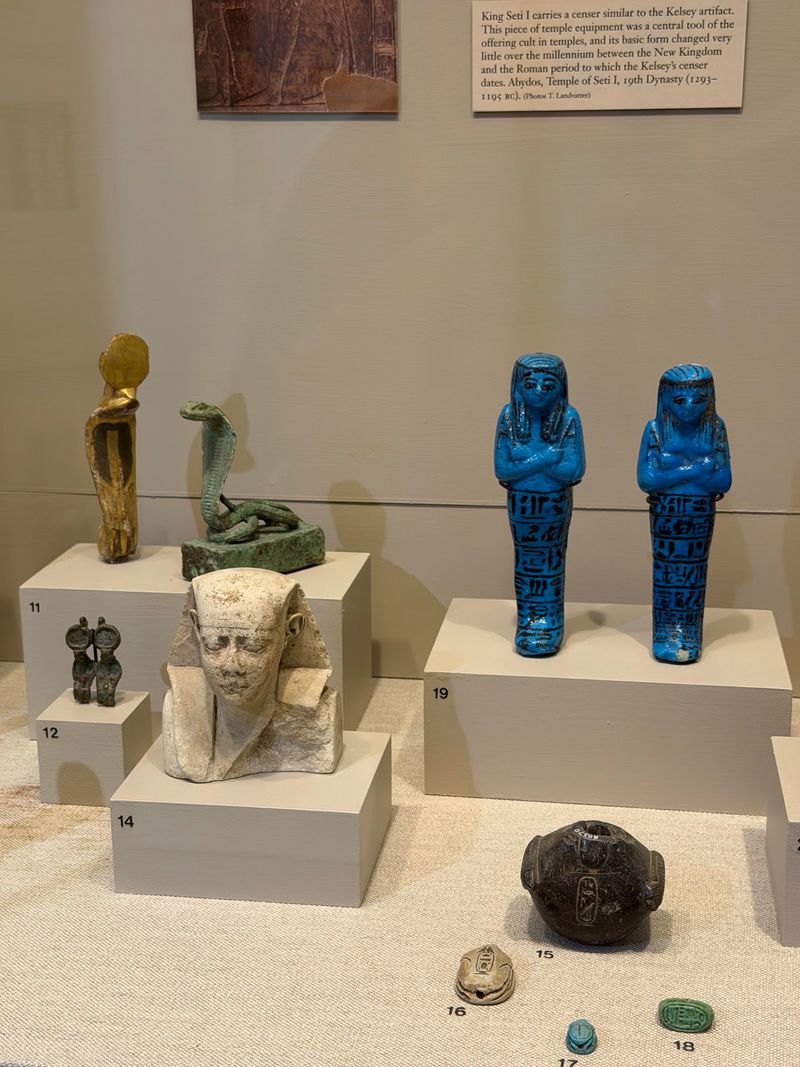
Rome may headline the show, yet the supporting cast is just as strong. Egyptian, Greek and Near Eastern pieces fill much of the Kelsey Museum of Archaeology.
Egypt has a major presence here. The University of Michigan excavated in Egypt during the 1920s and beyond, and that work shaped a big part of the collection.
Watch for small toys from Roman Egypt. They’re a sweet reminder that ancient kids loved playtime just as much as kids do today.
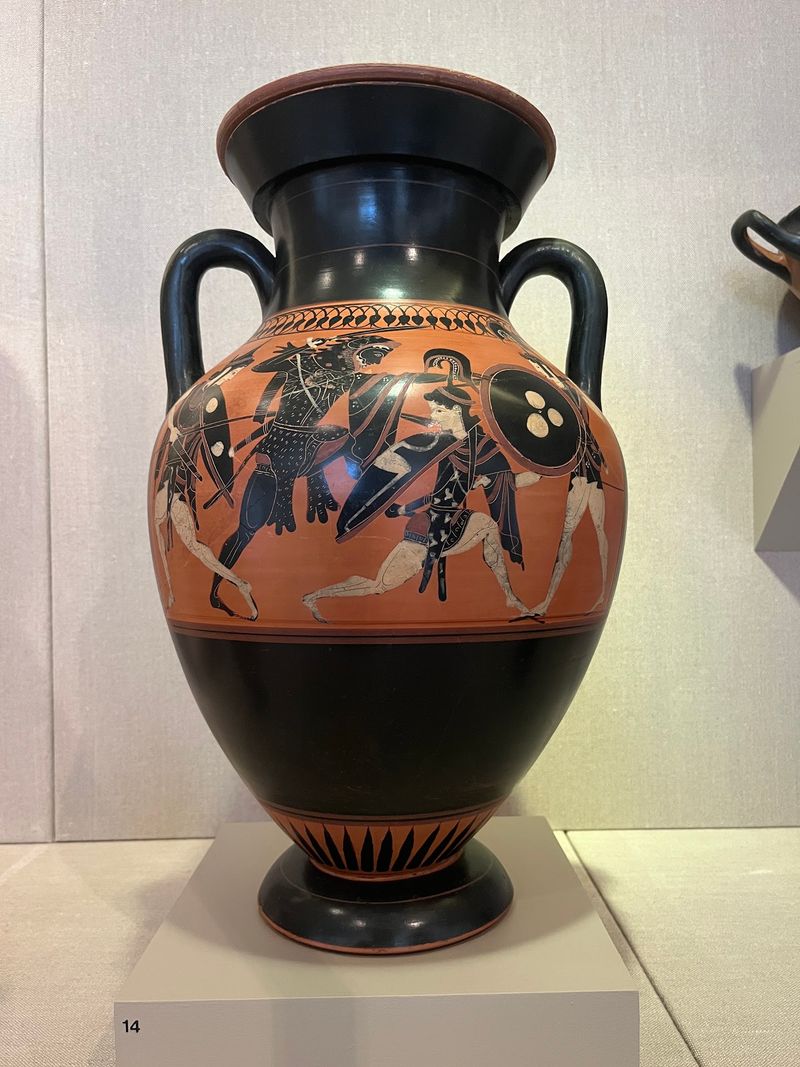
Greek pottery adds another flavor to the visit. Painted vessels show off artistic styles that still influence design thousands of years later.
The Near East also gets its due. Objects connected to places like ancient Mesopotamia and Babylon help round out the story of the ancient world.
The museum has thoughtfully changed how it handles human remains. A mummy is no longer on display because of ongoing ethical discussions within the museum community.
I respect that careful approach. It shows real care for the people of the past, not just their belongings.
And honestly, there’s still more than enough here to fill an afternoon.
A Newer Gallery Carries The Story Past Rome
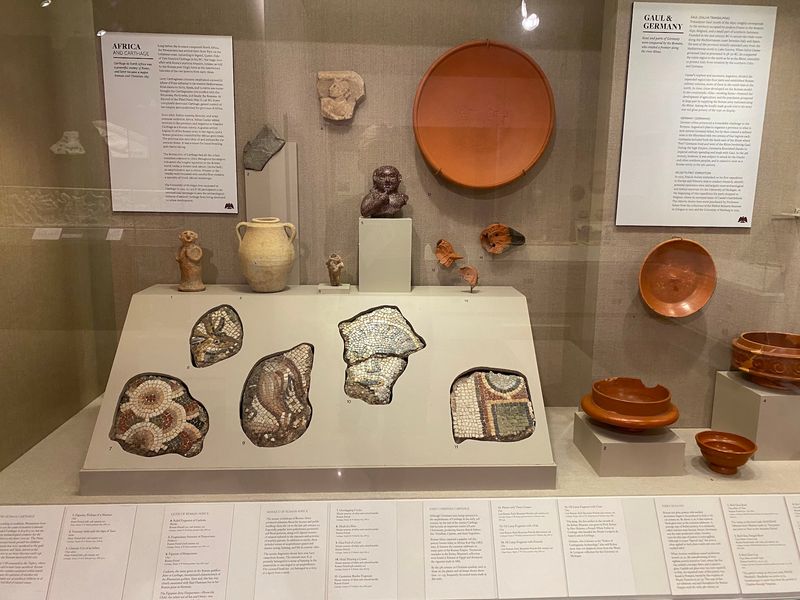
What happened after Rome’s power faded? The Kelsey Museum answers that question with a permanent gallery called The Byzantine and Islamic Worlds: 400 to 1800.
It’s the museum’s first new permanent gallery in nearly two decades. That’s a big deal for a place known mostly for its ancient collections.
The gallery explores everyday life across the eastern Mediterranean, North Africa and the Middle East. Religion, shared customs and trade all play starring roles in the story.
You’ll learn about the legacy of the Byzantine Empire and the rise of Islam. The gallery also shows how Muslims, Christians and Jews lived side by side and traded ideas.
Cities like Cairo and Damascus come alive as busy crossroads. Merchants, craftspeople and families all helped connect cultures across huge distances.
I like how this space stretches the timeline. Instead of ending with togas and chariots, the museum keeps going and shows how history kept moving forward.
Since gallery openings and installations can shift, it may help to check before your trip. Returning visitors especially will want to see how the newest section fits with the classics.
Small Enough For Kids, Rich Enough For History Buffs
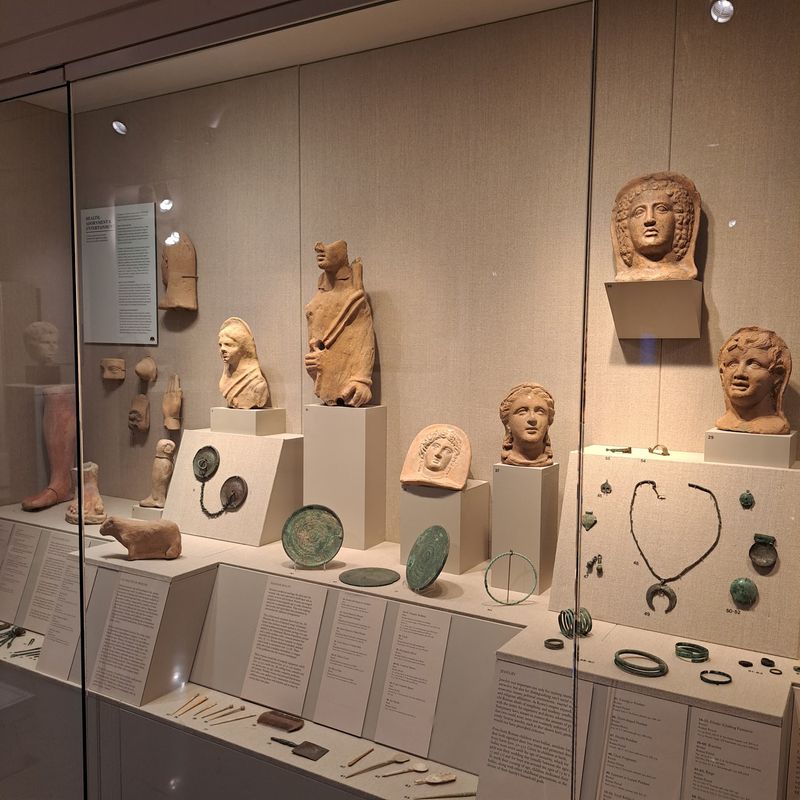
Five-year-olds and retired history teachers can share the same afternoon here. That’s a rare trick for any museum.
The galleries feel calm and manageable, which helps younger visitors stay engaged. Most people can see the highlights in about one to two hours.
Families will find interactive exhibits and clear information panels throughout. Ancient toys, colorful frescoes and those sneaky pull-out drawers give kids plenty to discover.
The museum also offers guided tours and public lectures. Tour themes and schedules change, so the experience can feel a little different from one visit to the next.
Programs for younger children have included story-based sessions in the Roman galleries. Checking the current calendar can help you plan around a special event.
The staff has a reputation for being friendly and helpful at the front desk. That welcoming feel makes it easy to ask questions or find your way around.
Bigger museums in Chicago or Washington have their charms. Still, there’s real joy in seeing a wide range of ancient artifacts without leaving Michigan, and without needing an entire vacation to do it.
Plan Your Free Trip Back In Time This Weekend
Thursday is the secret weapon. The Kelsey Museum of Archaeology stays open until 7:30 PM that day, which makes an after-work visit possible.
Other hours run 10 AM to 4 PM Tuesday, Wednesday and Friday. Weekend hours are 11 AM to 4 PM on Saturday and Sunday, and the museum closes on Mondays.
University holidays may also affect the schedule. A quick check before leaving home can save you a disappointing drive.
Head to 434 S State St, Ann Arbor, MI 48109. The public entrance may be on Maynard Street, so look for signs when you arrive.
Admission is free, though donations are welcome. Parking is a different story, since you’ll likely need to pay for metered street spots or a nearby public garage.
Afterward, stroll about a block to the famous spinning Cube sculpture. It’s an easy add-on for a full Ann Arbor afternoon.
So is it worth the trip? I believe it’s one of the best free days out anywhere in Michigan.
Ancient Rome is waiting, and it won’t even ask for a ticket.