A coyote climbed onto a brand-new wildlife bridge about five weeks before it was supposed to open. A National Park Service camera caught the whole sneaky preview.
Nobody handed that coyote a ribbon to cut.
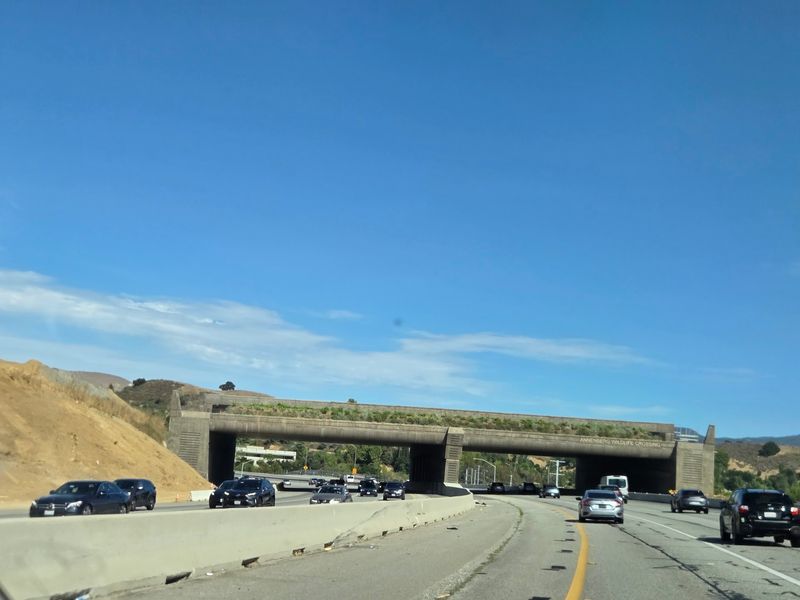
The bridge stretches over 10 lanes of one of the busiest freeways in Southern California. Its plants grew from roughly one million seeds gathered within five miles of the site.
Mountain lions were the headline species, but the coyote clearly skipped the press release.
I love that the first big trip across came from an animal with zero patience. I believe it shows how badly wildlife in California needed a safe path over the traffic.
Bobcats, deer, foxes, and even tiny lizards have reasons to cheer too.
So how did a giant green bridge end up above all those cars, and who gets to cross it next?
A Green Hillside Floating Over The Freeway
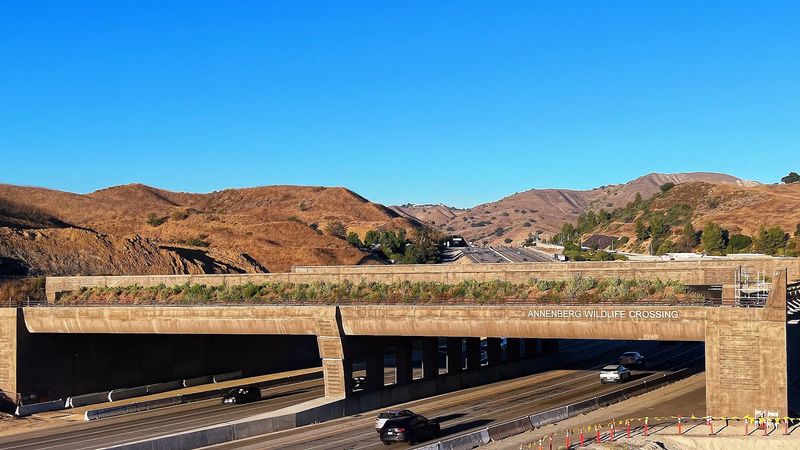
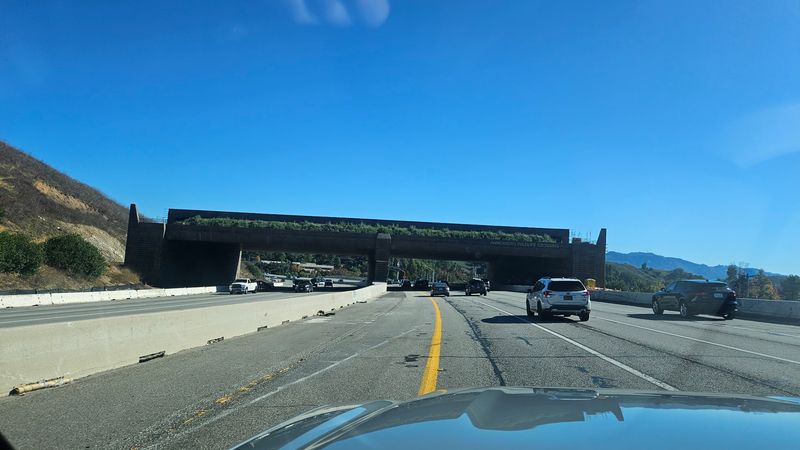
Drivers on the Ventura Freeway now pass beneath a bridge covered in plants instead of pavement. Meet the Wallis Annenberg Wildlife Crossing, built for paws and hooves rather than cars or sneakers.
It sits at Liberty Canyon in Agoura Hills, in Los Angeles County. The crossing spans U.S.
Highway 101 just west of Liberty Canyon Road.
Its job sounds simple, but it took decades to pull off. The bridge links the Santa Monica Mountains on one side with the Simi Hills on the other.
Those two wild areas used to be one connected landscape. Then a 10-lane freeway sliced right through the middle and stayed there.
The project first went by another name, the Liberty Canyon Wildlife Crossing. It now carries the Annenberg name, honoring the foundation that gave a major gift to help build it.
Here’s the part that makes people pull out their phones. It’s described as the largest wildlife crossing of its type in the nation and the world’s largest urban wildlife crossing.
Plenty of places have tunnels or small culverts for animals. Very few have an entire planted hillside hovering over rush-hour traffic in California.
Mountain Lions Stuck On An Island Of Their Own
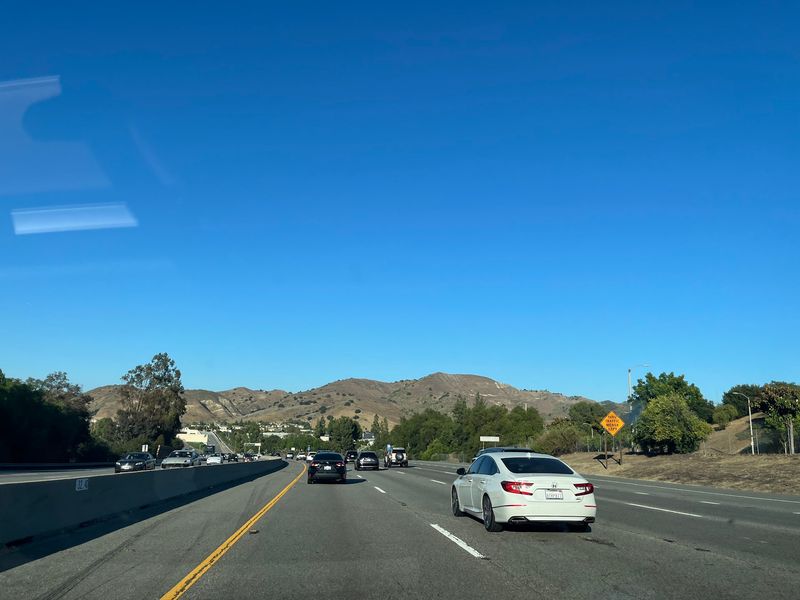
Big cats need room to roam, and the Santa Monica Mountains ran short of it. For decades, the 101 Freeway acted like a wall around the local mountain lion population.
Young males especially need to wander off and find their own territory. With heavy traffic blocking the way north, many simply had nowhere safe to go.
That isolation caused a quieter problem too. Lions kept pairing up with close relatives, which led to inbreeding and shrinking genetic variety.
Scientists watched the lion numbers decline over the years. A smaller gene pool can leave a population weaker and less able to bounce back.
Lions weren’t the only ones affected. Researchers found genetic differences across the freeway in a wide range of species.
Think about that for a second. A road turned neighbors into strangers, all because nobody could safely cross the street.
The crossing aims to fix that by letting animals mix again. New mates and new territory mean healthier families on both sides.
It’s a giant bridge built for a very old need. Animals just want to get somewhere without dodging trucks.
An Idea First Spotted Back In 1990
Some ideas sit on a shelf for a long time. The need for a crossing at Liberty Canyon was identified way back in 1990.
That year, the Santa Monica Mountains Conservancy commissioned a study of the area. It pointed to this exact stretch as a critical bottleneck for wildlife.
Why here, of all places? Liberty Canyon is one of the spots where wild land comes closest on both sides of the freeway.
That makes it a natural meeting point between the Santa Monica Mountains and the Simi Hills. Animals were already drawn toward it, even with no safe way across.
So the location wasn’t picked at random or for a nice view. It came from years of watching where wildlife actually tried to move.
Of course, spotting a problem is the easy part. Turning a study into a massive vegetated overpass took funding, partners, permits, and a whole lot of patience.
Kids who were born the year of that study are now grown adults. The bridge finally caught up with the paperwork, and the animals noticed quickly.
Breaking Ground On Earth Day
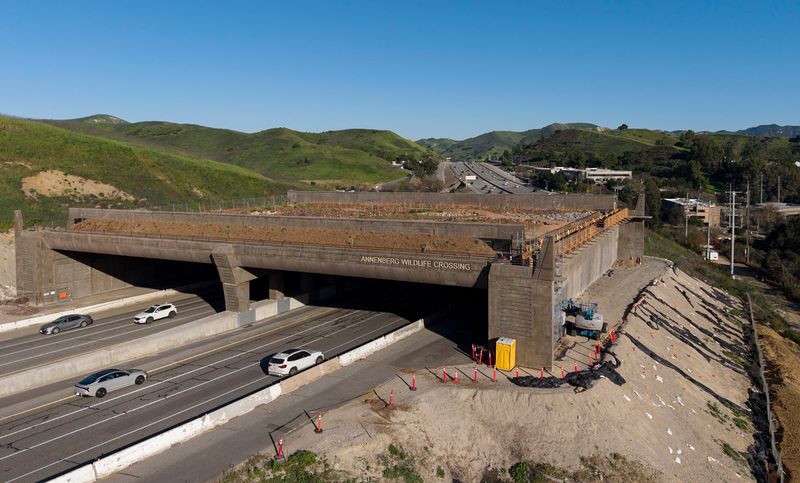
Talk about picking a fitting date. Construction officially began on Earth Day, April 22, 2022, with a groundbreaking ceremony at the site.
Building a bridge over an active 10-lane freeway is no small trick. Traffic still had to flow while crews worked overhead.
The first stage over the freeway wrapped up in June 2025. That was a big moment, since the span over the lanes is the hardest piece.
After that came the rest of the work. The full structure also needed to reach over Agoura Road and connect to the hillsides.
For a while, the bridge looked a little unfinished from below. It stretched over traffic but didn’t yet feel like part of the landscape.
Then came the planting, the fencing, and the walls that make it animal friendly. Those pieces turn a concrete deck into something a skittish bobcat might actually trust.
The official opening to wildlife was set for December 2, 2026. Nearly five years separated the shovels from the welcome sign.
As it turned out, one animal decided that schedule was more of a suggestion.
Bigger Than Most Football Fields Laid End To End
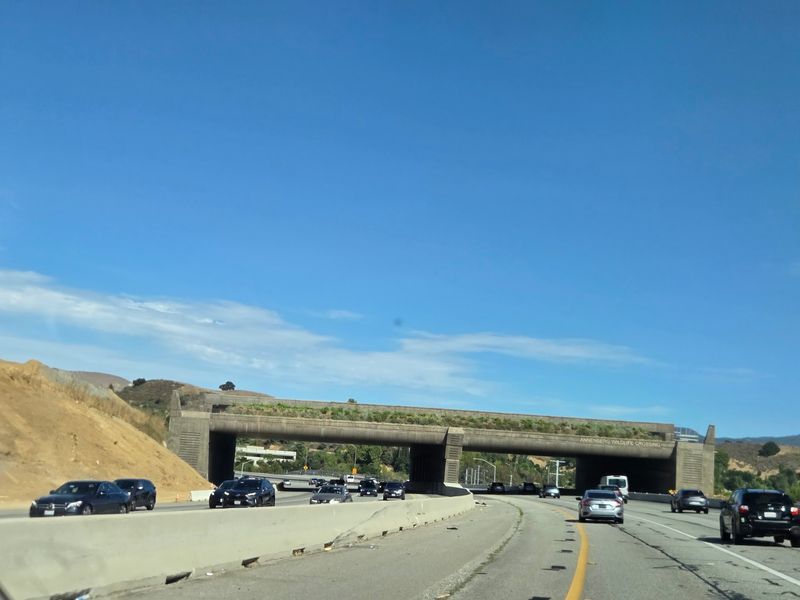
Numbers can sound dry until you stand them next to something familiar. The bridge over the 101 runs about 210 feet long and 174 feet wide.
That width matters more than you might guess. Wild animals feel safer with plenty of room around them and cover nearby.
Now zoom out a little. The entire structure, including the part over Agoura Road, stretches about 1,250 feet.
That’s longer than four football fields placed end to end. It’s a serious chunk of real estate dedicated entirely to wildlife.
The work doesn’t stop at the bridge edges either. The project includes restoring about 13 acres of habitat in the surrounding area.
So animals don’t just land on a deck and find bare dirt. They step into a stretch of restored land that flows into the bridge itself.
Size is a big reason the crossing earns its record-setting reputation. It’s built to feel like a continuation of the hills, not a narrow catwalk.
Even a cautious deer should feel like it has elbow room. Well, hoof room.
A Million Local Seeds Rolled Out The Welcome Mat
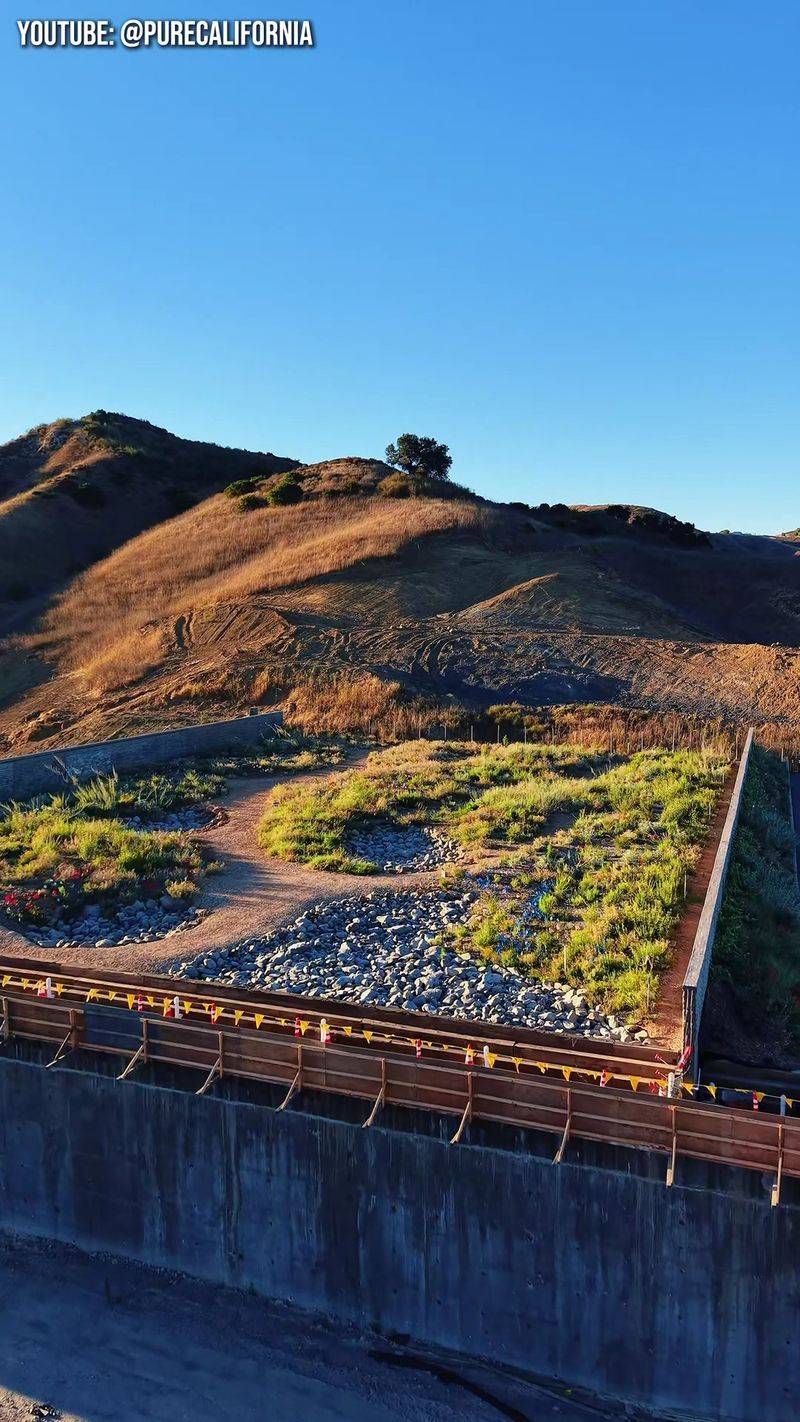
Roughly one million seeds went into making this bridge look like home. Every one of them was collected within about five miles of the site.
That detail is pretty clever. Plants from right next door already know the local soil, weather, and seasons.
They also match what local animals expect to find. A bobcat crossing over should recognize the scrub on top as familiar territory.
Using native plants keeps outside species from sneaking onto the bridge. The goal is a landscape that blends right into the surrounding hills.
Native plants support the little creatures too. Insects, birds, and lizards depend on the right greenery to feed and shelter.
And those small residents attract bigger ones. A healthy food chain on the bridge gives larger animals another reason to linger and cross.
It’s easy to focus on the concrete and steel. But the real magic of the Wallis Annenberg Wildlife Crossing might be what’s growing on top.
Give it time, and the plants should fill in even more. The bridge is meant to look wilder every season.
Walls Designed To Hush The Freeway Roar
Ten lanes of traffic make a lot of noise. Engines, horns, and headlights can easily spook an animal halfway across.
Designers planned for that from the start. The crossing uses vegetated barriers and other features to cut down traffic noise and light.
Sound-dampening walls line parts of the structure. They help shield animals from the constant rumble below.
Light is a sneaky problem too. Many animals move at night, and bright headlights can confuse or scare them.
By softening both the noise and the glare, the bridge feels calmer on top. That calm can make the difference between an animal crossing or turning back.
Some people wonder whether any bridge over the 101 can feel peaceful enough. It’s a fair question, given how busy this freeway gets.
The design is the engineers’ best answer to that worry. Plants, walls, and careful shaping all work together to quiet the scene.
Later in this story, you’ll see some young residents enjoying those walls. Apparently the hush works well enough for a little playtime.
Fencing That Gently Points The Way
Building a bridge is only half the battle. Animals also need a reason to find it instead of wandering onto the road.
That’s where exclusionary fencing comes in. Fences along the freeway guide animals toward the crossing and away from traffic.
Picture a funnel, just made of wire and posts. Wildlife following the fence line ends up right where the safe path begins.
Animals don’t read signs, after all. They follow edges, trails, and cover, so the fencing works with their natural habits.
Without it, many creatures might still try their luck on the asphalt. That’s dangerous for them and for drivers too.
Fewer animals on the road means fewer scary moments behind the wheel. A collision with a deer can ruin anyone’s commute in a hurry.
So the fencing quietly helps people as much as wildlife. It’s one of those unglamorous details that makes the whole system work.
Nobody takes selfies with a fence line. Still, it’s doing a lot of heavy lifting at the Wallis Annenberg Wildlife Crossing.
The Coyote Who Couldn’t Wait For Opening Day
Coyotes have never been famous for following rules. On October 28, 2026, a National Park Service camera caught one climbing the southern slope of the unfinished crossing.
The official opening was still about five weeks away. The coyote clearly had other plans.
A week later, things got even bolder. On November 5, 2026, a coyote showed up on top of the nearly finished bridge.
Then came the big news. An Associated Press report on November 18, 2026, said motion-sensor cameras had recorded a lone coyote making a full crossing.
It’s believed to be the first mammal to go all the way across. Not a mountain lion, not a deer, but a scrappy coyote.
Honestly, it fits the species perfectly. Coyotes are curious, clever, and happy to explore anything new on their turf.
The moment also gave the project a real boost. After years of planning, here was proof that animals would actually use the bridge.
Opening day had a celebrity guest before the doors technically opened. Not bad for an uninvited one.
Playful Pups And Tiny Early Adopters
After the first full crossing, cameras caught something even more charming. Three juvenile coyotes were filmed playing in the plants beneath the sound-dampening walls.
Young animals don’t play where they feel nervous. Seeing them goof around suggests the bridge already feels fairly comfortable.
Coyotes weren’t the very first visitors, though. Smaller creatures beat them to it.
Western fence lizards had been spotted on the crossing earlier. Birds and butterflies showed up too, before any coyote paws arrived.
That makes sense when you think about it. Small animals follow the plants, and the plants were already growing.
Lizards sunning themselves and butterflies drifting over the scrub are a good sign. They show the habitat on top is working as a real ecosystem.
It’s a little funny that the bridge built for mountain lions became a lizard hangout first. Every great venue needs an opening act.
Watching these early arrivals, you get the sense the crossing is filling in one small resident at a time. The bigger guests should follow.
A Guest List Full Of Fur, Feathers, And Scales
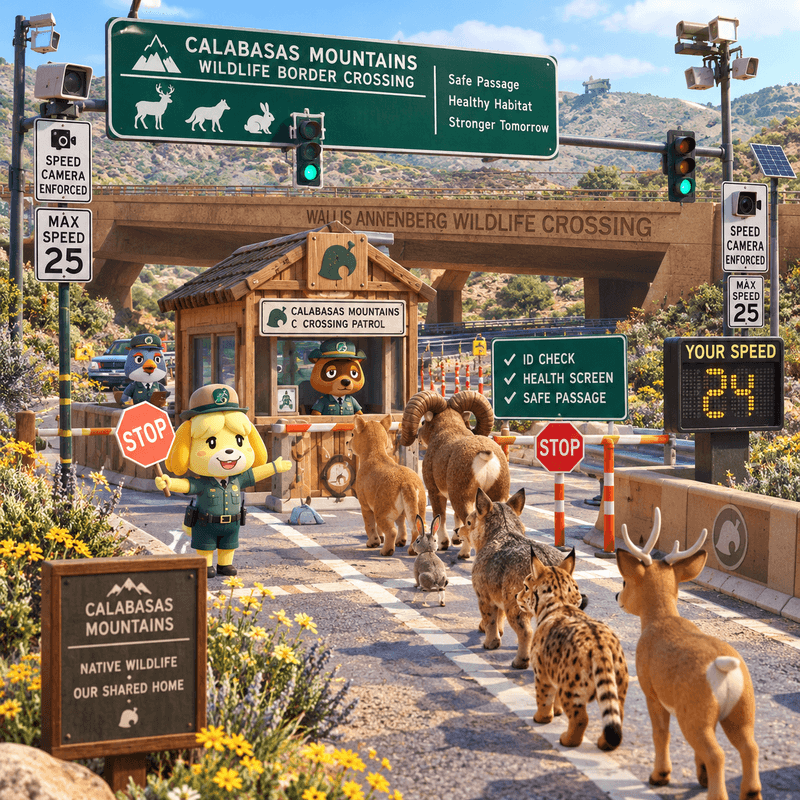
Mountain lions grab the headlines, but they’re far from the only ones invited. The crossing is expected to help a long list of wildlife.
Bobcats and gray foxes top that list. Both need room to roam and suffer when roads cut their territory apart.
Mule deer should benefit as well. Their movements across the region have long been blocked by the freeway.
Birds of prey, skunks, and rodents also make the cut. So do American badgers, which might surprise anyone who didn’t know they lived around here.
Even American black bears appear on the list of animals that could use it. That’s a fun thought for anyone stuck in 101 traffic below.
And of course, coyotes already proved they’re on board. Fence lizards round out the crew with their own tiny commute.
Each species uses the bridge a little differently. Some will cross at night, while others might stay a while.
The Wallis Annenberg Wildlife Crossing works like a shared hallway for the whole neighborhood. Everyone gets a lane, no tolls required.
Thousands Of Donors And A Lively Debate
Big projects need big teamwork. This one came together as a public-private partnership with a long roster of partners.
The Annenberg Foundation made a major donation, and the crossing carries its name. Caltrans, the National Park Service, and the National Wildlife Federation joined in.
The Santa Monica Mountains Conservancy played a key role too. So did the Mountains Recreation and Conservation Authority and the local Resource Conservation District.
More than 6,000 public donors chipped in as well. Leonardo DiCaprio was among the early supporters, along with nonprofit grants and state conservation funds.
The total cost grew well past early estimates, landing above one hundred million dollars. Not everyone loves that number.
Online reactions run hot in both directions. Some folks call it a model for the rest of the country, while others question the spending.
Construction also brought closures and detours to nearby side streets in Agoura Hills. Local commuters have voiced plenty of frustration about that.
It’s fair to hold both thoughts at once. The bridge stirred strong feelings, yet the wildlife results so far look genuinely promising.
Admire It From Below, Then Root For The Lions
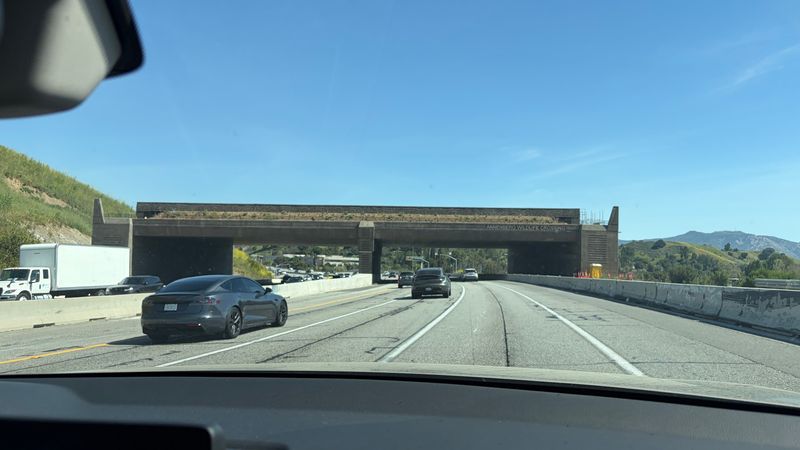
Quick reality check before you plan a stroll across. The bridge is built for wildlife, not hikers, so there’s no public walkway on top.
That’s on purpose, since people would spook the very animals it’s meant to serve. Keeping humans off helps the habitat stay calm.
You can still see it in all its leafy glory. Drivers on the 101 pass right beneath it near Liberty Canyon Road.
Mapping apps list it at US-101, Agoura Hills, CA 91301. It sits in Los Angeles County, an easy add-on to any drive through the western valley.
Opening to wildlife was set for December 2, 2026. Camera footage shared by partners offers the best peek at who’s crossing.
I believe this is one of the coolest pieces of public infrastructure in California right now. It shows people can build big things that help animals too.
Debate the price all you want. Just know a coyote already gave it a test run.
Next time you’re stuck in 101 traffic, look up. Someone furry might be commuting better than you.