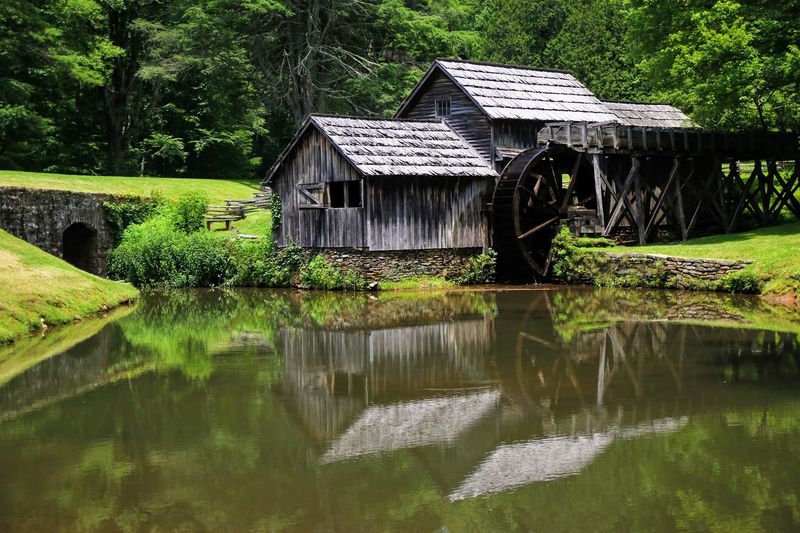
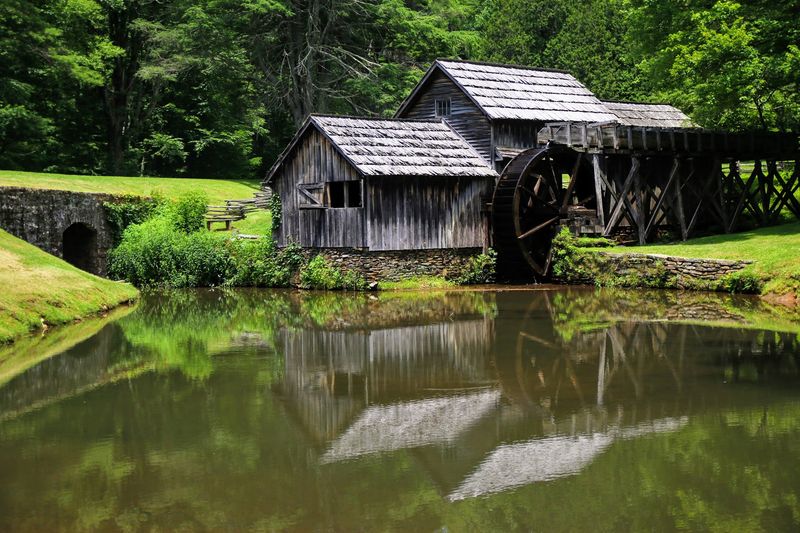
A wooden waterwheel still turns beside a quiet pond, grinding corn the way a mountain couple did over a century ago. The catch?
That fresh cornmeal isn’t sold on site, because modern health rules say no.
I love that detail. It tells you this spot cares more about showing how things worked than selling you a souvenir sack.
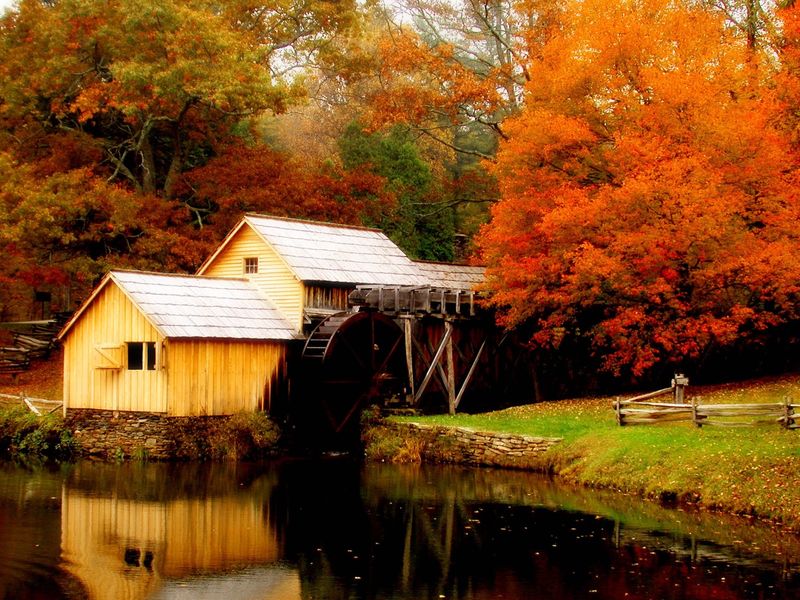
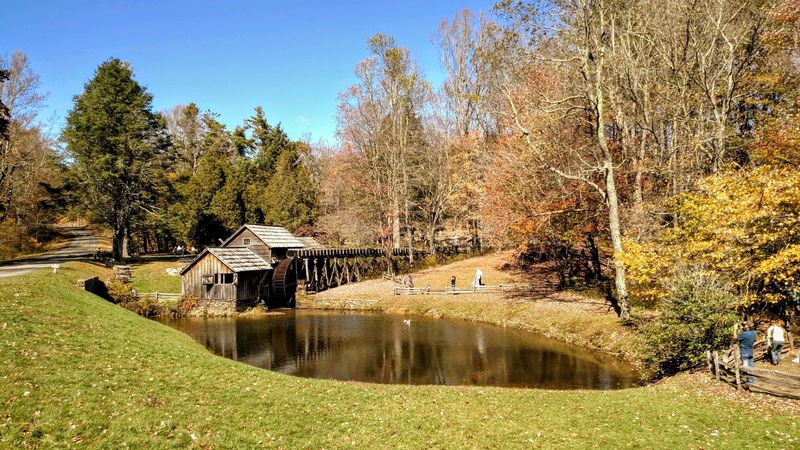
The old mill sits along a famous scenic road in Virginia, and it ranks among the most photographed places on the whole route. In autumn, the trees around the pond turn gold and red.
The water reflects all of it like a giant mirror.
Add a blacksmith shop, a log cabin with a working loom, and a sorghum mill. Suddenly a quick photo stop becomes an afternoon.
So why does a simple mill pull in so many cameras?
A Milepost Stop That Earns Its Fame
Mabry Mill sits at Milepost 176.2 on the Blue Ridge Parkway in Floyd County, Virginia. It’s a restored gristmill, sawmill, and woodworking shop rolled into one weathered wooden building.
The National Park Service runs the site as an outdoor museum. That means you get history, scenery, and a short stroll without needing a ticket booth or a tour group.
Plenty of Parkway overlooks offer one great view and then send you on your way. This stop is different, because the view comes with a working waterwheel and a whole cluster of old mountain buildings.
The mill is widely called one of the most photographed spots on the entire Parkway. That’s quite a title for a road packed with mountain vistas.
Fall gives the place its biggest moment. The pond, the wheel, and the turning leaves line up like they rehearsed it.
You can treat it as a quick photo stop. But the grounds reward anyone who slows down and wanders a bit longer, especially when the trees are showing off.
Give yourself at least an hour, and you won’t feel rushed.
Ed and Lizzie Mabry’s Do-It-All Business
Ed Mabry was a blacksmith, a carpenter, and clearly someone who hated sitting still. He and his wife Lizzie built the mill around 1910, though some accounts say the gristmill was grinding a few years earlier.
The business grew in stages. A blacksmith shop, sawmill, and woodworking shop followed over the next several years.
For the Meadows of Dan community, the mill became far more than a place to grind corn. Neighbors came for lumber, repairs, and ironwork too.
Think of it as an early one-stop shop. Need meal for cornbread and a wagon wheel fixed?
Same trip.
Ed ran the operation until the late 1930s. The National Park Service acquired the property around that time and restored the mill in the 1940s.
That restoration is why you can still see the wheel turning today. Without it, this could have been just another forgotten mill rotting by a creek.
I like knowing a real couple built this with their own hands. It makes the place feel personal, not like a set piece.
You Can Watch Water Do All The Heavy Lifting
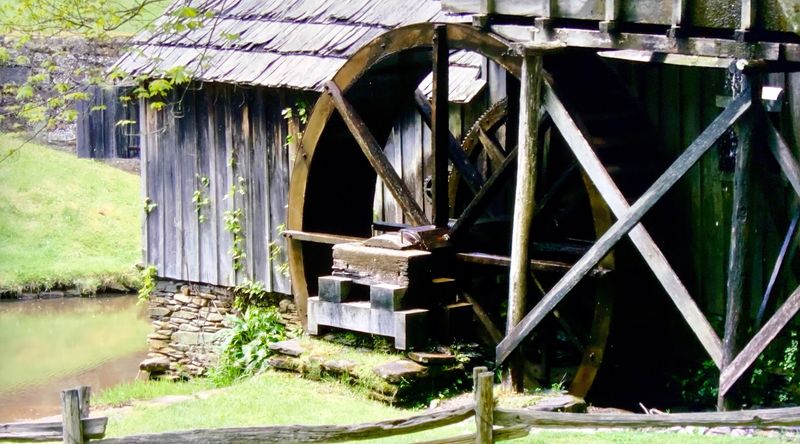
Water runs along a wooden flume, spills onto the wheel, and the whole thing creaks into motion. It’s simple engineering, and it’s oddly mesmerizing.
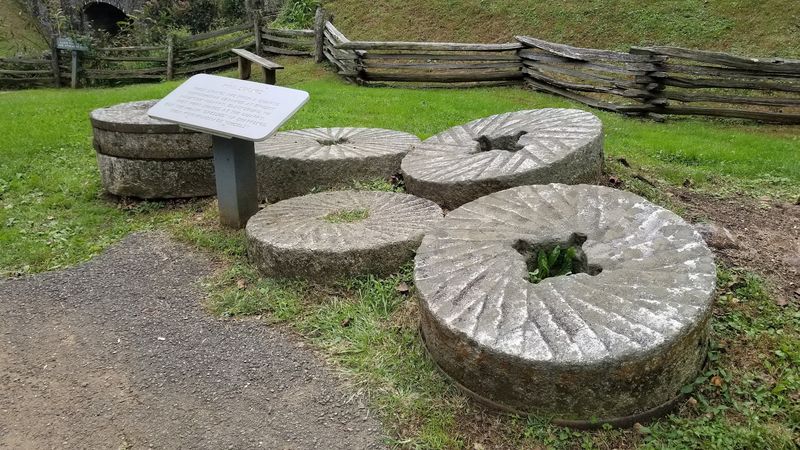
That wheel powers the gristmill inside. The millstones still grind corn for demonstrations, so you can see how mountain families got their meal.
Here’s the funny twist. You can’t buy the cornmeal made right there, because it doesn’t meet modern health standards.
Don’t worry, though. The gift shop sells stone-ground corn products from a nearby mill that does meet federal rules.
Watching the flume is half the fun. The wooden trough snakes toward the mill, carrying water with surprising steadiness.
Kids usually want to know where the water comes from and where it goes. That’s a great excuse to follow the flume and trace the whole system yourself.
Photographers love the wheel up close, too. Wet wood, moving water, and fall color make a pretty strong combination.
Just remember the building itself keeps seasonal hours. Grounds stay open year-round, but the mill interior runs on its own schedule.
That Mirror-Like Pond Is The Real Scene Stealer
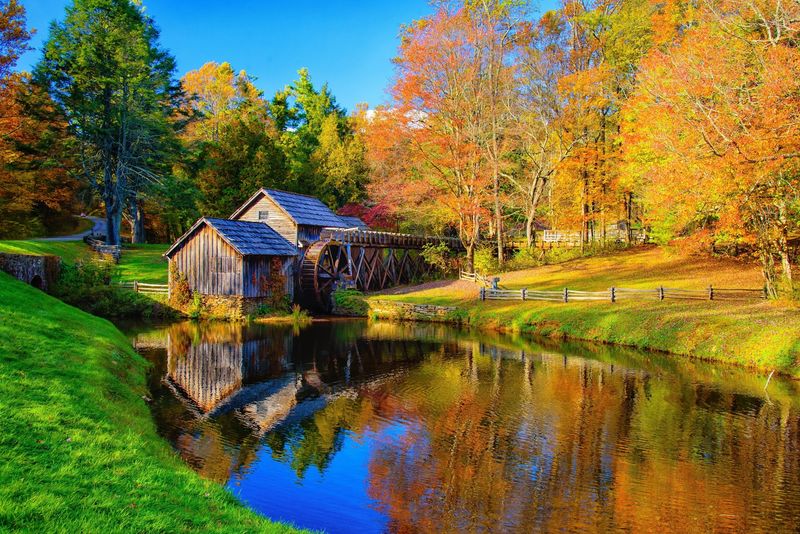
Most famous Mabry Mill photos share one secret ingredient. It’s the pond out front.
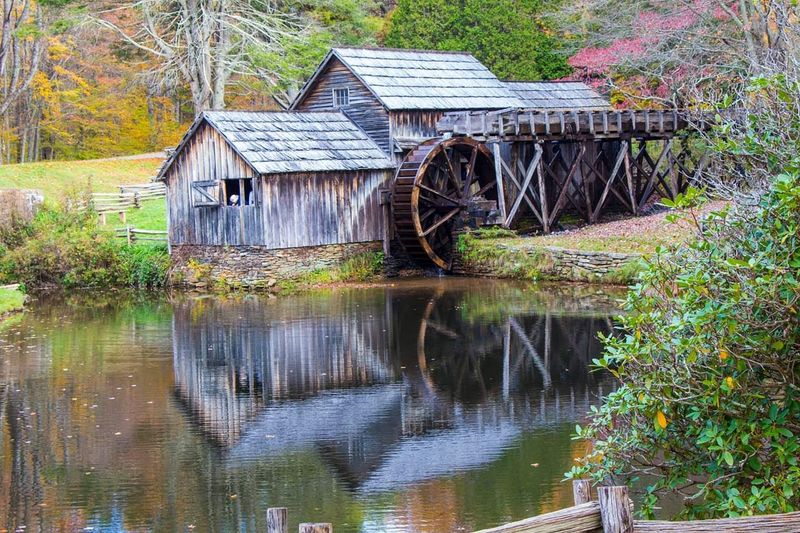
On a still day, the water reflects the mill, the wheel, and the trees almost perfectly. Add fall color, and the scene doubles its punch.
That’s why so many calendars and postcards seem to feature this exact spot. The composition practically builds itself.
You don’t need fancy gear to get a good shot. A phone and a little patience can work just fine.
Try walking around the pond’s edge for different angles. Each side gives the mill a slightly new personality.
Autumn turns the surrounding trees into a wall of warm color. Gold, orange, and red layer behind the dark wooden building.
Wind can ripple the surface and soften the reflection. If the breeze picks up, waiting a few minutes may pay off.
Even if you skip photos, the pond is a calm place to stand and look. Sometimes that’s the whole point of a Parkway drive.
Honestly, it’s hard to leave without at least one picture. Good luck resisting.
Sparks Fly At The Old Blacksmith Shop
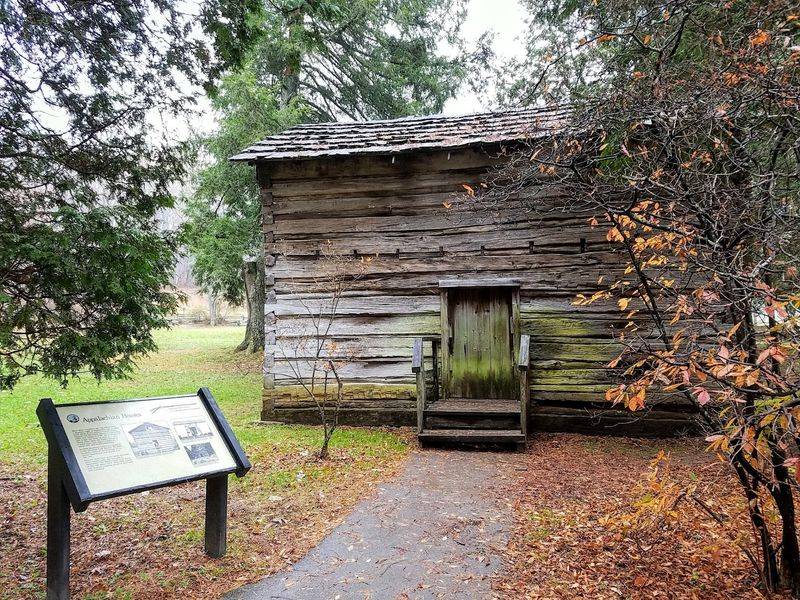
Ed Mabry was a blacksmith before he was a miller. So it makes sense that his blacksmith shop is part of the walk.
The shop shows how mountain communities kept tools, wagons, and farm equipment working. Fixing things locally mattered when the nearest store wasn’t close.
During the summer and early fall season, park rangers and volunteers sometimes demonstrate blacksmithing on weekends. Seeing hot metal shaped by hand is a real treat.
Not every visit lines up with a demonstration. Weekend timing during peak season gives you the best chance.
Even without a live demo, the shop is worth a look. The setup helps you picture the hammering, the heat, and the hard work.
I can’t imagine shoeing horses and repairing plows all day, then helping run a mill too. Ed clearly had serious stamina.
The shop also helps explain the mill’s role as a community hub. Folks came here for many needs, not just ground corn.
It’s a reminder that self-reliance wasn’t a hobby back then. It was everyday life in these hills.
A Log Cabin With A Loom Still Inside
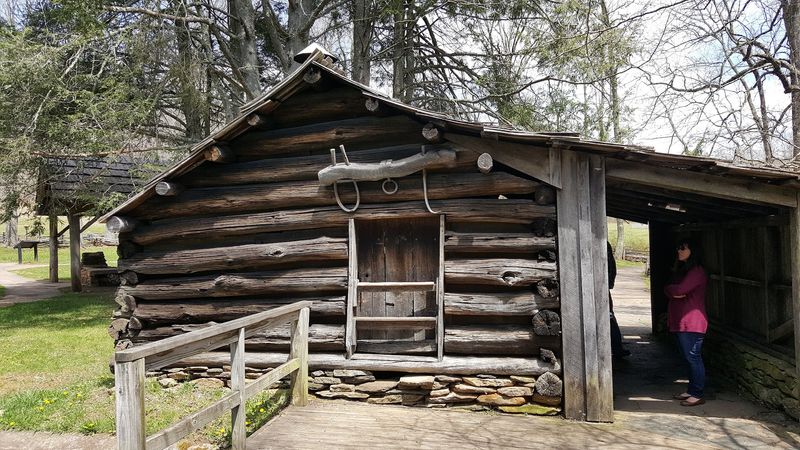
The Matthews Cabin didn’t start here. It was moved to the Mabry Mill grounds in the 1950s to help tell the story of mountain home life.
Inside, you’ll find a working loom. Handloom weaving is among the traditional crafts sometimes demonstrated during the busy season.
Log cabins always make modern houses feel huge. Families lived, cooked, and worked in surprisingly compact spaces.
The loom shows how much effort went into everyday cloth. Every blanket and garment took time, skill, and a steady hand.
Weekend demonstrations in summer and early fall may include weaving, basket making, or furniture building. Each craft shows a different piece of mountain know-how.
The cabin also balances the mill nicely. One shows the work that fed a community, while the other shows home life.
It’s a quiet stop on the trail. Many folks rush past toward the waterwheel, but this little cabin deserves a pause.
Bring curious kids here. Asking them to imagine life without a single screen tends to spark some lively conversation.
Sorghum, Soap Kettles, And Other Homestead Surprises
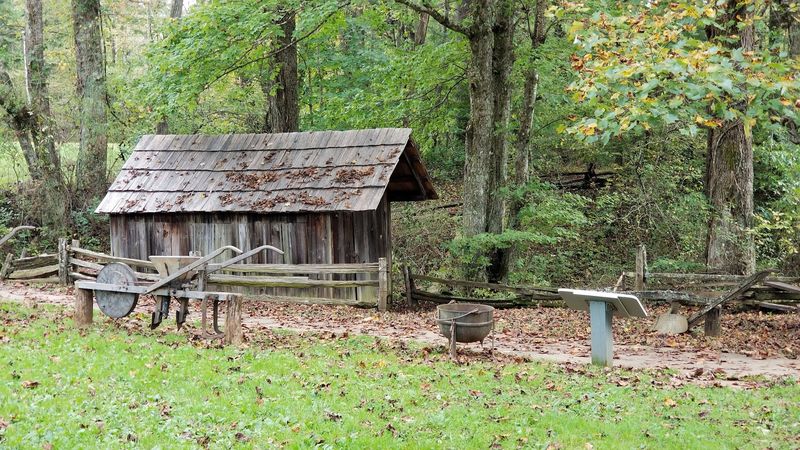
Sweetener didn’t come from a grocery aisle in these mountains. Families pressed sorghum cane and cooked the juice down into syrup.
The grounds include a sorghum mill exhibit that shows how this worked. It’s a neat peek at old-time kitchen supplies.
Nearby sits a big soap making kettle. Making soap was a regular chore, and it took real patience.
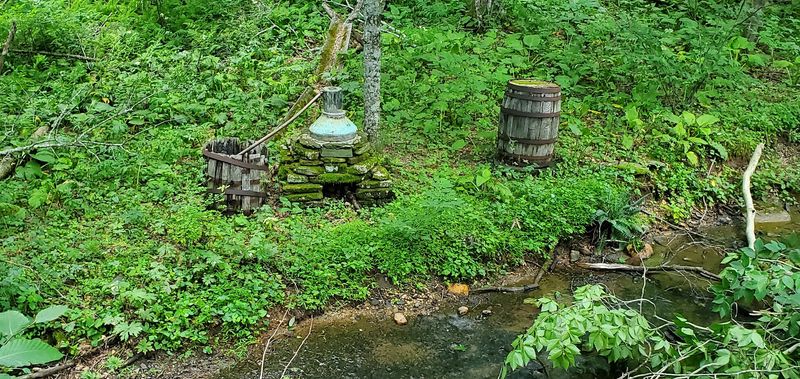
The trail also features an old-time still exhibit. It’s part of the broader story of how mountain families used their crops.
These outdoor pieces line the short walking path around the site. You can move at your own pace and read up as you go.
I like how these exhibits fill in the gaps. The mill gets the spotlight, but daily life needed far more than cornmeal.
Each stop adds a small story. Together, they paint a fuller picture of a working Appalachian homestead.
The walk is short and easy. It’s open year-round, so even off-season visitors can explore the outdoor displays and soak up the setting.
Weekend Crafts Bring The Old Days Back To Life
Old buildings tell part of the story. People showing old skills tell the rest.
On weekends during the summer and early fall season, rangers and volunteers often share traditional crafts. Past demonstrations include blacksmithing, furniture making, basket weaving, and handloom weaving.
These moments turn the site from a museum into something living. You get to see real hands doing real work.
Early fall is a sweet spot. You may catch demonstrations and early color in the same trip.
Schedules can shift, so check the National Park Service before heading out. That small step can save some disappointment.
Craft demos are especially great for kids. Watching a basket take shape beats reading about it on a sign.
Adults tend to get hooked too. There’s real satisfaction in watching skill and patience produce something useful.
Questions are part of the fun. Demonstrators usually know a lot about their crafts and the history behind them.
If your trip falls on a weekday, don’t stress. The grounds still offer plenty to see, even without a live show.
Summer Sundays Come With Free Mountain Music
Fiddles and banjos beside a historic mill? That’s a pretty perfect pairing.
From Memorial Day through Labor Day, Mabry Mill hosts free mountain music on select Sunday afternoons. It’s a lovely way to experience the region’s musical roots.
Virginia’s Blue Ridge has deep ties to old-time and bluegrass music. Hearing it outdoors here feels right at home.
The concerts happen in summer, not peak leaf season. Plan accordingly if music matters more than foliage.
Bring a little flexibility. Not every Sunday features a performance, so checking ahead helps.
Families can enjoy the music and then walk the trail. It turns a quick stop into a full afternoon.
Free entertainment in a scenic spot is hard to beat. Your wallet will appreciate it, and so will your ears.
If you love the sound, more music waits nearby. The town of Floyd, about 30 minutes north, hosts its famous Friday Night Jamboree at the Floyd Country Store.
Summer music and fall color make two great reasons to visit twice.
Grits, Buckwheat Flour, And Other Gift Shop Finds
Can’t buy the mill’s own cornmeal? The gift shop has a tasty workaround.
Shelves feature locally ground grits, cornmeal, and buckwheat flour. They come from a nearby mill that meets federal food rules.
You’ll also find Virginia crafts, books, and souvenirs inspired by the mill and the Parkway. It’s a handy place for meaningful gifts.
Bottled water and packaged snacks are available too. That helps on a long scenic drive.
Now for the restaurant news. The Mabry Mill Restaurant closed in 2024 when its lease ended.
A new operator was selected in 2026 and plans interior renovations. Food and retail services are expected to open in spring 2027.
Until then, pack a picnic or plan meals elsewhere. A cooler in the trunk can save the day.
Many folks remember the restaurant fondly for its pancakes and buckwheat cakes. Its return will be big news for Parkway travelers.
For now, a bag of stone-ground grits makes a fine edible souvenir. Breakfast at home just got more interesting.
Timing Your Trip For Peak Leaves And Open Doors
October brings the color, but the calendar matters too. The mill building typically opens daily from May through the end of October.
Hours usually run from 10 AM to 5 PM in season. Always confirm current times with the National Park Service before you go.
The grounds and walking trail stay open year-round. Winter visits are quieter, though the mill itself won’t be running.
Fall color here usually arrives in October. Exact timing changes each year based on weather.
Visiting earlier in the day can make parking easier. Leaf season draws plenty of Parkway drivers.
Recent repairs matter too. The mill closed for roof work and reopened in August 2025, so it’s back in action.
Restrooms are seasonal. Plan stops accordingly during colder months.
Weekends in early fall offer bonus chances for craft demonstrations. Weekdays may feel calmer.
Layers are smart for any fall trip. Mountain mornings can feel brisk, even when afternoons warm up.
A little planning goes a long way. Then you can relax and enjoy the show.
Finding Your Way To Milepost 176
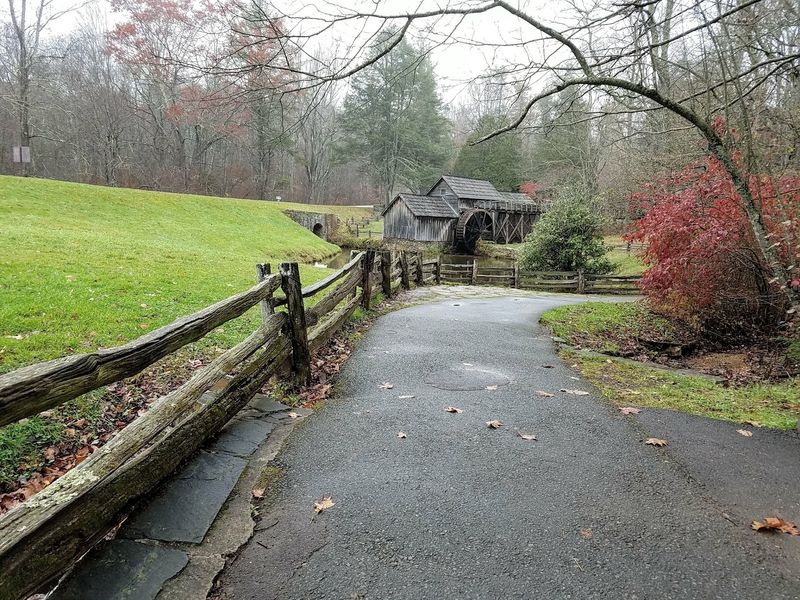
Getting there is half the pleasure. The Blue Ridge Parkway itself is a scenic drive worth savoring.
Mabry Mill sits at 266 Mabry Mill Rd SE, Meadows of Dan, VA 24120. On the Parkway, look for Milepost 176.
Parking is available for both cars and RVs. That’s welcome news for road trippers with bigger rigs.
Campers have nearby options too. Rocky Knob Campground sits a few miles north, around Milepost 167 to 169.
The town of Floyd is about a 30-minute drive. It makes a fun add-on for music, shops, and small-town charm.
Primland resort is also roughly 30 minutes away. It’s another option for travelers wanting a longer stay in the area.
Parkway speed limits are low, so budget extra drive time. Rushing defeats the whole purpose anyway.
Cell service can be spotty in the mountains. Downloading directions ahead is a smart move.
Once you arrive, everything is walkable. Park, stretch, and start exploring at your own easy pace.
Why This Old Mill Deserves A Spot On Your Fall Route
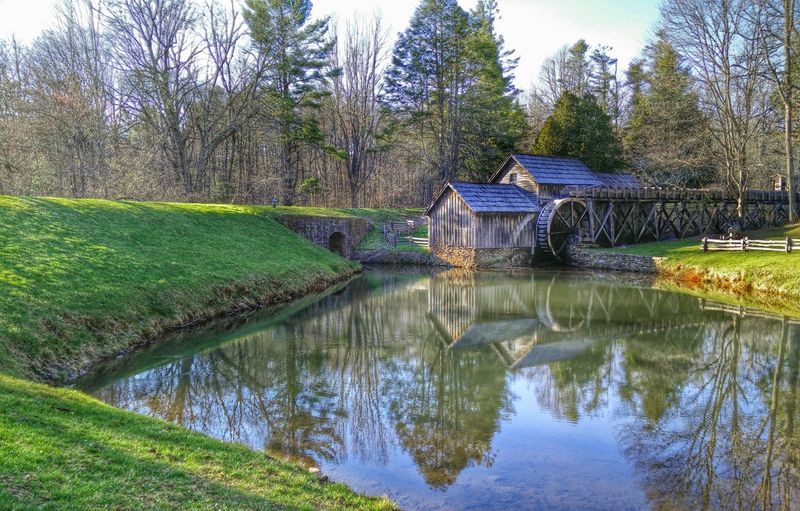
A waterwheel, a pond, and a hillside of autumn color make a strong case on their own. Mabry Mill adds real history on top.
Ed and Lizzie Mabry built something that served their whole community. Today, it serves curious travelers instead.
Few Parkway stops pack so much into a short walk. You get a working mill, a blacksmith shop, a cabin, and homestead exhibits.
Fall gives the site its most dramatic look. Still, summer music and weekend crafts offer their own charm.
The restaurant’s planned return in 2027 will add another reason to come back. Until then, the gift shop and a packed picnic fill the gap.
Families, photographers, and history fans will all find something here. Even folks who just want a pretty stretch break will leave happy.
I believe the best road trip stops make you slow down. This one does that gracefully.
Virginia has plenty of scenic drives, yet this mill remains a standout. Grab your camera, check the hours, and let that old wheel turn for you.