Everything you need to know about driving in Montenegro.
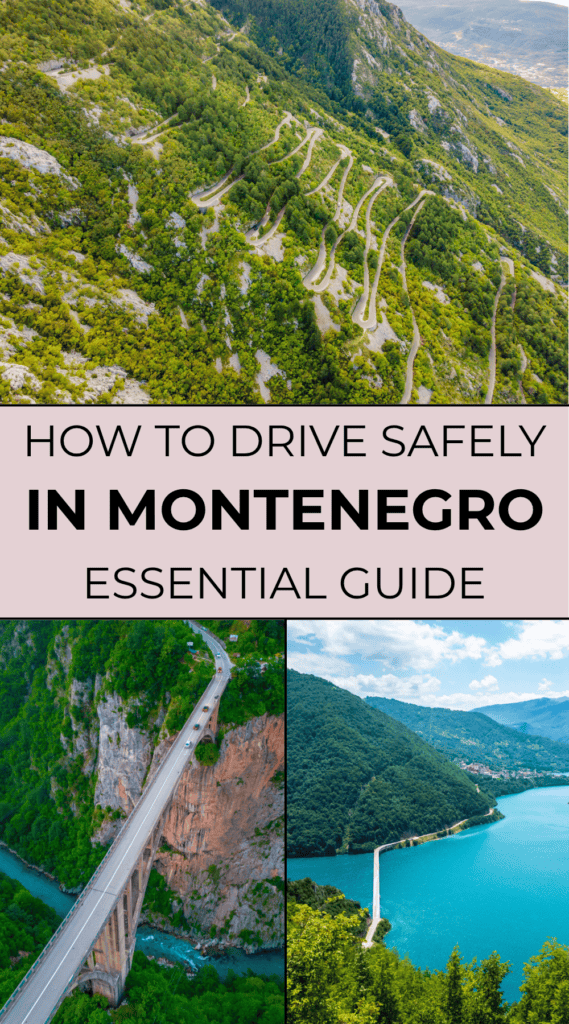
As a vanlifer, I have driven quite some roads in Montenegro; from the large ‘’scenic routes’’ to winding mountain roads, and everything in between. However, there are quite a few rumors about driving in Montenegro, and they’re not always positive. In this guide, I will tell you everything you need to know about driving in Montenegro for a safe and enjoyable trip.
Disclosure: This post may contain affiliate links, which means that if you purchase through one of the product links, we’ll receive a small commission at no cost to you. We only promote products and services we 100% believe in. Thank you so much for supporting us! Read more about it in our disclosure policy.
About Montenegro
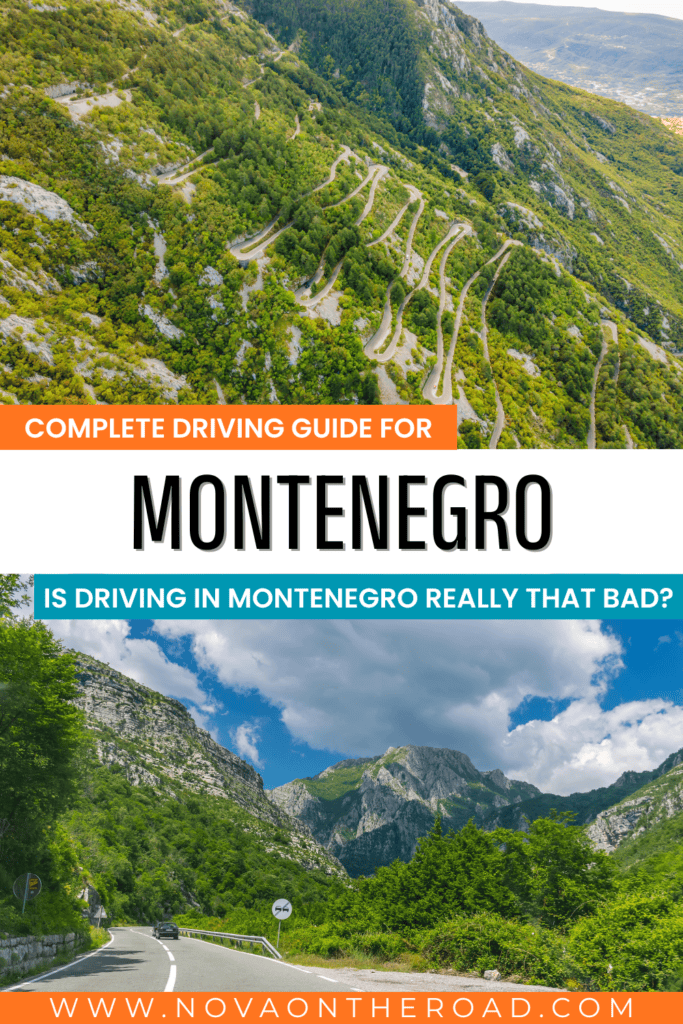
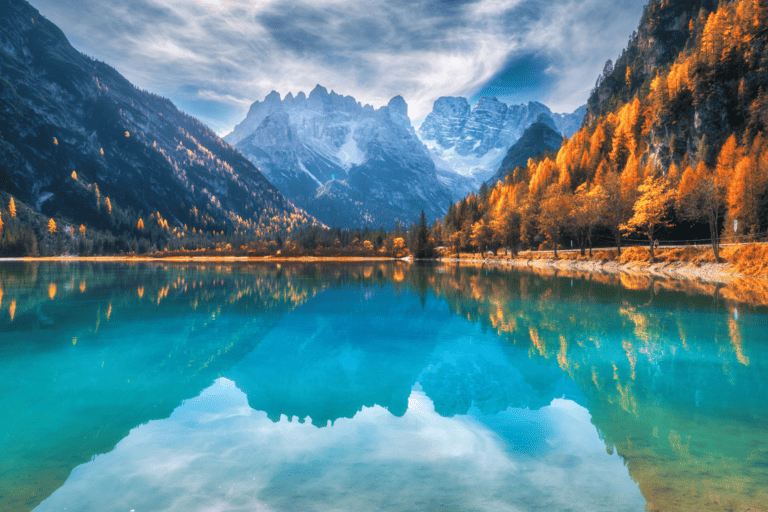
Montenegro is a small country in Southeastern Europe, with only about 60,000 inhabitants. Montenegro boasts a stunning coastline along the Adriatic Sea. However, the name ‘’Montenegro’’ means Black Mountains, from Monte (Mountain) and Negro (Black). It’s got this name from the dark forests that once covered the Dinaric Alps.
So, basically, Montenegro has it all. With a beautiful sea and incredible mountain peaks to explore, it truly felt like a little paradise to me!
And even though its neighboring country Croatia, has been getting mass tourism, Montenegro still seems to be a bit undiscovered. And don’t get me wrong, you will still run into tourists in Montenegro, especially in summer, but it doesn’t feel so ‘’fake’’… Know what I mean?
Introduction to driving in Montenegro
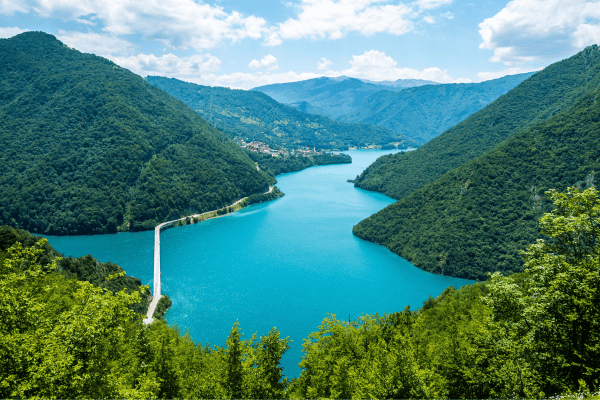
In this guide, I will tell you about everything you need to know about driving in Montenegro. This includes:
- Renting a car
- Rules and laws
- Safety and ease of driving
- Is it legal to drive with your current driver’s license?
- What the roads are like
- Parking
- Toll roads
- Gas prices
- Wildlife
Even if it’s just one of these topics that you need answers to, I do recommend reading the other parts too! And I’m saying this for a reason:
While writing this post, I found out about some laws that I didn’t know about and definitely didn’t stick to. I never got any problems, but I would’ve liked to at least know about these laws, to avoid potential trouble.
Related: The Ultimate Montenegro Travel Itinerary for 7 Days: Perfect Road Trip Itinerary for You!
That one time I tried out public transport…
Before starting, there is a great reason why I decided to write this guide. Let me tell you about my personal experience with the public transport in Montenegro.
The one time I took a bus, I’d been told: ‘’The bus may stop. The bus may not stop. Good luck’’. And in fact, the bus did not stop. The driver did open the door for me, so I had to run and jump in, which I (surprisingly) succeeded in. It was an interesting experience, but not one I would recommend.
That said, not all public transport is as bad as this in Montenegro. But I still think that driving yourself gives you so much more freedom to explore places you want.
And yes, people have been quite negative about driving in Montenegro. Something about the word ‘’catastrophe’’…
But let me tell you why worrying is unnecessary.
Should you rent a car in Montenegro?
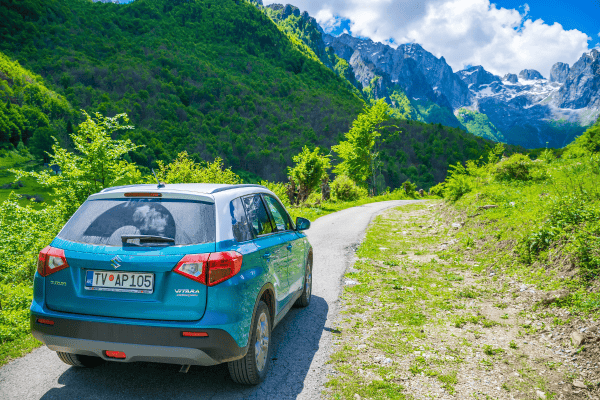
If you are not visiting Montenegro with your own car, I would highly recommend renting a car in Montenegro.
I have met many people while driving the Durmitor Ring who had a rental car. Being me, I asked them about their experience with the rental companies and how they booked their cars.
And surprisingly (because I had only heard negative things about renting a car in Montenegro), they all had a pleasant experience so far! They told me that pickup and the paperwork was easy and quick and that Montenegrins are very kind people (they really are).
And the prices are also very favorable! Think about prices from €18 per day, for a mini car or €24 for a compact car. And with the right coverage, you also won’t run into any trouble. And if you do experience problems, the company will be there to help you solve it.
Ps. Do keep in mind that the price per day may be higher with additional insurance, which I do recommend you get.
I highly recommend renting your car through DiscoverCars. Here you can compare cars, companies and prices very easily. They also have a unique kind of support, which I had to use on my trip to Tenerife, and I couldn’t be happier with the help that I got!
So long story short: Yes, you should rent a car in Montenegro.
I would recommend renting a compact, economy, or crossover car, depending on your needs. You will need more horsepower on mountain roads than what a mini car offers.
What do you need to rent a car in Montenegro?
You need:
- To be over 21 years old
- Have a full and valid driver’s license from your home country, or an International Driver’s Permit if your national driver’s license is not written in Roman script. You must have held your driver’s license for at least one year
- A credit card for deposit
- Additional insurance. I never drive without it. It is best to get it right away when booking in advance. It is a lot more expensive on-site.
Rules and laws to keep in mind when driving in Montenegro
Now here comes the fun part: Rules and laws that you need to know about. And they’re more strict than I would’ve guessed. Let me break them down for you.
Important road rules for driving in Montenegro safely:
- Drive on the right side of the road and overtake on the left.
- Headlights must be switched on at all times, even during the day.
- Always wear a crash helmet if you’re riding a motorcycle or moped.
- Drivers and all passengers must wear seatbelts.
- Always give way to traffic coming from the left.
- Vehicles from the right generally have priority.
- Speed limits are in kilometers per hour.
- You could be given an on-the-spot fine if caught committing a minor driving offence while driving in Montenegro.
- The drink-drive limit for all drivers is 0.03%, and police carry out random tests if a driver is suspected of being over the limit. By comparison, the UK and US limits are 0.08%. 0,03% is basically no alcohol allowed, so always make sure to drive sober!
- Road markings can be unfamiliar at junctions, so pay close attention and remember a solid white line means you must stop and give way.
- Dial 112 in case of emergency
Read this guide to dive deeper into traffic rules in Montenegro.
Speed limits in Montenegro
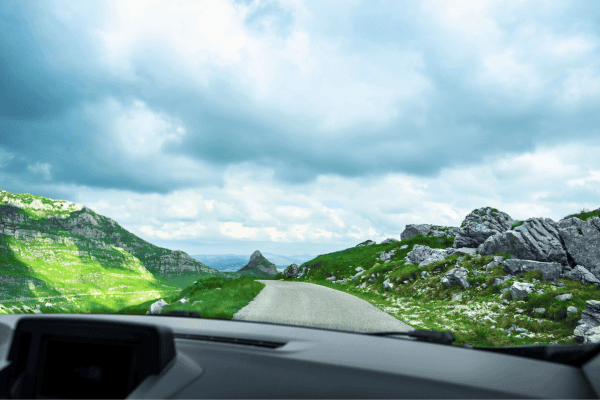
National speed limits vary generally from up to 50km/h (30mph) in built-up areas to 80km/h (50mph) in open roads, and up to 100km/h (60mph) on the A-1 motorway and on faster express routes. Though it is not uncommon to see speed limits as low as 20-30km/h (12-18mph) on mountain roads.
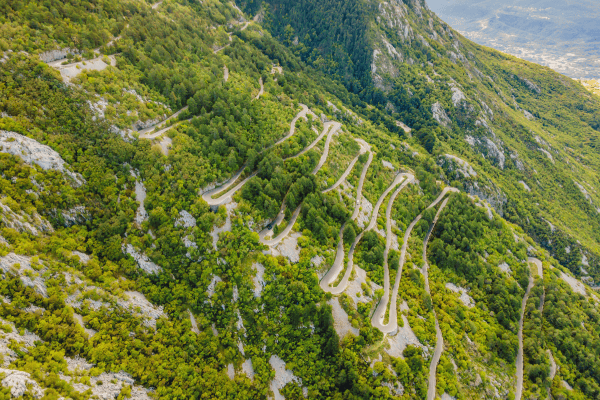
Is it safe to drive in Montenegro? And is it easy?
Despite all the stories and rumors, Montenegro is not that bad to drive through. But even though there are clear rules, Montenegrin driving habits might differ. So if you’re used to driving in countries where people stick to the rules, you might need to adjust a bit when driving in Montenegro.
One thing that I noticed in particular, is that Montenegrins will overtake anywhere. They are known to be speed devils, so if they overtake you, let them.
I would recommend avoiding driving in the dark, as not all roads are well-lit (some are not lit at all). And keep in mind that traffic jams are not uncommon, especially in summer.
I always drove with Google Maps navigation, so I could see any traffic jams or road closures up ahead.
Do make sure to always drive carefully and defensively; this is safest for everyone.
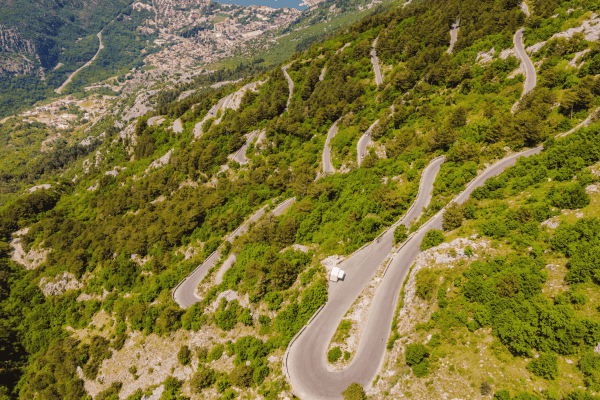
What are the roads like?
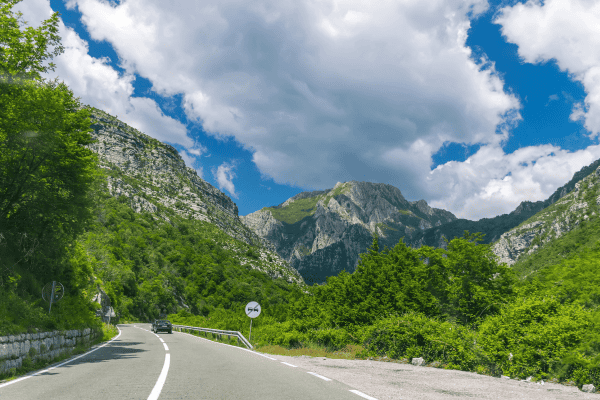
Road quality in Montenegro is actually not bad. On the mountain passes, it is the worst, but even there, you can get by with a normal car.
The entire country is well-paved, and you can basically go anywhere in a normal car. However, some roads do require a 4×4 car, but let’s say that is only 5% of the roads.
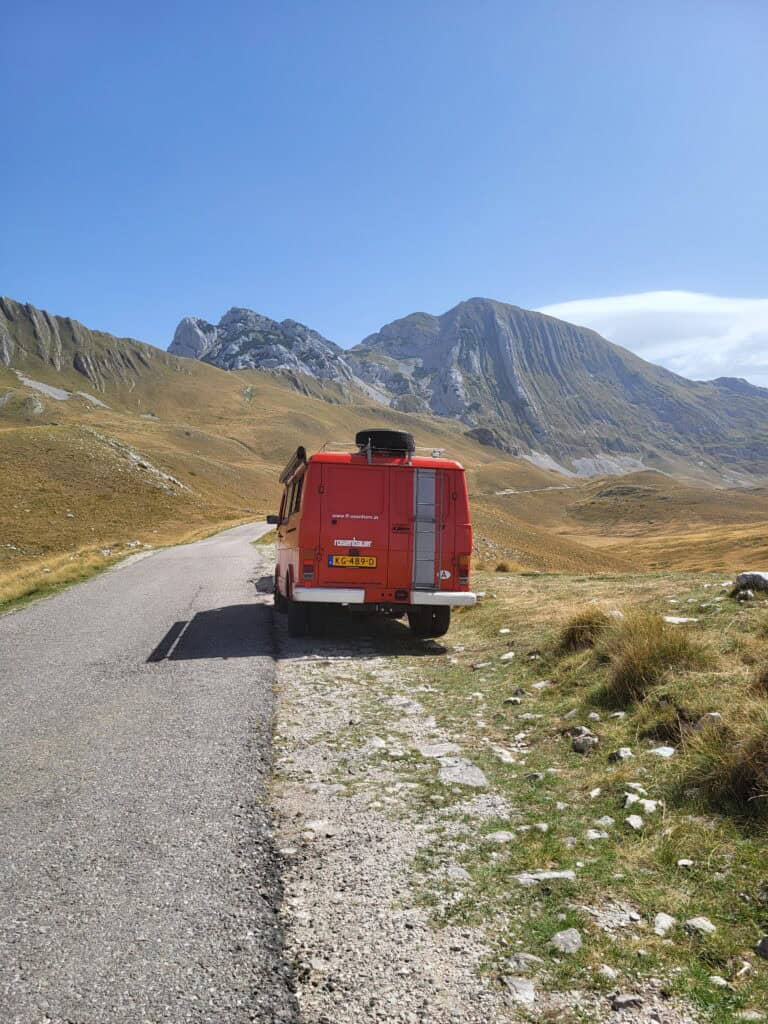
I drove through Montenegro in my wide campervan, and did not find the roads uncomfortable to drive.
Related: Discover the Magic of the Durmitor Ring: Your Ultimate Guide to Montenegro’s Scenic Adventure
What papers do I need to be allowed to drive in Montenegro?
To drive in Montenegro, you should have a driver’s license that is full and valid, from your home country. You do not need any more papers.
If you visit Montenegro with your own car, make sure it’s registered and insured in your home country. Have your papers in order, including a European damage report (I unexpectedly needed it on my trip, so do keep one in your car!)
Can I pass the border in my own car?
Yes. You will go through customs, so make sure to have your identification, driver’s license, and green card with you. Normally, they will check everything and not give you any problems.
I only had some problems with the Bosnian police when crossing the border into Montenegro. They made it very clear to me that I was not welcome in their country anymore, and I was to drive around it on the way back. With no clear reason. But joke’s on them, I took a ferry to Italy on the way back.
The Montenegrin border police were a lot nicer and let me through without any problems.
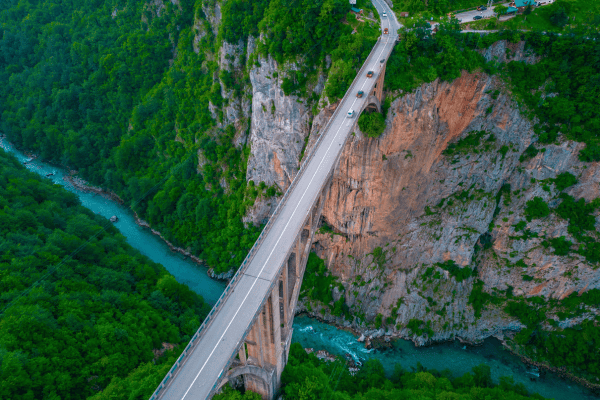
Are there toll roads in Montenegro?
Montenegro has limited toll roads. The main toll applies to the A-1 motorway, which connects Smokovac (near Podgorica) with Mateševo. There’s also a separate toll for the Sozina Tunnel on the road between Podgorica and Bar.
Tolls can be paid by cash or card. For cars, fees are typically around €3–€3.50 on the motorway and about €2.50 for the tunnel, while motorcycles pay roughly €1–€1.50.
So, I wouldn’t worry too much about toll roads. It’s likely you won’t even run into them, and if you do, paying is easy and cheap.
Is gas cheap in Montenegro?
Fuel prices in Montenegro are moderate compared to the rest of Europe. As of 2026, petrol (Eurosuper 95) costs around €1.50–€1.55 per liter, while diesel is slightly higher at €1.65–€1.71. Prices are government-regulated and updated regularly, meaning you’ll find similar rates at most gas stations across the country.
If you’re planning a road trip, keep in mind that mountainous terrain can increase fuel consumption, and gas stations may be limited in remote areas. Payments are simple, with both cash and card widely accepted, making fueling up easy and convenient throughout the country.
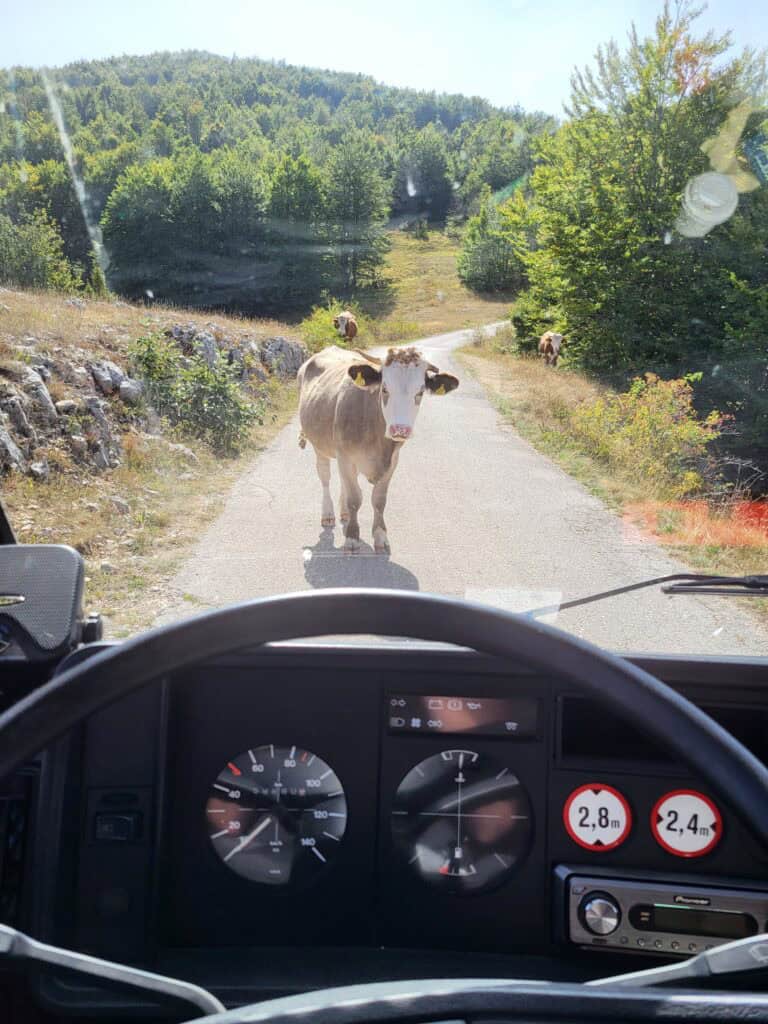
Wildlife and stray animals on the road
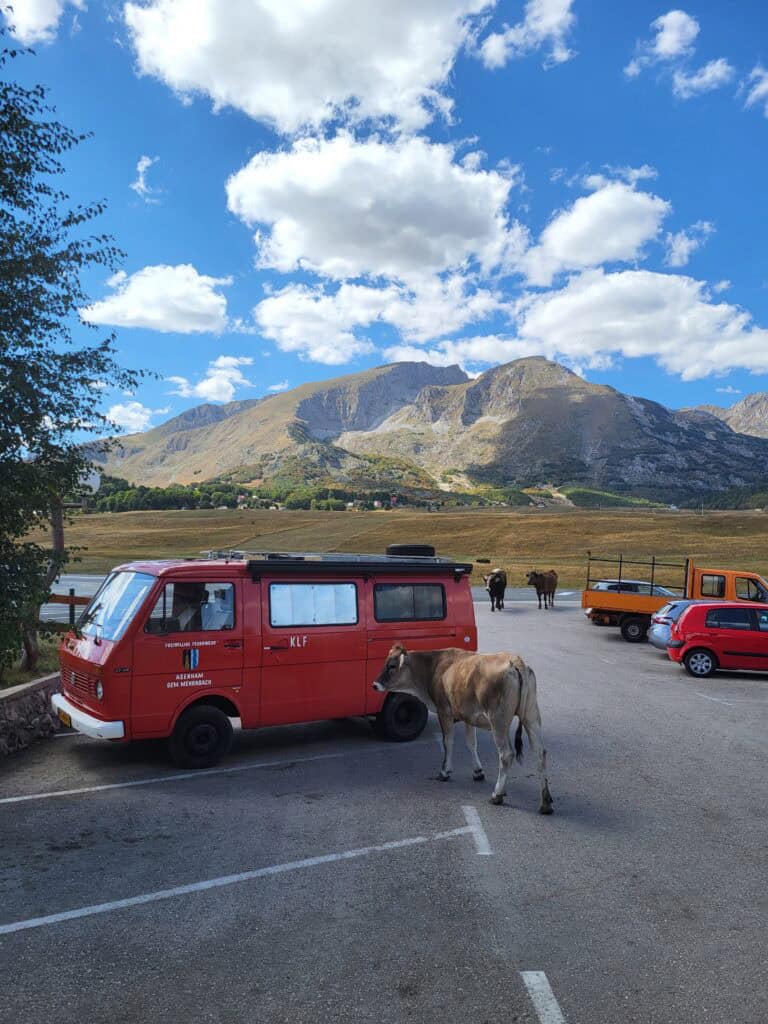
One very important thing that took me by surprise when driving through Montenegro was all the wildlife, livestock, and stray animals on the road. Coming from the Netherlands, I’m not used to keeping an eye out for animals on the road, but I quickly got used to it.
Animals that I encountered on the roads are cats, dogs, cows, horses, goats, and sheep. I did read about turtles and snakes crawling over the road, so do keep an eye out for those. I did see a few paper-flat snakes on the roads, so it is not uncommon to see one.
With cats and dogs, I passed them by slowly and honked in advance, so they would leave the road. This worked quite well, but I’m not sure if there’s a better way to handle these situations.
Related: 9 Perfect Hidden Gems to Discover in Montenegro
To summarize: These are the tips and driving advice you need for Montenegro
Driving in Montenegro is much easier than the rumors suggest, but being prepared makes all the difference. Here are the key things to keep in mind for a safe and enjoyable road trip:
- Rent the right car: A compact or economy car works for most routes, but a bit more power helps on mountain roads.
- Drive defensively: Locals can overtake unexpectedly. Stay calm and let faster drivers pass.
- Keep headlights on at all times: This is mandatory, even during the day.
- Watch your speed: Limits change frequently, especially in the mountains.
- Avoid driving at night: Roads can be poorly lit and harder to navigate.
- Expect animals on the road: From goats to stray dogs, always stay alert, especially in rural areas.
- Plan fuel stops: Gas stations are common, but can be sparse in remote regions.
- Use navigation apps: Tools like Google Maps help you avoid traffic and road closures.
- Carry the right documents: License, insurance, and ID are essential, especially when crossing borders.
- Don’t stress about tolls: There are only a few, and they’re inexpensive and easy to pay.
Extra tips you might not want to skip
These are a few important things that many travelers overlook:
1. Parking can be confusing in cities – In places like Kotor or Budva, parking is often paid and divided into zones. Look for signs or use local apps to avoid fines.
2. Summer traffic is real – During peak season (July–August), coastal roads can get very busy. Try to drive early in the morning or later in the evening.
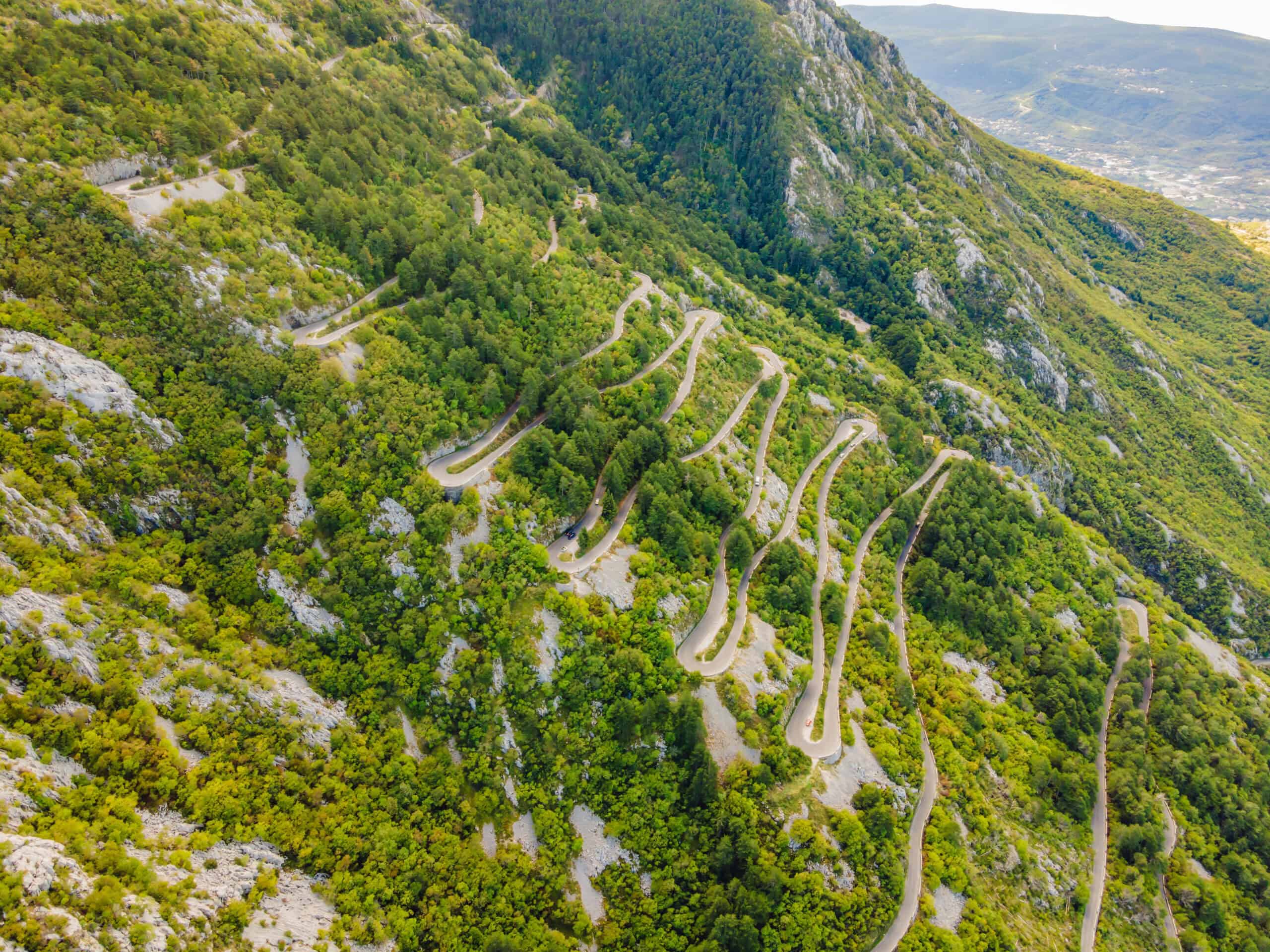
3. Roads can be narrow—very narrow – Especially around mountain areas and scenic routes, expect tight passes where you may need to reverse to let another car pass.
4. Border crossings can take time – If you’re combining your trip with nearby countries like Croatia or Bosnia and Herzegovina, be prepared for queues, especially in summer.
5. Weather can change quickly – In the mountains, conditions can shift fast. Fog, rain, or even snow (outside of summer) can impact visibility and road safety.
6. Download offline maps – Signal can be weak in remote areas, so having offline maps on Google Maps is a lifesaver.
Final thoughts on driving in Montenegro
You are now completely prepared to head out onto the Montenegrin roads! As you can see, it is not scary, and anyone can drive here.
Where is your first stop in Montenegro? Let me know in the comments below!
Happy travels!
Related posts
- 9 Perfect Hidden Gems to Discover in Montenegro
- Discover the Magic of the Durmitor Ring: Your Ultimate Guide to Montenegro’s Scenic Adventure
- The Ultimate Montenegro Travel Itinerary for 7 Days: Perfect Road Trip Itinerary for You!
- These Are The 9 Best Things To Do in Herceg Novi, Montenegro!
- 10 Days in Albania: A Magical Travel Itinerary
Read This Before Driving in Montenegro – Tips for a Good Road Trip


2 Comments
Comments are closed.