Twenty-nine times, a church bell rang out after a Lake Superior freighter vanished in a November storm, one ring for each crew member. A rector pulled that rope on his own, and a songwriter later put the moment into one of the most famous ballads ever written.
That church still stands and still rings every November. Its pews were promised to be forever free, a gift from a widow who wanted sailors to have a place to pray.
I love that Michigan has a downtown church that once got rolled down the street, stone walls and all. Workers even found an old tunnel underneath that points to the Underground Railroad.
I can’t imagine a better place to feel the pull of the Great Lakes. So how did one small church end up carrying so many sailors’ stories?
A Stone Lighthouse Standing At The Doorstep To Canada
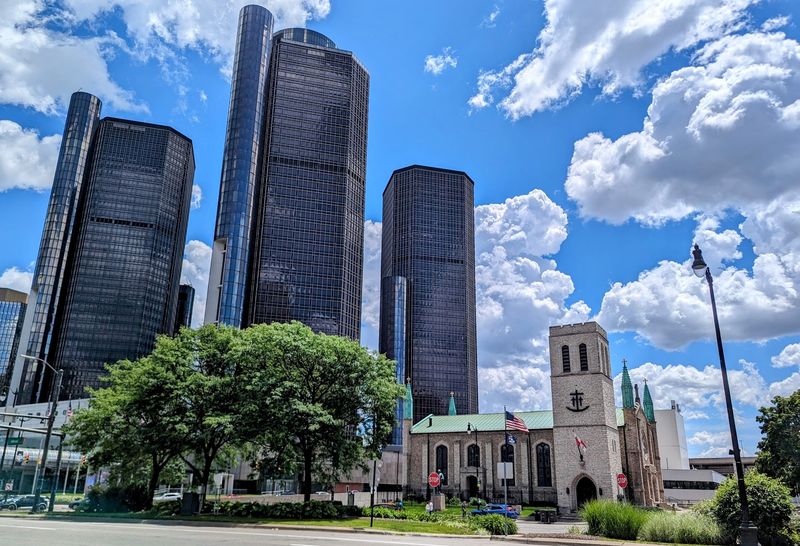
Few churches can claim an international border crossing as a next-door neighbor. Mariners’ Church of Detroit sits roughly 151 feet from the entrance to the Detroit-Windsor Tunnel.
That’s close enough to wave at Canada, almost. The little stone church stands at the foot of the Renaissance Center, facing Hart Plaza and the Detroit River beyond.
People call it Detroit’s spiritual lighthouse, and the nickname fits. Another title floats around too: the Maritime Sailor’s Cathedral, which sounds grand for such a modest building.
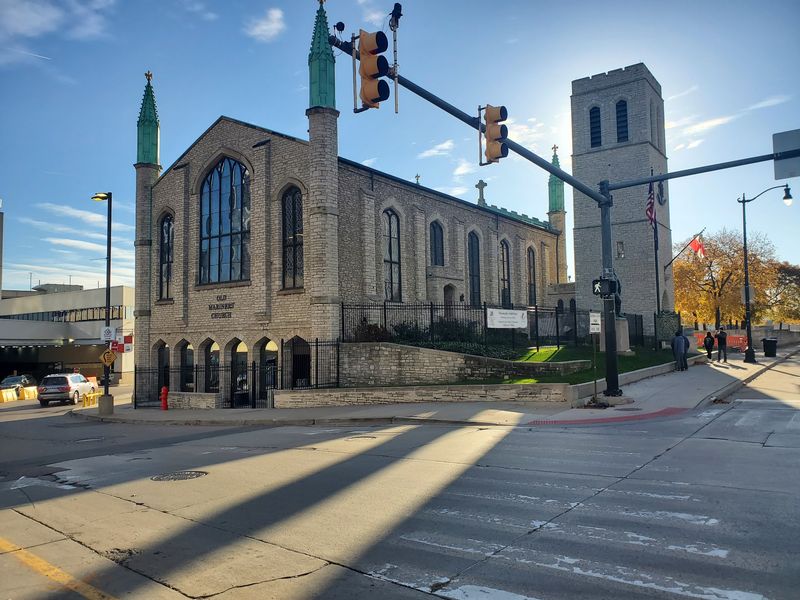
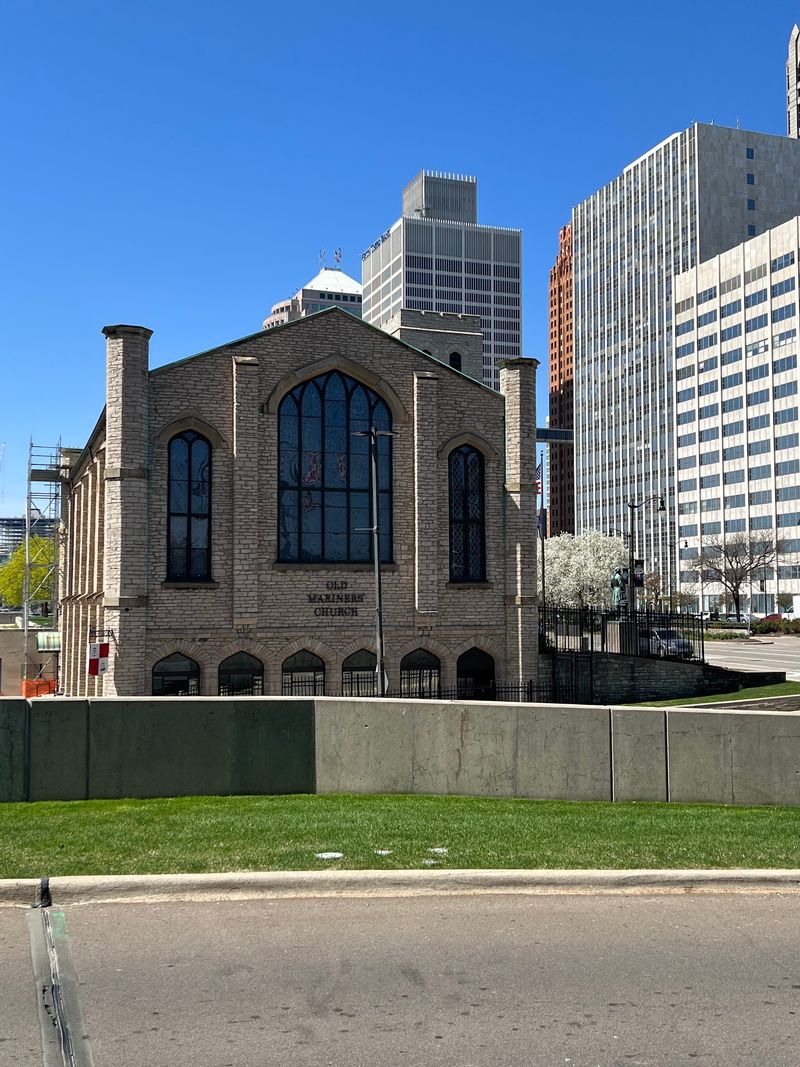
Modest doesn’t mean forgettable, though. With glass towers looming overhead, the gray stone walls and bell tower look like a page torn from an older Michigan.
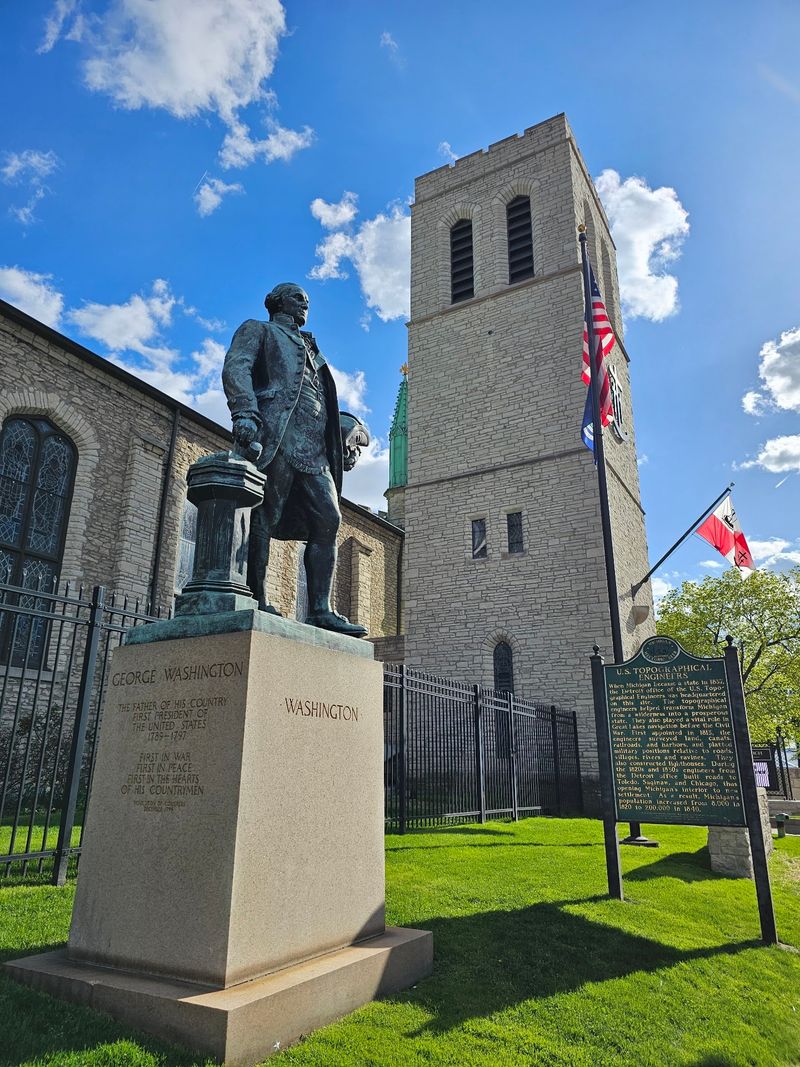
Out on the grounds, a bronze George Washington by sculptor Donald De Lue keeps watch. He gives the whole corner a surprisingly monumental feel for a church this size.
The congregation is active, with regular Sunday services and a weekday midday option. So this isn’t a museum piece frozen behind velvet ropes.
Plenty of folks zoom past on their way to the tunnel without a second glance. After reading its story, you probably won’t be one of them.
One Widow’s Will And A Promise Of Forever Free Pews
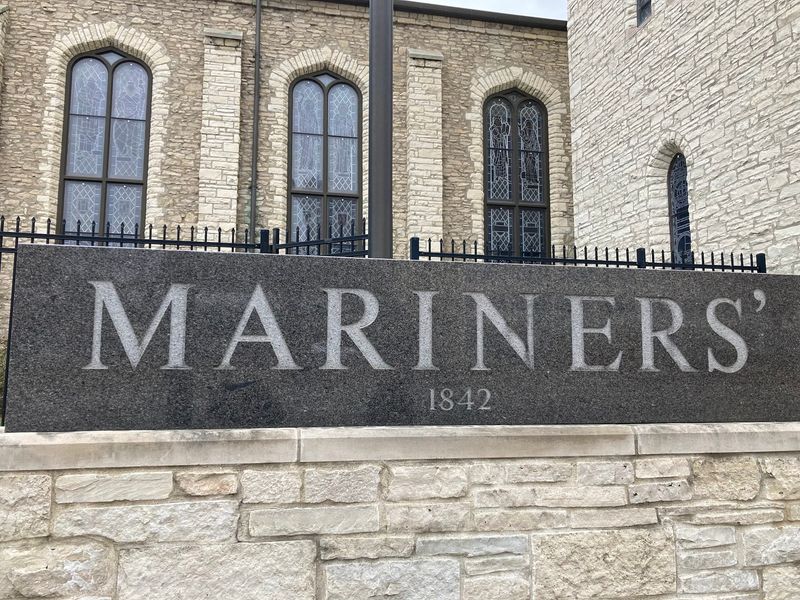
Back in 1842, a woman named Julia Ann Anderson wrote a will that still shapes Detroit today. She was the widow of Colonel John Anderson, a former commander of Fort Detroit.
Her wishes were clear and refreshingly generous. She wanted a church for the spiritual well-being of sailors and the wider community.
Then came the detail I love most. The pews were to be forever free, which mattered in an era when many churches rented seats to families.
Picture the riverfront back then, crowded with sailors far from home and short on cash. A free seat at worship was a real kindness, not a slogan.
Michigan had only been a state for about five years at that point. So Mariners’ Church of Detroit is woven into the earliest chapters of the state’s story.
The church grew into an independent parish rather than one tied to a larger denomination. That independence helped it hold onto its original purpose for generations.
Every time a sailor or a stranger slips into a pew without paying a dime, her promise lives on. Not bad for a document written over 180 years ago.
Gothic Revival Walls That Have Stood Since 1849
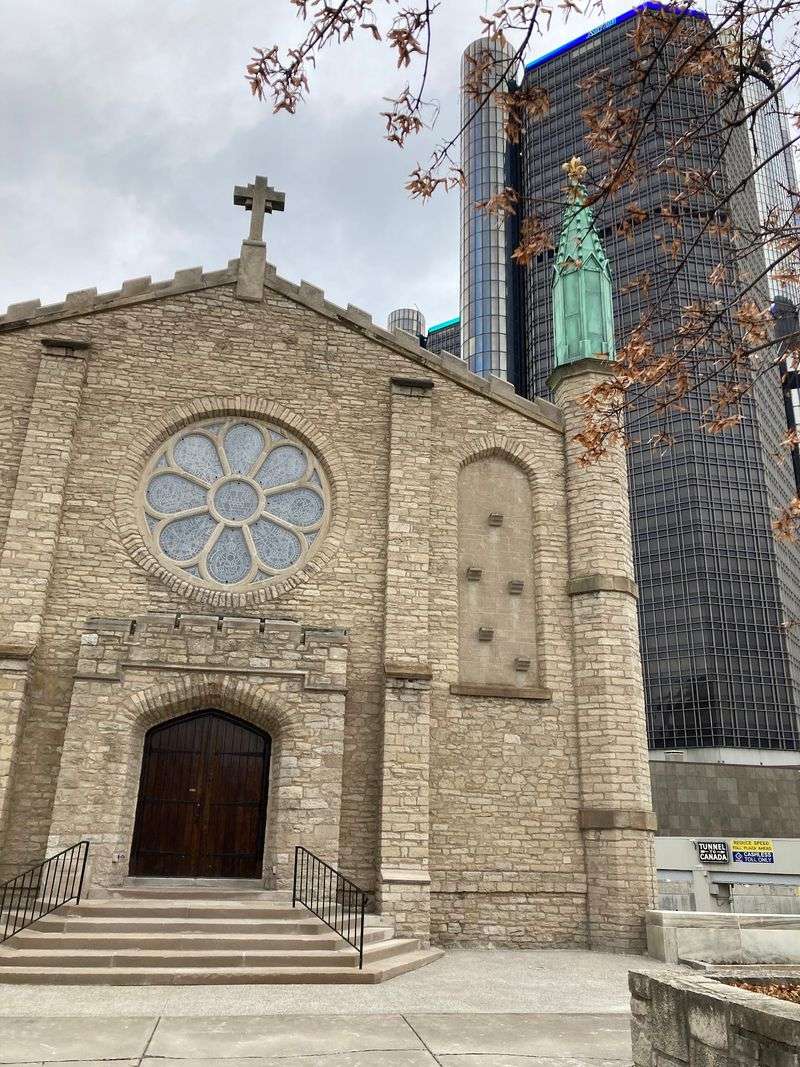
Seven years after the will, the stone went up. Construction on the current building wrapped in 1849, making it one of the oldest churches in Detroit.
Architect C.N. Otis designed it in the Gothic Revival style.
Think pointed arches, sturdy stone, and a look that feels serious without being stuffy.
Gothic Revival was a popular choice for American churches in that era. Here it gives the building a quiet confidence that holds its own beside skyscrapers.
Honestly, the contrast is half the fun. Sleek glass towers on one side, mid-1800s masonry on the other, and somehow neither looks out of place.
The bell tower came much later, added in 1957. It would go on to play the starring role in the church’s most famous tradition.
Mariners’ Church earned a spot on the National Register of Historic Places in 1971. That listing recognizes what Detroiters already knew about this sturdy old landmark.
Stand across the street and take a good look before heading in. Those walls have watched Detroit change from a river town into a motor city and beyond.
The Day Detroit Rolled A Church Down The Street
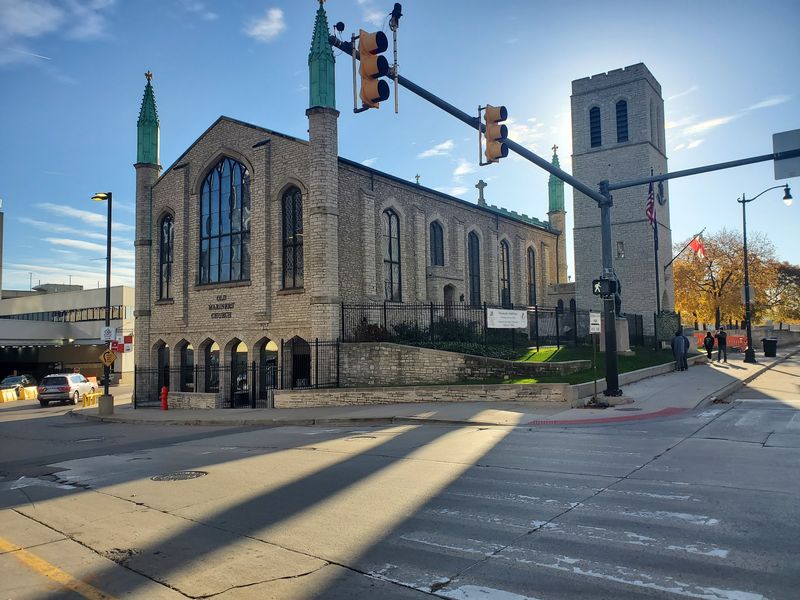
Six million pounds of stone, moving down a city street. That’s what happened in 1955, when Mariners’ Church of Detroit went on the road.
The city was building a new civic center, and the church stood in the way. Instead of tearing it down, Detroit decided to move the whole thing.
Crews shifted the roughly 3,000-ton building about 880 feet east. The project took four months, which sounds slow until you remember what they were carrying.
Originally, the church stood near the foot of Woodward Avenue. Its new home put it right where it sits today, beside the future tunnel entrance.
I can’t imagine the nerves of whoever was in charge that spring. One wobble and a century of history could have cracked like a dropped plate.
Yet the stone church arrived intact and kept right on serving. Its bell tower was added just two years later, in 1957.
It’s a very Michigan story when you think about it. When something matters, folks here find a way to keep it around rather than start over.
A Surprise Tunnel Hiding Beneath The Floor
Moving a church tends to reveal a few secrets. During the 1955 relocation, workers uncovered a tunnel beneath the building.
That find pointed to something remarkable. The church appears to have served as a stop on the Underground Railroad.
Detroit sat just across the river from Canada, a crucial destination for freedom seekers. A church this close to the water would have been a natural place to help.
It’s one of those details that changes how the whole building feels. The same stone that sheltered sailors may also have sheltered people chasing freedom.
The tunnel isn’t a tourist attraction you can wander through. Still, knowing it was there adds real depth to a visit.
I believe this is the kind of history Michigan should brag about more often. It’s quiet, it’s brave, and it was literally hiding under everyone’s feet for decades.
Next time you stand on that corner near the border crossing, the geography clicks. Freedom was right across the water, and this church stood at the edge of it.
Twenty-Nine Rings That Became A Song
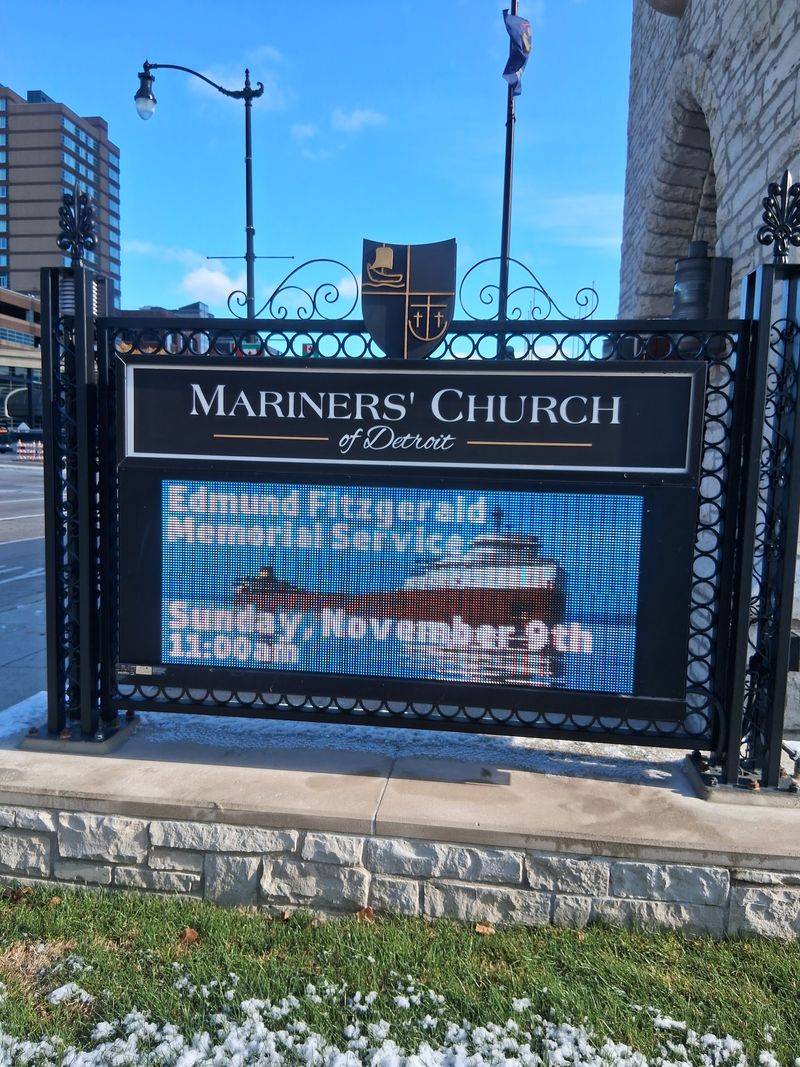
November 10, 1975 brought a brutal storm to Lake Superior. The freighter SS Edmund Fitzgerald went down, and all 29 crew members were lost.
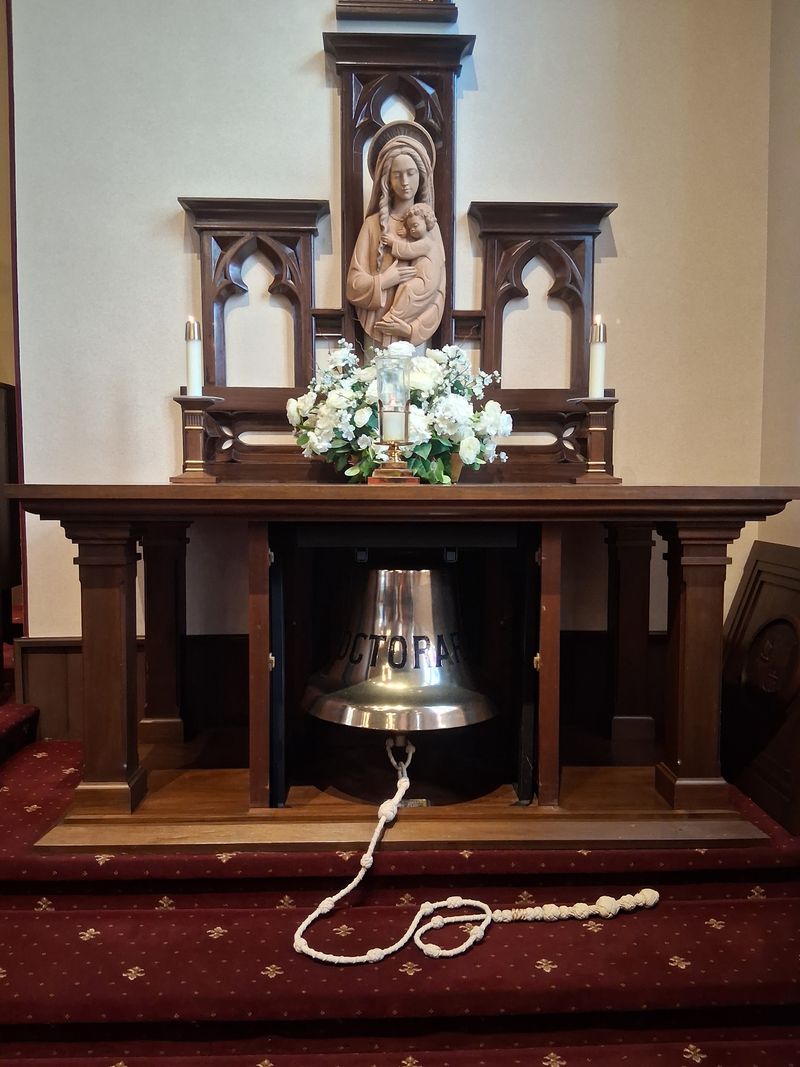
The next day, the Reverend Richard Ingalls Sr. did something nobody asked him to do. He rang the church bell 29 times, once for each man aboard.
It was a simple, spontaneous act of grief. Nobody planned it for cameras, and that’s exactly why it hit so hard.
Canadian songwriter Gordon Lightfoot heard about it. He wrote the moment into his 1976 ballad, The Wreck of the Edmund Fitzgerald.
Those lyrics about the musty old hall in Detroit put Mariners’ Church on the map for millions. One fun twist is that the sanctuary is anything but musty.
Ingalls later became a bishop, and the Ingalls family remains part of the church’s story. His single decision turned a local gesture into a lasting tradition.
Plenty of Michigan kids grew up humming that tune without knowing the church was real. Learning it still stands downtown feels like finding the last verse of the song.
Every November, The Bell Still Answers The Lakes
Some traditions fade after a few years. Not this one, which has kept going for half a century.
Each November, Mariners’ Church of Detroit holds its Great Lakes Memorial Service. The gathering remembers everyone lost on the Great Lakes, not only one ship.
The bell is typically tolled 29 times for the Fitzgerald crew. Then it rings one more time for all the other mariners the lakes have claimed.
That extra ring is what gets me. It quietly widens the circle to include sailors whose names never made it into a song.
The 50th anniversary of the sinking arrived in 2025, and the church planned special services for it. Folks traveled from across the U.S. and Canada to be part of it.
If you go, remember it’s a worship service first. Arrive early, dress respectfully, and let the moment speak for itself.
Fall in Michigan already carries a certain chill and reflection. Pairing a color drive with this service makes for one of the most meaningful November outings in the state.
Ship Models, Stained Glass, And A Sanctuary Full Of Sailors
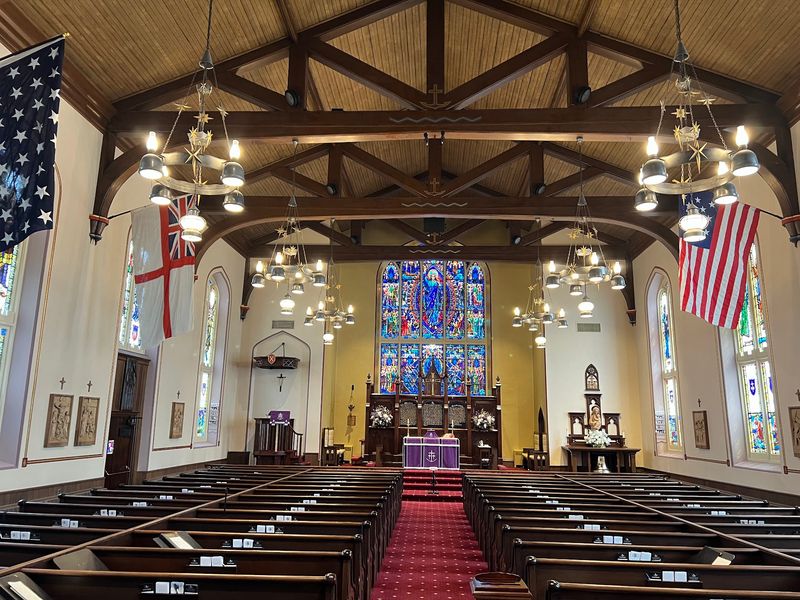
Nautical touches turn up nearly everywhere inside. The sanctuary is filled with maritime symbols that make the church’s mission impossible to miss.
Stained glass windows show mariners and Great Lakes imagery. Paintings, photographs, and ship models add even more seafaring character to the room.
It’s a little like a chapel and a maritime museum decided to share a lease. Somehow the mix feels reverent rather than cluttered.
Music is a big part of the experience, too. The church has a notable pipe organ, and the 11 a.m.
Sunday service features a full choir.
Traditional hymns and Anglican church music fill the space during worship. For anyone who loves classic sacred music, that alone may justify the trip.
The windows deserve a slow look on a sunny day. Color spills across the pews, and each panel seems to carry another story from the water.
I like how every detail ties back to the people this place was built for. Sailors aren’t just remembered here once a year, they’re part of the walls.
Old Prayers, Warm Coffee, And A Blessing For The Fleet
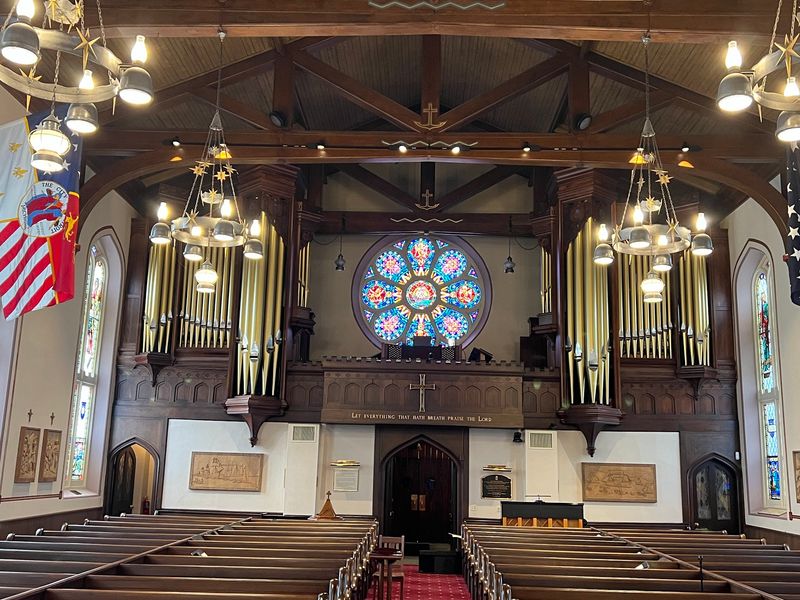
Tradition runs deep in the worship here. Mariners’ Church of Detroit follows Anglican liturgy and uses the 1928 Book of Common Prayer.
Sunday Holy Communion services take place at 8:45 a.m. and 11 a.m. The later one brings in the full choir, so plan accordingly if music is your thing.
On Thursdays, a short midday service runs from 12:10 to 12:30 p.m. It’s a neat option for downtown workers who want a quiet break before lunch.
After Sunday services, there’s a social hour with coffee and homemade treats. Faith and baked goods have always made a strong team.
Families will find Sunday School for children. Adults can join a weekly Wednesday study group as well.
Every March, the church hosts the Blessing of the Fleet. Prayers go up for sailors’ safety before the Great Lakes shipping season begins.
I love that the calendar here follows the water. Spring brings a blessing, fall brings remembrance, and the sailors stay at the center all year long.
Parking, Hours, And Timing Your Visit Right
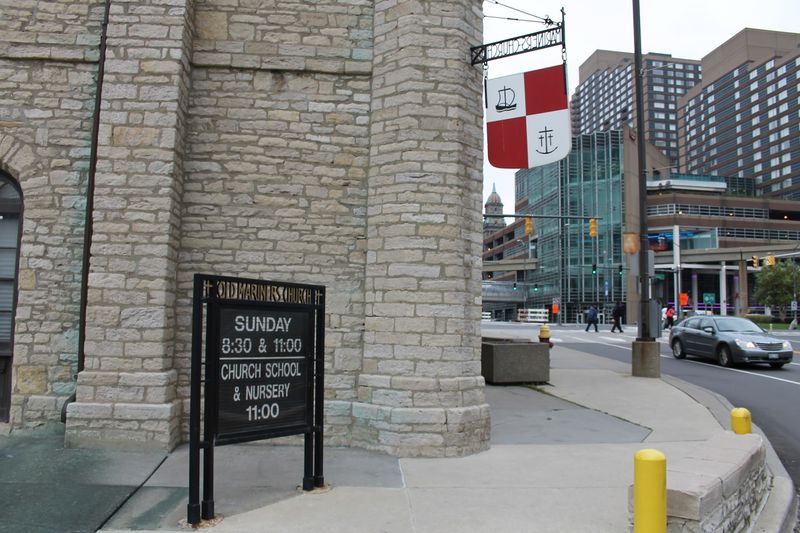
Good news for drivers heading downtown. Mariners’ Church of Detroit offers complimentary parking in a connected underground garage.
The entrance sits in the median of Jefferson Avenue, so watch closely as you approach. Street spots nearby are limited because of tunnel operations.
You’ll find the church at 170 East Jefferson Avenue, Detroit, MI 48226. It’s right beside the Detroit-Windsor Tunnel entrance and the Renaissance Center.
Office hours generally run Monday through Friday, 10 a.m. to 4 p.m. Sunday hours cover the morning services and the social time afterward.
Saturdays are typically closed, so don’t build a weekend plan around that day. Hours can change, and nearby construction has affected access at times, so checking ahead is smart.
Can’t make the drive? The 11 a.m.
Sunday service and the Thursday midday service are streamed on Facebook.
For the full experience, though, nothing beats sitting in those old pews in person. Michigan road-trippers can easily pair a visit with a riverfront stroll across Hart Plaza.
Why This Little Church Earns A Spot On Your Michigan List
Plenty of famous landmarks are bigger, louder, and busier. Very few carry this much heart in such a small footprint.
Mariners’ Church of Detroit packs a widow’s promise, a rolling relocation, and a possible Underground Railroad stop into one building. Then it adds a bell that a whole continent learned about through a song.
History buffs will be thrilled, obviously. Music lovers, Great Lakes fans, and anyone who grew up with that Lightfoot ballad will feel right at home too.
Faith visitors get something even richer. This is a living congregation with traditional worship, a fine choir, and pews that are still free.
Timing makes a difference. A November visit around the memorial service carries special weight, while a March trip lines up with the Blessing of the Fleet.
Any time of year works for a quiet look at the stained glass and ship models. Just confirm hours before you go.
I believe every Michigander should hear the story of this place at least once. Better yet, go stand under that bell tower and let the lakes have the last word.