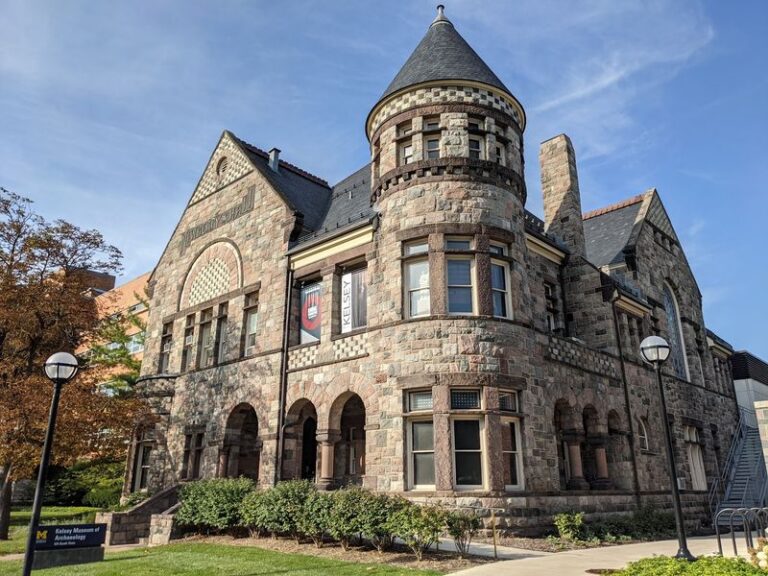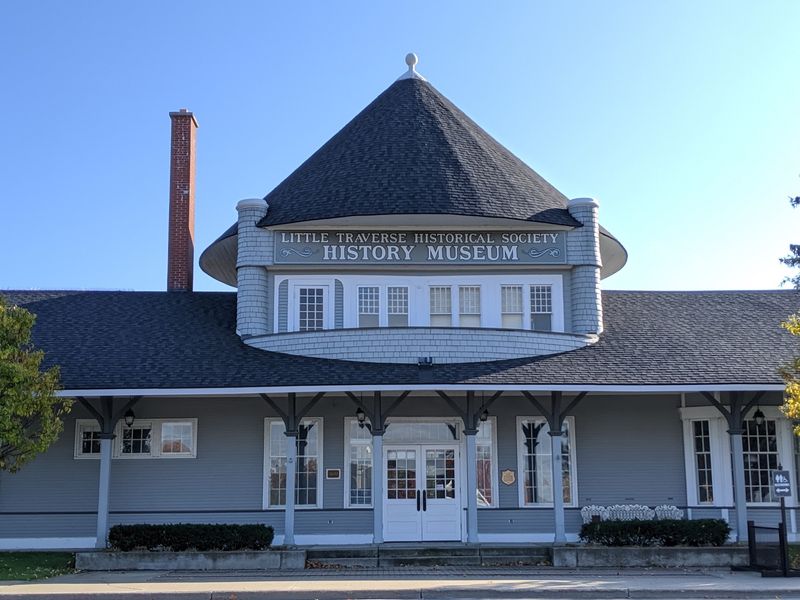
A piano that belonged to Ernest Hemingway’s mother now lives inside an old train depot built in 1892. That depot almost faced the wrecking ball.
Today it holds some of the best small-town history in northern Michigan.
The stories go deeper than one famous writer. The town itself carries the name of an Odawa leader whose sons grew up near a river just steps from the building.
I like how the land’s first chapter sits right beside the literary one.
There’s more tucked between the old walls. You’ll find a rough, unpolished version of the state’s most famous stone, plus exhibits on local women and a bird that once filled the skies here.
I can’t imagine a better excuse to slow down on a lakeshore trip. So what else is waiting inside that old station?
An Old Station Sitting Right By The Bay
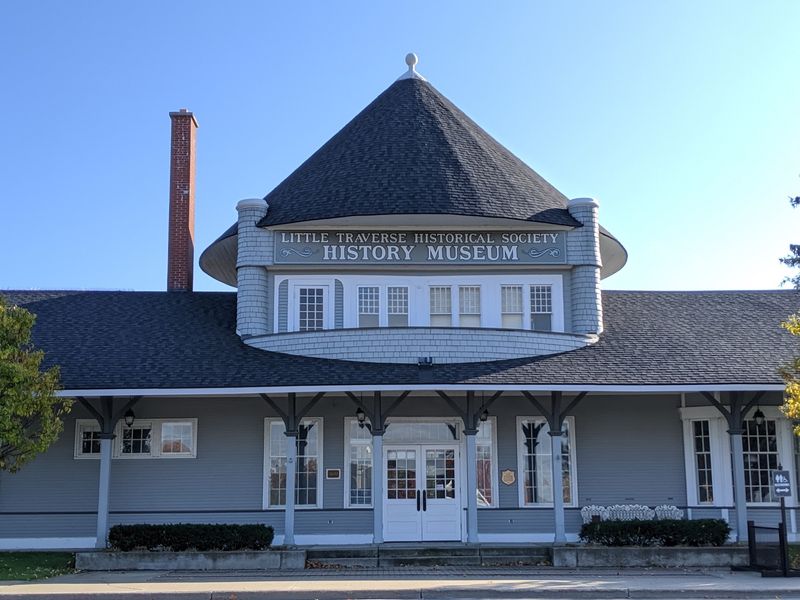
The trains stopped rolling here decades ago, but the station never lost its purpose. The Little Traverse History Museum now fills the old depot in Petoskey, Michigan, with stories instead of passengers.
It’s a small museum with a big job. Run by the Little Traverse Historical Society, it covers the people, places, and moments that shaped the Little Traverse Bay area.
The location is half the fun. The depot sits beside a lakeside park, right near the bay and close to the downtown shopping and restaurant district.
That means you can pair a museum stop with a stroll through town. Few history lessons come with this kind of water view outside the door.
Inside, the exhibits stretch across a surprising range of topics. You’ll see Odawa heritage, Hemingway’s northern summers, local women’s history, lumbering, and a lot of vintage photographs.
None of it feels overwhelming, because the space is cozy and easy to cover. Most people can see everything in about an hour, which leaves plenty of daylight for the beach.
Think of it as the perfect starter course for Petoskey. Once you know the backstory, the whole town looks a little different.
Railroad Roots Dating Back To 1892
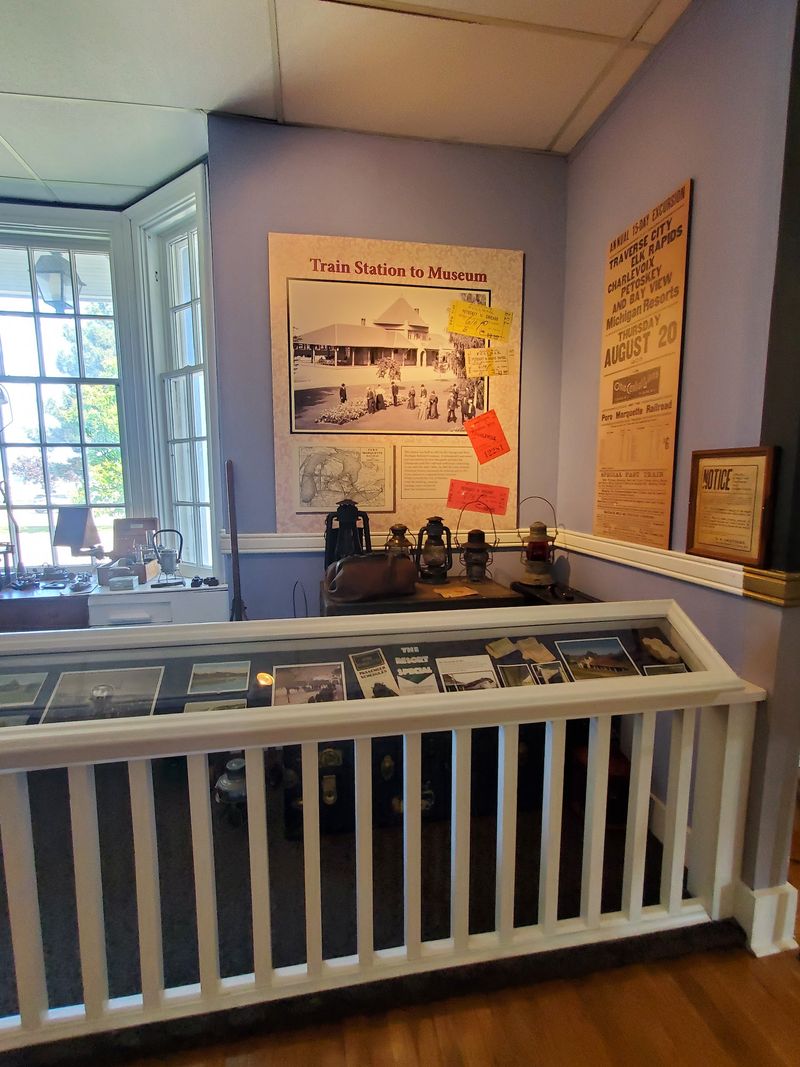
In 1892, the Chicago and West Michigan Railroad built this depot on Petoskey’s waterfront. Back then, rail travel was the main way summer visitors reached northern Michigan.
The station saw plenty of owners over the years. The Pere Marquette Railroad and later the C&O Railroad both ran trains through these tracks.
Each company added another chapter to the town’s busy past. Resort guests, local workers, and freight all moved through this small building by the bay.
Railroads helped turn Petoskey into a summer destination. Without them, the town’s resort era might have looked very different.
Then times changed. By the 1960s, train service to the waterfront had ended, and the depot sat without a clear future.
Plenty of old stations across the country simply vanished during that stretch. This one came close to the same fate, with demolition on the table.
It’s worth pausing on that while you stand inside. The floor under your feet has outlasted several railroad companies and a long quiet spell.
That staying power gives the museum an extra layer of meaning. The building itself is one of the most important artifacts in the collection.
How A 1905 Society Saved The Depot
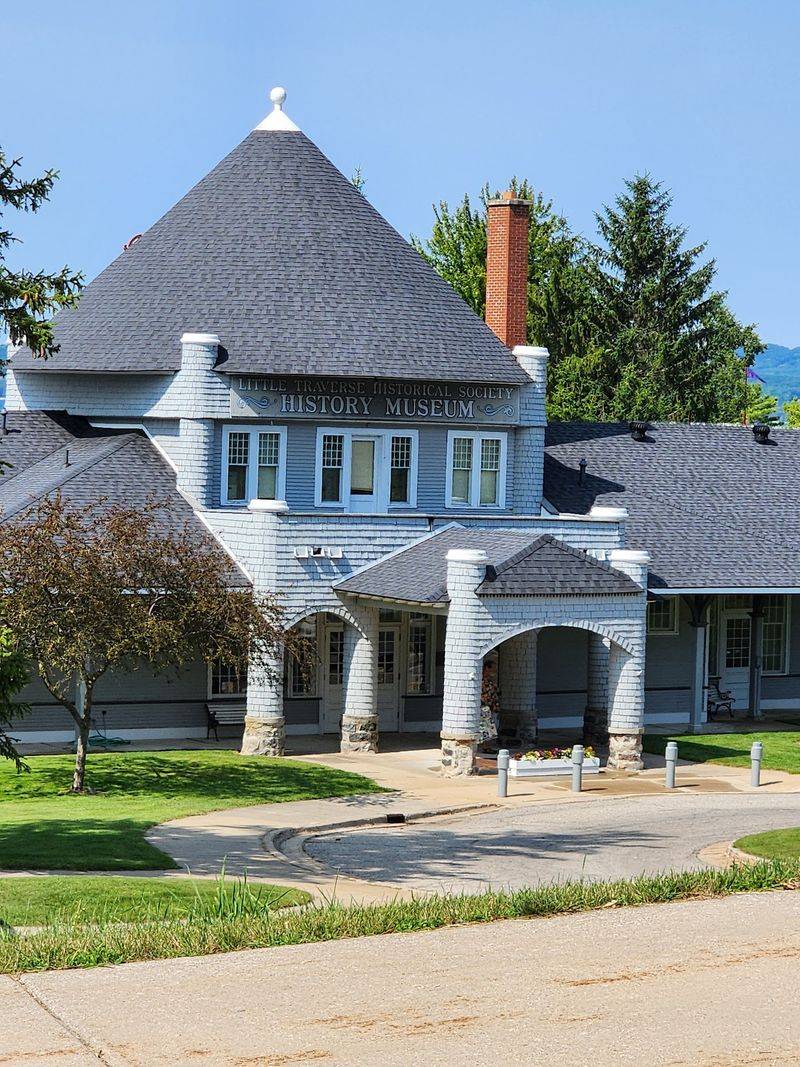
Good news arrived just in time for the empty station. The Little Traverse Historical Society stepped up, acquiring the depot and the land around it.
The group was hardly new to preservation work. It formed in 1905, more than six decades before it took over the building.
The renovation took about two years. In 1971, the depot reopened as the Little Traverse History Museum, ready for a brand-new kind of traveler.
That reopening gave the structure a second life that has now lasted more than fifty years. Not bad for a building once headed toward demolition.
The Society’s mission is simple and steady. It aims to preserve, advance, and share knowledge of the Little Traverse Bay area’s history.
In practice, that means collecting artifacts and thousands of photographs. Those images help visitors see how daily life looked here generations ago.
Volunteers keep the daily operations running. The museum has openly credited them, saying it couldn’t do the work without that help.
So every visit supports a long chain of local care. Your admission helps keep a 1905 mission going strong in a building from 1892.
Odawa Heritage At The Heart Of The Story
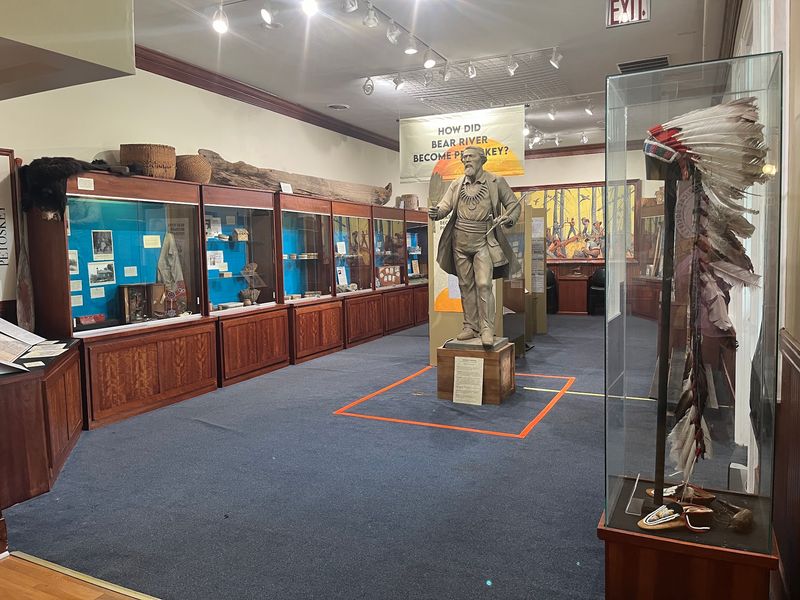
Long before any railroad arrived, the Odawa people called this land home. The museum’s Odawa exhibits help visitors understand that foundation.
That history matters deeply in this corner of Michigan. The Little Traverse Bay Bands of Odawa Indians remain part of the area’s present, not only its past.
The museum presents the heritage and stories of the Odawa people with care. It’s a chance to see the region through the eyes of its first communities.
Visitors have pushed the museum to keep improving this part of the story. The museum responded by inviting feedback and offering to show its Odawa exhibits in person.
That kind of openness feels right for a heritage museum. History grows richer when the people closest to it help shape how it’s told.
Take your time in this section rather than rushing toward the famous author. The Odawa story explains why the town exists where it does.
It also connects directly to the town’s name. That link becomes even clearer in the next part of the museum.
For Michiganders proud of the state’s Native heritage, this section alone can justify the drive.
The Chief Behind The Town’s Name
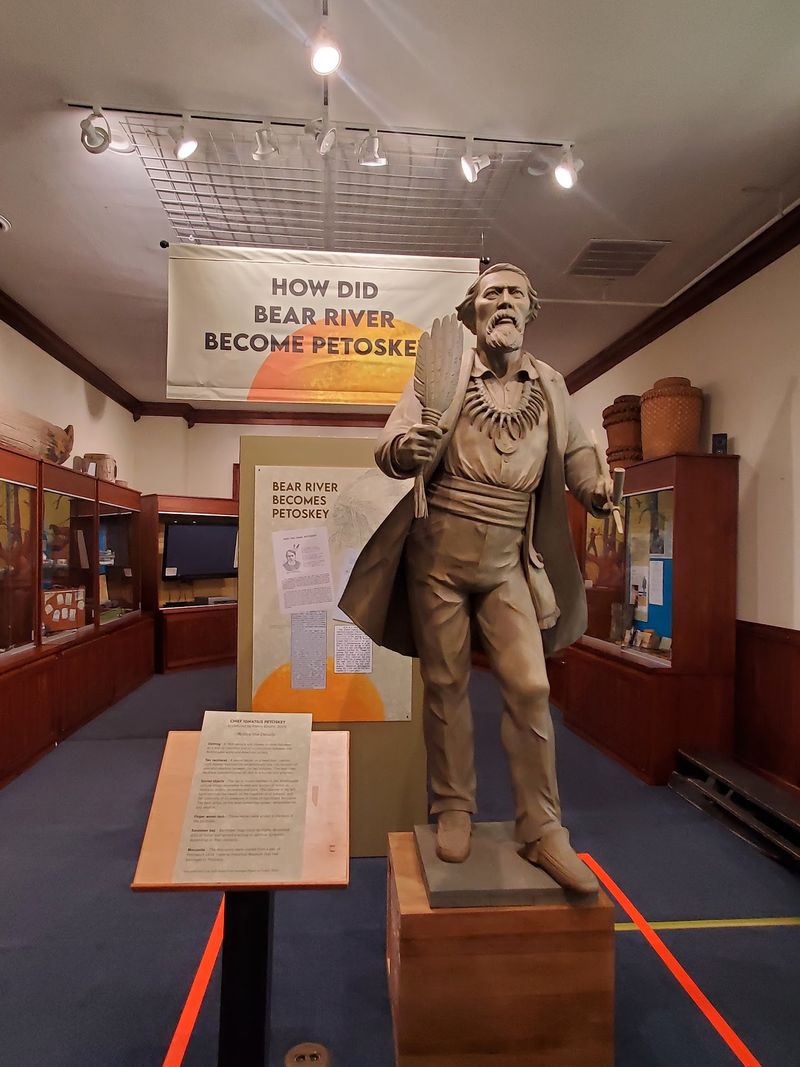
Ever wondered where the name Petoskey came from? In 1873, the town was named after Chief Neyas Petosega, whose family played a major role in the area’s development.
His name has appeared in many spellings over the years. Chief Petosky and Chief Petoskey both show up in local history.
Here’s a detail that gives the museum’s location real weight. His sons were raised near the Bear River, only a short distance from the depot.
That makes the exhibit feel rooted in place. You’re learning about this family on nearly the same ground where they lived.
Chief Petosky comes up often when people describe their visits. The museum’s volunteer staff can also share background on the family and the area.
It’s a story many Michigan travelers have never heard. Plenty of people pass through Petoskey every summer without knowing the man behind the name.
After this section, the town sign hits differently. You’ll understand that Petoskey carries an Odawa legacy in every mention.
And when you walk outside afterward, look toward the river. That short stretch of geography connects the exhibit to real life.
Young Hemingway’s Northern Summers
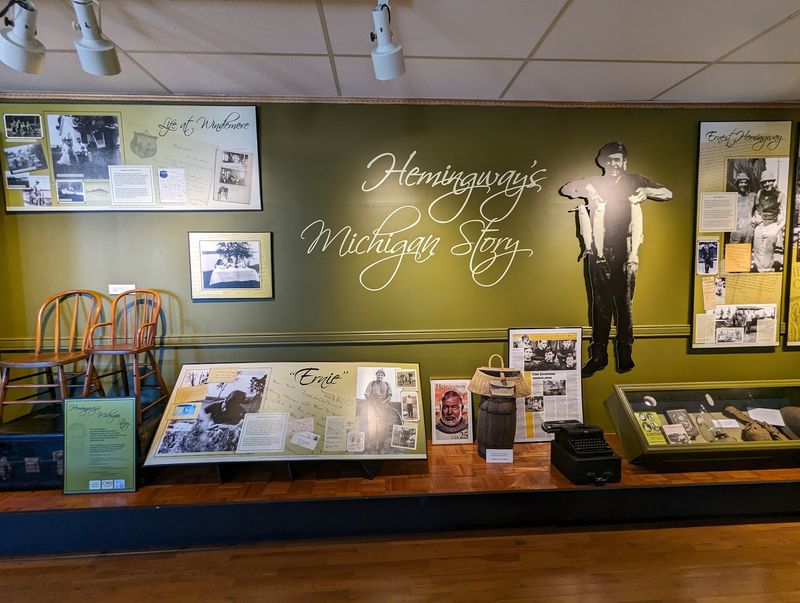
Before he became a literary giant, Ernest Hemingway was a kid spending summers near Little Traverse Bay. The museum holds a large collection about those formative years.
His ties to the area run deep. He spent many boyhood summers nearby and even lived in Petoskey during the winter of 1919 to 1920.
The exhibit includes photographs, artifacts, and family heirlooms. Together they show a side of Hemingway that rarely makes the textbooks.
Fans who have toured his Key West home may find this a fun contrast. Northern Michigan shaped him long before the tropical chapter began.
Here’s a fun local twist. Hemingway wasn’t a Petoskey native, yet his name draws plenty of curious readers to town.
The Hemingway family section gets lots of love from people who visit. It works well even if you’ve only read one of his books in high school.
Want to see his world outside the museum? The Society’s Hemingway walking tour traces sites tied to his early life around town.
Either way, you’ll leave knowing why Michigan settings kept slipping into his early stories.
A Piano With A Famous Family Connection
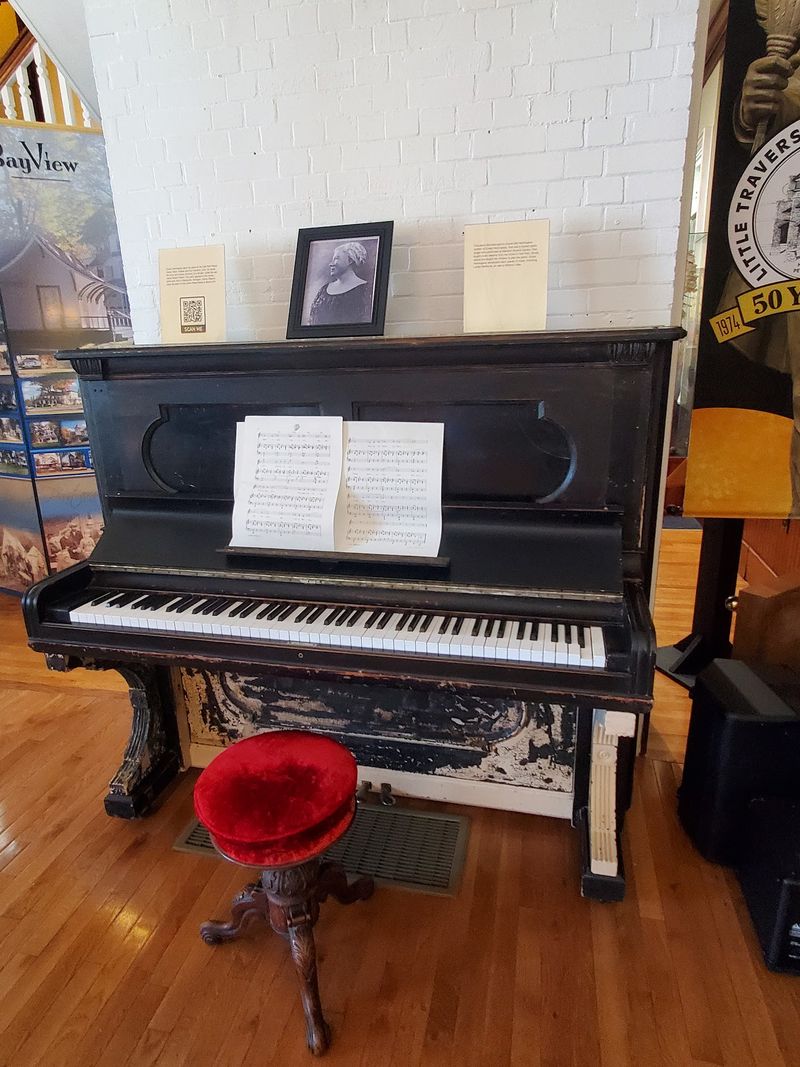
Of all the Hemingway relics, one stands out for sheer size. The museum acquired a piano that once belonged to Grace Hall Hemingway, Ernest’s mother.
Grace was a musician, so the piano carries real family meaning. It’s a direct link between a household and the author who grew up in it.
Museum pieces usually sit behind glass. A piano, though, feels personal in a way a photograph never quite matches.
The instrument has become one of the most talked-about items in the building. It pops up again and again when people describe what they saw.
One family even shared a sweet moment tied to a piano at the museum. A young member of their group played a few minutes of music while everyone read the exhibits.
The sound was a little out of tune, by their account. Still, it turned a quiet history stop into a memory.
Rules for touching any instrument can vary, so ask staff first. Respect for the collection comes before your best recital.
Even just standing near it is enough. You’re looking at something the Hemingway family lived with every day.
Local Women Who Moved The Needle
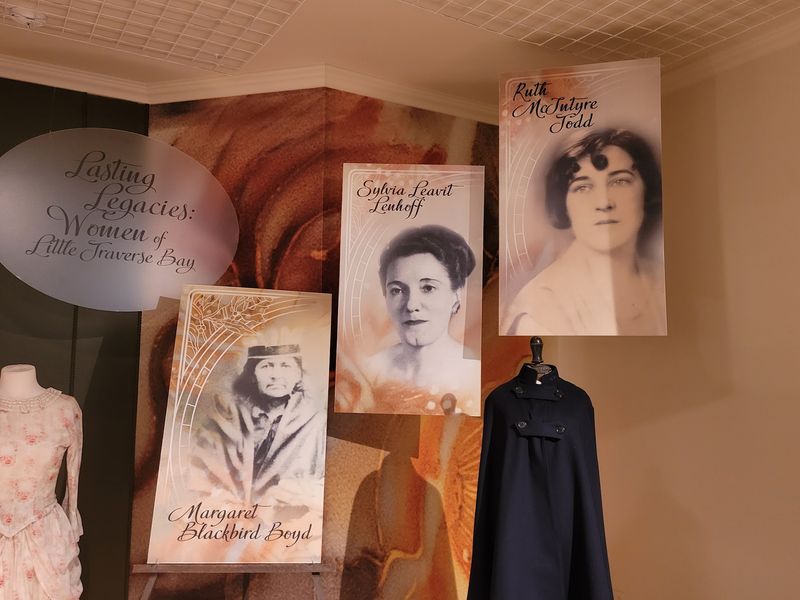
Hemingway may get the headlines, but local women did plenty of history-making here too. The museum features exhibits on women’s suffrage in Petoskey.
Those displays highlight the efforts of area women pushing for the vote. It’s a reminder that big national changes started in towns just like this.
The museum has also hosted a display called Legendary Women in Little Traverse Bay. Families have even contributed information about relatives for that kind of exhibit.
That community involvement gives the stories a personal touch. These aren’t distant figures, but grandmothers and great-aunts with local roots.
Exhibits rotate, so the exact lineup can change by season. Past visits have covered founders, fashion, and early 20th century social clubs.
Fashion displays add a fun visual angle. Clothing tells you a lot about how people worked, celebrated, and spent their summers.
Social clubs reveal how neighbors connected before phones and screens. Those groups helped shape the town’s civic life.
Put together, these sections give the museum surprising range. The quieter stories end up being some of the most memorable.
Lumber Camps And A Bird That Filled The Sky
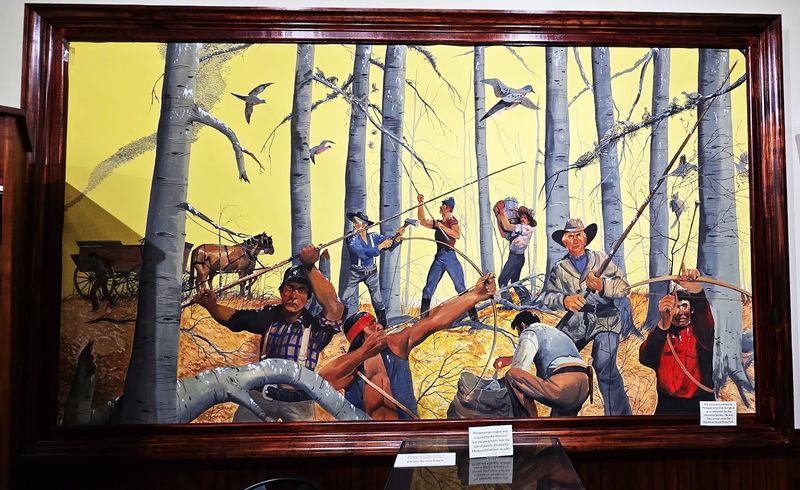
Millions of birds once darkened the skies over this region. The museum features an exhibit on the passenger pigeon, which nested heavily around Little Traverse.
The species is now extinct, which makes the display hit hard. It’s one of the most striking natural history stories tied to northern Michigan.
Hearing that such a huge flock thrived here can feel unreal. The exhibit helps put that lost abundance into perspective.
Right alongside it, you’ll find the region’s lumbering story. Timber shaped the early economy and changed the landscape around the bay.
Logging drew workers and built towns across Michigan. Railroads like the one that built this depot helped move that timber and those people.
Connecting those dots is part of the fun. The building, the forests, and the wildlife all belong to one bigger story.
Families with curious kids may find this section a great conversation starter. Questions about birds and forests often lead to bigger talks about change.
It’s also a good reminder for anyone hiking nearby. The woods you see today grew back from a very different past.
Raw Petoskey Stones And Old Winter Films
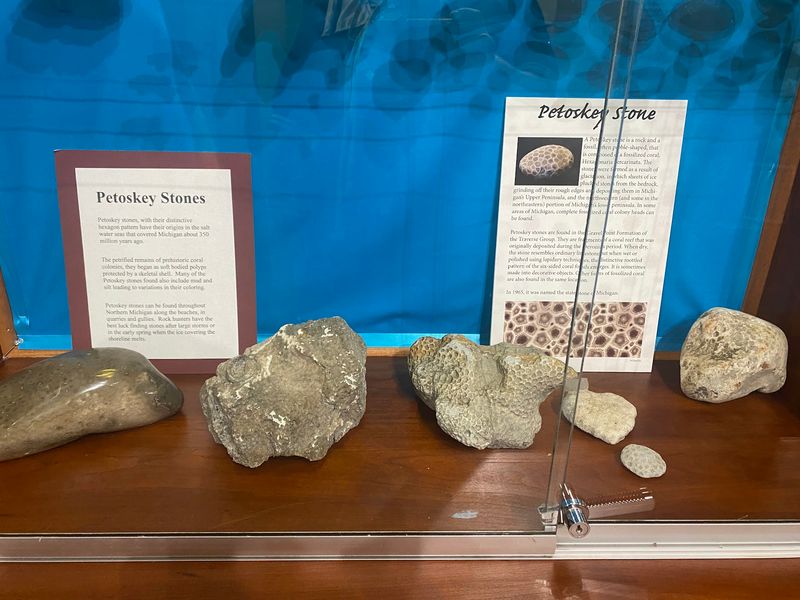
Most Petoskey stones you see are polished and shiny. The museum shows off an excellent natural, unpolished sample that looks quite different.
Michigan’s state stone has become a legend all its own. Seeing it in raw form helps explain why beachcombers stare so hard at wet rocks.
Here’s a handy tip for later. Spotting an unpolished stone on the shore gets easier once you know its natural look.
The museum also nods to the area’s winter past. Petoskey once had a ski scene before Boyne Mountain opened in the 1960s.
Vintage Winter Wonderland movies have been a favorite with returning families. Old footage of snowy fun brings that era back in a cheerful way.
Film offers something photos can’t. You get to watch people move, laugh, and bundle up against northern Michigan cold.
Combined, these exhibits show the town across seasons. Summer stones and winter slopes both helped build Petoskey’s identity.
Not bad for a few small displays. They might send you straight to the beach with fresh eyes.
Hands-On Fun For Young Explorers
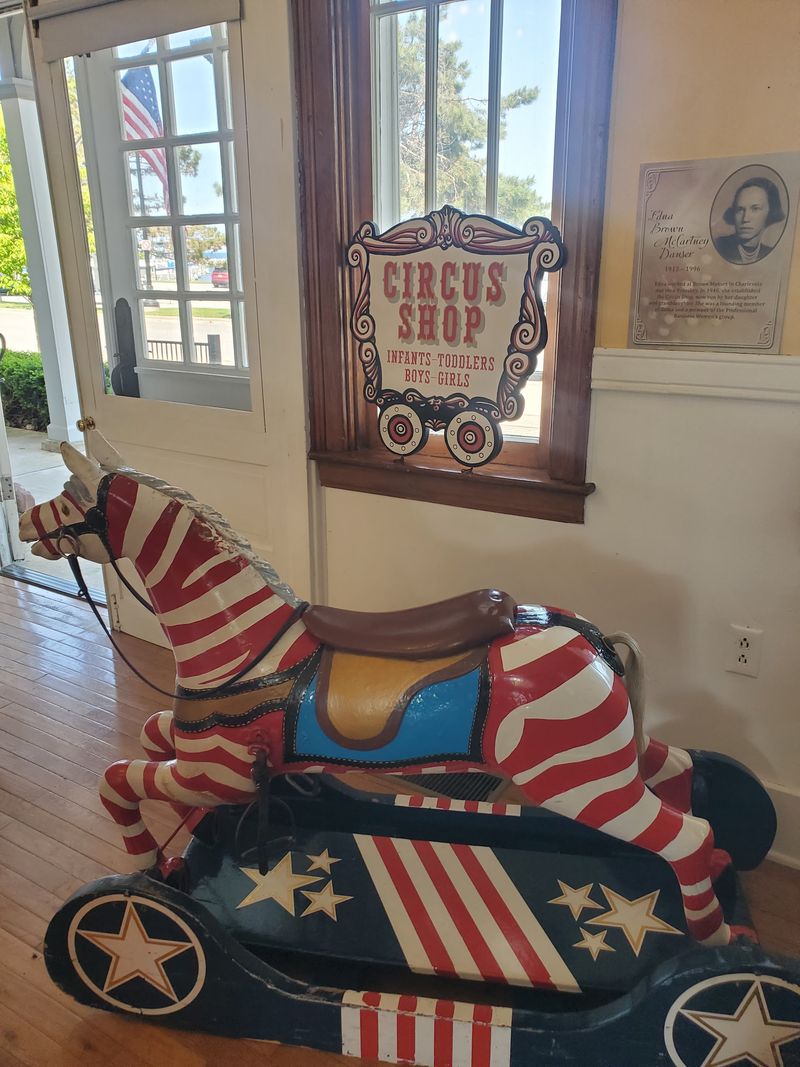
Kids usually get bored fast in museums, right? This one keeps them busy with hands-on activities mixed into plenty of history.
Families have mentioned children building ice castles during past visits. Yard games outside have also given little ones space to burn off energy.
Activities can change over time, so expect some variety. The idea stays the same, though, with learning that feels like play.
Families often describe a great time learning about the area together. Short attention spans fit well in a building you can cover in about an hour.
Even better, children get in free. Museum members also skip the admission fee, which makes repeat visits easy.
The lakeside park outside adds another bonus. Kids can run around before or after looking at exhibits.
School groups visit too, with tours starting before the public season. That shows how seriously the museum takes young learners.
Bring the grandparents along for extra stories. Older Michiganders may remember details the exhibits only hint at, and kids love hearing them.
Walking Tours And A Summer Corn Roast
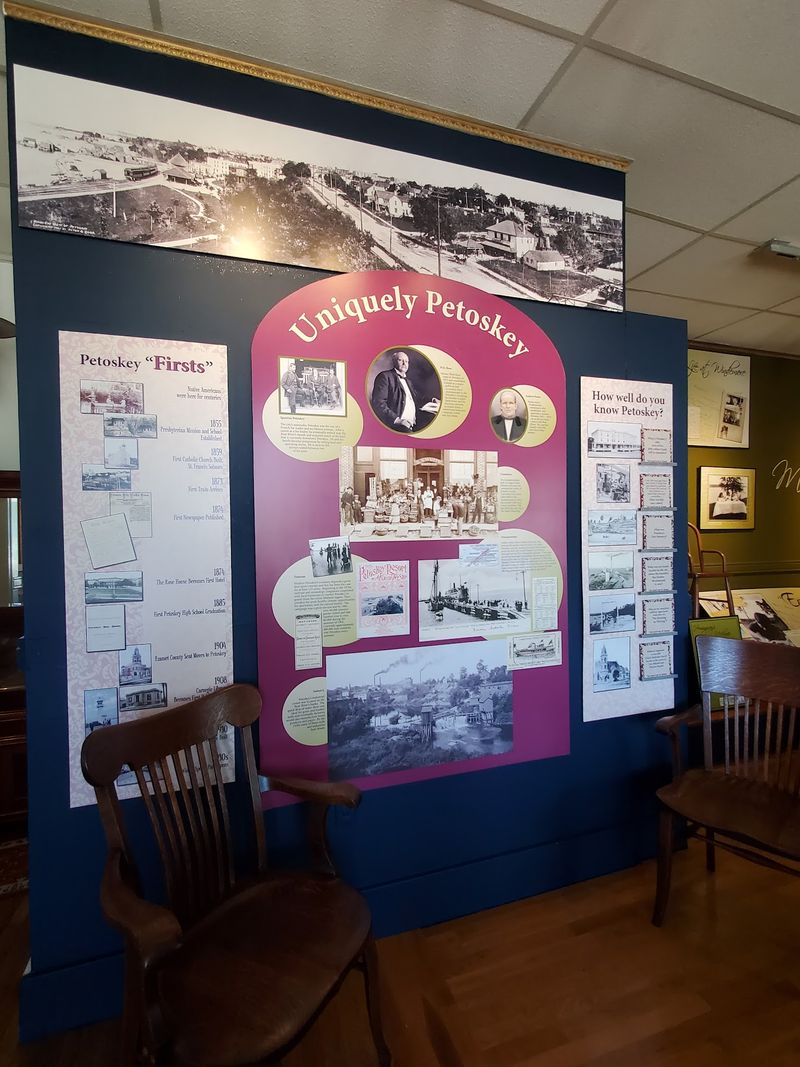
History doesn’t stop at the depot doors. The museum offers walking tours that take the story out onto Petoskey’s streets.
The Hemingway Tour follows the author’s footsteps through town. It visits sites linked to his early life in northern Michigan.
The Vintage Views Walking Tour covers other historic places and stories. It’s a great pick if you want local flavor beyond one famous name.
Walking tours turn ordinary storefronts into chapters of a bigger story. You may never look at downtown the same way again.
Then there’s the annual Corn Roast. The tradition brings people together for good food and good company in a historic setting.
Few things say Michigan summer like fresh corn. Enjoying it beside an 1892 depot adds a nice dose of nostalgia.
Other special programs pop up during the season too. They often explore specific parts of local history in more depth.
Dates and tour times can shift year to year. Checking the schedule before your trip can help you catch the events you want.
Planning Your Stop At The Old Depot
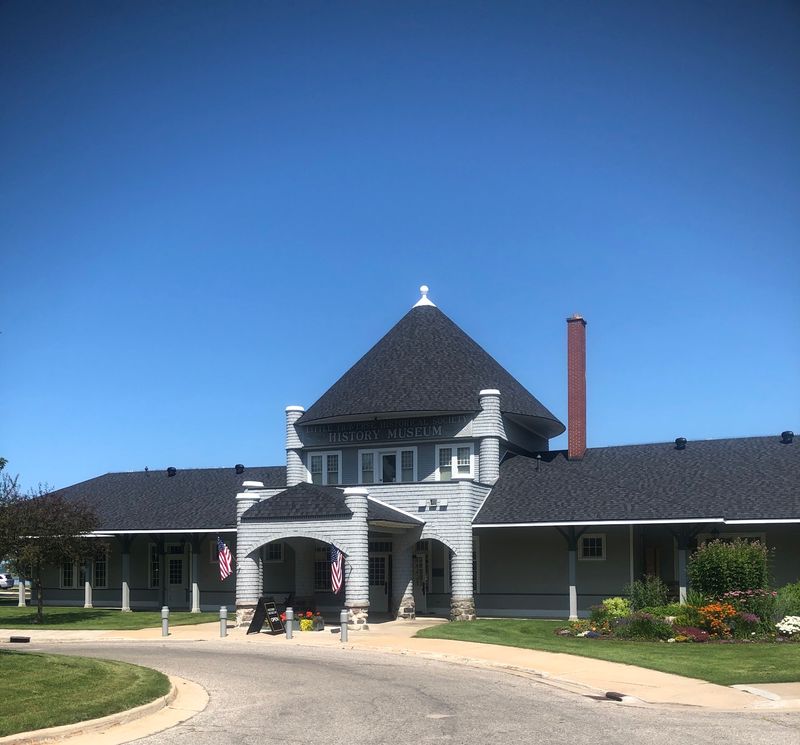
Timing matters most here. The Little Traverse History Museum closes for winter, then reopens for school tours in late May and the public in early June.
Recently, the public opening fell on June 9. Dates may shift a bit, so confirm before planning a Michigan road trip around it.
During the season, hours run 10 a.m. to 4 p.m., Monday through Saturday. The museum stays closed on Sundays.
You’ll find it at 100 Depot Court, Petoskey, MI 49770. The address still honors the building’s railroad roots.
Admission is a small fee for adults. Kids and members get in free, which keeps family outings budget-friendly.
Getting there can be part of the adventure. One group biked in from Harbor Springs along the trail and landed right at the lakeside park.
Plan on about an hour inside. Then wander to the nearby shops and restaurants downtown.
Fall trips can work beautifully if the museum is still open. Color drives through northern Michigan pair nicely with a history stop.
Why This Little Depot Earns A Day Trip
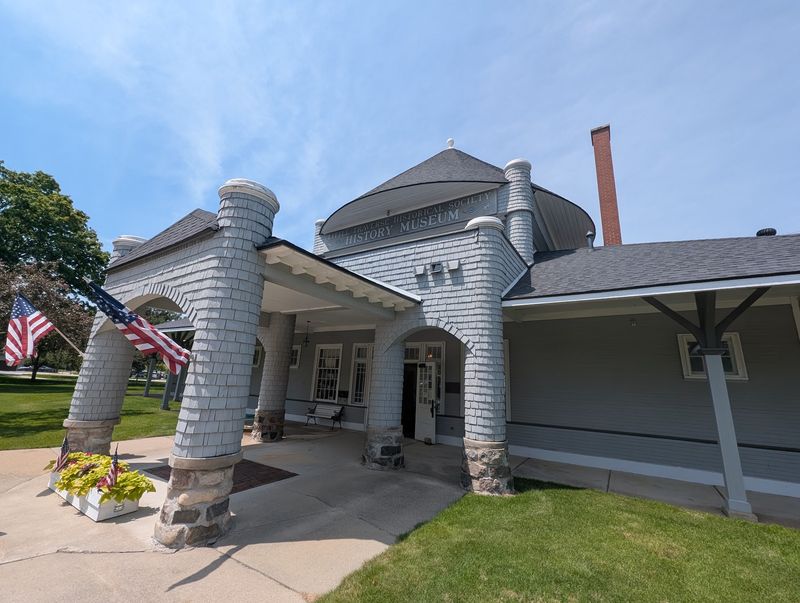
Small museums rarely pack this many worlds into one room. An 1892 depot, an Odawa legacy, and Hemingway’s boyhood all share the same address.
That mix makes the place feel personal. It tells Petoskey’s story without pretending any single chapter is the whole thing.
The overall rating sits at 4.5 stars, which says plenty about its charm. Friendly volunteers and a cozy layout help it punch above its size.
Is it huge? Not at all, and that’s part of the appeal.
You can finish in an hour and still leave with fresh stories. Then the bay, the park, and downtown are all waiting right outside.
For Michiganders who love insider heritage, this is a satisfying find. It’s the kind of stop that sparks plenty of “I never knew that” moments.
Bring curious kids, a literature buff, or a grandparent with memories. Everyone tends to find a corner that speaks to them.
And the next time you hear the name Petoskey, you’ll know exactly who it honors. That alone makes the old depot worth the drive.