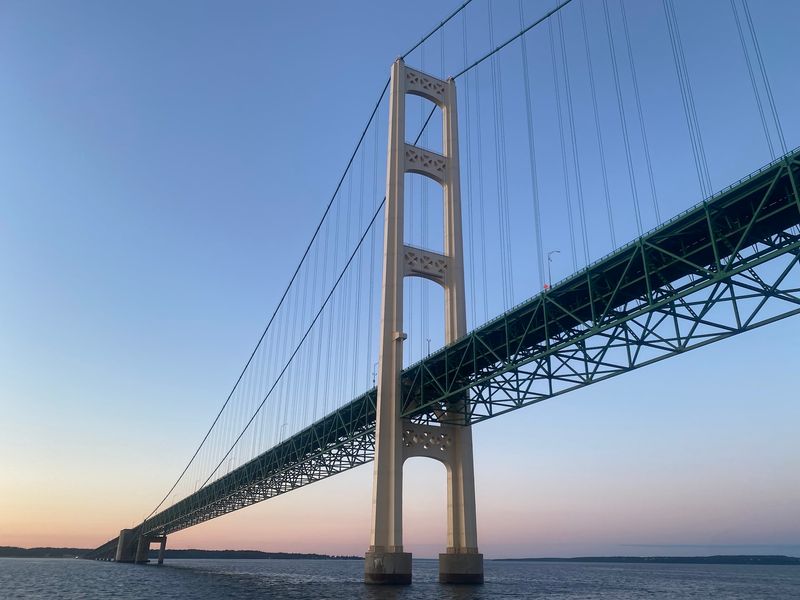
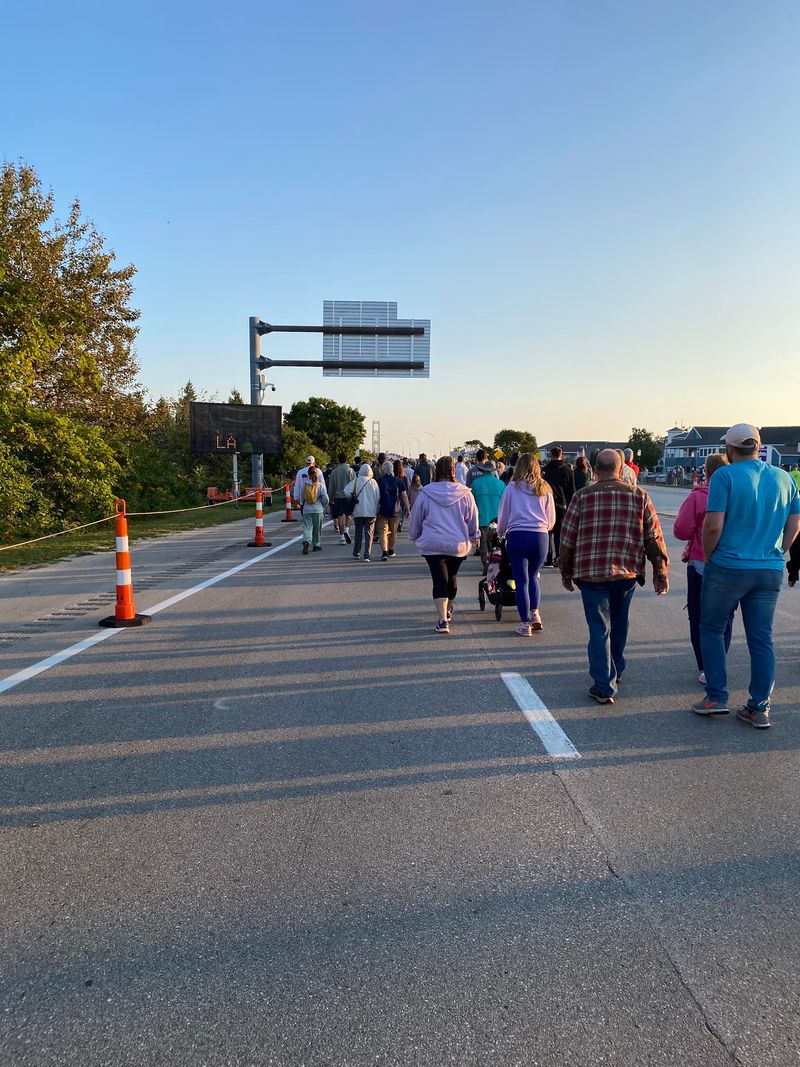
Every Labor Day morning, nearly five miles of highway over open Great Lakes water goes completely quiet. No cars, no trucks, no boats passing below.
Just people on foot, thousands of them.
The first group to try it in 1958 numbered only 68. In 1992, about 85,000 showed up and walked alongside a sitting U.S. president.
I love that a tradition can start that small and grow that big.
This is one of the most famous structures in Michigan. Most of us know it from behind a steering wheel, gripping a little tighter in the wind.
On foot, everything slows down, and the water feels much closer.
I can’t imagine a better excuse to wake up early on a holiday. So how do you actually join the walk, and what should you know first?
Five Miles Of Steel Linking Two Peninsulas
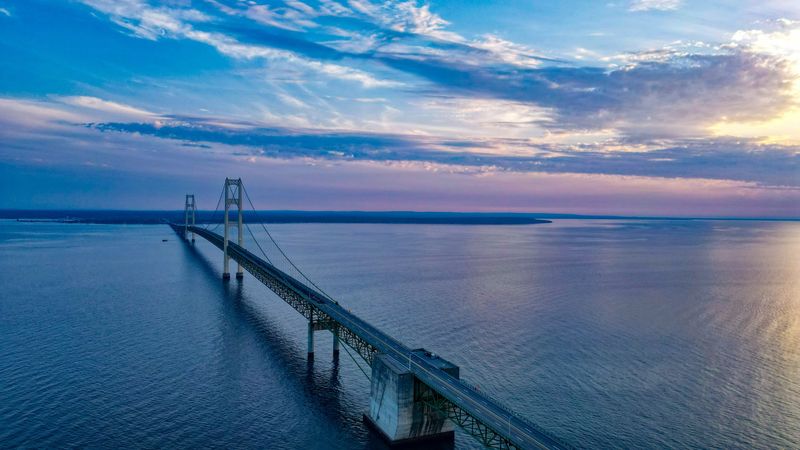
Michiganders call it the Mighty Mac, and the nickname fits. The Mackinac Bridge stretches 26,372 feet across the Straits of Mackinac, which works out to nearly five miles.
On the south end sits Mackinaw City in the Lower Peninsula. On the north end you’ll find St. Ignace, the doorway to the Upper Peninsula.
For most of the year, the bridge is a working highway carrying I-75 traffic. It’s open 24 hours a day, every day, and it rarely feels ordinary to cross.
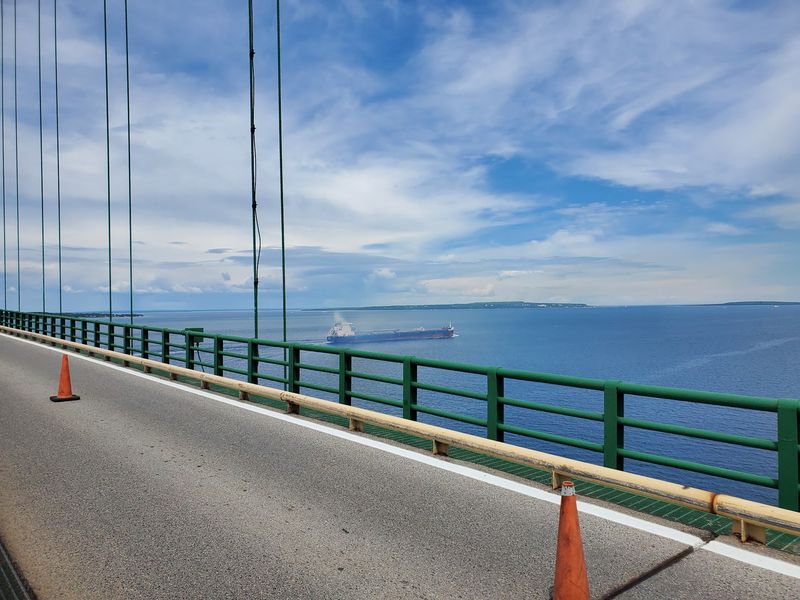
The waters below are where Lake Michigan and Lake Huron meet. That means the views on a clear day can stretch in every direction, with blue water filling the windows.
It’s often described as the longest suspension bridge in the Western Hemisphere. Whether you care about rankings or not, the scale is hard to shrug off.
Then comes Labor Day. For one morning, the Mackinac Bridge stops being a road and becomes a giant walking path, and that is the story worth telling.
A November Day In 1957 That Changed Northern Michigan
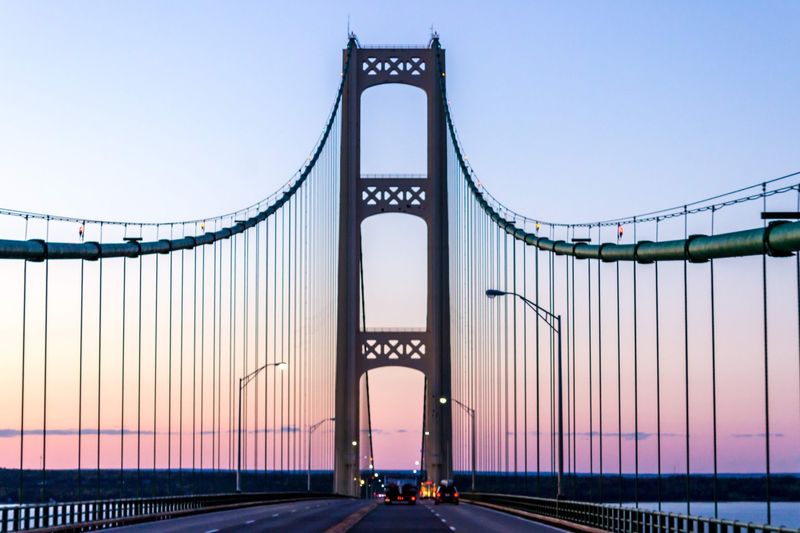
November 1, 1957, was a big day up north. That’s when the Mackinac Bridge officially opened to traffic and stitched Michigan’s two peninsulas together.
Before then, crossing the Straits meant relying on boats. A fixed road link changed how families, truckers, and travelers thought about the trip to the U.P.
Nearly seven decades later, the bridge is still doing its job. Plenty of people cross it dozens or even hundreds of times over a lifetime.
The Mackinac Bridge Authority oversees the span and keeps it running. Its headquarters sit on the St. Ignace side, right near the north approach.
What I appreciate most is the continuity. Grandparents who remember the bridge as brand new can walk it today with grandkids who only know it as a landmark.
That kind of shared history is rare for a piece of highway. Most roads fade into the background, but this one became part of the state’s identity.
So when the walk rolls around each year, people aren’t just crossing water. They’re crossing a structure that has meant something to Michigan for generations.
Sixty-Eight Walkers And A Governor Started It All
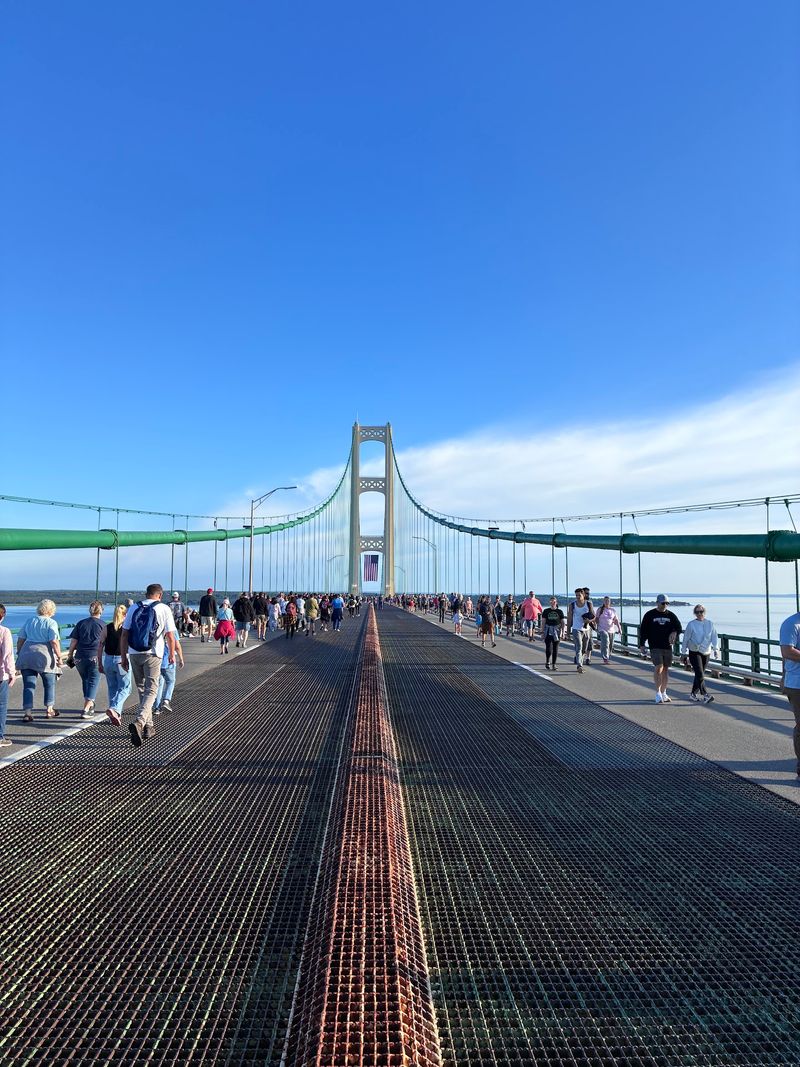
Just 68 people made the first walk. It happened in June 1958, as part of the bridge’s dedication ceremonies, and Governor G.
Mennen Williams led the group.
That small crowd clearly started something. The walk proved so popular that organizers moved it to Labor Day in 1959.
It has stayed a Labor Day tradition ever since. The only exception came in 2020, when the event was called off during the COVID-19 pandemic.
For many years, a lane or two of traffic stayed open during the walk. Walkers shared the span with cars rolling past nearby.
That changed in 2017. Since then, all vehicle traffic on the bridge pauses for the event, and shipping and boating below pause too.
Think about that for a second. An entire stretch of Great Lakes water goes still so people can enjoy a morning stroll.
It’s a lovely example of a tradition growing up without losing its heart. The idea is still simple: walk across, feel proud, and head home with a story.
Set Your Alarm, Because The Bridge Clears Early
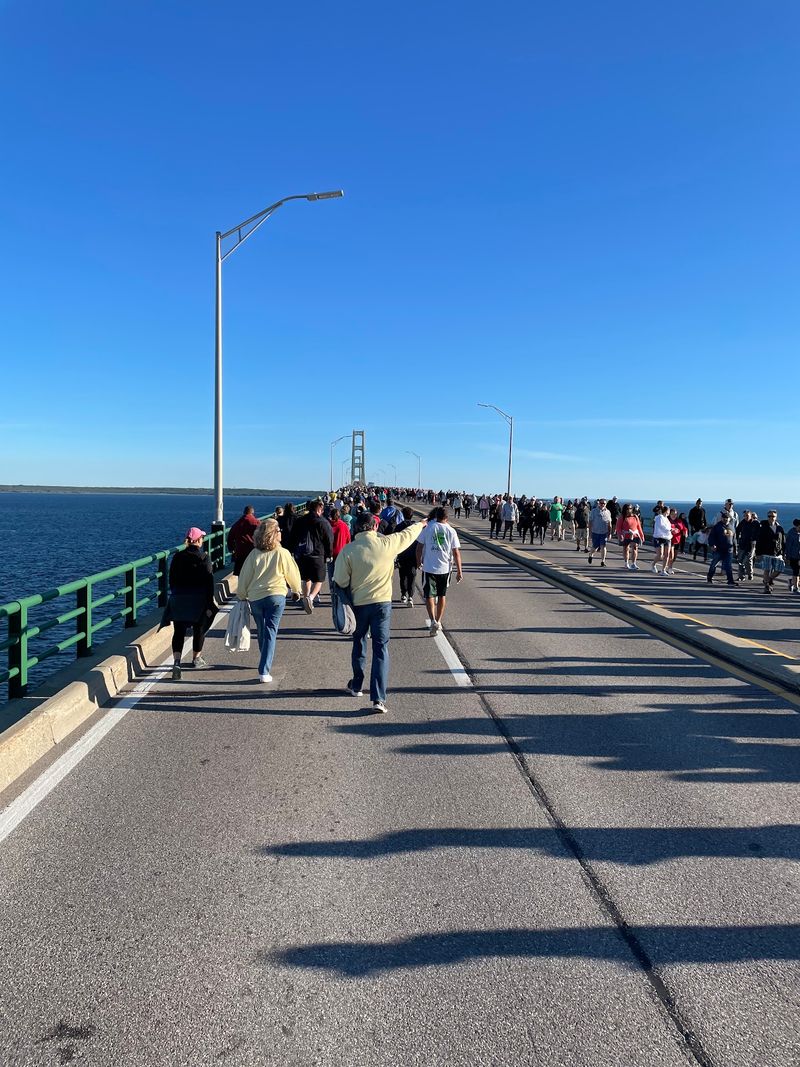
Early birds win this one. The bridge closes to public vehicle traffic at 6:30 a.m. on Labor Day and stays closed until noon.
The walk itself kicks off at 7:00 a.m. You don’t have to start right on the dot, though.
Walkers can begin anytime until 11:30 a.m. That flexibility helps if you’re traveling in from downstate or juggling sleepy kids.
Still, the noon reopening is firm. Traffic needs to flow again, so organizers keep the schedule moving.
Plan for a full morning rather than a quick outing. Getting parked, lining up, and walking all take time, especially with a big crowd.
Schedules can shift from year to year, so it’s smart to check the official event details before you go. Weather in northern Michigan may also change plans or pacing.
Here’s my favorite part of the timing. Because it’s so early, you may catch soft morning light over the Straits while most of the state is still asleep.
That feels like a reward all by itself.
North End Or South End, Your Call
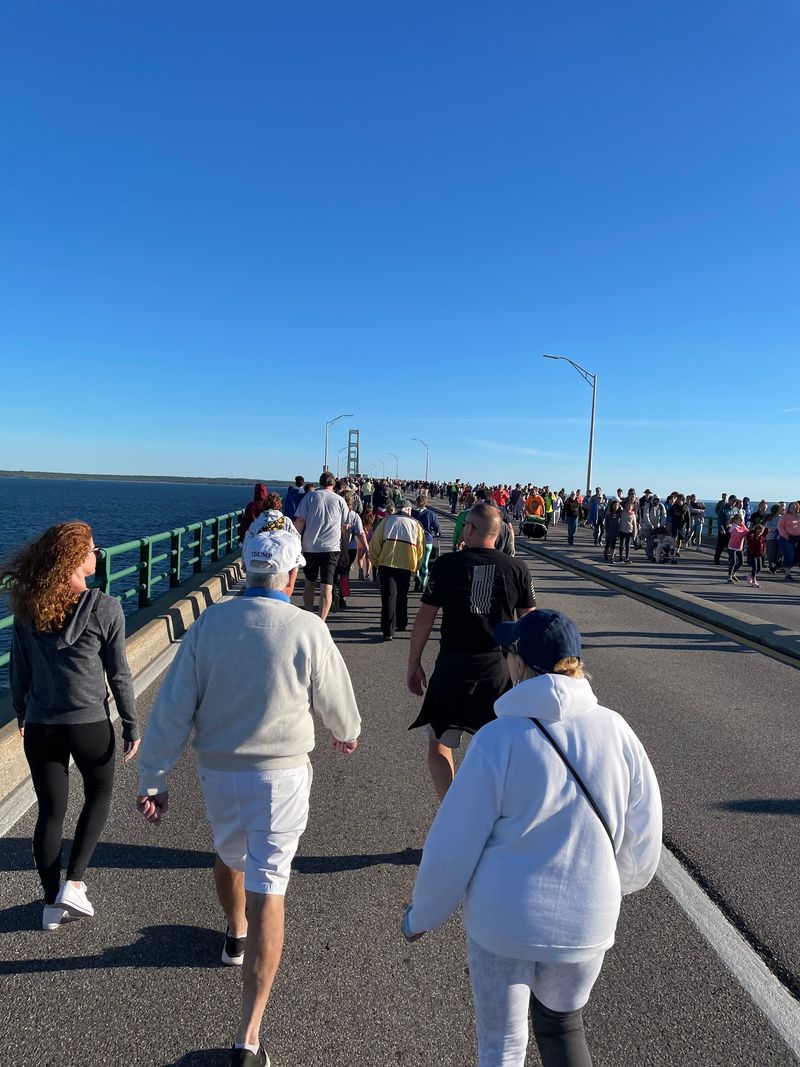
Good news for indecisive people: either end works. You can start from the north side in St. Ignace or the south side in Mackinaw City.
On the St. Ignace side, walkers begin from Bridge View Park. From Mackinaw City, you start at the south end of the span.
Many people walk to the midpoint and then turn back. That way, they finish where they parked, which makes the day much simpler.
Others go for a full one-way crossing. Finishing on the opposite peninsula carries a certain bragging-rights glow.
Your choice may depend on where you’re staying the night before. It may also depend on how far your legs feel like going that day.
A midpoint turnaround still gives you the core experience. You’ll stand high above the Straits with water on both sides and towers rising overhead.
A full crossing is roughly five miles, so wear comfortable shoes. Either way, you get a view of Michigan that most drivers only glimpse through a windshield.
The Ten-Mile Double Cross For Ambitious Legs
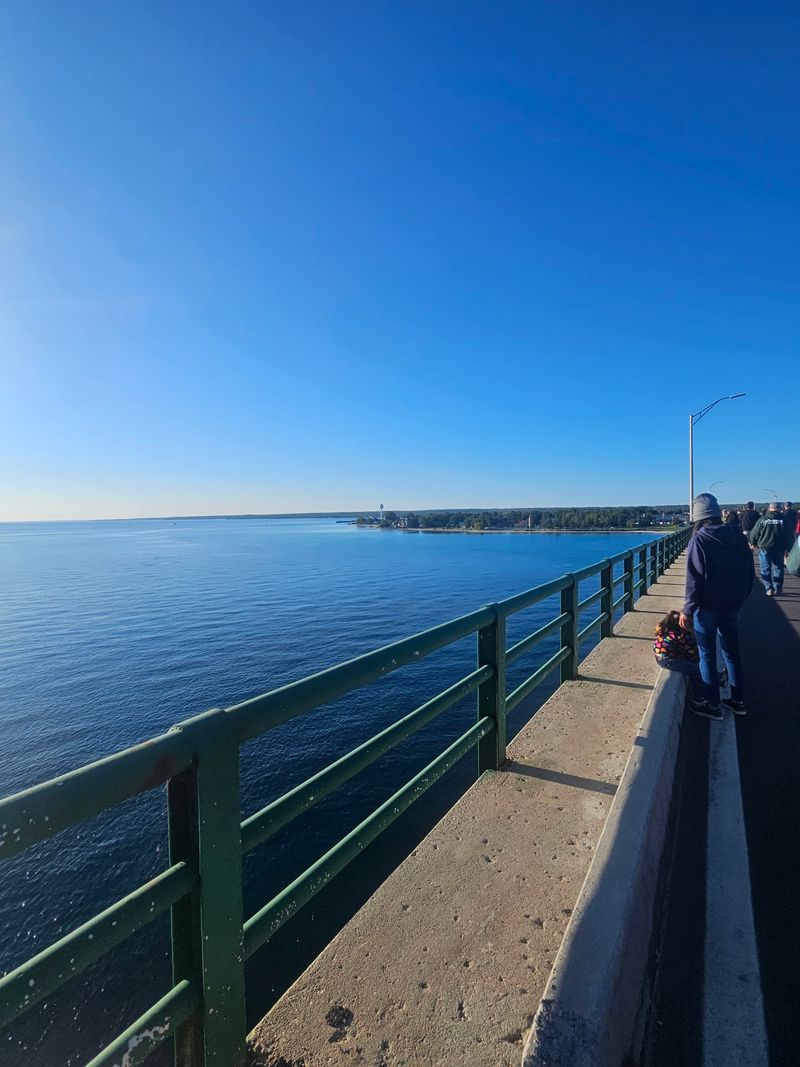
Five miles not enough? Some walkers tackle the double cross, which means walking the bridge both ways for roughly ten miles.
It’s a real effort, not a casual stroll. Still, it’s a great challenge for anyone who likes a goal on a holiday morning.
There’s one key rule. On your return trip, you need to reach the midpoint by 10:00 a.m.
Miss that cutoff, and you’ll be turned back. The rule helps make sure the bridge can reopen to traffic on schedule at noon.
That means pacing matters. Starting near 7:00 a.m. gives you the best shot at making it.
I like how the double cross adds a little friendly ambition to the day. It turns a scenic walk into something closer to a personal milestone.
Bring water and dress for changing weather. Wind over the Straits may feel stronger than it does on shore, and that can slow you down.
Finish it, and you’ll have crossed between Michigan’s peninsulas twice before lunch. Not a bad holiday flex.
A Governor Up Front And A Record Crowd In 1992
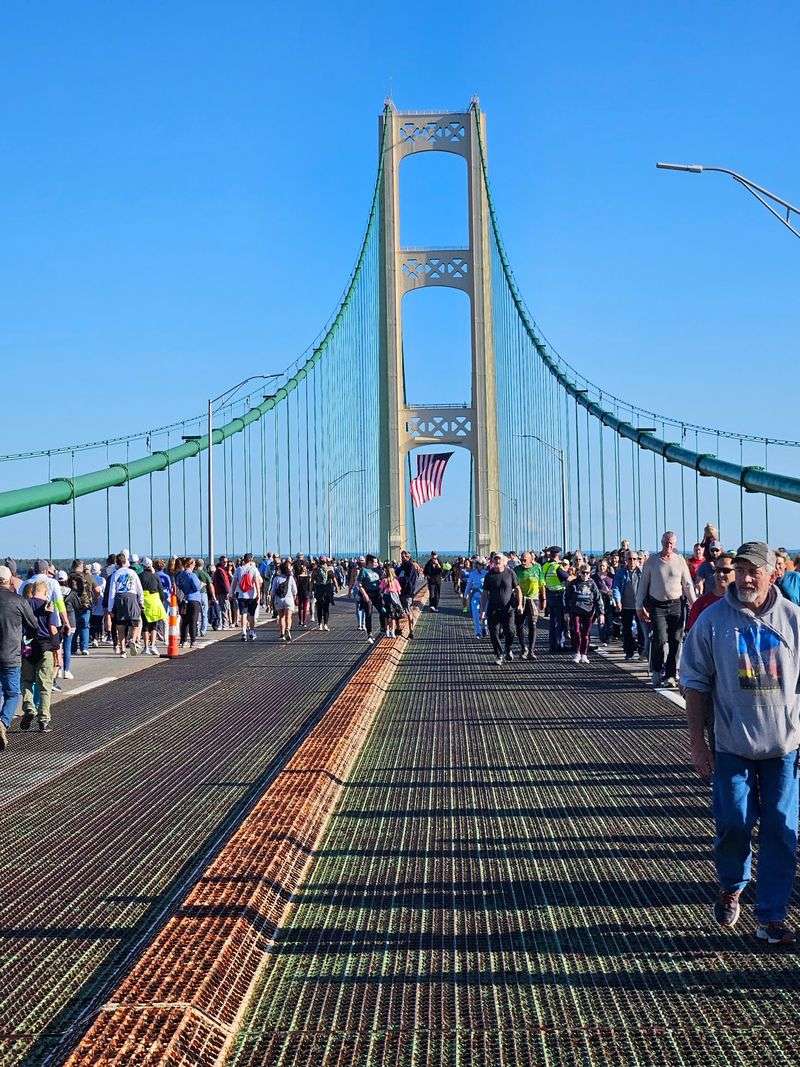
Tradition puts the governor at the front. The Michigan Governor typically leads the Mackinac Bridge Walk, a practice that dates back to that first group in 1958.
It adds a nice bit of ceremony to the morning. You get a sense that the whole state is showing up together.
Crowds vary from year to year. In an average year, somewhere between 40,000 and 65,000 people take part.
The record came in 1992. About 85,000 people walked that year alongside President George H.
W. Bush.
Picture the logistics of that many people on one bridge. Somehow it works, year after year, with walkers flowing steadily across the Straits.
Big crowds mean patience helps. Lines and slow stretches are part of the deal, especially near the start.
But there’s also real energy in walking with so many neighbors. Families, friends, and first-timers all share the same lanes for a few hours.
It’s one of those rare moments when Michigan feels like one big hometown.
Proof You Did It, In The Form Of A Numbered Certificate
Bragging is better with paperwork. After finishing the walk, participants receive a numbered bridge walk certificate.
It’s a simple keepsake, but people tend to treasure it. That little number turns your morning into something you can actually hold.
Some families likely collect them over many years. Kids grow up, shoes get bigger, and the stack of certificates grows too.
I can’t imagine a better fridge decoration for a Michigan household. It says you showed up early, walked the Straits, and finished strong.
The certificate also connects you to a long line of walkers. Tens of thousands of people join in most years, and every one of them gets a piece of that story.
If you’re bringing children, the certificate can be a fun motivator. Promise them proof of their big adventure, and those last stretches may go a little smoother.
Hang onto it somewhere safe. Years from now, it might be the thing that sparks a family tradition of your own.
Strollers Welcome, Skateboards Stay In The Car
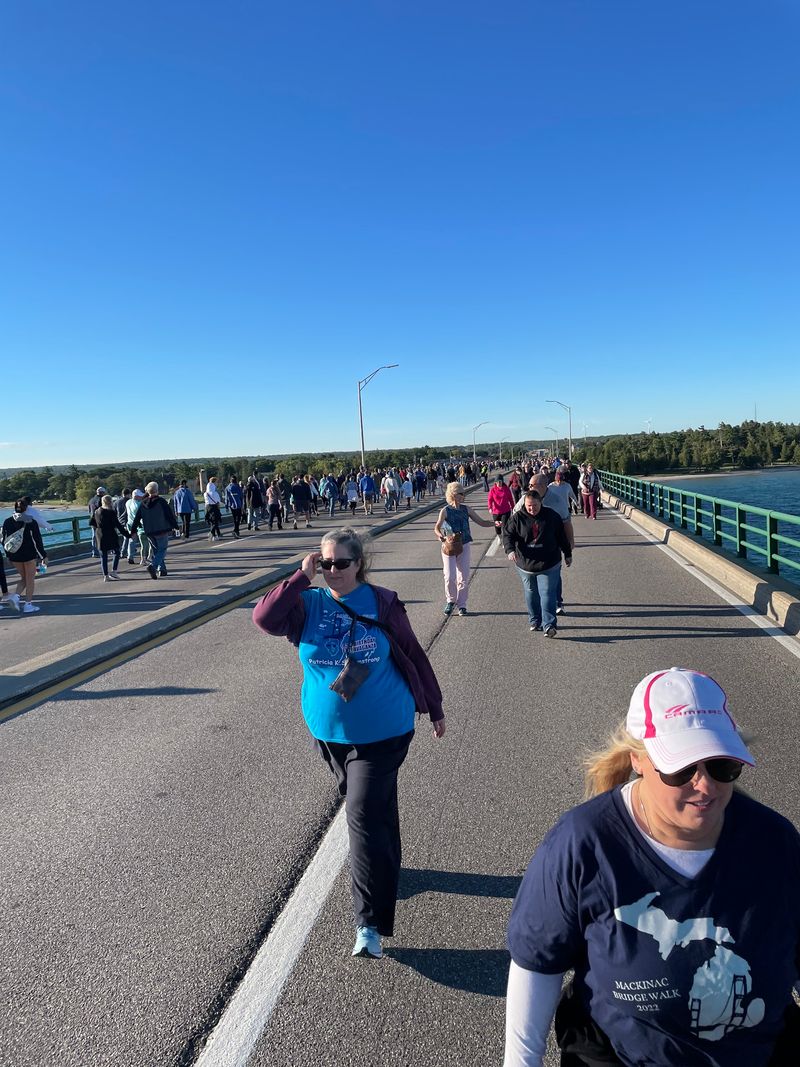
Strollers and wheelchairs are welcome on the bridge during the walk. That makes the event far more open to families and walkers with mobility needs.
A long list of items stays home, though. Signs, banners, umbrellas, bicycles, roller skates, skateboards, and wagons are all prohibited.
Yes, even umbrellas. On a windy bridge high above open water, that rule makes plenty of sense.
Pets are another question people ask. Only working service dogs can join walkers on the span.
So the family pup will need to sit this one out. Plan ahead for pet care if you’re traveling north for the weekend.
The rules keep things safe for a very large crowd. They also keep the flow steady, which matters when the noon reopening is fixed.
A light backpack with water and a jacket is a smart idea. Rules can change, so a quick look at the current guidelines before you leave may save a long walk back to the car.
Bathrooms, Rides Home, And Other Unglamorous Essentials
Nobody puts restrooms on a postcard, but they matter here. There are no restrooms on the bridge itself.
Portable toilets sit near the bridge entrances in both St. Ignace and Mackinaw City. Plan a stop before you start, especially with kids.
The south end of the bridge is listed at Mackinaw City, MI 49701. The north end sits in St. Ignace, where the Mackinac Bridge Authority keeps its headquarters.
Here’s the bigger planning point. Bus transportation across the bridge isn’t provided as part of the event.
If you walk one way, you’ll need your own ride back. That return can only happen after the bridge reopens to traffic at noon.
Some walkers solve this by parking a second car on the far side. Others simply walk to the midpoint and head back the way they came.
A little planning goes a long way. Sort out parking, restrooms, and your ride the night before, and the morning can feel much more relaxed.
Wind, Water, And Those Famous Grated Lanes
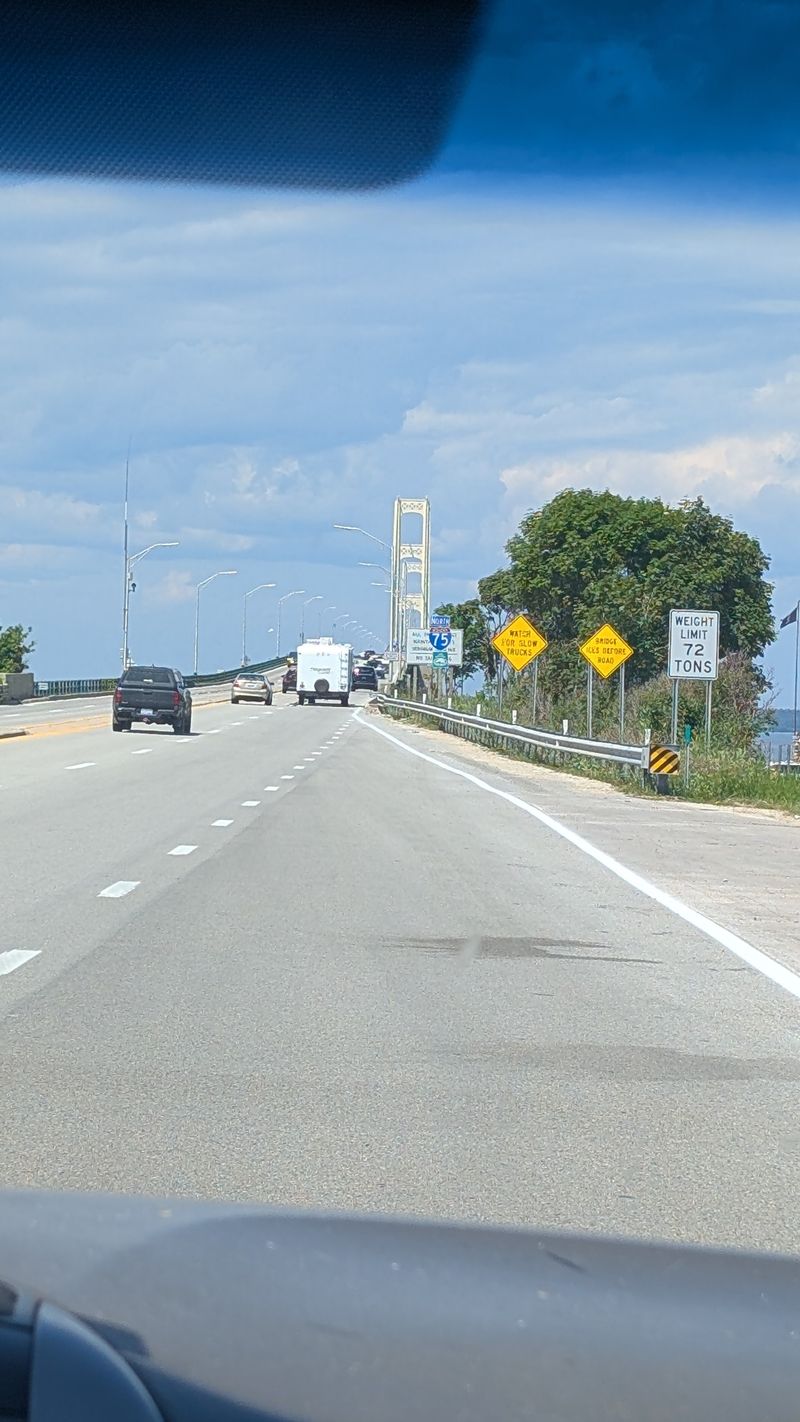
Ask anyone who drives it, and the wind comes up fast. Breezes over the Straits can be strong, and on some windy days trucks and RVs face lower speed limits.
The two middle lanes have open steel grating. The design lets air pass through, which helps the bridge handle strong winds.
From a car, those grates can create a light vibration. Plenty of drivers admit to gripping the wheel a bit tighter there.
On foot, the setting feels completely different. You can slow down and actually take in Lake Michigan and Lake Huron meeting below.
The blue water and wide horizon are the main show. On a clear day, the scenery seems to keep going.
Fog can roll in at times too. That may soften the views, but it also gives the towers a moody, dramatic look.
Dress in layers either way. Crisp air near the Straits is common, and a jacket can make the walk much more pleasant in northern Michigan.
Tractors, Big Rigs, And Snowmobiles Get Their Turn Too
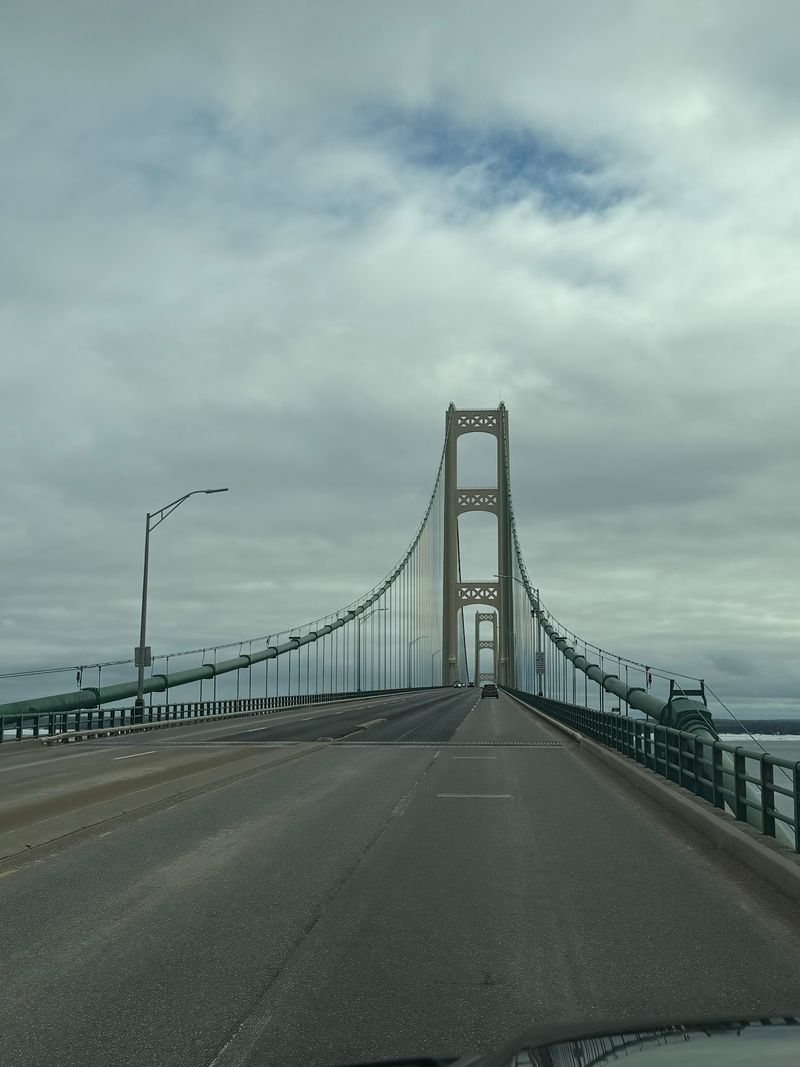
Walkers aren’t the only ones with a special day. The bridge hosts several other unique crossings throughout the year.
One is the Mackinac Bridge Antique Tractor Crossing. Rolling over five miles of Straits in a vintage tractor sounds wonderfully Michigan.
There’s also the Richard Crane Memorial Truck Show and Convoy. Big rigs get a chance to shine on one of the state’s best-known stages.
Off-road fans have the Trek the Mighty Mac ORV Crossing. It’s another way to see the bridge from a seat other than a regular car.
Then comes winter. The Snowmobile the Mighty Mac event takes place in mid-December.
I love how each event attracts its own crowd. Farmers, truckers, trail riders, and snowmobilers all get a moment with the bridge.
Dates and details may change, so check the official schedule before planning around any of them. Still, the variety shows just how much this span means to so many different Michiganders.
The Rest Of The Year Behind The Wheel
Most days, you’ll cross by car, and that’s still a treat. There’s a toll, and the booths sit on the north side after you cross from the Lower Peninsula.
Bring cash or get a MacPass. E-ZPass and I-Pass aren’t accepted.
Nervous about heights or wind? The Mackinac Bridge Authority offers a Drivers Assistance Program, which provides a driver for people uncomfortable crossing themselves.
That’s a thoughtful service. It means nobody has to skip the U.P. because the bridge feels intimidating.
Both ends have park areas with viewing spots. Just watch for the signs as you approach.
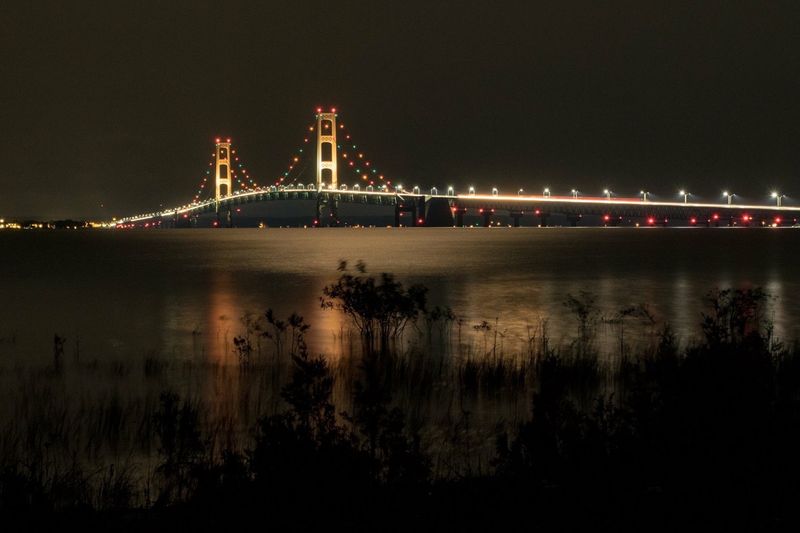
At night, the bridge lights can be a beautiful sight. They aren’t always on, though, since maintenance can affect them, so checking ahead may save a disappointing trip.
Ferry rides to Mackinac Island can also pass under the span. Seeing the underside from the water gives you one more angle on this Michigan icon.
Why This Labor Day Walk Belongs On Your Michigan List
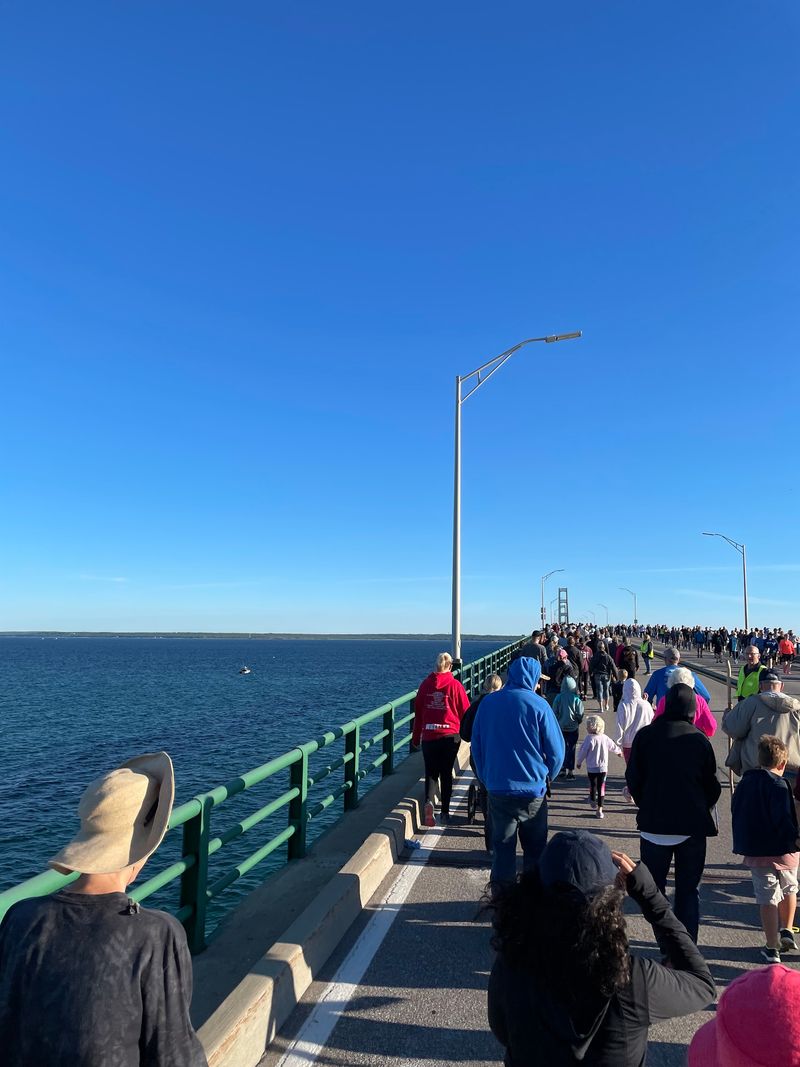
Some traditions feel too good to skip, and this is one of them. The Mackinac Bridge Walk turns a busy highway into a quiet path over the Great Lakes.
It costs you an early alarm and some sore legs. In return, you get a view of Michigan most people only see at highway speed.
The history adds weight to every step. From 68 walkers in 1958 to crowds in the tens of thousands, the event keeps bringing the state together.
It also suits almost everyone. Strollers, wheelchairs, kids, grandparents, and fitness fans chasing the double cross all have a place.
Just plan smart. Arrive early, pack layers and water, and sort out your ride home before you start.
I believe every Michigander should try it at least once. There’s real pride in walking from one peninsula toward the other under your own power.
Then grab your numbered certificate and tuck it somewhere safe. Something tells me you’ll want a second one next Labor Day.