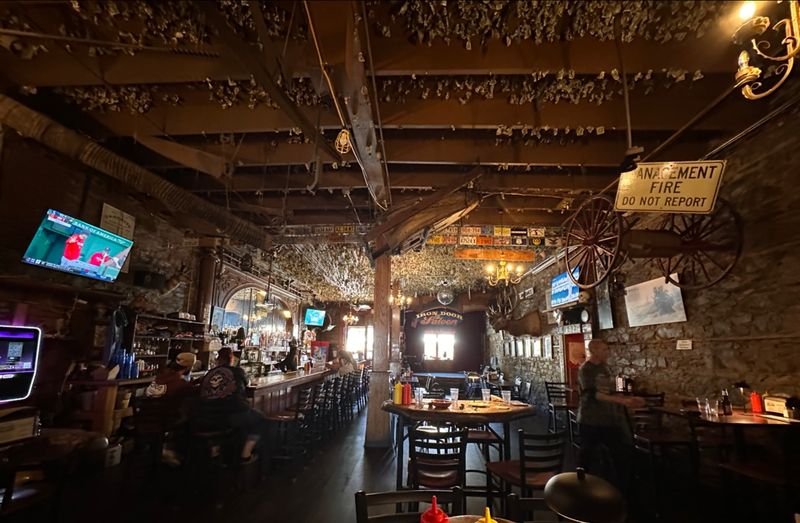
Roughly $4,000 in dollar bills hangs overhead inside one California saloon. Every one of those bills was pinned up by a visitor, usually with a name and a date scribbled across George Washington’s face.
The tradition supposedly goes back to Gold Rush miners. They stashed cash as a safety net, so a rough week in the diggings wouldn’t leave them flat broke.
Today anyone can add a bill, and getting it to stick is half the fun.
I like how the place never feels stuffy, even though it’s basically a museum with a kitchen. The walls are granite from the 1850s.
The front doors are iron, made in England and hauled in by mule.
Which leaves one big question. Once your dollar finally stays put up there, how long can you resist coming back to check on it?
A Yosemite Pit Stop With More Than 170 Years Behind It
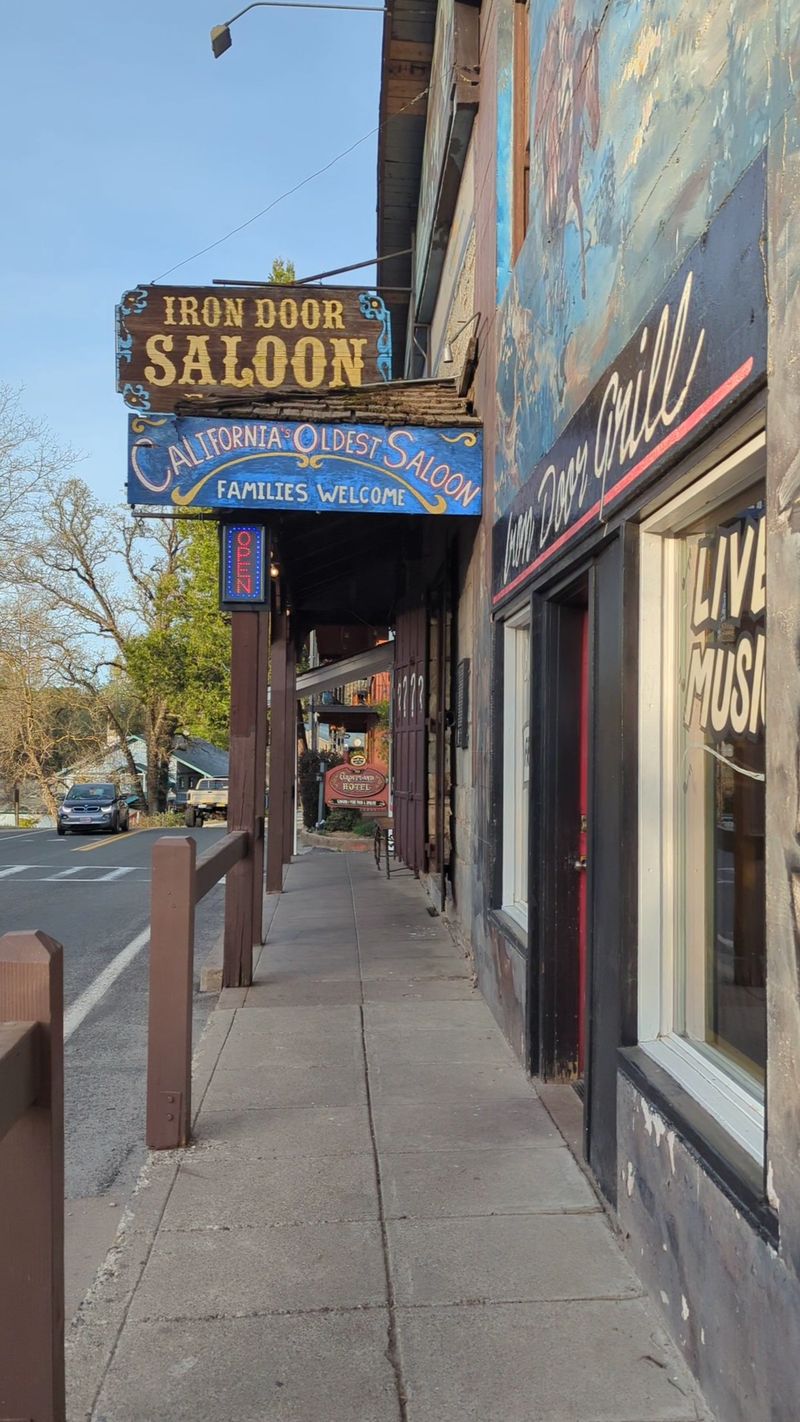
Plenty of travelers race through Groveland with Yosemite on the brain. The smart ones hit the brakes at the Iron Door Saloon, officially called The Historical Iron Door Saloon and Grill.
It sits right on Highway 120 in the heart of California’s Gold Country. The entrance to Yosemite National Park is roughly 25 to 30 miles up the road.
That makes it a natural stop going in or coming out. A burger after a long hiking day just hits differently when the walls around you predate the Civil War.
The saloon claims the title of oldest continuously operating saloon in California. That’s a bold boast in a state packed with Gold Rush towns, and it’s backed by a building dating to at least 1852.
Inside, you’ll find a long counter, dining tables, a pool room, and more artifacts than some small museums. Then there’s the ceiling, which we’ll get to soon enough.
For a state that reinvents itself every few years, a place this stubborn about staying itself feels like a small act of preservation. Groveland itself adds to the charm, with a compact historic main street that rewards a slow stroll.
Before The Saloon, There Was A General Store And A Post Office
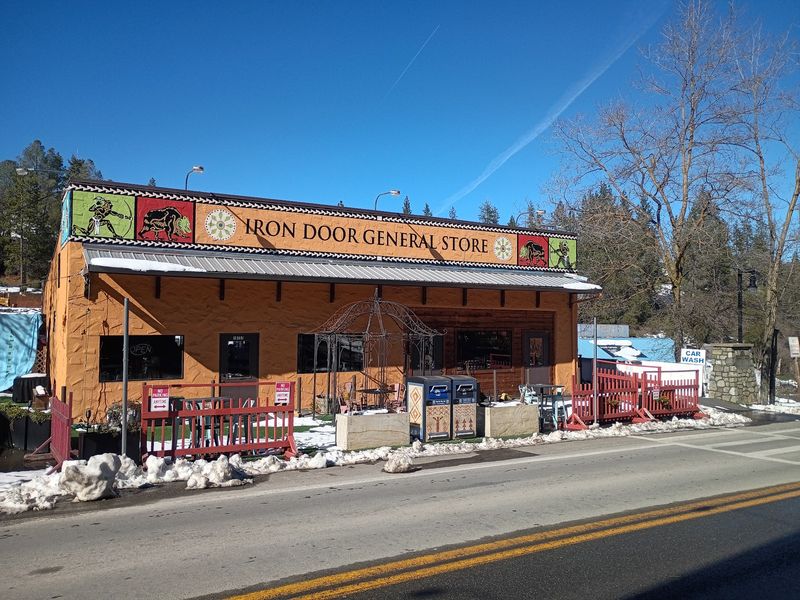
Long before anyone pinned a dollar to anything, this building sold supplies. It started life as the Granite Store, built sometime before 1852 and possibly as early as 1849.
Gold Rush miners needed tools, food, and news from home. A sturdy granite shop on the main road was exactly the kind of place a growing camp depended on.
From 1863 to 1880, the building also housed the town’s first post office. James Tannahill served as the first owner and postmaster, which made him a pretty important figure in local life.
Think about what that meant back then. Letters from family, payments, and news about faraway places all passed through these same granite walls.
That history gives the place a different feel than a typical Western-themed restaurant. Nothing here was built to look old, because it simply is old.
For California history fans, that origin story is the real hook. You aren’t visiting a re-creation of the Gold Rush era.
You’re standing in one of its working buildings, still open for business, still serving the folks passing through on the road east toward the high country.
Jake’s Place And The Italian Immigrant Who Changed Everything
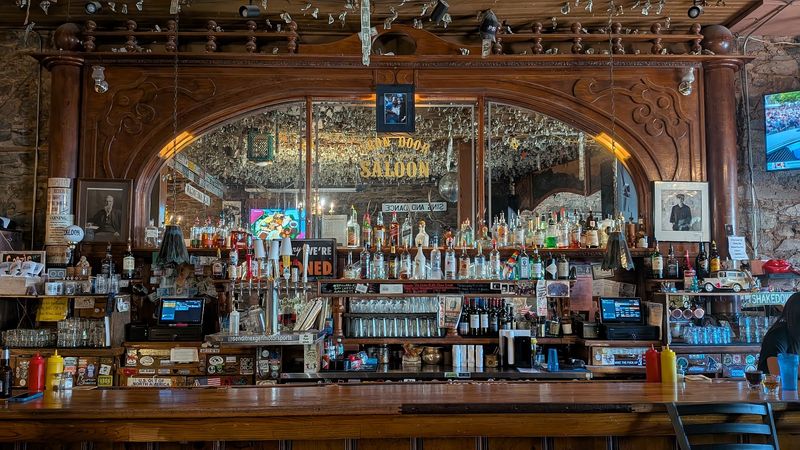
Here’s a name worth remembering: Giacomo DeFarrari. In 1896, he bought the old granite building and turned it into a saloon.
He didn’t call it the Iron Door, though. The place first went by Jake’s Place, a friendly, approachable name that fit a small mountain town.
DeFarrari’s story connects to a bigger thread in California history. Italian immigrants played a huge part in shaping Gold Country towns, from businesses to farms to family traditions that still echo today.
If your own family roots trace back to those early immigrant communities, this chapter might land close to home. It’s a reminder that the Gold Rush wasn’t only about prospectors with pans.
Merchants, shopkeepers, and saloon owners kept these towns running long after the easy gold was gone. Jake’s Place became a gathering spot when Groveland needed one.
That switch from store to saloon in 1896 kicked off the run the business is famous for now. More than a century later, the doors are still open.
Not bad for a building that started out selling shovels and flour to hopeful miners.
Those Heavy English Doors Earned The Whole Name
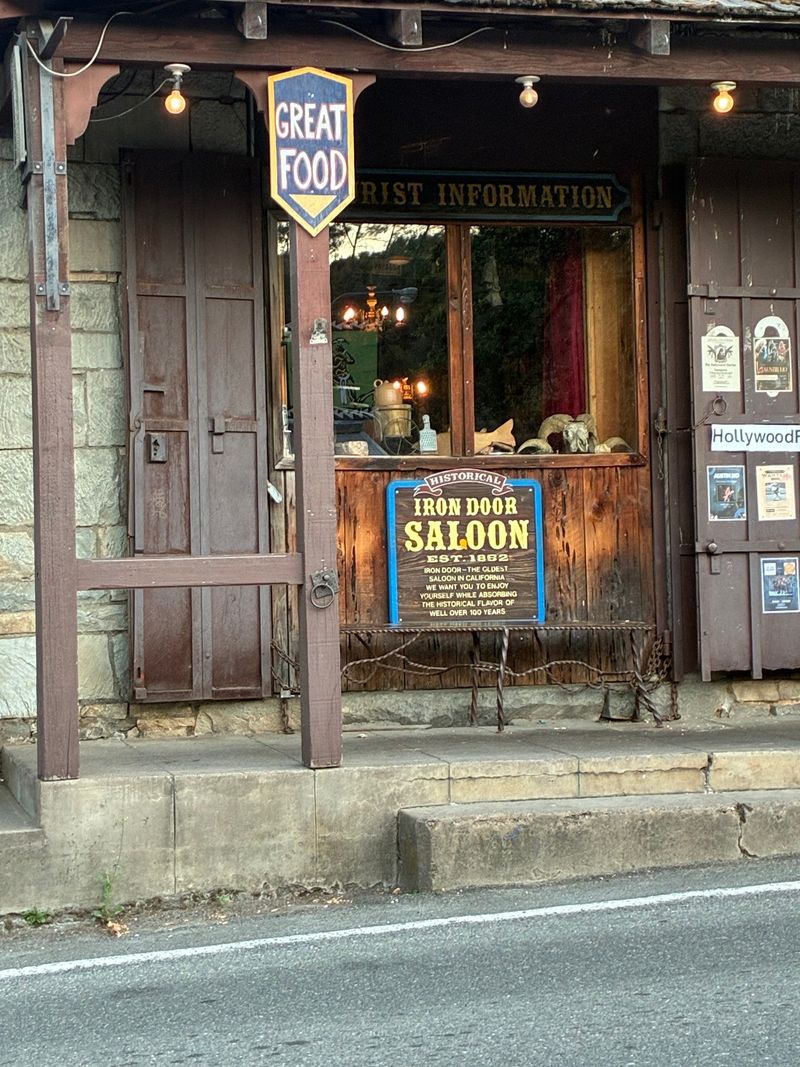
Mules. That’s how the famous iron doors reached this little foothill town, carted in after being manufactured in England.
They were installed in 1937 for fire protection, which made perfect sense. Gold Country towns had a long history of fires tearing through wooden main streets.
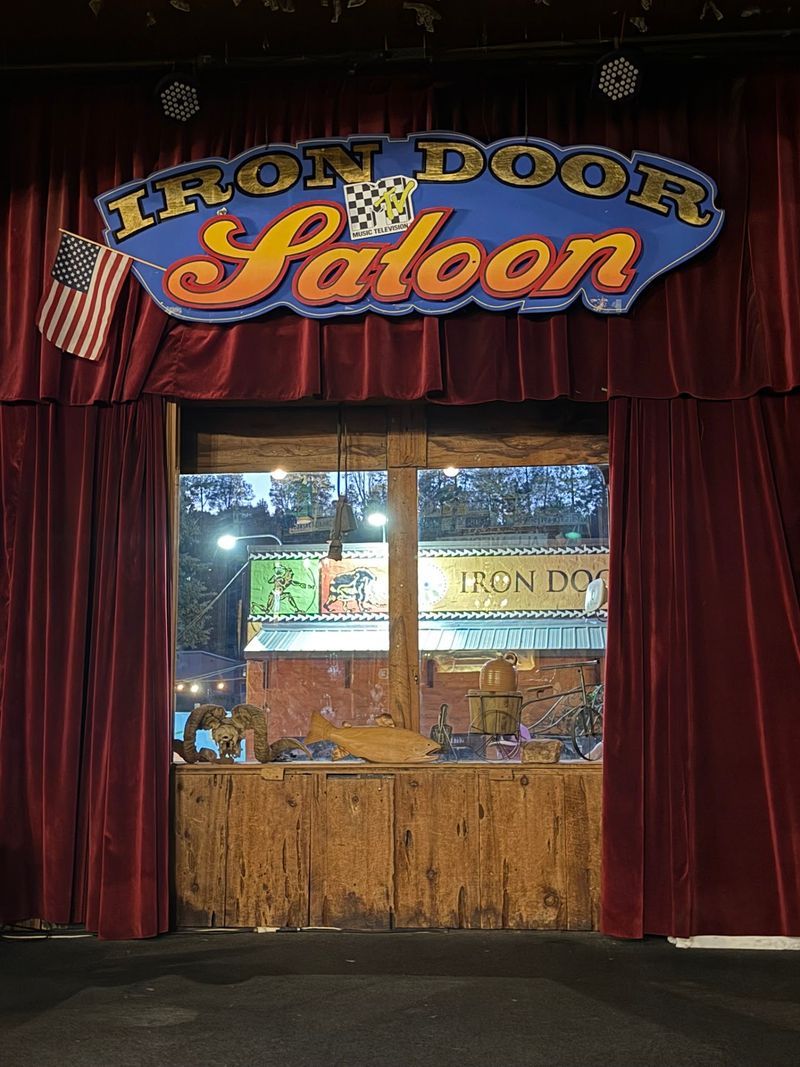
The same year, the owners added a second story for cards, billiards, and pool. They also gave the business a new name, the Iron Door Saloon, after its hefty new entrance.
Here’s the best part. Those original doors are still fitted today, so you pass right through a piece of 1937 history every time you enter.
They can look locked at first, which throws a few people off. Don’t worry, you’re allowed to walk right through them.
Take a second to look closely at the metal before heading inside. It’s not every day you get to touch a door that crossed an ocean and then rode a mule up into the Sierra foothills.
Snap a photo here too, since it might be the most photogenic entrance between the Central Valley and Yosemite.
Look Up, Because The Ceiling Is Worth About $4,000
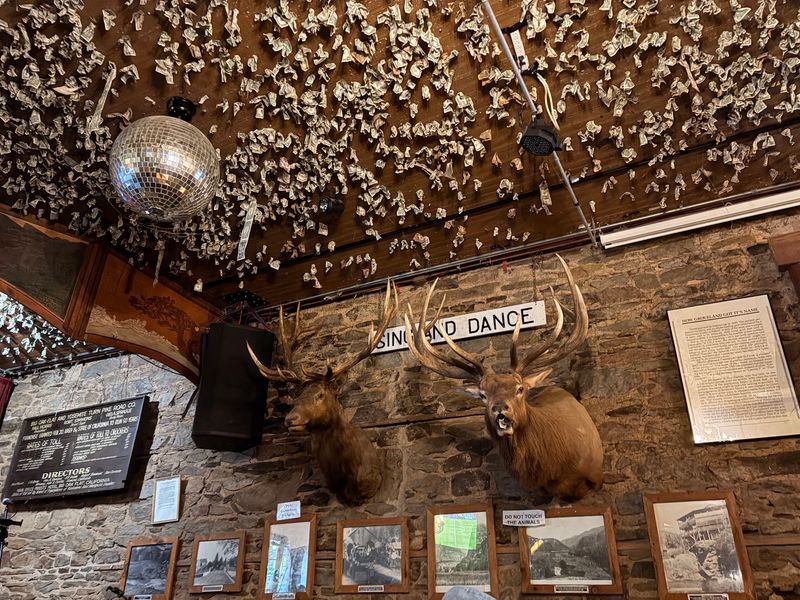
Grab a dollar and a pen. At the Iron Door Saloon, visitors write their name and the date on a bill, then pin it to the ceiling.
An estimated $4,000 in cash now hangs overhead. It’s a strange, wonderful sight, like a paper sky signed by thousands of strangers.
The tradition is said to trace back to Gold Rush miners. They’d leave money behind as a financial safety net, a little insurance for a lean stretch ahead.
One playful legend adds a twist. Stick your bill up there, and supposedly you’ll strike it lucky in the mines and find your way back to the saloon.
Whether you believe that or not, the ritual turns a meal into a memory. Your name joins a crowded, messy, very human record of everyone who stopped through before you.
Kids especially love the hunt for interesting signatures and dates. Adults tend to get just as hooked trying to spot the oldest bill they can find.
It’s the kind of tradition that doesn’t need a gift shop, just a dollar and a bit of nerve.
Getting Your Bill To Actually Stick Takes Some Skill
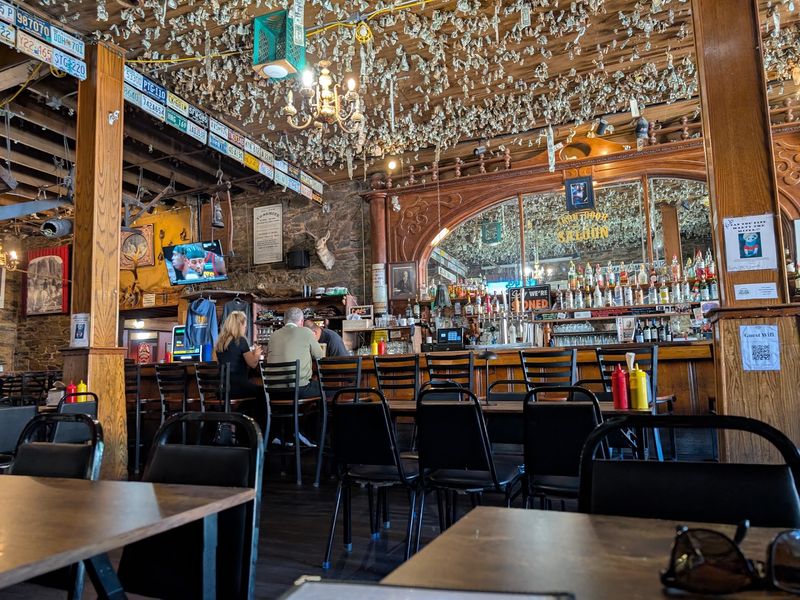
Fair warning: pinning a dollar to a ceiling is harder than it sounds. Plenty of first attempts end with a bill fluttering right back down.
That challenge is part of the appeal. Nobody gets a certificate for success, but the small victory feels oddly satisfying once your bill finally stays put.
Bring a crisp one-dollar bill so you’re ready. Write your name and the date clearly, because you might want to find it again someday.
Some families make it a repeat tradition, adding a new bill every trip to Yosemite. It turns the ceiling into a kind of scrapbook that only exists in Groveland.
Honestly, the overhead view isn’t polished or tidy. It’s crowded, layered, and a little wild, which is exactly how a Gold Rush relic should look.
Not everyone finds it charming at first glance. But once you understand the history behind it, those thousands of signatures start to feel less like clutter and more like a living guestbook.
Just don’t expect a reserved spot. Finding a bare patch overhead might take some craning, squinting, and a little friendly competition with your travel companions.
Granite Walls, John Muir, And A Nod To Black Bart
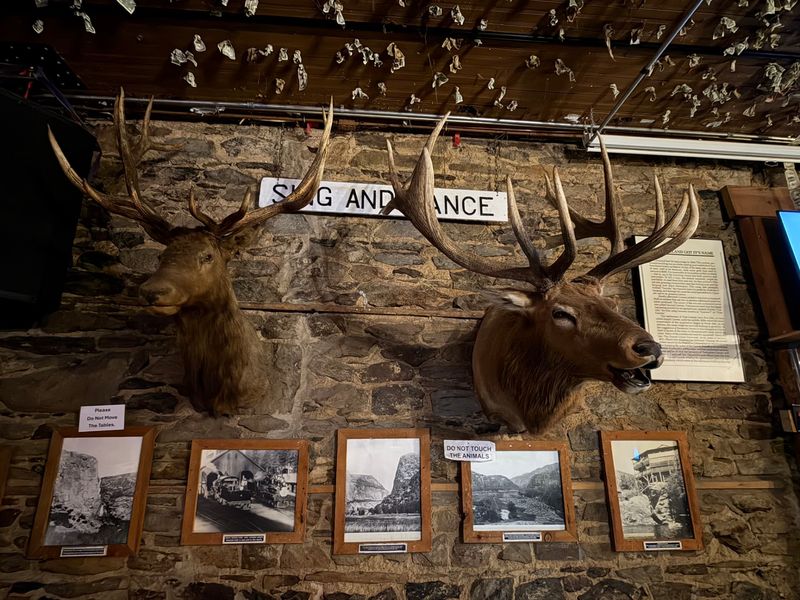
The original granite walls from the 1850s still stand inside. Running your eyes across that stone is like reading a timeline nobody bothered to write down.
Historic photos of Hetch Hetchy line the space. For California history buffs, those images carry real weight, since the valley’s story still sparks conversation today.
John Muir shows up too, in a collection of images honoring the famous naturalist. It’s a fitting tribute for a saloon this close to the park he fought to protect.
Then there’s Black Bart, the notorious stagecoach robber of the Gold Country era. The saloon includes a tribute to him, which adds a mischievous little wink to the decor.
Antique gold mining gear, timber tools, and old farm implements fill in the rest. It all hints at how hard people worked to carve a living out of these hills.
Give yourself extra time to wander before or after eating. The walls tell stories that a quick glance simply can’t catch, and every corner seems to hide one more relic worth a closer look.
A Natural History Display And A Few Mysterious Holes
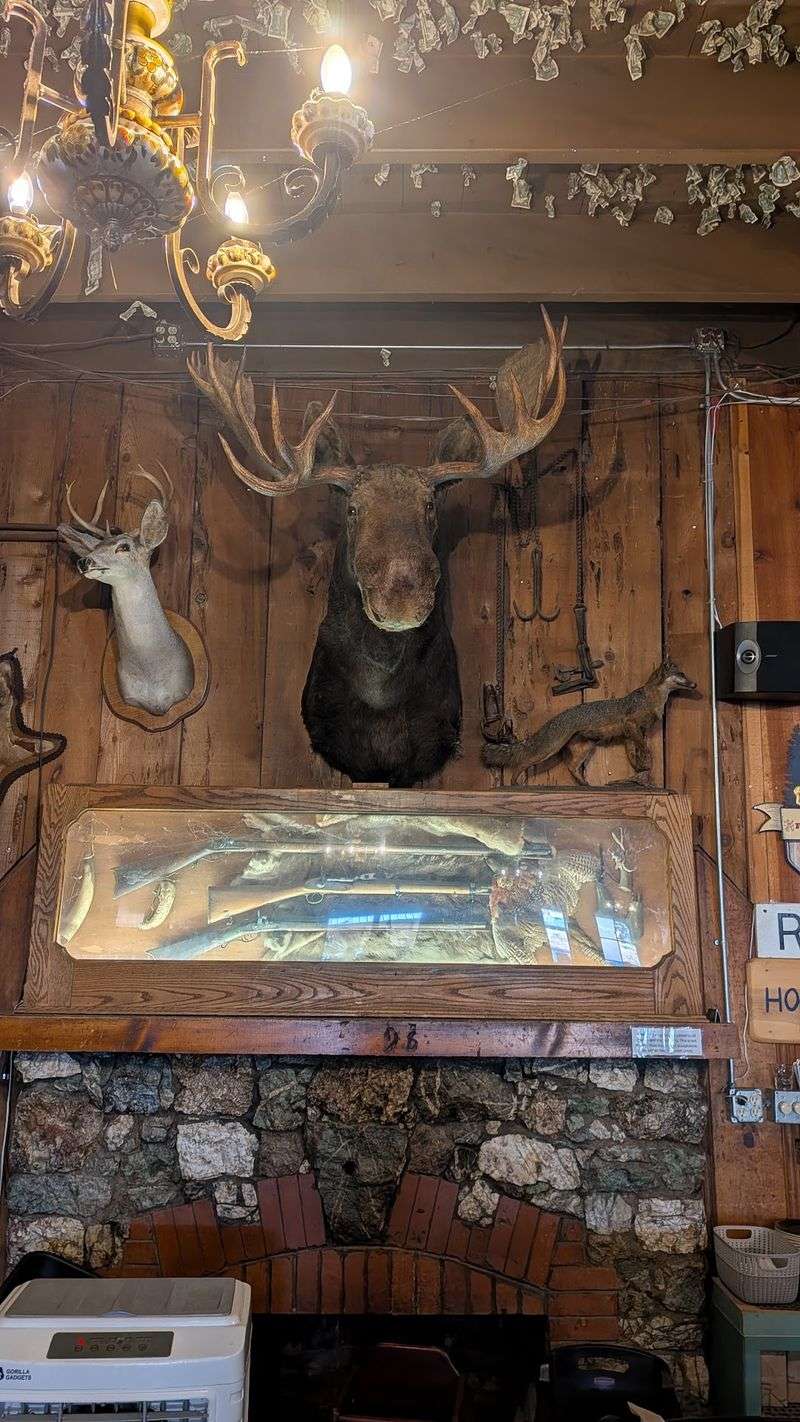
Few saloons double as a natural history museum. This one does, with a display of animal species native to the Sierra Nevada.
It’s a neat way to learn what lives in the mountains you’re about to explore. Seeing these creatures up close gives a Yosemite trip some useful context before you hit the trails.
Kids tend to gravitate here first, and who can blame them? It’s a lot more engaging than a laminated brochure at a visitor center.
Now, about that ceiling again. Among the dollar bills, there are stray bullet holes, some dating back to 1987.
Yes, really. It’s a quirky detail that proves the place has collected plenty of colorful stories over the decades, not just the ones from the 1800s.
Spotting them takes patience, since the bills hide a lot of the surface. Consider it a bonus scavenger hunt while you wait for your food.
Between the wildlife and the history, there’s always something to point at. That keeps restless travelers entertained, especially after hours in the car winding up from the valley floor.
Secrets Below, Stories Above
Every old saloon worth its salt has a few secrets. This one keeps them stacked on two levels.
During Prohibition, contraband was reportedly hidden in the basement. That fits the saloon’s knack for staying open through decades that shut down many other businesses.
Upstairs has its own colorful past. The second floor once operated as a brothel, a common chapter in rough-and-tumble mining towns of the West.
These days, that upper level serves much tamer purposes. It now holds offices and rooms for traveling musicians who come through to perform.
I love that detail. Bands playing the saloon may actually sleep upstairs, keeping a creaky old building humming with life after hours.
You won’t be touring the basement or the upper floor on a casual visit. Still, knowing what happened above and below makes the main room feel even richer.
It’s the kind of backstory that sparks conversation at the table. Somebody in your group is bound to start wondering what else these granite walls have witnessed over the years.
Burgers, Garlic Fries, And Chips Made In-House
Burgers rule the menu here. The Western Burger is a standout, and the buffalo burger draws attention from travelers looking for something a little more frontier-flavored.
Fish and chips and a turkey club round out the classic pub fare. Nothing fussy, just hearty food that makes sense after a day of hiking.
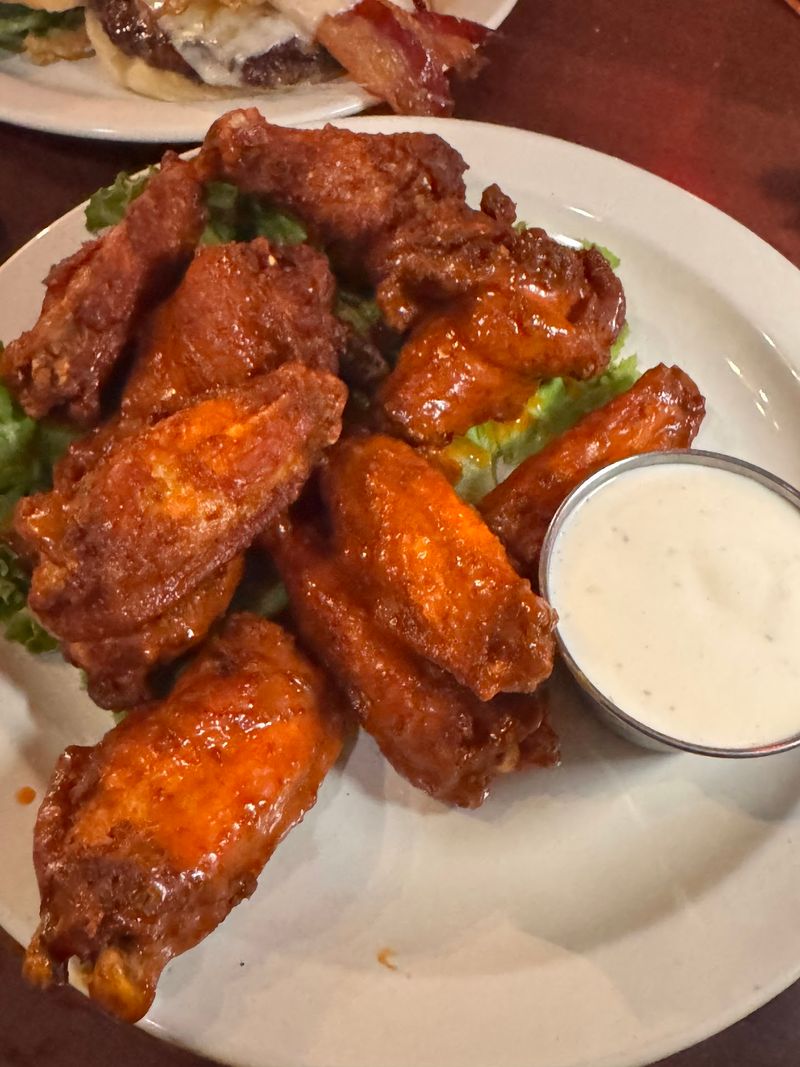
Then come the sides, and this is where people get passionate. Garlic fries, sweet potato fries, and homemade potato chips all earn plenty of attention.
Wings, jalapeno poppers, and a soft pretzel show up as popular starters too. Sharing a few around the table is a smart move if your group can’t decide.
Cheesecake sits on the dessert side of the menu for anyone with room left. After a long drive, a sweet finish can feel well earned.
Don’t expect white tablecloths or tiny artful portions. The Iron Door Saloon serves straightforward American comfort food in a room where miners once bought their supplies.
That setting adds flavor you can’t get anywhere else. A plain burger somehow tastes more interesting under a ceiling full of signed dollars.
Plant-Based And Gluten-Free Eaters Aren’t Left Out
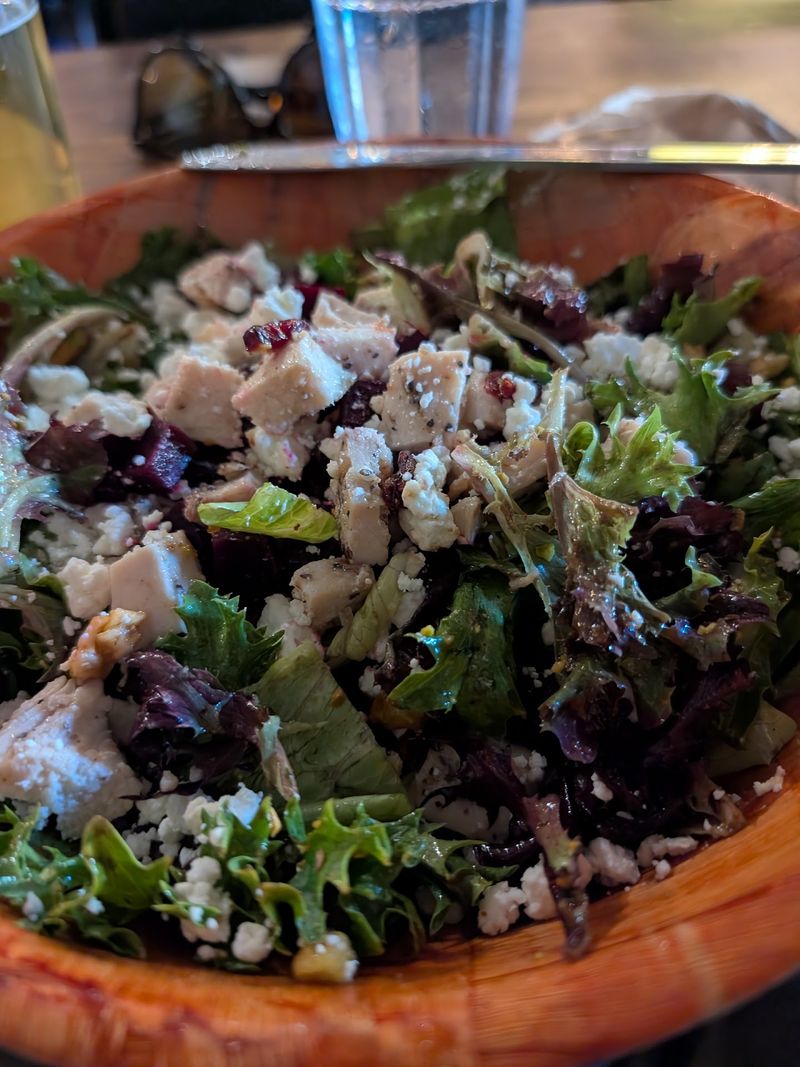
Surprise: a Gold Rush saloon thinks about vegan diners. The menu includes a Beyond burger served on sourdough.
Gluten-free guests get an option too. There’s gluten-free pasta in marinara, which is a welcome find in a small mountain town.
That flexibility matters when you’re traveling with a mixed group. Road trips get easier when one stop can make everybody happy, from the bacon lovers to the plant-based crowd.
Mocktails are on offer as well. They’re handy for drivers, kids, and anyone who wants something festive without going a different direction.
Avocado toast appears among the popular items, which feels charmingly modern next to antique mining tools. It’s a fun contrast, really.
I appreciate a historic spot that stays true to its roots without ignoring how people eat today. Preservation doesn’t have to mean a frozen menu.
If you have specific dietary needs, ask your server for details. That way you can order with confidence and focus on the real job at hand, which is getting your dollar bill onto that stubborn ceiling.
Weekend Bands, Karaoke, And A Pool Room
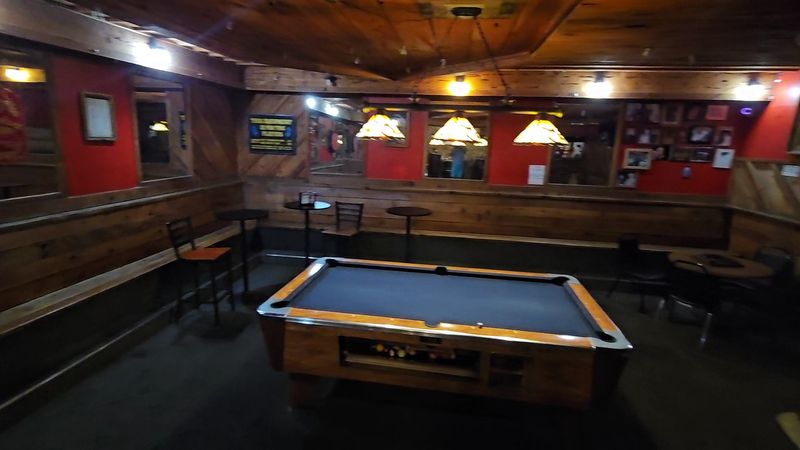
Evenings can turn lively fast. The saloon hosts live music on weekends, and karaoke nights give everyone a shot at the spotlight.
When a band gets going, the room can fill up quickly. Locals and travelers end up side by side, which is pretty much how a mountain town saloon should work.
Not a singer? No problem, because there’s a pool room for anyone who prefers a cue to a microphone.
A jukebox also keeps the soundtrack rolling during quieter hours. It’s an easy way to set the mood while you wait for your food.
Daytime visits feel more relaxed, with plenty of room to lounge and explore the artifacts. Families heading to or from Yosemite often find afternoons a comfortable fit.
Night visits bring a different energy entirely. The dim lighting, old granite walls, and live music make the Gold Rush history feel surprisingly close.
Pick your vibe based on your crew. Either way, the Iron Door Saloon gives you something more memorable than another fast-food stop off the highway.
When To Go And Where To Find It
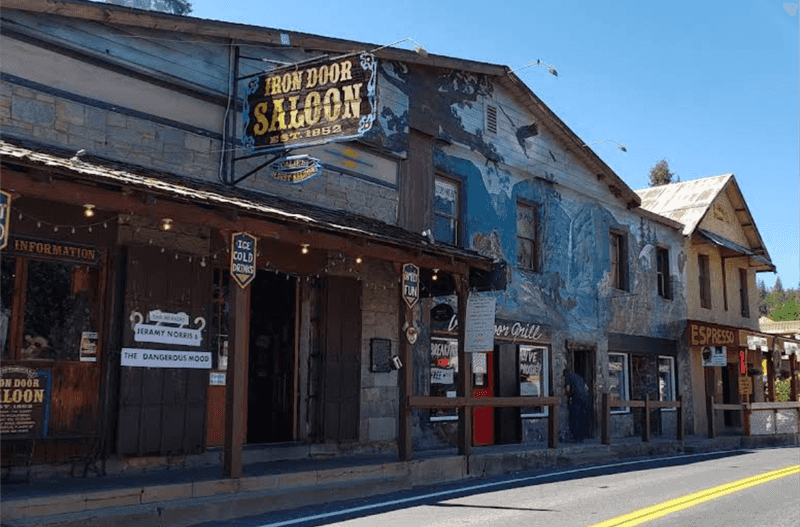
Mark it on your map: 18761 Main St, Groveland, CA 95321. It’s right along State Highway 120, which locals and road-trippers know as a main route toward Yosemite.
The saloon opens daily at 11 a.m. and typically stays open late, until midnight. Kitchen hours can run shorter than the saloon itself, so check ahead if you’re counting on dinner.
Prices sit in a comfortable, moderate range for a sit-down meal. It’s casual pub dining, not a splurge.
Timing matters a bit here. Summer and holiday weekends bring heavy Yosemite traffic, and service can slow down when the dining room gets busy.
A little patience goes a long way. Use the wait to explore the walls, find the bullet holes, or plan your dollar-pinning strategy.
Groveland makes a great stretch break before the climb into the park. Coming back down, it’s an easy place to refuel after a long day on the trails.
Bring cash, specifically at least one dollar bill. You’ll want it the minute you look up and see what everyone else left behind.
A Family-Run Relic That Deserves Your Dollar
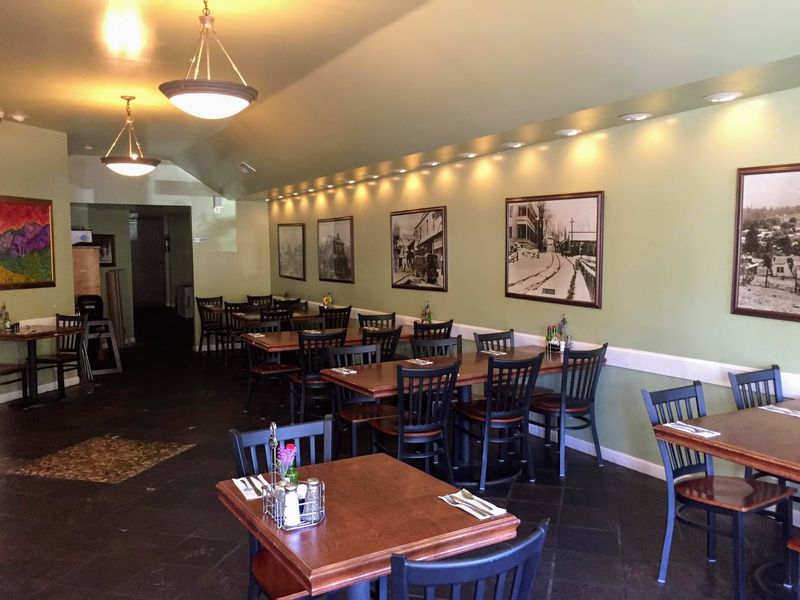
Continuity runs deep here. Chris and Corinna Loh have owned and operated the saloon since 2004, and the business has been in Corinna’s family since 1985.
That kind of stewardship shows. Keeping a 170-plus-year-old building open, quirky, and welcoming is no small feat in a fast-changing California.
Families fit right in, despite the saloon label. Kids are welcome to explore the artifacts, and Marty the Miner adds a little extra fun for younger visitors.
History lovers, Yosemite road-trippers, and anyone who misses old-fashioned California will find plenty to enjoy. Just know it’s rustic and worn in spots, which is part of its honest character.
The Iron Door Saloon isn’t trying to be fancy. It’s trying to be itself, and after more than a century as a saloon, it’s very good at that.
So next time Highway 120 calls, plan a stop in Groveland. Grab a burger, wander the granite walls, and leave your mark overhead.
Somewhere up there, a dollar with your name on it could be waiting for you to come back and say hello.