A 2,400-year-old Egyptian mummy rests just a few steps from a meteorite that came from Mars. Both sit inside a single room in New Jersey, and admission costs nothing at all.
The surprises keep stacking up. A 12-foot mastodon skeleton stands guard nearby, and he was dug up right here in the Garden State back in 1869.
I love that this place feels like a cabinet of wonders. Upstairs, a small back room holds glowing minerals that light up in vivid colors.
Kids can hunt for clues, and grown-ups can stare at space rocks older than Earth’s oceans.
I believe the best family outings often hide in plain sight. This one sits inside a historic college building with a story nearly two centuries long.
So who exactly is sharing a room with a mummy and a Martian rock?
A Free Museum Where Ancient Egypt Meets Outer Space
Meet your new favorite free afternoon: the Rutgers Geology Museum in New Brunswick, New Jersey. It packs a mummy, meteorites, dinosaur tracks, and a mastodon into one historic building.
Admission is free, and that alone feels like a small miracle these days. Donations are welcome, though, and they help keep the lights on for all those rocks.
The museum belongs to Rutgers University and sits right on its oldest campus. That means you get serious science collections with a friendly, campus-town feel instead of a giant ticketed complex.
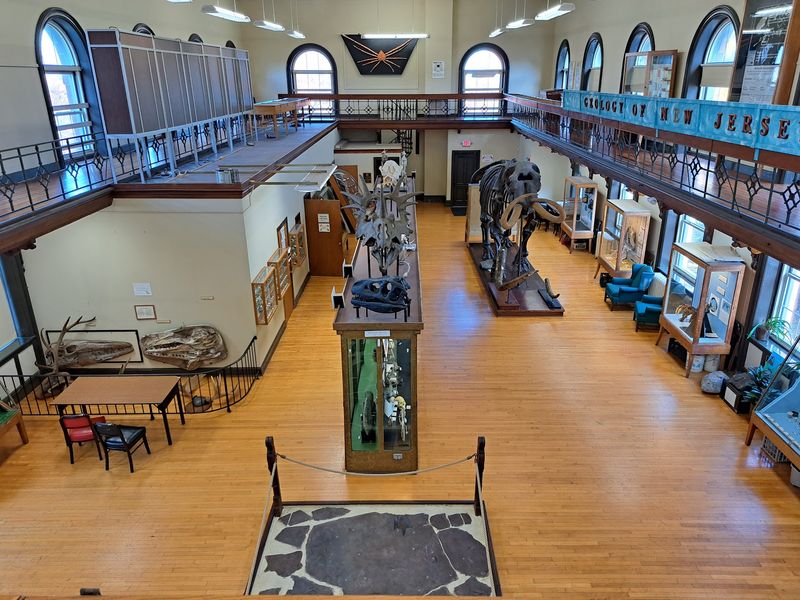
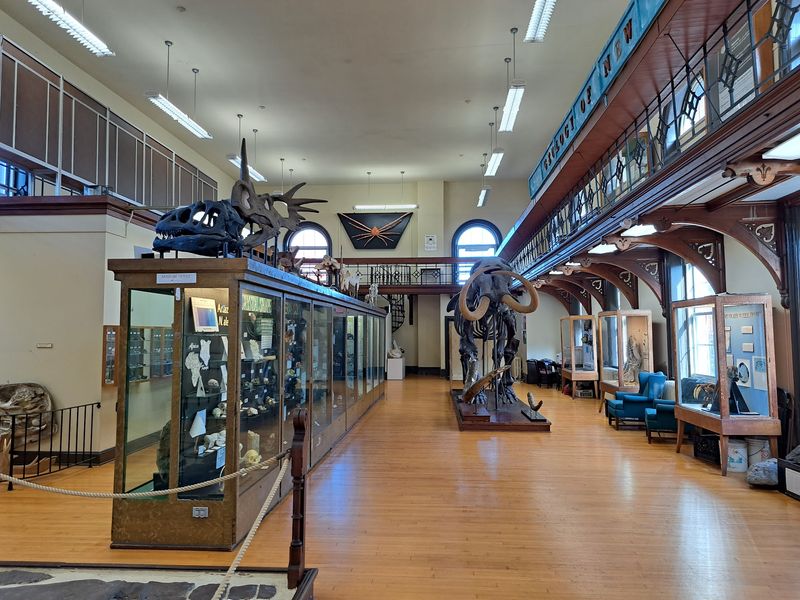
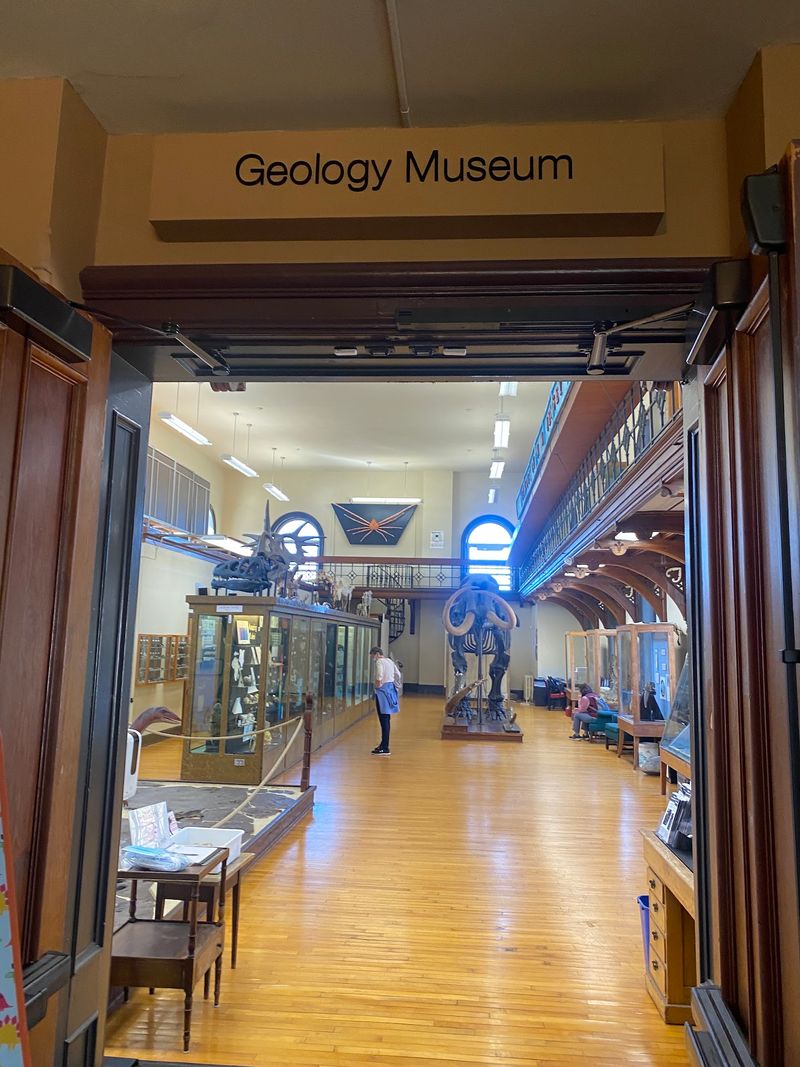
Don’t expect sprawling wings or endless hallways. The Rutgers Geology Museum is mostly one large open room with a second-floor mezzanine wrapping above it.
Small doesn’t mean thin, though. Exhibits cover geology, fossils, minerals, anthropology, and natural history, with a strong focus on New Jersey’s own past.
That local angle is the secret sauce here. Many of the bones, footprints, and minerals came out of Garden State ground, which makes the whole visit feel personal.
So yes, a family can wander through ancient Egypt, the Ice Age, and the early solar system before lunch. Not bad for zero dollars at the door.
The 1872 Building That Does Half The Talking
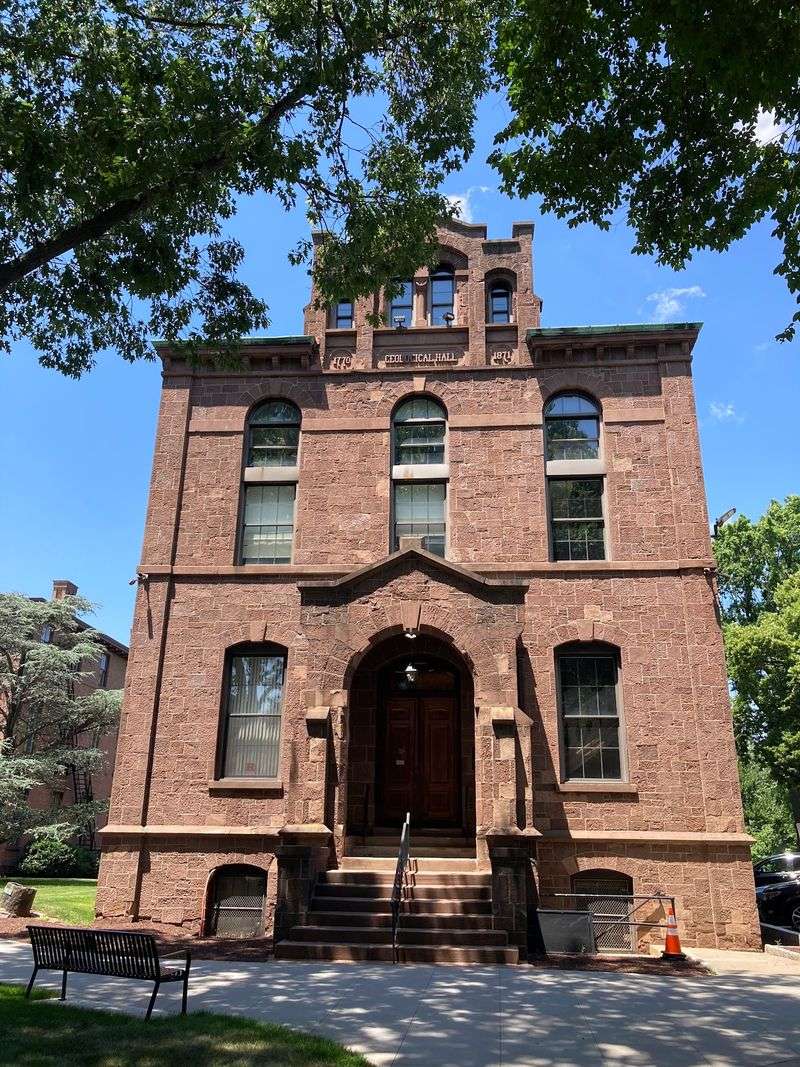
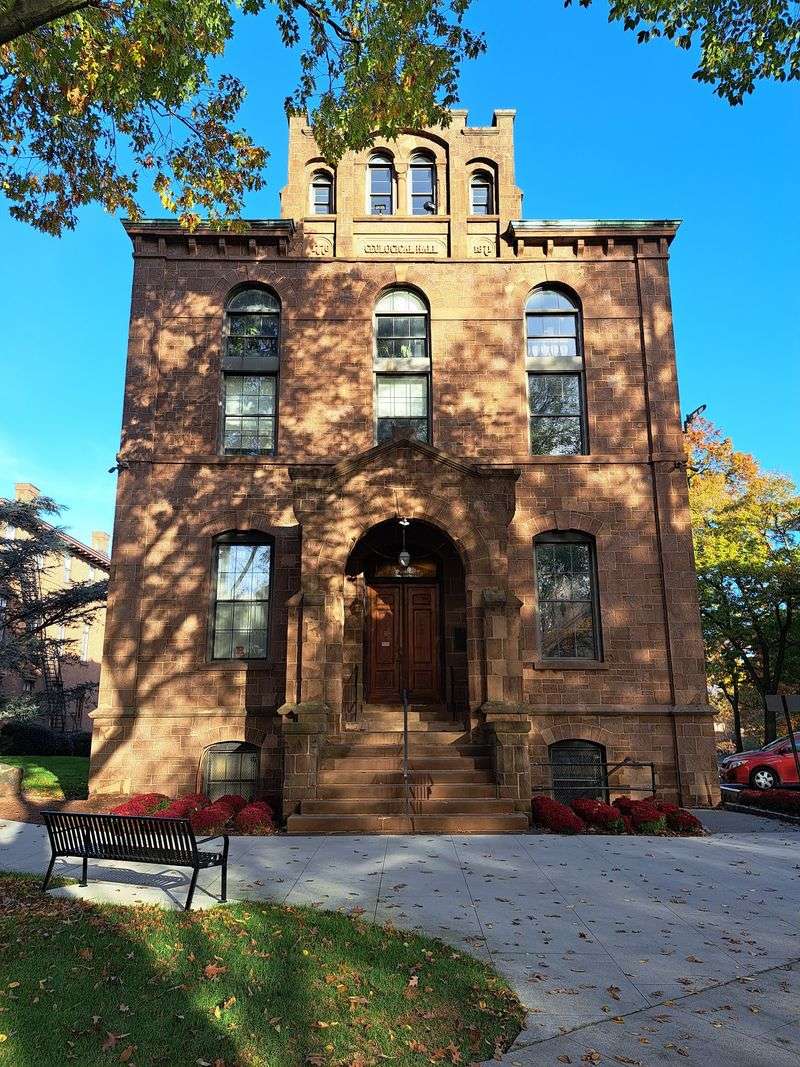
Before you even reach a single fossil, the building itself makes an impression. The museum lives inside Geology Hall, a landmark structure built in 1872.
That date matters more than it might seem. The hall has housed scientific collections for well over a century, so the specimens feel right at home.
Geology Hall stands on Rutgers’ historic Old Queens Campus. It’s one of the most storied corners of the university, surrounded by older buildings and open lawns.
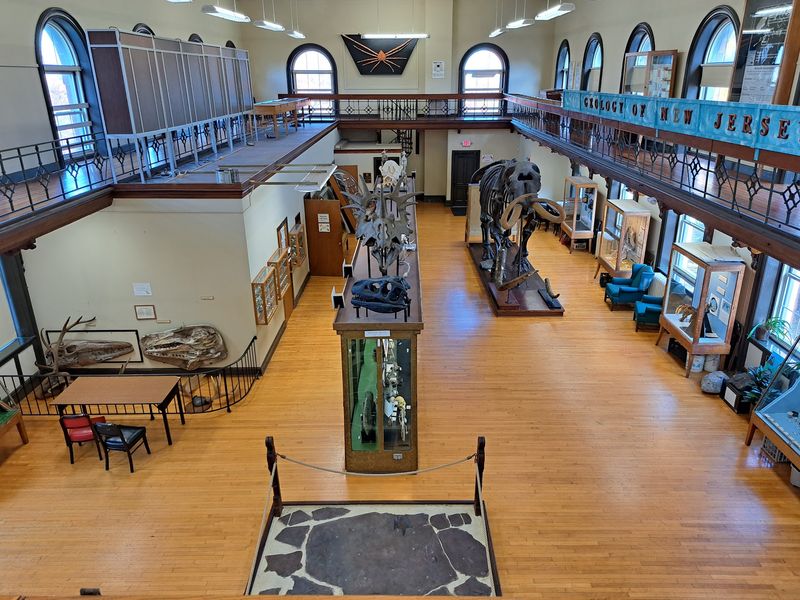
The interior layout adds to the charm. A big open floor sits below a mezzanine, letting you look down on Manny the mastodon from above.
Old buildings come with old-building quirks, of course. Air conditioning can be limited, so a summer visit may feel warmer than a modern climate-controlled gallery.
Still, that vintage vibe works in the museum’s favor. Glass cases, wooden details, and high ceilings make the place feel like a classic natural history cabinet.
It’s easy to imagine generations of students passing through these same doors. Now families get to do the same, and nobody has to sit for an exam afterward.
Collections With Roots Reaching Back To The 1830s
Some museums brag about being new. This one has the opposite flex, with collections that trace back to the 1830s at Rutgers.
The Rutgers Geology Museum is often described as one of the oldest geology museums in the country. Its specimens were gathering long before most of today’s museums existed.
For decades, the collections mainly served students and researchers. The museum later opened to the public in 1968, turning a teaching tool into a community treasure.
That academic history shows in the details. Exhibits come with labels and explanations meant to teach, not just decorate, so reading the cards really pays off.
Several historic mineral collections carry the names of the people behind them. You’ll see collections connected to Cook, Beck, Rowe, and Chester, each adding a chapter to the story.
I like how a place this small carries so much history. It feels less like a showroom and more like a family album for New Jersey’s rocks.
Every case seems to whisper that someone cared enough to save this. Nearly two centuries later, that care is still on display.
A 2,400-Year-Old Visitor From Northern Egypt
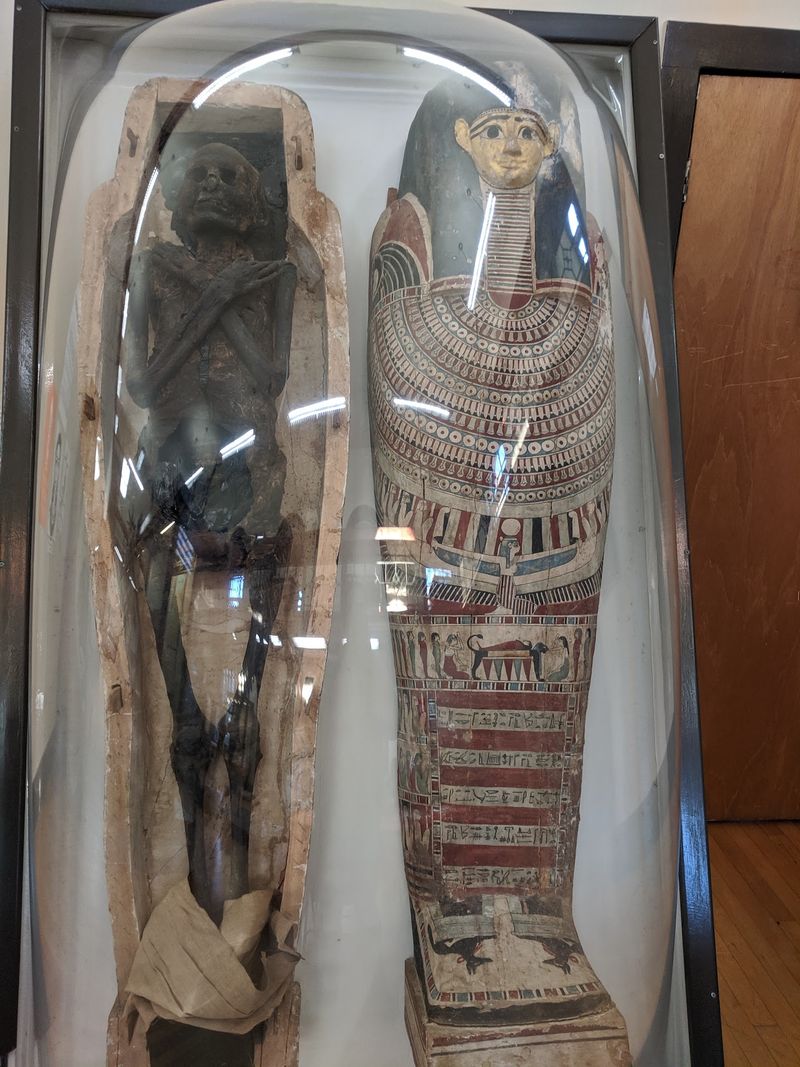
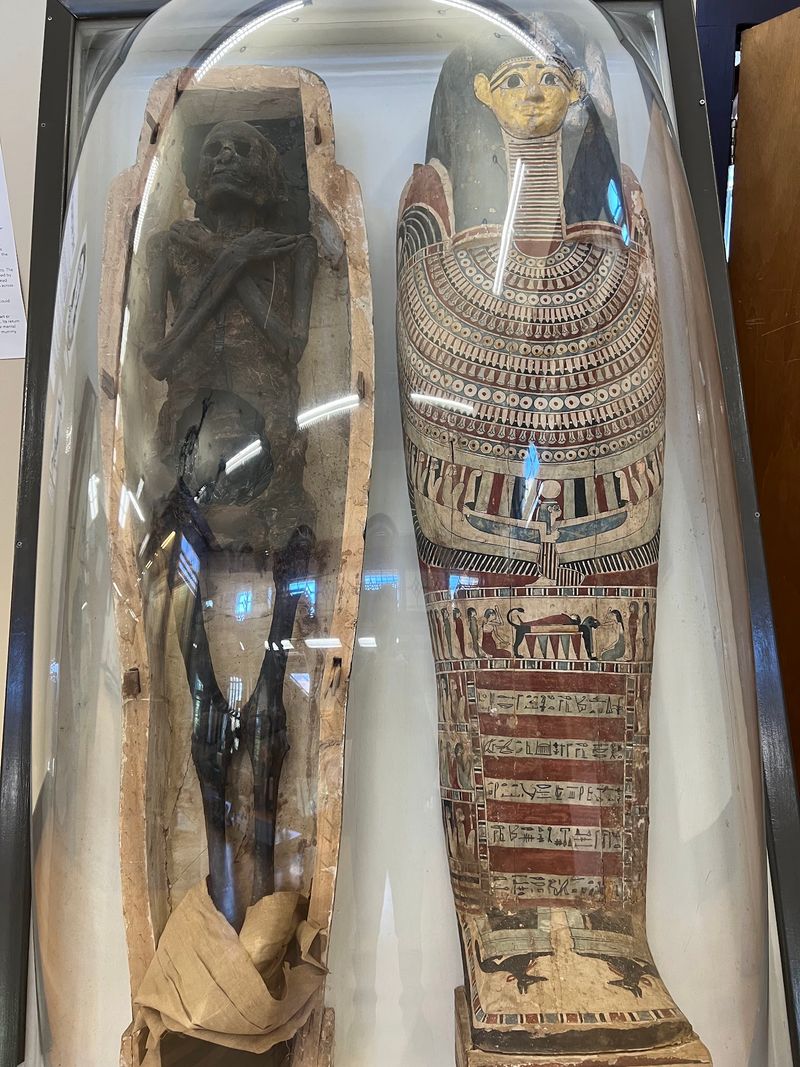
Yes, there really is a mummy in New Brunswick. She’s the star many people come to see, and she’s roughly 2,400 years old.
The mummy dates to Egypt’s Ptolemaic era. She’s a woman from Northern Egypt, which makes her one of the most ancient residents in Middlesex County.
Her journey to New Jersey has its own twist. She’s on loan to the museum from the New Brunswick Theological Seminary, a neighbor with deep local roots.
Seeing her in person feels different from flipping through a textbook. The scale, the wrappings, and the age all land at once.
Ancient Egyptian artifacts are displayed nearby too. Together they turn one corner of the museum into a small window on a civilization far from Somerset Street.
Kids often find the mummy both thrilling and a little spooky. That combination makes for great questions on the car ride home.
I can’t imagine a better way to make history feel real for a curious kid. Free admission and a genuine ancient Egyptian?
That’s a pretty unbeatable pairing.
Space Rocks From The Moon, Mars, And The Dawn Of Time
Here’s a sentence you don’t read every day. A piece of Mars is sitting in a museum in central New Jersey.
It belongs to the 3-Part Meteorite Exhibit, which walks through the formation history of our solar system. Each part tells a different chapter of that cosmic story.
The oldest piece is a chondrite about 4.5 billion years old. That’s older than pretty much anything else you’ll ever stand next to.
Then there’s a lunar meteorite, on loan to the museum. It’s a real fragment of the Moon that made its way to Earth.
The headliner for many space fans is the Shergottite. It’s a Martian meteorite, meaning it traveled here from the red planet.
The exhibit makes big ideas feel approachable. Kids who love rockets and planets can see actual evidence instead of just pictures on a screen.
Honestly, it’s hard not to grin at the contrast. An ancient mummy in one spot and a rock from Mars in another, all under one old roof.
Manny The Mastodon Has Been Standing Tall Since 1896
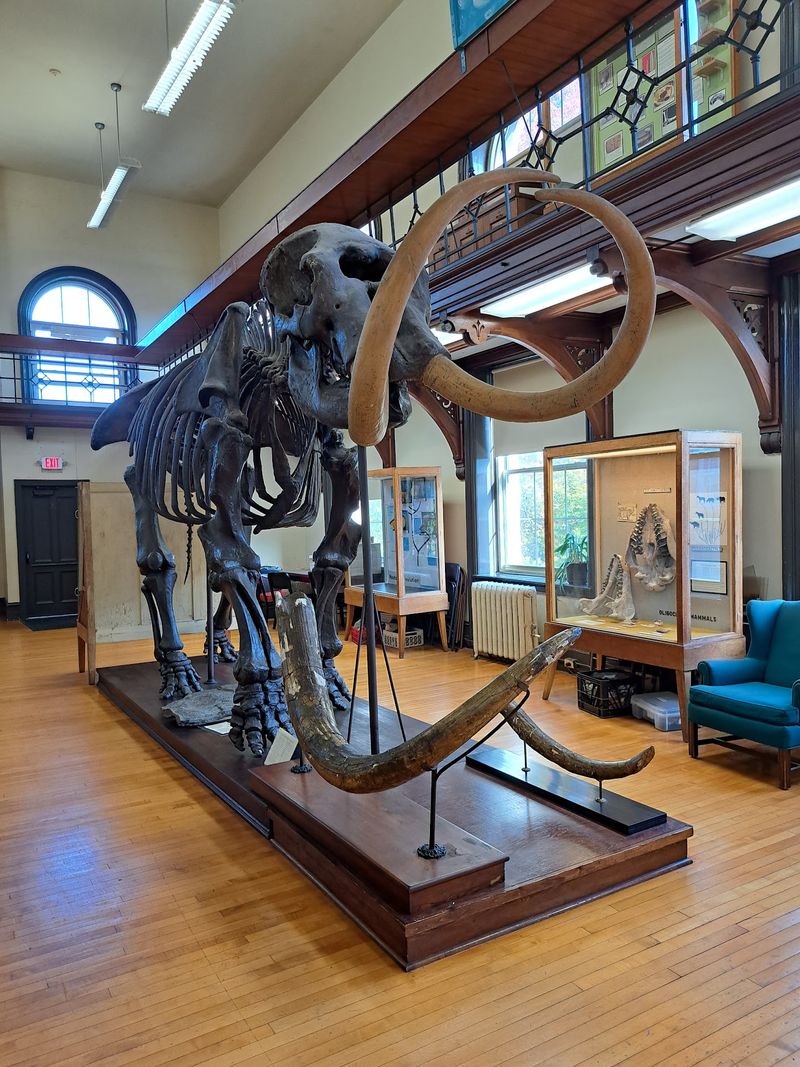
Twelve feet tall and fully articulated, Manny is hard to miss. He’s the museum’s Ice Age giant and easily one of its most beloved residents.
Manny is a mastodon, known to scientists as Mammut americanum. He’s a nearly complete specimen, which is a big deal for a fossil this size.
His story starts close to home. Manny was discovered in Salem County, New Jersey, in 1869, proving these giants once roamed the state.
The museum mounted his skeleton in 1896. He was later remounted in 1932, so he’s had more than one makeover over the years.
Thanks to the mezzanine, you can view Manny from below and from above. That second angle really shows off his size and shape.
He’s a great reminder that South Jersey once looked very different. Picture farmland swapped for Ice Age wilderness, with mastodons wandering where tomato fields grow today.
Kids tend to gravitate straight toward him. Adults usually aren’t far behind, because a giant skeleton never really gets old.
Dinosaur Footprints Pulled Straight From Jersey Ground
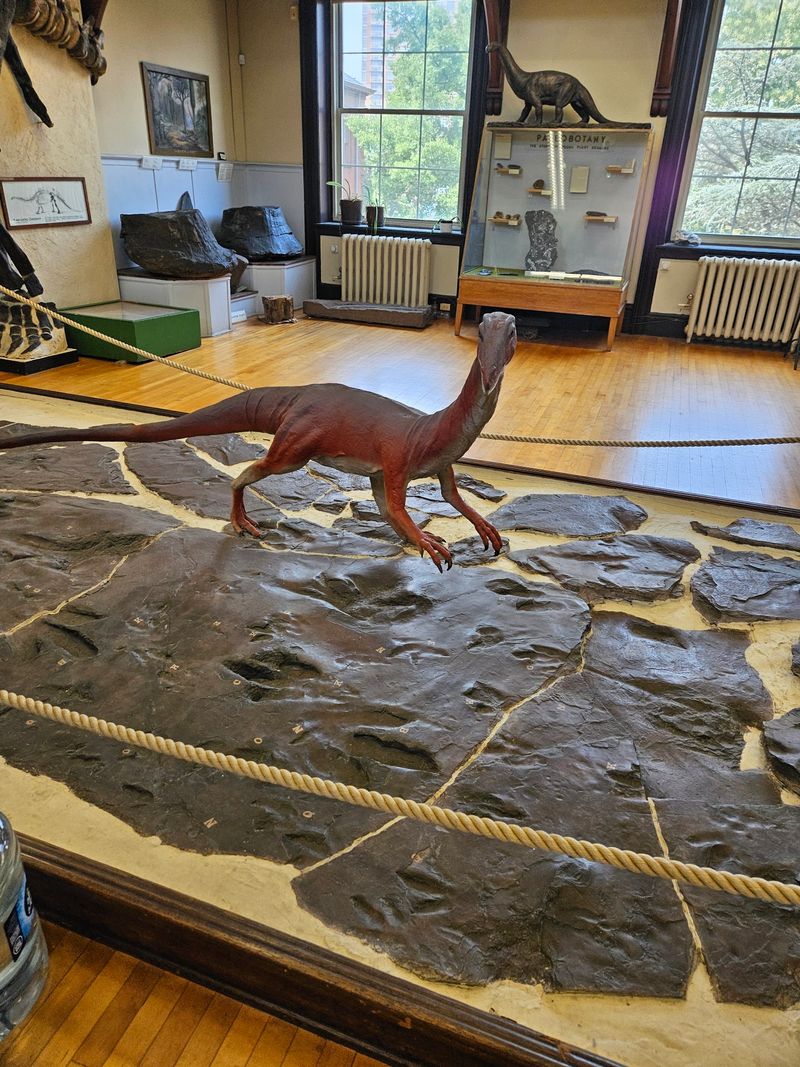
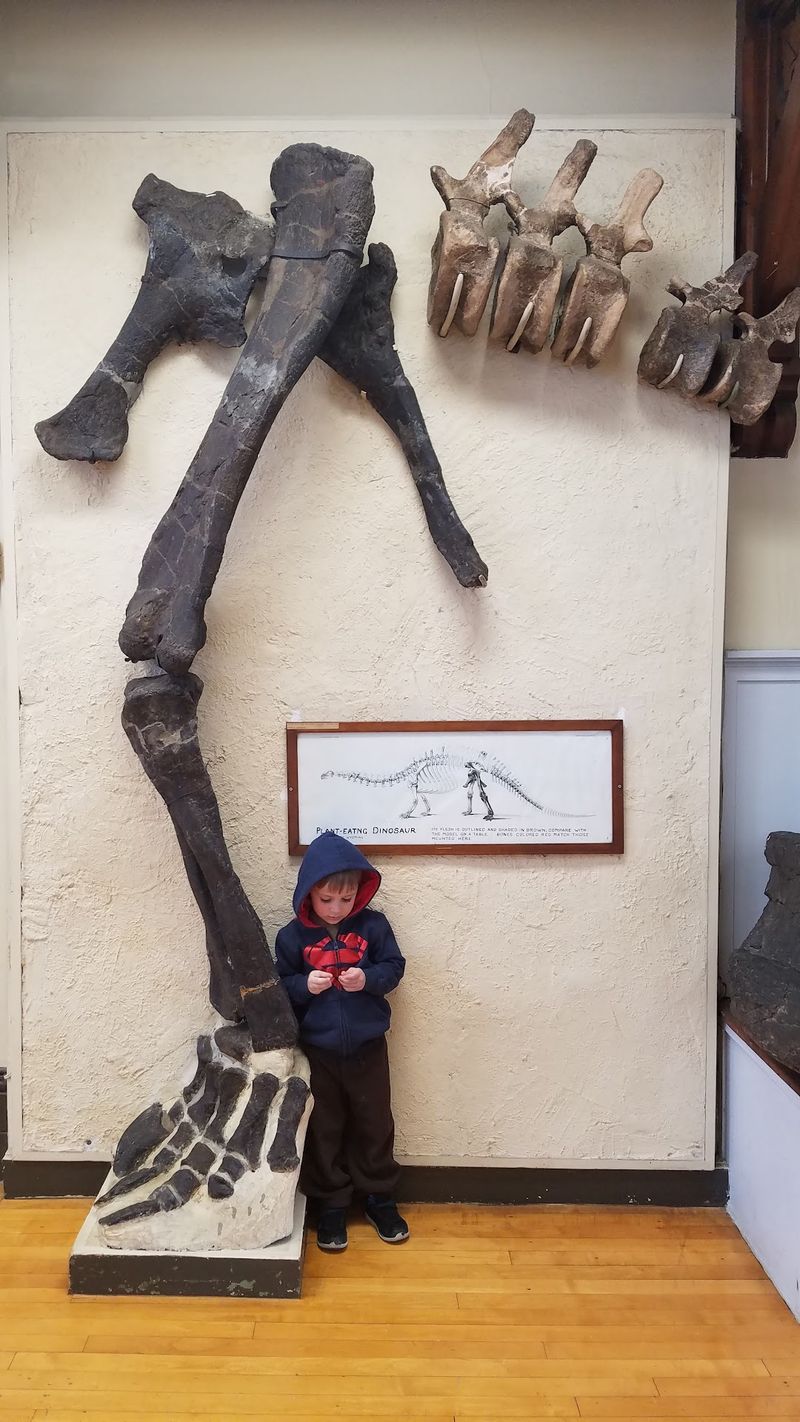
New Jersey has a serious dinosaur résumé, and this museum shows it off. Fossils and footprints found around the state fill several displays.
A dinosaur trackway from Towaco is one of the standouts. Next to it, a model shows the small carnivorous dinosaur believed to have made those prints.
That pairing makes the tracks click instantly. You see the footprints, then you see the animal, and the whole scene comes alive.
There’s also a truly gigantic footprint lifted from Woodbridge. Its size alone sparks plenty of wide-eyed reactions.
Dinosaur bones and other fossils from around New Jersey round out the collection. They make a strong case that the Garden State was once prime dinosaur territory.
For young dinosaur fans, the local connection is a real thrill. These creatures didn’t just live somewhere far away, they walked around places kids might recognize.
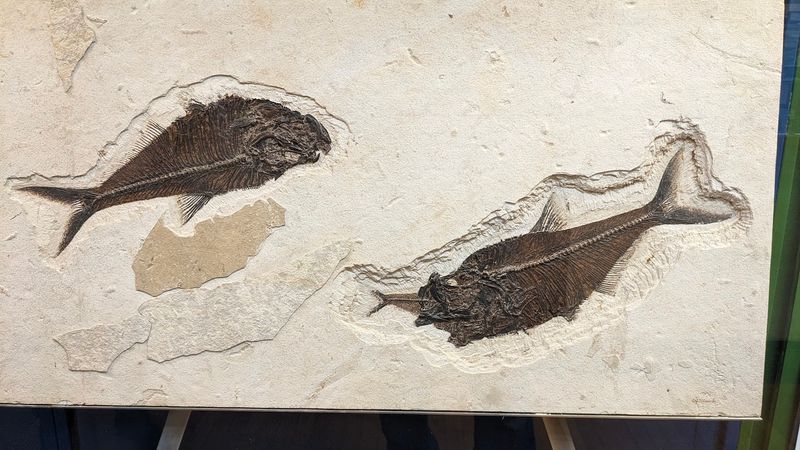
Beyond the dinosaurs, the fossil cases include ancient plants, marine creatures, and prehistoric mammals. Give yourself time here, because the little labels hold big stories.
Upstairs, The Rocks Start Showing Off
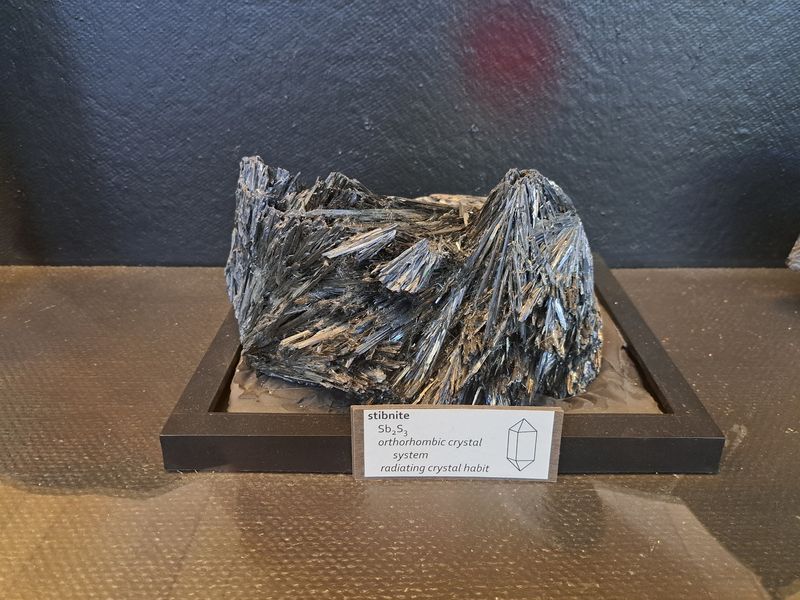
Climb to the mezzanine and the mood shifts to sparkle. The second floor holds much of the museum’s mineral and gemstone collection.
The specimens tend to be small, but there are a lot of them. Case after case shows off different colors, crystal shapes, and textures.
Rare New Jersey minerals get special attention. The state has a famous mineral history, and the museum leans into it proudly.
Historic collections from Cook, Beck, Rowe, and Chester add depth. Each one reflects years of careful gathering by people who loved this stuff.
One display shows how minerals end up in everyday products. Spotting familiar items, like a bag of cat litter, can be surprisingly fun for kids.
A collection of Native American tools and other human artifacts also appears in the museum. It connects the rocks to the people who once used them.
Rock lovers could easily lose track of time up here. Casual visitors will probably still find a favorite crystal or two before heading back downstairs.
Thousands Of Glowing Minerals Hide In A Small Back Room
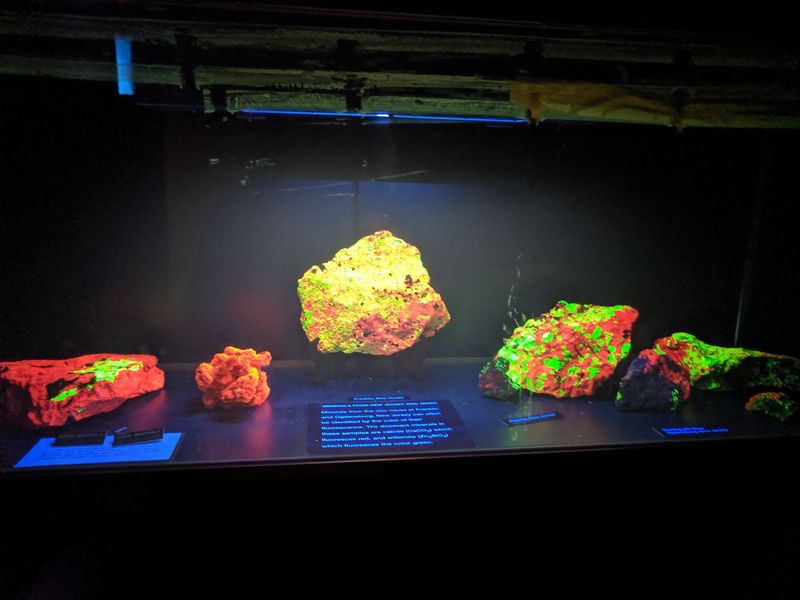
Flip off the regular lights and the rocks start glowing. That’s the magic of the Anne and Milton Hershhorn Fluorescent Mineral Exhibit.
The exhibit features about 6,000 fluorescent specimens. Many of them come from New Jersey, which happens to be world-famous for glowing minerals.
Franklinite and other fluorescent minerals shine under special lighting. The colors can look almost unreal, like someone hid neon signs inside stone.
The display lives in a small room toward the back. It feels like a secret bonus level after you’ve explored the main floor.
Kids usually react the moment the glow appears. Grown-ups often do the same, even if they try to play it cool.
It’s a great lesson wrapped in pure fun. The room shows that minerals can hide surprising properties you’d never notice in daylight.
Don’t skip it on your way out. Of everything in the museum, this glowing corner may be the one your family talks about longest.
Find Everything On The List And Win A Shark Tooth
Got a kid who needs a mission? The museum offers a scavenger hunt handout that turns browsing into a treasure quest.
Children search the exhibits for the items on the list. Finish the hunt and kids can earn a shark tooth, which feels like a pretty great prize.
Quizzes and activities help keep young visitors engaged. They also nudge kids to slow down and actually read about what they’re seeing.
Interactive displays add hands-on moments too. Some cover ideas like rock formations and fossil identification in ways that click for younger minds.
A big ferromagnetic rock has been a hit with little ones. Toddlers and preschoolers can get a kick out of something that simple.
The size of the museum works in families’ favor. It’s easy to keep an eye on kids in one open room with a mezzanine above.
For young children, plan on roughly 30 to 60 minutes. That’s long enough for wonder and short enough to dodge the meltdown zone.
Late Nights, Rock Shows, And Bring-Your-Own Fossil Questions
Evenings bring a different energy to Geology Hall. On the first Thursday of each month during the school year, the museum hosts Late Night at the Museum.
These events run from 4 to 8 p.m. They line up with SparkNights at the nearby Zimmerli Art Museum, so you can easily make a whole night of it.
Themed activities are designed for all ages. It’s a nice option for families who can’t make a weekday daytime trip.
Here’s a fun perk for curious collectors. You can bring your own minerals or fossils for identification by a specialist during these evening events.
That mystery rock from the backyard might finally get an answer. Even if it turns out ordinary, the conversation alone is worth it.
The museum also hosts public lectures and guided tours. Groups can arrange visits, which makes it popular for school and scout outings.
Then there’s the annual open house. It grows into a big gem, mineral, and fossil show, and rock lovers mark their calendars for it.
Small Footprint, Big Curiosity, Easygoing Pace
Nobody needs a map or a battle plan here. The museum’s compact layout makes for a relaxed, low-stress outing.
Speed-walkers could breeze through quickly. Take your time with the cards and cases, though, and an hour or two can fly by.
The mix suits a wide range of visitors. Rock hounds, dinosaur fans, history buffs, and toddlers can all find their thing.
Staff members are known for being friendly and happy to chat about rocks. That personal touch fits the cozy, campus-museum feel.
A small gift shop sits inside too. It carries minerals in both raw and polished forms, which makes for an easy souvenir.
I like how unhurried the whole thing feels. There’s no pressure to see everything, and no ticket price nagging you to stay longer.
It’s honest about what it is, a small museum with a lot packed in. That charm is exactly why it works so well for a quick New Jersey day trip.
Know Before You Go, Because Timing Is Everything
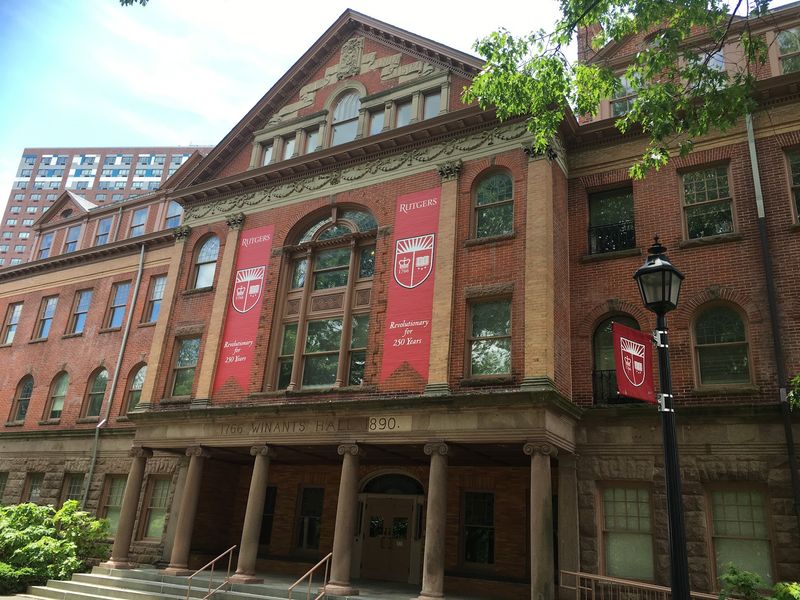
Mark your map for 85 Somerset St, New Brunswick, NJ 08901. The museum sits on the Old Queens Campus of Rutgers University.
Admission is free, and visitors may be asked to sign in. Donations are encouraged if you’d like to support the collections.
The museum is generally open Tuesday through Friday starting at 10 a.m. It’s closed Sundays, Mondays, major holidays, and during Rutgers breaks.
Some select Saturdays may also be open during the academic year. Hours can shift, so check the latest schedule before you hit the road.
Parking takes a little planning in a busy college town. Metered street parking can be found on George Street, Hamilton Street, Somerset Street, and College Avenue.
On weekends, some Rutgers lots may be open to visitors for free. For Late Night events, free parking is offered in certain Rutgers lots, but you need to register ahead.
Look up a photo of the building before you go. Campus streets can be tricky, and knowing what Geology Hall looks like saves a few laps.
Why This Free Little Museum Deserves A Spot On Your Weekend
Few places let you meet a mummy, a mastodon, and a Martian meteorite in one visit. Fewer still let you do it for free.
That’s the real magic of the Rutgers Geology Museum. It delivers big wonder without a big bill, which feels very New Jersey in the best way.
The local focus seals the deal. Manny came from Salem County, dinosaur tracks came from Towaco, and glowing minerals came from Garden State ground.
Pair your visit with a stroll around campus. The nearby quad gives kids space to run off energy after all that careful looking.
Families can plan around the monthly Late Night events too. A Thursday evening of rocks and art sounds like a pretty fine way to start the weekend early.
No, it isn’t a giant city museum. It’s something friendlier, a historic hall full of treasures that reward slow, curious eyes.
So grab the kids, a rock-loving friend, or just your own curiosity. A 4.5-billion-year-old space rock is waiting, and it has been very patient.