A Belgian dance-hall organ built in 1922 stretches 32 feet wide inside an old Michigan dairy barn. It weighs about 5,000 pounds.
And yes, it still plays.
That organ once filled a dance hall in Ypres, Belgium. Now it shares a farm property with music boxes, player pianos, jukeboxes, and a phonograph tied to Al Capone.
I like how none of it sits silent behind glass.
Guides actually play these machines for you. One piano even performs Rhapsody in Blue the way George Gershwin himself played it.
I can’t imagine hearing that and not grinning like a kid.
I believe most people drive right past this place on their way somewhere else. The building looks plain from the highway.
So how does a whole band fit inside one barn?
A Barn Full Of Machines That Refuse To Stay Quiet
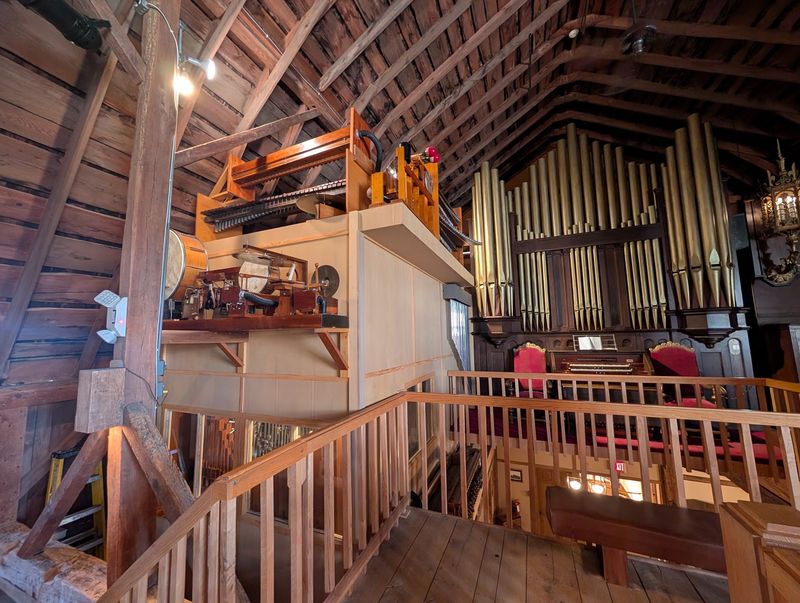
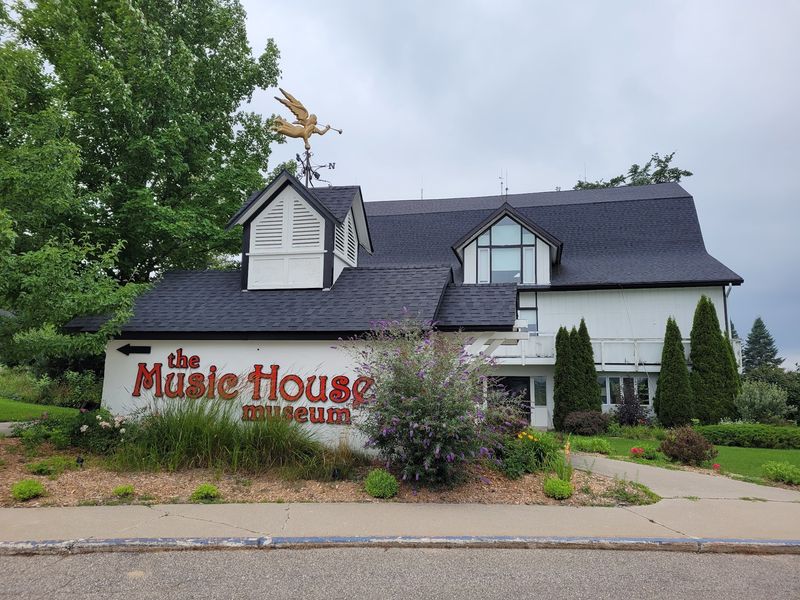
North of Traverse City sits the Music House Museum, a nonprofit devoted to automated musical instruments. The whole collection lives inside a converted granary and barn in Williamsburg, Michigan.
Automated instruments play themselves. Think rolls of punched paper, spinning cylinders, and clever bellows doing the work of human hands.
The collection covers a huge stretch of time. Pieces date from the late 1700s up through the mid-1900s.
That means you get the whole family tree of home entertainment in one stop. Tiny music boxes sit near towering organs, and early phonographs share space with jukeboxes.
Here’s what makes it special for a Michigander. The building looks like a farm property you’d pass without blinking.
Inside, though, sits a collection that guides describe as rare on an international level. Instruments survived decades, wars, and long ocean trips to land in Grand Traverse County.
Every machine on the floor has been restored to work. That’s the point of the place.
You don’t just read little placards here. You hear the instruments breathe, rattle, chime, and roar back to life, and that sound is the real exhibit.
The Farm Family Story Behind The Music
Long before any organ arrived, this land belonged to the Stiffler family farm. Their story here reaches back to the early 1880s.
The farm buildings themselves date to around 1910. A dairy barn and a granary still stand, now restored and repurposed.
The museum was founded in 1983. It formally opened its doors in 1984, which gives it four decades of keeping old music alive.
That continuity matters. One recent visitor shared returning more than 30 years after a first trip, simply glad it was still around.
I love that kind of staying power in a small Michigan museum. Plenty of quirky roadside attractions fade quickly.
This one kept restoring, kept demonstrating, and kept welcoming people through a barn door. That’s a rare streak.
The nonprofit model shapes everything too. Gift shop purchases help care for the instruments.
Donations and memberships keep fragile machines in working order. So a visit isn’t just a fun afternoon in the countryside.
It’s a small vote for keeping a strange, wonderful slice of history running. And honestly, a dairy barn holding a Belgian dance organ is a pretty great family legacy.
Meet The Amaryllis, A 5,000-Pound Showstopper
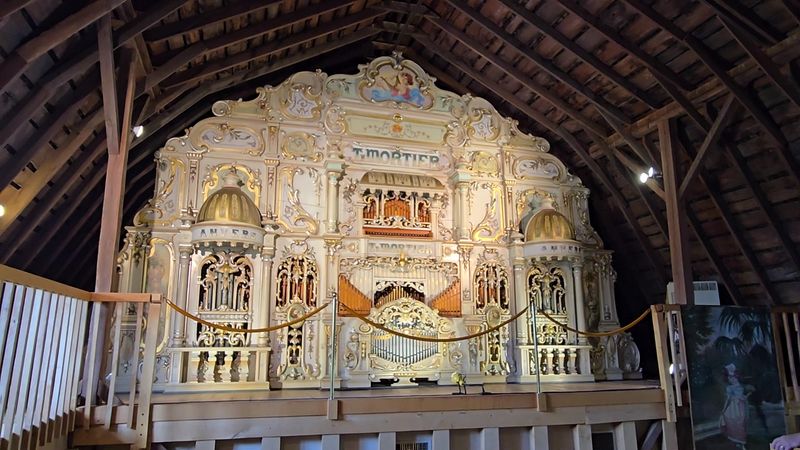
Five thousand pounds of carved, painted, pipe-filled glory. That’s the 1922 Mortier dance organ, nicknamed the Amaryllis.
It stretches about 32 feet wide. Standing in front of it feels a bit like facing a stage set rather than an instrument.
The Amaryllis is one of only two known surviving organs of its size and style. That alone earns it the spotlight.
Then it starts playing. Pipes, percussion, and rhythm combine so fully that it really does sound like a whole band showed up.
Dance organs were built to fill big halls with music for crowds. No human orchestra required, just a machine with serious lungs.
One visitor described it as looking like something pulled from a fantasy novel. Fair enough.
The fancy facade alone deserves a long look. Every inch seems designed to grab attention from across a crowded room.
Most people come to the Music House Museum for a peek at old pianos. Then the Amaryllis wakes up, and suddenly that’s all anyone remembers on the drive home.
Good luck ignoring it.
From A Belgian Dance Hall To Northern Michigan
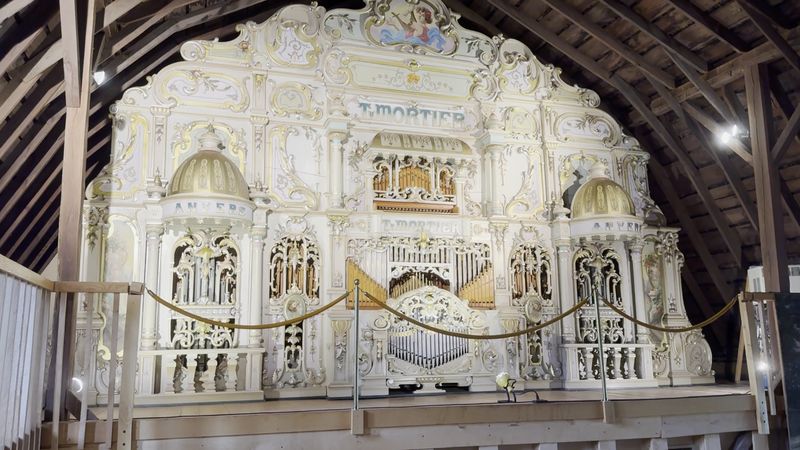
Ypres, Belgium, is a long way from US-31. Yet that’s where the Amaryllis started its working life.
The organ was built for the Victoria Palace in Ypres. It provided music for dancers in the 1920s, when halls like that needed big sound.
Decades later, the organ crossed the Atlantic. It arrived in America in 1967.
Private owners held it for a while after that. Then, in 1982, the museum acquired it.
Restoration came next, and it was no weekend project. Crews worked to bring it back in time for the museum’s opening.
Think about that journey for a second. A European dance hall organ now plays for families in a Michigan barn.
That kind of story is why I believe the museum deserves more attention. Michigan doesn’t often get credit for holding world-class music history.
Here, a rare Belgian instrument lives just north of Traverse City. It found a second home, and a second audience, among cherry country and lake views.
Not a bad retirement plan for a dance organ.
Gershwin Still Plays Here, Sort Of
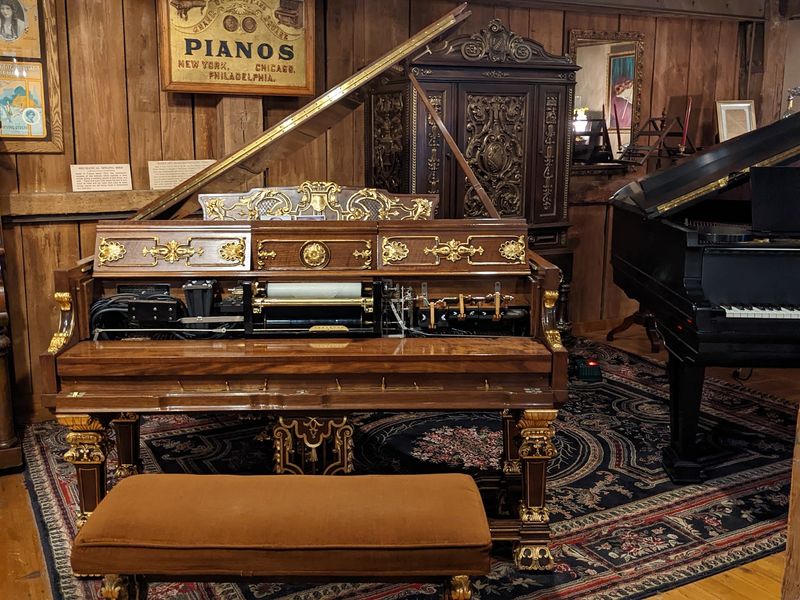
George Gershwin hasn’t played a live gig in a very long time. Still, his own performance of Rhapsody in Blue fills the room here.
The trick is a reproducing piano. These advanced player pianos captured a pianist’s playing on rolls, then replayed it with surprising detail.
So the keys move on their own. The phrasing, though, belongs to Gershwin.
That moment sticks with people. Rhapsody in Blue shows up again and again when folks talk about the museum.
The museum’s broader player piano story is fun too. Tours walk you through how these machines changed over the years.
You see early versions and later upgrades side by side. Each step gets demonstrated, so the history makes sense by ear.
Player pianos were a big deal in American homes. Before radio took over, they let families enjoy music without anyone practicing scales.
Hearing one play in the Music House Museum makes that era feel close. It’s a little eerie, a little magical, and completely charming.
Watching invisible fingers tackle Gershwin is the kind of thing you’ll describe badly to friends later. That’s fine.
They’ll just have to go see it.
Music Boxes, Nickelodeons, And A Capone Connection
Al Capone’s name pops up in the strangest places. At this museum, it’s attached to an early phonograph reportedly owned by the famous Chicago figure.
That’s just one stop in a wide-ranging collection. Delicate music boxes sit alongside player pianos, orchestrions, and nickelodeons.
Orchestrions are especially fun. These cabinets pack several instruments inside and play them together automatically.
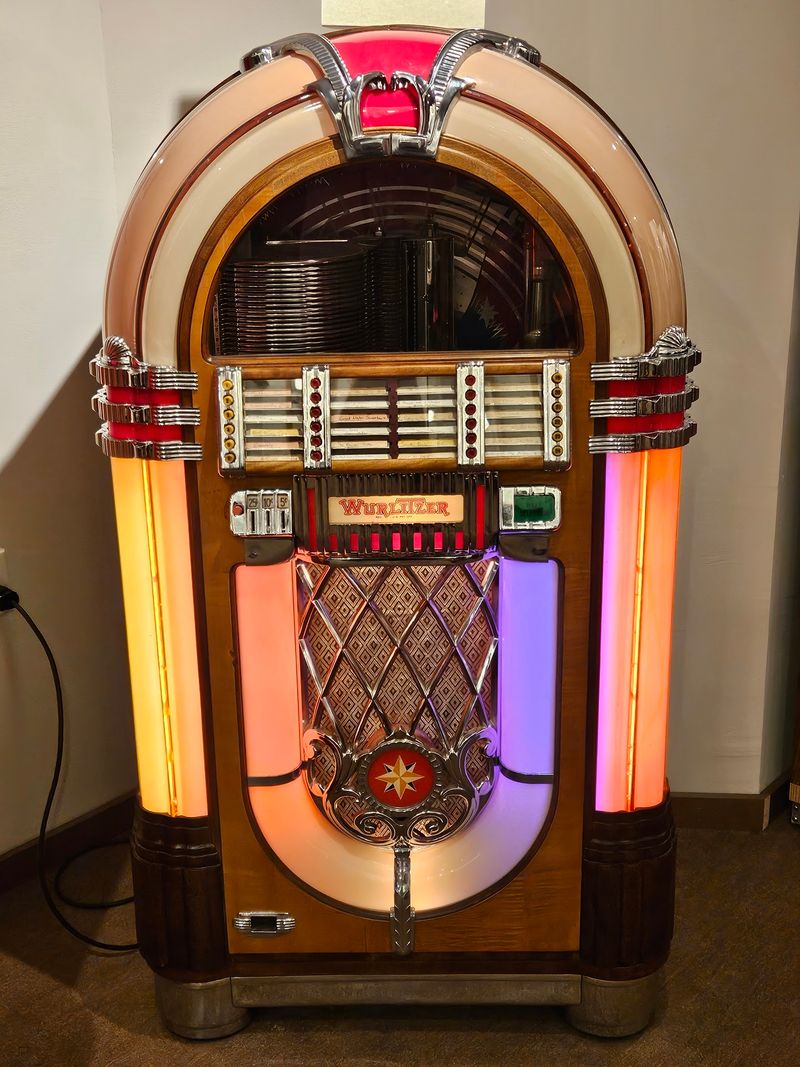
Nickelodeons were coin-operated machines. Drop in a coin, and music came out, which feels like a distant cousin of the jukebox.
Speaking of which, jukeboxes are here too. So are vintage radios and early phonographs.
The range is the fun part. You can follow sound technology from hand-cranked charm to electric record players.
Church and theater organs appear in the collection as well. Each one shows another way people chased bigger, richer sound.
Anyone who likes gadgets will find a lot to stare at. Gears, rolls, horns, pins, and bellows all reveal how inventors solved problems before microchips.
I like how the collection never feels like one long row of the same thing. Every turn brings a new machine, and usually a new noise.
Your Guide Is Basically The Opening Act
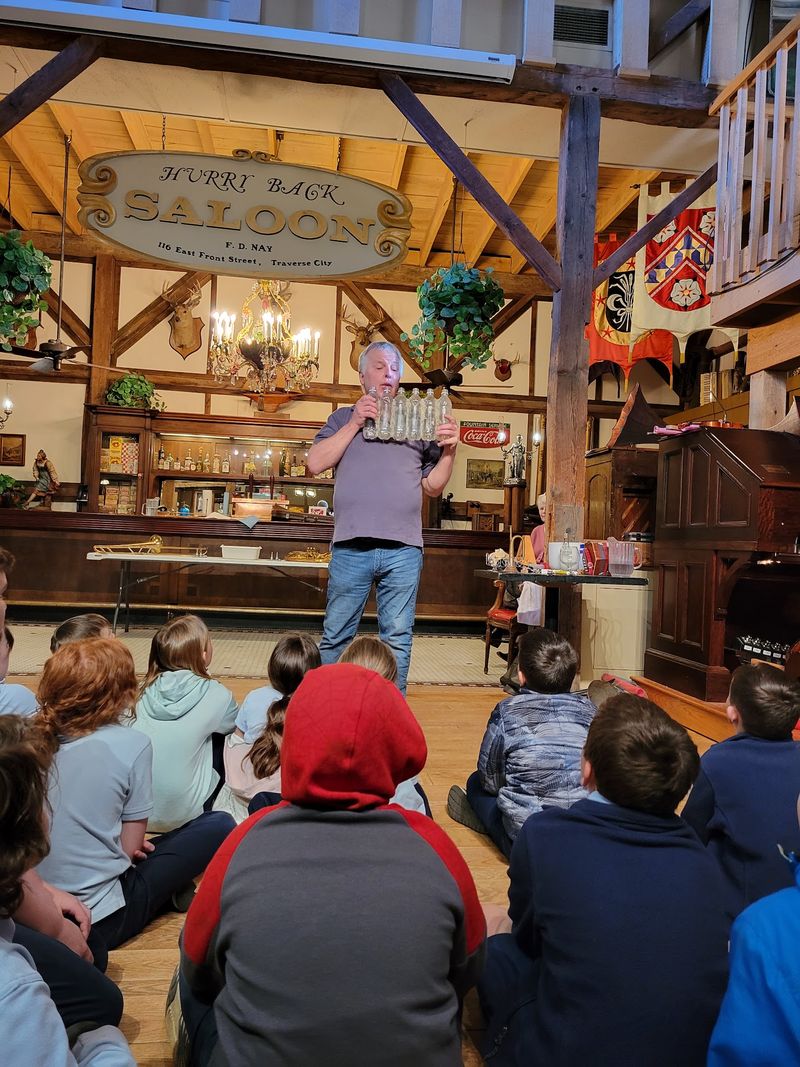
Silent strolls are not really the format here. Guided tours run the show, and the docents play many instruments as you go.
The museum calls its tours demonstration-driven. History and live music trade off, so nobody stands around reading signs for long.
Guides get a lot of love. They’re often described as knowledgeable, friendly, and clearly passionate about the machines.
One visitor said the tour felt like a conversation instead of a lecture. Another said a docent wove all the instruments into one connected story.
Sometimes guests even get to try a few instruments. That hands-on moment can turn a curious kid into a gearhead fast.
Plan for a longer visit than you might expect. Tours commonly run around 90 minutes, and some visits stretch closer to two hours.
Seats are placed along the route. That helps, since much of the tour happens on your feet.
Arriving well before closing makes sense. Showing up an hour before the doors shut could mean missing the best demonstrations, and the Amaryllis is worth the full wait.
Bring your questions. These folks clearly enjoy answering them.
Restore, Not Repair: The Rule Behind Every Note
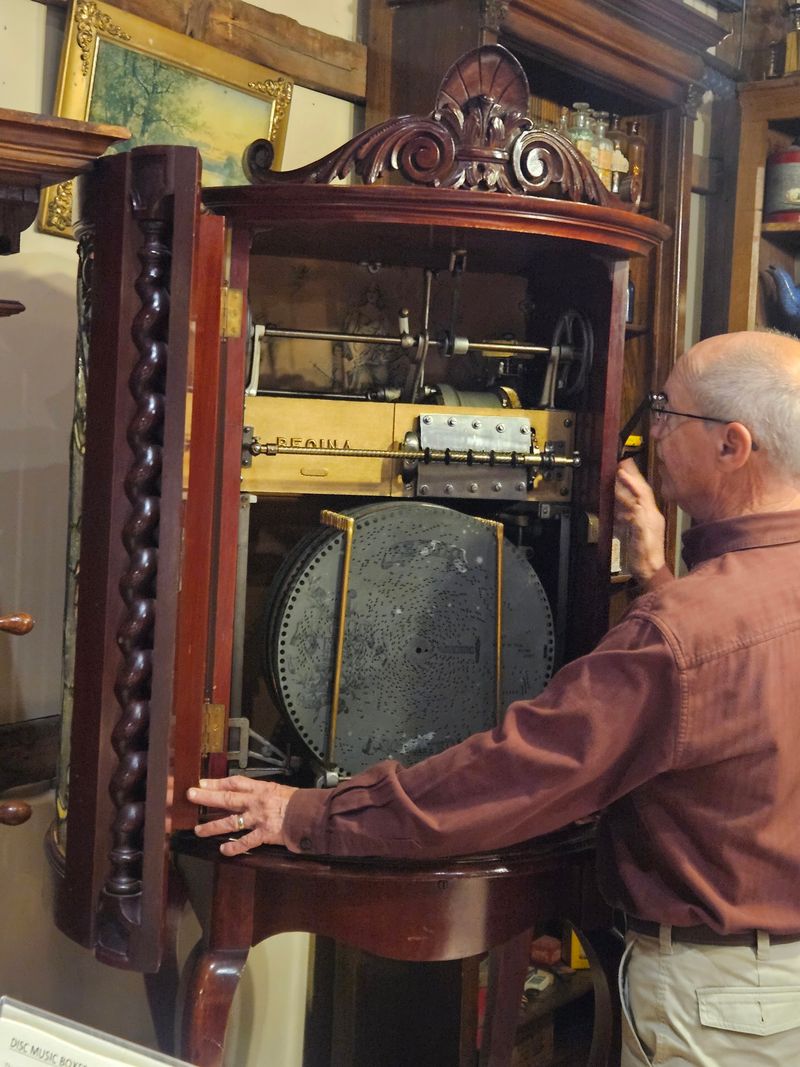
Three words guide the work here: restore, not repair. It sounds simple, but it’s a big commitment.
The goal is for each instrument to play just as it would have in its prime. No modern shortcuts, no sneaky electronic boosts.
That approach takes patience. Old pneumatic systems, wooden parts, and fragile mechanisms need careful hands.
Guides have explained that every item in the building has been restored as fully as possible. And the instruments work.
That’s rarer than it sounds. Many museums display old instruments that haven’t made a sound in decades.
Here, function is the whole point. When something plays, you’re hearing the original idea behind it, not a modern copy.
I believe that’s why the music feels so convincing. Your ears pick up the clicks, the air, and the little quirks.
Those quirks are part of the charm. They remind you a human built every piece and another human brought it back.
Craftsmanship like this deserves respect. Somewhere in Williamsburg, people are spending serious hours so a century-old machine can keep doing its job, which is making strangers smile.
Old-Time Village Vibes Inside A Dairy Barn
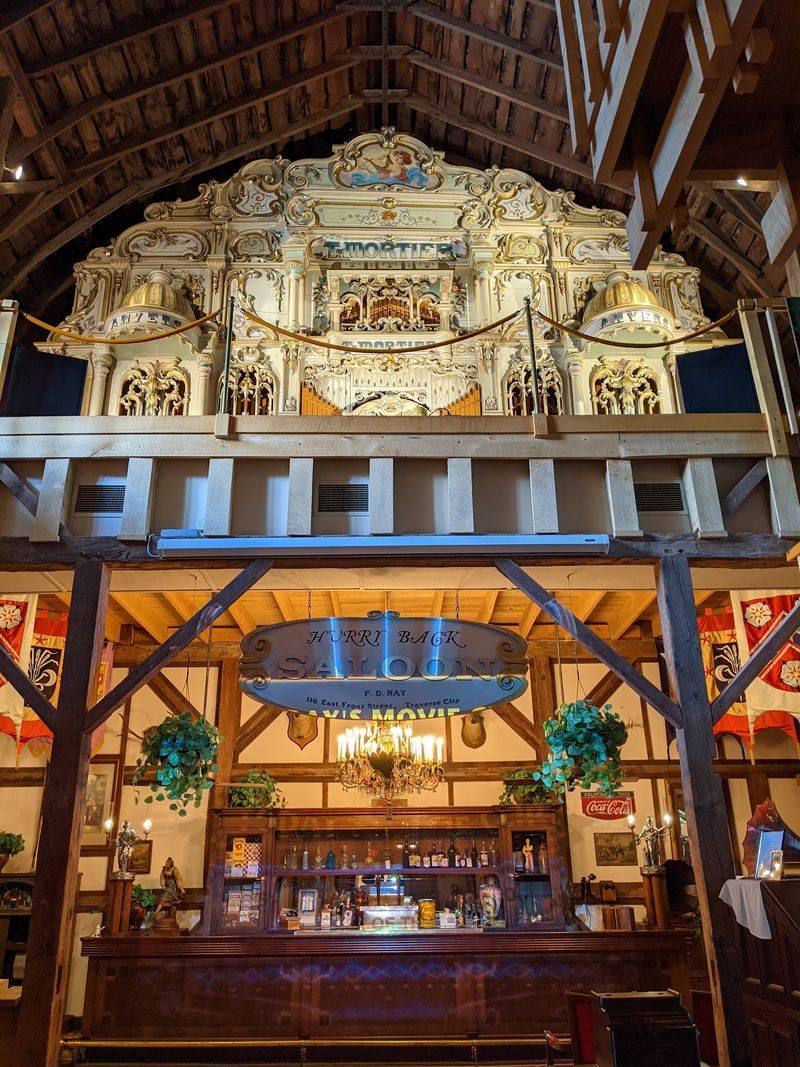
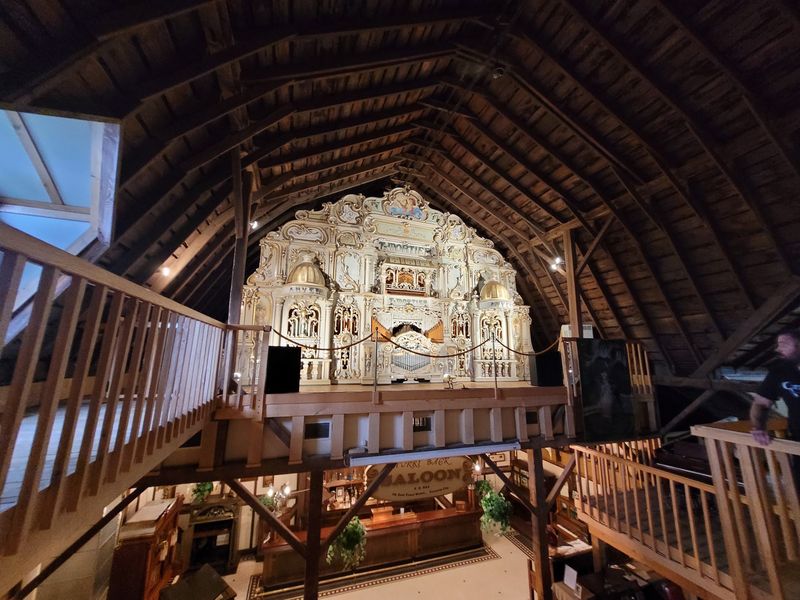
Turn a corner inside the barn and the century changes. The interior recreates a turn-of-the-century village setting.
You’ll find recreated parlors that show how families enjoyed music at home. There’s also an old-fashioned Acme General Store front.
A storefront called the Hurry Back Saloon adds to the old-town scene. It works as part of the period backdrop for the instruments.
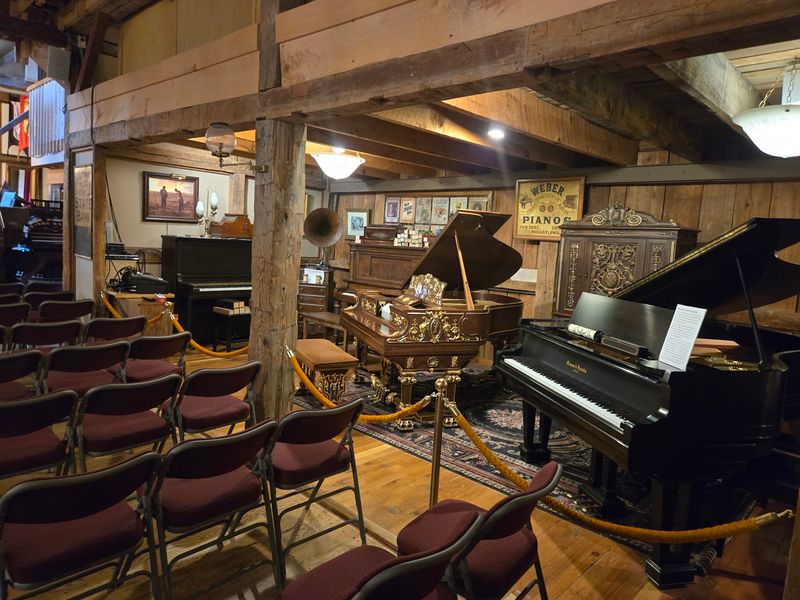
The setting gives each machine context. A player piano makes more sense sitting in a parlor than in a plain display case.
Then there’s the barn itself. Exposed character and farm bones give the space a cozy, quirky feel.
One visitor said the refurbished barn gave the whole collection a really nice vibe. I can see why.
Fancy European instruments surrounded by sturdy Michigan farm architecture is a fun contrast. Elegant meets practical.
Kids may treat it like a small time-travel set. Grown-ups may linger in the parlors, thinking about grandparents gathered around an instrument.
It doesn’t feel stiff or overly polished. It feels lived-in, curious, and a little playful, which suits a building full of machines that perform for a living.
Silent Movies With A Very Loud Partner
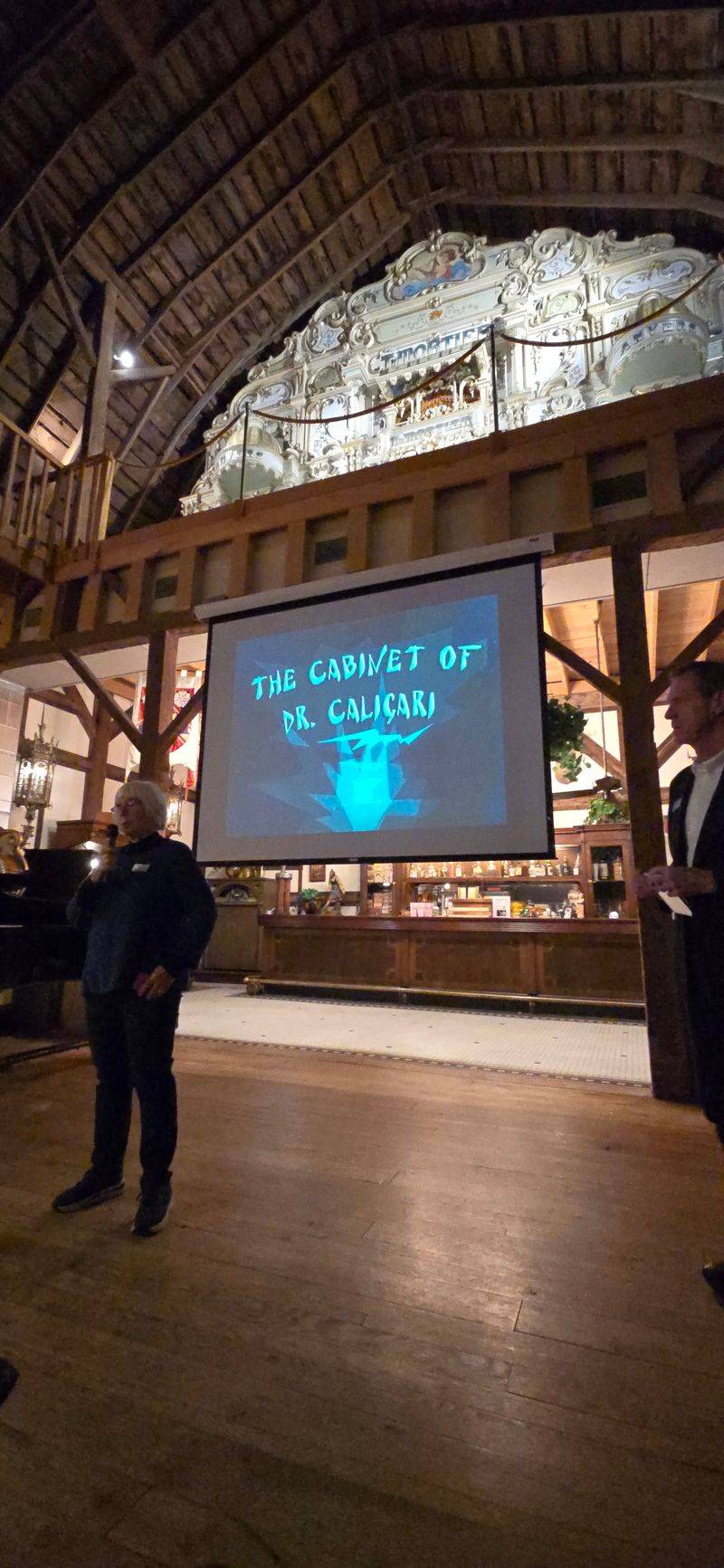
Silent films were never meant to be silent. Back in the day, live music carried the mood, and the Music House Museum keeps that tradition going.
Its Silent Film Series pairs classic movies with live accompaniment. The museum’s Wurlitzer theater organ handles much of that job.
Theater organs were built for this exact purpose. They could add drama, comedy cues, and sound effects to whatever flickered on screen.
Screenings have also featured piano and percussion. One recent showing of The Cabinet of Dr. Caligari came with both.
Watching a century-old film this way changes the experience. The music feels connected to the room, not piped in from somewhere else.
The quirky barn setting helps too. It suits strange old movies surprisingly well.
Concerts and other special events also pop up on the calendar. Schedules can shift, so checking ahead may save you a disappointing drive.
For locals, these events offer a reason to come back. You might tour once, then return for a film night with friends.
Popcorn optional. Wurlitzer mandatory.
Ring Out Amazing Grace On Your Way Out
Grab a mallet, hit the bells in order, and out comes Amazing Grace. That’s the cheerful little send-off waiting outside.
A circle of bells sits on the grounds. Visitors can play the hymn themselves, no music lessons needed.
It’s a sweet way to end a visit. After hearing machines play for 90 minutes, you finally get a turn.
Visitors have pointed to this outdoor installation as a must-try. One urged others not to miss the newer piece out front.
Bell donations are also part of the story. People can sponsor a bell to support the museum.
I like that detail a lot. It turns a simple yard feature into a community project anyone can join.
The gift shop deserves a stop as well. Themed souvenirs and recordings let you carry a bit of the music home.
Purchases help pay for instrument care. So that fridge magnet or CD quietly supports a 1922 Belgian dance organ.
Pretty good return on a souvenir. And who wouldn’t want to leave humming a hymn they just played on giant bells?
Who Will Love This Place Most
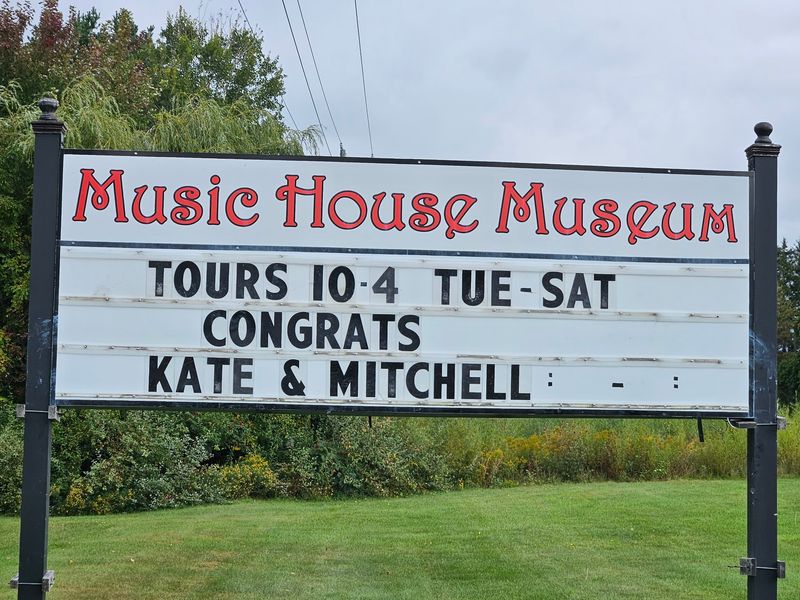
Musicians obviously have a good time here. Surprisingly, so do people who can’t read a single note.
One couple said neither of them played music. Yet the tour became one of their all-time favorites.
Gadget fans may enjoy it most. Anyone curious about how mechanical things work will find plenty to puzzle over.
History lovers get layers of stories. Inventors, dance halls, home parlors, and early recordings all show up.
Grandparents might spot machines from their childhood, like old radios and jukeboxes. Grandkids might be stunned that a piano can play itself.
That mix makes it a strong multi-generation outing. Everyone tends to latch onto something different.
The pace is relaxed and friendly. One visitor called the vibe laid back and chill, which feels right for a barn museum.
Rainy days around Grand Traverse Bay are another great fit. Michigan weather can change plans fast, and this stop keeps you indoors.
Fall color trips work nicely too. Pair a scenic drive with a few hours of music, and the day suddenly feels complete.
Plan Around Friday And Saturday, Then Go
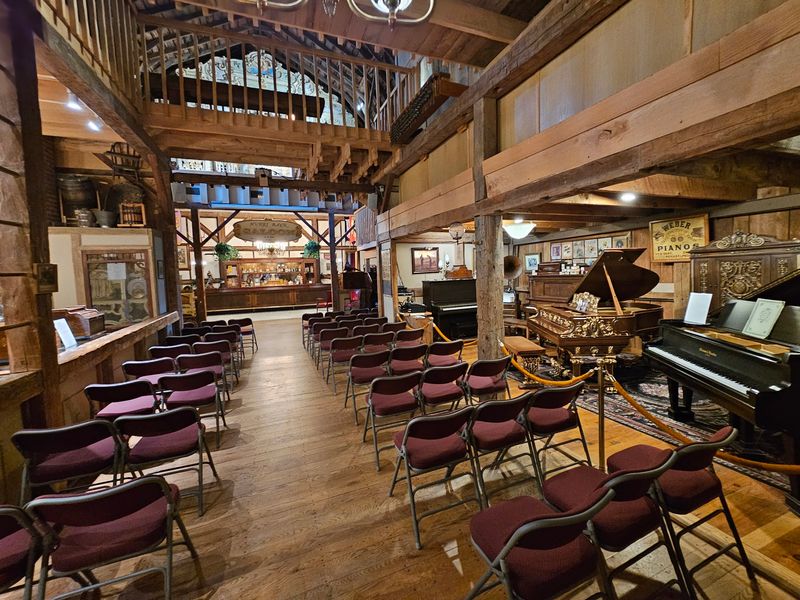
Timing matters most. Current hours list Friday and Saturday, 10 a.m. to 4 p.m., with the museum closed Sunday through Thursday.
Hours can change by season, though. A quick check before leaving home may spare you a closed door.
The address is 7377 US-31, Williamsburg, MI 49690. It sits just north of Traverse City in Grand Traverse County, Michigan.
Admission is charged, and visitors often call it a fair, modest cost. Proceeds support a nonprofit that keeps rare instruments running.
Give yourself about two hours. Tours often take around 90 minutes, and you’ll want time for the bells and gift shop.
Arriving early in the day is smart. Late arrivals could miss demonstrations before the 4 p.m. close.
The museum also hosts private events in its barn setting. Weddings and gatherings have used the space.
So, is it worth the drive? For anyone who loves a true Michigan oddity with real history behind it, I’d say absolutely.
A 32-foot organ is waiting. Somebody should go listen.