Somewhere in New York City, a family still stretches pastry dough by hand until the sheets turn almost transparent. Then those sheets bake in ovens that have been working for more than a century.
That dough is phyllo, the paper-thin layers behind baklava and spinach pie. Most of the world buys it frozen in a box, but this family has done it the slow way since 1923, across four generations.
I love that kind of stubborn devotion, because true handwork keeps getting harder to find in New York. Anyone who sews, quilts, knits, or bakes from scratch knows how much patience one perfect, even layer of anything demands.
So what does a century of careful craft actually taste like? And how does one family keep it going, one fragile sheet at a time, while the city around them keeps changing?
A Pastry Shop Where The Dough Still Gets Stretched By Human Hands
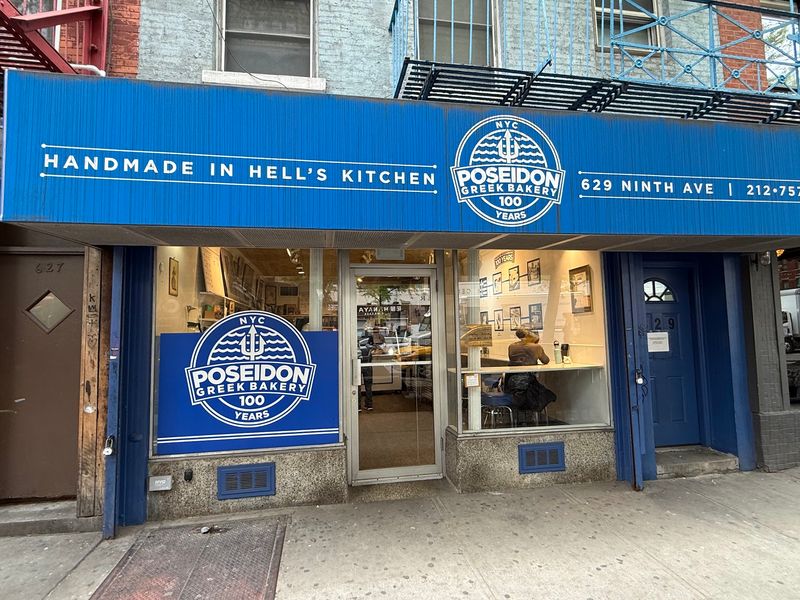
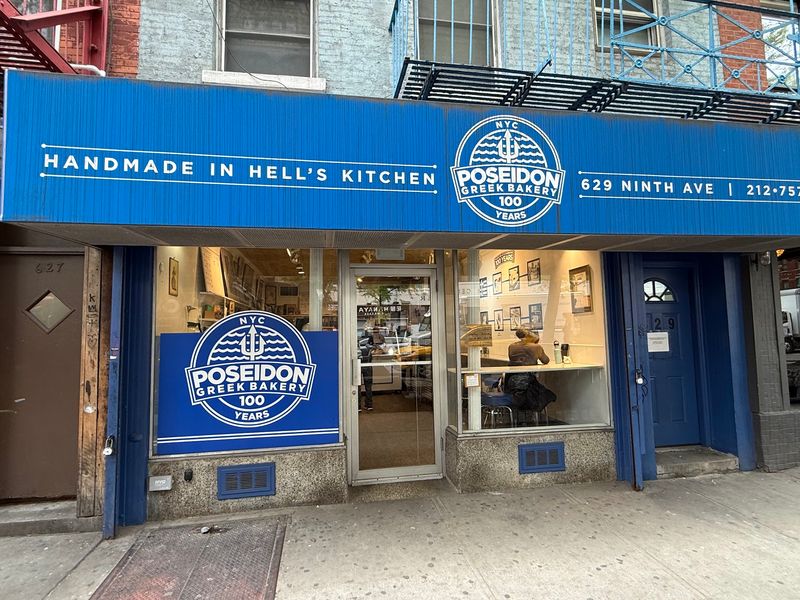
Poseidon Greek Bakery sits in Manhattan’s Hell’s Kitchen, a small family shop with a very big claim to fame. Its phyllo dough is still stretched by hand, the old way, on tables in the back.
That detail matters more than it sounds. Phyllo is the whisper-thin pastry that shatters into flakes when you bite baklava or spinach pie.
Nearly everyone else lets a machine roll it out. Poseidon stretches each batch until the sheets become so thin they’re described as transparent.
The family is widely regarded as one of the very few, if any, bakeries in America still making phyllo this way. That’s a remarkable title to hold in a country full of commercial bakeries.
For anyone in New York who loves traditional crafts, the appeal is easy to understand. It’s the pastry version of a hand-loomed textile or a quilt stitched without a machine.
The shop sells both sweet and savory Greek treats, plus a run of strudels with Austrian roots. Everything starts with that same patient, hand-worked dough.
In short, this is a bakery built around one stubborn skill. And that skill has carried it for over a hundred years.
Four Generations, One Family, And A Recipe Box Nobody Lost
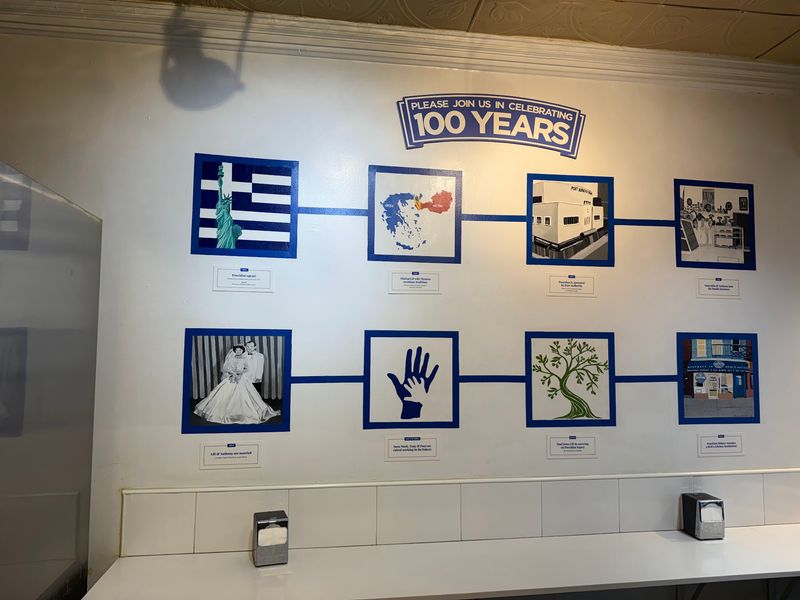
It all began in 1923 with Demetrius Anagnostou, an immigrant baker from Epirus, Greece. He brought the know-how for hand-stretched phyllo to New York and opened the bakery.
His son, Michael Anagnostou, took over next and ran the shop with his wife, Menina Fable. Menina added her own chapter by introducing Austrian recipes, which is why strudels share the case with baklava.
The torch then passed to Michael’s stepson, Anthony Fable, and his wife, Lili. Together they kept the ovens warm and the dough tables busy for decades.
Today, Paul Fable, son of Anthony and Lili, co-owns and runs Poseidon Greek Bakery alongside his mother. That makes four generations of one family behind the same counter.
Family businesses rarely last this long anywhere, let alone in Manhattan. Rents rise, tastes shift, and heirs often pick different careers.
Here, the chain simply held. Each generation learned the craft from the one before, much like a quilting pattern handed down at the kitchen table.
The result is a bakery that celebrated its centennial in 2023. Not bad for a shop that started with one baker and a family recipe.
Ovens Older Than Most Of Your Grandparents
Here’s a fun fact for your next dinner party. Some of the ovens at Poseidon Greek Bakery are more than a century old, and they still bake every day the shop is open.
Think about how many kitchen gadgets you’ve replaced in the last ten years. These ovens have outlasted generations of appliances, owners, and Manhattan trends.
They aren’t the only vintage workhorse in the building, either. A dryer from the 1950s remains in active use, still doing its job decades later.
For craft lovers, there’s real charm in tools that refuse to retire. It’s the same feeling you get from a cast-iron sewing machine that hums along after seventy years.
Old equipment demands skill from the people using it. You can’t just press a button and walk away from a century-old oven.
Bakers have to know its moods and quirks, which takes years of practice. That knowledge gets passed down along with the recipes.
So every tray of spanakopita carries a little history inside the crust. Somehow, that makes each flaky bite feel even more earned.
The Painstaking Art Behind Paper-Thin Phyllo
Stretching phyllo by hand is a little like spinning yarn or pulling taffy, only far more delicate. One wrong move and the sheet tears.
The dough gets worked across large tables in the back of the shop. Bakers stretch it gently until the sheets become so thin they’re described as see-through.
That’s been the method here since the bakery opened in 1923. No shortcuts were added along the way, which is precisely the point.
Hobbyists will recognize the mindset immediately. It’s the same patience that goes into hand-rolled pasta, a fine embroidery stitch, or an evenly pieced quilt block.
The quality speaks loudly enough that Poseidon supplies its phyllo to other New York City restaurants. Martha Stewart has even purchased their handmade dough.
Home bakers can buy the phyllo too, which opens a door for anyone who loves cooking from scratch. Imagine building your own spanakopita on dough that came off those very tables.
Frozen boxes from the grocery store have their place. Still, holding handmade phyllo feels like owning a small piece of living craft history.
Baklava, Finikia, And The Sweet Side Of The Case
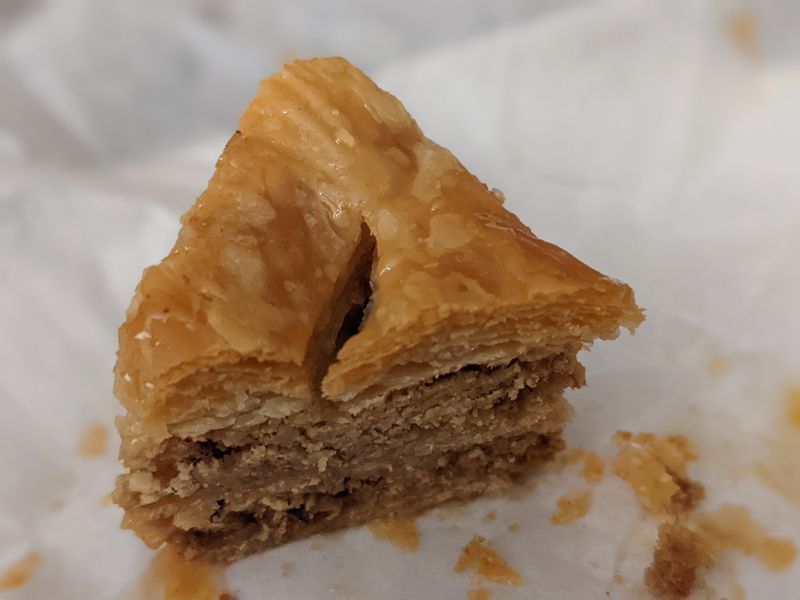
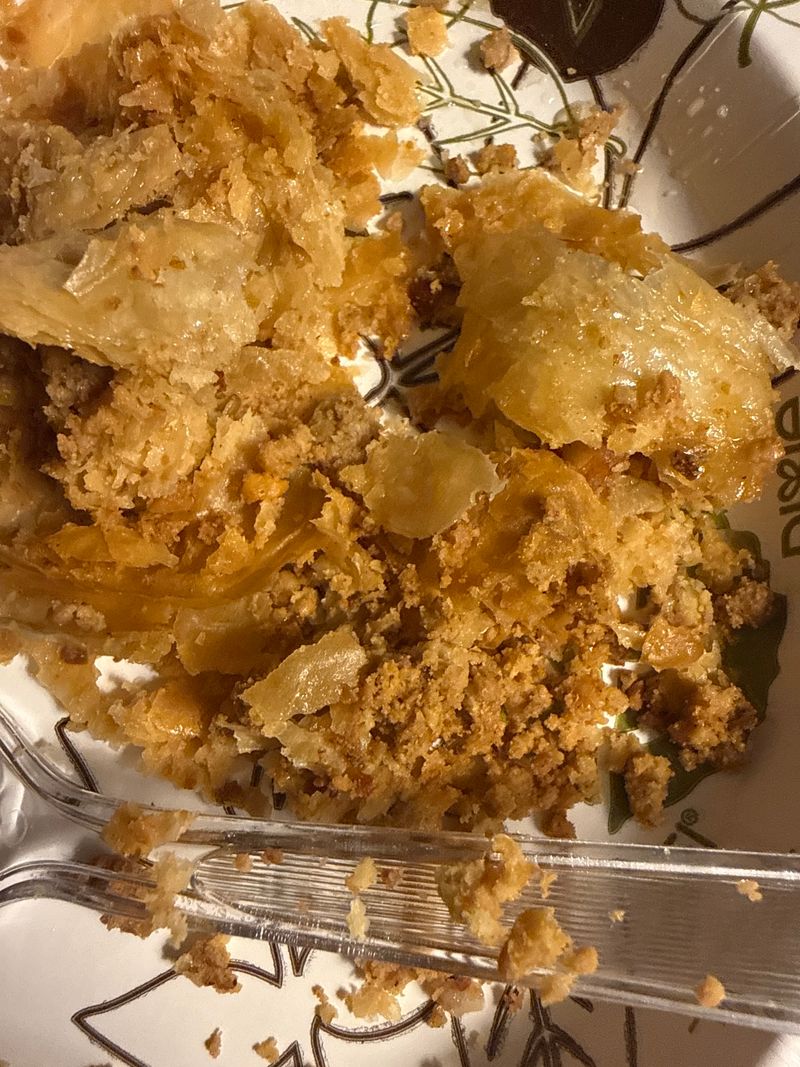
Baklava gets top billing for good reason. It’s the most talked-about treat at the shop, and it comes in a classic version plus a rolled version that’s easier to eat on the go.
Those layers of hand-stretched phyllo, nuts, and syrup show off the dough better than almost anything. Each crisp sheet is the payoff for all that work in the back.
Then there’s galaktoboureko, a custard pie wrapped in phyllo. Poseidon often serves it in an eggroll-style shape, which is a cute twist on the usual square.
Cookie fans have options too. Finikia are honey cookies, while kourabiedes are buttery almond cookies with a snowy finish.
Afali deserve a spot on your list as well. These rolls come stuffed with pistachios, giving you a nutty alternative to walnut-heavy treats.
Fair warning for anyone who prefers subtle desserts. Traditional Greek pastries lean sweet and syrupy, so a strong coffee or a glass of water helps balance things out.
Not sure where to start? Grab one of each and build your own tasting box.
Savory Pies That Make A Fine Midtown Lunch
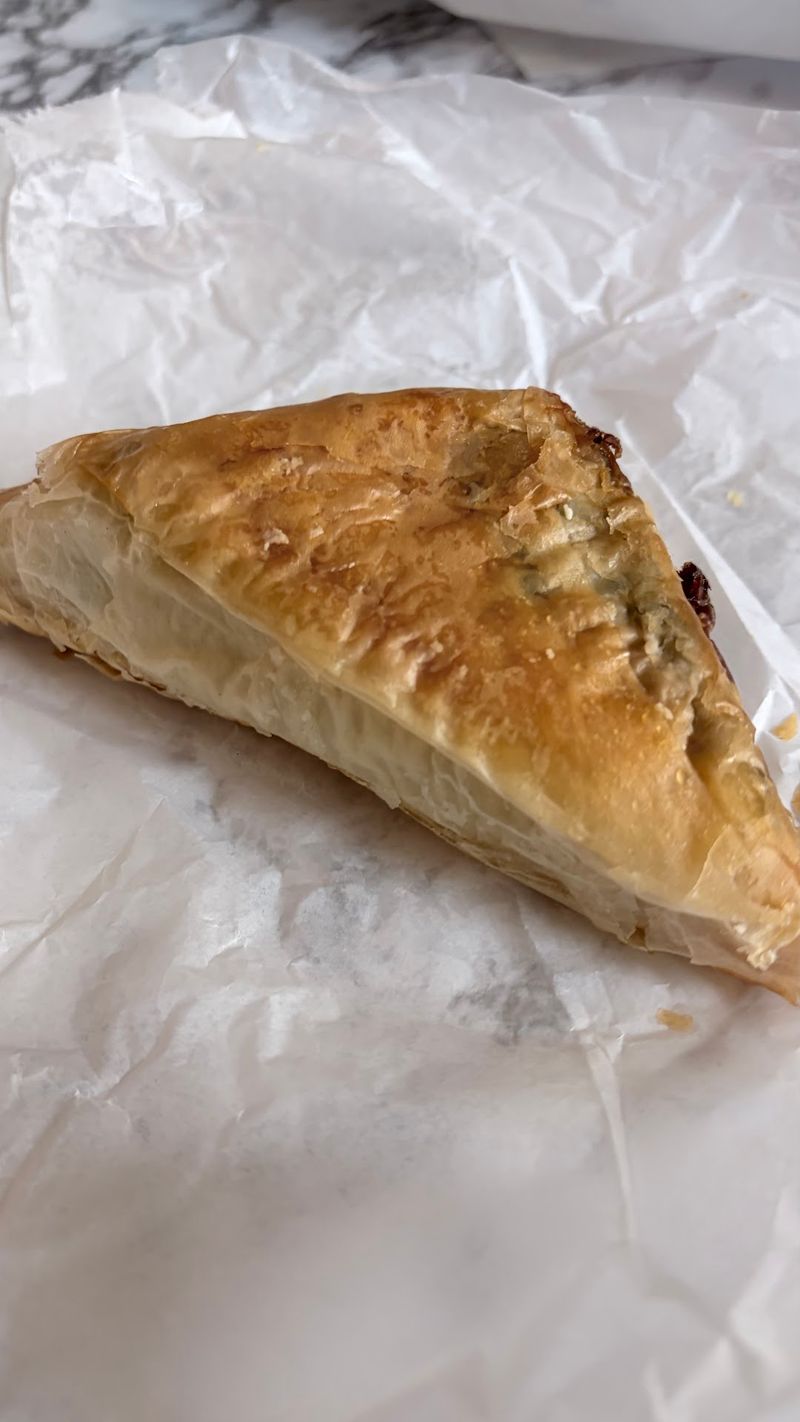
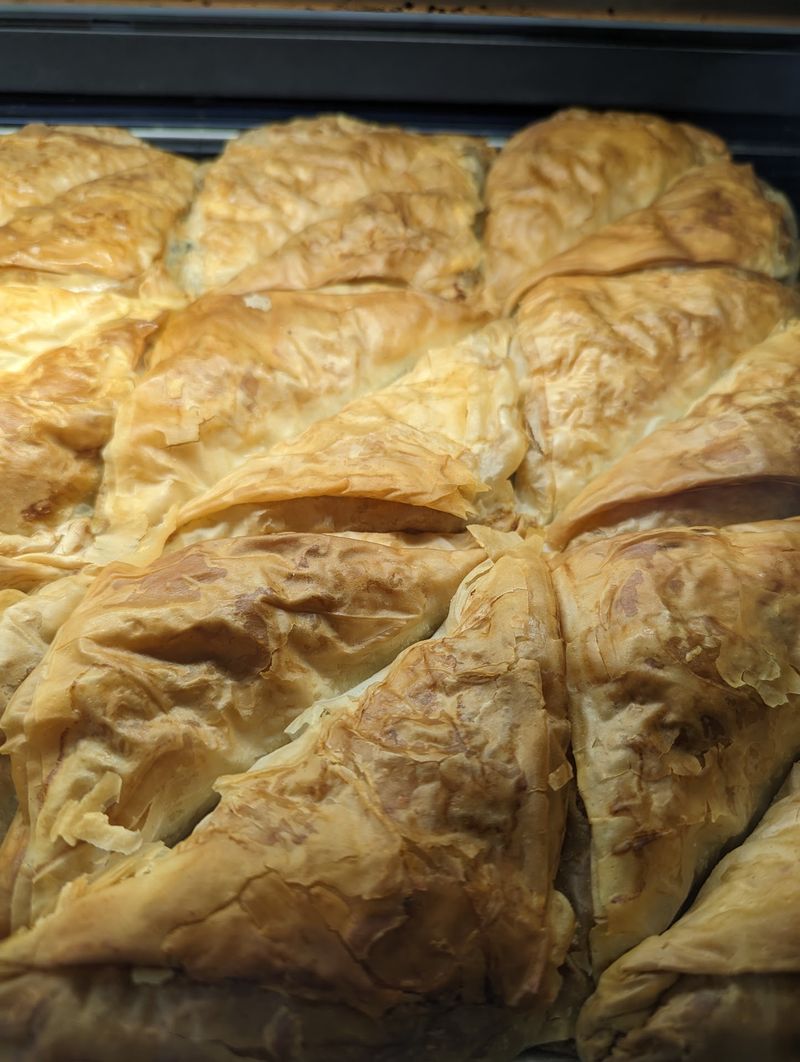
Spinach, feta, and flaky dough make a lunch that feels both humble and a little luxurious. Spanakopita is the shop’s savory star, and it’s generously stuffed with filling.
Right beside it sits tiropita, the Greek cheese pie. It’s creamy and rich, perfect for anyone who considers cheese its own food group.
Meat lovers can reach for kreatopita, a meat pie wrapped in that famous phyllo. It rounds out the savory lineup nicely when you want something heartier.
Vegetarians get plenty of choices here, since several of the savory pies skip meat entirely. That makes a group order much easier to sort out.
Each pie shows off the dough in a different way. The thin layers crackle around soft fillings, giving every bite a contrast in texture.
Hell’s Kitchen is close to plenty of Midtown offices and Broadway theaters. A couple of these pies make a handy grab-and-go meal before a show or after a long morning.
Pair one savory pie with one sweet pastry, and you’ve got a balanced lunch. Well, balanced by bakery standards, anyway.
Austrian Strudels Hiding In A Greek Bakery
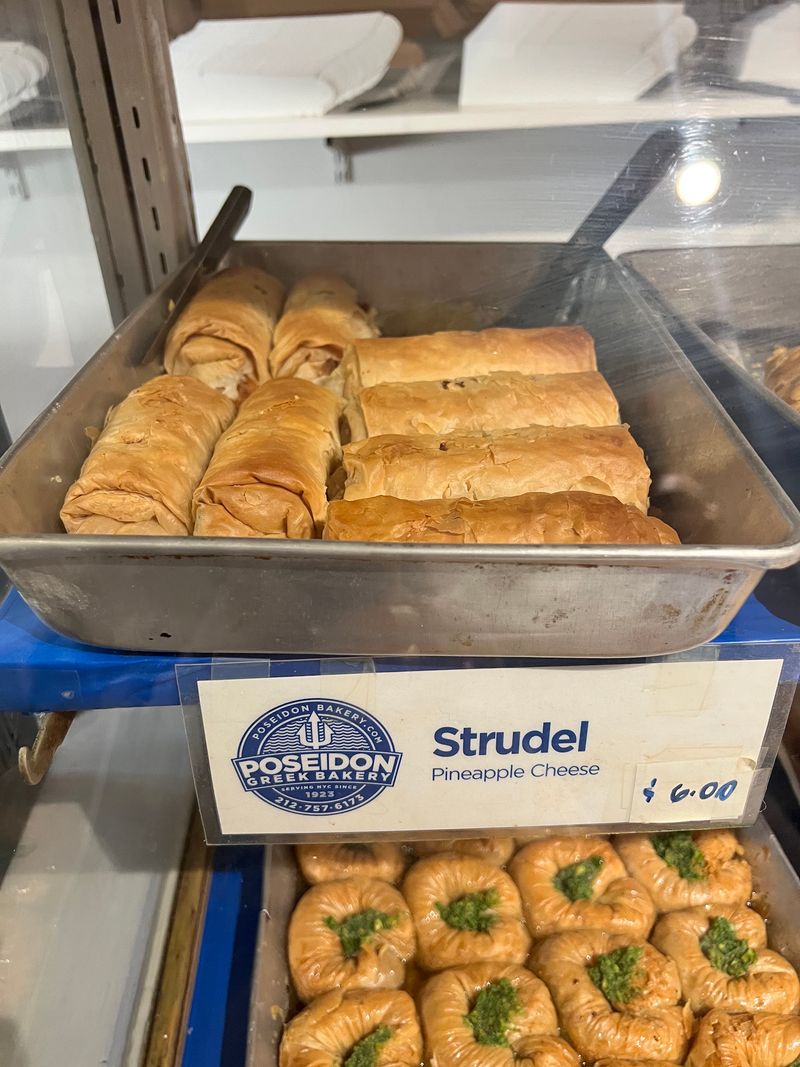
Strudel at a Greek bakery might sound like a plot twist. Blame Menina Fable, who brought Austrian recipes into the family business generations ago.
Those recipes stuck around, and now strudels rank among the shop’s most popular items. They pair beautifully with hand-stretched phyllo, since thin dough is the heart of a good strudel.
The cheese strudels are a particular highlight. Flavors include apricot cheese and pineapple cheese, with the pineapple version using real fruit pieces.
A custard strudel also shows up in the lineup. It’s a gentle option for anyone who loves creamy fillings over nutty ones.
Prune pastries appear too, which is a treat for fans of that old-fashioned flavor. Many bakeries have quietly dropped prune from their menus over the years.
The Austrian side of the case tends to be less sugary than classic syrup-soaked Greek pastries. That makes strudels a smart pick if baklava feels a bit too rich for you.
It’s also a delicious reminder of how family stories shape a menu. One marriage added a whole new chapter to this bakery’s craft.
Blue And White Walls Covered In A Century Of Memories
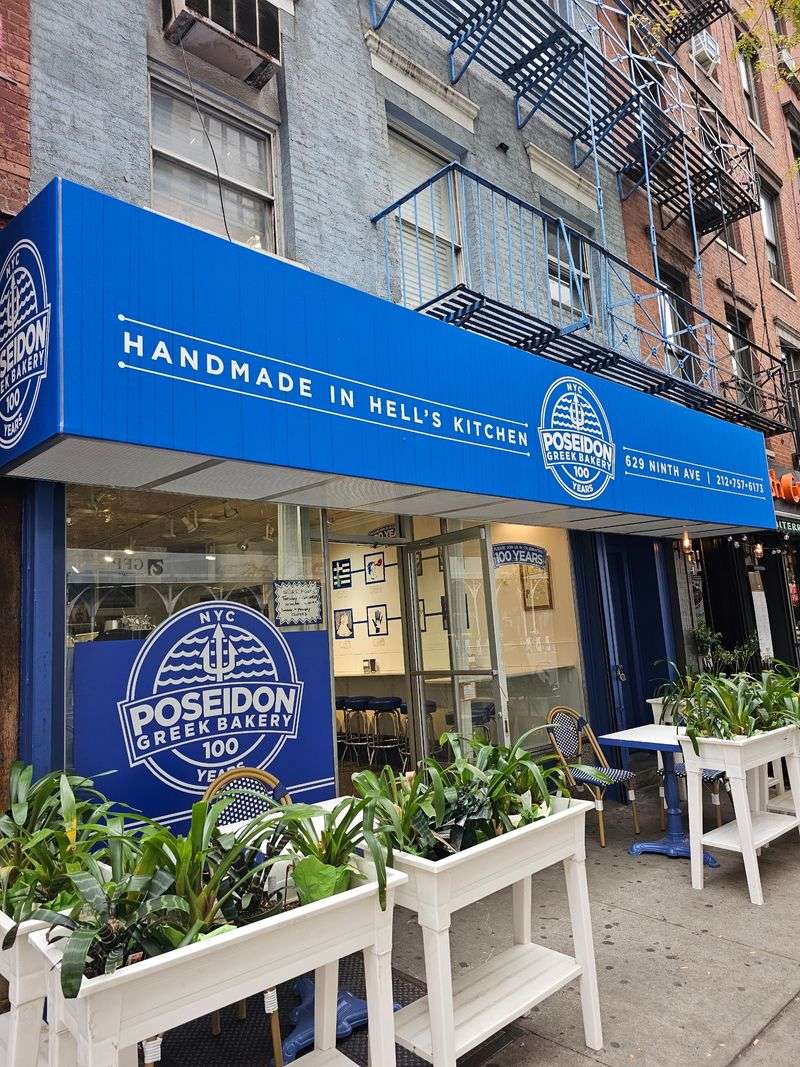
Blue and white paint wraps the little shop, giving it a breezy, seaside feel right in the middle of Manhattan. It’s a nod to the classic colors of Greece.
The space is small and built mostly for takeout. A few stools let you nibble on the spot if you can’t wait until you get home.
Handwritten signs label the treats, and an old-fashioned cash register sits by the counter. Nothing feels staged or designed for social media.
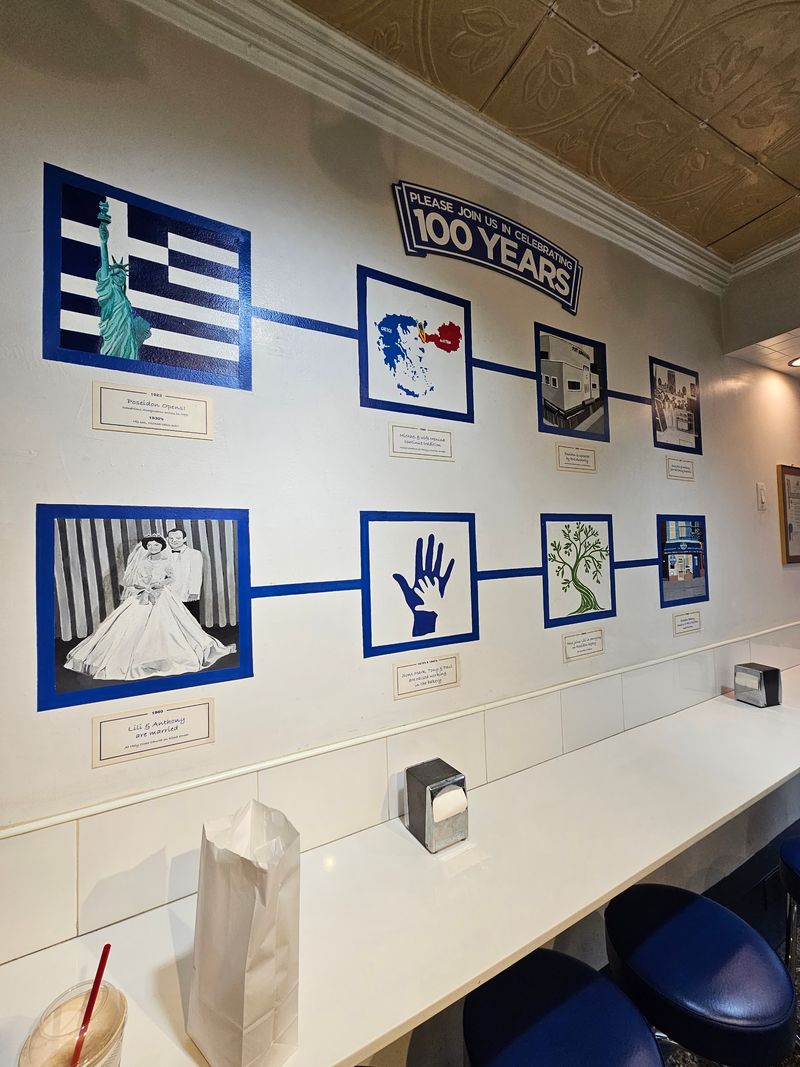
The walls double as a family scrapbook. Photographs of relatives and celebrity visitors hang beside painted panels that tell the story of the bakery.
For history buffs and tradition lovers, those walls are half the fun. You can trace four generations without opening a single book.
It’s a lot like browsing an old quilt where every square holds a memory. Each photo adds another stitch to the bigger picture.
The overall mood is cozy and personal rather than polished. That honesty suits a shop where the most important work still happens by hand.
Plan Your Trip Around A Tuesday Through Saturday Schedule
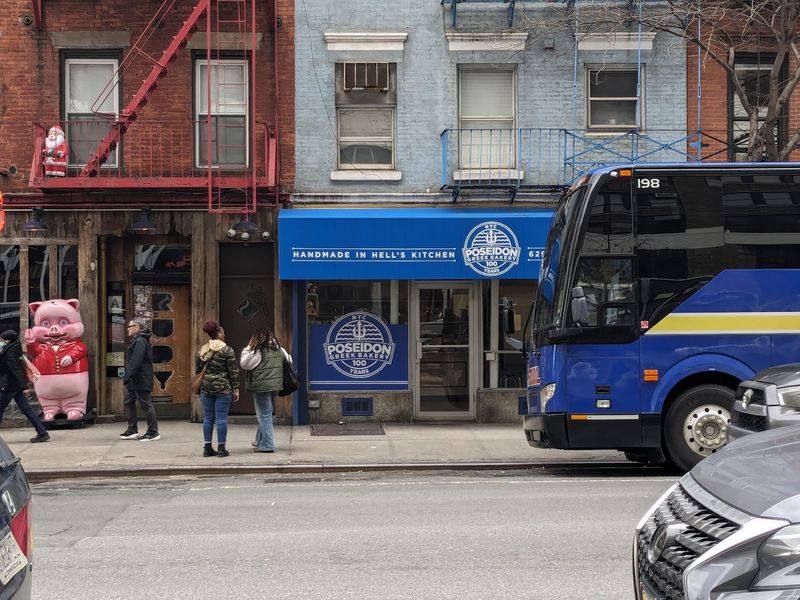
Timing matters with this one, so mark your calendar before heading out. The bakery is open Tuesday through Saturday from 10 AM to 6 PM, and it closes Sunday and Monday.
You’ll find it at 629 9th Ave, New York, NY 10036. It sits between 44th and 45th Streets in Hell’s Kitchen.
The family has called this exact address home since 1952. That’s more than seventy years on one stretch of Ninth Avenue.
Day-trippers from elsewhere in New York State can reach Manhattan easily by train. From Times Square or Port Authority, the shop is a short walk west.
Hours can occasionally shift, especially around holidays. Checking the bakery’s current schedule before a long trip is a smart move.
Since the space is tiny and takeout-focused, plan to carry your treats with you. A sturdy bag helps protect delicate phyllo on the ride home.
Bringing a cooler is a good idea if you’re buying dough or pies for later. Your future self, assembling homemade spanakopita, will thank you.
Why Craft Lovers Should Make The Pilgrimage
Some trips are about scenery, while others are about honoring a skill you care about. A visit to Poseidon Greek Bakery falls firmly into the second camp.
Hand-stretched phyllo is a living tradition, much like hand quilting or traditional weaving. Very few places in the country still practice it at all.
Tasting it is a way to support that tradition directly. Every pastry you buy helps keep century-old ovens and a family craft running.
Not every treat will win over every palate, and that’s fine. Classic Greek desserts can lean quite sweet, while the strudels offer a lighter path.
What stands out most is the dedication behind the counter. Four generations of one New York family have chosen the harder, slower way, again and again.
Bring a friend who appreciates handmade things, or bring the whole craft circle. It makes a fun outing that pairs nicely with fabric shopping in the Garment District nearby.
Leave with a box of baklava, a few strudels, and maybe some phyllo for home. That’s a souvenir with real roots.