The pigs behind this kielbasa are curly-coated Mangalitsas, raised on the owners’ own farm a short drive from the truck. Yes, the sausage starts in a pasture before it ever reaches your plate.
The cook even renders his own pork lard. Every pierogi, cutlet and side gets fried in it.
I believe that kind of devotion is rare anywhere, let alone at a food truck window.
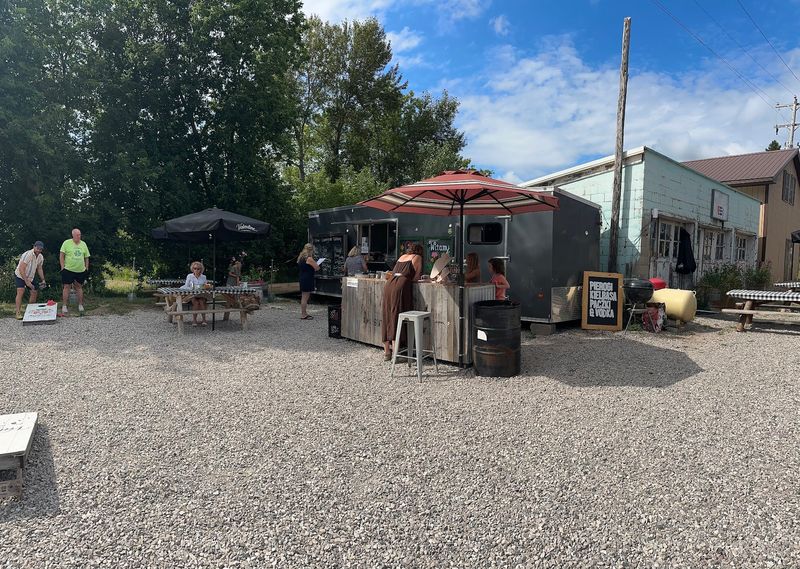
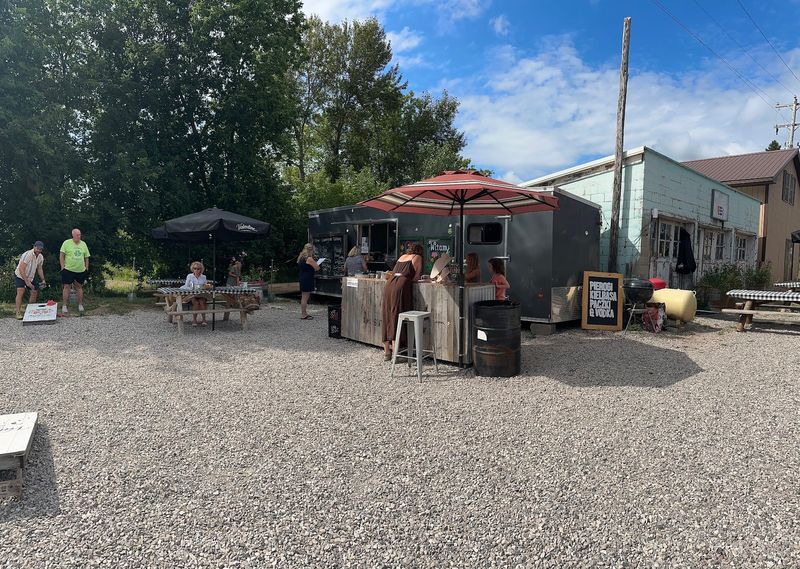
The whole setup sits behind a Polish import shop in a small northern Michigan town. Red umbrellas shade the picnic tables.
Polish folk music drifts across the yard.
I like how the menu reads like a family recipe box from a Hamtramck kitchen. Stuffed cabbage, dill potatoes and sauerkraut share space with goat burgers.
So how did a little truck up north end up serving some of the most talked-about Polish food in the state?
A Polish Food Truck Parked Behind a Polish Art Store
Cedar is a small town in Leelanau County, and its downtown hides a surprisingly big slice of Poland. Polish Countryside Kitchen serves its food from a truck parked right behind the Polish Art Center.
That pairing makes perfect sense once you know the owners. Thomas Koch runs the kitchen, while his wife, Kathleen Koch, owns the import shop out front.
The truck officially opened in the summer of 2022. In a short time, it has become one of the most beloved Polish food stops in northern Michigan.
Google ratings sit at an impressive 4.9 stars. That number gets even more striking when you remember this is a seasonal truck with limited hours.
The menu leans hard into old-world comfort food. Think kielbasa, pierogi, stuffed cabbage, dill potatoes and sauerkraut, all made with serious care.
What sets it apart is the source of the meat. The pork comes from the Kochs’ own farm, so the story begins long before the grill fires up.
For Michiganders who love Polish heritage, this place feels like a happy discovery. It’s a small truck carrying a big family tradition north.
From Hamtramck Kitchens to a Leelanau County Farm
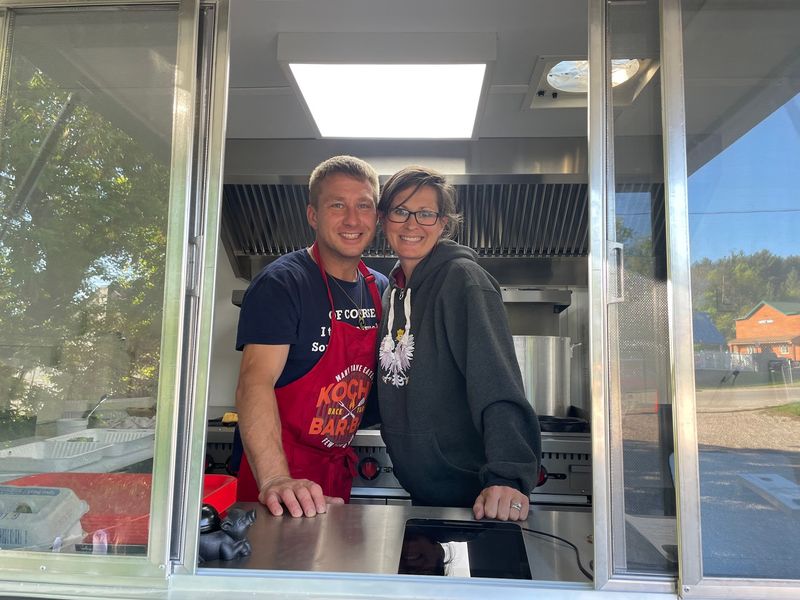
Hamtramck roots run deep in every bite here. Thomas Koch grew up in a Polish household in that famous Detroit-area city.
His grandparents shaped his love of cooking and gardening. Those early lessons clearly stuck, because his whole business now revolves around both.
Kathleen brings her own Hamtramck legacy to the table. Her family owned the Polish Art Center import store there for more than 50 years.
Eventually, the couple moved north to Cedar and started Polish Heritage Farm. They raise Mangalitsa pigs, poultry, eggs and vegetables on the property.
They also opened a second Polish Art Center in downtown Cedar. The food truck followed, turning farm work and family recipes into lunch.
In the early days, Srodek’s Campau Quality in Hamtramck made custom meat products from the Kochs’ pigs. Today, the couple raises all the pork served at the truck themselves.
I love that thread back to Hamtramck. It connects two very different corners of Michigan through sausage, cabbage and family pride.
Nostalgia here isn’t a marketing trick. It comes straight from grandparents, a 50-year family store and a farm built from scratch.
Kielbasa That Starts With Curly-Coated Pigs
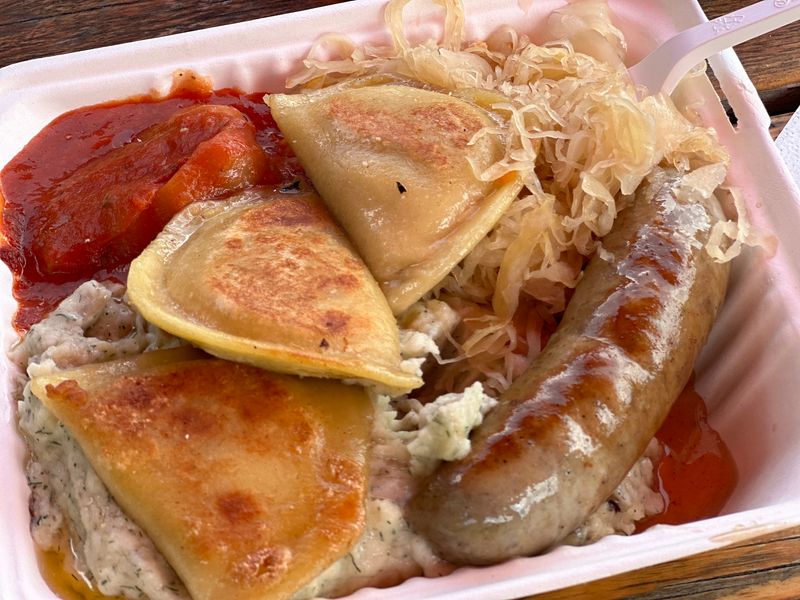
Mangalitsa pigs look a bit like sheep, thanks to their woolly coats. They’re also the reason this kielbasa gets so much attention.
The Kochs raise these pigs on Polish Heritage Farm, not far from the truck. That pork becomes the house-made Polish sausage at the heart of the menu.
Kielbasa is the most talked-about item on the truck’s Google page. Plenty of diners call it the best they’ve ever had, including folks raised on family recipes.
That’s a bold claim in a state with such strong Polish traditions. Still, homemade sausage from your own pigs gives a cook a real head start.
Thomas Koch also renders all the pork lard used for cooking. Kathleen has said it’s the only thing they cook with.
That detail matters more than it sounds. Frying in rendered Mangalitsa lard adds richness that store-bought oil simply can’t match.
Kielbasa usually comes with sauerkraut and rye bread nearby. Together, they make a plate that tastes like a holiday table in a Hamtramck kitchen.
Good luck ordering anything else on a first visit. The sausage practically names itself the main event.
The Polish Platter Covers Every Craving at Once
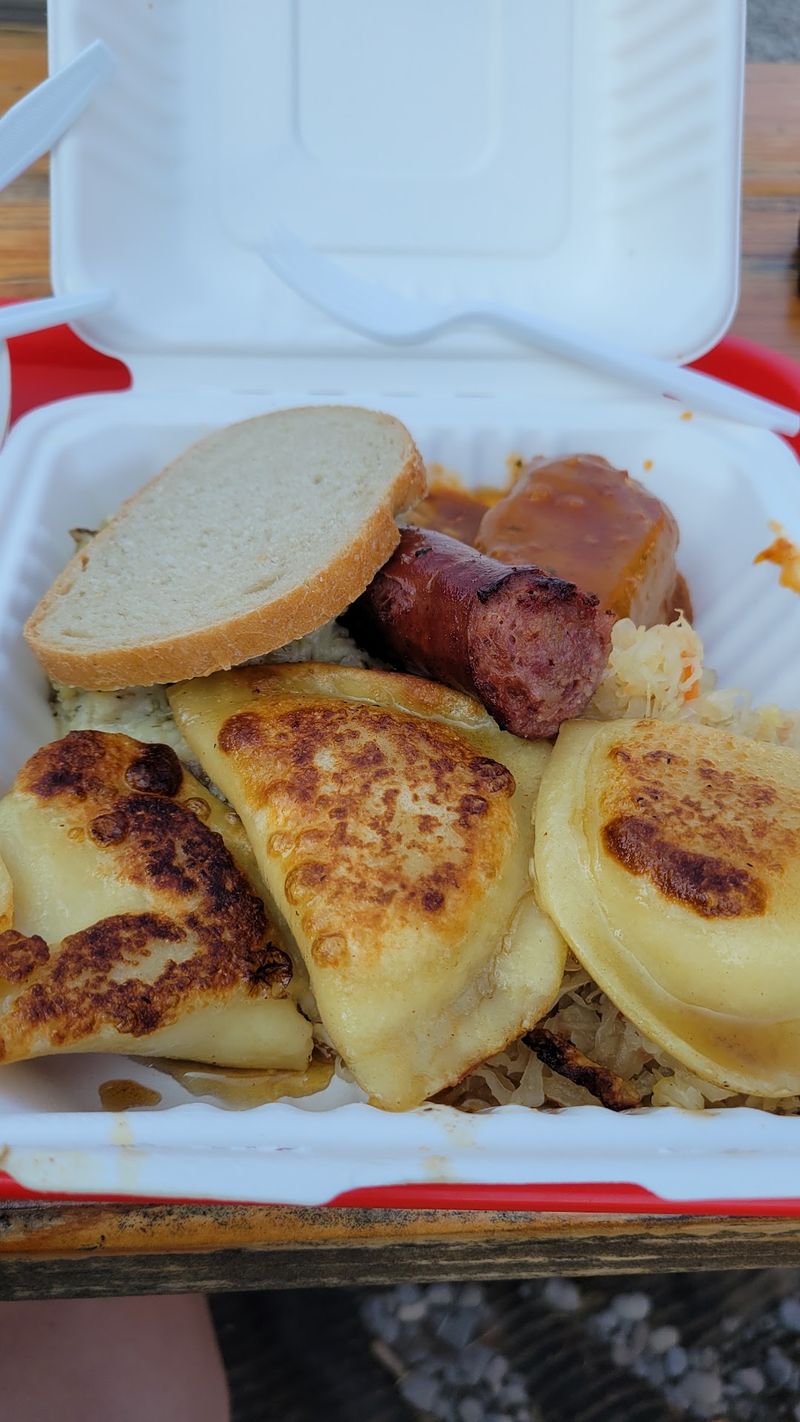
Can’t decide? Polish Countryside Kitchen solved that problem with its most popular dish, the Polish Platter.
The platter brings together Polish sausage, stuffed cabbage, pierogi, dill potatoes, sauerkraut and a slice of rye bread. It’s basically a sampler of Polish comfort food on one plate.
Gołąbki, the stuffed cabbage rolls, deserve their own spotlight. Many families save them for holidays, so seeing them on a truck menu feels like a treat.
The pierogi also earn plenty of love. Jalapeño pierogi and sweet farmer’s cheese pierogi both come up often in diner comments.
Since the menu rotates, platter components may shift over time. Some versions have featured city chicken, mashed potatoes and gravy instead.
Portions run generous, and several couples mention splitting one platter. Leftovers seem to be a common souvenir from this truck.
For first-timers, the platter offers the easiest introduction. You get a little bit of everything without the pressure of picking a favorite.
Polish grandmothers might grumble about the competition. Everyone else will probably just ask for extra rye bread.
Goat Burgers, Kiszka and Other Delicious Surprises
Goat burgers on a Polish menu? They sound unexpected, but they reportedly sell out every week.
The goat meat comes from the family farm. It’s served with beet horseradish spread, grilled onions, pepper jack cheese and tomato on a butter bun.
Beet horseradish gives the burger a clever Polish twist. Ćwikła, as it’s often called, shows up on many Easter tables back home.
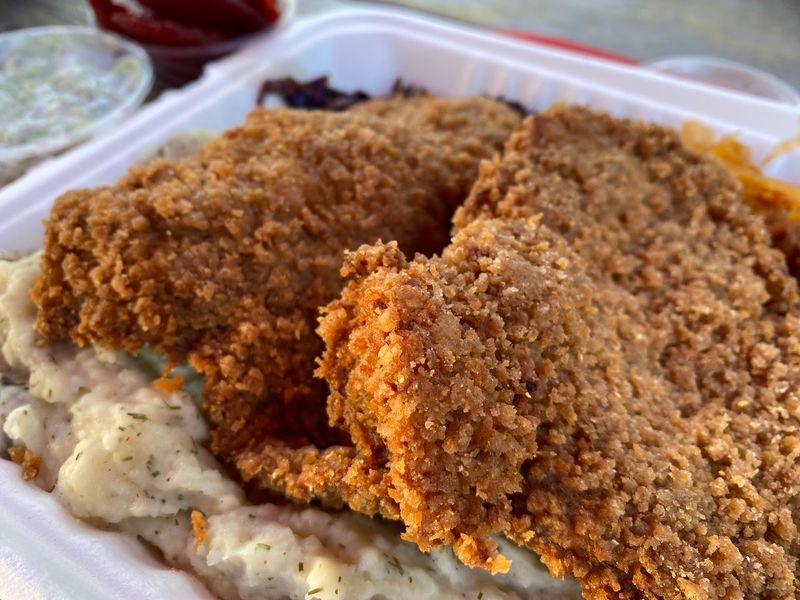
The pork cutlet dinner is another standout. Pork gets dusted in flour, panko and spices, then fried in Mangalitsa lard.
It lands over seared red cabbage or mashed potatoes with scratch-made mushroom gravy. That’s serious Sunday dinner energy from a truck window.
Adventurous eaters can try kiszka, a traditional blood sausage. It comes with crisp purple cabbage, onion, tomato and rye bread.
There’s also a Polish veal casing hot dog with homemade chili, onions and mustard. Apple pancakes, borscht and homemade soups have appeared too.
Specials rotate often, including smoked ribs and half chickens smoked and then fried in lard. Checking the menu before you go can help you catch a favorite.
Red Umbrellas, Folk Music and a Chatty Cook
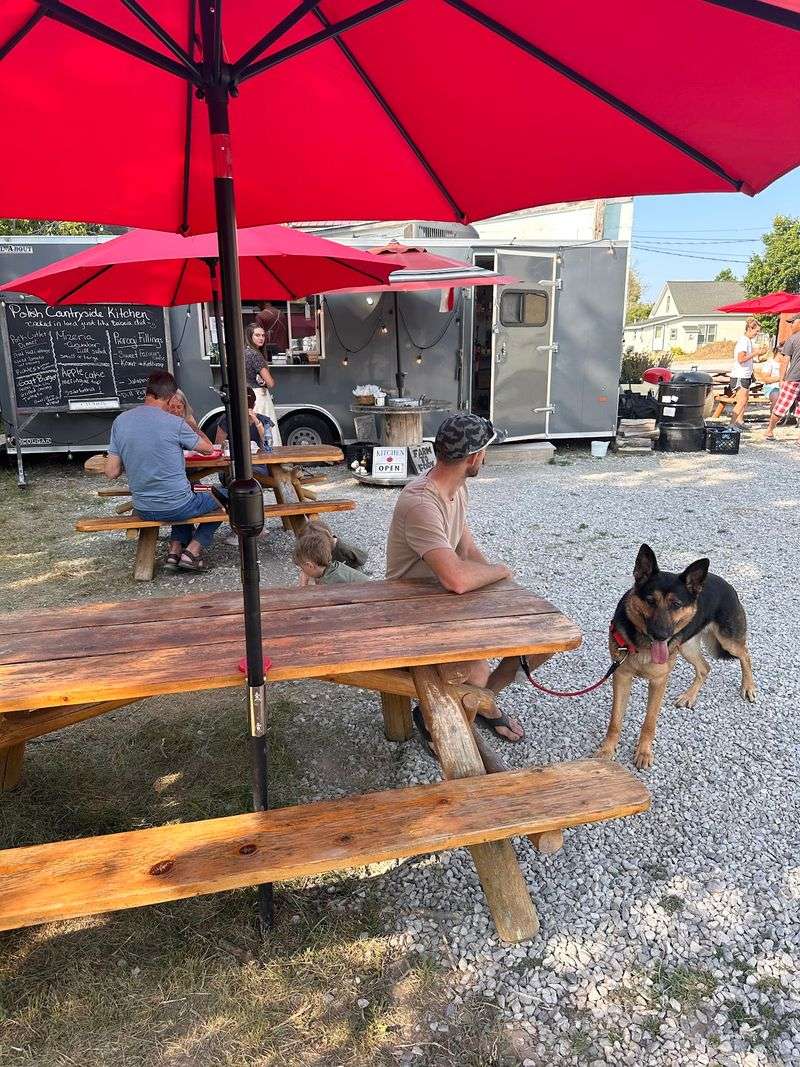
Polish folk music floats over the picnic tables while you eat. Red umbrellas add a cheerful splash of color overhead.
Cornhole games give kids and grown-ups something to do while waiting. Views stretch toward the nearby Williams Orchards farm stand.
The vibe feels relaxed and family-friendly. Flowers on the tables add a homey touch, almost like eating in a relative’s backyard.
Thomas Koch enjoys chatting with customers at the window. Kathleen has said he loves talking with the people he serves.
Those conversations often turn to the farm and ethically raised meat. Some guests even end up swapping family heritage stories with him.
Dog owners will appreciate the welcoming setup too. A water bowl for pups has been spotted, and one lucky dog reportedly got a sausage sample.
After eating, the Polish Art Center sits right there for browsing. Hand-painted pottery and countless Polish keepsakes fill the store.
It all adds up to a slow, happy afternoon. Few food trucks give you dinner, a gift shop and a soundtrack in one stop.
Plan Around the Weekend Hours Before You Hit the Road
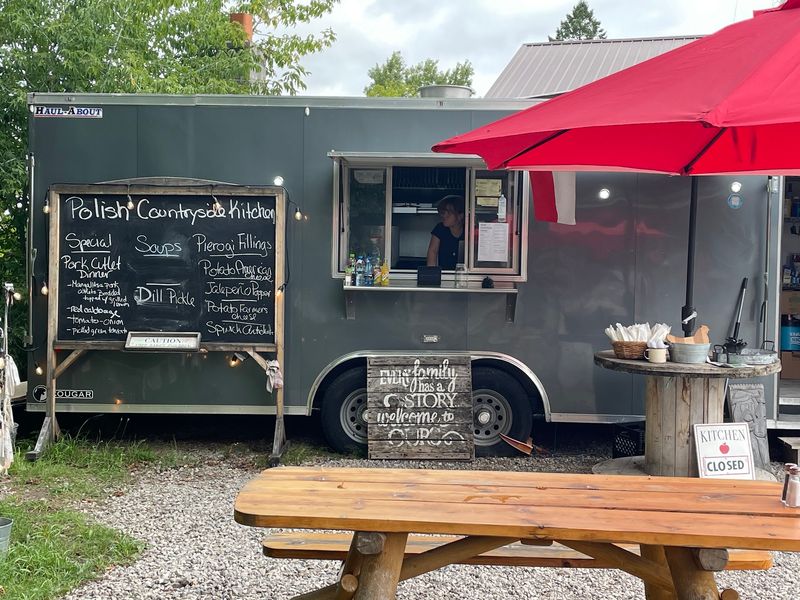
Timing is everything with this truck. Polish Countryside Kitchen is open Friday, Saturday and Sunday from noon to 7 p.m., according to its Google listing.
The truck operates seasonally, and schedules may change. Some stretches have included Thursday through Monday hours.
Food can also run out before closing time. Arriving earlier in the day may improve your chances of getting everything you want.
Prices are friendly for food this carefully made. Most meals fall in a budget-friendly range for a sit-down-quality lunch.
You’ll find the truck at 8994 S Kasson St, Cedar, MI 49621, behind the Polish Art Center. Look for the picnic tables and red umbrellas.
Cedar sits about a half-hour drive west of Traverse City. It makes an easy detour on trips toward Leland, Northport or Empire.
Checking the truck’s social media before driving is smart. Updates there can reveal special menu items and any schedule changes.
Fall color season makes the drive especially pretty across Leelanau County. Pairing kielbasa with orchard stops sounds like a perfect Michigan Saturday.
Why Lunch Here Often Turns Into Dinner Too
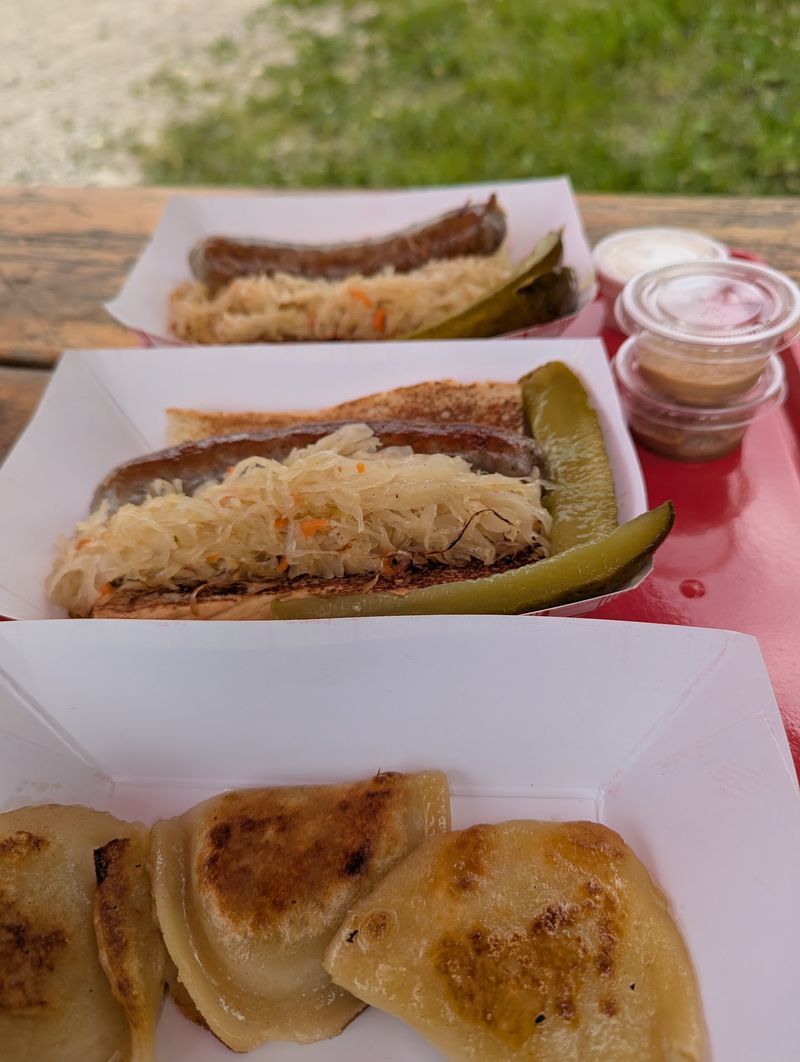
Thomas Koch has said some customers come for lunch and then return for dinner the same day. That might be the best endorsement any cook could ask for.
Polish Countryside Kitchen earns that loyalty the hard way. The Kochs raise the pigs, render the lard and make the sausage themselves.
That farm-to-fork commitment shows up in every corner of the menu. It’s rare to see that level of control from a truck parked behind a gift shop.
The heritage piece makes it even sweeter. Hamtramck family recipes now feed travelers across northern Michigan.
Families will love the picnic tables and cornhole. Polish food fans will love the stuffed cabbage, pierogi and kiszka.
Curious eaters can try a goat burger with beet horseradish. Picky eaters can stick with kielbasa and dill potatoes and leave happy.
Is it worth a long drive? I can’t imagine a better excuse for a Leelanau County road trip.
Just check the hours first and arrive hungry for seconds. Saving room for another round of pierogi seems wise.