This old iron furnace once burned through about an acre of trees every single day it ran. All that charcoal fed a towering stone stack that still stands in the Virginia woods today.
Its pig iron traveled all the way to a famous ironworks in Richmond during the 1860s. Now the whole thing sits quietly behind a curved wooden fence, wrapped in shade, moss, and creek sounds.
I love that there’s no ticket booth, no gift shop, and no velvet rope here. You park, stroll a short path, and suddenly a hulking pyramid of squared stone looms through the trees.
Even better, a shady creek trail keeps climbing past it toward a roaring waterfall. So why do so many drivers roll right past the turnoff without giving it a second look?
A Stone Giant Waits Just Off a Quiet Country Road
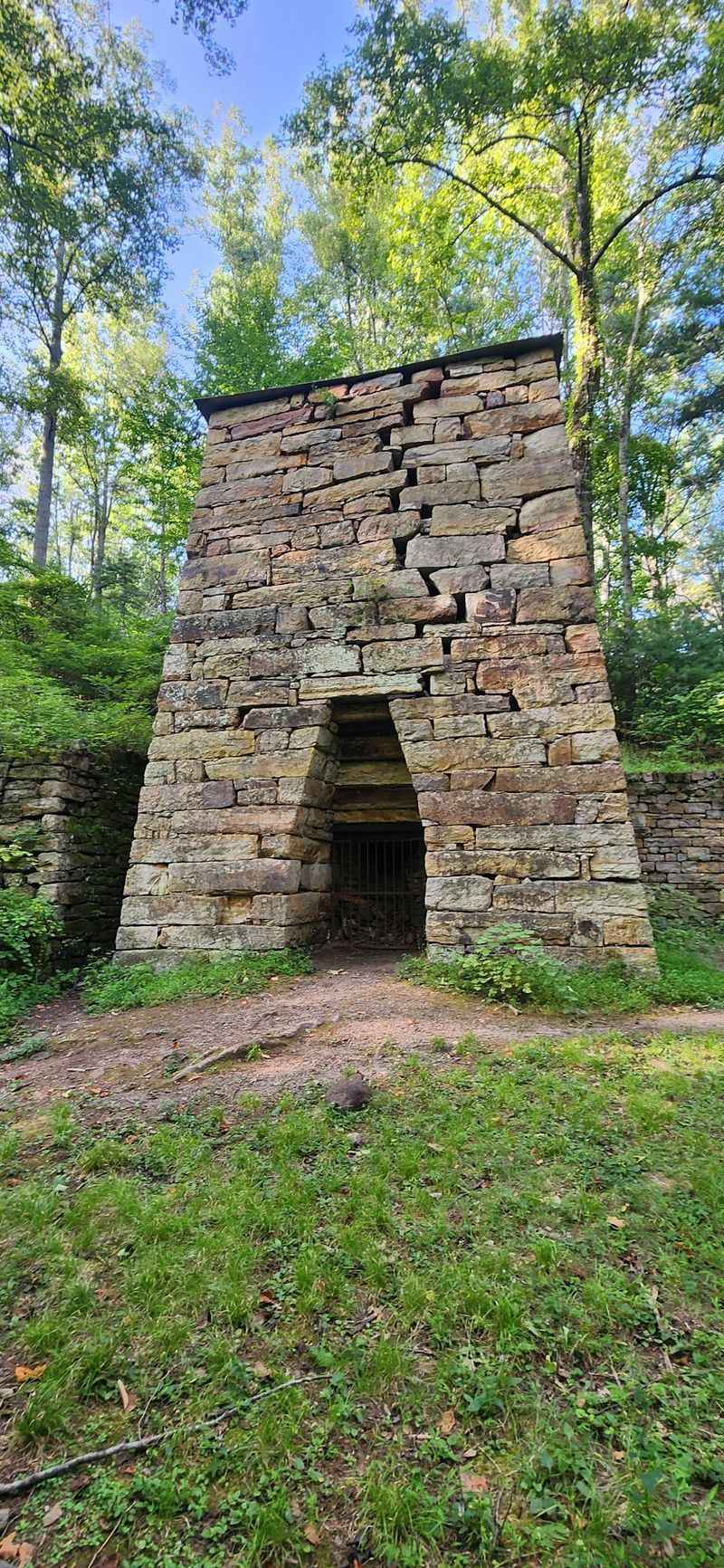
Roaring Run Furnace doesn’t announce itself with billboards or flashing signs. It simply stands in the forest near Eagle Rock, a single stone stack that once roared with fire and molten iron.
The furnace sits inside the George Washington and Jefferson National Forests in Botetourt County, Virginia. That puts it within easy reach of the Blue Ridge, yet it feels miles from the nearest crowd.
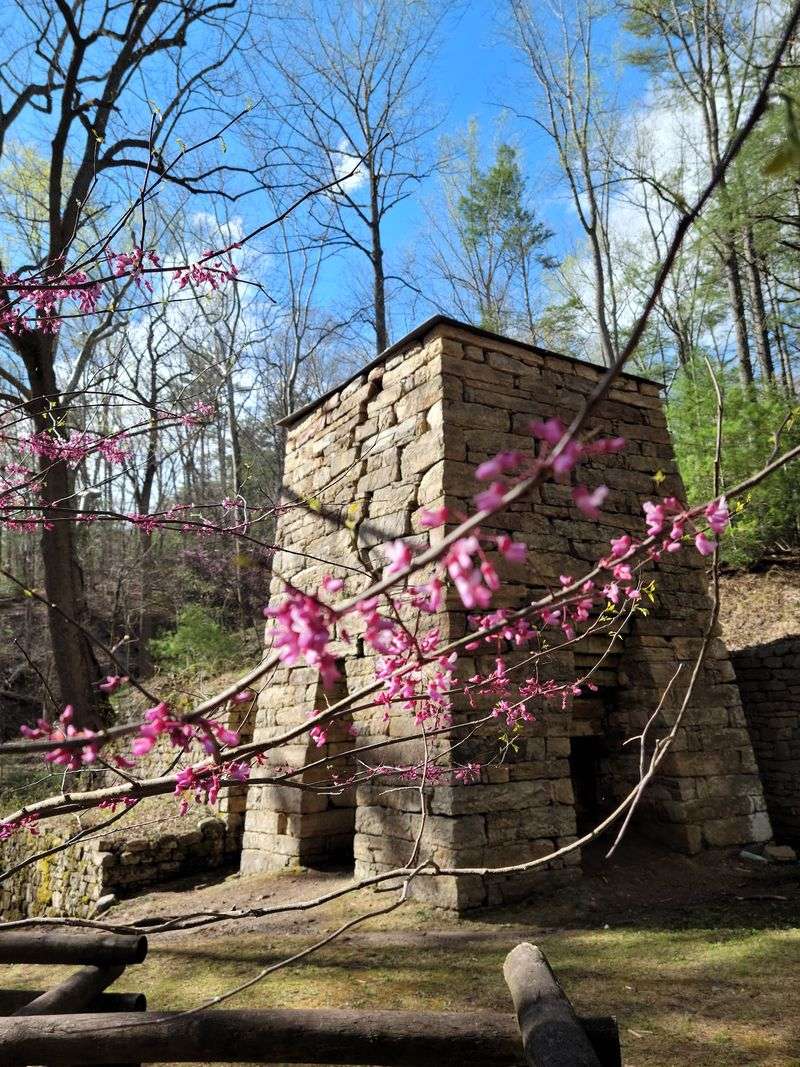
Here’s the fun twist on the headline. Despite the skeletal vibe, the structure is built from big squared stones, and it often gets described as a hulking stone pyramid.
The furnace is a single-stack, hot-blast charcoal furnace. In plain terms, air got heated and blown in to make the fire burn hotter, which turned rock into usable iron faster.
It’s preserved as a historic ruin, so nobody is firing it up again anytime soon. Still, it looks sturdy enough that you half expect a worker to stroll around the corner carrying a shovel.
The best part is how close it sits to the parking area. Roughly 500 feet of walking separates your car door from nearly two centuries of industrial history.
Its Birthday Is a Little Fuzzy, and That’s Part of the Charm
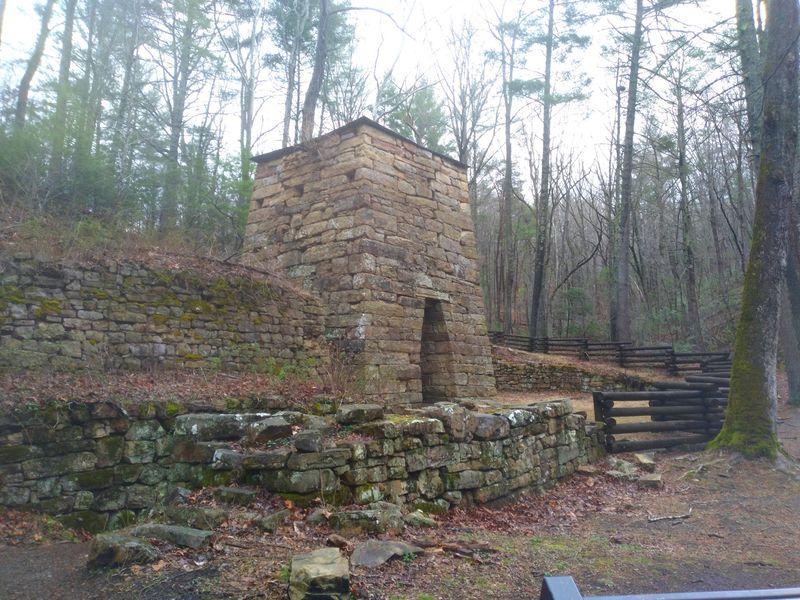
Historians can’t quite agree on the exact year this furnace was born. Some sources point to around 1832, while others say 1838, which makes its birthday a friendly debate.
Either way, the stack is well over 180 years old. That’s older than most of the towns you’ll pass on the drive in.
The furnace didn’t stay frozen in its original form, either. Workers rebuilt it in 1845, then gave it another major rebuild in the early 1860s.
Each rebuild tells you something about how valuable this spot was. Nobody pours that much effort into a stone stack in the middle of the woods unless the iron is worth it.
Its working life turned out to be fairly short. The furnace ran for roughly one to two decades centered around the 1840s, then went quiet after the 1860s.
After that, the forest slowly reclaimed the land around it. Trees grew back, moss crept over the stones, and the roar of industry faded into the sound of a rushing creek.
I find that quiet comeback oddly comforting. Nature had the last word, and it chose ferns.
An Acre of Forest a Day Kept This Fire Fed
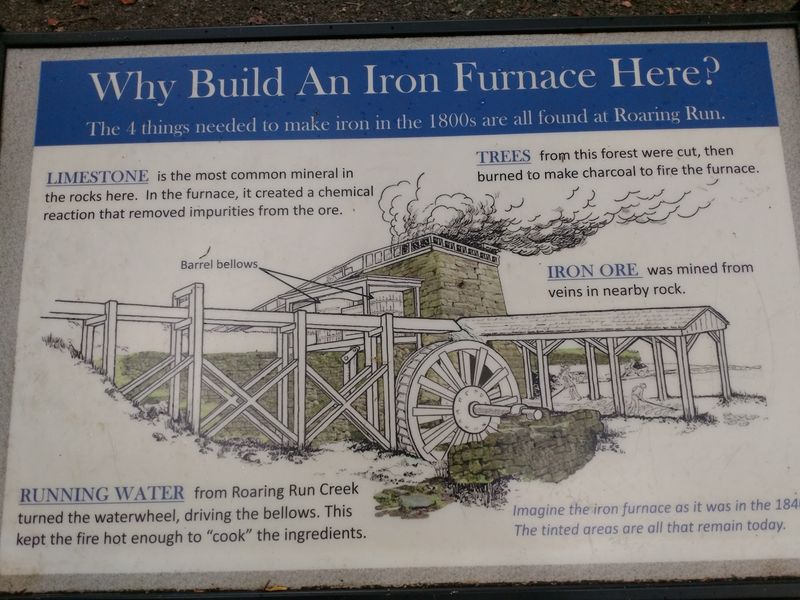
Talk about a big appetite. This furnace consumed about an acre of trees every day to make the charcoal it needed.
Charcoal was the fuel that made the whole operation possible. Workers had to cut the wood, slowly burn it down, and haul it to the stack around the clock.
Do the math over a year and the number gets wild fast. Hundreds of acres of hillside would have been stripped bare to keep one stone tower glowing.
That changes how you see the green woods surrounding it today. The shady forest you’ll stroll through is, in a real sense, a forest that grew back.
It also explains why furnaces like this were built in remote, heavily wooded places. Owners needed timber, iron ore, and flowing water all close together, and these mountains delivered all three.
Standing near the stack, it’s easy to picture the noise, smoke, and constant motion that once filled this hollow. The contrast with today’s birdsong is about as dramatic as history gets.
Good luck looking at a tree here without thinking about it. The acre-a-day fact tends to stick around long after you leave.
Iron From These Woods Rolled All the Way to Richmond
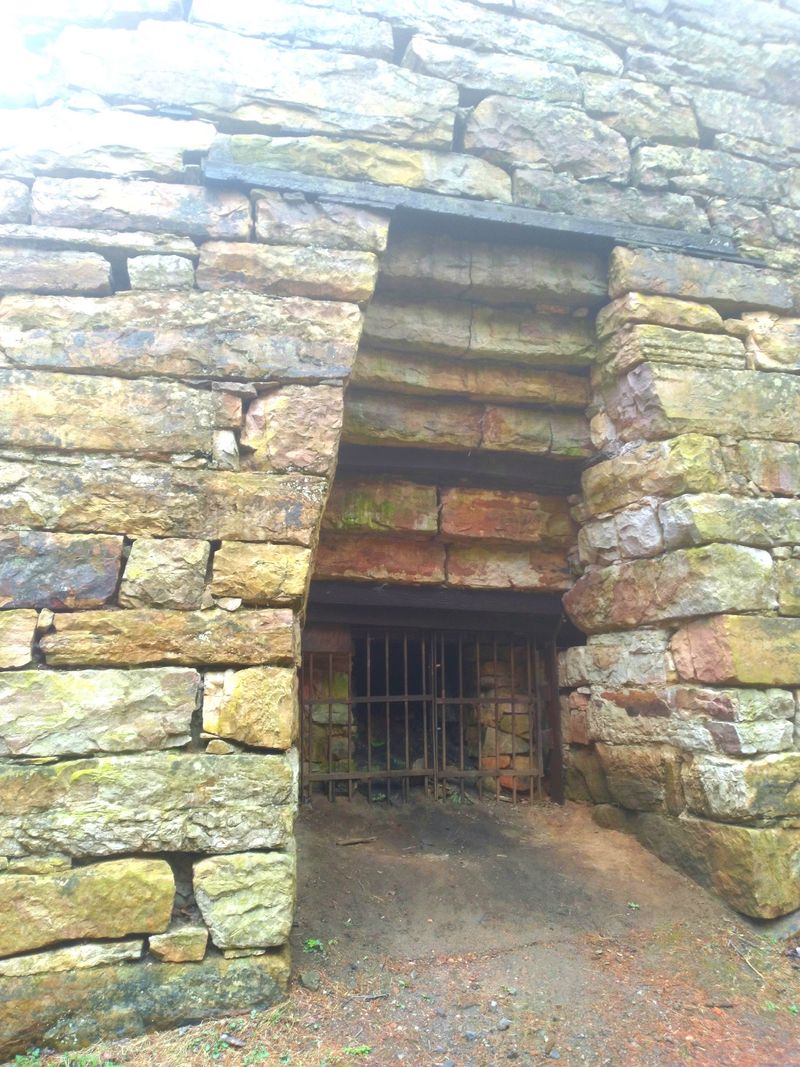
Pig iron was the main product here, and it didn’t stay local. Much of it ended up at Richmond’s Tredegar Iron Works during the 1860s.
Tredegar was one of the biggest ironworks in the South at the time. It turned raw iron into heavy equipment and arms, so this little hollow played a part in a much larger story.
Pig iron itself is a pretty humble material. It’s the rough, first-stage iron that comes out of a furnace before anyone refines it into something useful.
Getting it from the mountains to Richmond took serious effort. Wagons, rough roads, and plenty of patience were part of the deal back then.
That connection is what makes Roaring Run Furnace more than a pretty pile of rocks. It’s a physical link between a quiet mountain creek and one of Virginia’s most famous industrial sites.
I like that the story stretches so far from such a peaceful place. You stand beside the stones, and suddenly Richmond feels a lot closer than a few hours away.
The interpretive signs nearby help connect those dots. They’re worth a few minutes before you head for the trails.
Those Squared Stones Have Two Landmark Titles to Their Name
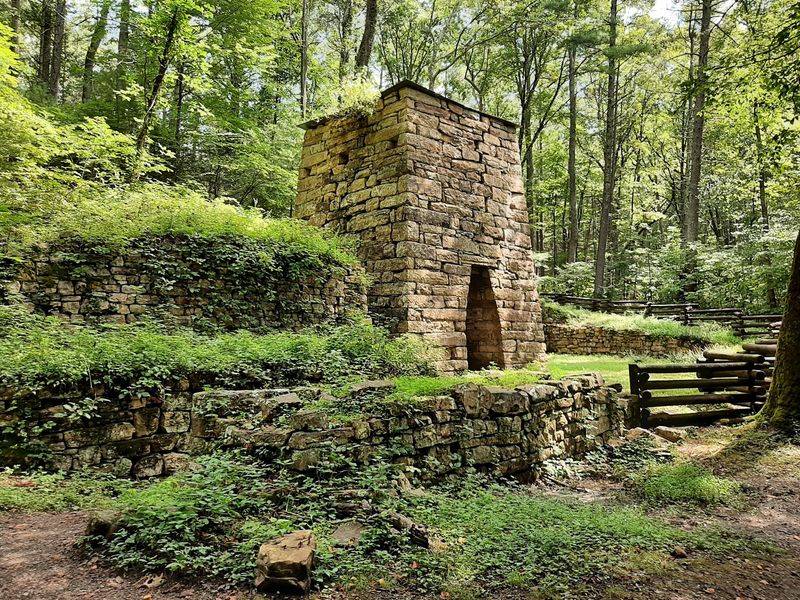
Plenty of old ruins crumble without anyone noticing. This one earned official recognition twice over.
The furnace joined the Virginia Landmarks Register in 1976. Then in 1983 it was added to the National Register of Historic Places.
Those listings aren’t handed out for looks alone. They recognize sites that tell an important part of the region’s story, and this stack tells a big one.
The stonework is the real showstopper up close. Large, carefully squared blocks rise in a tapering shape that gives the whole furnace its pyramid nickname.
Builders in the 1800s didn’t have modern cranes or power tools. Every one of those heavy stones was cut, moved, and fitted by hand and muscle.
Take a slow lap along the fence and study the angles. You’ll start noticing how the stones lock together and how the shape narrows toward the top.
For history fans, it’s a textbook example of how early iron was made in the mountains. For everyone else, it’s simply a jaw-dropping piece of handmade engineering that’s somehow still standing.
Gates, Signs, and a Big LOVE Greet You on Arrival
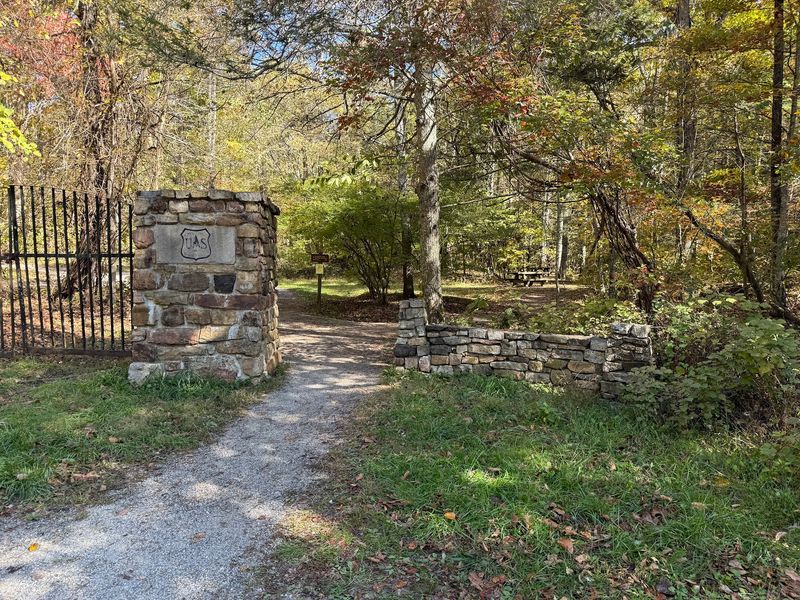
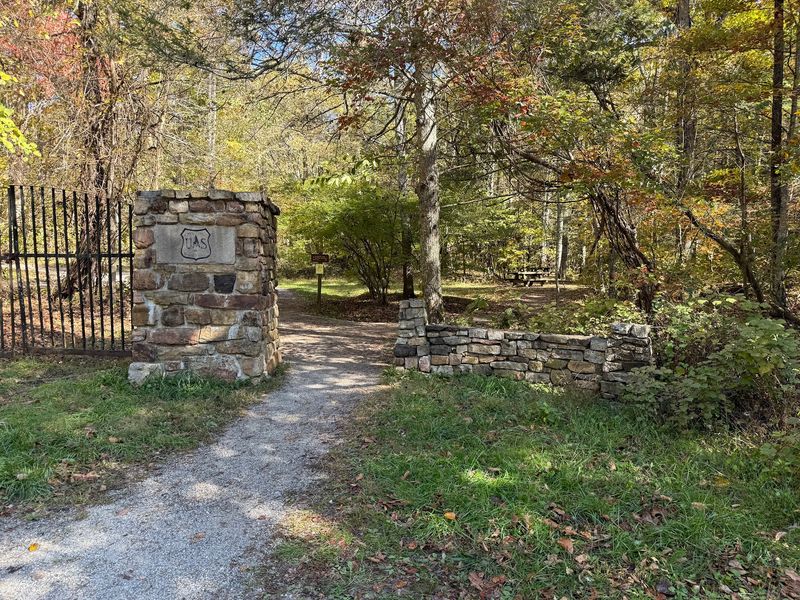
First impressions start before you even reach the furnace. An old stone and iron gate marks the entrance, and it hints right away at the industrial past hiding ahead.
Fitting, right? A place built on iron greets you with a little iron of its own.
Near the furnace, a curved wooden fence wraps around the stack. It keeps everyone at a respectful distance while still giving you plenty of great angles for photos.
Two interpretive signs stand nearby to explain the history and how the furnace operated. They’re short, clear, and perfect for anyone who wants the story without a lecture.
Then there’s the playful surprise. A LOVEworks sculpture, made from local materials, adds a modern touch to the setting.
Virginia’s LOVE sculptures pop up across the state, and each one reflects its location. Finding one beside a historic iron site makes for a fun photo stop between the parking lot and the trails.
I appreciate how all these pieces work together. The gate sets the tone, the signs share the story, and the sculpture reminds you to have a little fun.
Two Trails, One Easy Loop, Zero Bad Choices
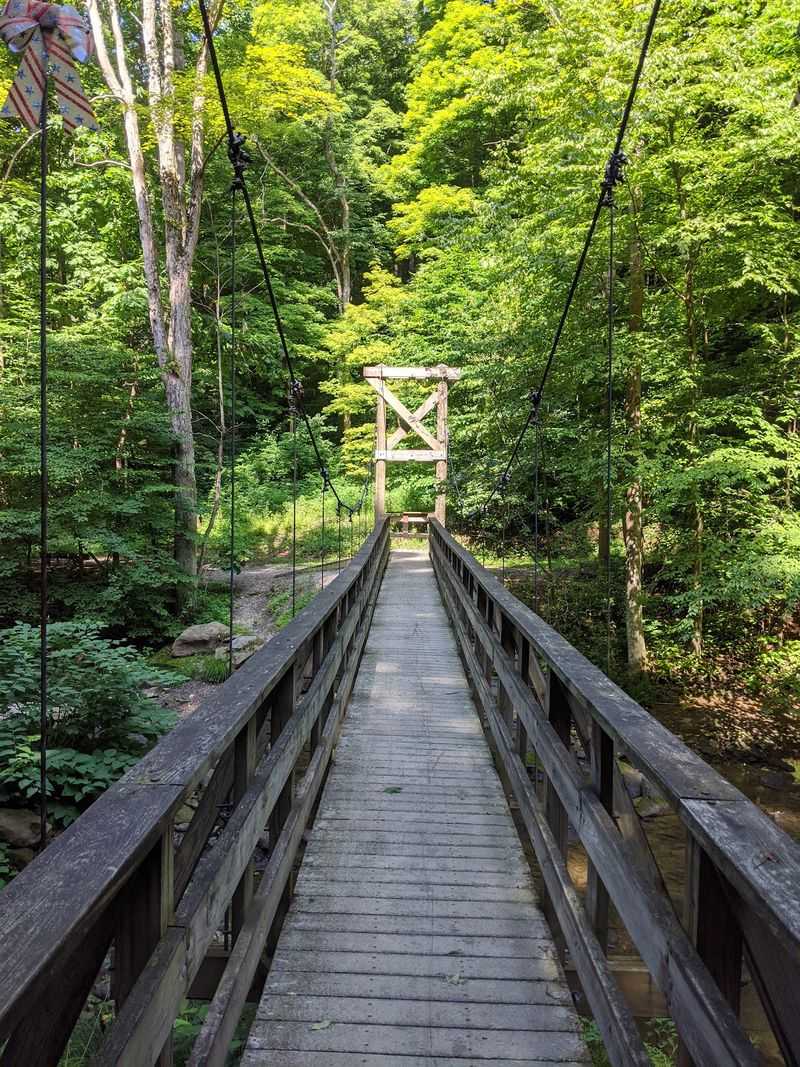
Choices are rarely this easy. The Roaring Run Recreational Area offers two main paths, the Streamside Trail and the Woodland Trail.
Combine them and you get an easy loop of about 1.5 miles. That’s short enough for casual walkers but scenic enough to feel like a real adventure.
The Streamside Trail hugs the creek with bridges, steps, and plenty of water views. It’s the one to pick if you want rushing water beside you most of the way.
The Woodland Trail climbs a bit more as it moves through the forest. Expect a slight incline, along with a quieter, leafier feel.
A smart move is to go up one trail and come down the other. That way you see both sides of the area without repeating a single step.
Keep an eye on your footing along the way. Roots, rocks, and stairs show up often, so sturdy shoes beat flip-flops every time.
Shade covers much of the route, which is a gift on warm days. Even in the middle of a Virginia summer, the forest canopy keeps things pleasant.
The Waterfall at the Top Steals the Show
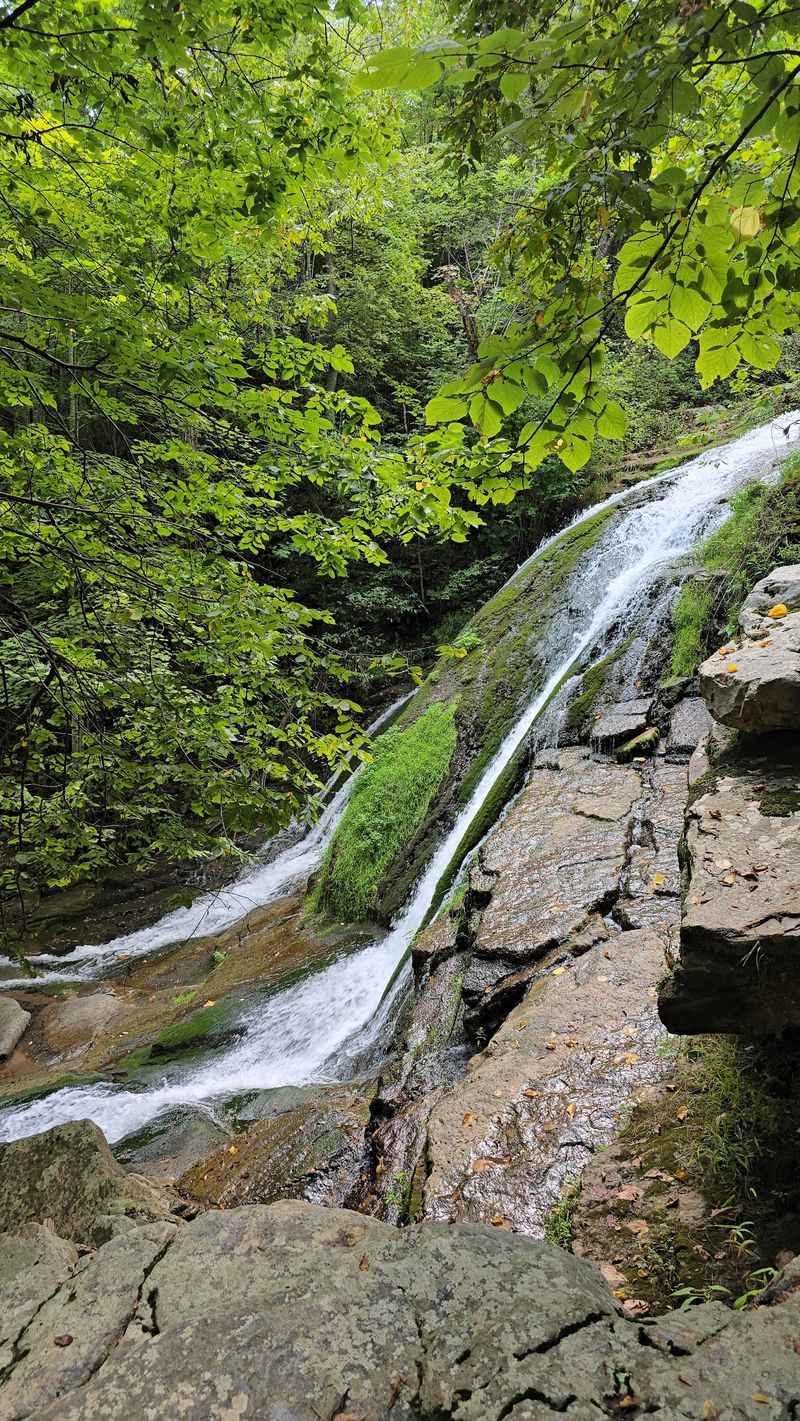
Sorry, furnace, but you’ve got competition. A waterfall waits at the upper end of the creek trail, and it’s a real crowd-pleaser.
Along the way, the creek tumbles over a series of smaller cascades. Each one feels like a preview, building up to the main event at the top.
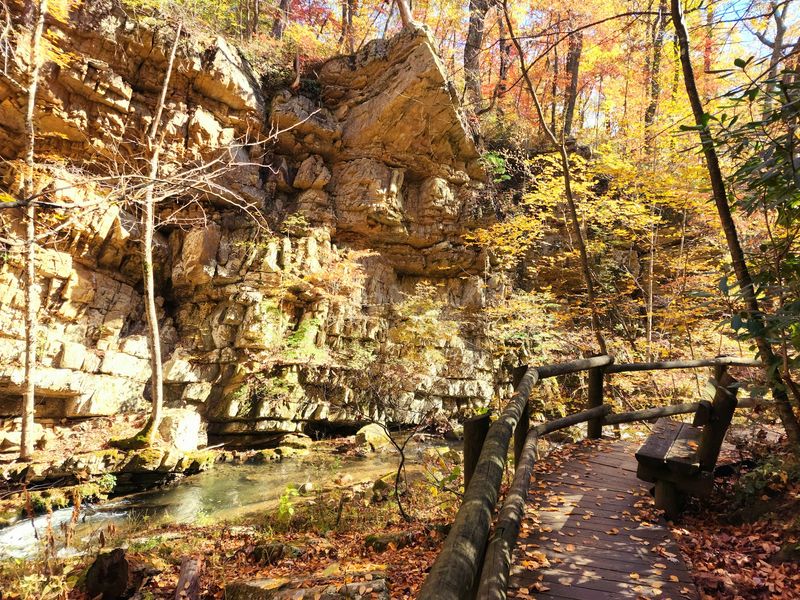
The rock formations along Roaring Run Creek are striking on their own. Layers of stone, patches of moss, and clusters of ferns line the water like a natural garden.
After a good rain, the falls really earn their roaring name. The water pours harder and louder, turning the whole hollow into a soundtrack.
That same rain makes things slippery, though. Rocks, bridges, and wet steps near the falls deserve extra care.
Signs posted in the area discourage climbing on the rocks at the top of the falls. Respecting those keeps the day fun and keeps everyone in one piece.
Here’s a sneaky tip for planning. The falls are so captivating that some folks almost forget to visit the furnace, so see the stone stack first before the waterfall works its magic.
Trout, Cool Pools, and Rocks That Demand Respect
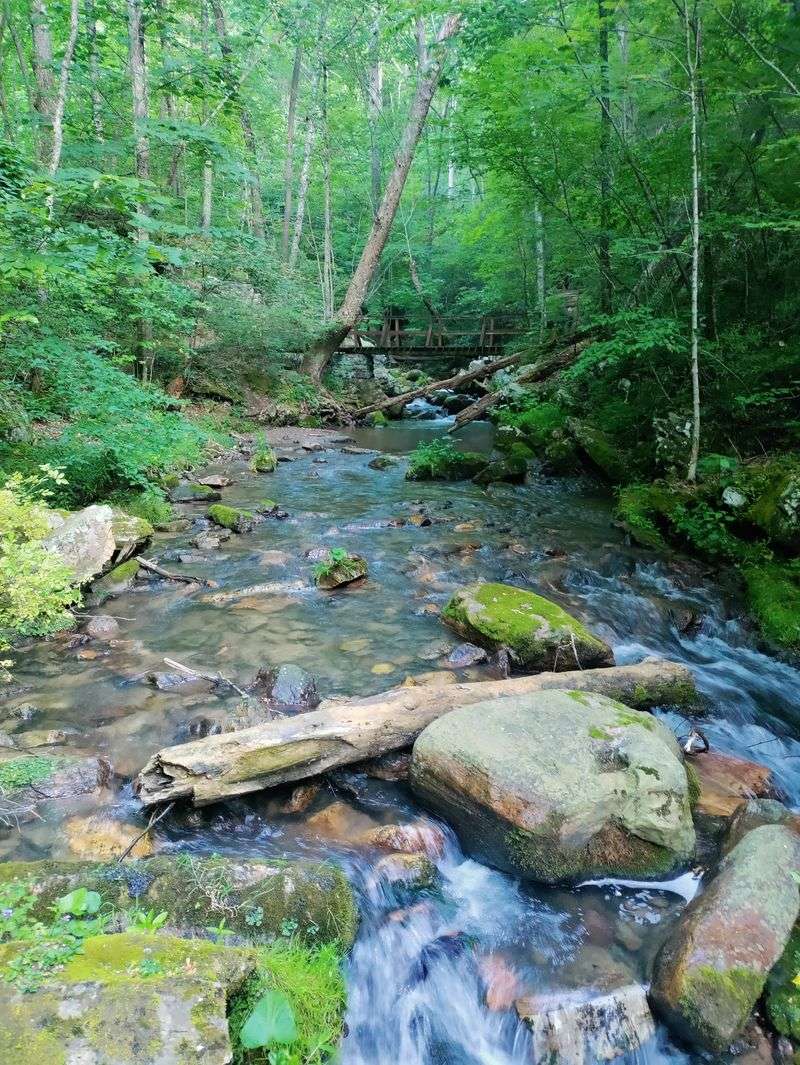
Anglers, take note. Roaring Run Creek is a native trout stream, which adds another reason to bring gear along.
Fishing here comes with a gorgeous backdrop of boulders, ferns, and moving water. Just make sure you know the current Virginia fishing rules before you cast.
On hot days, the creek also offers places to cool off. Several deeper pools form along the way, and wading in for a foot soak feels fantastic after the climb.
Some smooth rock faces act like natural slides. They look tempting, but signs in some spots discourage sliding, and slick stone can bruise more than your pride.
Water clarity can change a lot depending on recent weather. After heavy rain, the creek may look murky, so use good judgment before taking a full plunge.
My advice is simple. Treat the creek like a beautiful neighbor you admire from a respectful distance.
A dip of the toes, a few casts, or a quiet seat on a boulder can be just as rewarding. The water does most of the entertaining anyway.
Pack a Lunch, Leash the Pup, and Round Up the Kids
Lunch with a side of history sounds pretty great. Picnic tables sit near the parking lot, making it easy to refuel before or after the trails.
There’s no snack bar or café on site. Pack your own sandwiches and drinks, and you’ll have one of the prettiest dining rooms in the county.
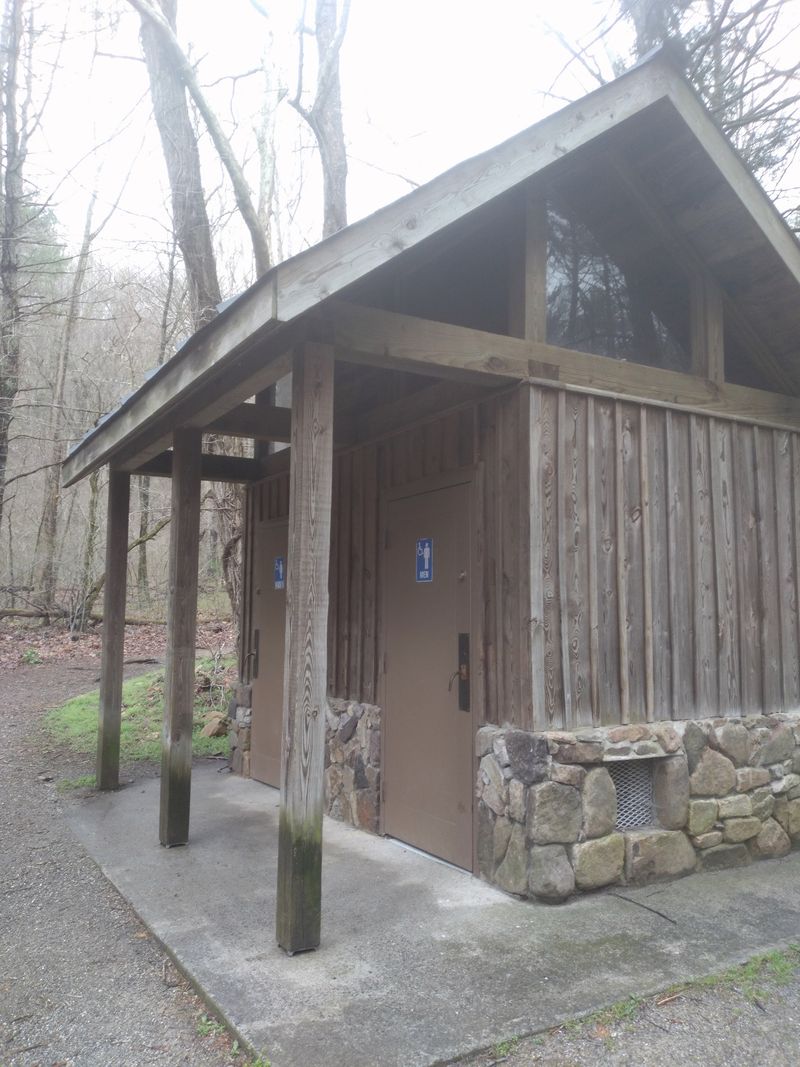
Restrooms are located near the parking area too. That’s a small detail, but anyone traveling with little ones knows how much it matters.
Dogs on leashes are welcome on the trails. The shade and creek make it a comfy outing for four-legged hikers on warmer days.
Kids tend to love this place for obvious reasons. There’s a giant stone tower, bubbling water, wooden bridges, and plenty of rocks begging to be explored.
The short distance to the furnace keeps tiny legs happy. Families who want more can push on toward the waterfall at their own pace.
Homeschoolers and teachers will spot an easy field trip here. It blends science, history, and outdoor time into one free afternoon.
Fill the Tank Before the Road Gets Quiet
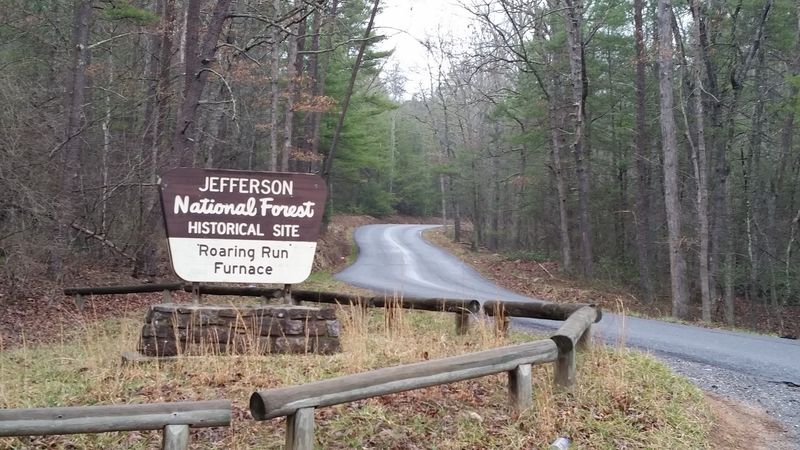
GPS will get you there without much drama. The address is 450 Roaring Run Rd, Eagle Rock, VA 24085, along State Road 621.
The drive takes you through rural Botetourt County, and it feels pleasantly far from everything. That remoteness is part of why so few people stumble across it.
Gas stations aren’t exactly lined up along the final stretch. Top off your tank and grab water before you leave town.
Wildlife is another reason to take it slow. Deer are common in these hills, and they don’t always check for traffic before crossing.
Roanoke is the nearest bigger city for meals and supplies. Plenty of travelers pair a morning at the furnace with lunch or dinner there afterward.
Parking is available right at the recreation area. From there, the furnace is only a short stroll away, so you won’t spend half your visit walking just to reach the main sight.
The whole trip feels like a mini road adventure. Windy roads, mountain views, and a stone giant at the end make the drive part of the fun.
Free, Open Year-Round, and Best With Good Timing
Your wallet gets the day off. Roaring Run Furnace is free to visit and accessible to the public all year long.
No reservations, no admission desk, and no timed tickets. You just show up and start exploring.
Each season gives the place a different personality. Summer brings deep shade and cool creek water, while autumn paints the hollow in warm colors around the gray stone.
Spring and rainy stretches usually mean stronger flow at the falls. Winter strips the leaves away, which can make the furnace stand out even more against the bare woods.
Holiday weekends and warm afternoons can bring more company. Arriving early in the day is a simple way to enjoy quieter trails.
Weather matters here more than you might expect. Wet conditions make bridges and rocks slick, so check the forecast and adjust your plans if storms roll in.
Since the area sits in a national forest, conditions and facilities can change. It’s smart to check with the forest service before heading out, especially in winter.
Why This Stone Tower Deserves a Spot on Your Next Road Trip
Short stops can deliver big rewards. Roaring Run Furnace proves that a quick detour can pack history, nature, and a waterfall into one easy outing.
You get a nearly two-century-old stone stack with a real connection to Richmond. You also get a creek trail, a trout stream, and falls that sound as good as they look.
It’s welcoming for nearly everyone. History buffs, casual walkers, families, dog owners, and anglers can all find their own favorite corner here.
The price tag helps too. Free entry and year-round access make it an easy yes for spontaneous road trips.
I believe the best places are the ones that make you slow down. This furnace does exactly that, asking you to stand still and picture the fire, smoke, and noise that once filled these woods.
Virginia has plenty of famous stops along the Blue Ridge. This one stays quieter, which honestly makes it even more appealing.
So next time you’re cruising through Botetourt County, tap the brakes. A stone giant is waiting in the trees, and it’s been patient for a very long time.