Somewhere off a quiet farm road in Texas, I pulled up to a plain little country church and almost kept driving. From the outside, it looked like a hundred other white chapels sitting in the pastures.
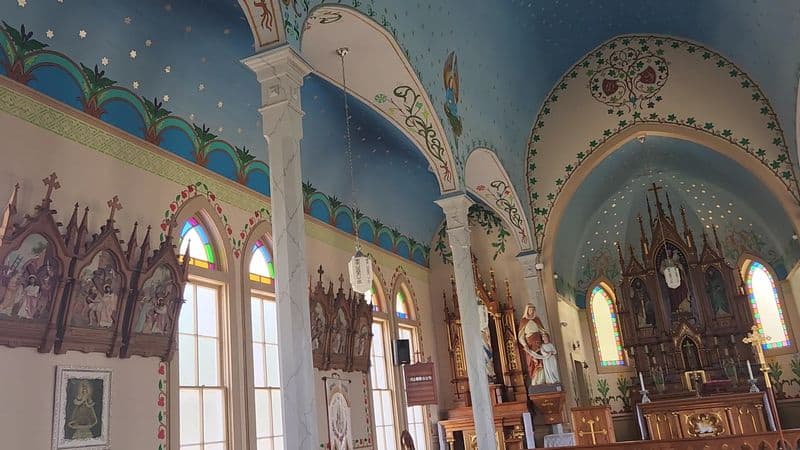
Then I peeked inside and saw a ceiling the color of a summer sky, scattered with gold stars and swirling painted vines. It turned out to be one of the most surprising stops I have ever made on a back-road drive, and it is the kind of place that makes you want to tell everybody you know.
A Country Church Tucked Off FM 1383
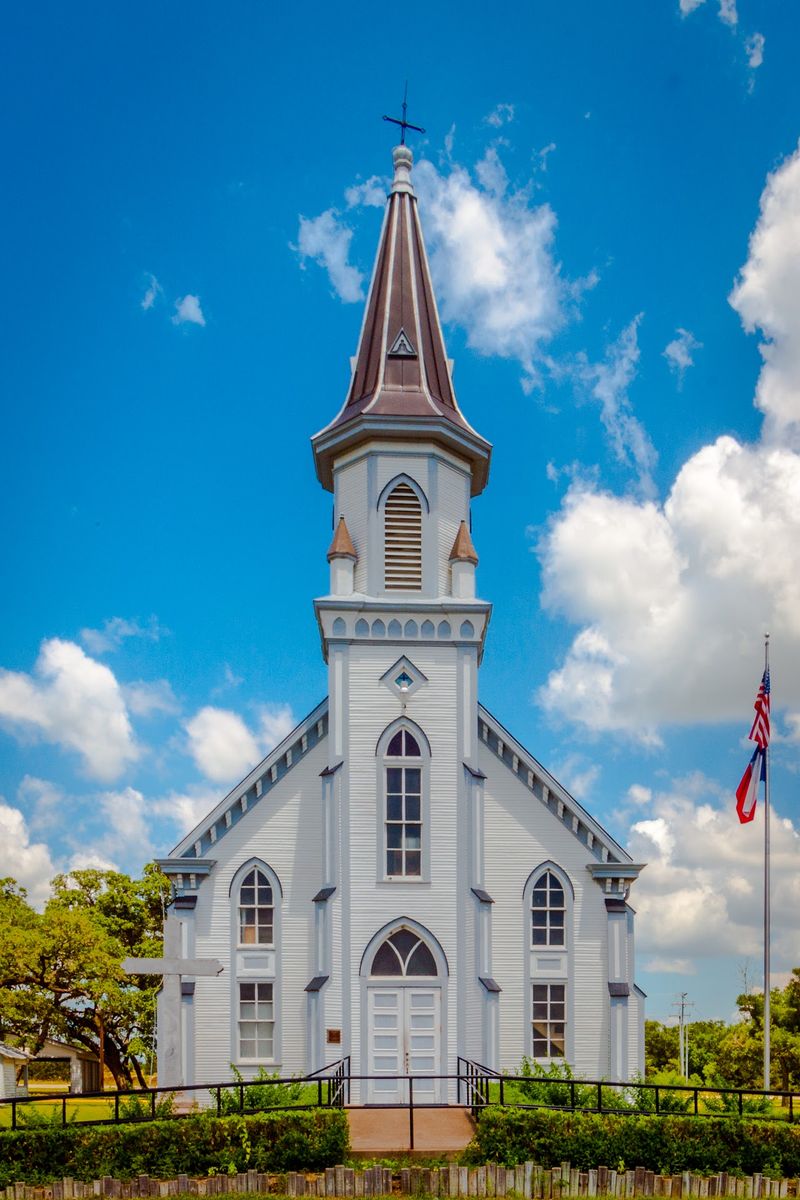
Out on FM 1383, a few miles from Schulenburg, sits a small white church that could easily pass for any rural chapel. St. Cyril and Methodius Catholic Church stands in the tiny community of Dubina, surrounded by open Texas countryside.
Most folks headed down I-10 never guess it is there.
Visitors describe it as being in the middle of nowhere, and they mean that as high praise. The road is quiet, the fields stretch wide, and the steeple rises like a friendly landmark.
There are no billboards, gift shops, or flashy signs pointing the way.
Yet this humble building is one of the famous Painted Churches of Texas. Inside, nearly every surface glows with color, pattern, and artwork.
That gap between a simple outside and a dazzling inside is exactly what makes the trip so memorable, and it is why road-trippers who love old-school Texas keep putting it on their lists.
Roots in the First Czech Settlement in Texas
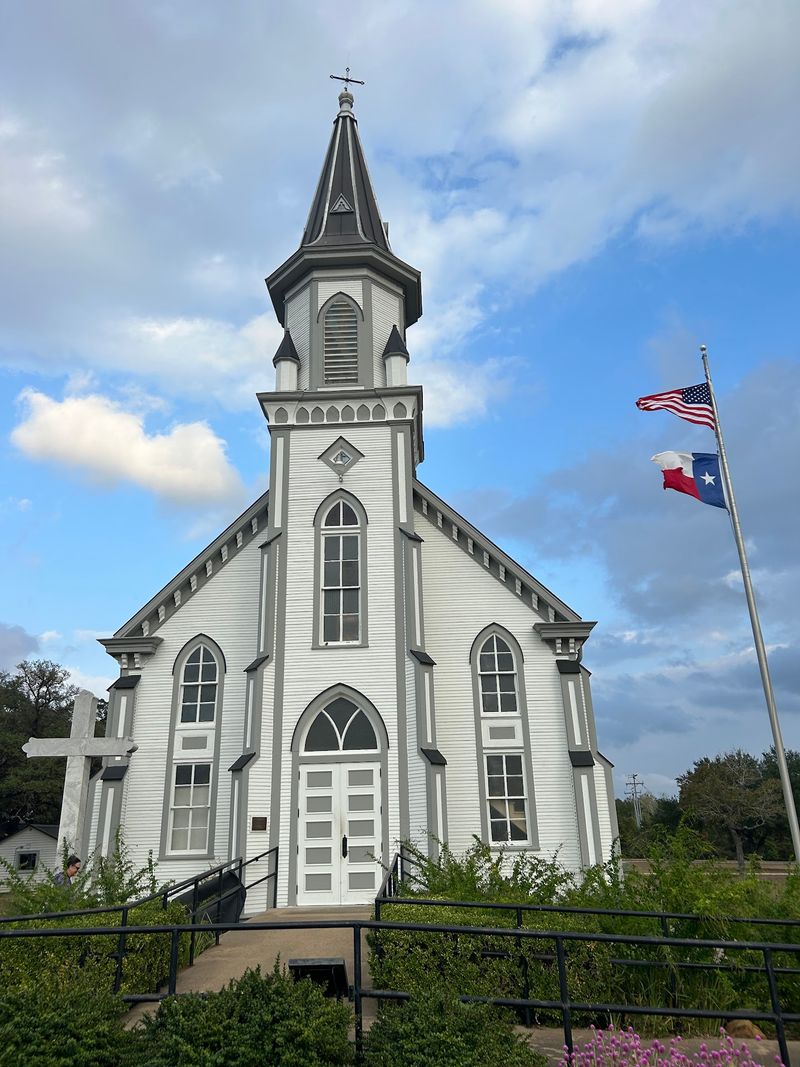
Long before highways crisscrossed the state, Czech families put down roots here. Dubina is known as the first Czech settlement in Texas, and the church grew up as the heart of that community.
You can still feel that heritage the moment you step onto the grounds.
Visitors often point out how strong the Czech identity remains. It is not a museum version of history, either.
The church has a clear cultural and faith character that has been carried forward by the people who still worship there.
Fun fact: the church takes its name from Saints Cyril and Methodius, two brothers who are honored for bringing faith and learning to Slavic peoples. That makes the name a perfect fit for a congregation founded by Czech settlers.
It is a small detail, but it ties the building straight back to the families who built this corner of Fayette County.
Dubina Historic District Status
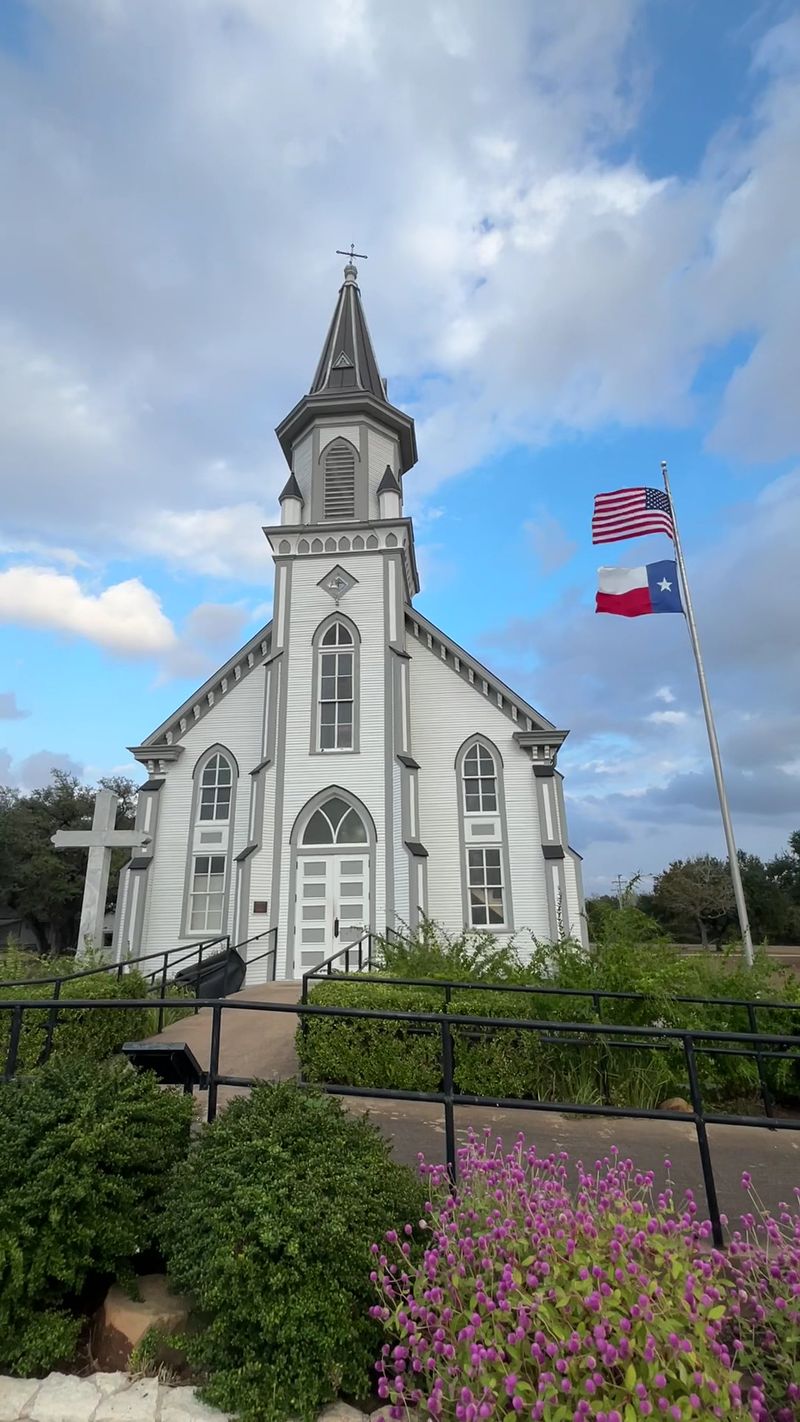
Official recognition came in 2003. That year, the Dubina Historic District, which includes this church, was placed on the National Register of Historic Places.
It is a big honor for such a small spot on the map.
Being on the register means the area is valued for its role in the story of the state. For travelers, it also means you are looking at something that has been cared for rather than torn down and replaced.
In a world full of new construction, that feels rare.
Regulars mention how well the parishioners have maintained this historic location over the years. The paint is bright, the building is tidy, and the grounds are neat.
You get the sense that people here care deeply about keeping things the way they were meant to be, without trading charm for something trendy.
The Starry Blue Ceiling
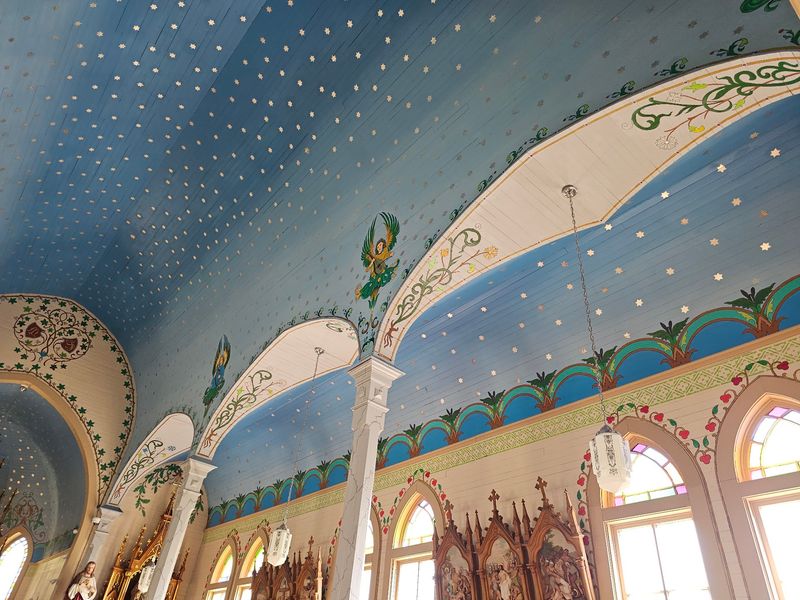
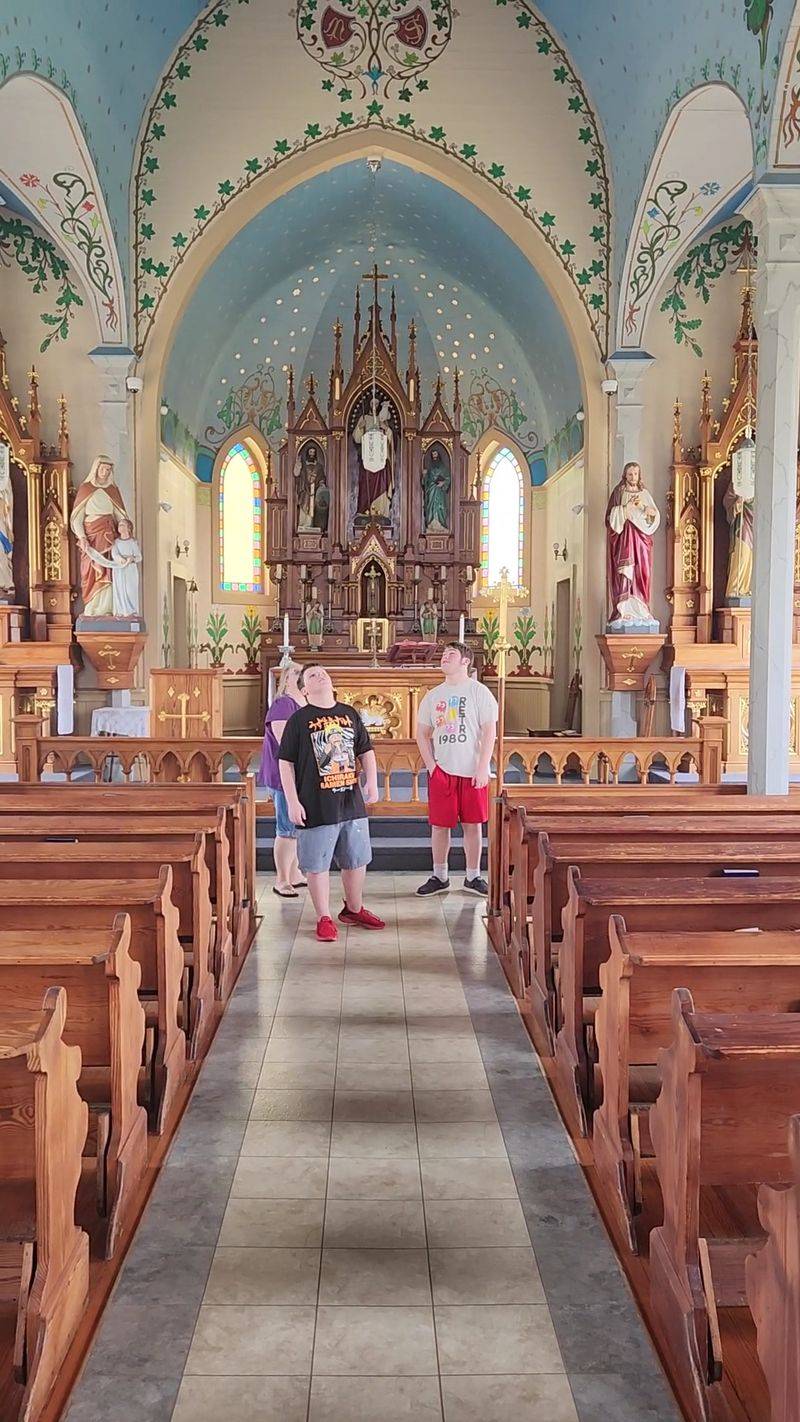
Look up. That is the first thing almost everyone does after walking through the doors, and for good reason.
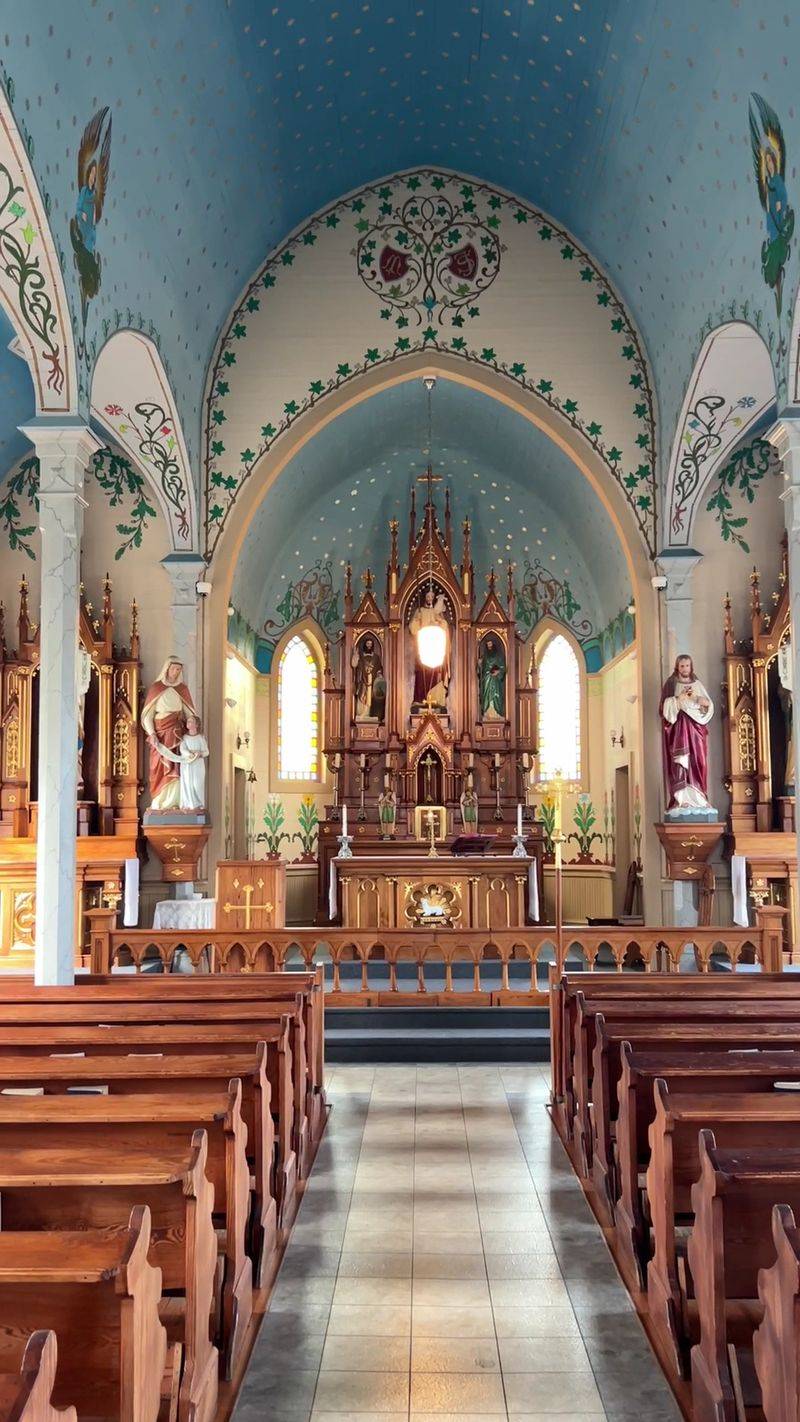
The ceilings and domes are painted in pale shades of blue and sprinkled with gold six-pointed stars.
The effect is calm and dreamy, like standing under a clear Texas night sky that somebody decided to bring indoors. Visitors often say photos of the interior simply do not do it justice.
The colors seem softer and richer in person, and the curves of the domes make the stars feel like they are floating.
Some fans call this the most elaborate of all the Painted Churches. Whether or not you agree, the starry ceiling alone is worth the drive.
Bring a little patience, stand still for a minute, and let your eyes wander across the whole sky above you.
Stenciled Flowers, Vines, and Angels
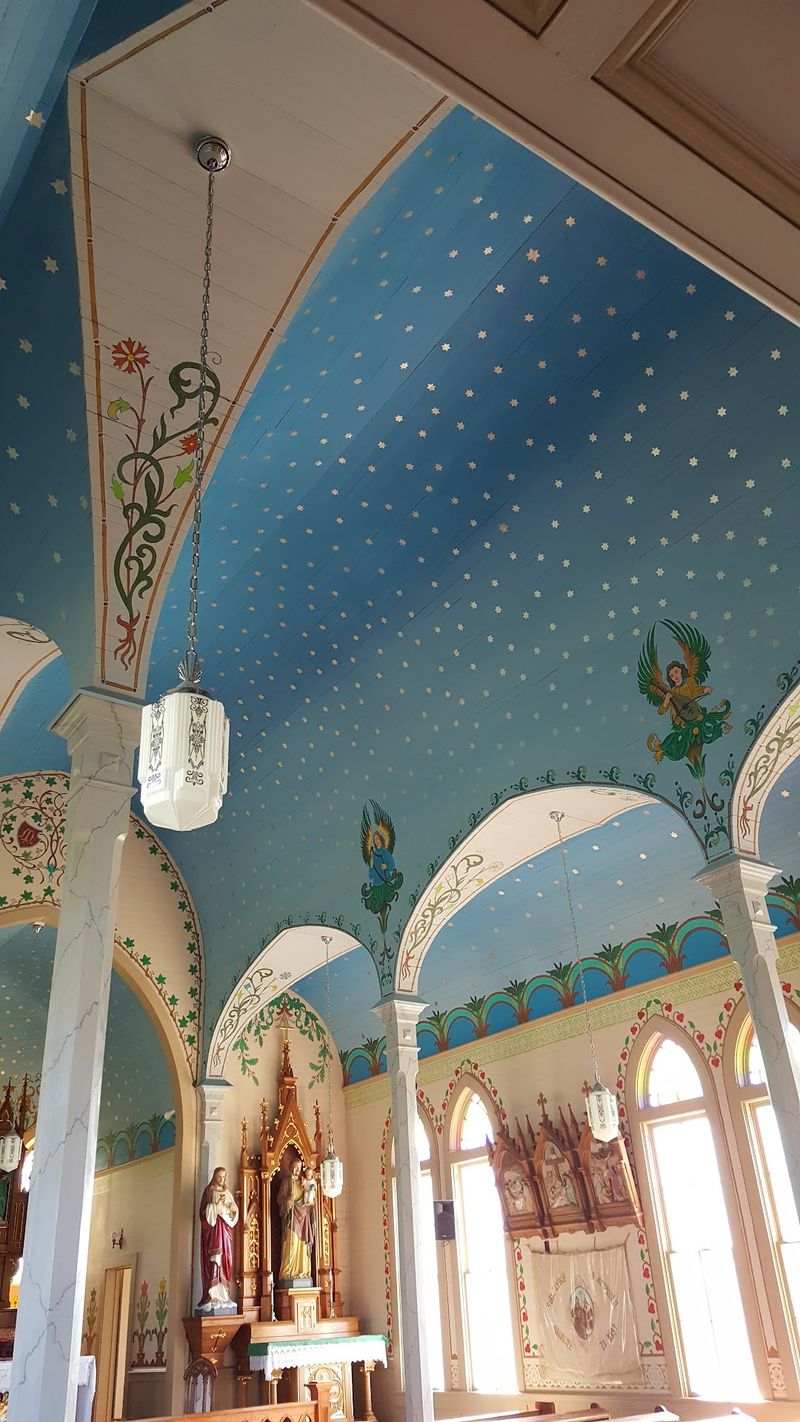
Every wall tells a story in paint. Flowers bloom along the edges, vines curl around corners, and leaves trace graceful patterns across the surfaces.
Angels and other artistic touches appear here and there, rewarding anyone who takes time to look closely.
The stenciling is what turns a beautiful room into a breathtaking one. Patterns repeat in steady rhythm, giving the whole interior a sense of order and care.
Visitors describe the bright colors as making everything more interesting to look at.
Kids especially tend to enjoy spotting details. Try turning the visit into a little game of finding the angels or counting flower designs.
It keeps young eyes busy and helps everyone notice the craftsmanship that might otherwise blur together.
An Altar Built to Impress
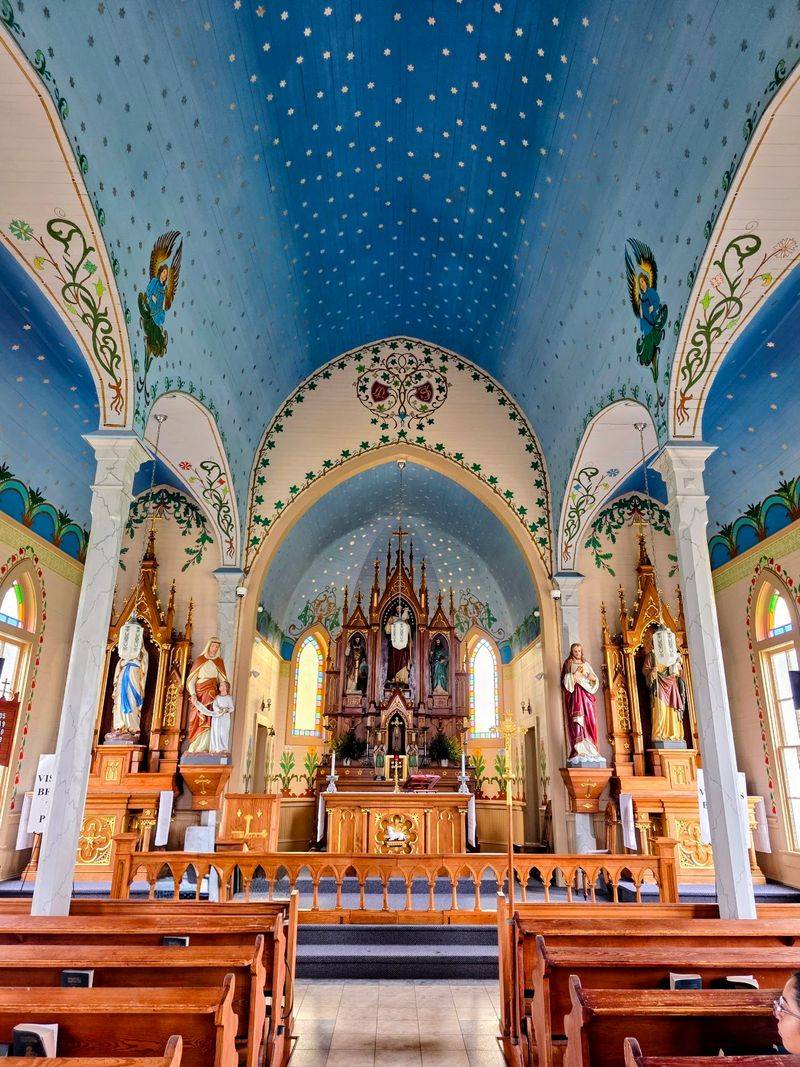
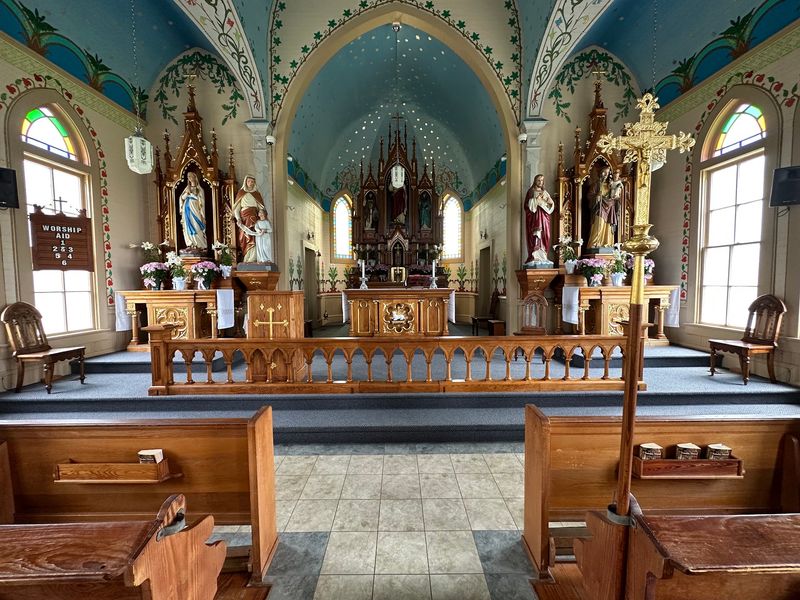
At the front of the church, the altar steals the show. Visitors describe it as impressive, and paired with dramatic sculpture nearby, it pulls the eye straight down the aisle.
Everything in the room seems to lead toward it.
Traditional touches fill the space too. Guests mention the wooden pews, the confession box, and the faint smell of incense that greets you inside.
For anyone raised in a Catholic church, it can feel like coming home.
One visitor shared how refreshing it was to sit in a place that felt like a real sanctuary instead of an auditorium. That old-fashioned feeling is a big part of the charm.
Nothing here is built for show business, yet the result is more stunning than most modern buildings could ever hope to be.
Inscriptions Written in Czech
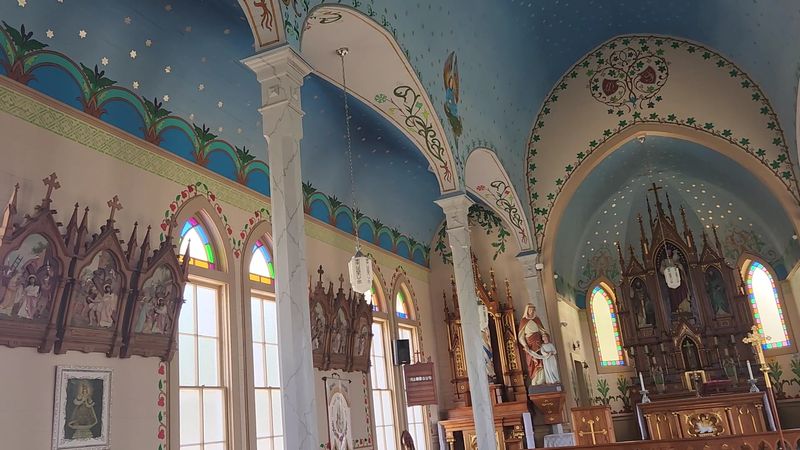
Here is a detail many people miss on the first glance: the Stations of the Cross are written in Czech. So are many other inscriptions scattered throughout the church.
It is a quiet but powerful reminder of who built this place.
Reading the words, even if you cannot understand them, connects you to the settlers who first prayed here. They carried their language across an ocean and kept it alive on the Texas prairie.
The walls still speak it today.
Bring a phone translator if you are curious, or just enjoy the shapes of the unfamiliar letters. Either way, these inscriptions add a layer of meaning you will not find in a typical small-town chapel.
Visitors also mention the European-style decoration, which pairs perfectly with the old-world words.
A Tribute to Those Who Served
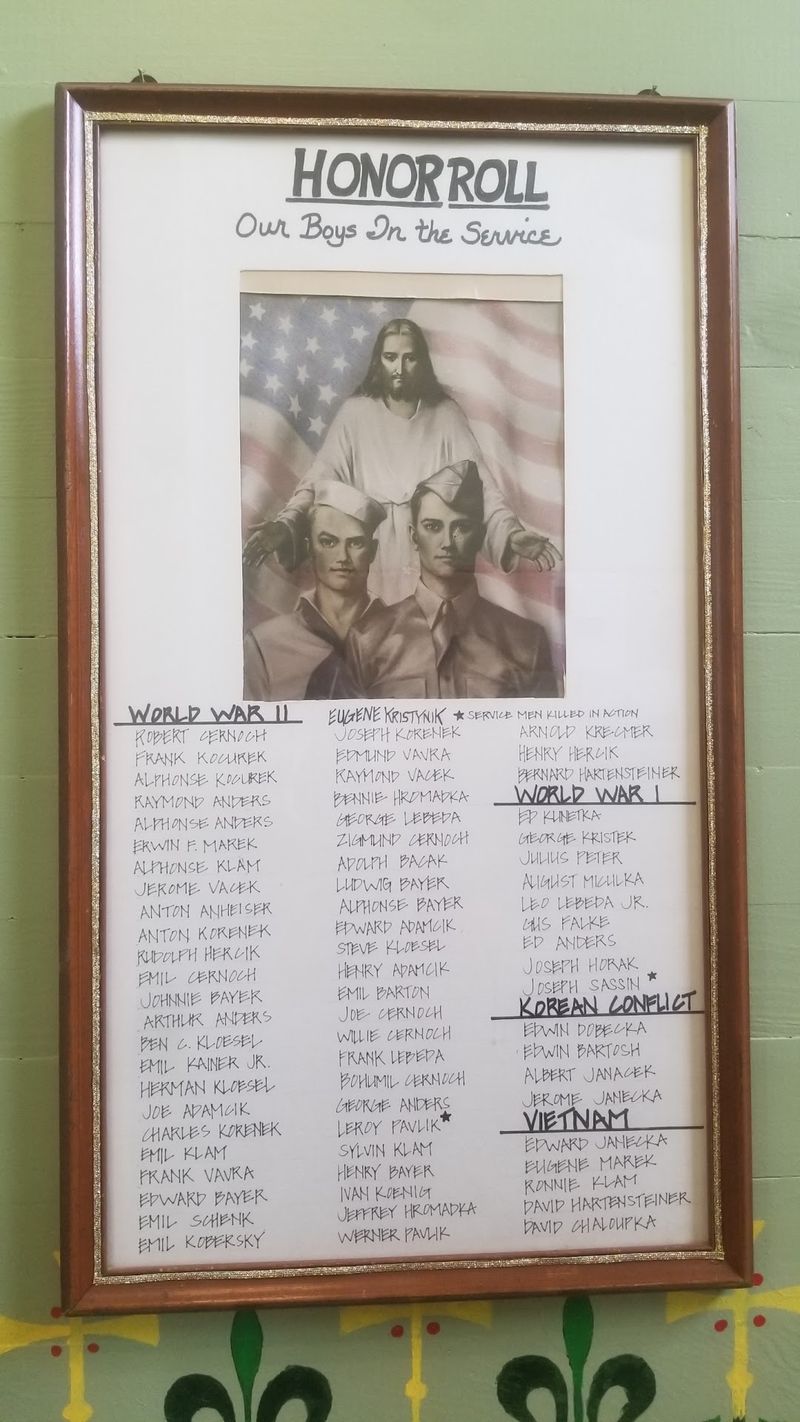
Patriotism shows up in a heartfelt way here. The church honors members of the congregation who served in the military, and several visitors have singled out a poster recognizing these parishioners.
It is a small display with a big heart.
Travelers often call it an added bonus to an already special stop. Seeing local names and faces makes the history feel personal.
It reminds you that this is a living community, not just a pretty building.
Take a moment to read through it if you visit. For families, it can spark good conversations with children about service, community, and the people who shaped rural Texas.
That kind of quiet tribute fits right in with the humble, sincere spirit of the whole place.
Peaceful Grounds and the Cemetery Across the Road
Step back outside and let the countryside take over. The setting is tranquil, with open land, big skies, and very little noise beyond birds and wind.
Many visitors take time to walk around and explore the land after seeing the interior.
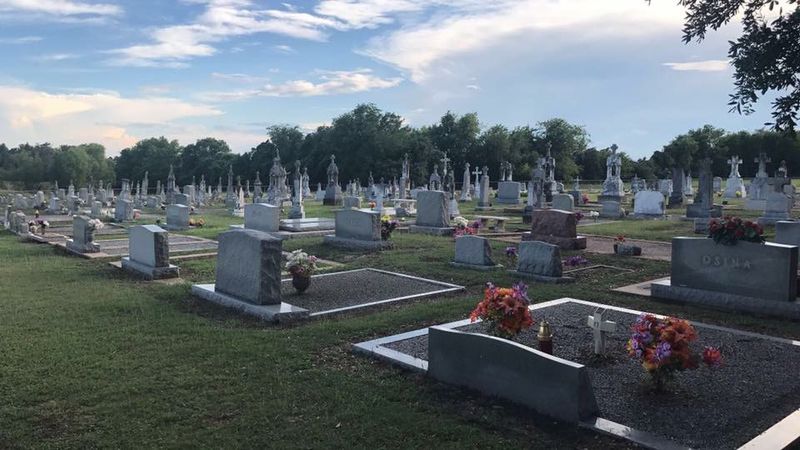
The church also has its own cemetery across the street. It is a peaceful, respectful place that adds to the historic feel of the stop.
Walk quietly and enjoy the old markers and the sense of continuity.
Spring is a lovely time to visit, when wildflower season paints the roadsides of this part of Texas. In summer, plan on an early morning stop before the heat builds.
The church interior offers welcome indoor relief once the sun climbs high.
Still a Working Parish Church
Plenty of historic buildings become empty showpieces. Not this one.
Visitors are quick to point out that it is well preserved, well maintained, and still serving as an active church for the community.
One caterer who worked a Christmas gathering here described the congregation as wonderfully kind, with a clean, beautiful interior and music that filled the room. Another guest noticed the song books were brand new.
Those little signs show a parish that is very much alive.
Remember that you are a guest in a place of worship. Speak softly, dress respectfully, and keep phones quiet.
If you feel moved, there is a spot to leave a donation by the front door, which helps the parish keep this treasure looking its best for future generations.
Who Will Love This Stop
History buffs, photographers, and anyone who adores old churches will feel right at home. So will road-trippers who would rather find a hidden gem than wait in line at a crowded attraction.
It is the kind of spot that rewards curiosity.
Families can make it a short, meaningful stop. The colors and patterns hold kids’ attention, and the open grounds give everyone room to stretch their legs.
Grandparents with Czech or Catholic roots often find it especially moving.
People interested in faith and heritage tend to call it a true pleasure to visit. Even folks who simply enjoy pretty places come away impressed.
If you love a Texas that still moves at its own pace, untouched by trends and chains, this little church speaks your language.
Hours, Access, and the Gate Inside the Door
Plan ahead. Listed hours run 8 AM to 5 PM every day of the week, though times can change, so calling the parish at 979-725-6714 before you go is a smart move.
More information may be found through the parish website, stmichaelweimar.org.
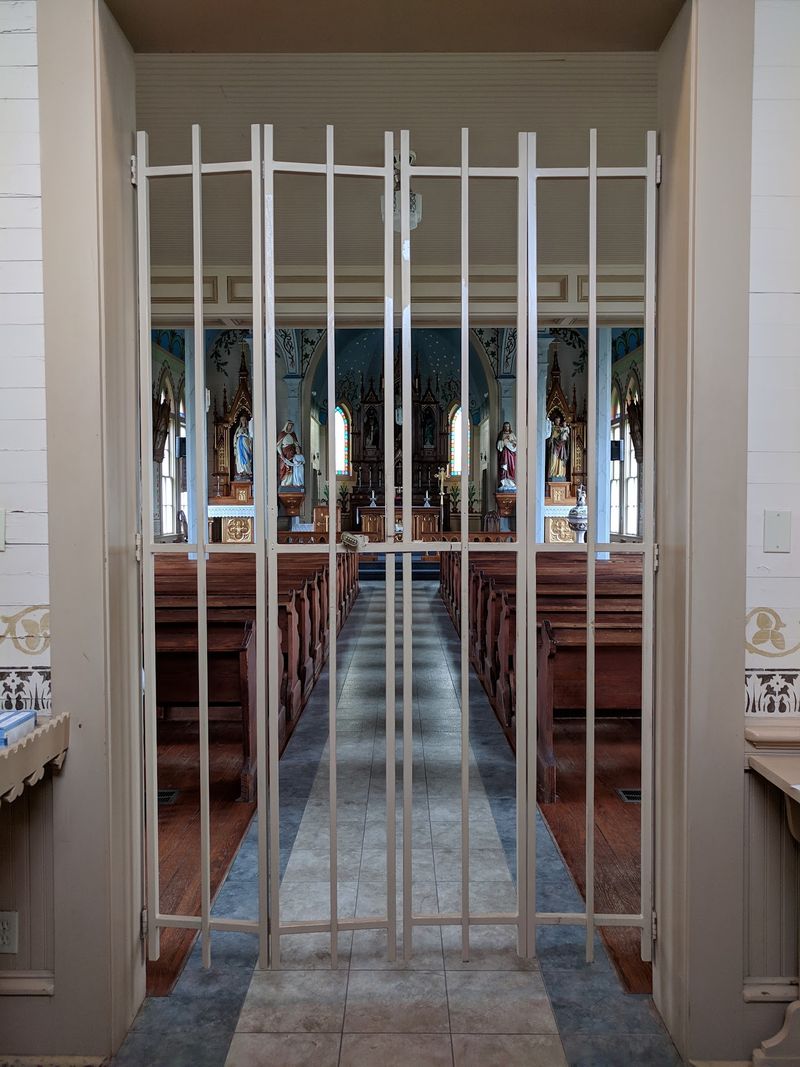
Some past visitors found that opening the main door revealed a locked inner gate. You could still see the interior and snap photos through it, but not walk the aisle.
Others mention that tours provide fuller access, so arrangements may vary.
Good news on accessibility: there is a handicap ramp, and plenty of parking along a pebbled road. No admission price is listed, which makes this a wonderfully budget-friendly outing.
A donation box near the front door welcomes whatever you wish to give.
Making a Day of the Painted Churches
Why stop at one? This church sits just a short drive off I-10, and it is roughly 7 miles from St. Mary’s Church in High Hill, another stunning painted church.
Pairing them makes an easy, rewarding day trip.
Tours are available too. Visitors mention seeing the church through a tour run by the Schulenburg Chamber of Commerce, and bus tours are an option.
Joining one can be a great way to learn the stories behind the artwork and potentially see more of the interior.
Fans of the Painted Churches often name favorites across the state, including the ones in Panna Maria and Wallis. Building a weekend around them is a classic Texas road trip.
Pack snacks, gas up, and enjoy the quiet farm roads between stops.
Worth Every Mile of the Back Roads
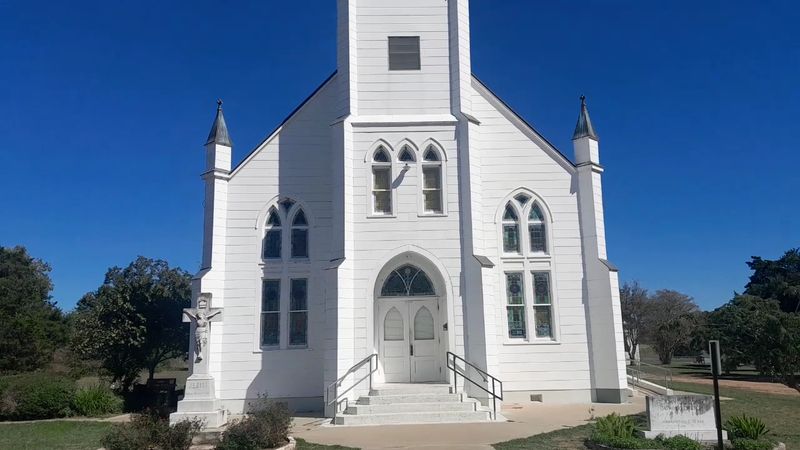
Small on the outside, unforgettable on the inside. That sums up this little chapel better than any long speech could.
A plain white building on a farm road hides a ceiling full of stars, walls full of blooms, and a story that reaches back to the first Czech settlers in Texas.
It does not try to be modern, and it does not need to. The charm comes from care, tradition, and a congregation that keeps showing up.
Visitors keep saying it never disappoints, and after one look at that blue ceiling, it is easy to see why.
So next time you are cruising I-10 near Schulenburg, take the exit and follow the quiet road. Call ahead, bring your camera, and leave a little something by the door.
Some of the best treasures in Texas are still waiting just off the highway.