Drive south on I-75 toward downtown, and one old church steeple seems to line up neatly with the Renaissance Center towers. Some folks insist that view is no accident.
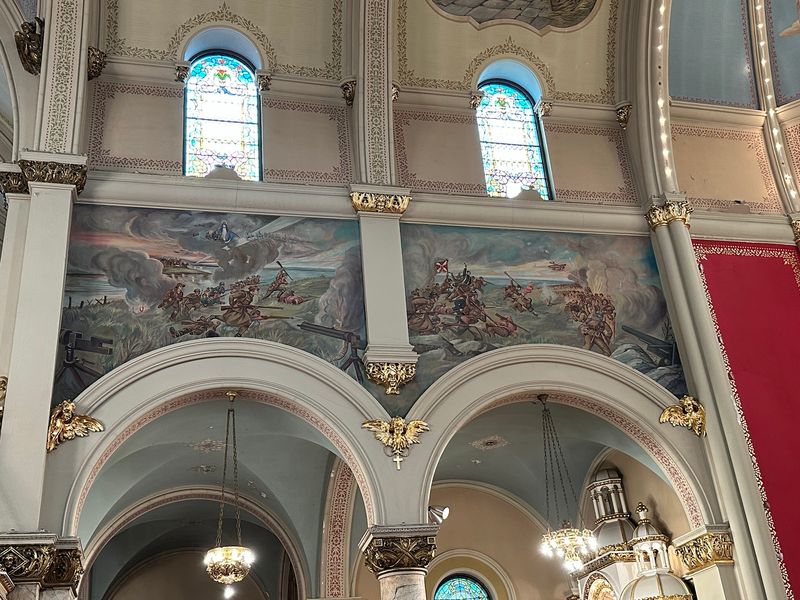
The church behind that steeple was built by Polish immigrant families more than a century ago. Its ceilings and walls are covered in paintings, and its windows pour color across the pews.
I love that a place this ornate sits on a modest side street in Michigan. It doesn’t shout for attention from the highway exits, the hospital blocks, or the much bigger church right across the street.
Generations of local families have been baptized and married under that painted ceiling, some for four generations running. So how did a church this stunning stay off so many travel lists?
A Polish Landmark Waiting Just Off The Freeway
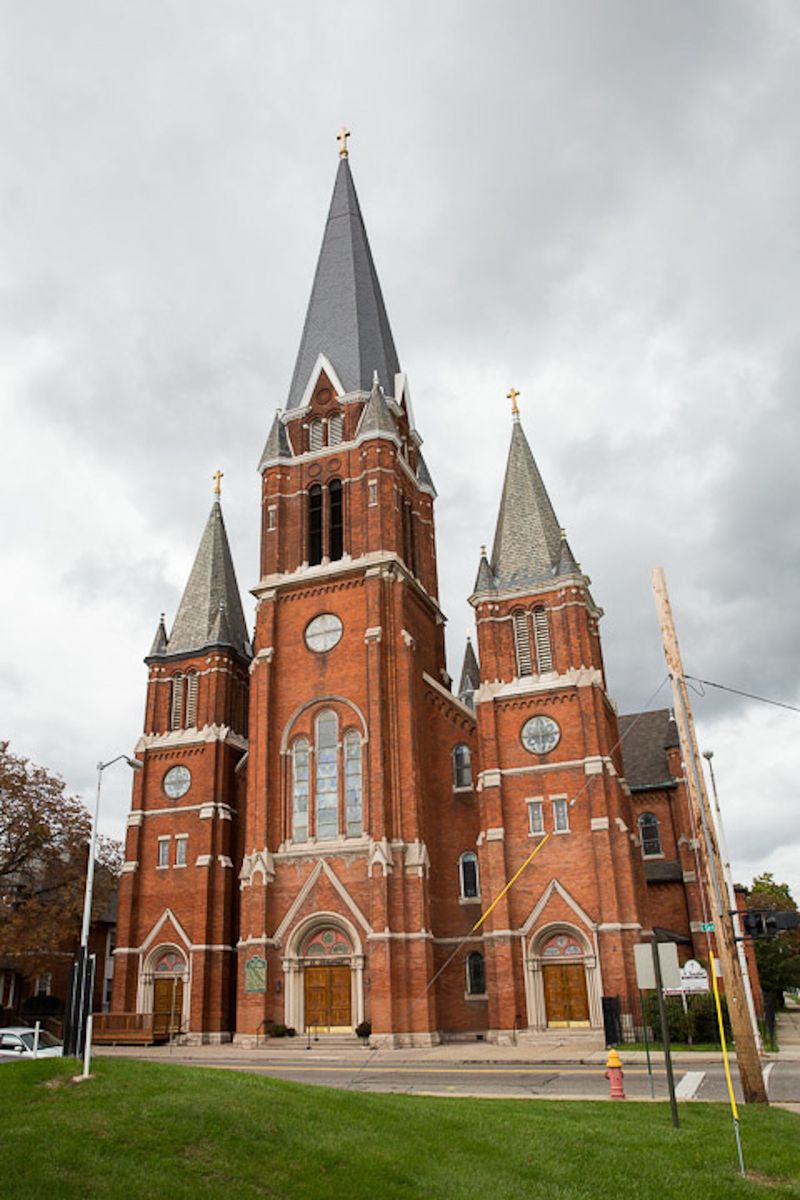
Plenty of Detroit drivers see its towers every week without ever learning its name. Meet St. Josaphat Catholic Church, a Polish-built house of worship sitting on East Canfield Street near Midtown, Michigan.
It’s an active Catholic church, not a museum or a former sanctuary turned event hall. Today it belongs to Mother of Divine Mercy Parish, which joins it with a famous neighbor down the block.
The building rises in red brick with a trio of towers and a tall central steeple. That silhouette is the part most people know, mostly from the highway.
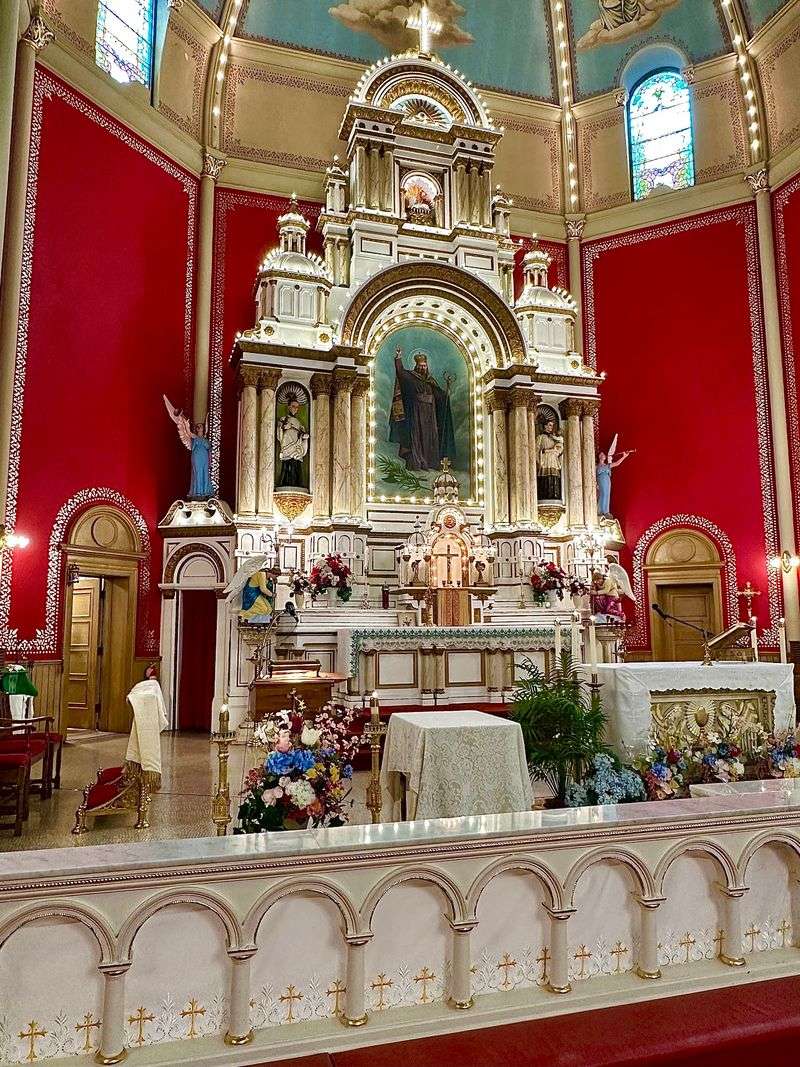
Inside is where things get colorful. Stained glass, painted walls, and a decorated ceiling give the interior a glow few passersby would guess from the street.
I like how the church feels both grand and neighborly at the same time. It sits among homes and medical buildings rather than a big tourist plaza.
Google visitors give it a strong 4.6-star average, which is lovely praise for a working parish church. Most of that affection centers on beauty, history, and family memories.
Those three threads run through everything that follows here.
Immigrant Families Who Built Something Built To Last
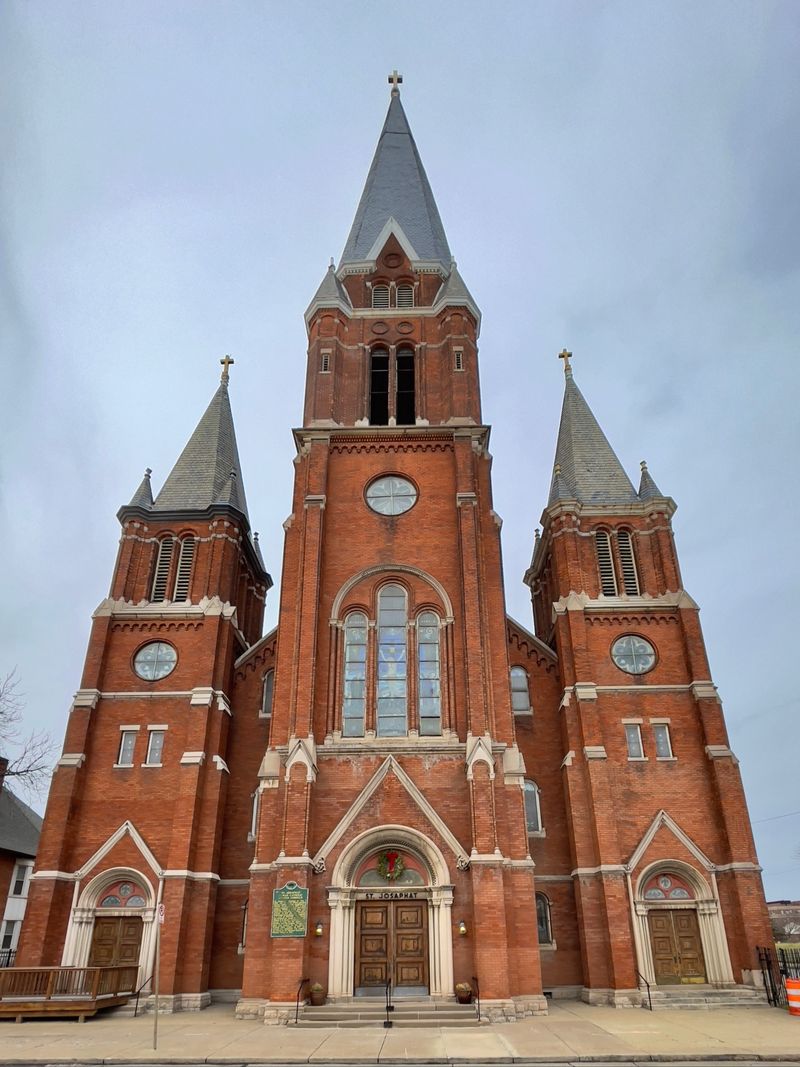
Polish immigrants poured into Detroit in the late 1800s, and they brought their faith right along with their recipes. St. Josaphat Catholic Church grew out of that wave of newcomers on the city’s east side.
The church was dedicated in 1901 after construction began at the close of the 1800s. That makes the current building well over a century old.
Working families paid for much of it, which says a lot about their priorities. They wanted a church that looked like it belonged in a European capital.
And honestly, they pulled it off. The building still carries that old-world ambition every time the doors swing open.
One online note calls it a very special place for the Polish community in Detroit, finished with a cheerful “Sto lat!” That Polish toast wishes someone a hundred years of life.
Fitting, right? The church has already cleared that number with room to spare.
I believe that’s the real foundation here, more than brick or stone. It’s a place built by people who wanted their grandchildren to have somewhere beautiful to gather.
The Canfield Street Rivalry Nobody Teaches In School
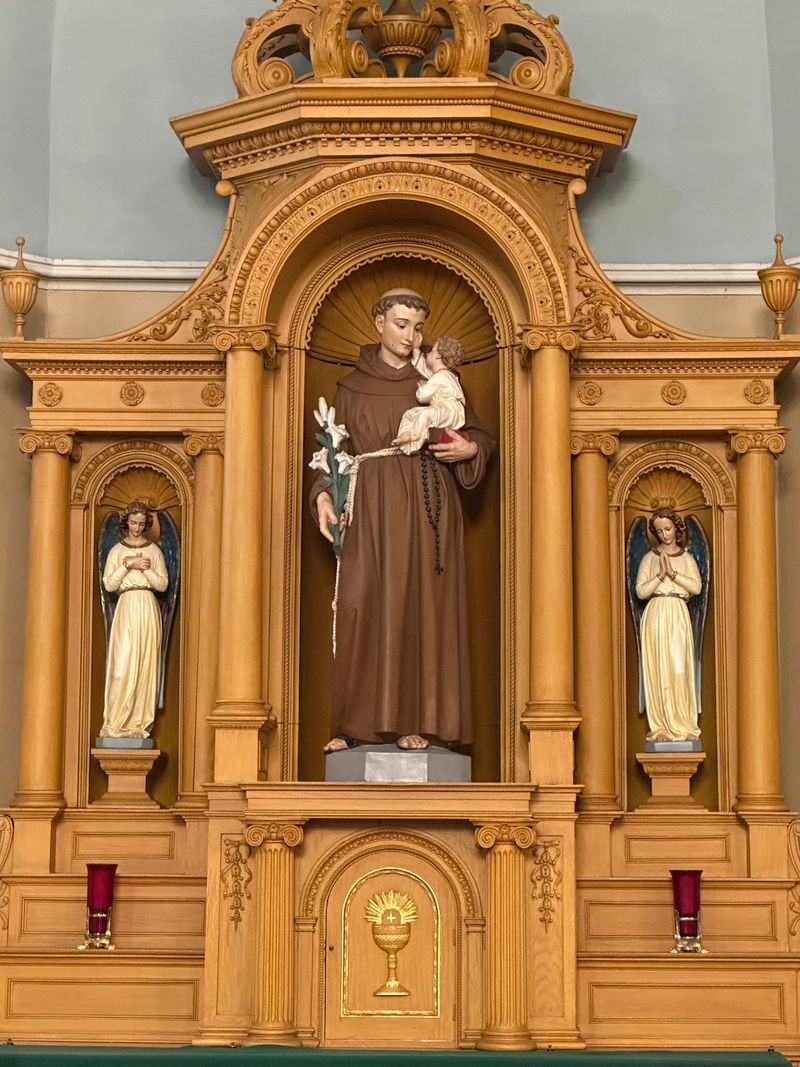
Church history can get surprisingly dramatic. East Canfield Street once sat at the center of a real split among Detroit’s Polish Catholics.
A charismatic priest named Father Dominic Kolasinski led a breakaway congregation that founded Sweetest Heart of Mary. For several years, that parish operated outside the approval of the Diocese of Detroit.
One widely shared local account says St. Josaphat was established partly to give loyal Polish families a separate parish nearby. In other words, the neighborhood had choices, and loyalties ran deep.
Sweetest Heart of Mary eventually reconciled with the diocese in 1894. The tension faded, though the churches kept their own identities for a very long time.
Here’s the twist I enjoy most. About a century later, these onetime rivals were folded into one parish, Mother of Divine Mercy.
So the two congregations that once kept a careful distance now share leadership and a parish name. That’s quite a plot arc for one city street.
Knowing this backstory changes how the whole block feels. You’re looking at a neighborhood that argued, healed, and eventually came together.
A Steeple That Plays Peekaboo With The RenCen
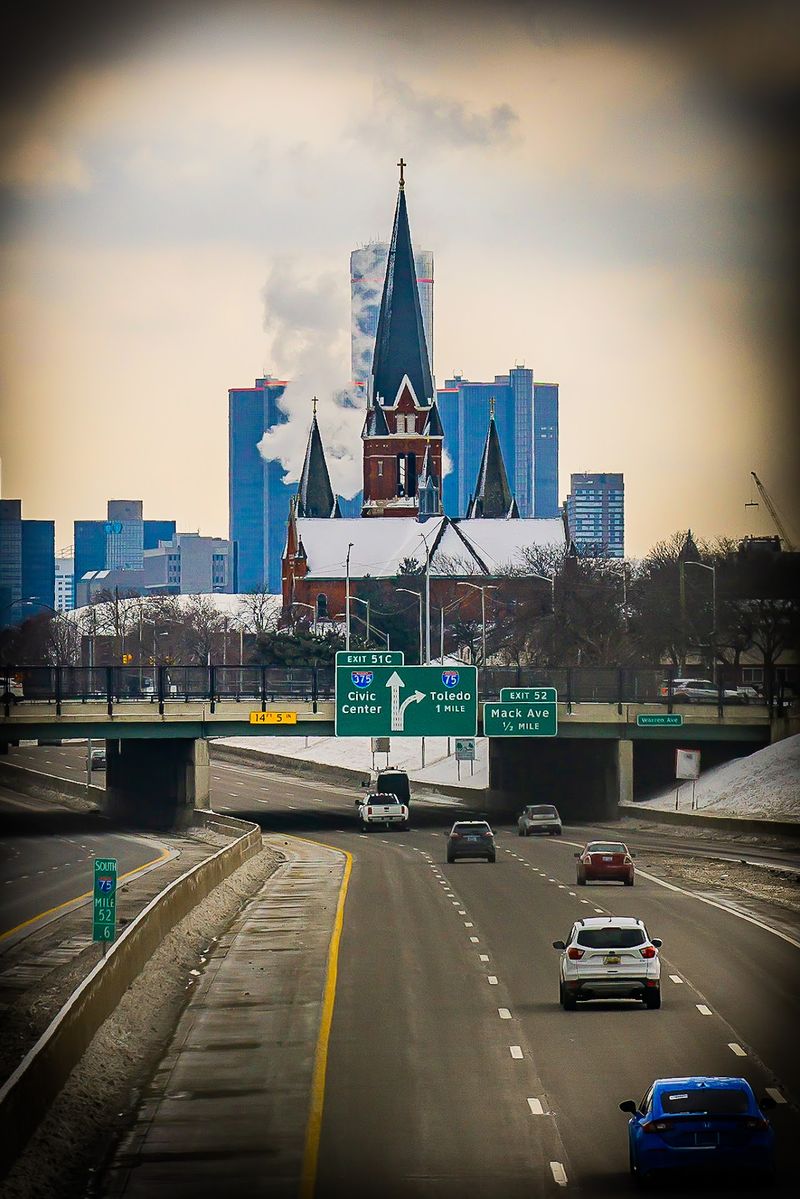
Here’s a fun one for your next drive downtown. Head south on I-75 toward Detroit and watch the St. Josaphat steeple as the skyline comes into view.
At the right angle, it lines up with the towers of the Renaissance Center. The old church and the glass skyscrapers seem to stack into one tidy picture.
Some fans claim the alignment is no accident. That’s a fun theory, though the timing is tricky, since the church came decades before the RenCen.
Either way, the view is real, and it’s a great game for passengers. Whoever spots the lineup first gets bragging rights until the next exit.
I can’t imagine a better symbol of the city’s layers. A Polish parish steeple from around 1900 shares a frame with a modern landmark.
The steeple also works as a handy landmark for finding the church itself. Once you’ve noticed it from the freeway, you’ll start seeing it everywhere.
Fair warning for drivers, though. Keep your eyes mostly on the road and let your passengers handle the sightseeing.
Comeback Story Of A Massive Rebuilt Spire
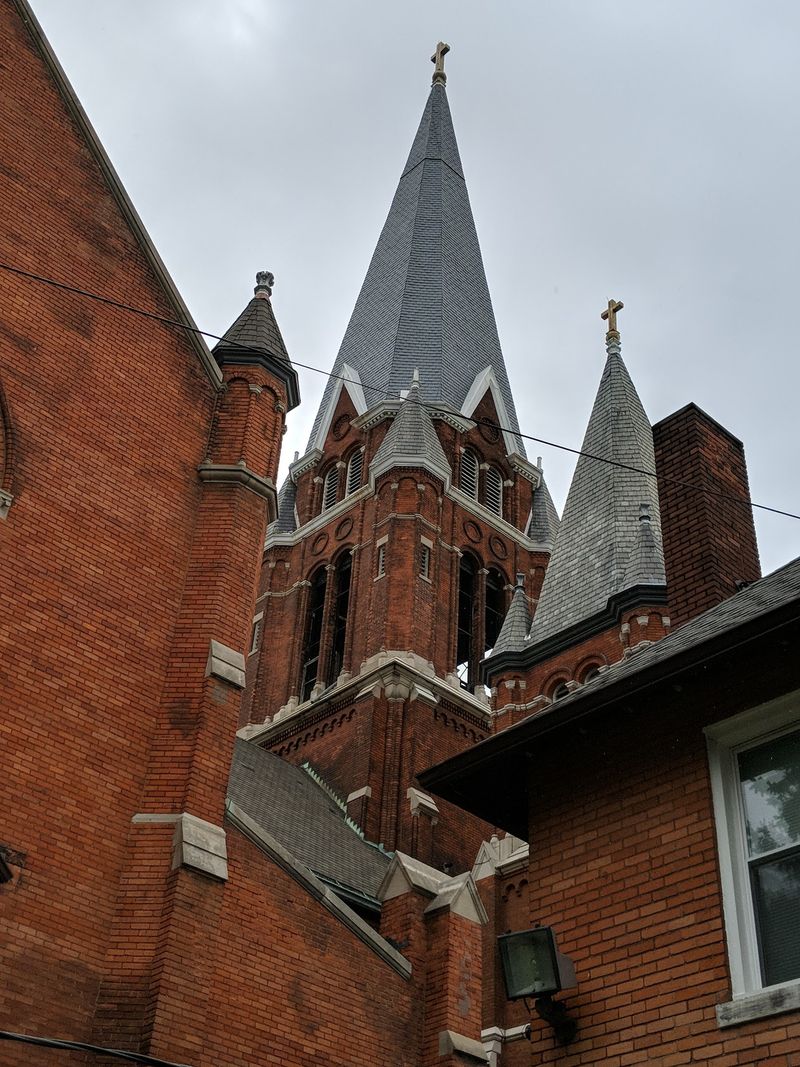
Old steeples take a beating from Michigan weather. Wind, ice, and endless freeze-thaw cycles can wear down even the sturdiest brick and metal.
St. Josaphat Catholic Church has faced that challenge firsthand. Its massive steeple was reconstructed, and the work drew attention from people who love the building.
One longtime visitor called the rebuilt steeple wonderfully reconstructed. That’s high praise for a project that had to match a century-old design.
Restoration work like this is slow, careful, and rarely cheap. Crews have to respect the original look while making the structure safe for decades ahead.
The result keeps the skyline familiar for anyone driving past. Lose that steeple, and the I-75 view would feel strangely empty.
I like that the community chose repair over removal. Plenty of aging city churches haven’t been so lucky across the Midwest.
Next time you spot the spire, give it a little nod of respect. It’s standing tall again because people decided it was worth the effort.
Not bad for a tower that has watched over the neighborhood since before cars ruled the road.
Windows That Turn Daylight Into Something Else Entirely
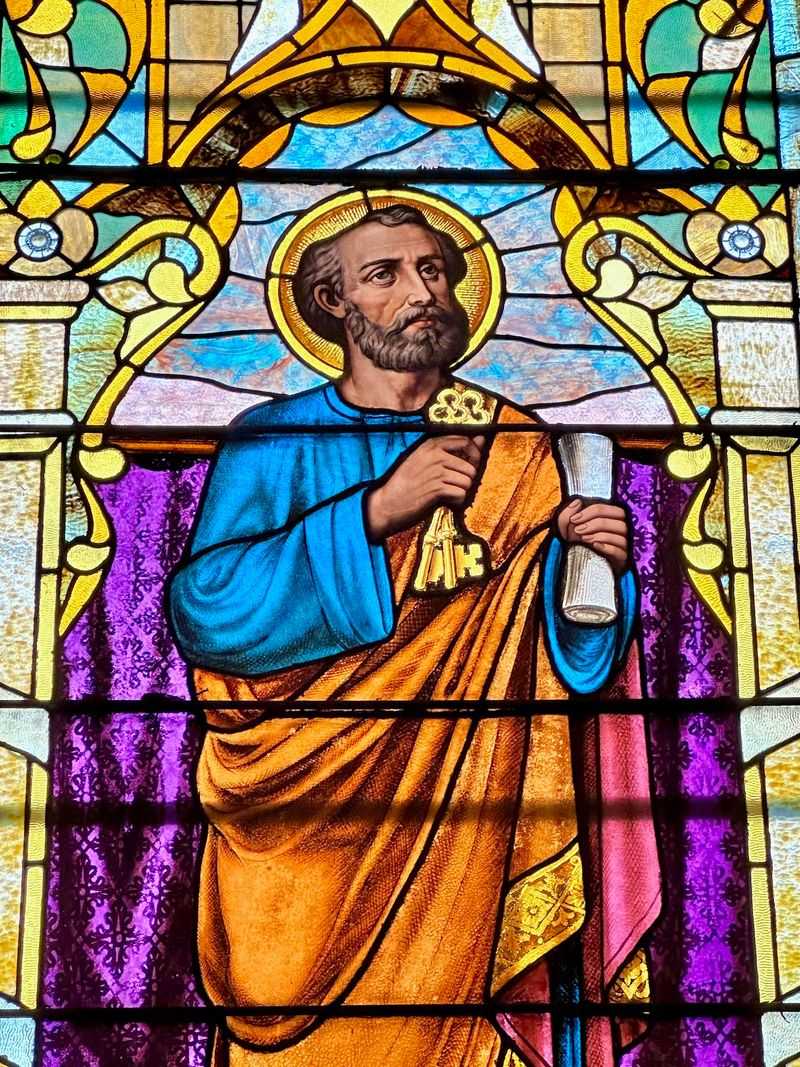
Sunlight doesn’t just enter this church. It gets translated into color the moment it passes through the stained glass.
The windows at St. Josaphat Catholic Church help explain why the interior feels so much brighter than the brick exterior suggests. One visitor described the space as wonderful, colorful, and spiritual all at once.
Stained glass in churches like this served a purpose beyond decoration. For generations, these windows helped tell sacred stories through images instead of words.
That made sense for an immigrant parish full of families learning a new language. Pictures carried meaning that needed no translation at all.
Time your visit for a sunny day if you can manage it. The windows simply look their best when daylight is doing the heavy lifting.
Cloudy afternoons still offer plenty to admire, of course. The glass just glows more softly, which has its own quiet charm.
I believe the windows are the biggest surprise for first-timers. The plain street gives few hints, and then the color shows up all around you.
Bring patience, because you’ll want to study each one.
Painted Ceilings That Steal Attention From The Bride
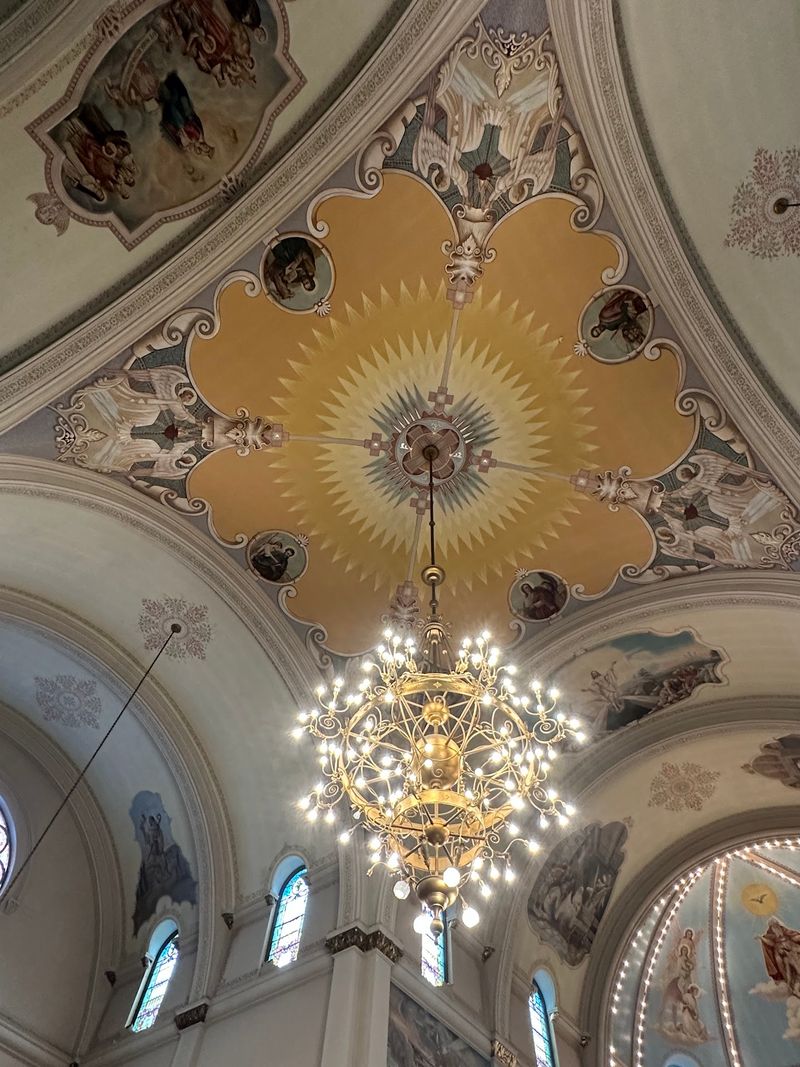
Weddings usually keep every eye on the couple. At St. Josaphat, the ceiling puts up some serious competition.
One guest admitted she kept staring at the paintings on the ceiling and walls during her niece’s wedding. Honestly, that sounds like an easy mistake to make here.
The interior is covered in decorative painting that wraps the space in color and detail. Look up, and there’s always another pattern or image waiting.
That same guest added a hope that nobody ever tries to update it. I’m with her on that one.
Plenty of historic churches lost their painted interiors during modernizing trends. Walls got whitewashed, and decades of artistry disappeared under a few coats of paint.
St. Josaphat Catholic Church kept its character, which makes it feel like a time capsule. The craftsmanship reflects what Polish families valued around the turn of the last century.
Bring a little neck stretch with you, because craning upward becomes a habit. Photos help, though they rarely capture the full sweep of the ceiling.
Sometimes you just have to stand there and let your eyes wander.
Two Grand Churches Sharing One Remarkable Block
Most cities would be thrilled with one historic Polish church. This stretch of East Canfield Street gives you two within easy walking distance.
Sweetest Heart of Mary stands across the street, with its soaring Gothic Revival spires. It’s known as Detroit’s largest Catholic church, so it naturally draws a lot of attention.
One fan of St. Josaphat even admitted the neighbor might be more beautiful. That’s refreshingly honest, and it’s also a great reason to visit both.
Comparing them is half the fun. St. Josaphat leans toward rounded Romanesque style, while Sweetest Heart of Mary goes all-in on pointed Gothic drama.
Sweetest Heart of Mary is famous for enormous stained glass windows, including one that won a top prize at the 1893 Chicago world’s fair. Pairing the two makes for a full afternoon of glass and stone.
Both churches now belong to Mother of Divine Mercy Parish. The old rivals have become something closer to siblings.
I love how the block feels like an outdoor gallery of Polish heritage. Few places in Michigan pack this much history into such a short walk.
Medical Center Neighbors And A Midtown Backdrop
Hospitals and historic spires make unusual next-door neighbors. Around St. Josaphat, that pairing is just part of daily life.
The church sits near Detroit’s Medical Center, close to the edge of Midtown. One former resident grew up right behind the church and called it a wonderful backdrop for an incredible neighborhood.
That same person spent forty years as a nurse. It’s a sweet image, a lifetime of caregiving framed by those familiar towers.
The surrounding area mixes medical buildings, homes, and busy city streets. Somehow the church still feels calm amid all that motion.
Its location also makes it easy to fold into a Midtown outing. Museums, campus life, and restaurants sit within a short drive.
The freeway access is handy too, since the church stands close to I-75. That makes it a simple stop for anyone heading into the city from the suburbs.
I like that it isn’t tucked away in a far-off corner. It’s right there among people going about their day, steady as ever.
Sometimes the best landmarks are the ones hiding in plain sight.
Latin Chant Echoing Under Century-Old Arches
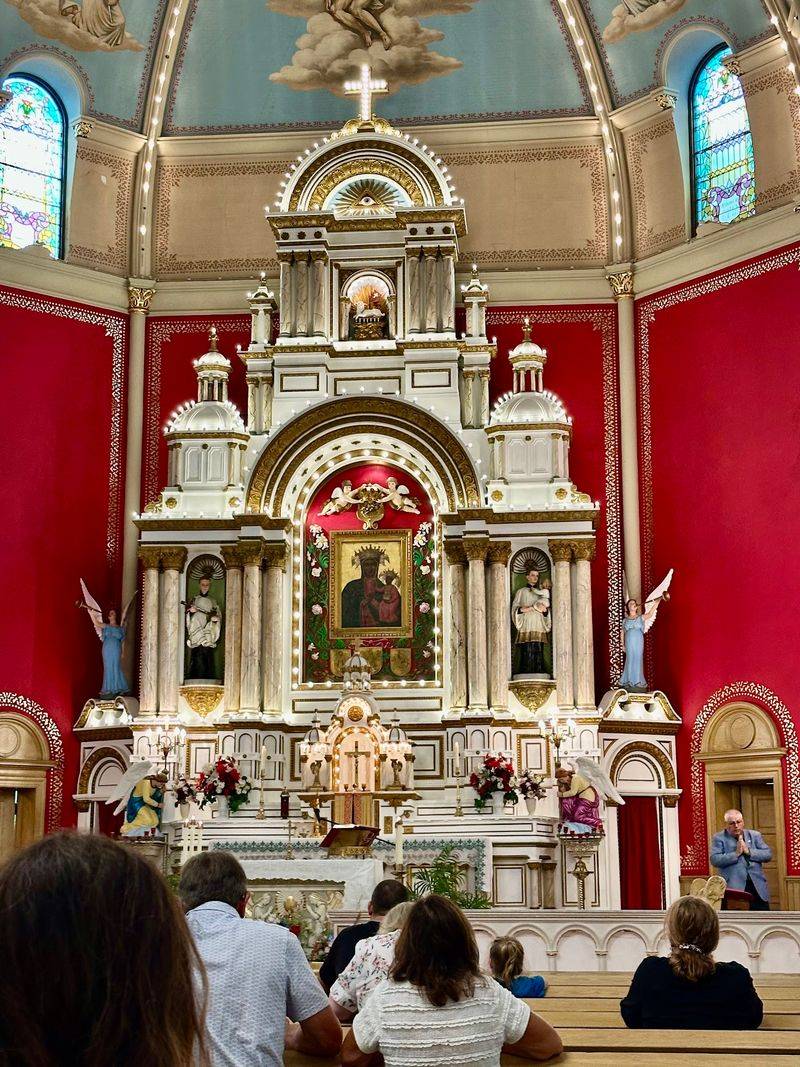
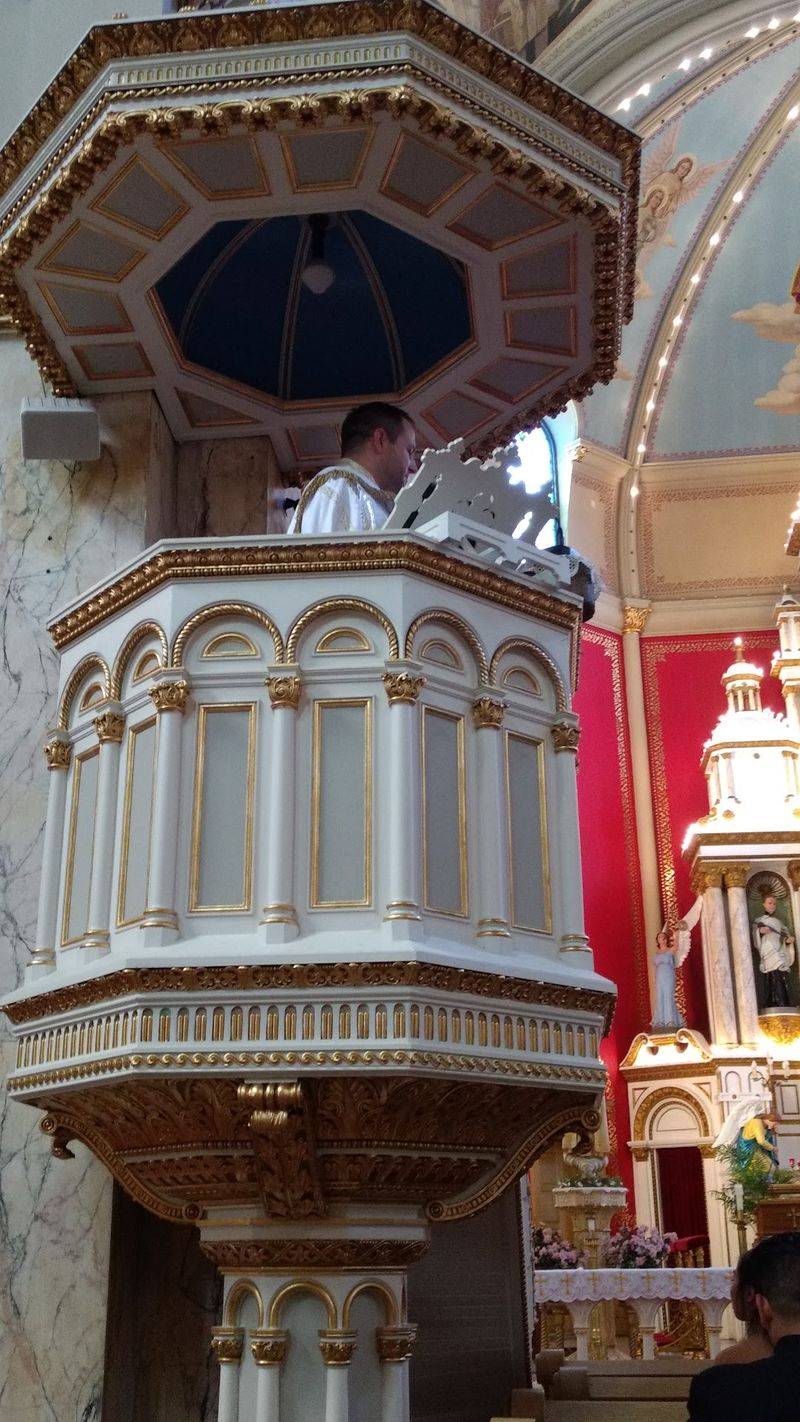
Ancient words fit an old building remarkably well. At St. Josaphat Catholic Church, the Traditional Latin Mass has become a big part of the story.
One recent online note celebrated that the church brought back the Latin Mass. That return clearly matters to many worshippers who seek out this style of liturgy.
The setting suits it beautifully. Ornate altars, painted walls, and colorful glass all match the reverent tone of the older form.
For curious non-Catholics, attending can feel like stepping back in time. Much of the Mass is in Latin, so a missal or worship aid helps you follow along.
Schedules can shift, so don’t trust an old post for timing. Contact Mother of Divine Mercy Parish before you plan around a specific Mass.
Dress respectfully and arrive a little early. Quiet observation is always welcome, even if you’re simply there to appreciate the space.
I believe this is the best way to experience the building as intended. The church was designed for worship, and it truly comes alive during it.
Music and incense complete what the architecture started.
Four Generations Of Weddings Under One Roof
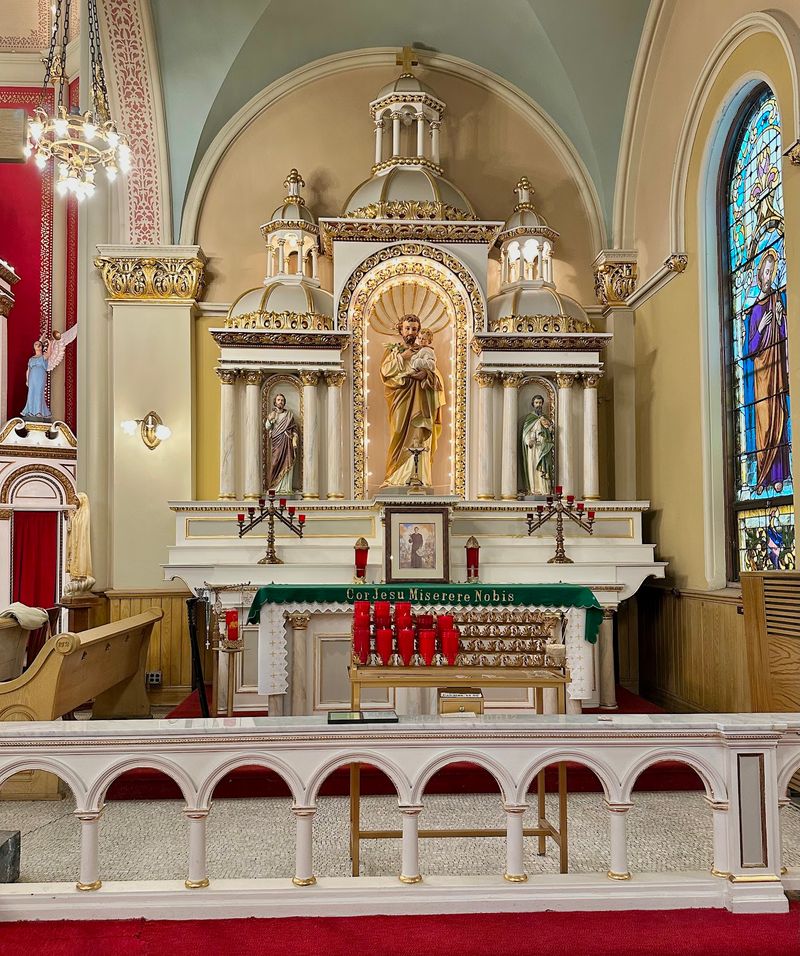
Baptized here, married here, and the fourth generation of the family to say vows at the same altar. That’s the kind of loyalty St. Josaphat inspires.
One longtime parishioner shared exactly that story online. She still calls it the most beautiful church, while admitting family history might shape her opinion a bit.
Another former attendee recalled Masses with her mother, brothers, and their families. They came to remember her grandmother, Sophie, keeping the family tradition alive.
Years later, she drove past with her daughter and granddaughter. She saw the church still standing and open, and felt grateful.
Stories like these explain why the place earns such warmth. It’s woven into family albums across Michigan and beyond.
Weddings here clearly leave an impression on guests too. Between the paintings and the glass, the photographs practically take care of themselves.
I can’t imagine a more meaningful setting for a family milestone. Standing where great-grandparents once stood gives a ceremony extra weight.
Even newcomers can feel that sense of continuity in the pews. It makes the building feel less like a monument and more like a family heirloom.
Quiet Prayer In A Place Full Of Old Devotion
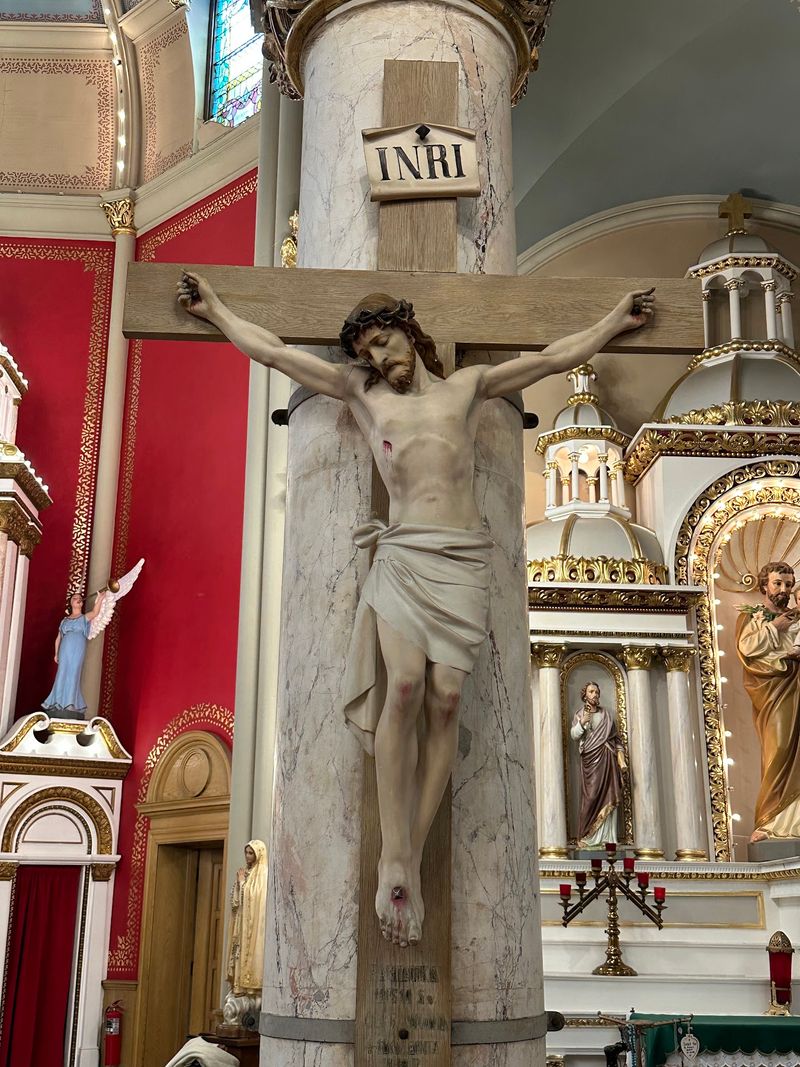
Some churches feel like galleries first and sanctuaries second. St. Josaphat manages the opposite, even with all that artwork overhead.
One heartfelt note described feeling the love and strong faith left behind by Polish parishioners. The same writer added that you don’t need to be Polish to enter God’s house.
That welcome matters. The church carries deep Polish roots, yet anyone looking for a peaceful moment can find one here.
The building has also served neighbors in practical ways. In past years, the parish hosted food distribution for people in need on set Wednesdays.
Programs change, so check with the parish about current outreach. Still, that history shows the church has long cared about more than beautiful walls.
Visitors use words like peaceful, holy, and historic again and again. Those three ideas sum up the mood better than any brochure could.
I believe a quiet visit might be the most memorable one. Sit for a few minutes, let the colored light settle, and the noise of the city fades fast.
Your phone can wait, honestly.
Smart Planning Before You Point The Car Toward Canfield
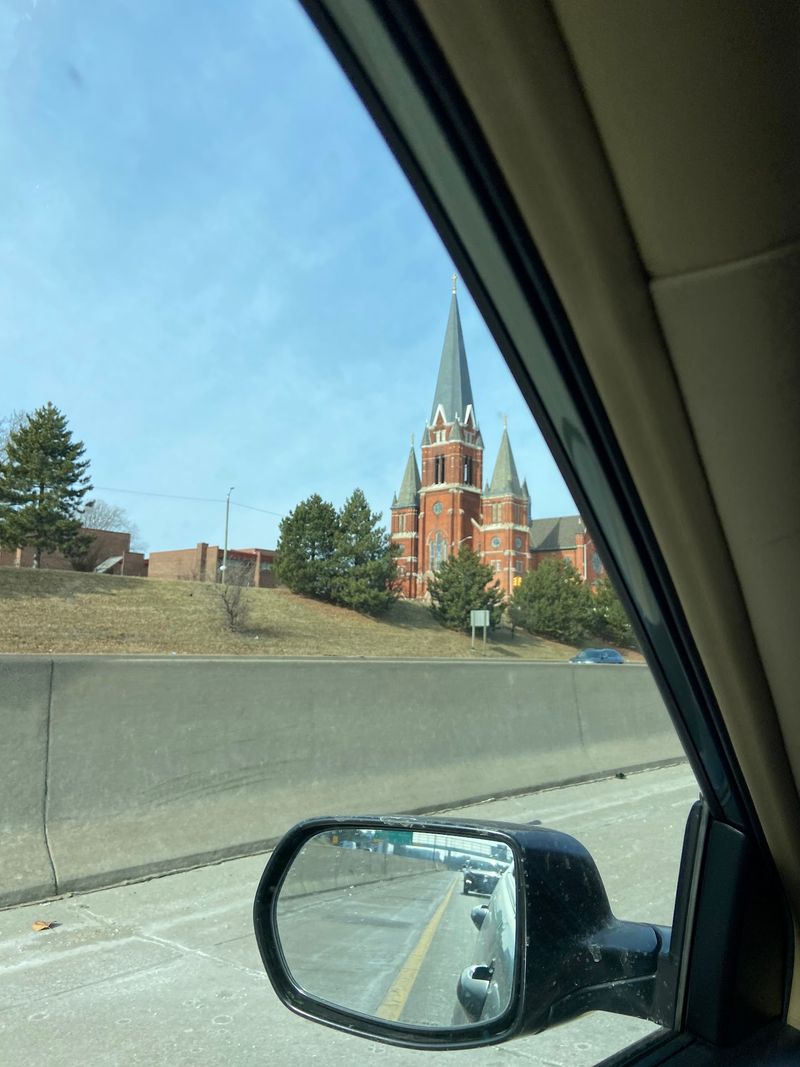
Good news first: finding the church is easy. St. Josaphat Catholic Church stands at 715 E Canfield St, Detroit, MI 48201, close to I-75.
Now the practical part. The church doesn’t keep museum-style hours, so timing your visit takes a little homework.
One recent note mentioned Masses running on a Summer and Fall schedule rather than year-round. Another celebrated seeing the church open again after a quieter stretch.
Your best move is contacting Mother of Divine Mercy Parish before you go. Staff can confirm Mass times and whether the doors will be open.
Attending a Mass is usually the surest way to see the interior. Arrive early, sit toward the back, and take in the details before the service begins.
Photography during worship should be skipped out of respect. Ask the parish if you hope to take pictures at another time.
Pair your trip with Sweetest Heart of Mary across the street for a fuller Polish heritage outing. Check its separate visiting hours too.
A little planning turns a quick stop into a memorable Michigan afternoon.
Why This Polish Treasure Belongs On Your Michigan List
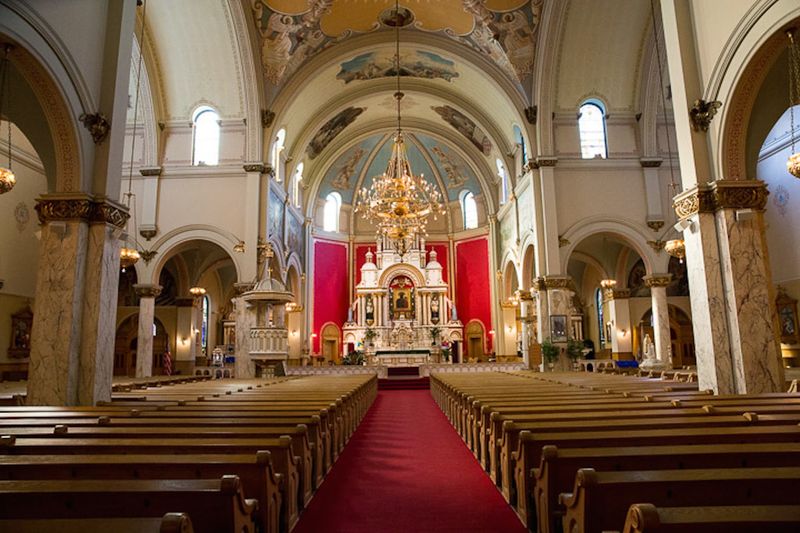
Big tourist attractions get the billboards. St. Josaphat gets the steady affection of families who never stopped coming back.
That says plenty about what’s waiting inside. Colorful glass, painted ceilings, and more than a century of Polish heritage fill one remarkable building.
It’s also a living parish, not a frozen exhibit. Latin chant, weddings, baptisms, and quiet prayer keep the space busy with purpose.
Add the Canfield Street backstory and the RenCen steeple trick, and you’ve got a church with personality. Few buildings in Detroit pack this much story into one block.
History lovers will enjoy the rivalry-to-reunion tale. Architecture fans will want extra time with the ceiling and windows.
Families tracing Polish roots may feel the strongest pull of all. This is the kind of place grandparents talked about for decades.
I believe St. Josaphat Catholic Church rewards anyone willing to plan a little. Check the schedule, bring some curiosity, and leave room in your day for Sweetest Heart of Mary too.
And next time that steeple lines up with the RenCen, you’ll know exactly what’s glowing beneath it.