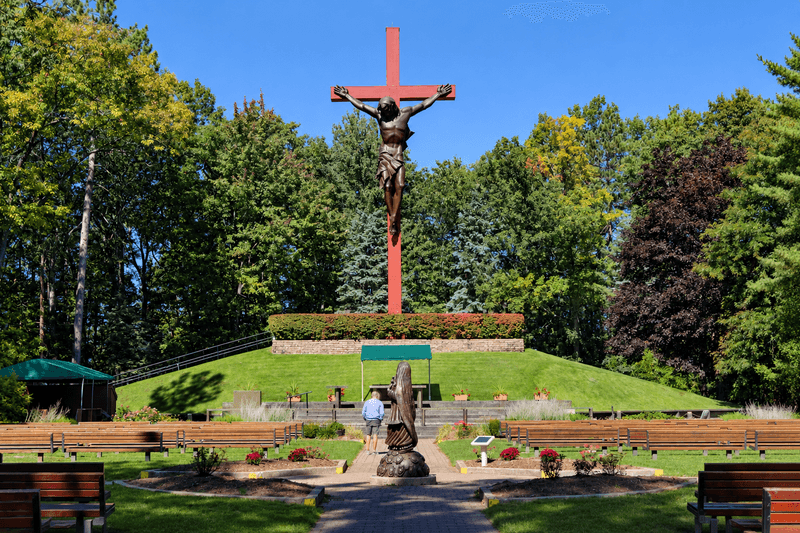
A 55-foot cross carved from a single redwood tree stands in the northern woods. A seven-ton bronze figure of Christ hangs on it, and the figure alone is 28 feet tall.
The sculptor spent four years on it. Then it was cast in Norway and shipped across the Atlantic.
I can’t imagine the paperwork on that delivery.
The whole story here keeps getting stranger in the best way. The land was secured for one dollar and a box of candy.
A building nearby holds hundreds of dolls dressed as nuns and priests. Somehow, it all fits together into one quiet, reverent stop in Michigan.
I like how this place welcomes everyone, Catholic or not. Admission is free, and the grounds stay open all year.
So why do so many Michiganders still drive right past it?
A National Shrine Waiting Just Off M-68
Few roadside stops in northern Michigan carry an official title this weighty. The Cross in the Woods Catholic Shrine of Indian River was declared a National Shrine by the United States Conference of Catholic Bishops on September 15, 2006.
That makes it one of only two national shrines in the state. It’s also an active parish, staffed by the Franciscan Friars of the Sacred Heart.
The heart of the property is the crucifix, of course. It sits down a small hill, behind the church and the gift shop, framed by trees on every side.
Around it, you’ll find a paved Way of the Cross trail, several saint shrines, rows of outdoor seating, and a raised platform for outdoor Masses. Inside, there are chapels, a modern church, and a museum you won’t see coming.
Estimates put annual visitors somewhere between 275,000 and 325,000. That’s a lot of people for a spot so many travelers still miss on the way north.
The best part might be the price of entry. There’s no admission fee to tour the grounds, though donations are welcome.
Candle lighting is also available for a small offering if you’d like to leave a prayer behind.
One Dollar, a Box of Candy, and a Big Idea
Real estate deals don’t get much sweeter than this one. In May 1948, the Michigan State Parks Commission granted land for the shrine for one dollar and a box of candy for the secretary.
The search had started two years earlier. Bishop Francis Haas of the Diocese of Grand Rapids began looking for land in April 1946 to start a new Catholic parish in Indian River.
On paper, the plan looked a little shaky. Only about a dozen Catholic families lived in the area year-round.
Summer changed the math, though. Waves of vacationers poured into the lake country each season, and they needed a place to attend Mass.
The site first went by the name Indian River Catholic Shrine. It became Cross in the Woods in 1983, a name that honestly does a better job describing what you’ll find.
I love that this whole landmark grew out of a practical need. A small community wanted a church, a bishop kept searching, and someone at the state office got a treat.
Decades later, that humble deal anchors one of the most visited faith sites in Michigan.
Fifty-Five Feet of Redwood That Stops You Cold
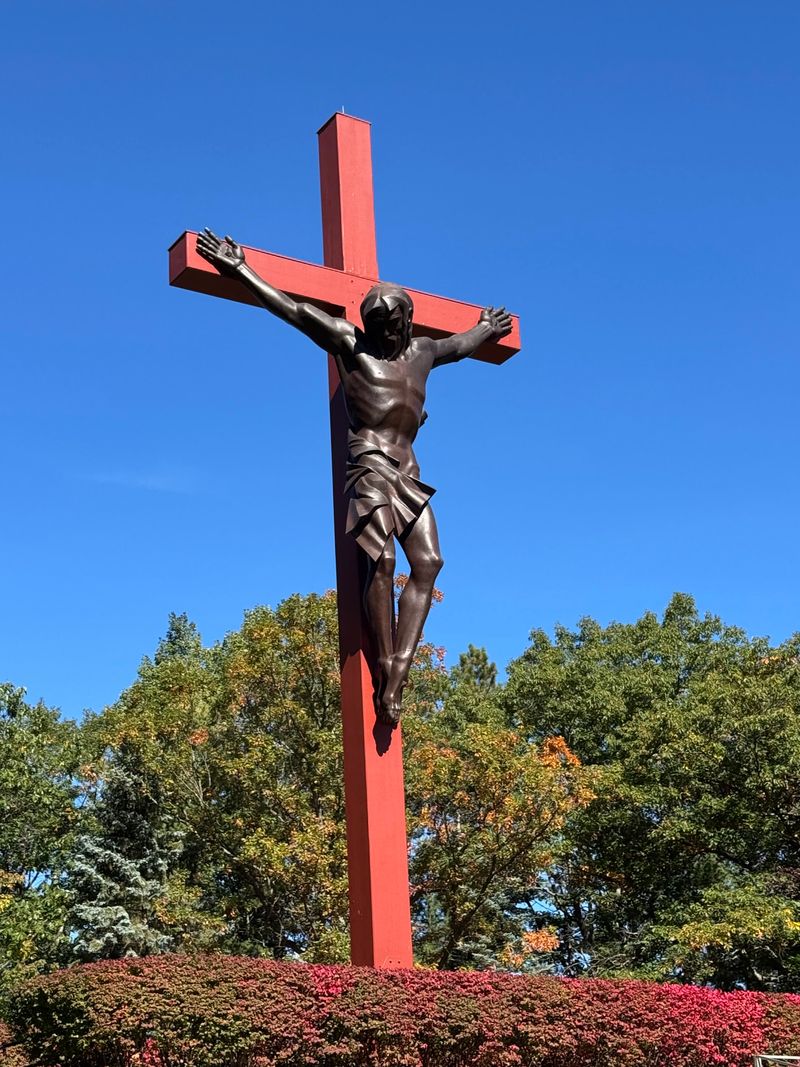
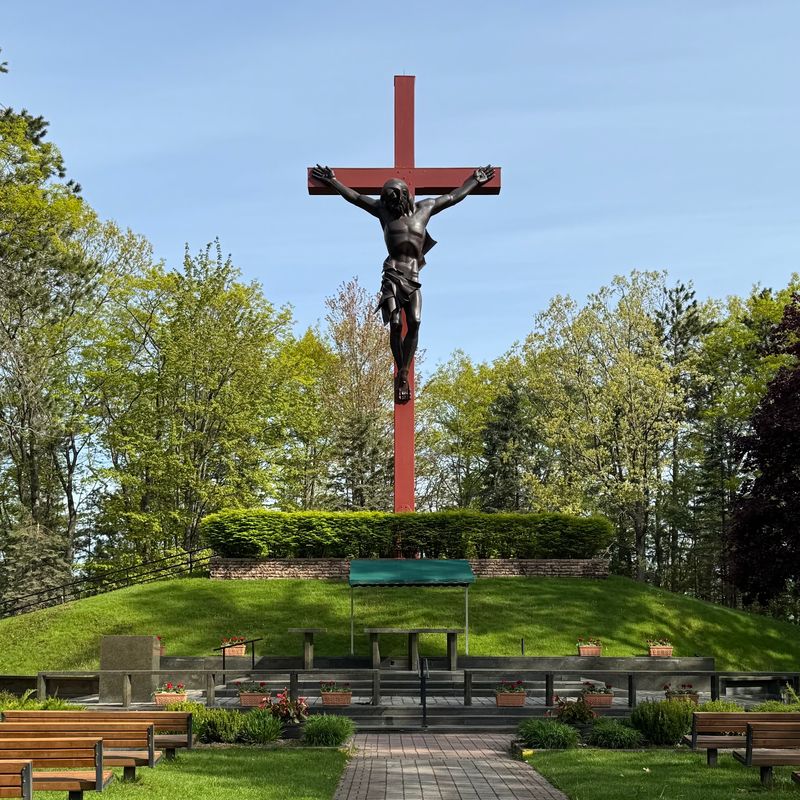
Photos simply don’t capture the size of this thing. The cross rises 55 feet and stretches 22 feet wide, and it was hewn from a single redwood tree.
Then comes the figure. Marshall Fredericks sculpted the bronze Christ, which measures 28 feet tall and weighs seven tons.
Getting that much bronze onto wood took serious hardware. When the figure was attached in 1959, crews used 13 bolts, each 30 inches long and two inches in diameter.
For many years, it was considered the largest crucifix in the world. Even without the record, standing at the base makes your neck work harder than usual.
The ground beneath it holds a secret too. The hill isn’t entirely natural, since it’s a man-made structure of steel and concrete covered with soil.
That engineering keeps the whole display steady among the trees. It also explains how a sculpture this heavy can look so calm in such a quiet setting.
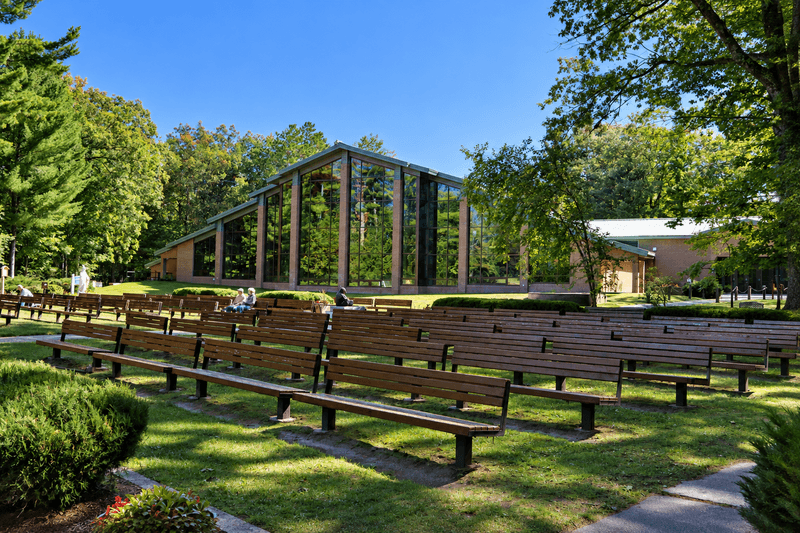
Take your time here. Rows of outdoor benches face the cross, so there’s plenty of room to sit, look up, and let the scale sink in.
The Sculptor Behind Seven Tons of Bronze
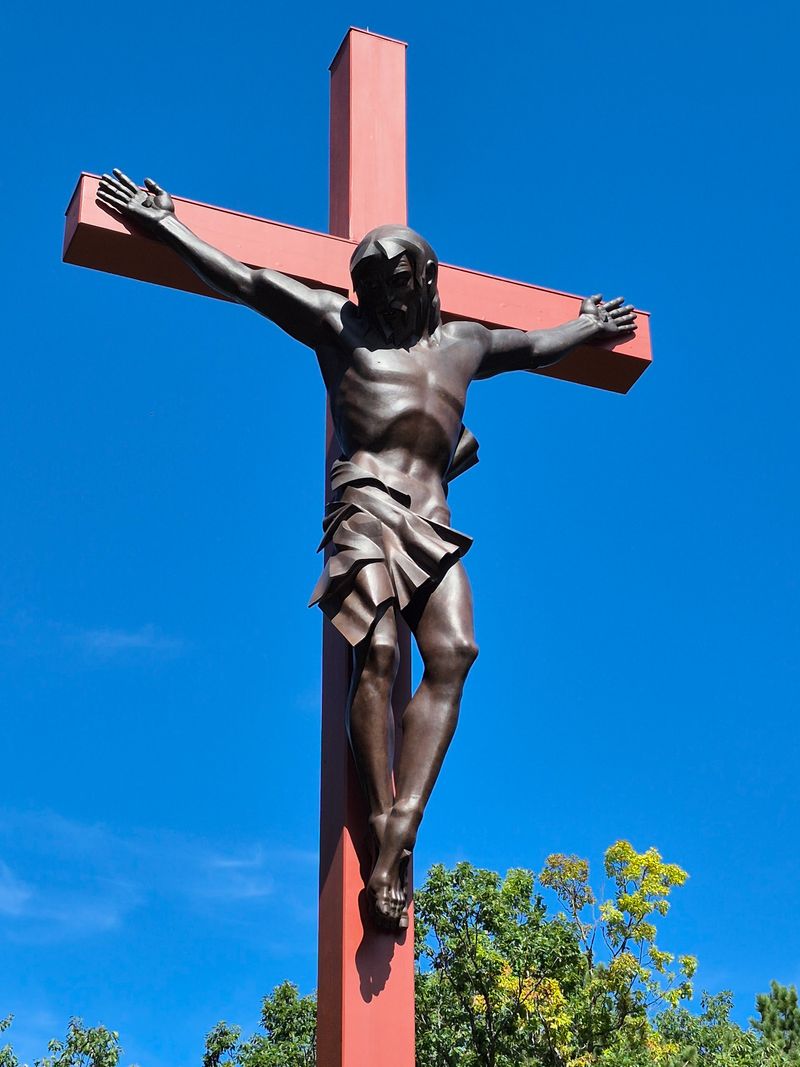
Michigan art lovers already know the name Marshall Fredericks. His bronze Christ at this shrine might be one of his most ambitious projects anywhere.
From first sketch to plaster mold, the work took four years. That’s four years for a single figure, which tells you how much care went into the details.
Casting happened far from Indian River. The piece was cast in Oslo, Norway, then shipped across the Atlantic Ocean.
At seven tons, it ranked among the largest castings ever sent across that ocean. Somewhere, a shipping clerk surely double-checked those numbers.
Once it arrived, the figure needed a worthy home. The redwood cross and the reinforced hill gave it one, and the finished crucifix went up in 1959.
Knowing the backstory changes how you see it. You’re not just looking at a big statue, you’re looking at years of craftsmanship from one of Michigan’s best-known sculptors.
I believe that’s what makes this stop feel so special for art fans and the faithful alike. Devotion and artistry meet in one spot, and neither one overshadows the other.
Twenty-Eight Holy Stairs and a Trail of Saints
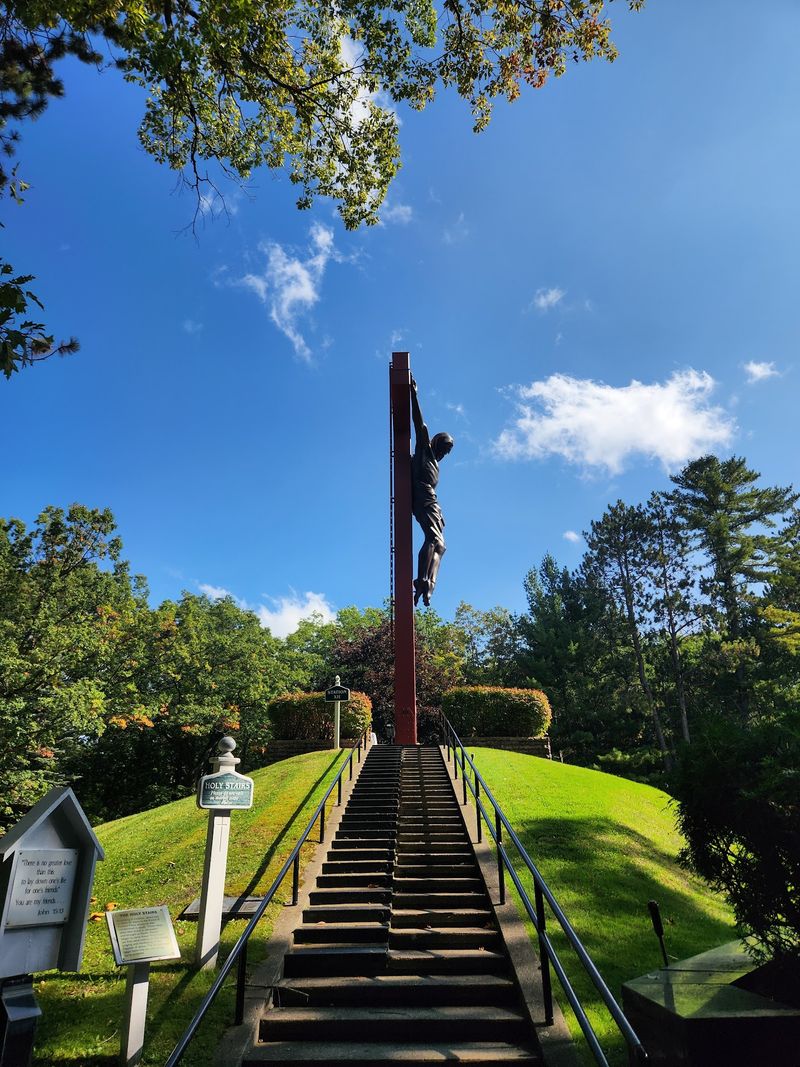
Prayer here can be a walk as much as a pause. In 1956, the shrine added 28 Holy Stairs leading up toward the base of the main cross.
The steps invite a slow, reflective climb. Each one gives you a moment to settle your thoughts before reaching the crucifix.
Around the cross, a paved Way of the Cross trail winds through the woods. Many first-timers start the stations on the right, which leads you naturally toward the cross.
Along the paths, you’ll also find outdoor shrines honoring different saints. These include St. Kateri Tekakwitha, Our Lady of the Highway, and St. Francis.
Indoor chapels add even more quiet corners. Divine Mercy and St. Peregrine are among the spaces where you can stop and pray out of the weather.
Nature joins the experience too. Squirrels, chipmunks, and a variety of birds share the garden walk, which feels fitting near a shrine to St. Francis.
Good news for anyone using a wheelchair or stroller. The trail to the cross is paved and handicap accessible, so the whole family can make the walk together.
Hundreds of Tiny Nuns Waiting Downstairs
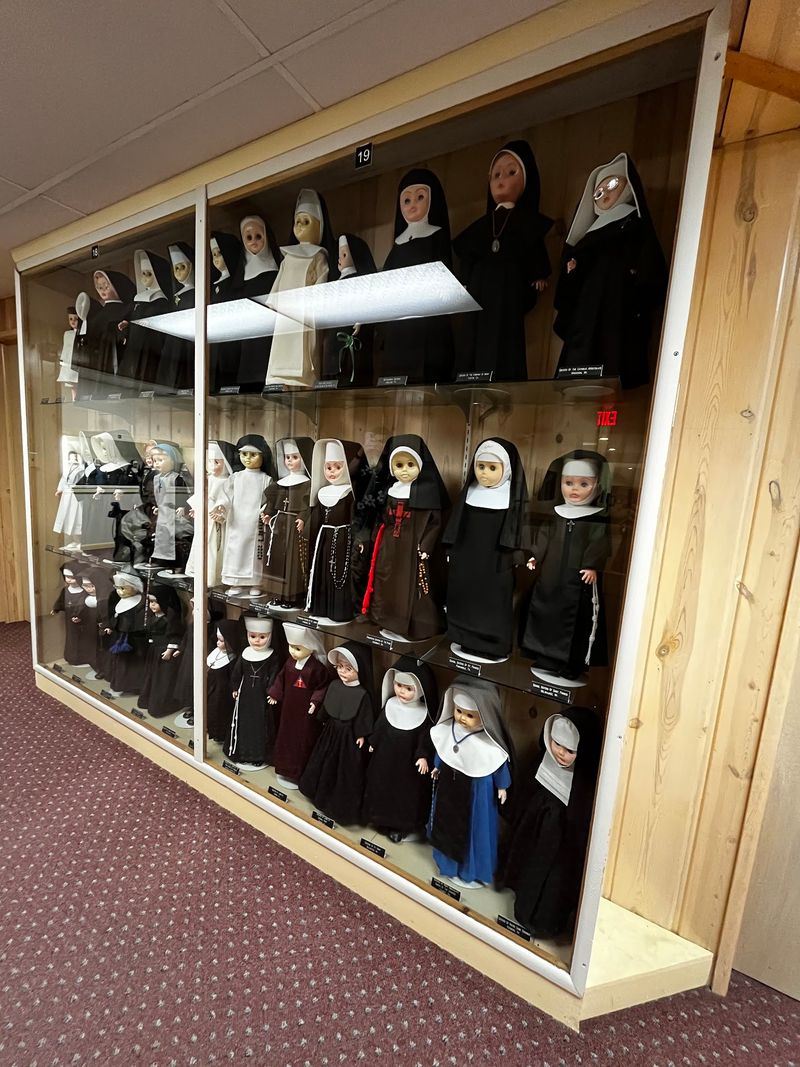
Nobody expects a doll museum at a national shrine. Yet the Nun Doll Museum might be the detail you’ll tell friends about first.
It all began in 1964 with a donation of 230 dolls. Today, the collection holds more than 525 dolls dressed in the habits of religious orders.
Each figure wears clothing in the colors, styles, and symbols of a particular order. The orders come from Michigan, across the United States, and around the world.
Some displays use dolls, while others feature figurines or life-sized mannequins. Older visitors may even spot designs they remember from Catholic school days.
Keep your eyes open for a fun surprise. Somewhere among the priests, you can hunt for figures of John Wayne and Robin Williams.
The museum sits on the lower level, in a hall connecting the church to the gift shop. An elevator is available, though wheelchair users may need to enter through the main entrance to reach it.
Admission costs nothing, which makes it an easy add-on. It’s equal parts history lesson and charming curiosity, and kids tend to find it fascinating.
From a Woodland Chapel to a Church With a View
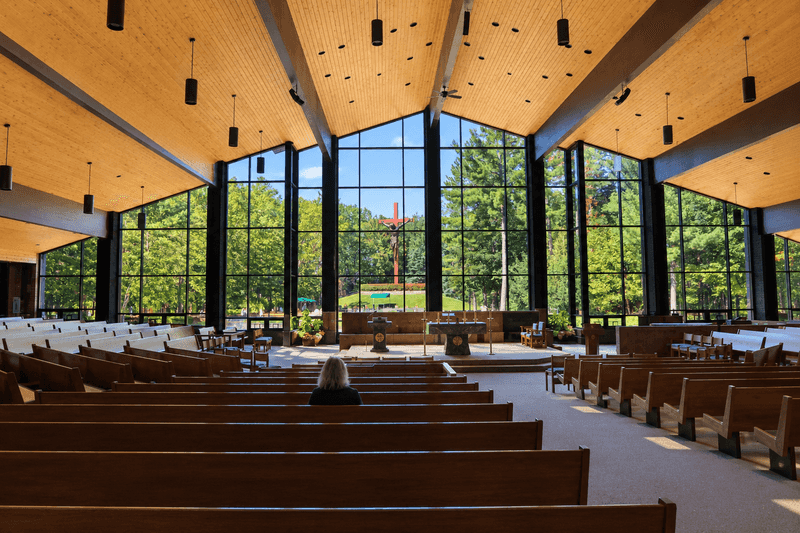
Architecture buffs, here’s your pause. The first church on site, the Long House Chapel, was designed by Alden Dow, a student of Frank Lloyd Wright.
It was ready by Memorial Day weekend in 1949. The design aimed to blend with the surrounding woods rather than compete with them.
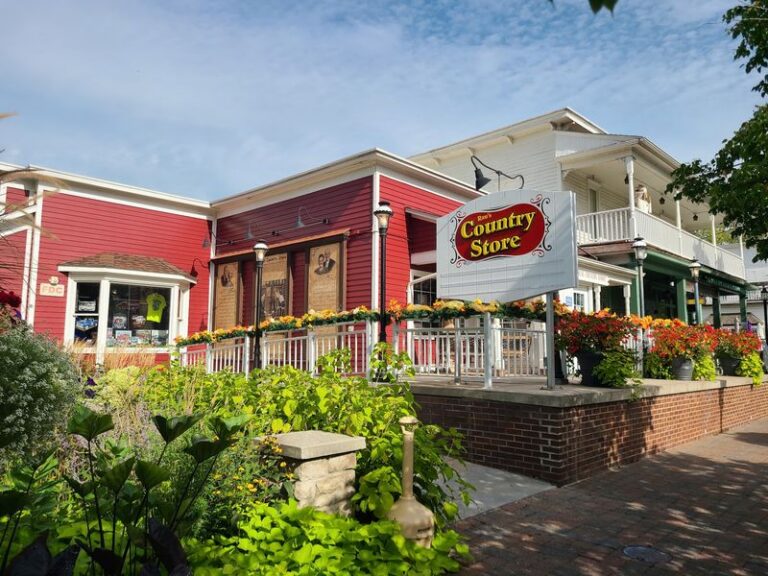
That original building still earns its keep. Today it houses the gift shop, the main office, and part of the doll museum space.
Growth eventually demanded more room. Once the parish passed 500 families, a larger church went up in 1997, built to hold over 1,000 people.
Its best feature might be the glass. Large windows keep the crucifix in view during services, linking the indoor church with the woods outside.
Photographers, take note of a neat trick. With a little patience, you can capture the cross reflected in the church windows, plus a shot of the cross from inside.
The church stays open for quiet reflection as well as Mass. On a cold or rainy Michigan afternoon, it offers a warm, dry way to see the crucifix.
Summer Mass Under a Giant Crucifix Hits Different
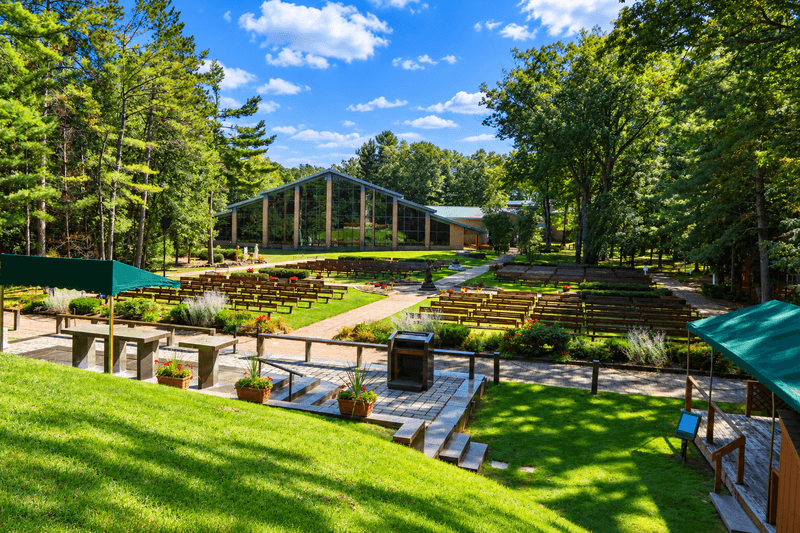
Sunday worship rarely comes with a backdrop like this. From Memorial Day through Labor Day, some Saturday and Sunday Masses may move outdoors, weather permitting.
Rows of outdoor seating can hold hundreds of people at a time. A raised platform faces the congregation, with the massive crucifix rising behind it.
The rest of the year, worship moves indoors. Daily Mass is typically offered Tuesday through Friday, with several weekend Masses too.
The 8:30 a.m. Sunday Mass is always held inside.
Reconciliation is available at scheduled times and by appointment, and Eucharistic Adoration is offered as well.
Not Catholic? You’ll still fit right in.
Visitors of many backgrounds stop here simply for the peace and the art.
Families, travelers heading to the Upper Peninsula, and quiet solo wanderers all seem to find something here. The grounds offer spots for near-private prayer or just sitting still.
Schedules can shift with the seasons, so check before you go. Planning around an outdoor Mass may be the single best way to experience this place in summer.
Your Easy Game Plan for a Northern Michigan Detour
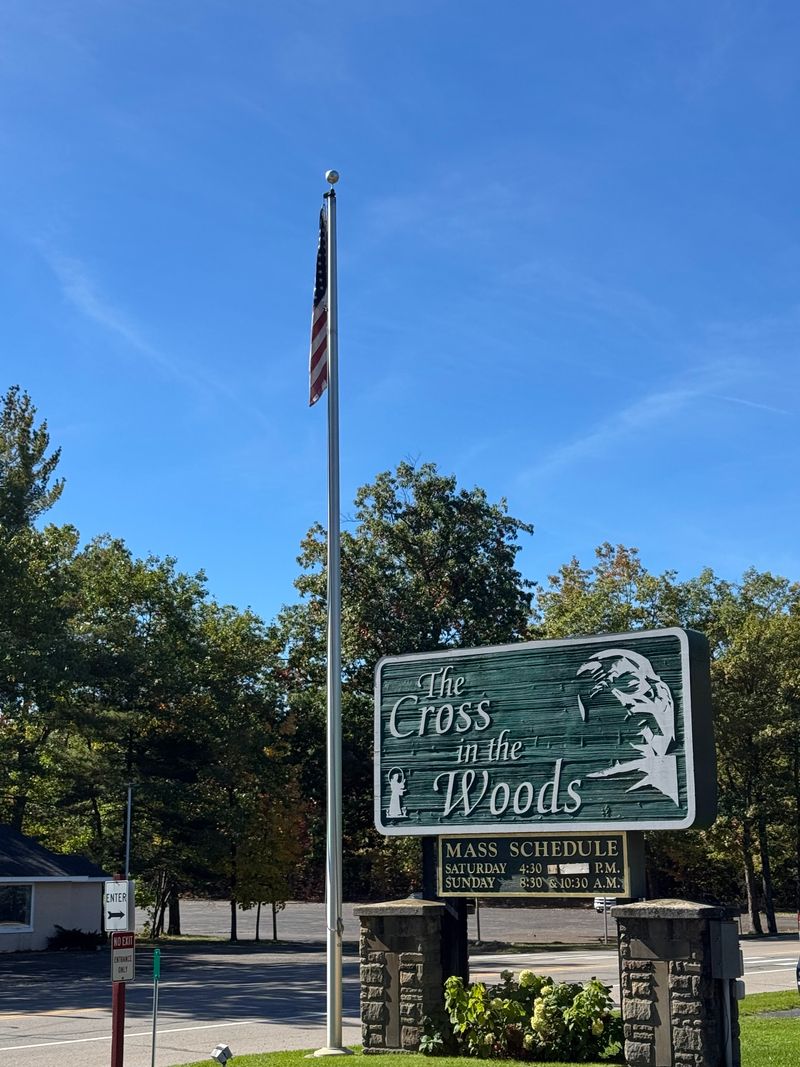
Getting here couldn’t be simpler. Set your map for 7078 M-68, Indian River, MI 49749, just a short hop from I-75.
That location makes it a natural stop on trips to Mackinaw City or the Upper Peninsula. Some folks drive an hour each way just to see it, and they rarely seem sorry.
The grounds are open year-round, and listed hours run from 7 a.m. to 7 p.m. daily. The shrine also describes access as dawn to dusk, so seasonal timing may vary.
The gift shop keeps its own limited hours, which change by season. Calling ahead can help if rosaries, statues, or Christmas ornaments are on your list.
Parking is free and plentiful, with an overflow lot across the street for tour buses. Restrooms are on site, and the paved paths are accessible.
One heads-up for pet owners. Dogs aren’t allowed on the main grounds by the cross.
So is it worth the drive? A free, peaceful stop with world-class sculpture, a quirky doll museum, and genuine Michigan history makes a strong case.
I’d call it an easy yes.