The trail starts by crossing a river and finishes where that same river slips into the Pacific. That’s the whole plot, and somehow it never gets old.
The walk is short, about a mile each way, and nearly flat. It runs through an open meadow named for an old dairy creamery.
Then the grass gives way to sand, driftwood, and crashing surf.
I like how little effort this place asks of you. No switchbacks, no gasping, no fancy gear.
You just follow the river and let the ocean pull you forward.
November adds a quiet twist on this stretch of the California coast. Summer crowds fade, the air cools, and the beach often feels wonderfully empty.
So why do so many road-trippers drive right past the turnoff without ever knowing it’s there?
A Big Sur Meadow Walk That Delivers You Straight To The Surf
Big Sur hides plenty of easy wins, and the Creamery Meadow Trail might be the friendliest one. It sits inside Andrew Molera State Park, just off Highway 1 on the Big Sur coast.
The idea is wonderfully simple. You park, cross the Big Sur River, and walk a mostly level path to Molera Beach.
Round trip, the hike lands around two miles. That makes it a sweet fit for kids, grandparents, and anyone whose legs prefer flat ground.
Most Big Sur views come with a catch. Usually you need a steep climb or a risky roadside pullout to earn them.
Here, the reward shows up with almost no sweat. The meadow opens wide, the hills rise on one side, and the river keeps you company.
Then the trail ends exactly where you hope it will. Sand underfoot, waves ahead, and the Big Sur River meeting the Pacific right beside you.
For a California coastal walk, that’s a pretty generous payoff. You get the drama of Big Sur without the drama of a hard hike.
Why A Beach Trail Carries A Dairy Name
Creameries and crashing waves don’t usually share a sentence. On this patch of Big Sur, though, they shared the same land.
The meadow takes its name from the area’s dairy past. Cattle ranching and dairy work shaped this stretch of coast long before hikers showed up.
The park itself honors Andrew Molera, whose family held the land for decades. His sister, Frances Molera, later helped steer it toward public use.
The property passed through The Nature Conservancy before becoming a state park. That handoff kept the meadow open instead of turning it into private coastline.
Long before any ranch, Native peoples lived along this coast. The Big Sur region is part of the homeland of the Esselen and other California tribes.
So the name is a small history lesson tucked into a trail sign. Every step across the grass follows a landscape that’s changed hands and purposes many times.
For anyone who loves old California stories, that’s a nice bonus. A beach walk that doubles as a ranch-era time capsule doesn’t come along every day.
First Up, A River Crossing
Most trails start with a sign. This one starts with a river, which feels a lot more fun.
From the main parking area, the path heads toward the Big Sur River. Hikers cross it before reaching the meadow on the far side.
The park has used a seasonal footbridge here. When it’s down, the crossing may mean wading through cool, shallow water.
Conditions shift with the seasons and with rain. Checking with California State Parks before you go is the smart move.
In late fall, water levels can vary depending on early storms. A dry stretch may leave the river calm, while a wet week could raise it.
Pack sandals or water shoes just in case. Your hiking boots will thank you for not dunking them in the first five minutes.
Kids often think the crossing is the best part. Honestly, it sets the mood perfectly for an easy little adventure.
Once you’re across, the hard part is basically over. Everything ahead is level ground and a growing sound of surf.
The Meadow Itself Steals More Attention Than Expected
Wide open space is rare on the Big Sur coast. Cliffs and canyons hog most of the real estate, so a flat meadow feels like a treat.
The Creamery Meadow Trail runs right through that open ground. The path is broad and easy to follow, with plenty of room to walk side by side.
Coastal hills rise inland, giving the meadow a big, sheltered feel. It’s the kind of scenery that makes you slow down without meaning to.
By November, the grasses have usually lost their spring green. Expect warmer tans and golds that pair nicely with gray-blue ocean light.
The flat terrain makes this a relaxed walk for most fitness levels. No one needs to stop and pretend they’re admiring the view just to catch their breath.
Trees line parts of the route near the river. Their shade and color add texture to an otherwise open landscape.
I believe meadows get underrated on coastal trips. People rush toward the water and forget the walk there can be half the joy.
Following The Big Sur River To Its Final Stop
Rivers make excellent trail guides. They never get lost, and they always head somewhere interesting.
For much of the route, the Big Sur River flows nearby. You can often hear it before you see it through the riverside trees.
That steady water gives the walk a calm soundtrack. Wind in the grass, birds in the branches, and the river doing its quiet thing.
The river ends its journey at Molera Beach. That’s the same place your hike ends, which feels oddly poetic for such an easy stroll.
Near the mouth, the river may form a lagoon depending on season and tides. Sometimes it pools behind the sand, and sometimes it pushes straight into the surf.
Watching a river meet the Pacific never gets boring. Fresh water and salt water collide right in front of you.
Birdwatchers may enjoy this transition zone most of all. River edges and shorelines often draw different species close together.
Bring binoculars if you have them. Even without, the meeting point is worth a long, lazy look.
Molera Beach, The Grand Finale
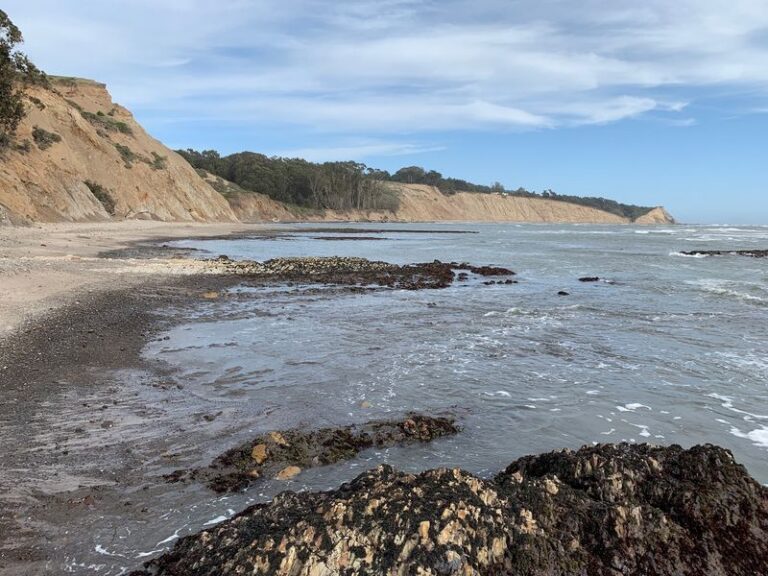
Sand appears, the meadow fades, and suddenly the whole Pacific is right there. That’s the moment this trail exists for.
Molera Beach stretches along a wild bit of Big Sur shoreline. Cliffs frame the scene, and the surf rolls in with real power.
Driftwood often collects along the beach. Visitors sometimes lean pieces together into rough shelters and sculptures.
The beach feels raw rather than polished. No boardwalk, no snack stand, just sand, water, and big coastal views.
Treat the ocean here with serious respect. Big Sur waves can be strong and unpredictable, so swimming isn’t a casual idea.
Keep an eye on the tide and on kids near the water. Sneaker waves are a real hazard on this coast.
That said, sitting on a log and watching the surf is pure joy. A snack and a jacket turn this spot into the best picnic table in Monterey County.
Getting here took maybe half an hour of easy walking. Good luck finding a better reward for so little effort.
November Turns Down The Volume
Summer in Big Sur can feel like everyone in California had the same idea. Highway 1 fills up, pullouts fill up, and patience thins out.
November tends to change that. Fall and early winter are generally quieter seasons along this coast.
Fewer cars usually means an easier time parking at Andrew Molera State Park. It also means more room on the trail and the beach.
Weekdays can be especially peaceful this time of year. Nothing guarantees solitude, but your odds improve a lot.
Cooler temperatures make the walk comfortable, too. You won’t be baking in an open meadow under a hot sun.
Weather can swing quickly, so layers matter. Morning fog, afternoon sun, and a sudden breeze can all share one visit.
Early storms may arrive in some years. A quick check of the forecast and road conditions saves headaches.
I can’t imagine a better month for a slow, unhurried beach walk. Having the sound of the surf mostly to yourself feels like a small luxury.
Wildlife Worth Keeping An Eye Out For
Binoculars might be the most useful thing in your daypack here. The river, meadow, and shoreline each support different kinds of life.
Seabirds often patrol the coastline. Pelicans and gulls are common sights along Big Sur beaches.
Out on the water, sea otters may appear in kelp beds along this coast. Spotting one floating on its back is always a highlight.
Late fall into winter marks the start of gray whale migration along California. Sightings from shore aren’t promised, but scanning the horizon costs nothing.
Big Sur is also known for California condor recovery efforts. These giant birds sometimes soar above the coastal ridges in the region.
The meadow and riverside may attract deer and smaller animals. Early mornings are often the best bet for quiet wildlife moments.
Give every creature plenty of space. Feeding or chasing wildlife is a hard no in any state park.
Half the fun is not knowing what will show up. A plain beach walk can turn memorable the second a fin breaks the surface.
An Easy Hike That Still Feels Like A Real Adventure
Flat trails sometimes get dismissed as boring. This one quietly proves that theory wrong.
The river crossing adds a little thrill at the start. The meadow brings open space, and the beach delivers the big finish.
That mix makes the Creamery Meadow Trail great for families. Kids get variety without facing a grueling climb.
Older hikers and casual walkers can enjoy it, too. The gentle grade keeps the focus on scenery instead of effort.
Photographers may love the changing backdrops. Golden grass, riverside trees, and crashing waves all fit into one short outing.
Runners sometimes use flat coastal paths like this for easy miles. Just stay mindful of other trail users on busier days.
The walk works as a warm-up for bigger Big Sur hikes. It also works perfectly as the whole plan for a relaxed day.
Not every great hike needs a summit. Sometimes the best ones just ask you to walk, look around, and enjoy the ending.
Longer Loops For Anyone Craving More Miles
Two miles might leave some hikers itching for more. Andrew Molera State Park has plenty of extra ground to cover.
Several trails connect near the meadow and beach. The Bluffs Trail heads along the coastline with big ocean views.
Other routes climb into the hills above the park. Those paths bring more elevation and much wider panoramas.
Combining trails can turn a short stroll into a longer loop. Grab a park map before setting out so you know your options.
The longer routes are noticeably tougher than the meadow walk. Steep sections and exposed stretches call for water and sturdy shoes.
Short November days also matter here. Sunset arrives early, so plan bigger hikes with plenty of daylight to spare.
For most visitors, the meadow-to-beach walk is plenty. It’s the bonus trails that bring people back for a second visit.
I like that the park works for every energy level. One family member can wander the beach while another chases a ridge.
Camping Close Enough To Hear The Surf
Some visitors don’t want the day to end at the beach. Andrew Molera State Park offers a way to stretch it out.
The park has a walk-in campground, often called Trail Camp. Campers carry their gear a short distance from the parking area.
The setup is simple and rustic. Think tents, trees, and a quiet night rather than hookups and big RVs.
Staying overnight puts you close to the Creamery Meadow Trail at dawn. Early light on the meadow may be worth the extra effort alone.
Campground details and reservation rules can change. Check with California State Parks for the latest before planning a trip.
November nights on the coast can get chilly and damp. A warm sleeping bag and rain gear are worth packing.
Camping here feels very old-school Big Sur. No fuss, just fresh air and the distant sound of waves.
For road-trippers, it can also break up a long Highway 1 drive. Waking up near the ocean beats another motel parking lot.
Finding The Turnoff On Highway 1
Blink on Highway 1 and you may sail right past the entrance. Big Sur turnoffs love to sneak up on drivers.
Andrew Molera State Park sits along Highway 1 in Big Sur, within the 93920 ZIP code. It’s roughly 20 miles south of Carmel.
The Creamery Meadow Trail begins near the park’s main parking area. From there, the river crossing and meadow are close by.
Cell service along this coast can be spotty. Downloading maps ahead of time is a very good idea.
Highway 1 conditions also change, especially during wet months. Slides and closures happen in Big Sur, so check Caltrans updates before leaving home.
The drive itself is part of the fun. Ocean cliffs and winding curves make the trip feel like a mini adventure.
Take it slow and use pullouts to let faster drivers pass. Nobody wins a race on Highway 1.
Arriving relaxed sets the tone for the whole walk. Rushing to a peaceful beach would kind of defeat the purpose.
Small Planning Details That Make A Big Difference
Good news first: this trail doesn’t need much gear. A little planning still goes a long way.
Andrew Molera State Park charges a day-use fee for parking. Rates can change, so check California State Parks for current details.
Restroom facilities are basic near the parking area. There’s no shop or café on the trail, so bring water and snacks.
Sandals or water shoes help with the river crossing. Dry socks waiting in the car feel like pure luxury afterward.
Layers are smart in November. Coastal fog and wind can make a sunny morning feel chilly by noon.
Check park rules on dogs before bringing a pet. State park trail policies vary, and Big Sur parks often limit where dogs can go.
Pack out everything you bring in. The beach stays beautiful because visitors leave it that way.
Finally, watch the clock as days get shorter. Plan to be back at the car before dark, with time to enjoy the drive.
A Quiet Big Sur Ending Worth The Drive
Plenty of California trails promise ocean views. Very few actually walk you right onto the sand with so little effort.
The Creamery Meadow Trail keeps things refreshingly simple. Cross a river, stroll a meadow, and land on a wild Big Sur beach.
Its ranch-era name adds a dash of old California history. Andrew Molera State Park turns that history into open space everyone can share.
November may be the sweet spot for a visit. Cooler air and thinner crowds often make the beach feel almost private.
It works for families, casual walkers, and longtime Big Sur fans. Bigger hikes wait nearby for anyone hungry for more.
Just check road conditions, crossing status, and daylight before heading out. Those small steps keep the day easy.
In a state that changes fast, an unhurried meadow walk to the sea feels grounding. It’s the kind of place true Californians quietly keep on their list.
Toss a jacket in the car and point it toward Highway 1. The ocean is only about a mile past the river.