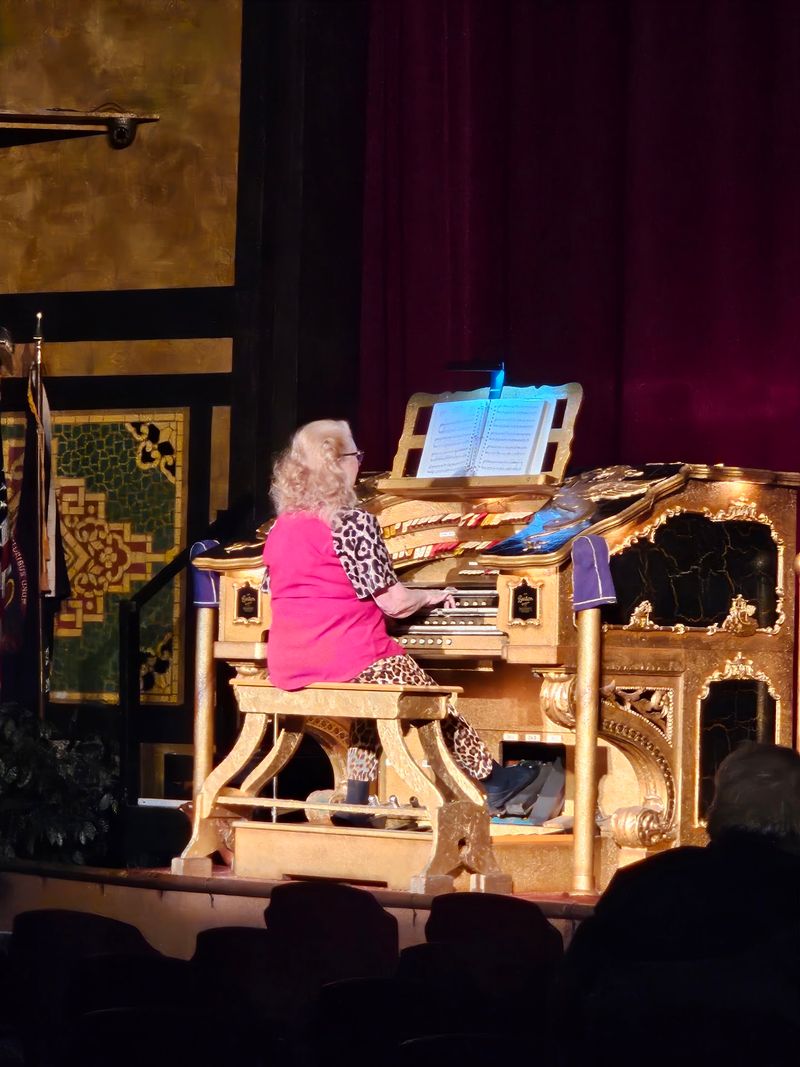
The organ console rises out of the floor before the movie starts. The organist is already playing as the lights come up on the console.
It’s a 1920s movie ritual, and it still happens every show night here.
The pipe organ is the real deal, too. It was built for this exact building in 1927.
After the overture, the film starts, often on actual 35mm reels instead of a digital file.
I like how the whole place feels like a dare to modern multiplexes. There’s an intermission, real butter on the popcorn, and an all-volunteer crew running every job.
Nobody here is trying to rush you out the door.
I can’t imagine a better Michigan night out for anyone who loves old movies. So how does a nearly century-old theater keep pulling this off?
A Neighborhood Palace On Detroit’s Northwest Side
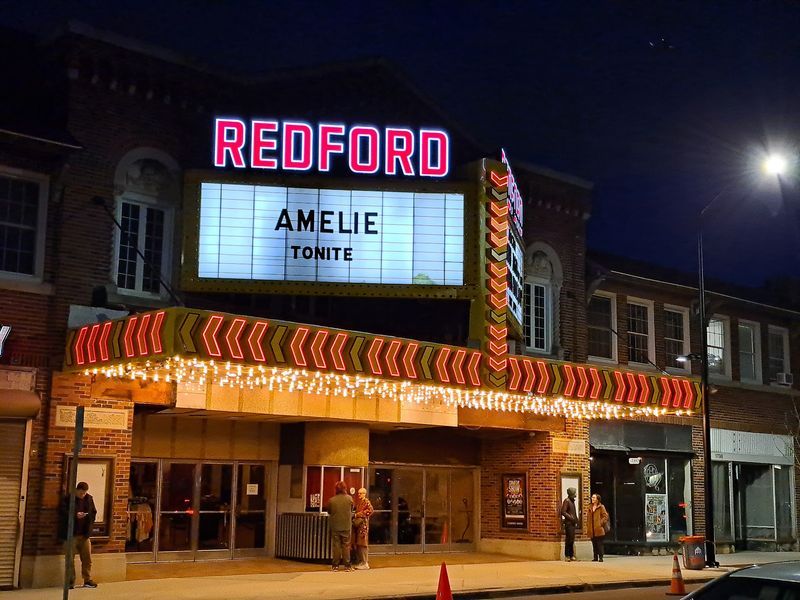
Some theaters show movies. The Redford Theatre in Detroit turns a movie into an event, and it has been doing so since January 27, 1928.
It sits on the city’s northwest side, in the old Redford neighborhood. When it opened, promoters billed it as America’s Most Unique Suburban Playhouse.
That’s a big claim, but the building still backs it up nearly a century later.
The Redford is a classic movie palace with a full stage and a working pipe organ. It hosts vintage films, stage plays, concerts and special events throughout the year.
The marquee alone looks like it belongs in an old newsreel.
What makes it feel special is the continuity. You aren’t visiting a museum about movie palaces.
You’re sitting in one that never stopped doing its original job.
For Michigan film fans, that’s a rare thing to have in driving distance. Plenty of grand old theaters across the country were split up, gutted or closed.
This one kept its organ, its stage and its dreamy interior.
And it’s easy to reach from much of metro Detroit. Not far from I-96, it makes a simple trip for a weekend show.
Your evening plans just got a lot more interesting.
How Volunteers Kept The Lights On
Here’s a twist most people miss. Every single job at the Redford is done by volunteers, from running projectors to ushering guests.
The Motor City Theatre Organ Society bought the theater in 1977. The nonprofit group has operated it ever since with its all-volunteer staff.
That’s nearly fifty years of people giving their evenings to keep a landmark alive.
The money from events goes right back into the building. Ticket sales and programs help pay for restoration and upkeep.
So every bag of popcorn quietly helps fix something.
That model explains a lot about the mood. The people working here clearly want to be here.
Volunteers who love film make a different kind of host than a typical box office.
The organ society connection makes sense too. A group devoted to theater organs saved a building with a theater organ inside.
Talk about a perfect match.
The pandemic hit the Redford hard, like many small venues. It came back and kept its schedule of movies and events rolling.
For a Michigan landmark run on passion rather than profit, that comeback says plenty about its community.
The Golden-Voiced Barton Steals Every Opening
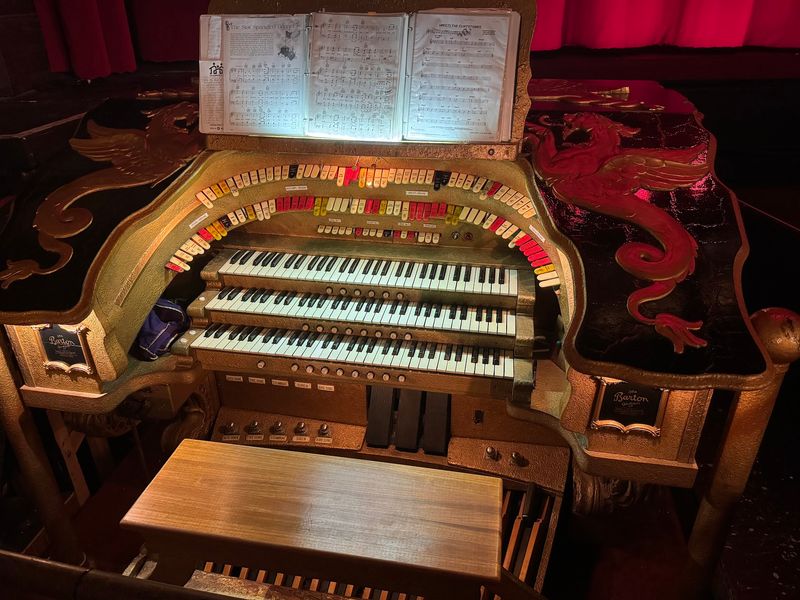
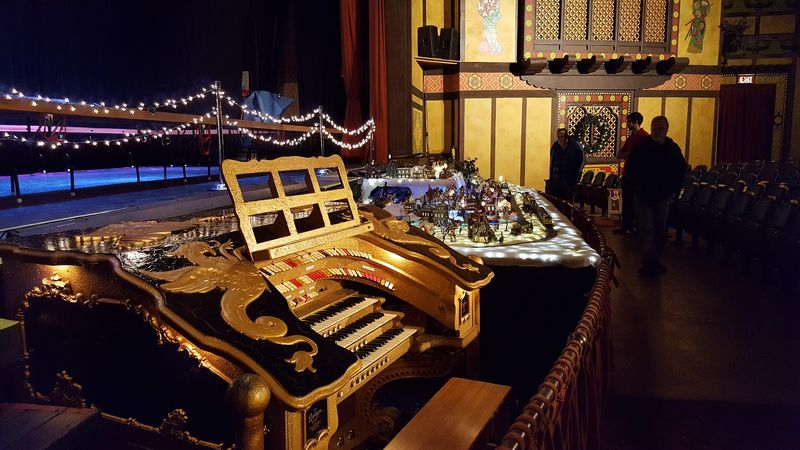
Good luck ignoring the Barton. The theater’s original pipe organ is a 3-manual, 10-rank instrument built for this building in 1927.
Fans call it the Golden-Voiced Barton. Before many classic films, an organist plays an overture as the console rises into view.
Then the music fills a room designed for exactly that sound.
The console looks wildly complicated, with rows of keys, stops and buttons. Watching someone work it feels a bit like watching a pilot run preflight checks.
It’s impressive before you even notice the music.
The organ often plays again during intermission. That means arriving early pays off.
Show up late and you’ll miss half the reason people come.
Plenty of old theaters lost their organs decades ago. Some were sold, others were removed during remodels.
Keeping an original organ in its original home is uncommon, and Michigan has a good one right here.
The Barton also stars in full concerts, not just pre-show music. Organ fans can catch it as the main event.
Everyone else gets a delightful surprise before the opening credits roll.
Real Film Reels In A Digital World
Most theaters dropped film years ago. The Redford still projects movies the old way, and that’s a big deal for film lovers.
The projection booth holds Norelco projectors that can run both 35mm and 70mm film. Classic series screenings rely on real reels.
Digital projection is available too, mostly for other events.
Why does it matter? Film has a texture and glow that many fans prefer.
Seeing an older movie on film is closer to how audiences first saw it.
The Motor City Cinema Society has also screened titles on 35mm here. Their programs bring newer cult and art films to the big screen.
The group runs weekly screenings in a smaller room next door as well.
Programming leans heavily on classics. Think Alfred Hitchcock, Universal horror favorites from the 1940s and 1950s, and Three Stooges nights.
Schedules change, so the theater’s calendar is your best guide.
Some screenings even include an intermission. It’s a charming throwback that gives you time to stretch and refill snacks.
Honestly, a few modern three-hour blockbusters could learn something from that habit.
An Auditorium Dressed Like A Japanese Garden
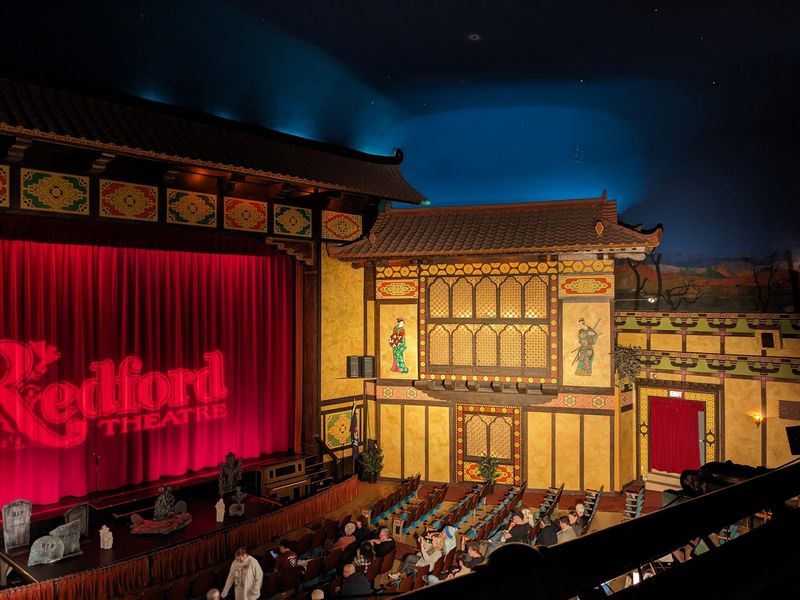
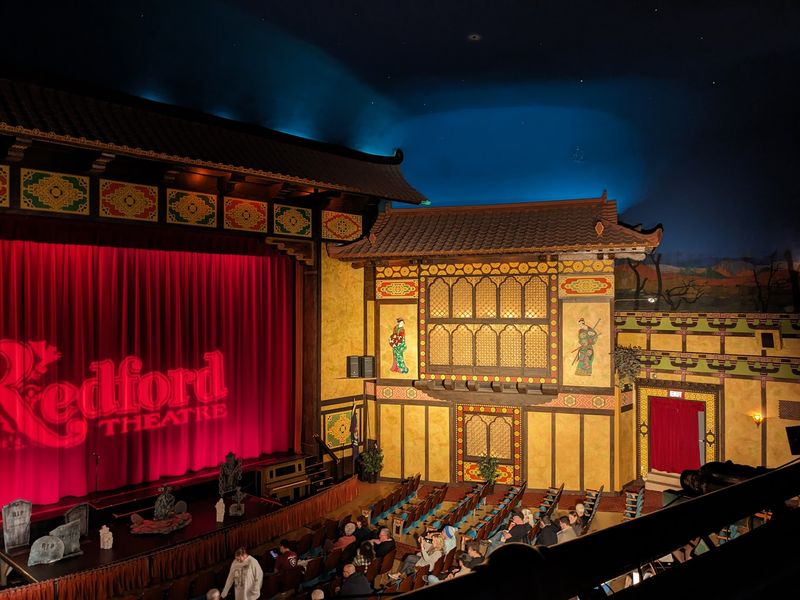
Movie theater or Japanese garden at twilight? The Redford’s designers went for both with an atmospheric style.
Atmospheric theaters tried to make audiences feel like they were sitting outdoors. Here, the theme is a Japanese garden theater.
The decor and original architectural details carry that idea across the room.
The effect still surprises first-timers. A plain-looking stretch of Detroit street doesn’t prepare you for this interior.
It’s ornate, theatrical and a little dreamy.
The auditorium seats 1,610 people. There are no support pillars, so sight lines stay clear from every seat.
That’s a rare perk in a building this old.
Restoration crews installed historically accurate replica seats. They fit the period look of the room.
A 40-foot-wide screen anchors the stage.
One honest heads-up helps. Older buildings can run warm, and airflow may feel limited on busy nights.
Dressing in layers seems like a smart move.
Bring curiosity and look up often. The details reward slow attention.
You might catch something new on every visit.
Three Stories Of Foyer Before The Show
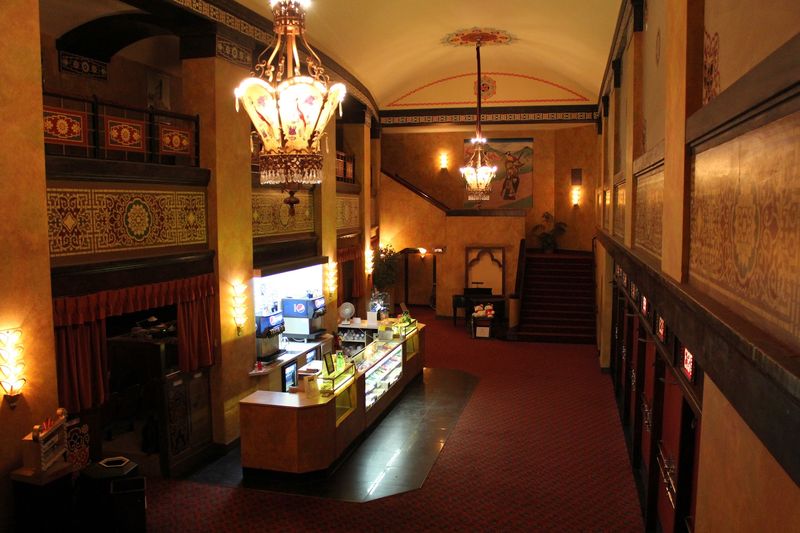
First impressions start well before your seat. The Redford’s grand foyer rises three stories, and it’s been carefully restored.
Workers uncovered original features that had been hidden over the years. Oriental-design chandeliers from the same era now hang in the space.
They suit the Japanese theme of the auditorium beautifully.
The inner lobby has also been fully restored. It feels polished without losing its old-time personality.
That balance is tricky, and this building handles it well.
Families should watch for a fun extra. A working model train table has been displayed near the front of the theater.
Kids tend to treat that as a bonus attraction.
The lobby is also where the merch lives. The theater sells shirts and sweatshirts themed to the shows it plays.
It’s a fun way to prove you saw a movie on a 1927 organ night.
Give yourself a few extra minutes out here. Arriving early lets you explore before the organ starts.
And once that console rises, you won’t want to be stuck in the restroom line.
Popcorn With Real Butter And Old-School Snack Counters
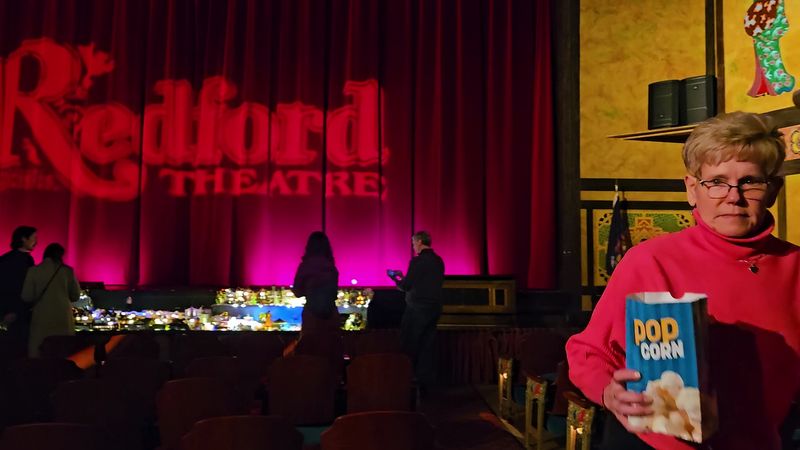
Real melted butter. That alone sends plenty of people to the Redford’s concession stand before the show.
The award-winning counter stocks more than 50 kinds of treats. Popcorn gets genuine butter, not a mystery topping.
The candy spread could make a kid freeze in place deciding.
Prices stay famously low by modern standards. You won’t need a small loan for a soda and snack.
That’s part of the old-time charm, and it feels refreshingly fair.
Bring cash, though. Concessions are cash-only, so plan ahead before you leave home.
A quick ATM stop can save some disappointment.
Volunteers staff the counter too. Their good humor adds to the experience.
It’s the kind of snack line that feels more like a neighborhood gathering.
Some nights also feature a 50/50 raffle drawn at intermission. Prizes and raffles add a little game-show energy to movie night.
It also helps support the building.
Grab your popcorn early, then find a seat. Seating is general admission for movies.
Snacks in hand, you’re ready for the organ.
Candlelight Concerts, Ballets And A Stage Built For More
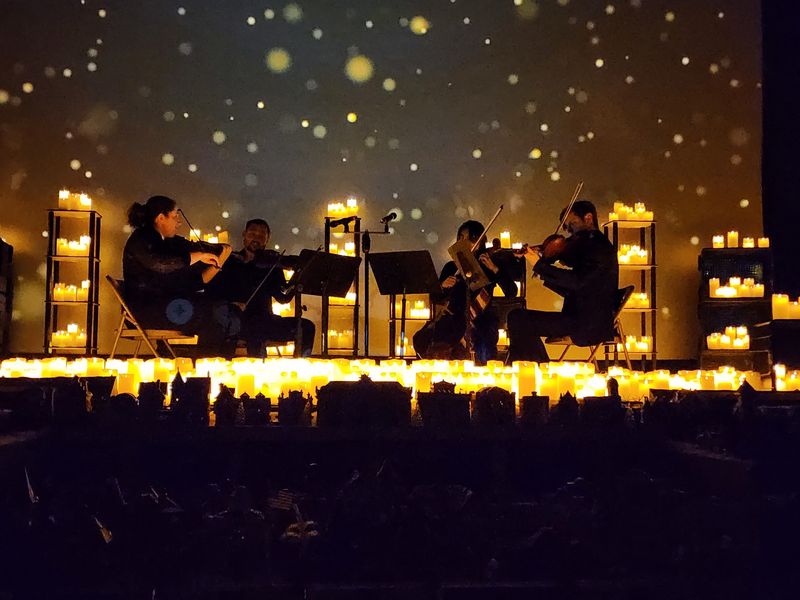
Movies are only half the story. The Redford also has a full-size stage built for live shows.
Backstage features include a modern dimmer system, generous fly space and a four-story dressing room tower. That setup supports plays, music and dance.
The sound system handles up to six-channel stereo for films.
Candlelight concerts have become a popular draw. String quartets perform themed sets in the glowing auditorium, even playing music like 1990s hip-hop.
Photos are typically limited until the finale, so phones stay down.
Light ballets have appeared here as well, including a Sleeping Beauty production. Shows of about an hour can suit younger kids nicely.
Live performances of The Rocky Horror Picture Show have also taken the stage.
The theater can be rented for private events. Weddings, graduations, class reunions and work functions are all options.
Renters can even add a performance on the pipe organ.
Imagine walking down the aisle to a 1927 Barton. Rental dates may book quickly, so planning ahead makes sense.
It beats a hotel ballroom by about a hundred years of character.
Parking, Tickets And Why It’s Worth The Drive
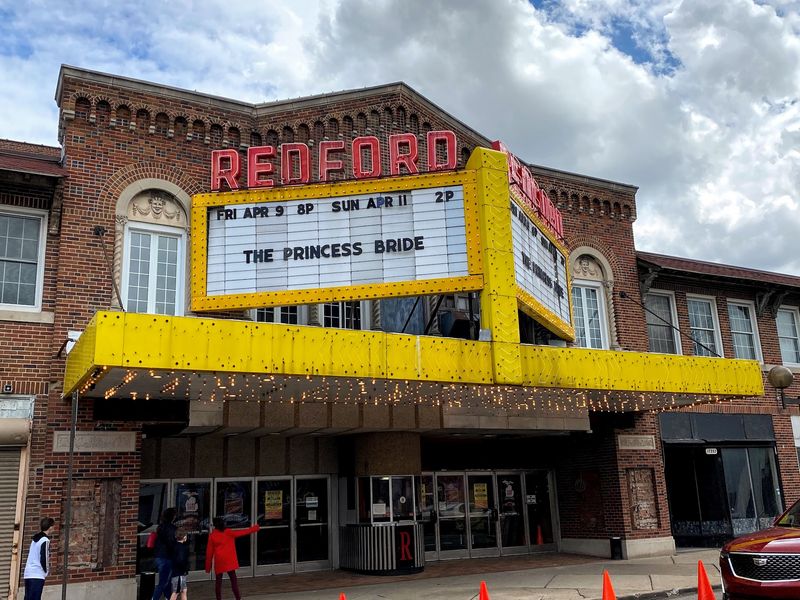
Planning a trip is refreshingly simple. The Redford Theatre sits at 17360 Lahser Rd, Detroit, MI 48219.
Free parking makes life easier. The theater owns and leases lots around the north end of the building.
Attendants are often there to help direct cars.
Tickets for classic movies have stayed budget-friendly. You can buy at the box office, and online options may be available for some events.
Special concerts and stage shows are priced separately.
Accessibility gets real attention. There are 17 wheelchair spaces, and the theater meets ADA standards.
Note that no elevator connects the main floor and balcony.
Showtimes vary by series and season. Checking the current calendar before driving helps avoid surprises.
Arrive early for the organ overture and the best seat choices.
So is it worth it? For anyone who loves Michigan history, old movies or a good bag of popcorn, I believe it absolutely is.
A rising organ, real film and volunteers who care make for a night you’ll remember long after the credits roll.