Seven elk. That’s how many were released near Wolverine in 1918 to bring the animals back after they vanished from the state.
Today their descendants number roughly 900 to 1,000, and the bulls bugle loud enough to stop you mid-sentence.
I love that Michigan manages this herd with extra bulls on purpose. The goal is simple.
More bulls means more of that eerie fall bugling for everyday people to hear.
The best stage for the show is a sprawling forest in the northeastern Lower Peninsula. It covers about 120,000 acres of meadows, rivers, and pine.
Cell service mostly gives up out there, which honestly feels like part of the charm.
So where do you start, and how do you find the elk before dark? A small log-cabin-style office in the woods holds the answer, plus the maps.
The Forest Office Where Every Elk Trip Should Begin
Every great elk evening needs a starting line, and this one sits on Twin Lakes Road. The MI DNR Pigeon River Country State Forest Headquarters is the hub for the whole forest.
Think of it as mission control for about 120,000 acres. The forest stretches across parts of Otsego, Montmorency, Presque Isle, and Cheboygan counties, northeast of Gaylord.
Locals often just call the place The Pigeon. That nickname covers rivers, lakes, pine stands, and grassy openings where elk like to graze.
The headquarters is where you can pick up maps and ask questions before heading out. That matters more than you might think in this corner of Michigan.
Out here, roads are often dirt, and signs can be scarce. Your phone may also stop being helpful very quickly.
Staff members get credit for being knowledgeable and patient with questions. Several kinds of maps are available, depending on whether you plan to drive, hike, or fish.
A quick stop here can turn a confusing wander into a smart plan. It also gets you closer to that first bugle, which is really the whole point.
Seven Elk And A Comeback Story Worth Bragging About
Michigan once lost its native elk entirely. By the late 1800s, the animals were gone from the state.
Then came 1918. Seven elk were released near Wolverine, not far from today’s forest, and the herd slowly took root again.
That tiny group grew into something remarkable. The Michigan DNR now manages a herd of roughly 900 to 1,000 animals.
It ranks among the largest free-roaming elk herds east of the Mississippi River. Not bad for a project that started with fewer animals than a pickup basketball game.
Managed hunts have helped balance the population since 1984. The state also keeps a higher share of bulls than many other states do.
Why bother? Bulls are the ones that bugle, so more bulls means better odds of hearing that wild fall call.
I like how this story turns wildlife management into a gift for ordinary visitors. You don’t need a guide or a permit to enjoy the result.
You just need a calm evening, a little patience, and a spot near the right meadow. The comeback does the rest.
That Spine-Tingling Sound Rolling Across The Meadows
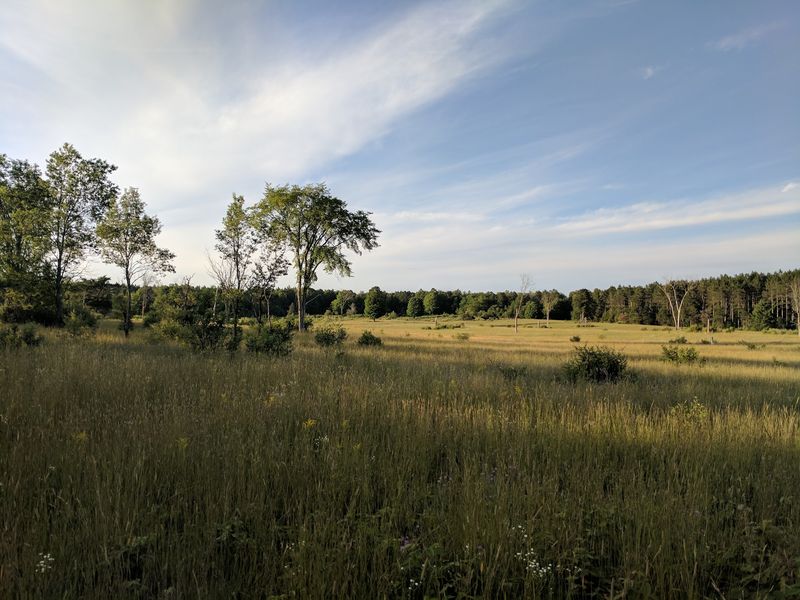
Squeal, whistle, grunt. A bull elk’s bugle sounds like all three at once, and it carries.
The rut, or breeding season, starts in early September. Activity tends to peak around September 20.
Late September through early October is the prime listening window. Bulls call out challenges to rivals and gather cows into groups called harems.
The calls can thin out as October moves along. Still, bugling may happen throughout the month, and the first half usually offers the best chances.
Timing your visit for dawn or dusk helps a lot. Elk are most active during those hours, and the forest often feels hushed enough to hear every note.
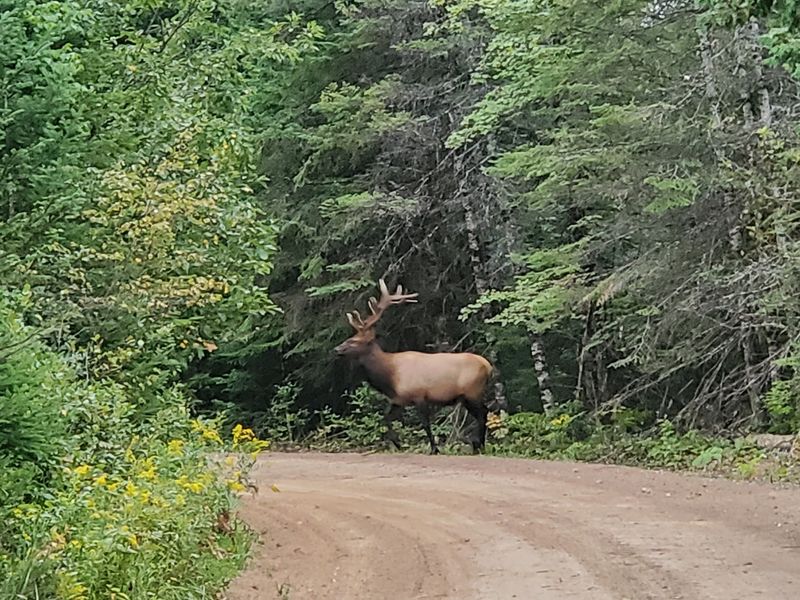
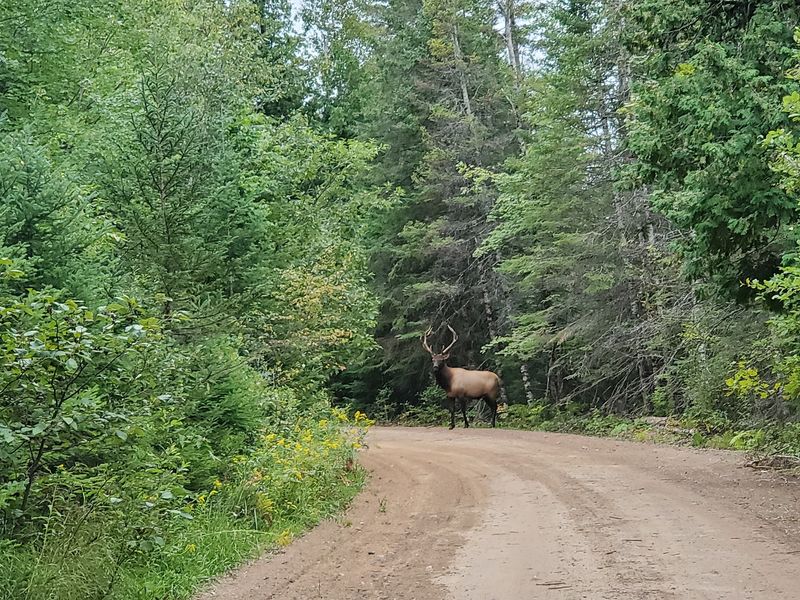
The bulls themselves are no small surprise. They can weigh between 400 and 900 pounds, and some stand roughly six feet tall.
Their antlers grow and shed each year, so autumn shows them at their most impressive. Seeing a bull tip back his head to call is a memory that sticks.
Good luck staying quiet when one answers another across the field. Your heartbeat may be the loudest thing around.
Planted Fields Built For Elk Watching
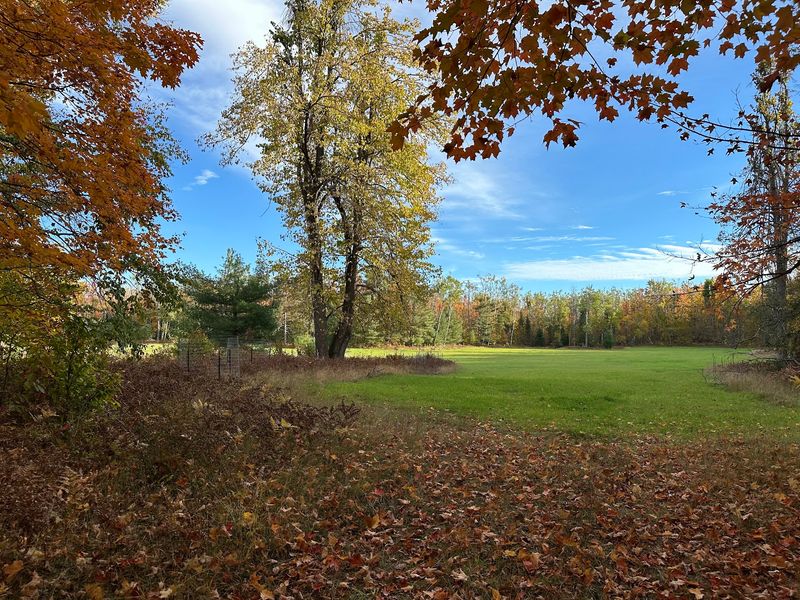
Here’s a fun detail: some of the best viewing fields are planted on purpose. Crops like rye, clover, alfalfa, or buckwheat help draw elk into the open.
The Pigeon River Country State Forest offers 13 designated elk viewing areas. Each one comes with parking, so you won’t need to guess where to pull over.
Elk also show up by chance in improved grassy meadows across the forest. That keeps every drive a little exciting.
Bring binoculars, a spotting scope, or a camera with some reach. The animals deserve space, and good optics let you enjoy them without crowding.
Keep noise low and stay at a safe distance. Elk are wild, and a calm approach can help keep them relaxed in the field.
Patience pays off more than any gadget. Sometimes the meadow sits empty for a while before a cow steps out of the trees.
Spotlighting at night is legal from 6 a.m. to 11 p.m., except in November. Firearms aren’t allowed in vehicles while you’re doing it.
Follow those rules, and the evening stays simple and respectful for everyone.
Your Phone Will Quit, So Grab A Paper Map
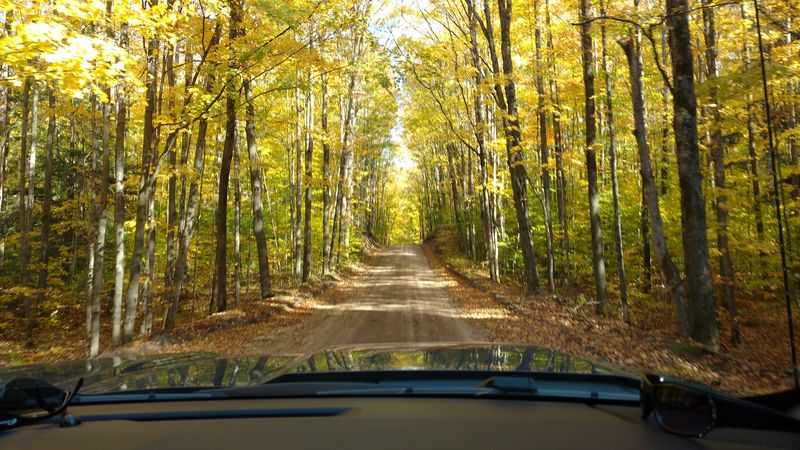
No bars, no blue dot, no problem, as long as you plan ahead. Cell service and GPS can be unreliable through most of the forest.
Drivers often find the north side of Grass Lake is one of the few spots with signal. Everywhere else, assume you’re on your own.
That’s exactly why the headquarters matters. Staff can hand you a driving map, and it may save you hours of backtracking.
Paper maps are also available at the Gaylord Visitors Center. Either way, grab one before you lose service.
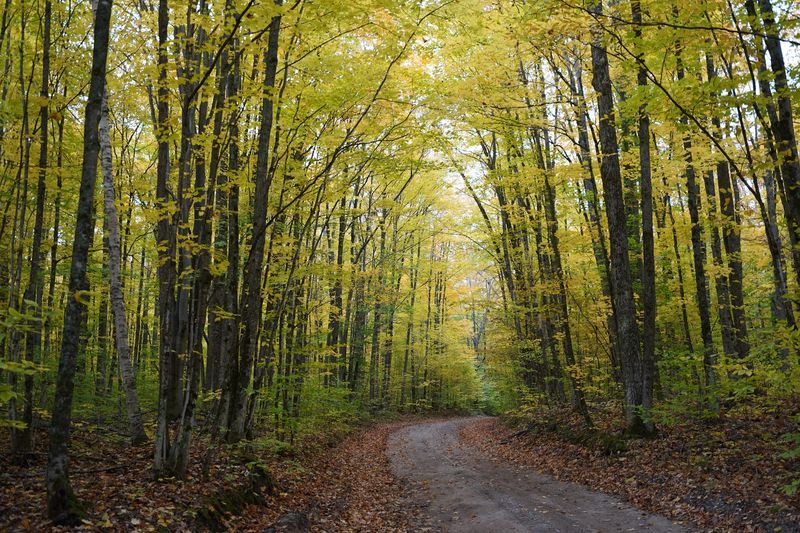
Many forest roads are dirt, and some are seasonal. Certain routes have flooded after wet weather, so traveling at your own risk is the honest reality.
Road signs can be sparse in places. A map lets you track turns without second-guessing every fork.
Pack water, snacks, and a full tank. Help may not be a quick call away if something goes sideways.
None of this should scare you off. It just turns the trip into a real backwoods adventure, the kind your grandparents probably took without a phone anyway.
Hemingway’s Old Stomping Grounds
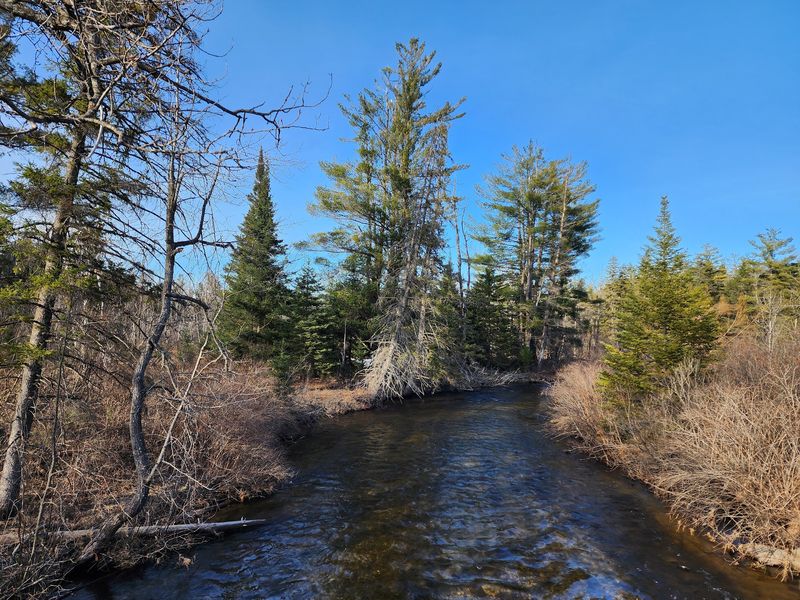
Ernest Hemingway knew these woods long before he became a famous author. The Pigeon River country was a cherished fishing and hunting spot in his youth.
That bit of history gives the forest an extra layer of Michigan pride. You’re casting into the same kind of water that shaped a young writer.
Trout still define much of the appeal. The Pigeon River supports naturally reproducing brook, rainbow, and brown trout.
Some stretches allow easy wading, which beginners will appreciate. Anglers also point to how quiet the river can stay, even on busy holiday weekends.
The Black River and other nearby waters draw fly fishers too. Plenty of small lakes give spin anglers options as well.
Fishing and elk watching pair nicely in fall. Spend the afternoon on the river, then shift to a meadow as evening arrives.
Check current Michigan fishing regulations before you go. Rules can vary by water and season.
I can’t imagine a better way to fill the hours before the bulls start calling. Hemingway would probably approve.
Trails, Turquoise Water, And Shingle Mill Pathway Miles
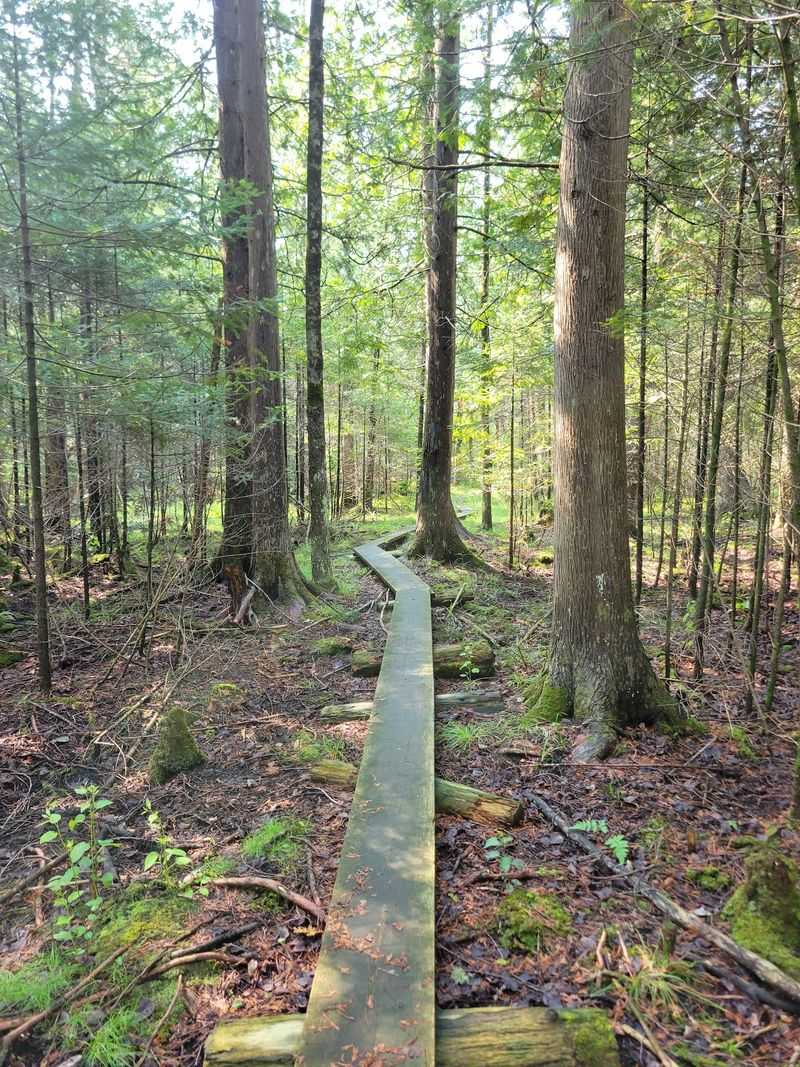
Hiking ranks near the top of what people love about The Pigeon. The Shingle Mill Pathway is one of the forest’s best-known routes.
Blue paint and tree markers guide the way. Much of the path stays fairly flat, with views of small lakes along the route.
One stretch near the end includes wooden boardwalk sections. Wet leaves can make those boards very slippery, so tread carefully in fall.
Section 4 Lake earns special affection. It’s a spring-fed lake with strikingly clear, turquoise-tinted water.
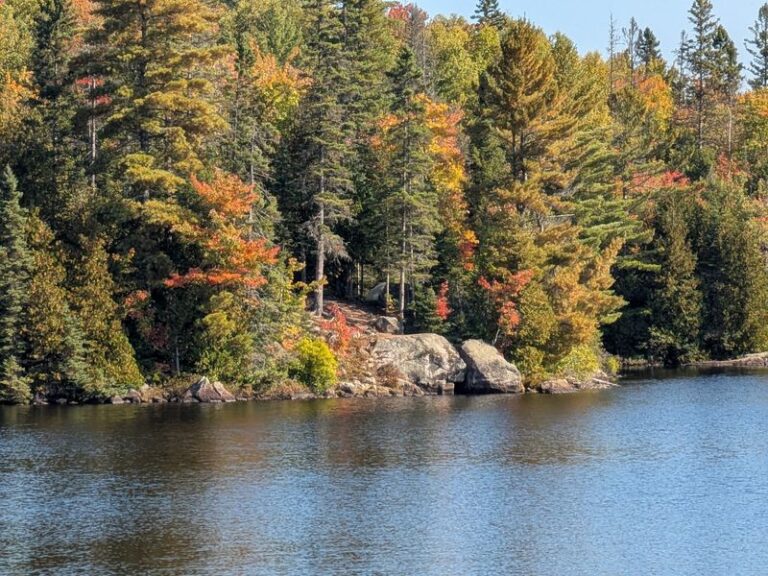
The forest itself mixes red and white pine with hardwoods, jack pine, and balsam fir. That variety makes October color especially rich.
Ticks are a real concern here, especially if a dog tags along. Treating clothing and checking yourself afterward can help.
Some overlooks and side areas can become overgrown over time. Conditions change, so asking at headquarters before a long hike is smart.
A morning walk and an evening elk session make a full Michigan day. Your legs and your ears both get a workout.
Rustic Camping For Folks Who Like It Quiet
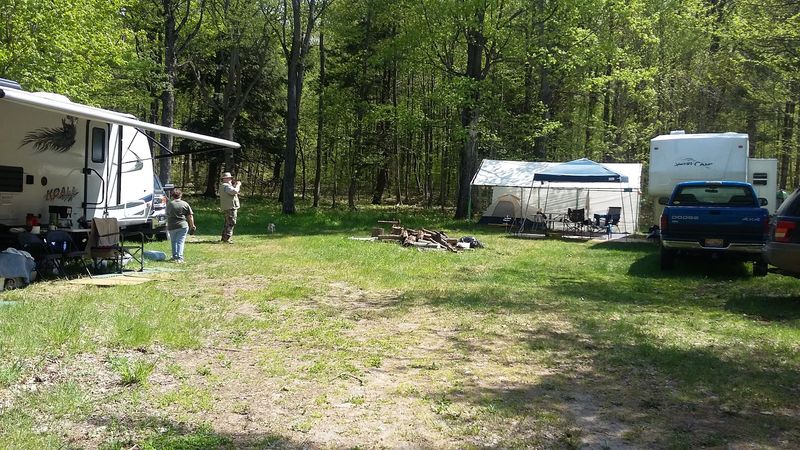
Forget hookups and hot showers. Camping at The Pigeon leans proudly rustic.
Campgrounds are primitive but known for shade and river access. Pit toilets are the norm, and swimming in the river doubles as bath time.
Both free dispersed camping and paid campgrounds exist in the forest. Pigeon Bridge Campground sits right by the Shingle Mill Pathway.
Dispersed sites can be small, so large groups may struggle to fit many tents. Smaller parties will have an easier time.
Horseback riders have options too, with equestrian camping available. ORV trails also draw riders, though flooded roads can be an issue after rain.
Families return here for generations, and that loyalty says a lot. Long-time visitors describe it as pure, quiet nature.
Staying overnight puts you close to both dusk and dawn viewing. That’s two chances at bugling without a long drive.
Bring layers, since autumn mornings in northern Michigan can feel downright crisp. A warm mug beside the fire never hurts either.
Getting There And Knowing What To Expect
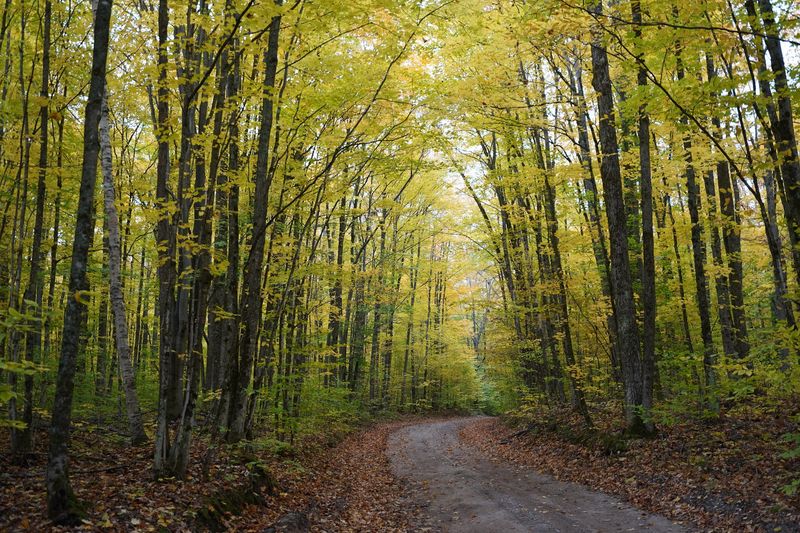
Plug this into your map before you lose signal: 9966 Twin Lakes Rd, Vanderbilt, MI 49795. That’s the MI DNR Pigeon River Country State Forest Headquarters.
Vanderbilt sits just off I-75 in northern Michigan. From there, the drive east leads into the forest’s quieter roads.
Gaylord is the nearest larger town. It’s handy for gas, groceries, and a stop at the visitors center for extra maps.
Office hours can vary by season, so call ahead if you’re counting on staff. The nature center has been open on some fall weekends but closed at other times.
On open days, it has offered well water and clean restrooms. Those small comforts feel huge after a long hike.
The forest is open to the public. Elk viewing areas don’t require a special pass, which keeps things wonderfully simple.
Aim to arrive a couple of hours before sunset. That gives you time to grab maps and settle at a viewing field.
Arriving early beats racing the dark on dirt roads you don’t know.
Why The Pigeon Earns A Spot On Your Fall Calendar
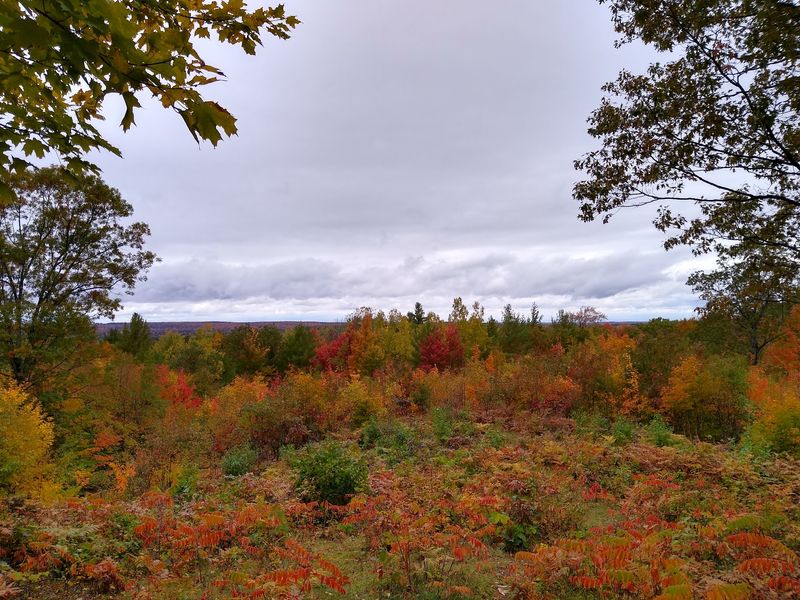
A 4.7-star rating across 159 Google reviews tells you plenty. People clearly love this wild corner of Michigan.
Not every visit lands an elk sighting, and that’s honest wildlife reality. Some drivers leave with only scenery, and others hit the jackpot.
If a guaranteed view matters most, Gaylord’s city elk park makes a fine backup. Still, nothing beats hearing a free-roaming bull call across an open field.
The Pigeon rewards people who slow down. It suits anglers, hikers, campers, photographers, and families willing to trade convenience for quiet.
It’s probably not ideal for anyone who needs constant signal or paved roads. Everyone else should feel right at home.
The MI DNR Pigeon River Country State Forest Headquarters makes that adventure easier. Stop in, grab a map, and ask where the elk have been.
Plan for late September or early October for the best bugling odds. Go at dusk, stay patient, and keep the volume low.
Then listen. That first bugle might just become your favorite Michigan sound.