A ghost in a blue peacoat is said to keep making his rounds at an old adobe church, more than 175 years after a terrible tragedy. Nobody can explain why he picked that coat for eternity.
He doesn’t haunt alone, either. Legend says a woman in a white, stained gown drifts through the complex, and witnesses claim they never quite see her face.
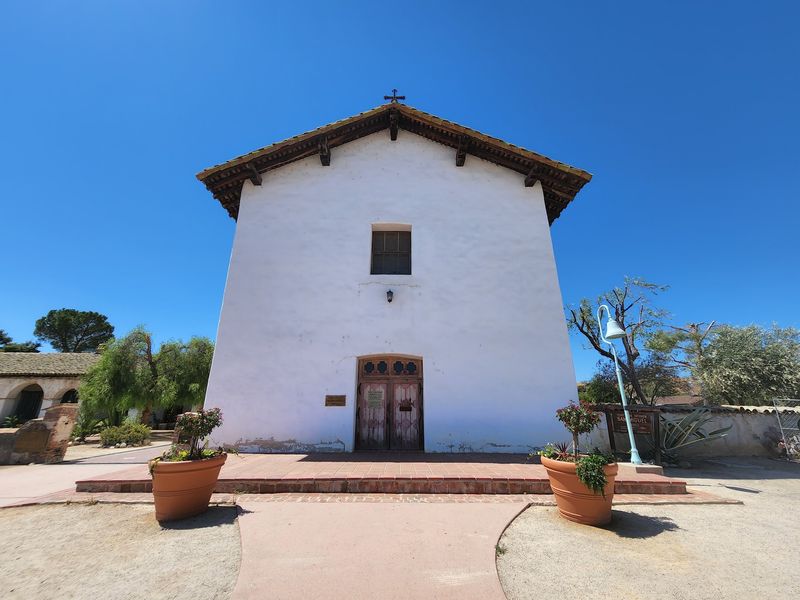
I like that the real building behind these tales is just as fascinating in daylight. Its walls are about six feet thick, and its painted interior has never been retouched since the early 1800s.
It sits right beside a busy California highway, and plenty of drivers zoom past without a second glance. I can’t imagine doing that once you know the stories attached to those walls.
So, would you pull over, or keep your foot on the gas?
An Adobe Survivor Sitting Right Beside Highway 101
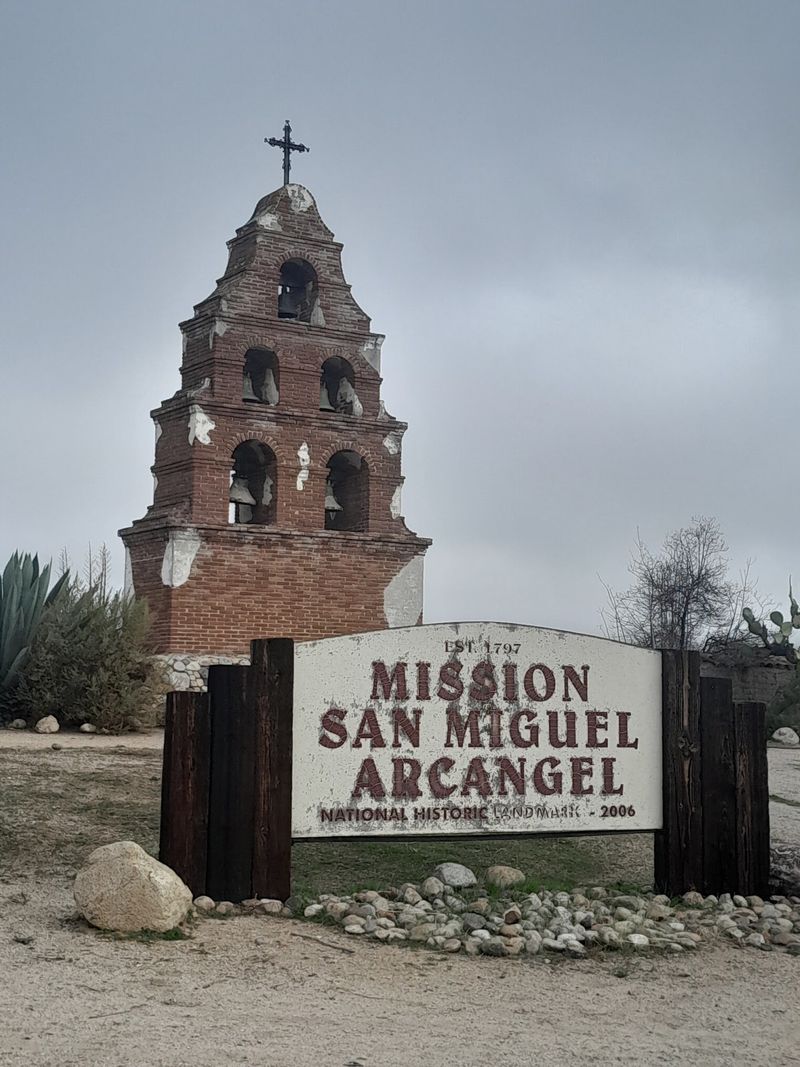
Mission San Miguel Arcángel has been standing in the Salinas River valley since 1797. That makes it older than the U.S.
Constitution’s Bill of Rights by only a few years, which is a fun fact to drop on road-trip passengers.
The mission sits in the small town of San Miguel, in northern San Luis Obispo County. It’s just north of Paso Robles, close enough to Highway 101 that a historic bell tower is visible near the exit.
Today it isn’t a museum frozen in amber. It works as an active Catholic parish under the Diocese of Monterey, with Mass held on weekends and weekday mornings.
Visitors also get a museum, a gift shop, a courtyard garden, and a cemetery with plenty of history. On top of all that, the site carries the title of National Historic Landmark.
So you get a living church, a heritage stop, and a ghost-story magnet in one place. Few spots along the Central Coast pull off that combination quite so neatly.
California has 21 historic missions, and this one ranks as the 16th founded. It also happens to have the spookiest reputation of the bunch, which is saying something.
Fire, Mud Bricks, And Walls Six Feet Thick
Father Fermín Francisco de Lasuén founded the mission on July 25, 1797. He chose the spot to bridge the long gap between Mission San Antonio de Padua and Mission San Luis Obispo.
The first church was a temporary wooden building. A fire destroyed it in 1806, which feels like an early hint that this place would collect dramatic chapters.
Builders didn’t make the same mistake twice. The current church went up between 1816 and 1818, with adobe walls roughly six feet thick.
Six feet is a lot of mud and straw. For comparison, that’s about the height of a tall adult lying sideways inside the wall.
Those walls have done serious work over the centuries. They held up through changing owners, changing uses, and eventually one very rough earthquake in 2003.
Standing beside them, it’s easy to see why the church feels so solid and hushed. Thick adobe blocks out a surprising amount of outside noise, which only adds to the spooky reputation.
I believe that quiet is part of the charm. A building this sturdy seems built to hold onto its stories, whether you believe in ghosts or simply love a good history lesson.
How A Holy Site Became A Hotel And A Crime Scene
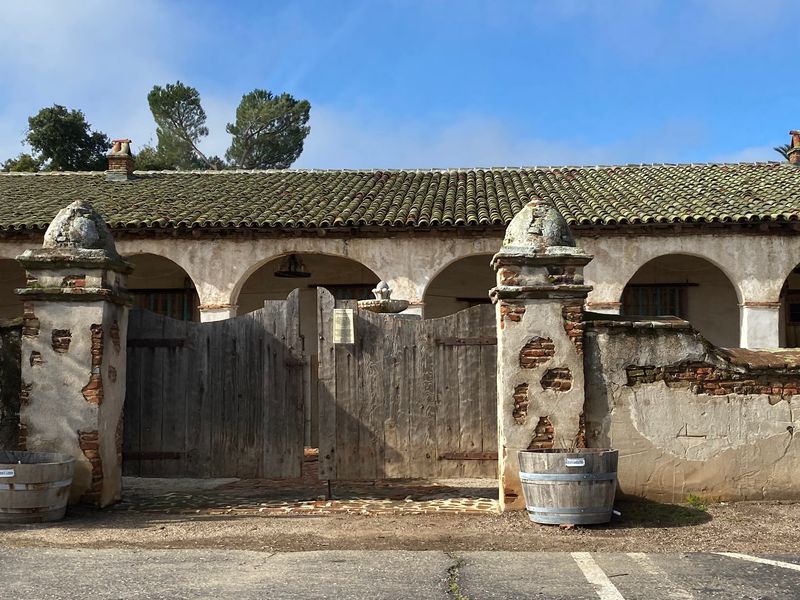
Secularization arrived in 1834, and the mission’s property was split up and handed out. Some buildings were turned into shops, a hotel, and a dancehall, which is quite a career change for a church complex.
That’s where William Reed enters the story. He managed the mission back when it operated as a commercial property.
In 1848, Reed, his family, and his staff were murdered in a violent attack at the mission. Accounts put the number of victims somewhere between 10 and 13 people.
It’s a heavy piece of California history, and it’s the root of nearly every ghost tale linked to the site. Without that night, the mission might just be known for its murals.
Things slowly turned around afterward. In 1859, President James Buchanan returned the mission to the Catholic Church.
Church services came back in 1878 when a new padre arrived. Then, in 1928, the Franciscans officially regained control and began reshaping the grounds.
That roller-coaster timeline explains a lot about the mood here today. A place with this many lives, uses, and sorrows practically invites people to wonder who might still be hanging around.
Meet The Ghost Who Still Does His Rounds
Talk about commitment to the job. William Reed’s apparition is reportedly seen around the complex, always wearing a blue peacoat and seemingly still managing the place.
He has company, according to the legends. A woman in a white, blood-stained gown is often linked to Mrs. Reed, and witnesses say they can’t make out her face.
Then come the stranger reports. People have described hearing pained screaming echo around the grounds.
Child-sized shadow figures are said to appear too, especially inside the church building. That detail alone is enough to make the brave ones hold a friend’s sleeve.
Many believe all of the 1848 victims still linger at the mission. Psychics and visitors have also described intense visions while on the property.
One popular take is oddly comforting. Some spirits supposedly just attend church or quietly go about their afterlives, while only a few occasionally startle the living.
Do I know if any of it is real? Nope, but I love that these stories have stuck around for generations, and the setting certainly doesn’t argue against them.
The Painted Church Nobody Ever Retouched
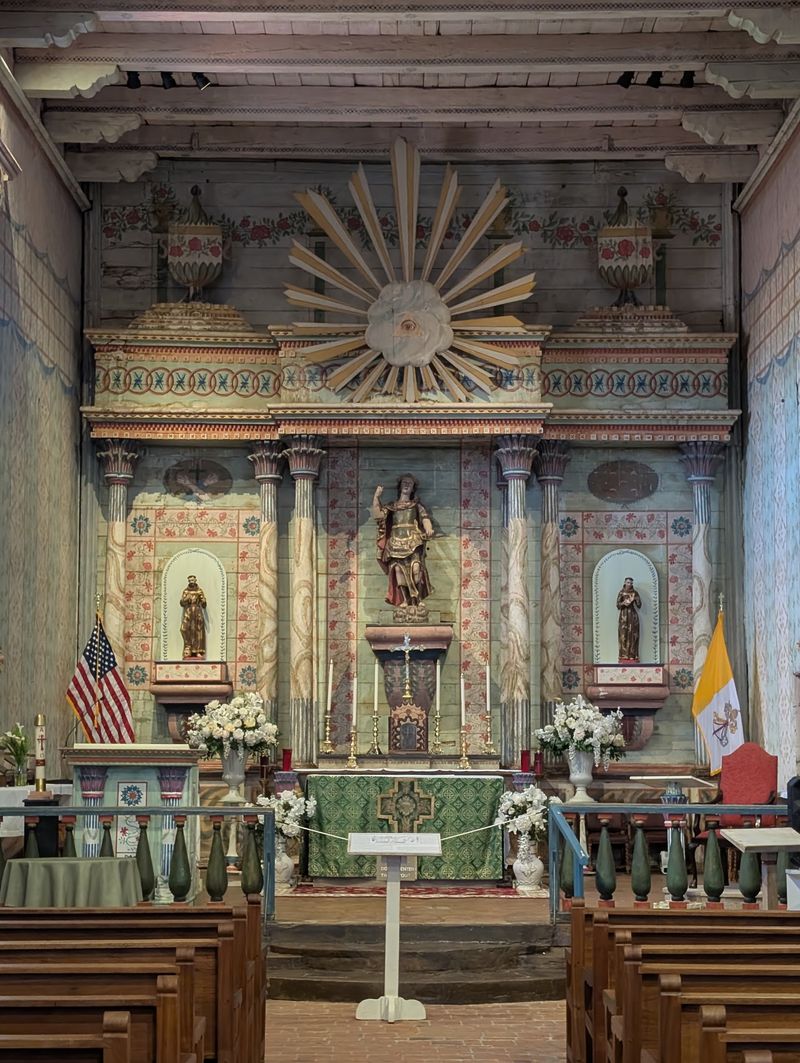
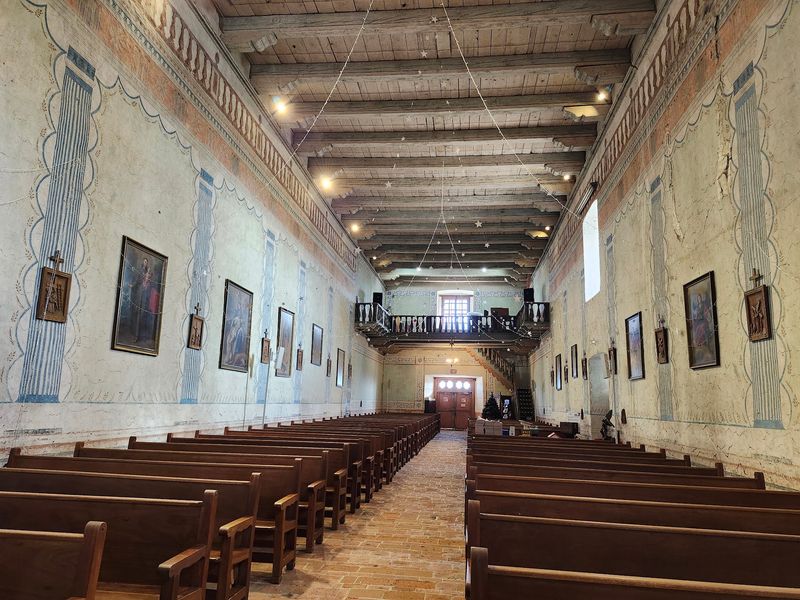
Forget the ghosts for a minute, because the walls deserve your full attention. The church interior holds original murals painted by Esteban Munrás and Salinan artists.
Here’s the jaw-dropper. Those paintings have stayed untouched since they were first created in the early 1800s.
That’s why the mission is considered to have one of the most authentic, best-preserved interiors in the entire California mission chain. Some even call it the unretouched mission, and the nickname fits perfectly.
The colors cover walls, details, and the altar area with bold patterns. Looking at them means seeing almost exactly what worshippers saw two centuries ago.
It’s a rare thing in a state where so many historic buildings have been rebuilt or repainted. Here, the brushwork you see is the real deal.
Give yourself time inside the church instead of rushing through. The longer you look, the more little designs and touches seem to pop out from the walls.
And yes, those painted walls are the same ones tied to the shadow-figure stories. Admiring fine art while wondering who else is admiring it with you is a very specific kind of thrill.
Beehive Ovens, Woven Baskets, And A Wooden Saint Michael
History buffs, this is your playground. The self-guided museum walks you through the mission’s past and everyday life, one room at a time.
The Salinan Room shows stone tools and baskets made by the Salinan people. It’s a meaningful reminder that this story started long before any Spanish padre arrived.
Next door, the Mission Room features a loom and candle-making equipment. You get a real sense of how much daily labor kept the whole place running.
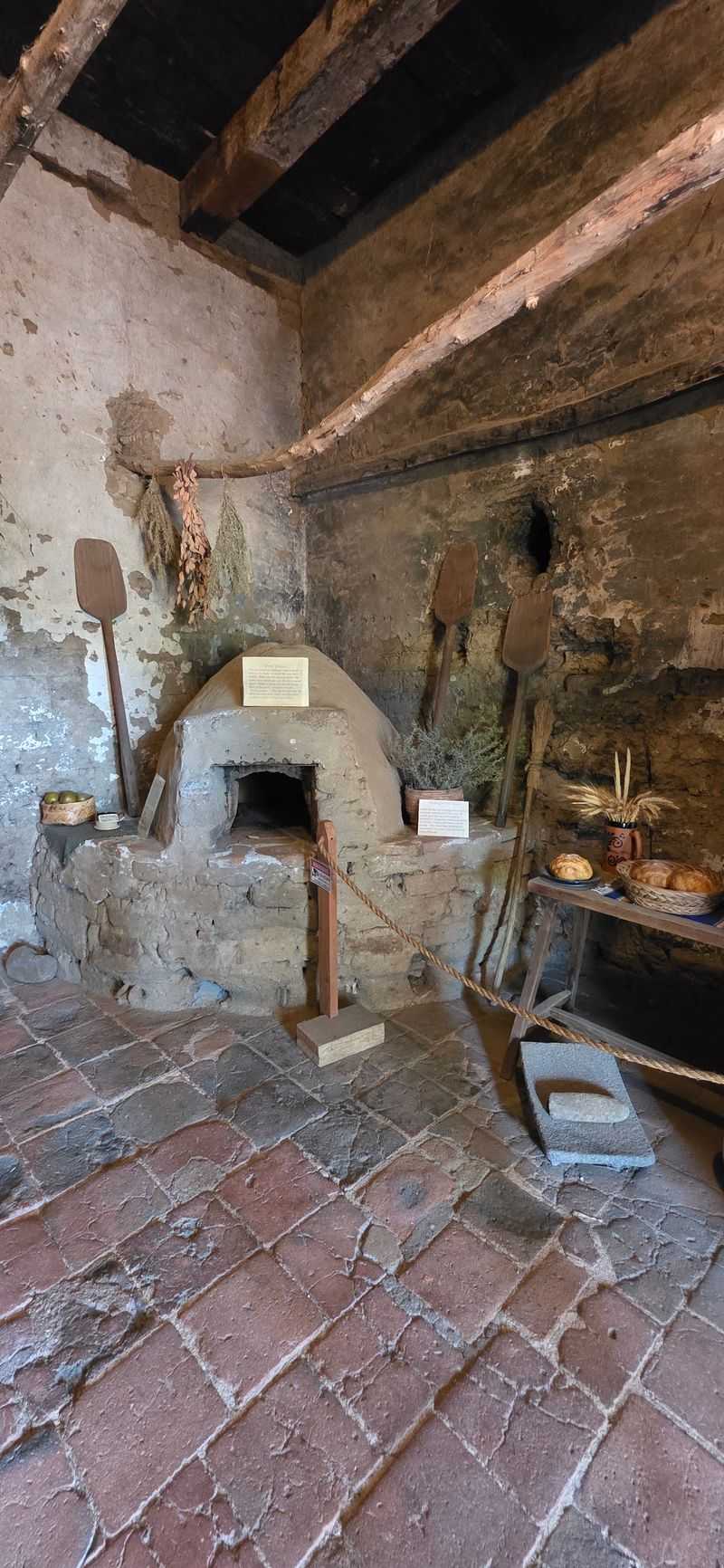
Historic living quarters round things out nicely. There’s a kitchen with an original beehive oven, plus a dining room and a padre’s bedroom.
The Sala works as an art room, displaying 17th-century oil paintings. It also holds a significant wooden statue of Saint Michael, the mission’s namesake archangel.
A map guides you, so you can wander at your own pace. Plan on roughly 1.5 to 2 hours to cover the church, courtyard, and museum exhibits without hurrying.
That padre’s bedroom might be the spot where your imagination works overtime. Small, simple, and very old, it feels like a room where a blue peacoat could appear in the doorway at any moment.
Twelve Mismatched Arches And A Garden Made For Quiet
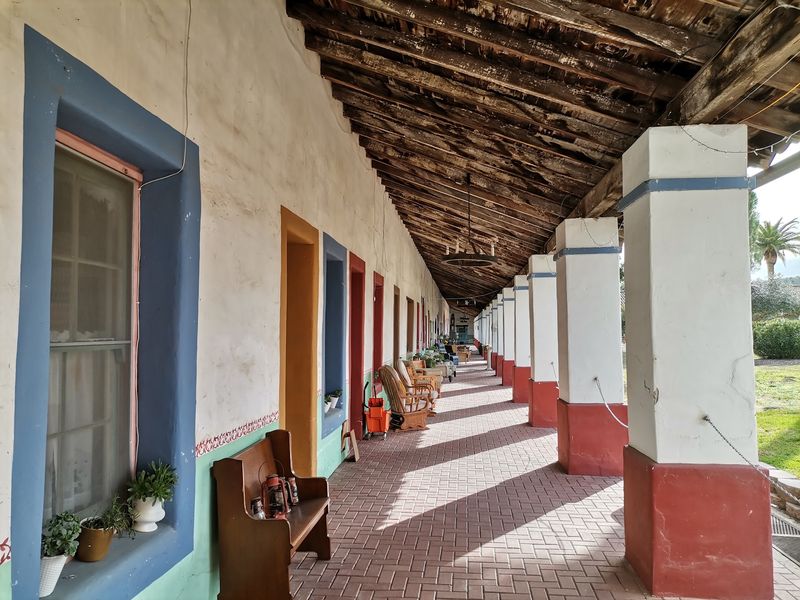
Look up as you walk the front of the mission. Its arcade has 12 original arches, and they come in different shapes and sizes.
Nobody tried to make them perfectly matching, and that’s part of their charm. They feel handmade because they were.
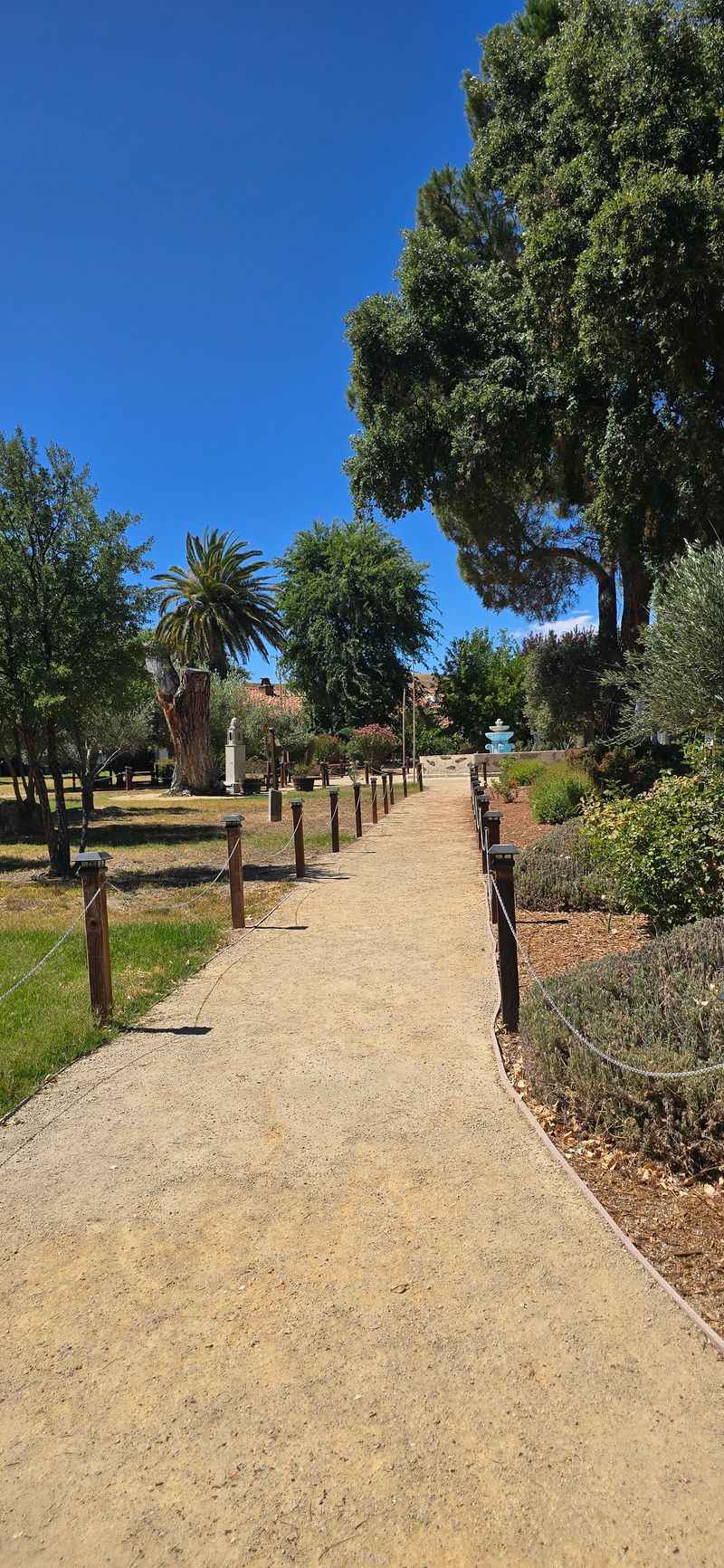
Inside the walls sits the Garden of Peace, also called the Unity Garden. It started as a work area and became a garden around 1928.
Adobe walls and surrounding hills frame the space, and a fountain adds a soothing centerpiece. It’s a calm spot for quiet reflection, a picnic, or a small ceremony.
The cemetery tells a more somber story. It’s the resting place for early settlers and over 2,000 Salinan people.
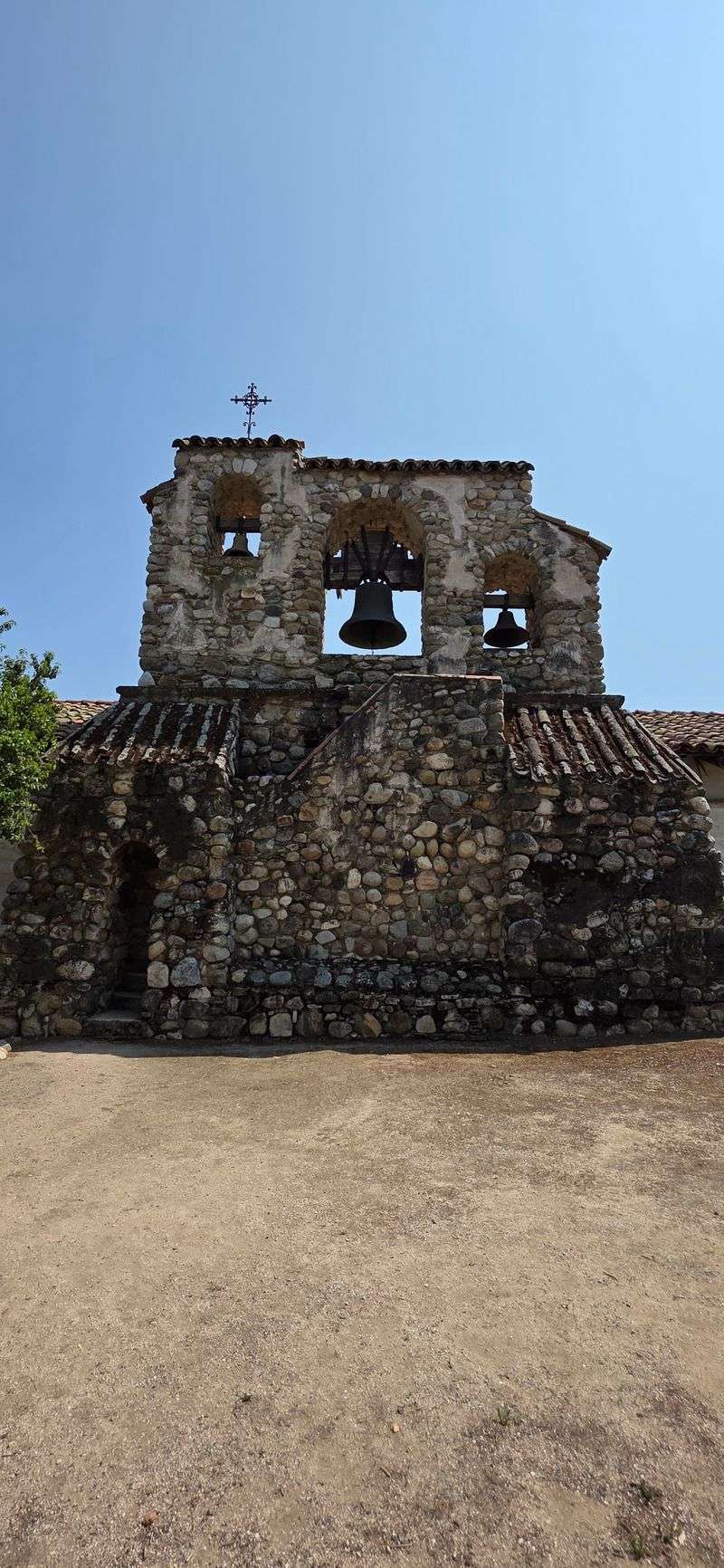
An old stone bell tower stands there with three bells. One was cast in San Francisco in 1888 from fragments of older bells, and a feathered cross stands nearby too.
Bonus tip: the exterior and cemetery side can be visited without a ticket. That means a quick stroll still gives you the arches, the bells, and plenty of atmosphere for your ghost-story imagination.
Know The Hours Before The Gates Swing Shut
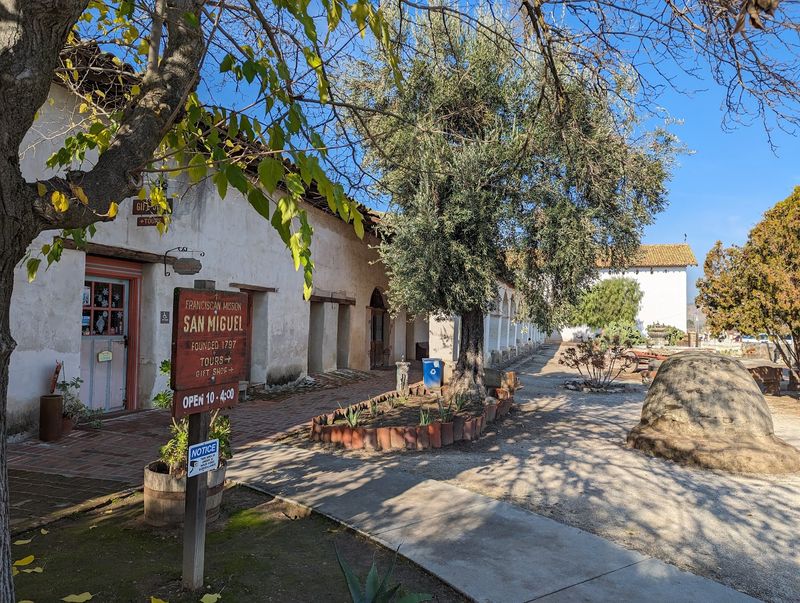
Timing matters here, especially if you’re hoping to see the museum. Hours run from 10 AM to 4 PM most days, with Thursday listed as closed.
Head to 775 Mission St, San Miguel, CA 93451. From Highway 101, the exit is easy to spot thanks to the historic bell tower nearby.
Admission covers the self-guided tour, and it helps support ongoing restoration work. Reduced rates exist for seniors, and children have a separate fee as well.
The church itself is an active parish. Mass is held on weekends and weekday mornings, so check posted times if you want to attend or avoid a service.
Outdoor restrooms are available on the grounds. The gift shop near the entrance sells handcrafted jewelry, artwork, books, and local crafts, perfect for a spooky souvenir.
The mission also has a little extra backstory on reopening. A major earthquake on December 22, 2003, damaged the buildings, and it reopened on October 2, 2009.
So arrive early in the day if you can. Two hours fly by quickly inside, and nobody wants to be politely ushered out right when the ghost stories start feeling real.
Why This Haunted Landmark Earns Your Next Detour
Some road stops are just stretch breaks. Mission San Miguel Arcángel offers far more for anyone driving through Central California.
History lovers get unretouched murals, thick adobe walls, and a museum full of real artifacts. Ghost fans get a blue-coated manager who supposedly never left work.
Families can enjoy the garden, the arches, and the free cemetery side. Quiet seekers will likely appreciate how peaceful the courtyard feels compared to the highway nearby.
It also pairs nicely with a fall or winter road trip. The indoor museum and church make it a solid pick when the weather turns cool or gray.
I can’t promise you’ll hear footsteps in an empty hallway. What I can promise is a place with more layers than most landmarks in the state.
A fire, a crime, a hotel era, a homecoming, and an earthquake all shaped this spot. Somehow it’s still standing, still holding Mass, and still sparking whispers.
So next time Highway 101 carries you past Paso Robles, take the exit. Walk under those uneven arches, glance toward the church door, and decide for yourself whether anyone is glancing back.