Neighbors once walked into an Odawa leader’s kitchen just to pick up their mail. That kitchen doubled as the town post office, and he was the postmaster.
The same man later wrote a book about his people’s history. He also worked as an interpreter, an educator, and a fierce advocate.
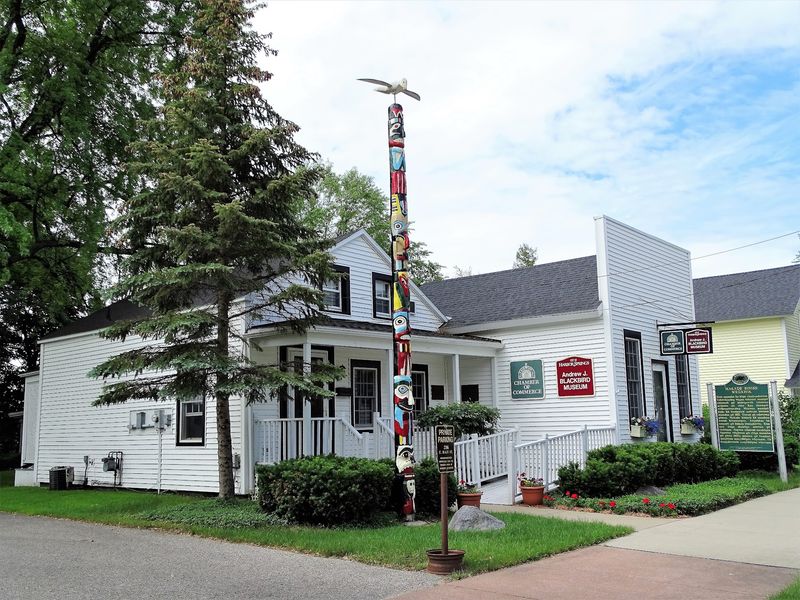
Today his small 1800s home in northern Michigan holds artifacts, original mailboxes, and stories that rarely made it into our school textbooks.
I like how the whole experience happens inside an actual house. You’re not staring at history behind thick glass in some giant hall.
You’re standing where real letters changed hands and real family life went on around them.
I believe places like this are worth more than a quick glance. So how did one family’s kitchen become the center of a whole town?
An Odawa Leader’s House On A Quiet Main Street
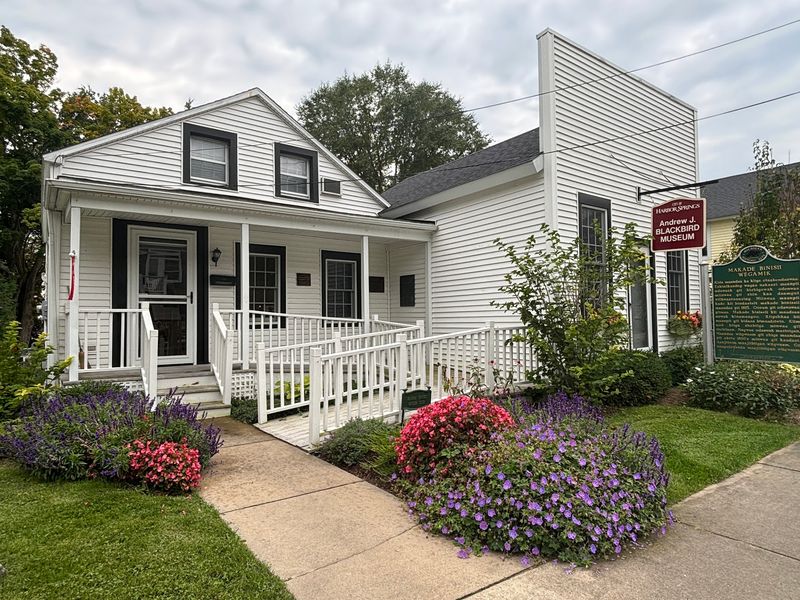
Some museums need a parking garage. The Andrew J Blackbird Museum needs only a sidewalk, because it sits inside a modest 1800s home in Harbor Springs, Michigan.
That home once belonged to Andrew J. Blackbird, an Odawa leader with a remarkable résumé.
He lived here, raised a family here, and ran the local post office from these very rooms.
Today the building tells his story and the wider story of the Odawa people of this region. It’s small, personal, and refreshingly free of flashy gimmicks.
Think quiet rooms, real objects, and history you can stand right next to.
Harbor Springs is better known for its sparkling bay and summer crowds. Plenty of people stroll past this little house without realizing what’s inside.
That’s a shame, honestly, because the stories here run deeper than the harbor.
The museum focuses on the people who lived on this shoreline long before resort cottages arrived. It shares the region through Odawa voices and experiences.
That perspective changes how the whole town looks once you step back outside.
For Michiganders who love knowing the stories outsiders miss, this place is a natural fit. Consider it a short stop with a long memory.
The Man Known As Makade-binesi
Andrew J. Blackbird had another name, too.
In his own language, he was Makade-binesi, which is often translated as Black Hawk or Blackbird.
He was born around 1815 in the area that’s now Harbor Springs. Back then, the Odawa called this shoreline home, and the bay looked very different from today’s postcard view.
Blackbird grew up during a period of huge change for Native communities in Michigan. Treaties, settlers, and new laws reshaped daily life fast.
He didn’t just watch those changes happen around him.
Instead, he pursued an education and put it to work for his people. That choice shaped nearly everything that followed in his life.
It also explains why his home deserves a museum today.
Many of us learned about early Michigan through lumber barons and fur traders. Leaders like Blackbird often got a sentence, if anything.
The museum gently fixes that gap in our collective memory.
Knowing his name before you visit makes a real difference. You start seeing the house as a person’s home, not just an old building.
And once you know Makade-binesi, the town around him starts to make more sense.
Author, Interpreter, Educator, And Advocate All In One
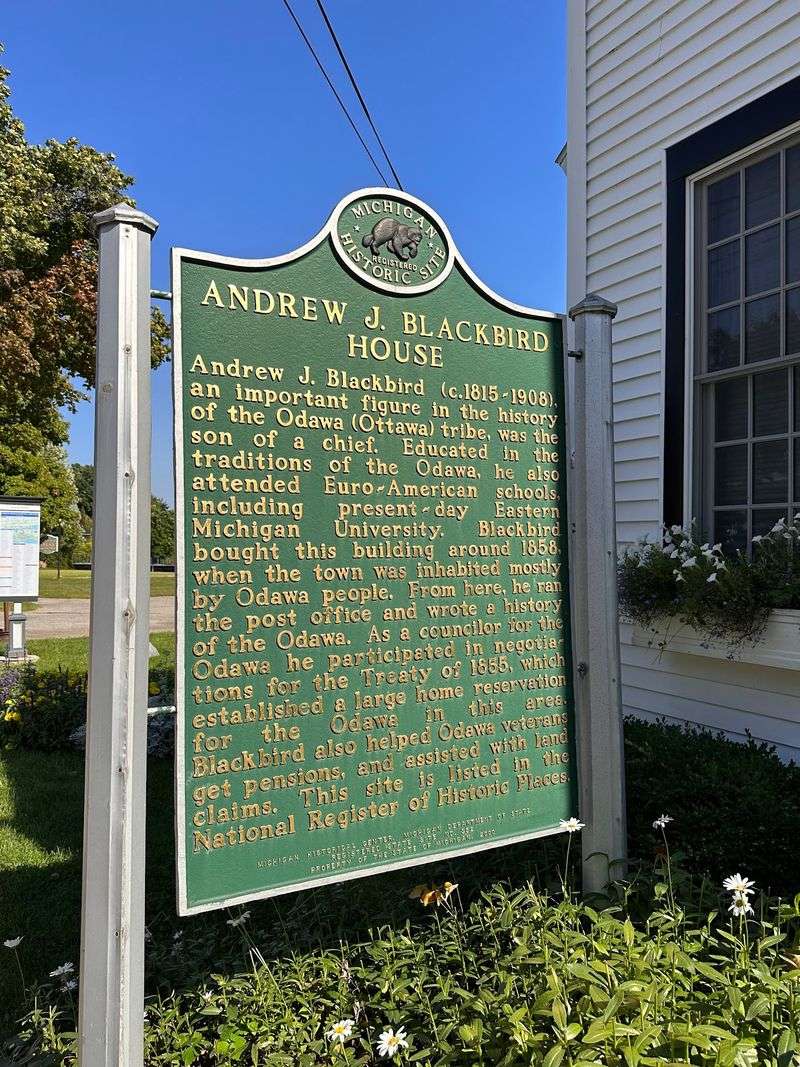
Calling Blackbird a chief only tells part of the story. He was also an author, an educator, an interpreter, and a tireless advocate for Odawa rights.
Interpreting mattered enormously in his era. Agreements between Native nations and the government depended on clear translation, and misunderstandings could cost communities their land.
Here’s a detail that surprises plenty of Michiganders. Blackbird helped secure Michigan citizenship for Native Americans under the state’s 1850 Constitution.
Read that again, because it’s a big deal. A man from this small shoreline community helped shape the legal rights of people across the whole state.
His work as an educator fit right in with that mission. He believed knowledge could protect his people and give them a stronger voice.
That belief threads through every room of the museum.
So when you wander these exhibits, you’re learning about more than one family. You’re tracing how one determined person pushed Michigan toward fairness.
Not a bad legacy for someone whose kitchen also handled the town mail.
It’s the kind of history that makes you want to text a friend. Something like, did you know this happened up north?
Mail Day Meant A Trip To The Kitchen
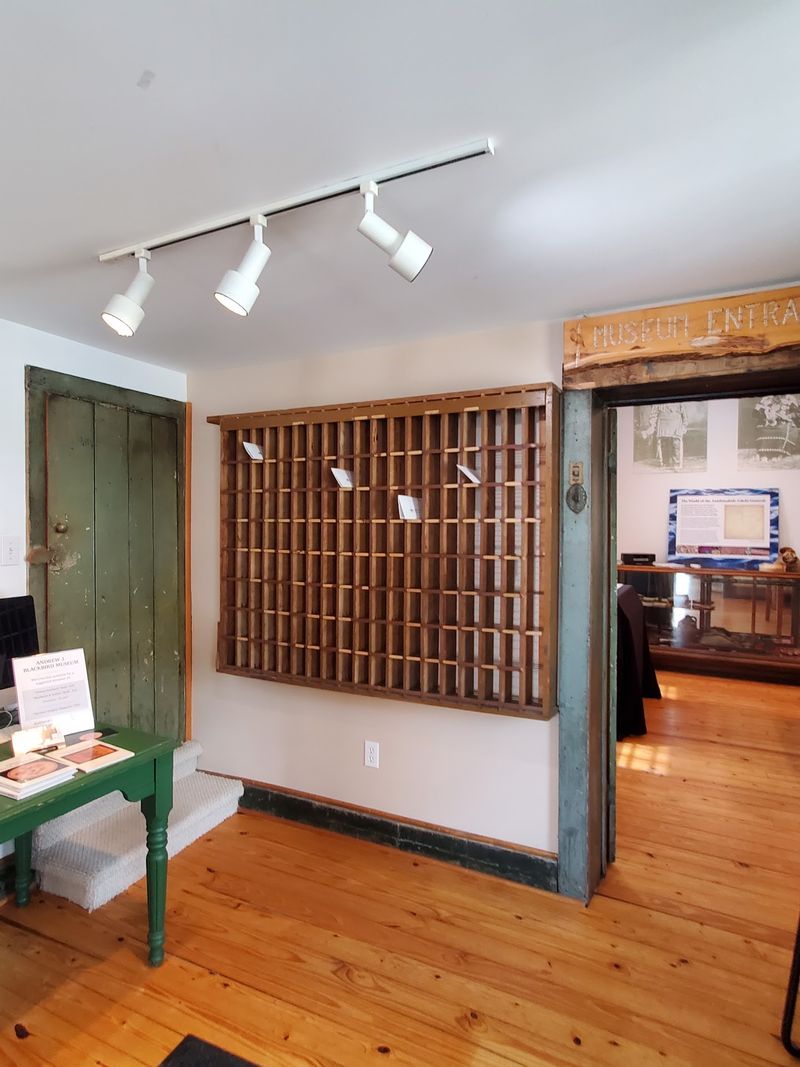
Imagine needing a stamp and heading straight to your neighbor’s kitchen. That was everyday life in early Harbor Springs once Blackbird became the town’s first postmaster.
He purchased this house around 1858. Before long, it turned into a gathering point for the whole community.
Residents came right into his kitchen to collect their letters. Family life and public service shared the same space, probably with plenty of small talk on the side.
That arrangement says a lot about the town back then. It was small, connected, and dependent on one trusted person to keep news flowing.
Blackbird was that person.
The detail also feels wonderfully human. Somewhere between meals and chores, letters from faraway relatives landed on his table.
It’s hard to picture a modern post office feeling quite so cozy.
For visitors, this story makes the house come alive. You start noticing how ordinary rooms once held an extraordinary amount of responsibility.
Every corner suddenly seems to carry a little extra weight.
It also flips a common assumption. In this Michigan town, an Odawa leader stood at the center of daily communication for settlers and Native neighbors alike.
An 1870s Addition Built For Bags Of Letters
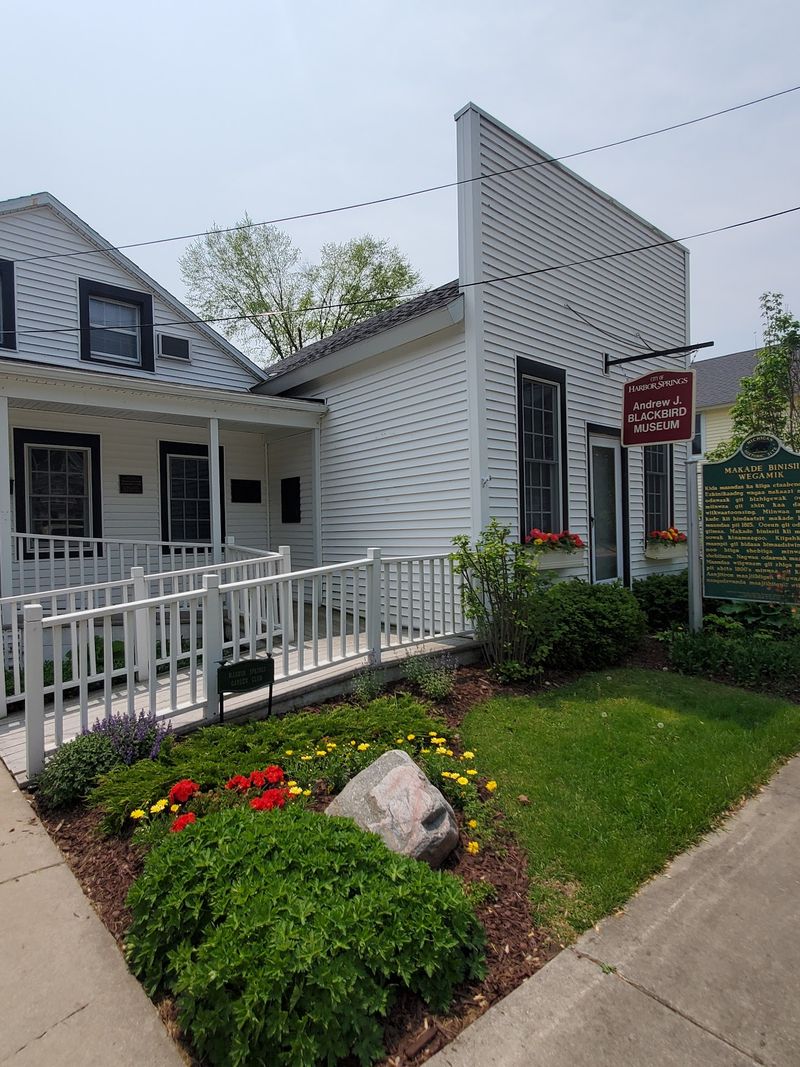
Busy kitchens eventually run out of room. By the early 1870s, the mail volume had grown enough that Blackbird built an addition onto his home just for the post office.
That’s a practical solution with a big message. The town was growing, and its connection to the outside world was growing with it.
The addition gave the post office its own dedicated space. It also gave his family some breathing room, which they likely appreciated after years of neighbors at the table.
When you visit, that history adds a new layer to the building itself. You’re looking at a house shaped by community needs, not just personal taste.
The walls literally expanded to serve the town.
Small details like this make architecture feel personal. A homeowner chose to invest in his own house so everyone else could receive their mail.
That’s civic spirit you can measure in boards and nails.
It’s also a reminder of how central Blackbird was to early Harbor Springs. Few people get to say their home became essential public infrastructure.
Next time you complain about a slow mail day, consider his workload. Suddenly the line at the counter seems pretty manageable.
An Unfair Ending To A Postmaster’s Career
Not every chapter here is a happy one. In 1877, Blackbird was removed as postmaster, and sources point to racial prejudice as the reason.
That fact lands hard after learning how much he gave this community. He served faithfully, expanded his home for the job, and kept the town connected.
The museum doesn’t hide this part of the story. Sharing it honestly helps visitors understand the barriers Native leaders faced, even when they followed every rule.
It’s uncomfortable history, but it’s important history. Michigan’s past includes moments of injustice alongside moments of progress.
Both deserve a place in how we remember our towns.
Blackbird’s response is what makes his story so inspiring. Losing the position didn’t quiet his voice or end his work for his people.
If anything, his most lasting contribution was still ahead. A decade later, he would publish a book that still matters today.
Standing in the room where he once sorted mail, this moment feels personal. You can’t help thinking about how it must have felt for him.
That reflection might be the most valuable souvenir you take home.
A Book That Put Odawa History In Odawa Words
Blackbird picked up a pen and kept going. In 1887, he published History of the Ottawa and Chippewa Indians of Michigan.
The title sounds formal, but the book is deeply personal. He recorded the struggles, traditions, and heritage of his people from the inside.
That perspective was rare for its time. Most histories of Native communities were written by outsiders, often with plenty of guesswork mixed in.
Blackbird’s account became an invaluable source for anyone hoping to understand Odawa and Ojibwe life in Michigan. It also included details about language and community that might otherwise have faded.
The museum connects visitors to this legacy in a meaningful way. You’re standing in the home of a man who documented his nation’s story so it wouldn’t be lost.
Writers love to say the pen is mightier than the sword. Blackbird actually proved it, using words to protect memory after losing a public job.
If the museum sparks your curiosity, his book makes a fine follow-up read. It’s a chance to hear his voice directly, more than a century later.
Not many authors get to keep teaching quite that long.
Original Mailboxes And Artifacts Worth A Slow Look
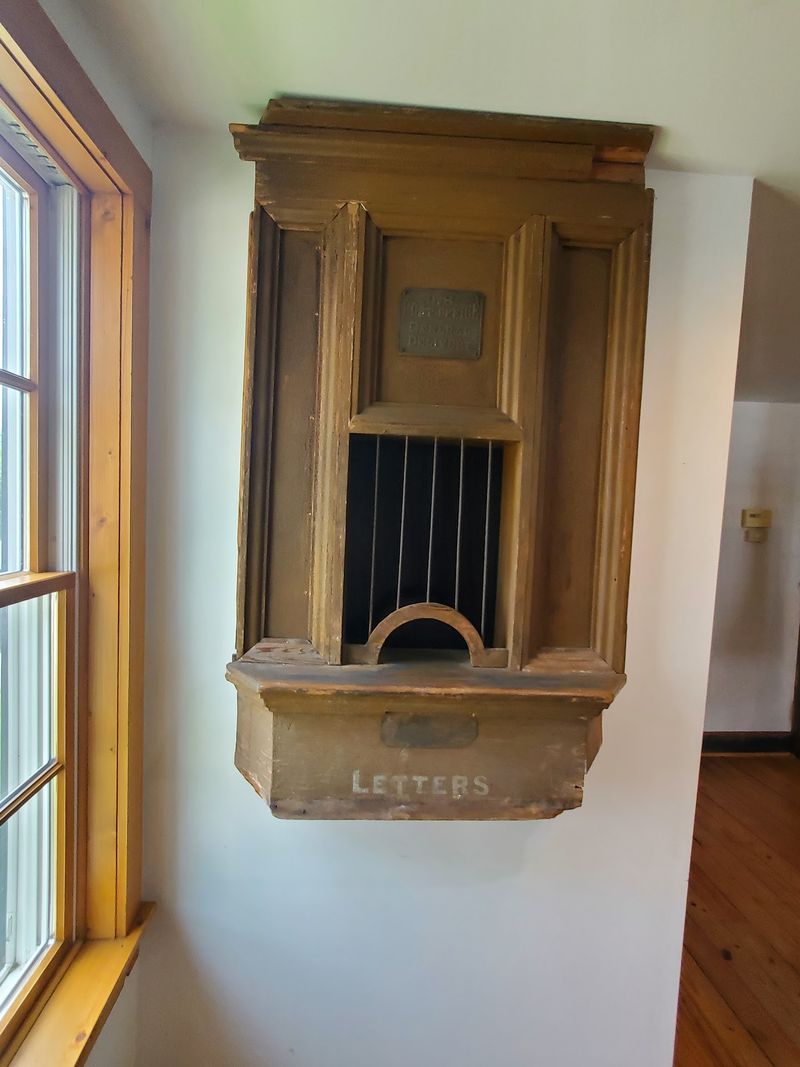
Few museums can show you the actual mailboxes from their own building’s past. The Andrew J Blackbird Museum can, and they’re a highlight for good reason.
Some of the original mailboxes remain on display today. They offer a direct link to the years when this house buzzed with letters and town news.
Seeing them in person makes the post office story feel real. It’s one thing to read about history, and another to stand beside the objects that witnessed it.
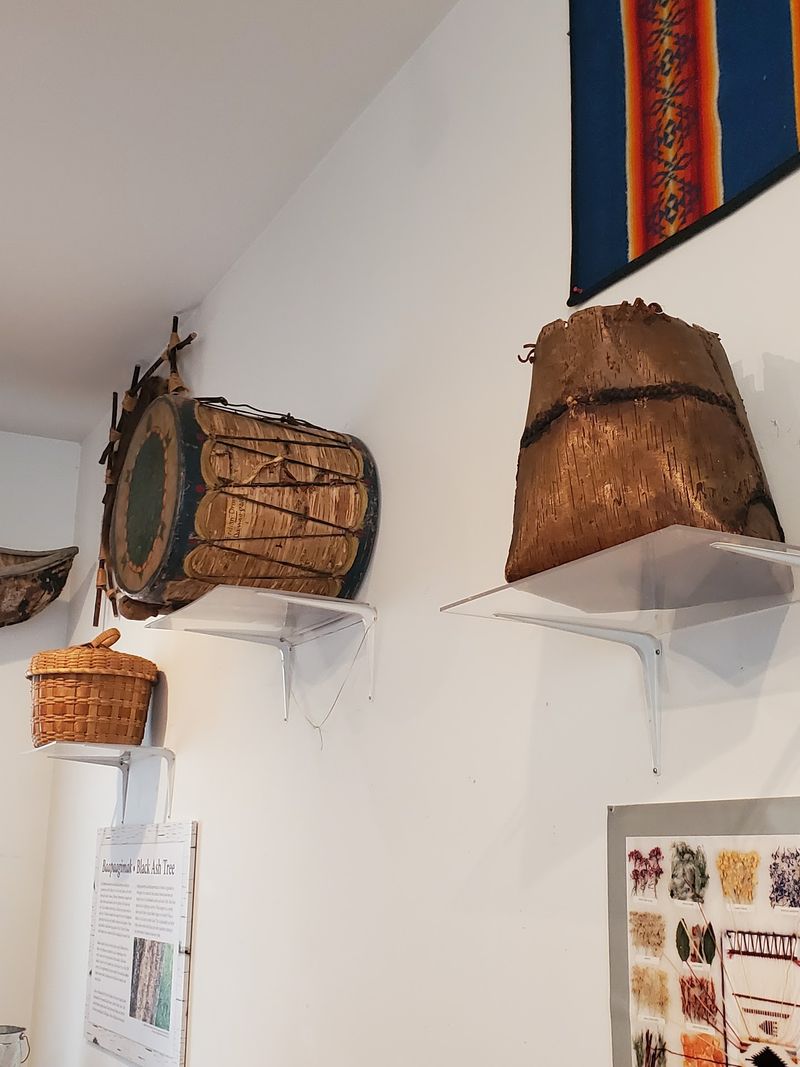
The museum also holds a collection of American Indian artifacts. Each piece adds another thread to the larger Odawa story told inside these walls.
Because the space is small, the collection feels focused rather than overwhelming. You can actually take time with individual pieces instead of rushing past dozens of cases.
That pace suits a place like this beautifully. It invites curiosity, questions, and a little quiet reflection between rooms.
Bring your reading glasses if you need them. The labels and narratives reward visitors who slow down and soak up the details.
Rushing through would be like skimming the best letter you ever got.
Stories Told Through The Little Traverse Bay Bands Lens
Perspective is everything in a museum. Here, the story of this shoreline comes through the voices and experiences of its first inhabitants.
The exhibits explore Blackbird’s life alongside the culture of the Little Traverse Bay Bands of Odawa Indians. That connection keeps the museum rooted in a living community, not a distant past.
Visitors can learn about Indigenous history, diplomacy, language, and community in northern Michigan. Those themes stretch far beyond one house or one man.
Diplomacy might surprise some people as a museum topic. Yet Odawa leaders negotiated, translated, and advocated through decades of enormous change.
Language matters too, since words carry culture from one generation to the next. Learning even a little about it can shift how you hear local place names.
The museum offers a critical perspective on Harbor Springs history. It reminds visitors that the town’s story didn’t begin with summer cottages or resort hotels.
For many Michiganders, this is where the I never knew moments happen. And those moments tend to stick with you long after the drive home.
That’s exactly what good history should do.
Quillwork And The Chance To Meet A Living Artist
Porcupine quills make surprisingly beautiful art. Quillwork has displayed at the museum, giving visitors a close look at this traditional craft.
The technique uses dyed or natural quills to create detailed designs, often on birchbark. It takes patience, skill, and generations of shared knowledge.
Here’s a bonus worth knowing. Sometimes visitors get to meet Jacob Keshick, a local quillwork artist connected to the museum.
Jacob has shared Odawa history with visitors, including stories about his own family in the Harbor Springs area. That personal connection turns a museum stop into a real conversation.
Meeting an artist adds living history to the experience. You’re not just seeing the past, you’re hearing how traditions continue today.
Of course, his presence isn’t guaranteed on any given day. Think of it as a happy possibility rather than a scheduled event.
Either way, the quillwork itself deserves a long look. The precision involved might leave you rethinking every craft project you’ve ever abandoned halfway.
Honestly, glitter and glue sticks never stood a chance against this level of artistry.
Start With The Plaque, Then Head Inside
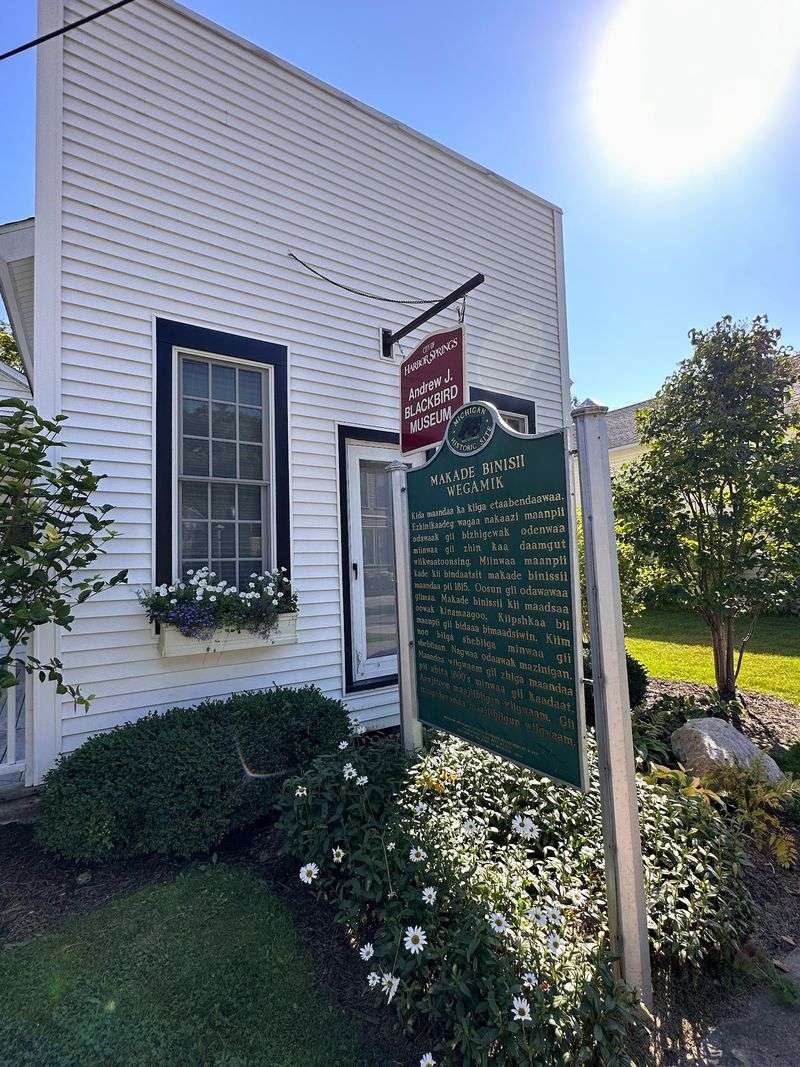
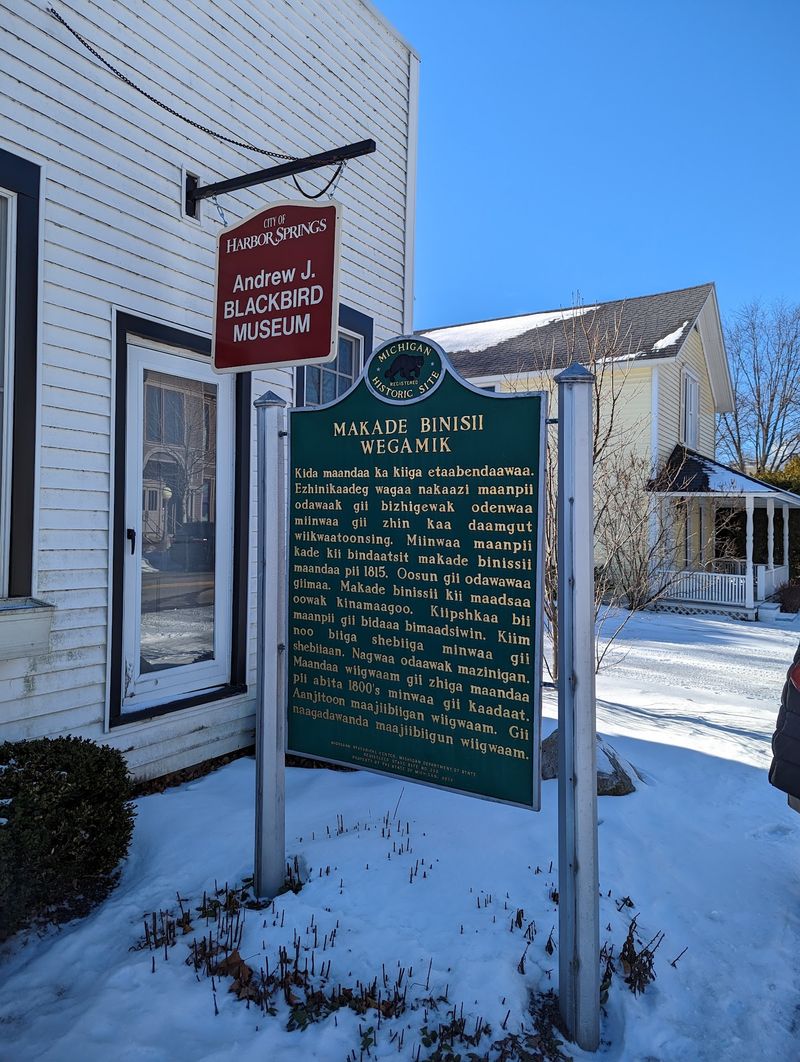
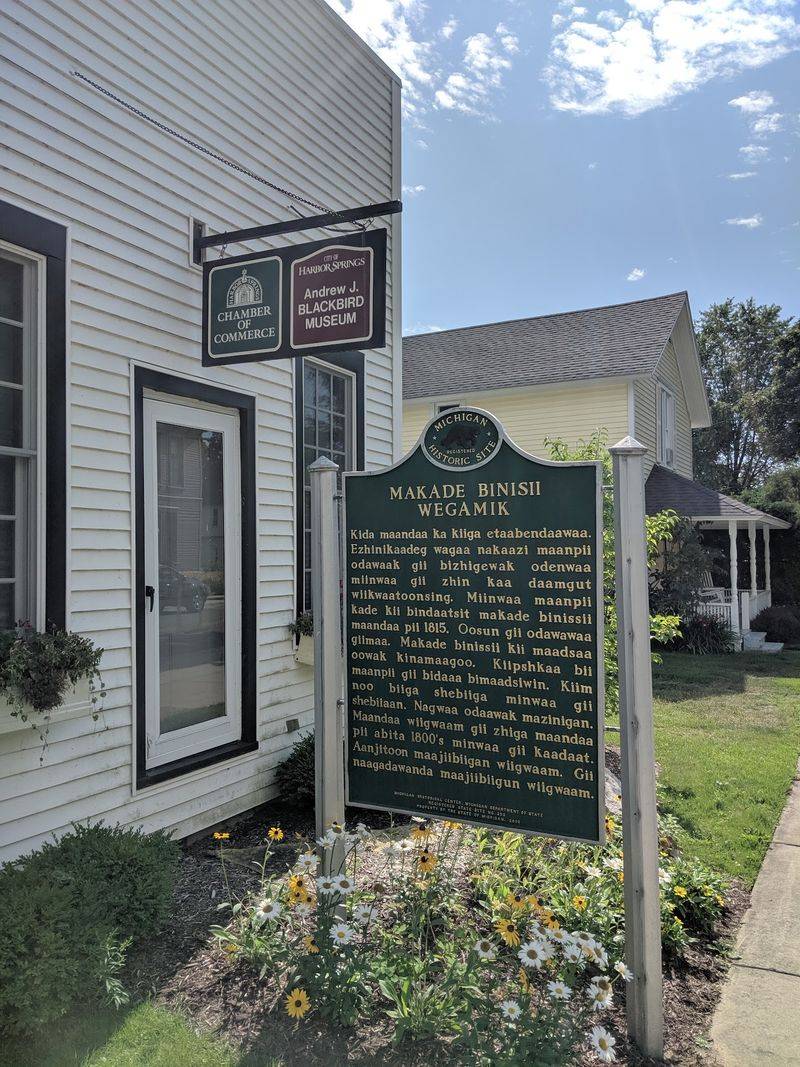
A simple tip can shape your whole visit. Read the plaque outside before heading through the door.
It gives you helpful background on Blackbird and the house. With that context, everything inside makes more sense right away.
The museum is small, and that’s part of its charm. Expect an intimate space rather than a sprawling complex with endless galleries.
That size makes it a great fit for curious travelers with limited time. You can enjoy a meaningful visit without blocking out your entire afternoon.
History lovers will appreciate the depth packed into those rooms. Families with older kids might find it a solid introduction to Odawa history in Michigan.
It also suits anyone who prefers quiet, thoughtful spaces. There are no flashing screens competing for attention, just stories and objects.
Pair your stop with a stroll along Main Street afterward. The contrast between modern shops and Blackbird’s home gives you plenty to think about.
You’ll probably notice the town differently on the walk back to your car.
One Stop Along The Harbor Springs Historic Corridor
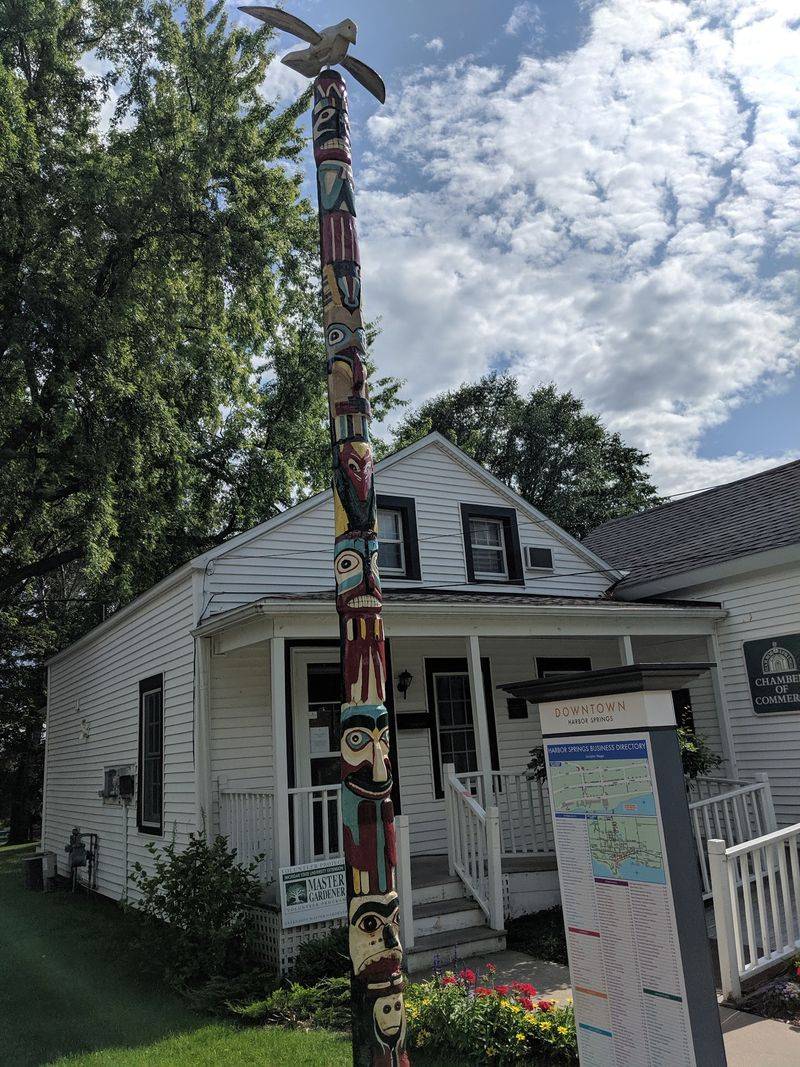
Good news for anyone who likes stacking history stops. The museum is part of the Harbor Springs Historic Corridor.
That means other local historical sites sit within easy reach. You can turn one museum visit into a fuller day exploring the town’s past.
Harbor Springs makes a lovely setting for that kind of outing. Its downtown sits close to Little Traverse Bay, so scenery comes built in.
Starting at Blackbird’s home sets the right tone for the corridor. You’ll begin with the people who lived here first, then trace how the town grew.
That order matters more than you’d think. It reframes everything else you see, from old storefronts to historic markers.
Fall could be an especially pleasant time to explore northern Michigan towns like this. Cooler weather and changing leaves make walking between sites feel like a treat.
Just check opening schedules before planning a full day. Smaller historic sites can keep limited or seasonal hours, so a little homework goes a long way.
Nobody wants to admire a locked door all afternoon.
Hours, Donations, And Finding The Front Door
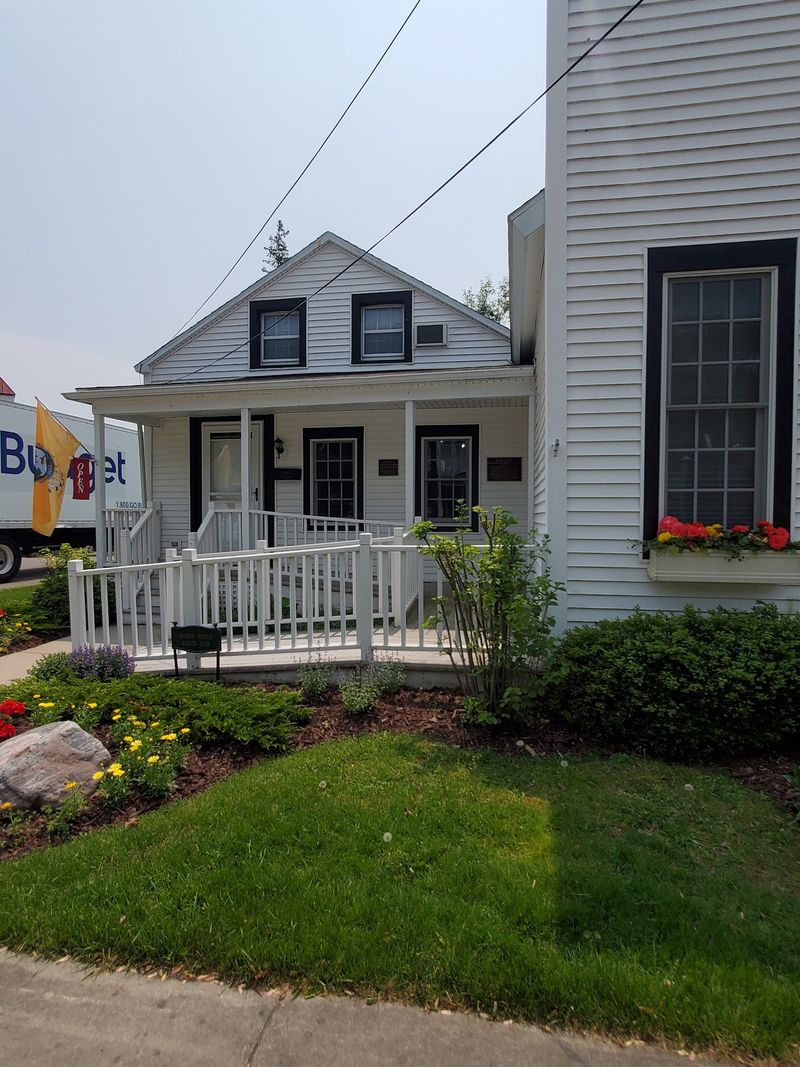
Planning ahead pays off with this one. The museum sits at 368 E Main St, Harbor Springs, MI 49740, right in town.
Hours appear limited, so timing matters. Current listings online show Saturdays from 10 am to 4 pm, though some sources mention Thursday through Saturday.
Because schedules can shift, calling ahead before your drive is a smart move. Nobody wants to cross half of Michigan for a closed door.
Admission works on a donation basis. There’s no set entry fee, and the museum relies on visitor support to keep operating.
That setup makes the experience accessible to just about everyone. It also means your contribution directly helps preserve this important history.
Harbor Springs is in Emmet County, just across the bay from Petoskey. Many visitors combine a trip here with other stops around Little Traverse Bay.
Give yourself time to park and stroll the block. Main Street is pleasant to wander, and the museum is easy to fold into a relaxed day trip.
A little flexibility keeps the whole outing stress-free.
New Exhibits On The Horizon And A Reason To Return
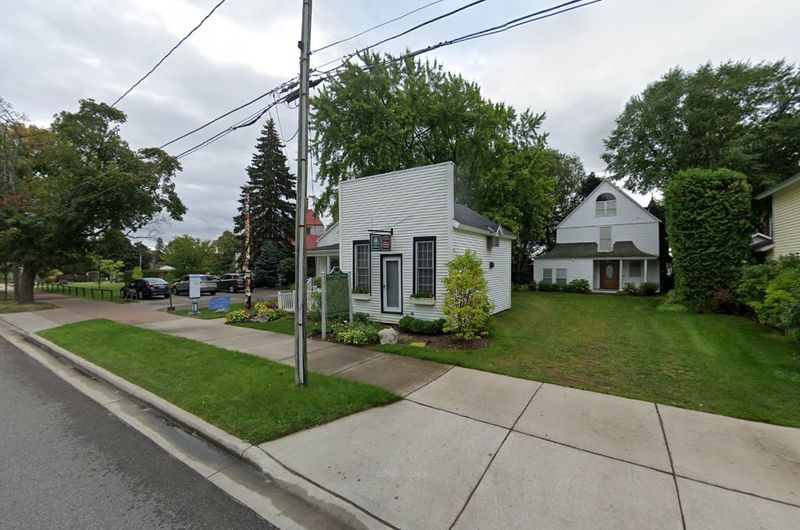
Exciting changes are coming to this little house. The museum has shared plans for new permanent exhibits, with timing mentioned for spring 2027.
That gives visitors two good options. Go now to see the current displays, then return later to experience the refreshed museum.
New exhibits could bring fresh ways to share Blackbird’s legacy and Odawa culture. It’s encouraging to see a small museum investing in its future.
So is the Andrew J Blackbird Museum worth the drive? For Michiganders who treasure overlooked heritage, I believe the answer is a confident yes.
It isn’t big or flashy, and it doesn’t try to be. Instead, it offers something rarer: honest stories in the actual home where they unfolded.
You’ll leave knowing about a postmaster, author, and advocate who shaped Michigan history. You’ll also understand Harbor Springs through the eyes of its first people.
That’s a lot of value packed into a modest Main Street house. Drop something in the donation box, read that plaque, and let Makade-binesi’s story ride home with you.
It’s a Michigan secret worth sharing.