A little post office deep in the Pine Barrens still hand-stamps mail, and it reportedly never got its own ZIP code. It sits inside an old iron village that once pulled ore straight out of the swampy ground.
Yes, really. Workers here scooped bog iron from streams and turned it into goods for a young country during the American Revolution.
The village later went quiet. The furnace cooled, families drifted away, and the sandy roads stayed put.
Today you can wander past weathered homes, a grand mansion, and old mills while tea-colored water slides by.
I like how this corner of New Jersey feels frozen mid-sentence. It’s peaceful, a little spooky, and surprisingly easy on the wallet.
So how does a busy factory town simply stop, and why does it still feel like someone just stepped out?
A Ghost Town Waiting At The End Of A Sandy Pine Barrens Road
Sand crunches under your tires long before the buildings appear. Batsto Village sits inside Wharton State Forest, the largest single tract of land in the New Jersey state park system.
The historic village belongs to the Pine Barrens, a vast stretch of pitch pine, cedar swamp, and quiet water. It feels miles from the Turnpike, even though it sits in South Jersey’s Burlington County.
What waits here is a preserved industrial village that once hummed with iron and glass work. Today it is a state historic site, with dozens of old structures still standing along shaded lanes.
You’ll find a mansion, workers’ homes, mills, a general store, and that famous little post office. Trails loop around a lake and slip into the forest beyond.
Nobody built Batsto as a tourist stop, and that’s the charm. It was a working company town, and its bones still show.
The whole place reads like a history book someone left open on a picnic table.
Pack curiosity and comfortable shoes. The rest of the afternoon tends to sort itself out.
Iron Pulled Straight From Swampy Ground
Rust-colored mud built this village. In 1766, Charles Read established an ironworks here, drawn by a resource most people would step around.
Bog iron forms when iron-rich groundwater meets the slow streams and swamps of the Pine Barrens. Workers dug the lumpy ore from creek beds and wetlands, then hauled it to the furnace.
The region had everything an ironmaster wanted. There was ore in the bogs, endless pine for charcoal, and moving water to power machinery.
Batsto put all three to work.
The name itself is often traced to a word for bathing place. That fits, since water shaped nearly every chapter of the village’s story.
Furnaces turned the raw ore into pig iron and cast goods. Think pots, kettles, and other everyday items that early American households needed.
It’s a little wild to think about while standing beside a calm stream. That reddish tint along some banks isn’t just pretty scenery.
It’s a clue to why an entire village rose from the sand, and why New Jersey played a bigger role in early industry than many folks realize.
The Furnace That Helped Supply A Young Nation
History buffs, this part is for you. During the American Revolution, the Batsto ironworks produced supplies for the Continental Army.
The furnace reportedly turned out items like cannonballs, camp kettles, and other iron goods. For a quiet village in the pines, that was a serious contribution to the cause.
Ownership shifted over the years. William Richards took control in the 1780s, and his family would guide Batsto for generations.
Under the Richards family, the village grew into a true company town. Workers lived nearby, shopped at the company store, and kept the furnace fed with ore and charcoal.
The location helped too. Batsto sat near the Mullica River, which gave access toward the coast for shipping goods out.
It’s easy to picture the clatter and smoke while strolling the grounds now. The contrast with today’s birdsong is striking.
Standing here, I can’t help thinking how much of the country’s early story happened in places that look this humble. A sandy lane and a few weathered buildings once mattered on a national scale.
That’s a pretty great reason for a day trip.
From Iron To Glass, Then Into Silence
Iron couldn’t last forever. By the mid-1800s, richer ore and coal-fired furnaces elsewhere made bog iron hard to justify, and the Batsto furnace eventually went cold.
The village didn’t give up right away. It pivoted to glassmaking, using the region’s plentiful sand, and window glass became a key product for a time.
That chapter also faded. Fires, debts, and changing markets took their toll, and the village slipped into decline.
Then came Joseph Wharton, a Philadelphia businessman, who bought Batsto in 1876. He gathered huge tracts of surrounding land and made improvements to the village and mansion.
Wharton had big ideas for the area’s water supply. Those plans never fully came together, but his land holdings shaped what happened next.
In the 1950s, the State of New Jersey purchased the property. That vast parcel became Wharton State Forest, with Batsto Village preserved at its heart.
So the quiet you hear today has layers. Furnace roar gave way to glass work, then to farming and forestry, and finally to footsteps on a historic site.
Few places wear their reinventions this openly.
A Mansion That Towers Over The Treetops
Talk about a power move. The Batsto Mansion rises above the village with a tall tower, making it clear exactly who ran the show.
The house served as home to the ironmasters and owners. Joseph Wharton remodeled it in the Italianate style, giving it the striking look you see today.
Its size stands out against the modest worker homes nearby. That contrast tells a quiet story about how a company town was organized.
Guided tours of the mansion have been offered seasonally, usually for a small fee. Schedules can change, so check with Wharton State Forest before you plan around one.
Even from the outside, the mansion is worth a slow lap. The tower, porches, and grounds make a great backdrop for family photos.
It’s also a handy landmark. Lose your bearings among the outbuildings, and you can usually spot that tower poking above the trees.
I like that it doesn’t feel stuffy from the lawn. Kids can roam, grandparents can rest on a bench, and everyone gets a peek at how the other half lived in the pines.
Rows Of Worker Homes Still Lining The Lane
Plain, sturdy, and a little haunting. The workers’ homes along the village lanes give Batsto much of its ghost-town feel.
These modest houses sheltered the families who mined ore, tended furnaces, and later worked in glass and farming. Many stand in tidy lines, as if waiting for shift change.
Walking past them hits differently than touring a grand house. These were ordinary lives, and the simple wood siding keeps that story honest.
Some buildings may be closed to the public, so enjoy them respectfully from the path. Peeking at the rooflines and windows still tells you plenty.
On a gray day, the effect can feel downright eerie. Empty porches and still yards make it easy to imagine voices that faded long ago.
Families often find this the most memorable stretch. It sparks questions about school, chores, and what kids did for fun in a company village.
That’s my favorite kind of history lesson. No screens, no lecture, just a dirt lane and a row of homes asking you to fill in the blanks.
Bring a curious kid and watch the questions pile up fast.
The Little Post Office Without A ZIP Code
Here’s a fun one to tell your friends. The Batsto Post Office is often described as one of the few in the country that never received a ZIP code.
It dates to the 1800s and has long served the village. Mail sent from here has traditionally been hand-stamped with a special Batsto postmark.
That small ritual makes it a favorite stop for collectors and postcard fans. Mailing a note from a historic village feels a lot more charming than tapping send.
Hours can be limited and seasonal, so don’t count on it being open every visit. If the door is shut, the building alone is still worth a look.
The post office sits close to other village buildings, so it’s easy to fit in. A quick detour here rarely costs much time.
Kids especially seem to love the idea of old-fashioned mail. A postcard to grandma with a Batsto stamp could become a family keepsake.
Honestly, it’s the kind of detail that makes this New Jersey village so lovable. A tiny building, a hand stamp, and a story you’ll repeat at dinner.
Old Mills Built To Run On Water Power
Water did the heavy lifting here long before electricity arrived. Batsto’s mills show how the village turned flowing streams into real work.
The sawmill processed timber from the surrounding forest. In a place surrounded by pine and cedar, lumber was a natural business.
A gristmill also served the community, grinding grain for local use. Together, these mills kept the village fed, housed, and busy.
The buildings have been restored as part of the historic site. Demonstrations have been held at times, though schedules vary by season.
Even standing still, the mills are fascinating. You can see how the lake and waterways connect to the machinery that once hummed inside.
It’s a great spot for curious kids who like knowing how things work. Gears, water, and wood make sense in a way modern gadgets rarely do.
The setting helps too. Calm water, old timber, and the hush of the pines create one of the most photogenic corners of Batsto Village.
Snap a picture, then take a moment to just listen to the water.
The Trail That Loops Around Batsto Lake
Ready to leave the buildings behind? The Batsto Lake Trail heads out from the village and curls into the surrounding forest.
The loop runs roughly four miles on mostly flat, sandy paths. That makes it approachable for many families and casual hikers.
You’ll pass pitch pines, swampy edges, and glimpses of the lake through the trees. The terrain stays gentle, but sand can make walking a bit more tiring.
Shorter nature walks are also available near the village. Those work well if little legs aren’t up for the full loop.
The eerie feeling often grows once the village slips out of view. The forest goes quiet, and the trees seem to close in a little.
Bring water, bug spray, and sturdy shoes. Ticks can be active in warmer months, so a quick check afterward is smart.
I believe this trail is the secret ingredient of a Batsto visit. History makes you curious, and then the pines give you room to think about it.
It’s a free workout with a backstory, which feels like a pretty good deal.
Tea-Colored Water That Looks Straight Out Of A Storybook
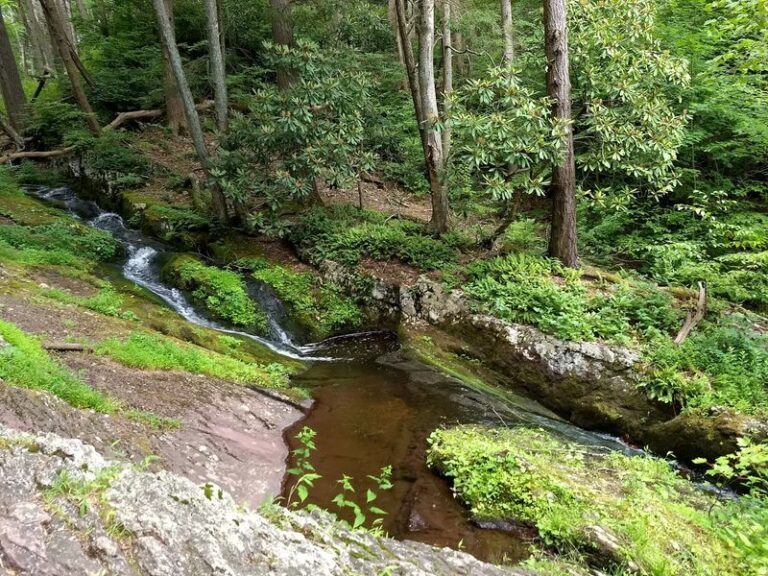
No, the water isn’t dirty. The amber, tea-like color of Pine Barrens streams comes from natural compounds released by cedar and other plants.
That same water carries iron, which helped form the bog ore that built the village. It’s a neat loop of nature and history.
The Batsto River and lake reflect the trees like dark mirrors. On a still day, the effect can feel almost unreal.
Photographers tend to love it. Morning and late afternoon light can make the reflections glow.
It also adds to the moody, slightly spooky atmosphere. Dark water and quiet pines can make even a sunny walk feel mysterious.
Kids usually have plenty of questions about the color. It’s a perfect chance to explain how plants, soil, and water work together.
The Pine Barrens sit over a huge underground water supply, which makes these waterways especially important to New Jersey. Treat them gently, stick to trails, and leave the banks as you found them.
That way the next family gets the same storybook view.
Just Spooky Enough For Curious Families
Eerie doesn’t have to mean scary. Batsto offers a gentle kind of spooky that suits families, history fans, and anyone who loves a quiet walk.
Empty homes, old mills, and a towering mansion set the mood. The surrounding pines add an extra layer of hush.
The Pine Barrens also have famous folklore, including the legend of the Jersey Devil. Batsto sits right in that storied landscape, which kids may find thrilling.
Nothing here is designed for jump scares, though. It’s more about imagination and atmosphere than anything frightening.
Photographers, walkers, and families on a budget can all find something to enjoy. Older visitors may appreciate the easy, mostly flat ground around the village.
Fall can feel especially atmospheric, with cool air and shifting light. Overcast days can lean even moodier.
It’s a place that rewards slowing down. Rushing from building to building misses the point, since the real magic is in the stillness between them.
Let the kids lead the way, and see which old building becomes their favorite story.
Paddles, Picnics, And More Pine Barrens To Explore
Batsto makes a great launchpad for a bigger day. Wharton State Forest surrounds the village with miles of trails, sand roads, and waterways.
The Batsto and Mullica Rivers are popular for canoeing and kayaking. Local outfitters in the region often rent boats, though availability varies by season.
Picnic spots near the village make an easy lunch break. Packing your own food keeps the day budget-friendly.
Longer hikes reach deeper into the forest. The Mullica River Trail connects Batsto with other parts of Wharton for more ambitious walkers.
Birders may enjoy the mix of forest and wetland habitats. Keep an eye out for wildlife along the water’s edge.
Sand roads can be soft and tricky for ordinary cars. Stick to paved routes unless you’re prepared for rougher conditions.
Pairing history with a paddle or picnic turns a short visit into a full outing. It’s a classic South Jersey day that feels refreshingly far from the crowded shore.
And it proves that New Jersey has plenty of wild room once you know where to look.
Getting There Without Getting Lost In The Pines
Plug in Batsto Village Rd, Washington, NJ 08037, and your GPS should guide you in. The village sits in Washington Township, Burlington County, near the Hammonton area.
A visitor center near the village entrance is a good first stop. It typically offers exhibits, maps, and helpful information about Wharton State Forest.
Walking the village grounds has generally been free. Mansion tours have usually carried a modest fee, and seasonal parking fees may apply.
The grounds are commonly open during daylight hours. Building and tour hours vary by season, so check with the state park service before heading out.
Restrooms have been available near the visitor center area. Cell service in the Pine Barrens can be spotty, so download directions ahead of time.
Bring water, snacks, and bug spray. Food options right at the village are limited.
Weekends in nice weather may draw more visitors. An earlier start can make the trails feel calmer and leave more time to explore.
A little planning goes a long way out here, where the pines stretch farther than your signal.
Why This Quiet Iron Village Deserves Your Next Free Afternoon
Few day trips pack this much story into such a peaceful setting. Batsto Village blends Revolution-era history, Pine Barrens scenery, and a gentle eerie streak.
You get a towering mansion, old worker homes, water-powered mills, and a post office with a quirky claim to fame. Then the lake trail pulls you into the woods.
Best of all, much of it can be enjoyed for little or nothing. That makes it an easy yes for families watching their budget.
It also shows a side of New Jersey many people never see. Sand roads, cedar water, and silent pines feel worlds away from highway traffic.
Kids can learn something without realizing it. Adults can unplug and enjoy the quiet.
I’d suggest pairing a village stroll with at least part of the Batsto Lake Trail. Add a picnic, and you’ve built a pretty perfect afternoon.
The furnace went cold long ago, but the village still has plenty to say. Go listen, mail a postcard, and let the pines tell the rest.
You might leave planning your next trip back.