A telescope with a mirror 200 inches wide sits on a Southern California mountain, and you can pitch a tent within walking distance of it. Astronomers chose that summit for a reason.
Dark, high, steady air is rare, and our state still has plenty of it.
That same recipe shows up on volcanic slopes up north and granite domes in the Sierra. A few of these summits sit inside International Dark Sky Parks.
The rest are high pullouts, campgrounds, and trails where city glow can’t reach.
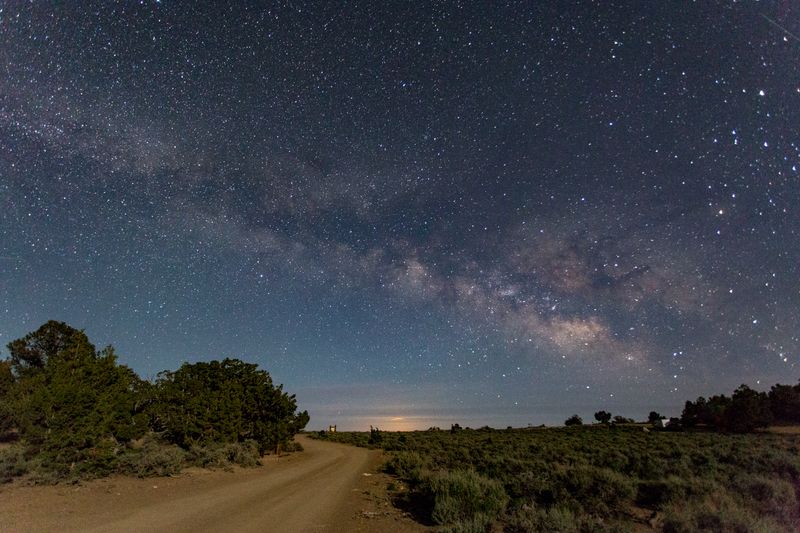
I love that you don’t need an observatory pass to see the Milky Way like this. A jacket, a thermos, and a full tank of gas will do.
Moonless nights from late spring through early fall tend to show off the bright galactic core.
Which California ridge gets your next late night? Let’s go find a summit where the sky does the heavy lifting.
1. Mount Pinos
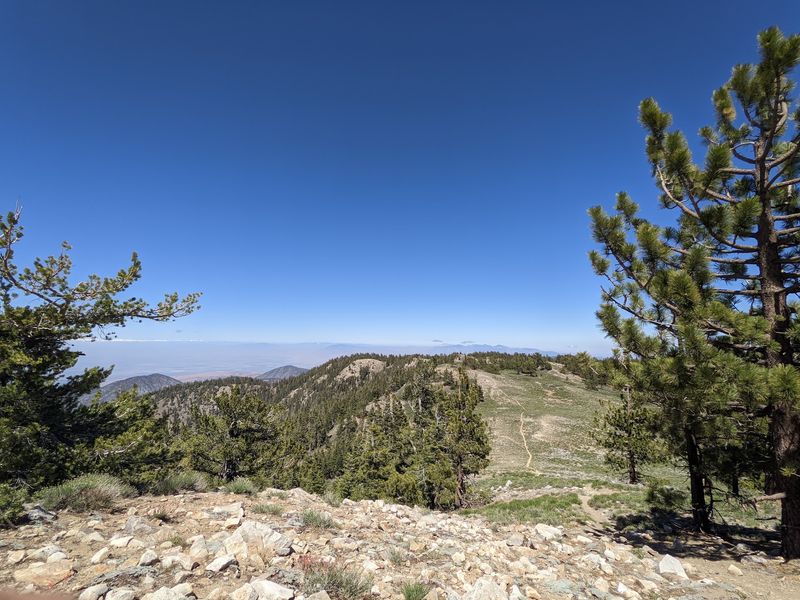
Southern California hides a peak that rises past 8,800 feet, and most freeway drivers never guess it exists. Mount Pinos straddles Kern and Ventura Counties, a short climb from the Frazier Park area.
Height is the whole trick here. Up this high, you leave a big chunk of hazy air below you, and the stars sharpen noticeably.
Getting to the top is refreshingly reasonable. The hike to the peak is fairly easy, and the woodsy trail tends to stay quiet and uncrowded.
Bring the dog along, too. The mountain is known as dog-friendly, with scenic lookouts that reward you long before sunset.
Daytime brings wildflowers and broad views, so you can arrive early and explore. Once the light fades, the sky becomes the main event, and that’s when this peak really earns its spot.
Camping nearby makes it easy to stay for the late show. Plan ahead on one practical point, since restroom options at the summit area are limited.
Pack layers even in summer. High summits cool off fast once the sun drops.
Address: California 93225
2. Minaret Vista, Mammoth Lakes, CA
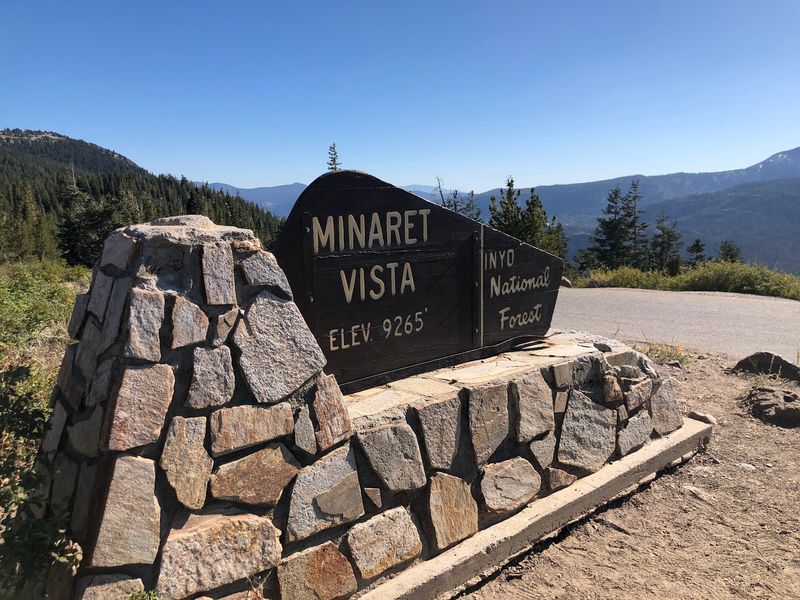
Jagged spires that look like a row of broken teeth make one wild backdrop for the night sky. That skyline belongs to the Minarets, and the best seat in the house is a ridge just outside Mammoth Lakes.
Minaret Vista sits along Lookout Point Road, high above the valley. From the overlook, you can even peer down toward Devils Postpile.
Sunset pulls a crowd, especially on Friday and Saturday evenings. Stick around after the colors fade, though, because the stars put on a far bigger show.
Clear nights here can be packed with stars. The craggy Minarets turn into black silhouettes, and photographers love framing a lone tree against the glitter.
The overlook is listed as open 24 hours, which suits night owls nicely. There’s also a restroom on site, a small luxury on a mountain ridge.
Timing matters in the Eastern Sierra. Weeknights tend to be quieter, so a Tuesday visit may give you more elbow room under the sky.
Address: Lookout Point Rd, Mammoth Lakes, CA 93546
3. Grandview Campground, Bishop, CA
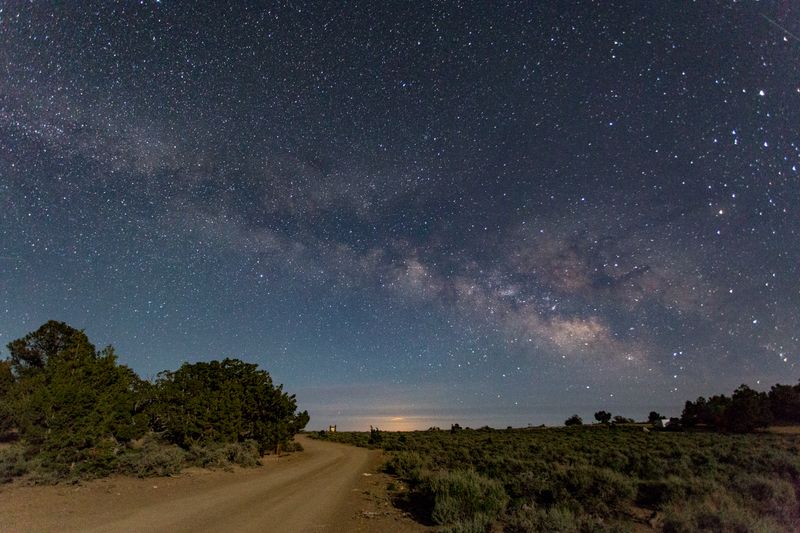
Amateur astronomers have a favorite trick for escaping light: drive up White Mountain Road until the towns disappear. Grandview Campground waits around 8,600 feet in the White Mountains above Bishop.
The name isn’t bragging. The campground is known as ideal for stargazing, with large sites that leave room for tripods and telescopes.
Comfort is basic, so plan like a pro. There’s no water and no electricity, and cell service is mostly a rumor unless you climb a nearby peak.
That remoteness is the point. Without city glow nearby, the Milky Way can stretch across the whole dome of sky on a clear night.
You’ll find tent sites, room for RVs, and a restroom that stays clean. Dogs are welcome, and parking sits right on site.
Fill your water jugs in Bishop before heading up. A warm sleeping bag helps too, because nights at this height get chilly even in July.
Address: White Mountain Rd, Bishop, CA 93514
4. Storm Canyon Vista Trailhead, Mt Laguna, CA
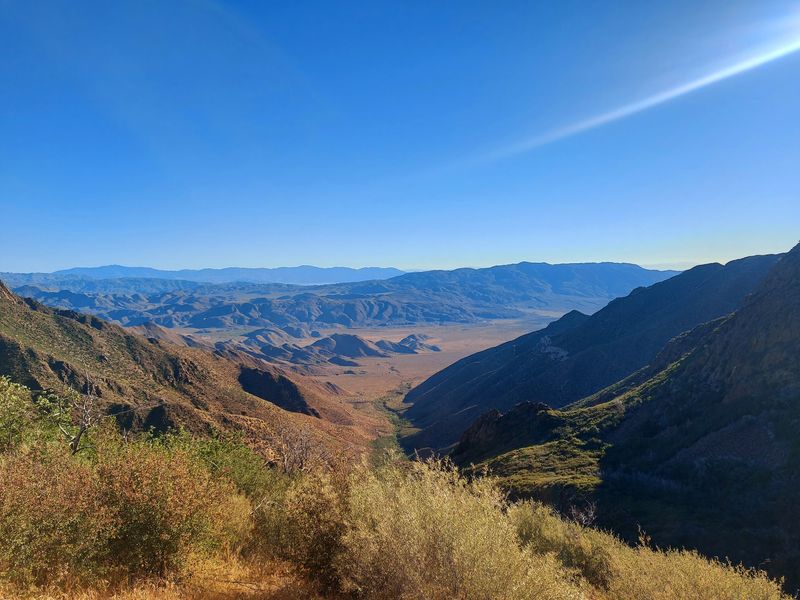
Two worlds meet at this pullout on Sunrise Highway. Behind you stands a pine forest, and in front of you the ground drops away toward the desert.
The overlook sits at about 6,000 feet in the Laguna Mountains east of San Diego. Below spreads the desert floor and Anza-Borrego Desert State Park.
That huge, mostly empty desert is your secret weapon. With so little development out there, the eastern horizon stays dark, and the Milky Way can rise in plain view.
Fresh mountain air and the scent of the forest add to the experience. You get a front-row seat without a long hike.
The trailhead is listed as open 24 hours. That makes it a handy stop for San Diego folks who want a late drive instead of a full camping trip.
Wednesday nights can draw a crowd, so pick another weeknight for more quiet. Bring a red flashlight to keep your eyes adjusted.
Address: 11631-11737, County Rte S1, Mt Laguna, CA 91948
5. Olmsted Point, TUOLUMNE MEADOWS, CA
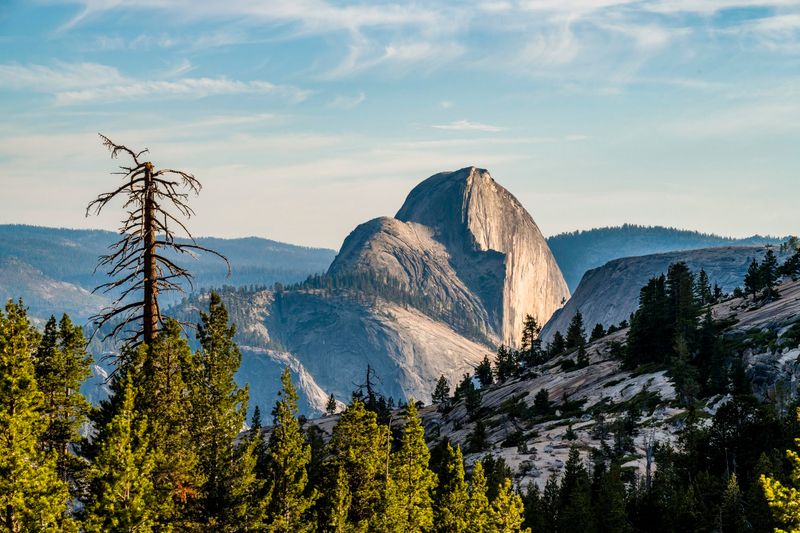
Half Dome looks completely different from behind, and few people ever see that angle under the stars. Olmsted Point gives you exactly that view from Tioga Road.
The pullout sits around 8,400 feet in Yosemite’s high country. From here, you look down Tenaya Canyon toward the north side of Half Dome.
Daytime visitors hop out, snap photos, and roll on. After dark, the busy pullout often turns quiet, and the night sky takes over.
A short trail leads across granite to an even better perch. The spot is also known as a great place for stargazing, with Yosemite spread below.
Bare granite and few trees mean a wide-open sky. Picture the Milky Way rising over the dome you usually see only from the valley floor.
Timing is everything here. Tioga Road closes seasonally in winter and spring, so check park road status before you set out for a summer night.
Address: Tioga Rd, TUOLUMNE MEADOWS, CA 95389
6. Glacier Point
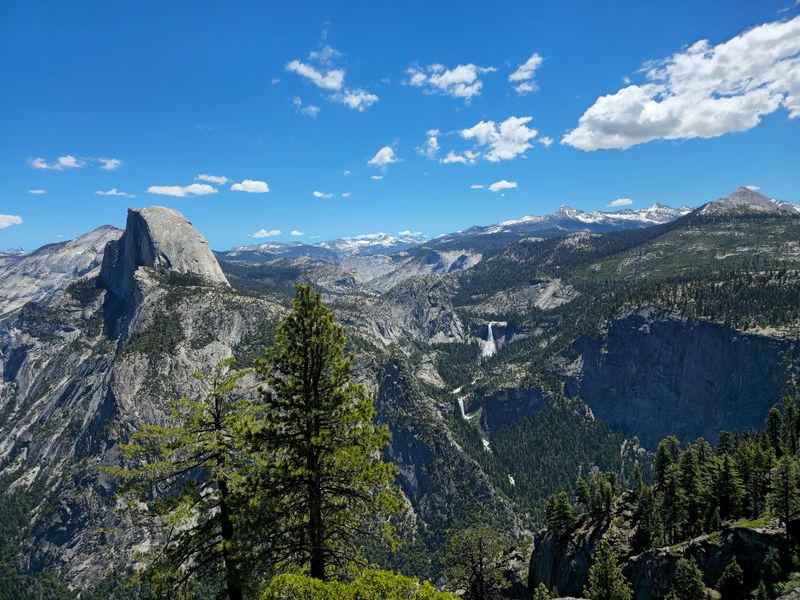
Postcard fame usually belongs to daylight, yet this overlook may be even better at midnight. Glacier Point stands at 7,214 feet on the rim above Yosemite Valley.
The view is top-down and dizzying. Half Dome, Yosemite Falls, Nevada Fall, and Vernal Fall all line up in one sweep.
When darkness falls, that skyline turns into black cutouts against the stars. The Milky Way can arch right over Half Dome on summer nights, a sight that feels unreal.
Getting here is easy compared to most mountaintops on this list. You can drive up to a free parking lot, or hike in on several trails.
Early risers get a bonus too. The point is a favorite for sunrise, so a night of stargazing can roll right into dawn.
Glacier Point Road closes for winter, so plan your trip for the warmer months. Check Yosemite park alerts before driving, since access rules can change by season.
Address: Glacier Point Rd, Yosemite National Park, California
7. Dante’s View
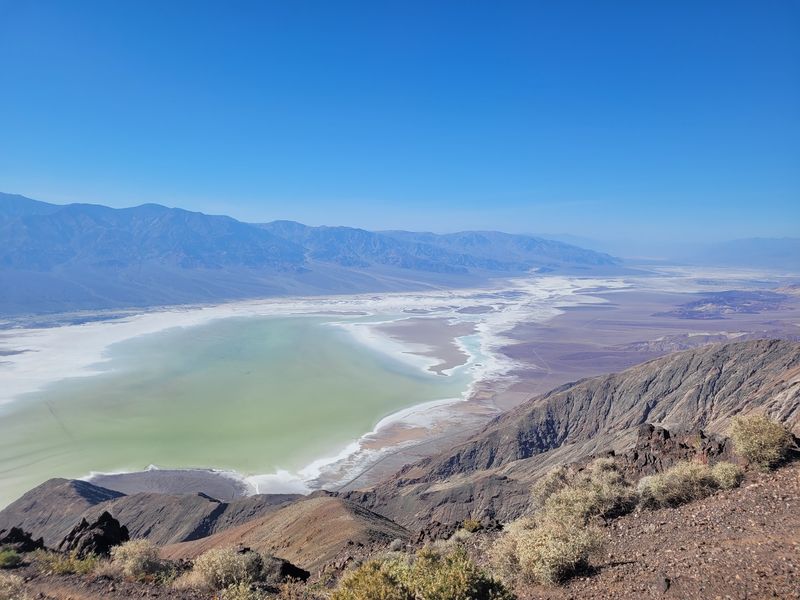
Standing over a mile above the lowest point in North America sounds like a riddle. At Dante’s View, it’s just the scenery.
The viewpoint perches at 5,575 feet in the Black Mountains. Far below sits Badwater Basin, white salt flats stretching across the valley.
The vista spans more than 180 degrees with very distant sightlines. Sunset here is famously impressive, painting the far Panamint Range in color.
Then the real show begins. The surrounding national park is a Gold Tier International Dark Sky Park, one of the darkest places in the lower 48.
On a clear night, the Milky Way can run from horizon to horizon. That desert air makes the stars look sharp enough to touch.
The drive up is short but steep, and a small trail leads to even better angles. A rest and picnic area makes it easy to wait for full darkness.
Cooler months are kinder for this part of California. Summer heat lingers down low even after sunset.
Address: Dante’s View Rd, Inyo County, California
8. Observatory Campground, Palomar Mountain, CA
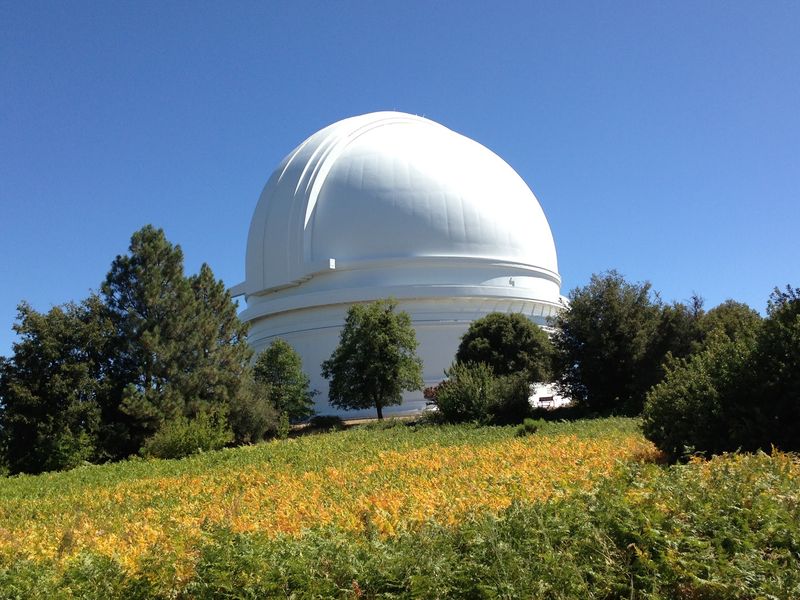
Camping next door to one of the world’s most famous telescopes is a pretty good flex. Observatory Campground sits near the summit of Palomar Mountain, above 5,000 feet.
A trail leads from the campground to Palomar Observatory. Its legendary 200-inch telescope is open to the public for tours.
Here’s the fun part for families. Astronomy enthusiasts often roll in with big telescopes and let fellow campers take a peek.
Moonless nights tend to bring out the most gear. Plan around the lunar calendar if you want the best shot at a guided look.
Comforts beat most mountain sites. You’ll find running water, restrooms, coin-operated showers, and RV water hookups.
Tent pitches sit among forested trails, and dogs are allowed. Parking is paid, so plan for that when you arrive.
Palomar draws plenty of San Diego campers in warm months. Reserve early if you have a specific dark weekend in mind.
Address: Observatory Campground Co Hwy S6, State Park Rd #21485, Palomar Mountain, CA 92060
9. Desert View Park, Julian, CA
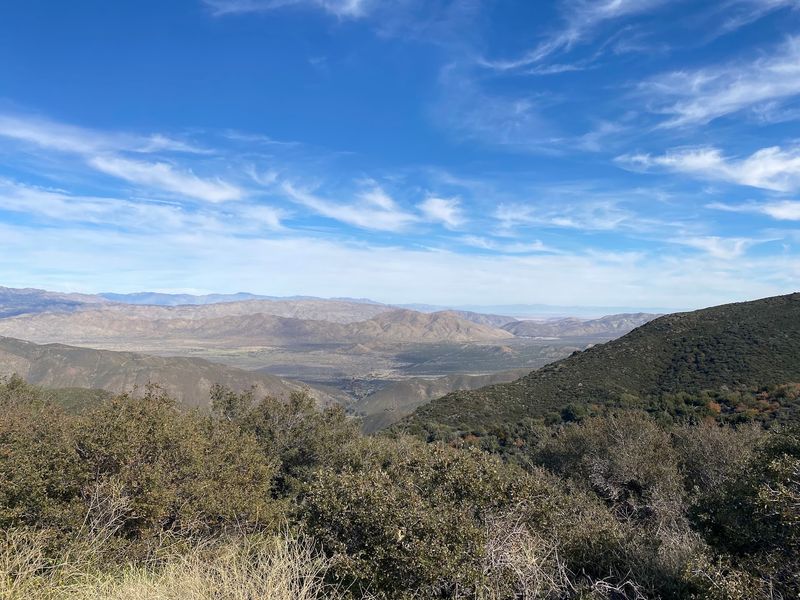
Apple pie gets most of the credit in Julian, but the sky above town deserves a slice of fame. Desert View Park sits on Inspiration Point Road, a quick hop from the historic main street.
The lookout faces east over the Anza-Borrego Desert. On clear days, the mountain ranges and desert stretch for miles.
After sunset, that empty desert becomes your darkness bank. Few lights out there means stars can pile up fast once twilight ends.
The park is known as a peaceful spot for desert views and stargazing. It usually stays quiet, which suits slow sky watching.
Keep expectations simple. There are no picnic tables, so a camp chair or blanket makes the evening far more comfortable.
Parking is free, which makes a spontaneous stop easy. Pair it with fall apple season in Julian for a full California day trip.
Air quality can change how far you see. Pick a crisp, clear evening for the best results.
Address: Inspiration Point Rd, Julian, CA 92036
10. Bunny Flat Trailhead, McCloud, CA
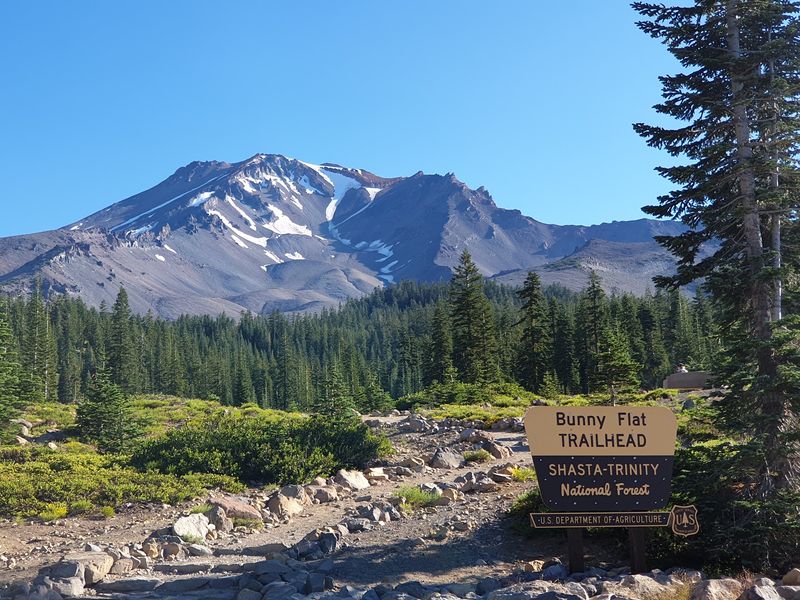
Mount Shasta looks enormous by day, and somehow even bigger as a dark shape blocking out the stars. Bunny Flat puts you right on its southern flank at about 6,950 feet.
The trailhead sits along Everitt Memorial Highway. It’s the only trailhead on the mountain plowed to a parking area in winter.
That makes it a rare year-round option for Northern California sky watchers. Snow access is easy, which means a winter night here can feel truly alpine.
The night sky earns serious praise. With few cities nearby, the stars can crowd around the peak like a frame.
Practical perks help. You’ll find a free parking lot, two bathrooms, and dogs allowed outside.
One thing you won’t find is water. Bring plenty, plus extra layers, because the mountain makes its own chilly weather.
Weekends get busy with hikers. Thursday evenings tend to be quietest, which is good news for stargazers.
Address: Everitt Memorial Hwy, McCloud, CA 96057
11. Sentinel Dome
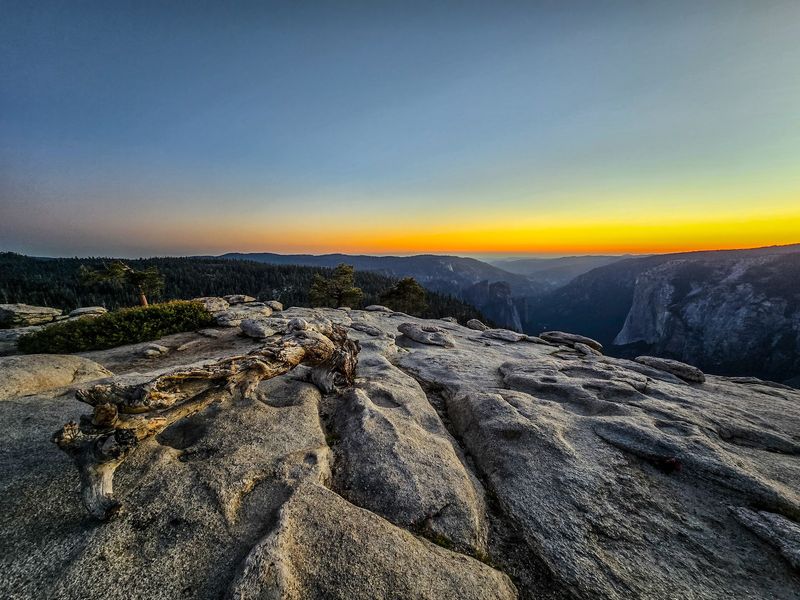
Few summits give you a full 360-degree view for such a short walk. Sentinel Dome rises to 8,127 feet, and the bare granite top feels like a giant observation deck.
From the summit, Yosemite Valley, Half Dome, El Capitan, and the High Sierra peaks circle around you. Not much blocks your line of sight in any direction.
That wide-open crown is perfect for night skies. The whole sky opens up, and the Milky Way can sweep from one edge to the other.
The shortest route is about a mile from the trailhead on Glacier Point Road. A longer three-mile loop adds more challenge.
Night hiking calls for care. Bring a headlamp, sturdy shoes, and a friend, and scout the trail in daylight first.
The final climb crosses smooth granite slabs. Take it slow on the way down, when tired legs and darkness team up.
Like Glacier Point, this spot depends on seasonal road access. Summer and early fall are your best bets.
Address: California 95389
12. Lassen Peak
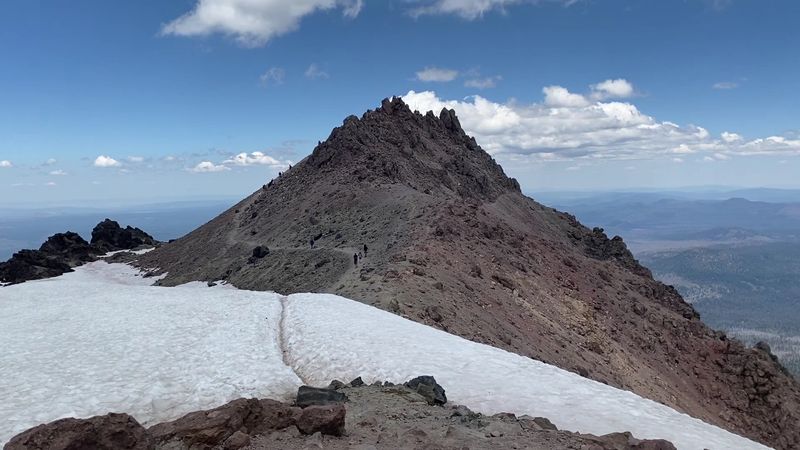
An active volcano topping 10,460 feet makes a dramatic final stop. Lassen Peak rules the skyline of Lassen Volcanic National Park in Northern California.
The park is an International Dark Sky Park, so protecting darkness is part of the plan. It also hosts astronomy events in summer, which are worth watching for.
The summit trail is a five-mile round trip with about 2,000 feet of gain. Most hikers need two to three hours.
Wear real hiking shoes and pack a jacket. Plenty of water matters too, because thin air dries you out faster than you’d expect.
On clear days, the summit view reaches all the way to Mount Shasta. That’s two volcanic giants in one glance.
For stargazing, the trailhead and high slopes are your friends. Dry mountain air helps the Milky Way show crisp detail after dark.
Snow can linger well into summer here. Check trail conditions before you go, and enjoy a California sky that feels endless.
Address: Lassen Volcanic National Park, California