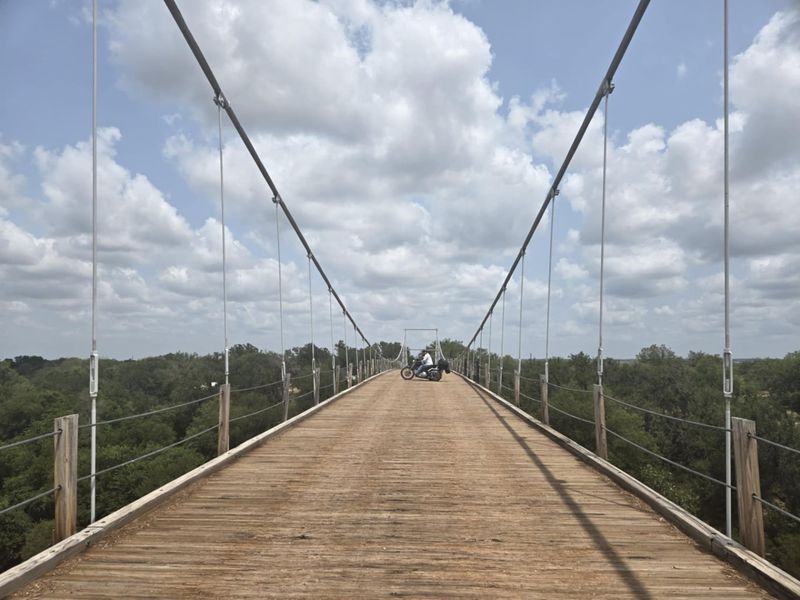
Some of the best Texas finds sit at the end of a gravel road you almost talked yourself out of driving. Out in the quiet middle of the state, a skinny wooden bridge hangs high over a river and moves when you cross it.
It has no gift shop, no ticket booth, and no fancy signs, yet people leave talking about it for weeks. If you love old places that never bothered to change, this one is worth the dust on your tires.
A Wooden Crossing on the Colorado
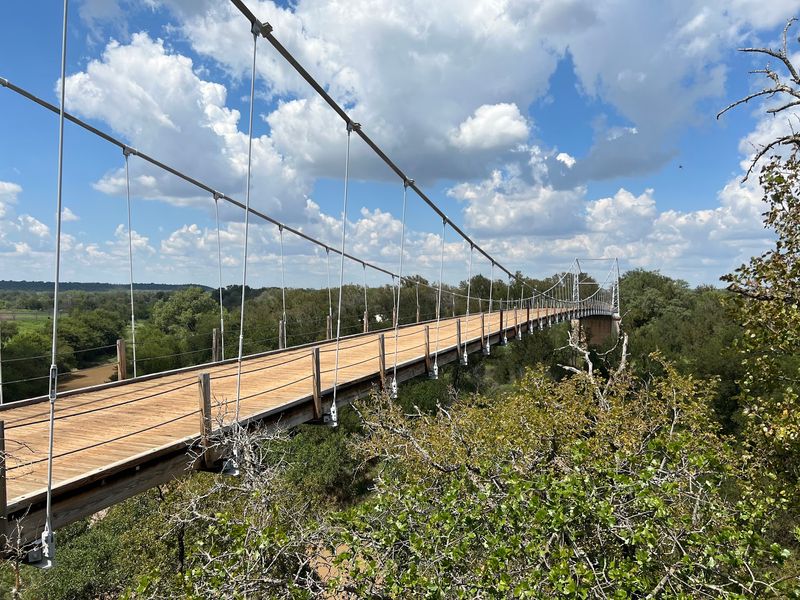
Picture two gravel county roads meeting in the middle of nowhere, with a river between them. That meeting point is the Regency Suspension Bridge, a one-lane wooden crossing that locals have long called the Swinging Bridge.
It stretches over the Colorado River and joins Mills County to San Saba County.
The official mailing spot is 987 County Road 137 near Richland Springs, though the bridge itself sits where Mills County Road 433 meets San Saba County Road 137. The closest landmark is the tiny community of Regency, which is more of a name on the map than a town.
Visitors often say it feels close to the geographic center of Texas, and that is not far off.
What makes it special is simple. It is the last suspension bridge in Texas still open to cars.
You can walk it, drive it, or just stand nearby and listen to the boards creak.
No big signs lead the way, and that is part of the charm. It feels like a secret shared by back-road drivers who know where to look.
Two Bridges Lost, a Third Built to Last
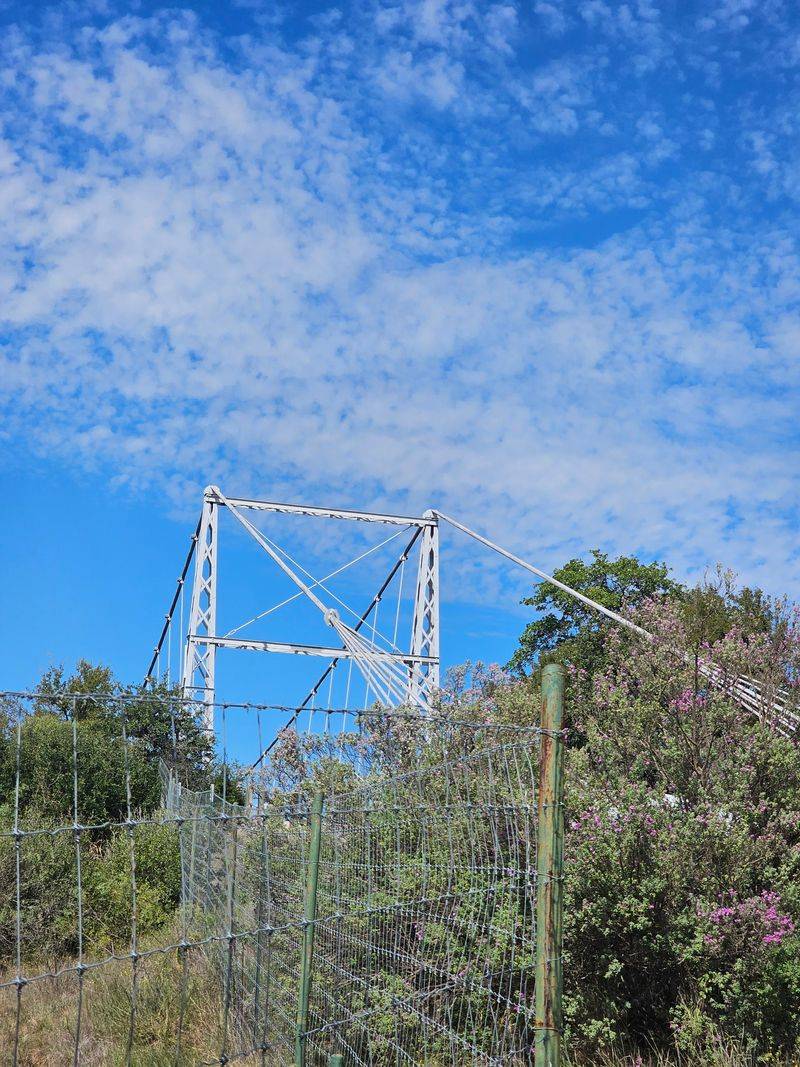
Third time really was the charm here. Before the current bridge went up, two earlier crossings stood in the same spot, and neither lasted long.
The first one, built in the 1920s, gave way in 1924 under the weight of a herd of cattle.
A replacement followed, but a flood swept it away in 1936. Ranch families on both sides of the river needed a way across, so work began again.
In 1939, the bridge you see today was finished, much of it built by hand labor.
That makes it about 87 years old now. Think about that for a second: it has watched the Colorado River rise and fall for nearly nine decades.
Hand tools, hard work, and stubborn determination made this crossing happen during tough times. Standing on those planks, it is easy to picture crews hauling cable in the Texas heat.
Few roadside spots carry that much quiet history.
Cables, Planks, and Sixteen Feet of Nerve
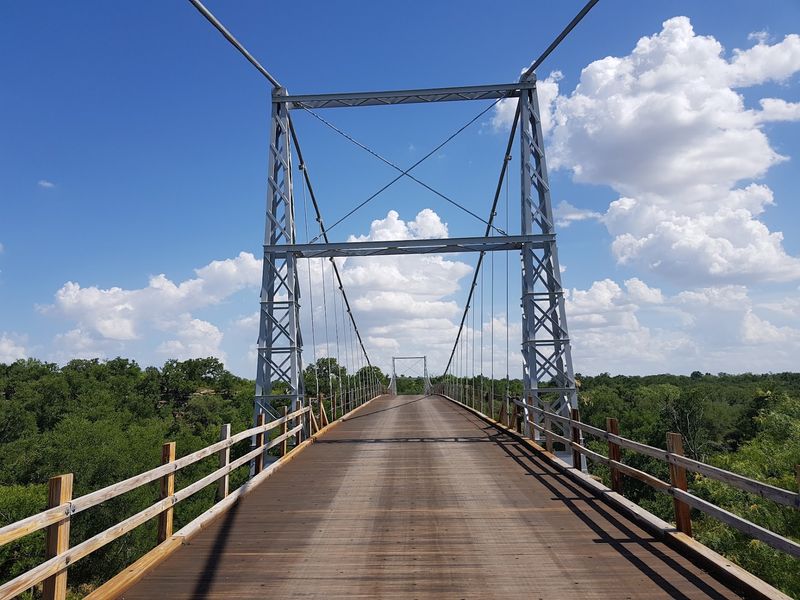
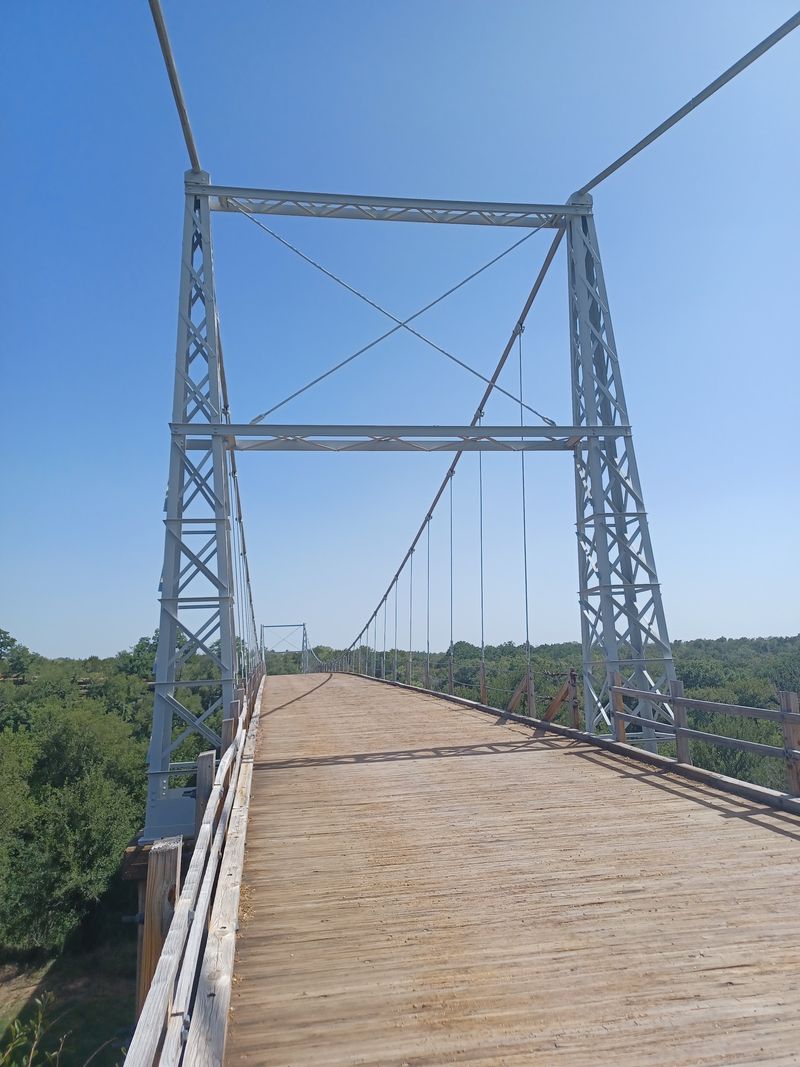
Sixteen feet. That is the full width of the wooden deck, which explains why only one car fits at a time.
Pull up to the edge and the bridge looks almost narrow enough to touch both rails.
The main span runs about 343 feet, and the full length with approaches reaches around 403 feet. Some sources list slightly different numbers, but everyone agrees it is long enough to make your palms a little sweaty.
The whole thing hangs about 75 feet above the river.
Holding it up are two steel cables, each 3.75 inches across. Each one is made of 475 strands of galvanized wire twisted together.
Engineering fans tend to stop and stare at those cables for a while.
There is nothing flashy about the design. It is wood, wire, and towers, built to do one job and do it well.
Modern bridges hide their bones, but this one shows every piece proudly.
That Famous Sway Under Your Tires
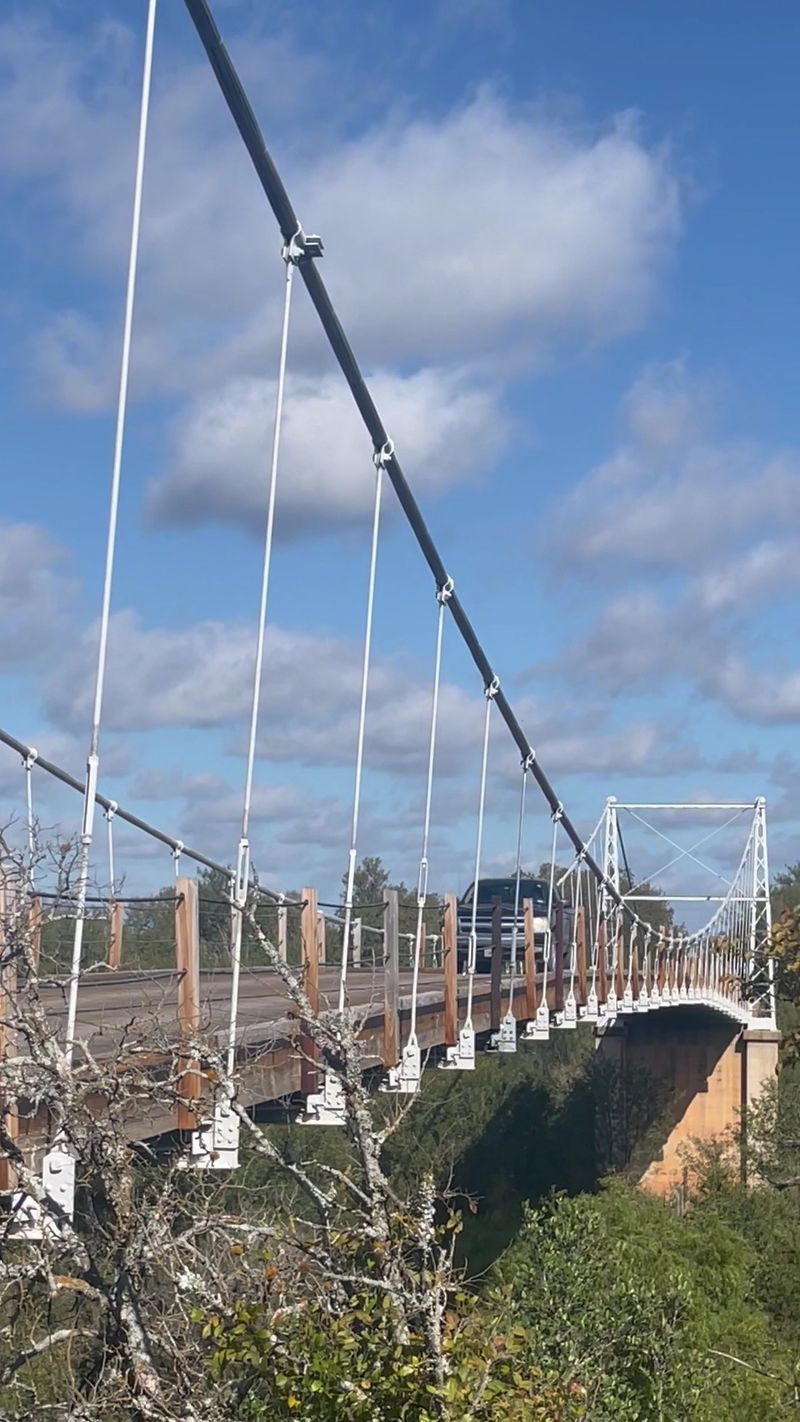
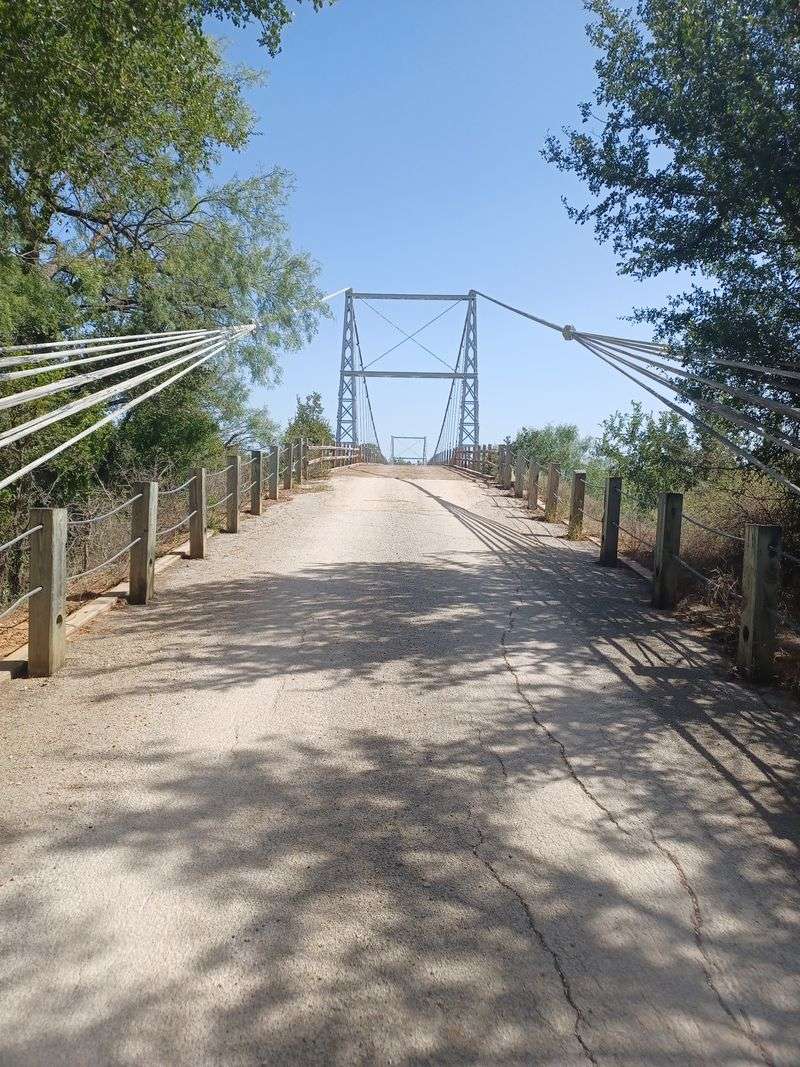
Roll onto the planks and you will feel it right away. The deck dips, the boards creak, and the whole span seems to breathe under your wheels.
People compare it to a roller coaster or climbing a rope ladder in a car.
Visitors who walked it while a car crossed say the movement is very real. Wind can make it shake too, and so can someone hopping on the deck.
Some folks admit to a little dizziness up there.
Funny enough, a few drivers say it feels fairly normal from inside the car. Walking is where the bounce really shows up.
One visitor described being nervous on the first drive, then crossing two more times feeling brave, though still going slow. That is the usual arc here.
Nerves first, grins after.
Take it easy and keep your speed low. The bridge is sturdy and inspected, but it was built for patience, not hurry.
Walking the Span on Foot
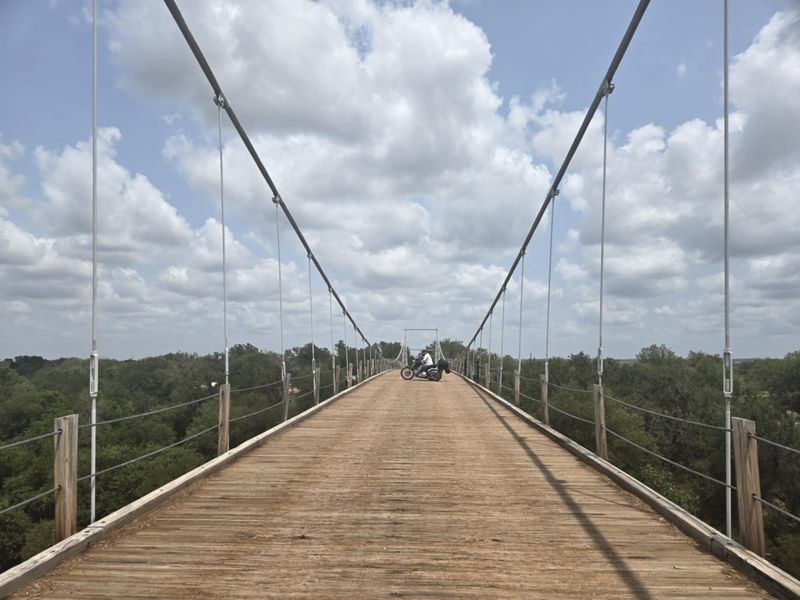
Here is a tip regulars swear by: park and walk it. Driving is fun, but strolling the planks gives you the full experience.
You feel every little bounce and hear the wood talk back.
Visitors describe the walk as both thrilling and peaceful at once. Being so high above the river can make you feel like you are floating.
If a car rolls by while you stand there, hold on and enjoy the ride.
Heights not your thing? Some guests suggest staying back from the edge, and that is fair advice.
Plenty of families choose to walk across and skip the drive altogether.
A posted sign has limited foot traffic to a set number of people at times, so read any notices before heading out. Rules can change after inspections.
Kids usually love the bounce, but keep little hands close to grown-up ones.
Views of the River Seventy-Five Feet Down
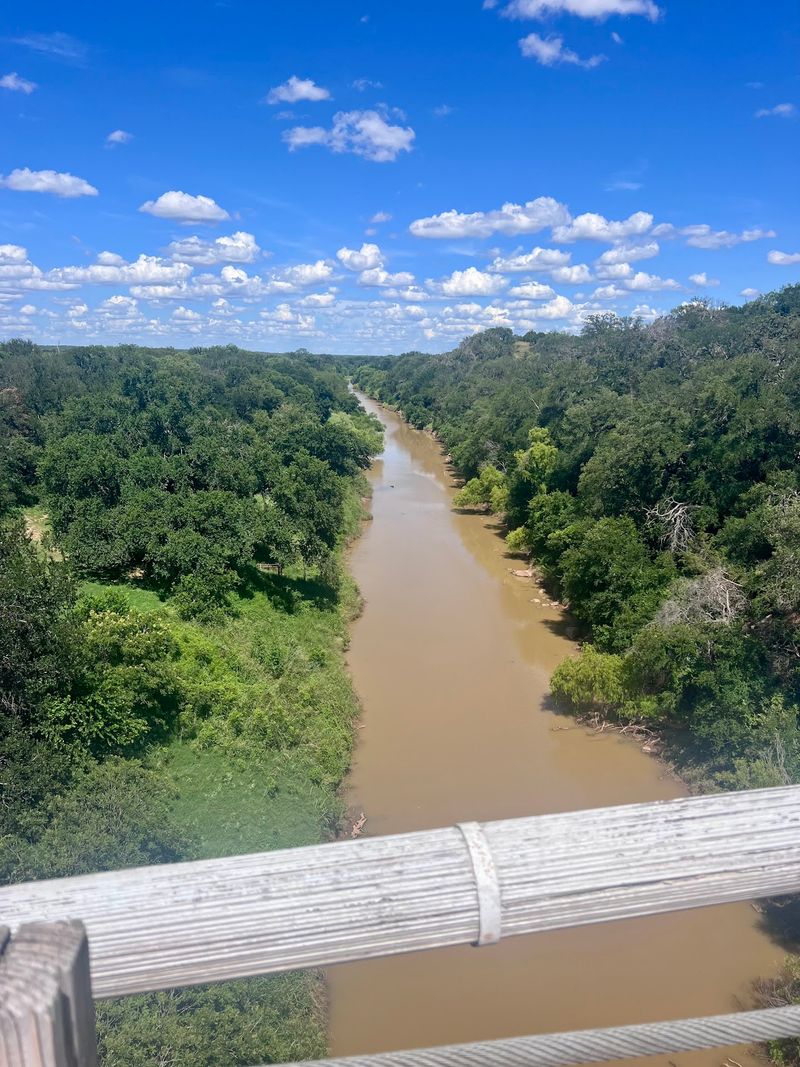
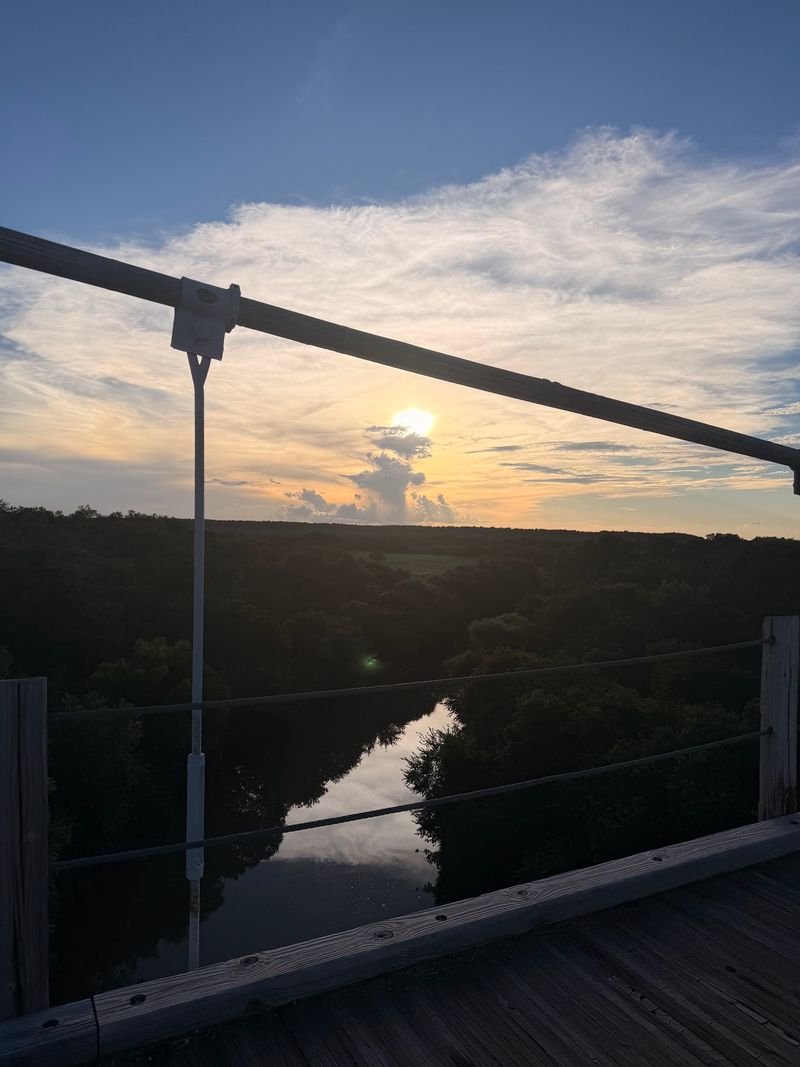
Look over the rail and the Colorado River winds below like a green ribbon. The banks are lined with trees and rock, and the water moves slow and lazy most days.
It is the kind of view that makes you go quiet.
Sharp-eyed visitors have spotted turtles, fish, and even snakes in and along the water. Bring binoculars if you have them.
Wildlife watching here can be surprisingly rewarding.
Many call this the most peaceful crossing of the Colorado anywhere in the state. With no buildings or highways around, nothing interrupts the scenery.
One catch: there is no public river access right at the bridge. A nearby private RV park sits on the far side, and access to the water is mostly for its guests.
Enjoy the river from above, and save the toes-in-the-water plans for another stop.
Sunset Hour at the Swinging Bridge
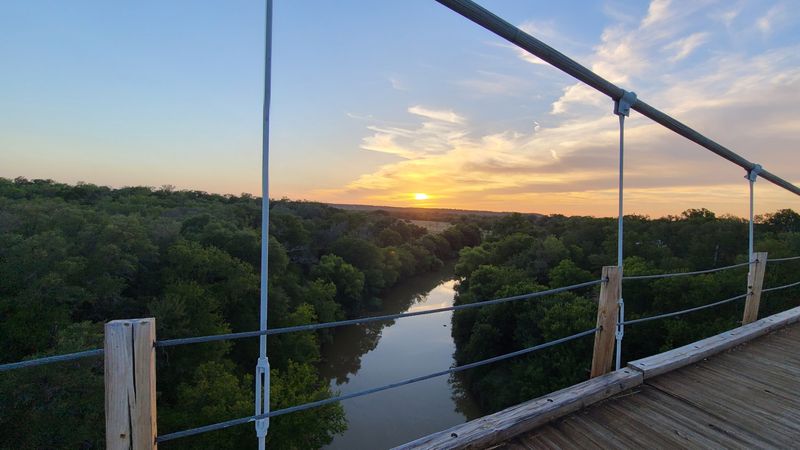
Ask around and one bit of advice keeps coming up: go at sunset. The sky turns orange and pink behind the cables, and the river catches every color.
Photographers practically camp out for it.
Timing matters in summer too. One visitor noted a day that hit 107 degrees, but by the time the sun dipped low it was cooler, with no direct sunlight.
After dinner is a smart window when Texas heat is cranked up.
Evenings also tend to be quiet. Some guests say they saw no other cars for miles.
Just you, the bridge, and a slow fade into dusk.
Spring is another sweet spot, when the hill country drives turn green and wildflowers may pop up along the roads. Bring a camera, a jacket for breezy evenings, and maybe a folding chair.
Senior and prom photos have even been shot here, and it is easy to see why.
Closures, Repairs, and a Bridge That Keeps Coming Back
Old bridges need love, and this one has received plenty. A major restoration took place from 1997 to 1999, giving the span new life.
People cared enough to save it rather than tear it down.
In December 2003, a fire damaged the wooden deck. Crews repaired it, and the bridge opened again.
That kind of comeback says a lot about how much this place matters to locals.
More recently, it closed in September 2020 because of structural damage. After repairs, it reopened to traffic in May 2021.
The Texas Department of Transportation inspects and overhauls it regularly.
Because of this history, it is smart to check current status before a long drive. Closures can happen with little notice.
Even when cars are not allowed, visitors have still enjoyed walking across.
Quiet Country Charm and Who Will Love It
Silence is the soundtrack out here. Visitors say all they hear is nature, with no traffic noise at all.
For city folks, that alone is worth the trip.
History buffs will feel right at home. So will photographers, couples on a weekend drive, and families who like a little adventure without a price tag.
Fans of Texas Country Reporter may even recognize it from the show.
Thrill seekers get their fun too, thanks to that bounce. Nervous types can stick to walking, or just admire it from solid ground.
It can get busy with visitors at times, especially on nice weekends. Even then, the mood stays friendly.
Some guests mention chatting with kind locals who stopped by to share stories.
If you like your landmarks humble and unchanged, this is your kind of place. No crowds of shops, no snack stands, just a proud old bridge doing its thing.
Getting There: Gravel, Gas, and Good Planning
Fill your tank first. More than one visitor warns not to head out low on gas, since stations are far apart.
That is advice worth taking seriously.
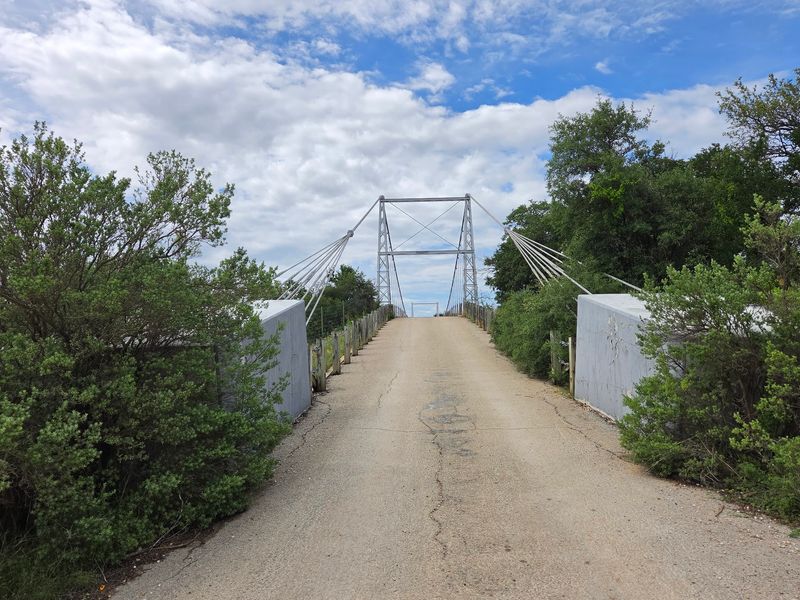
Both approaches are gravel or dirt roads. One traveler mentioned driving about three more miles of dirt after crossing to reach the main road again.
After heavy rain, those roads can get rough, so plan around wet weather.
From downtown San Saba, the trip is roughly 25 minutes. Any car can manage the roads in dry conditions, though a slow pace helps.
RV owners, take note. The bridge has a weight limit, and a large rig may exceed it.
Check ahead with the nearby RV park about the best route instead of assuming you can cross.
Parking is limited to a few spots along the roadside. Pull over carefully and leave room for others.
Free, Open, and Worth Every Mile
Price of admission? Zero dollars.
There are no fees, and the site is listed as open 24 hours, every day of the week. That is about as old-school as Texas gets.
For questions, the listed phone number is 830-282-1734. Hours and access may change during inspections or repairs, so a quick check before leaving home can save a wasted drive.
So is it worth it? For anyone who loves real history you can touch, the answer leans strongly yes.
Few places let you drive across something built by hand in 1939 and feel it move beneath you.
Bring a full tank, a camera, and a little courage. Time it for a cool evening, roll across slow, then park and walk it back.
You will likely drive home grinning, already planning a return trip with someone who has not seen it yet.