Whistle posts from an 1892 railroad still stand beside a path where bikes now roll instead of trains. The rails are gone, but the old mile markers stayed put, like they never got the memo.
That old corridor now runs 34 miles without a single car on it. It links three mountain towns in upstate New York, and the final stretch opened in October 2025.
Beavers build ponds along the way, and bald eagles patrol the sky above the wetlands.
I like how the grade stays gentle the whole way. Railroads hated steep hills, so walkers, riders, and skiers get the easy version of the wilderness.
Even a casual pedaler can cover real ground here.
So which town do you start in, and how far will the herons tempt you to keep going?
Three Mountain Towns, One Long Ribbon Of Stone Dust
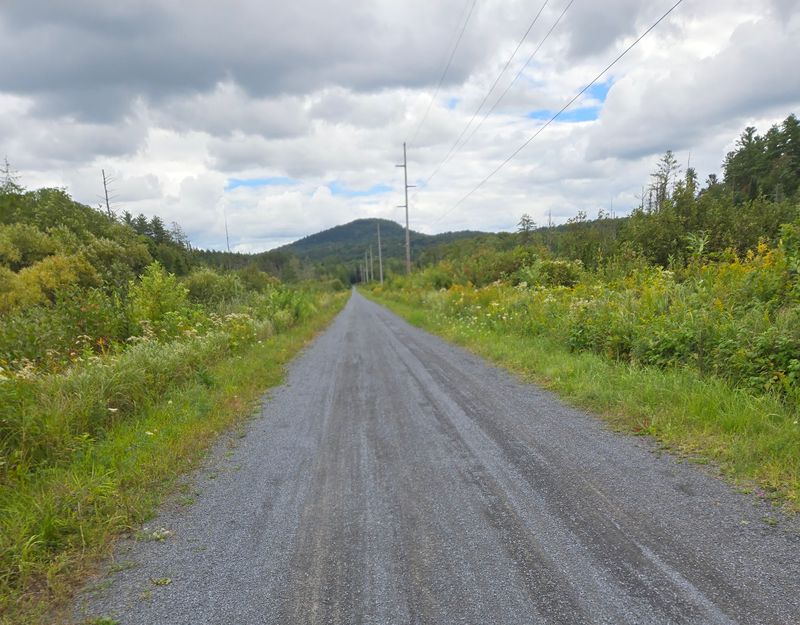
Thirty-four miles of former railbed now tie Lake Placid, Saranac Lake, and Tupper Lake together. The Adirondack Rail Trail is fully open, and it’s open year-round.
Nobody drives on it. That single fact changes the whole mood of a day outdoors in New York.
The path sits inside the Adirondack Park, the huge protected region of northern New York. Most of the surface is compacted stone dust, firm enough for bikes and kind to sneakers.
Because trains once ran here, the climbs stay mild from end to end. Railroad engineers liked flat ground, and modern riders get to enjoy their good taste.
The trail serves hikers, runners, and cyclists in warm months. Winter brings snowshoers, cross-country skiers, and snowmobilers onto the same corridor.
You can treat it as one big point-to-point adventure. You can also nibble at it in short out-and-back sections from any town.
Either way, the setting does most of the work. Forests, ponds, wetlands, and mountain views roll past at whatever speed you choose.
For day-trippers who value a slower pace, that’s a pretty great deal. The scenery shows up whether you pedal hard or barely pedal at all.
An 1892 Railroad That Refused To Disappear
History buffs, look down at the trail edges. Original mile markers and whistle posts from the old New York Central line still stand along the route.
That rail line was built in 1892. It carried travelers deep into the Adirondacks at a time when the mountains were becoming a famous retreat.
New York State acquired the corridor in 1974. Then came a long debate about what the old line should become.
Decades passed with plenty of opinions and very little track action. Work to turn the corridor into a multi-use trail finally began in 2021.
The last segment wrapped up in October 2025. Now the whole route is complete, from Lake Placid to Tupper Lake.
Interpretive signs and kiosks at trailheads explain the railway story. They also cover the natural and cultural surroundings, so the ride doubles as a lesson.
I believe that’s the best kind of history. You don’t read it behind glass.
You pass it at ten miles an hour, with pine trees on both sides. For tradition-minded travelers, those weathered whistle posts feel like small, sturdy thank-you notes from the past.
Your Eastern Starting Line Near Olympic Lake Placid
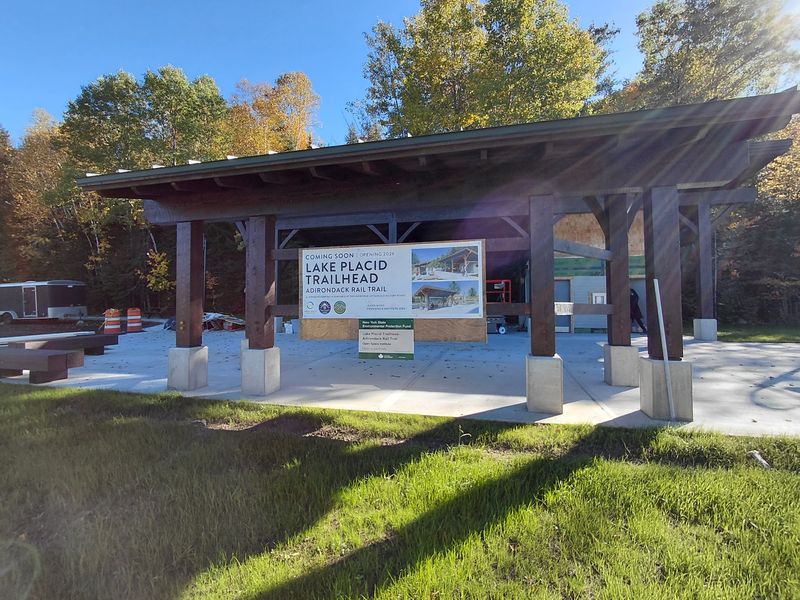
Olympic history hangs over Lake Placid, and the trail’s eastern end begins right there. It’s a fitting launch point for a long, easy-going journey.
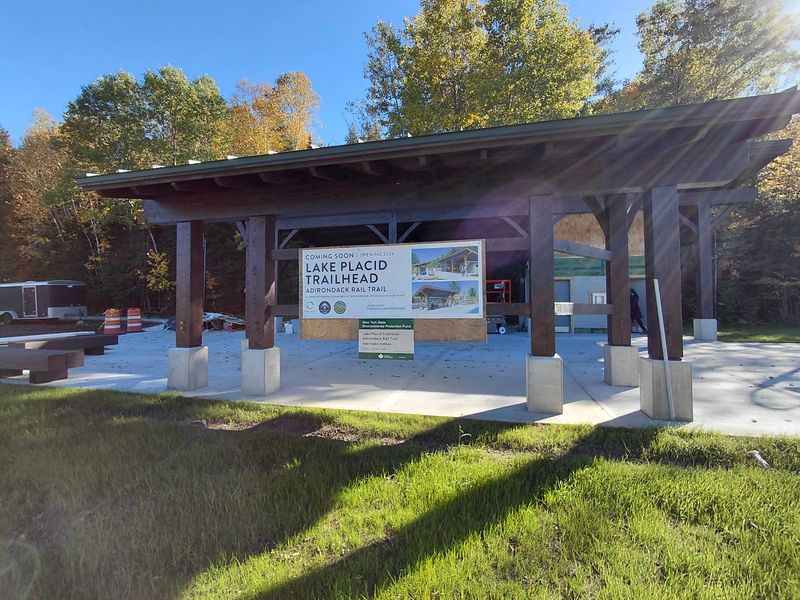
A permanent trailhead facility at 162 Station Street is under construction. For now, a temporary lot at the Snowfields Parking Area on Old Military Road handles access.
You’ll find it near the Lake Placid Fire Department at 400 Old Military Drive. That’s handy, since fire stations tend to be easy landmarks.
The Lake Placid trailhead offers bathrooms and picnic areas. A bike repair station and maps round out the setup.
So, flat tire before mile one? Not a trip-ender.
From here, the path heads toward Saranac Lake in an uninterrupted run. Forest closes in quickly, and Ray Brook keeps you company along part of the way.
Starting east has one nice perk. Online accounts of the Lake Placid to Saranac Lake ride describe it as an easy one.
That makes it a smart first taste for newcomers. Ride it once, and the rest of the trail starts calling your name.
Beaver Engineers At Work Along The Wetlands
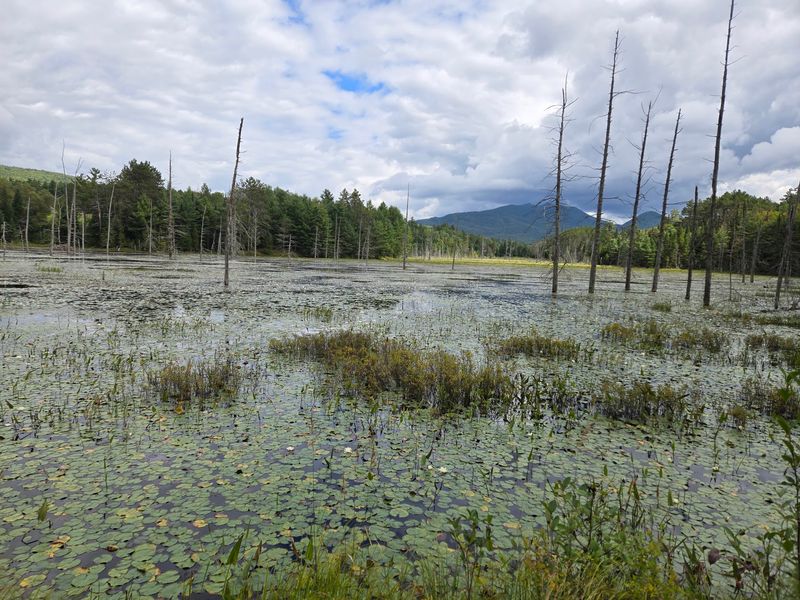
Beavers are the original civil engineers of the Adirondacks. Along this trail, their handiwork shows up again and again.
The route winds through numerous beaver ponds and wetlands. These flooded spots create quiet water where wildlife gathers.
Keep your eyes on the water’s edge as you roll by. Beavers can sometimes be seen at work in their ponds.
Turtles also show up in these wet places. So do plenty of bird species, which makes binoculars a very reasonable thing to pack.
Great blue herons love these marshes too. A tall gray bird standing perfectly still is probably one of them, not a garden ornament.
Wetland stretches reward people who slow down. Stop, listen, and give the reeds a minute.
I can’t imagine rushing through this part. The whole point is noticing small motion on still water.
Craft lovers and quilters may appreciate the patterns here. Mud, sticks, and reflections form their own handmade patchwork across the ponds.
Just remember to keep a respectful distance. Beavers are busy, and they didn’t sign up for a photo shoot.
Bald Eagles, Ospreys, And Other Sky Patrol
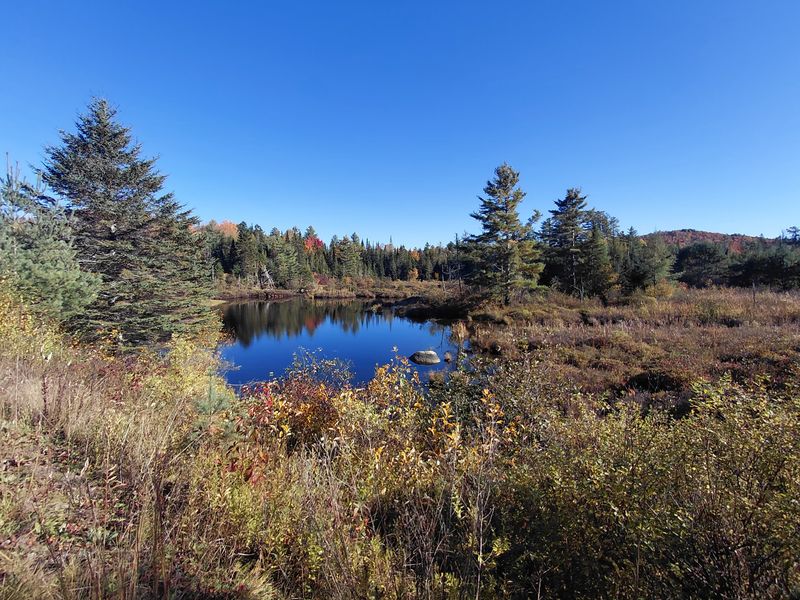
Look up once in a while. Bald eagles and ospreys have been spotted soaring above the corridor’s lakes and wetlands.
That’s the eagle-country part of the trail’s reputation. Remote lakes and ponds give these big birds plenty of fishing grounds.
Bigger mammals roam the quieter sections too. Deer, black bears, and even moose have been known to frequent parts of the route.
The stretch between Saranac Lake and Floodwood Road is especially wild. It’s one of the more remote sections of the whole trail.
Sightings are never guaranteed, of course. Wildlife keeps its own schedule and doesn’t check yours.
Early and quiet tends to be the friendliest approach for watching animals. Loud groups usually see more trees than critters.
A small pair of binoculars fits easily in a bike bag. A zoom lens helps too if photography is your thing.
Stay on the trail and give animals plenty of room. A moose is impressive from a distance and much less charming up close.
Spotting an eagle over New York wilderness never gets old. It might become the story you tell first afterward.
Two Paved Miles Through Saranac Lake
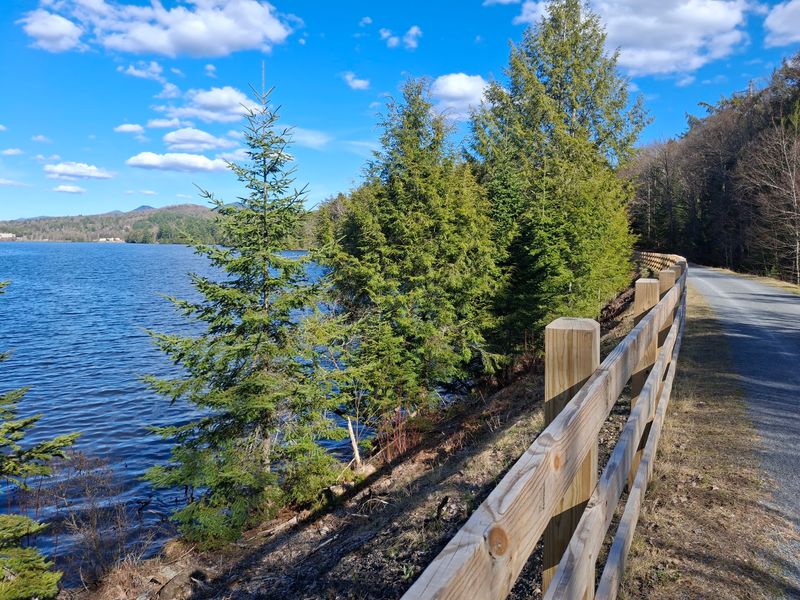
Smooth pavement shows up right when Saranac Lake does. Roughly two miles of the trail are paved within the village.
Strollers, skinny tires, and casual walkers all get a break here. It’s the trail’s most polished stretch.
Access is easy from the Union Depot Parking Lot at 42 Depot Street. Fowler’s Crossing, where the trail meets State Route 86, is another option.
Along the way, you get glimpses of Lake Flower. The path also leads directly to downtown, where local shops and restaurants wait.
That makes Saranac Lake a natural break point. Park the bike, stretch your legs, and browse a little.
Hobbyists who love wandering small-town shops will feel right at home. A trail stop easily turns into an afternoon of poking around.
The Adirondack Carousel sits right next to the train station. It adds a playful touch that kids, and plenty of grown-ups, appreciate.
So the village feels like the trail’s friendly middle chapter. You get outdoors on one side and Main Street charm on the other.
Few rail trails mix the two this neatly.
A Spin On The Adirondack Carousel
Few trails have a carousel near the halfway snacks. The Adirondack Carousel sits right beside the Saranac Lake train station.
Its location makes it an easy add-on for trail users. You don’t need a detour or a car to reach it.
Families with younger riders may find this especially useful. A promised carousel stop can be a strong motivator for small legs.
For adults who love handmade things, it’s worth a look too. Carousels belong to a long tradition of craftsmanship and community fun.
Combining a ride with the paved village stretch makes for a gentle outing. You get movement, scenery, and a little whimsy in one trip.
Check its schedule before planning around it. Hours can vary, and a closed carousel is a tough sell to a six-year-old.
I like how it breaks up the serious mileage talk. Not every highlight has to involve counting miles.
Sometimes the best part of a trail day is a short, silly spin. Then you hop back on the bike with a grin.
Saranac Lake handles that balance nicely.
Lake Clear, The Quiet Middle Of Everything
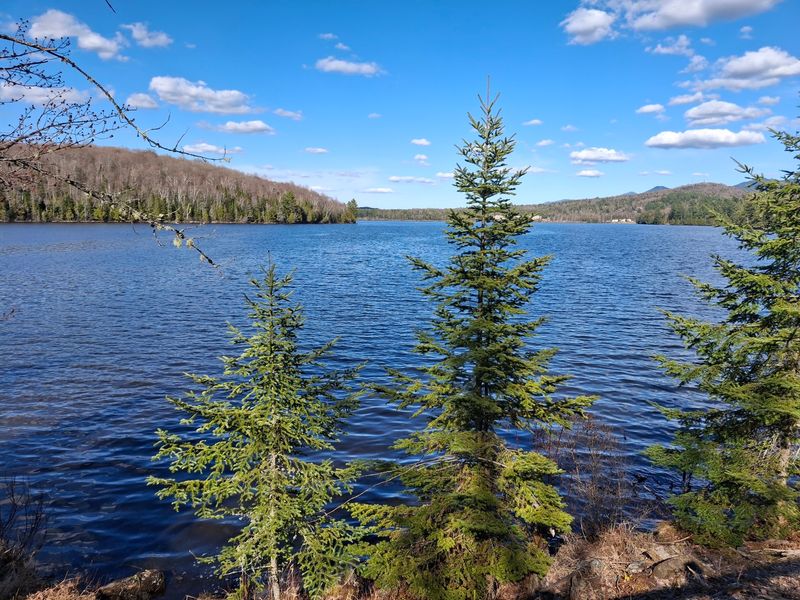
Roughly halfway along the route, Lake Clear serves as a key access point. It’s small, but it opens the door to the trail’s more remote sections.
Parking is available at the end of Station Road. There’s also parking near the NYSDEC Fish Hatchery, which is worth a visit of its own.
More parking sits where the trail crosses McMaster and Floodwood Roads. That gives you several ways to build a custom ride.
Nearby, the Floodwood Outpost camping store makes a useful landmark. Trails also lead toward Floodwood Mountain and Long Pond Mountain for anyone craving a climb.
Lake Clear Lodge and Resort adds a strong dose of history. It’s recognized as the longest-operating Great Camp in the Adirondacks.
Great Camps reflect a rustic building tradition tied closely to this region. Tradition-loving travelers may enjoy that connection.
One recent rider pedaled from Tupper Lake to just past Floodwood Pond and back. That out-and-back covered about 20 miles.
It’s a solid sample of the trail’s wilder heart. Lake Clear makes those middle miles easier to reach.
Tupper Lake’s Grand Finish By The Depot
Every long ride deserves a good finish line. In Tupper Lake, the trail ends near a beautifully remodeled train station.
A large paved parking area sits on Washington Street. It’s directly next to the Tupper Lake Train Depot.
Extra parking is available at Tupper Lake Waterfront Park on Demars Boulevard. Lakeside parking is a pretty nice consolation prize.
Tupper Lake is known for its calm lakeside setting. Outdoor activities fill the area, so the trail is just one option.
The Wild Center is easy to reach from here. So is the Adirondack Sky Center and Observatory.
Think of it as a two-part day. Ride in the afternoon, then turn your attention to the stars.
One recent rider called the trail a must-do attraction in the Tupper Lake area. They also described it as exceptionally well maintained.
Starting at this western end works well too. The depot makes a clear, easy-to-find launch point.
Small-town charm and big wild scenery meet here neatly. It’s a satisfying place to stop and look back.
Two Wheels Seem To Win The Popularity Contest
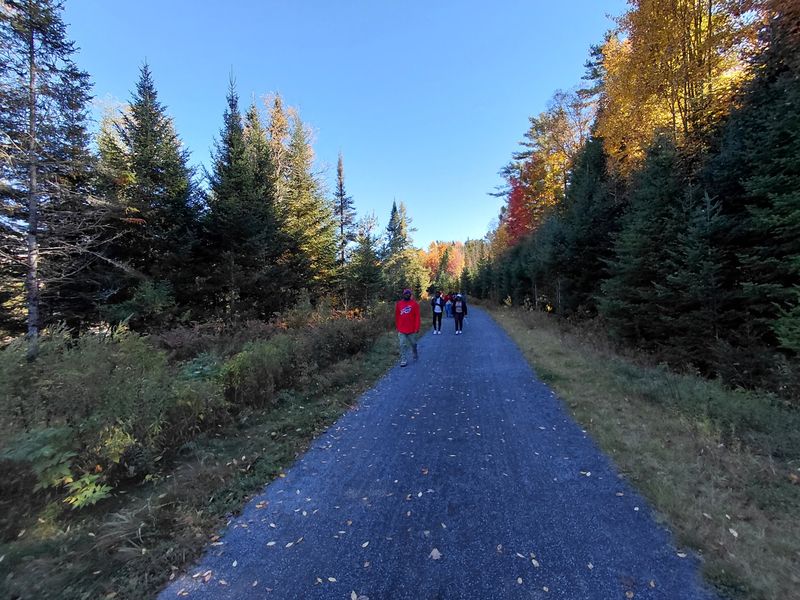
Bikes rule this corridor in the warm months. One recent walker noted that many cyclists were out and suggested biking might be the best way to experience it.
That makes sense on a 34-mile route. Covering long stretches on foot takes serious time.
Cyclists describe it as easy and beautiful. One even called it the nicest rail trail they’d ever ridden.
Another rider mentioned feeling fortunate to have such a safe local trail. Car-free riding clearly earns that kind of gratitude.
Walkers still belong here, of course. Shorter out-and-back strolls from any trailhead are perfectly doable.
Runners can enjoy the forgiving grade. The surface keeps things comfortable without much elevation drama.
Courtesy keeps the mix working. Call out when passing and stay aware of others on the path.
Families can choose sections that match their energy. The paved Saranac Lake portion works especially well for new riders.
Strong cyclists can tackle the whole length. Casual ones can pick a pretty section and call it a win.
Either approach counts as a great day outside.
Snowshoes, Skis, And Sleds When Winter Arrives
Snow doesn’t shut this trail down. The Adirondack Rail Trail stays open year-round.
When winter covers the corridor, a different crowd shows up. Snowshoers, cross-country skiers, and snowmobilers all use the route.
The gentle railroad grade helps here too. Skiers appreciate a path that doesn’t throw surprise hills at them.
Winter in northern New York can be serious business. Dress in warm layers and plan shorter outings than your summer self might.
Shared use means paying attention. Skiers and snowshoers should stay alert for snowmobiles on the corridor.
Frozen wetlands look completely different from their summer selves. The beaver ponds go quiet, and the forest takes on a hushed feel.
I like that the trail earns its keep in every season. Many outdoor spots go dormant once the cold hits.
This one simply changes outfits. For people who already love winter sports, that’s a big draw.
Check conditions before heading out, since weather shifts quickly up north. A little planning keeps the snowy adventure fun and comfortable.
Bathrooms, Apps, And Other Small Mercies
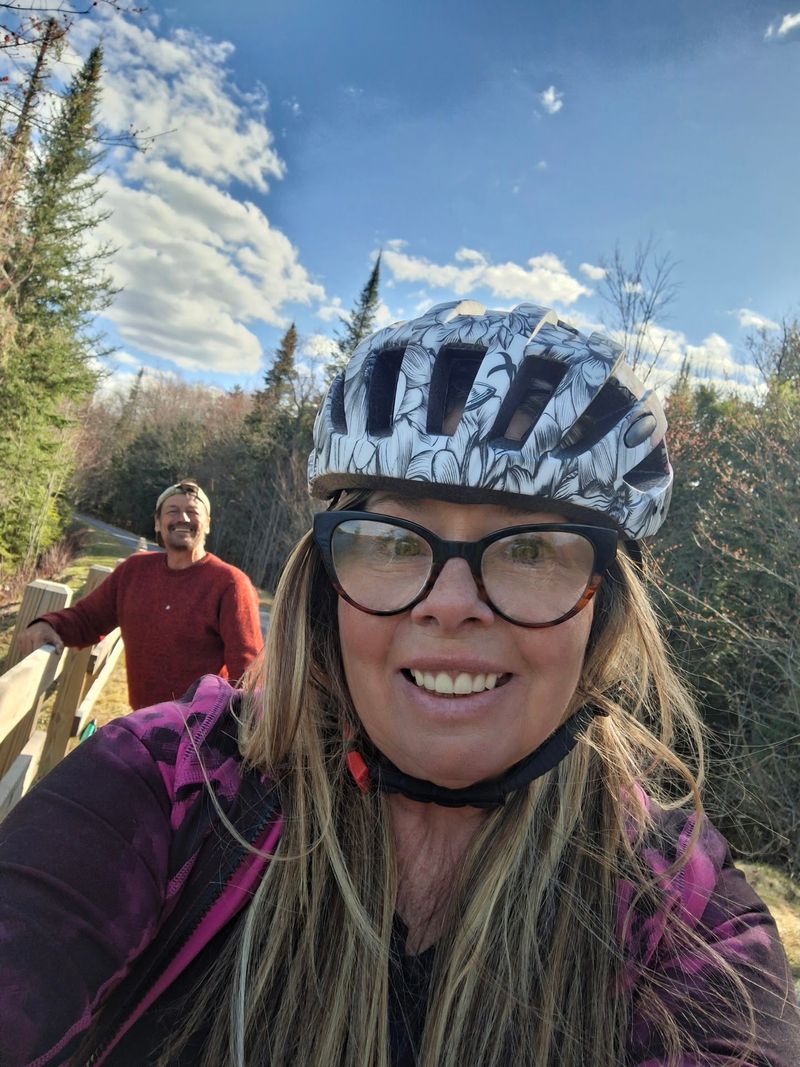
Good trails sweat the details, and this one does. Parking areas sit every few miles along the route.
Many of those lots have porta-potties. Anyone who has hunted for a restroom mid-ride understands the value.
An official ADK Rail Trail app helps with navigation. It offers interactive maps, mileage markers, and access point information.
It also points out nearby amenities. That’s handy when you want a snack stop or a quick detour.
The Lake Placid trailhead adds bathrooms, picnic areas, and a bike repair station. Maps are there too.
Interpretive kiosks at trailheads share history and nature notes. They’re worth a pause before you roll out.
Spacing between parking areas makes custom trips easy. You can plan a short loop or a long haul without guessing.
Bring water and basic repair gear anyway. Remote stretches don’t come with convenience stores.
Still, the support system is impressive for a trail this long. It turns a big wilderness corridor into something approachable.
That’s welcome news for first-timers and seasoned riders alike.
No Bike, No Ride Home, No Problem
Forgot your bike? Local shops have you covered.
High Peaks Cyclery and Silver Birch Cycles both offer bike rentals. That opens the trail to visitors traveling light.
Then there’s the one-way question. Riding 34 miles is one thing, and riding 68 is quite another.
BikeADK solves that with shuttle service for people and bikes. You can pedal in one direction and ride back in comfort.
Reservations are recommended for the shuttle. Busy days can fill up, so plan ahead.
This setup makes town-to-town trips realistic for more people. Casual riders can enjoy the full length without a punishing return.
A shuttle also helps with car logistics. Park in one town, ride to another, and get dropped back near your vehicle.
Day-trippers from elsewhere in New York will appreciate that flexibility. It turns a big trail into a manageable outing.
Check rental availability and shuttle times before you go. Booking early beats standing at a trailhead wondering what’s next.
A little prep makes the whole adventure smoother.
Why This Trail Deserves A Spot On Your Calendar
A perfect five-star rating doesn’t happen by accident. The Adirondack Rail Trail holds one on Google from its early reviews.
Riders call it a gift and an easy, beautiful ride. One summed it up with a simple kudos to New York.
The appeal is easy to see. You get 34 car-free miles, history underfoot, and wildlife all around.
Three distinct towns break up the journey. Each offers its own flavor, from Olympic Lake Placid to lakeside Tupper Lake.
Families can stick to short paved stretches. Ambitious riders can chase the whole route with a shuttle waiting.
Craft and history lovers get whistle posts and Great Camp heritage. Nature fans get beaver ponds and eagle skies.
I believe the trail’s best gift is its pace. It invites you to slow down and actually notice the Adirondacks.
Pick a season, pick a town, and start small if you like. One rider promised to come back and finish the rest.
That feels like the most natural reaction. One section rarely seems like enough.