A rock in the woods of Michigan’s Thumb carries carvings that may be up to 1,400 years old. Most of us never heard about it in school.
I still can’t get over that.
Those carvings are only one piece of a much bigger story. There are tribal museums run by the nations themselves.
There’s a longhouse you can step inside, and a historic home once owned by an Odawa leader.
Some stops are joyful, full of art, language, and craft. Others are quiet and heavy, like a former boarding school site and a removal-era memorial ground.
I love that you can see both sides of the story in one state.
The best part is that you can drive to these places. A day trip, a full tank, and an open mind will do.
So which part of the story did your field trip skip?
1. Nokomis Cultural Heritage Center (Nokomis Learning Center)
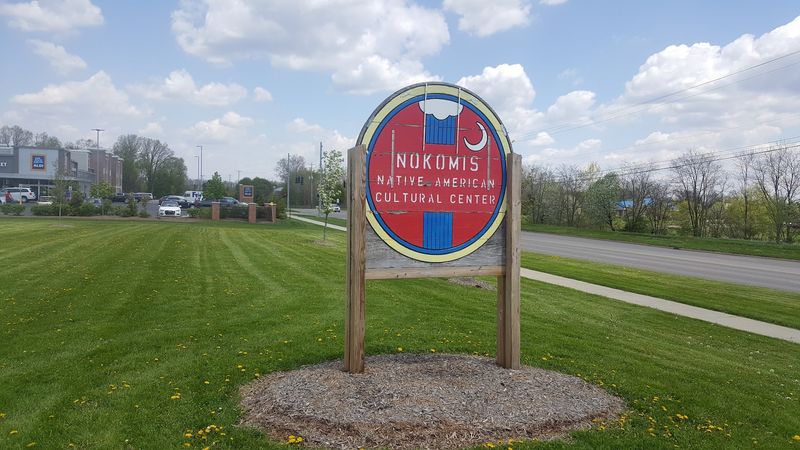
Grandmother is the meaning behind the name Nokomis in Anishinaabe tradition, and that fits this Okemos center perfectly. It acts like a patient elder, sharing knowledge with anyone willing to listen.
The mission centers on the history, arts, culture, and language of the Ojibwe, Odawa, and Potawatomi nations. Together, those three nations are often called the People of the Three Fires.
You’ll find that mission brought to life through programs, exhibitions, special events, and a public gallery. Checking the event calendar before you go can help, since offerings may change through the year.
Language is a big deal here, and for good reason. Keeping Anishinaabemowin alive is a key part of keeping the culture strong today.
The center also means a lot to people reconnecting with their roots. Adoptees and descendants tracing Odawa and Ojibwe family lines have found it a meaningful place to begin.
Plan around the short schedule. Doors open Thursday from 10 a.m. to 3 p.m., then Friday and Saturday from 10 a.m. to 4 p.m.
It’s an easy add-on to an afternoon near East Lansing. You’ll leave knowing the Anishinaabe story in mid-Michigan is still being written.
Address: 5153 Marsh Rd, Okemos, MI 48864
2. Ziibiwing Center
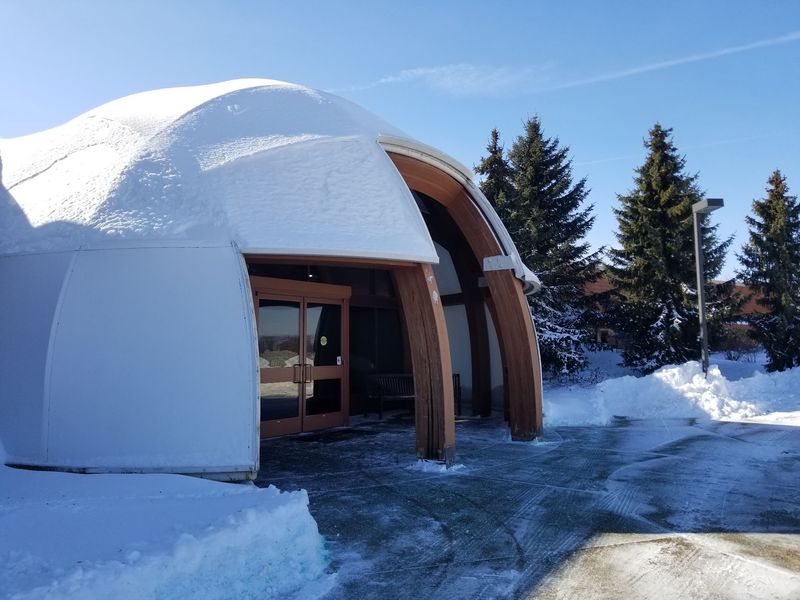
Few museums get to tell their own story in their own words, and the Saginaw Chippewa Indian Tribe does exactly that here. Ziibiwing is the tribe’s cultural center and museum in Mt.
Pleasant.
Exhibits walk you through what mattered most to the Anishinaabe of Central Michigan. Transportation, family, food, and animals each get thoughtful attention.
A major thread runs through the Seven Prophecies, a teaching that frames the past, present, and future. It gives the whole visit a sense of direction that ordinary timelines can’t match.
Don’t expect a sugarcoated version of history. The displays cover the hardships the community faced, how it overcame them, and where it’s headed next.
There’s more than glass cases, too. The center has a theater, offers tours, and sometimes hosts live performances.
Kids tend to do well with the layout and hands-on feel. When the learning wraps up, the gift shop is worth a slow browse.
Ziibiwing is open Monday through Friday, 9 a.m. to 4:30 p.m., with on-site parking. Weekend road-trippers should rearrange plans, because this one deserves a weekday.
Address: 6650 E Broadway Rd, Mt Pleasant, MI 48858
3. Potawatomi Heritage Center
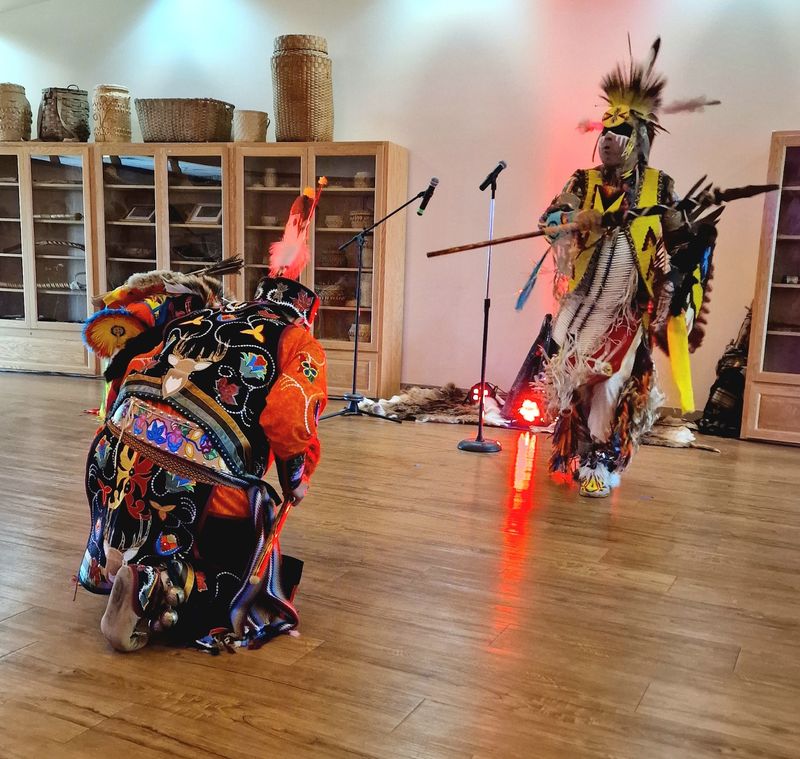
Out in the Upper Peninsula, west of Escanaba, sits a heritage center that most downstate Michiganders couldn’t find on a map. That’s a shame, because the craftsmanship inside is worth the miles.
The center serves the Hannahville Indian Community, a Potawatomi tribe in Menominee County. It works as a cultural home for the tribe’s history and art.
You’ll find a learning area paired with a collection of tribal arts. Together they trace the history of the tribe in a way you can actually see and study up close.
The handiwork is the star. Visitors often leave talking about the skill and detail in the pieces on display.
Wondering why the Potawatomi are this far north? The tribe’s own history explains it far better than any textbook paragraph could.
Families should feel right at home, since the space works well for kids. Restrooms and on-site parking make the stop easy on a long U.P. drive.
Timing matters, though. Hours run Monday through Friday from 8 a.m. to 4 p.m., so a fall color weekday trip could line up nicely.
Address: N15756 Hannahville B-1 Rd, Wilson, MI 49896
4. Museum of Ojibwa Culture at Old Mission Saint-Ignace
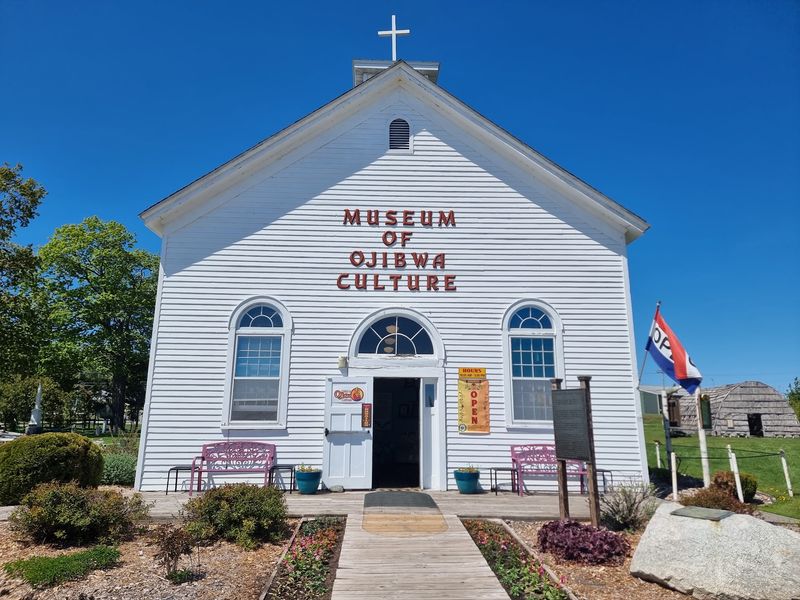
A longhouse right next to a city museum? St. Ignace pulls it off along the Straits of Mackinac, where the Ojibwa story gets room to breathe.
The museum focuses on local Native culture and how the Ojibwa shaped the Upper Peninsula and beyond. Exhibits cover traditions, daily life, and the history of nearby Native settlements.
You can move through at your own pace, which makes it easy to linger. The displays are well organized and packed with context.
Outside, the longhouse gives you a real sense of how families once lived together. It’s the kind of detail that sticks with kids long after the drive home.
Guided walking tours have been offered on certain evenings. Ask ahead, since tour nights may vary by season.
The museum runs seasonally, so check before you cross the bridge. During its season, hours are listed as 10 a.m. to 5 p.m. daily.
Save time for the crafts shop, which features Native artwork and handmade pieces. Saturdays can get busy, while Tuesday mornings tend to be calmer.
Address: 500 N State St, St Ignace, MI 49781
5. Sault Tribe Cultural Center (Niigaanagiizhik Ceremonial Building)
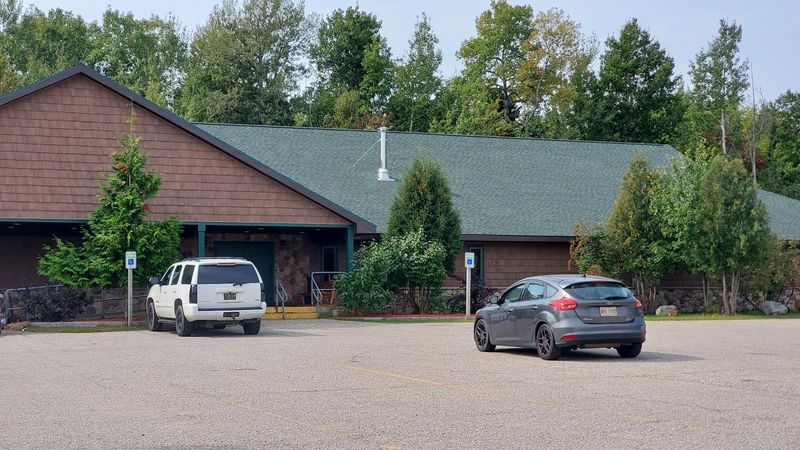
Sault Ste. Marie is famous for freighters and locks, but the Sault Tribe adds a richer layer to that story.
Its ceremonial building is a living cultural space, not a dusty exhibit hall.
The Niigaanagiizhik Ceremonial Building operates under the Sault Ste. Marie Tribe of Chippewa Indians.
It supports tribal cultural services and community programming.
Think of it as a gathering place first. Ceremonies, teachings, and community events give it purpose beyond tourism.
When public events happen, the arts can steal the show. Past gatherings have drawn plenty of vendors selling excellent Indigenous arts and crafts.
That makes it a smart stop for meaningful gifts. Buying directly from Native artists keeps the money and the craft in the community.
There aren’t posted daily museum hours, so plan carefully. Calling ahead or checking the tribe’s culture department can help you match your visit to an open event.
The building sits on Ice Circle near the Chi Mukwa arena. Pair it with a walk along the St. Marys River, and you’ve got a full Upper Peninsula day.
Address: 11 Ice Circle Chi Mukwa, Sault Ste. Marie, MI 49783
6. Sanilac Petroglyphs Historic State Park
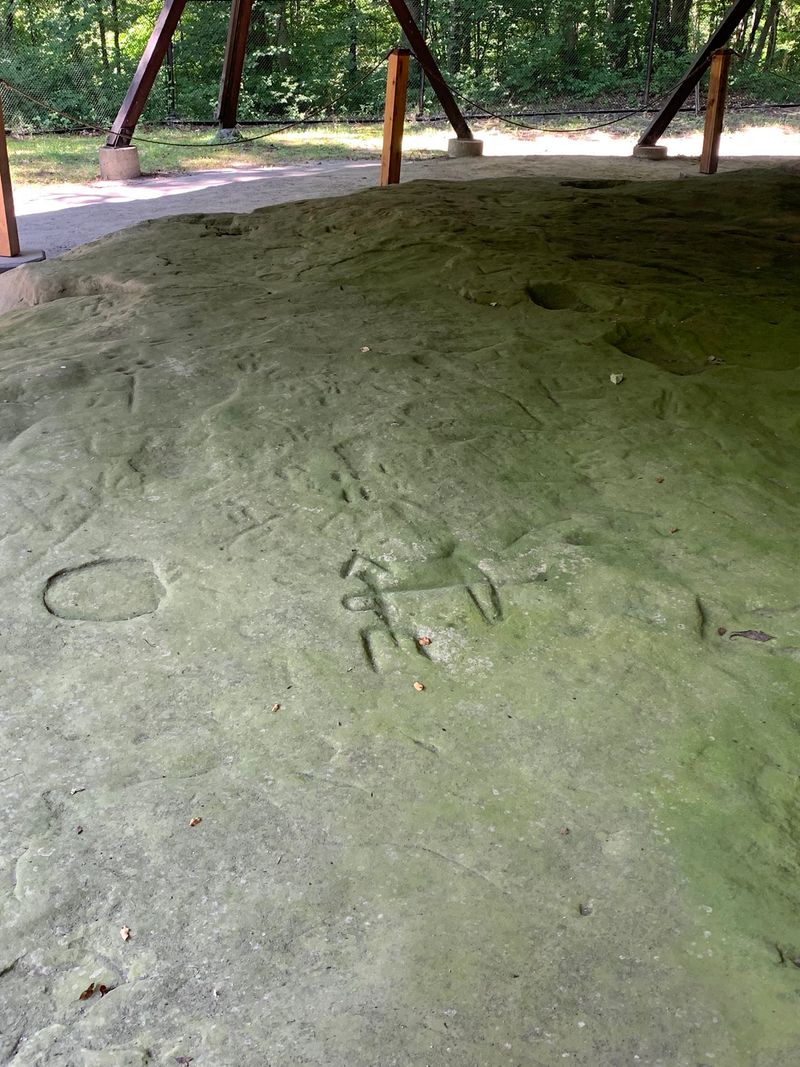
Carvings that may be up to 1,400 years old sit quietly in a Thumb-area forest. Yes, in Michigan, and plenty of residents still have no idea.
The petroglyphs are believed to date from roughly 300 to 1,400 years ago. That puts their creation somewhere between about 600 and 1700 AD.
Known in Anishinaabemowin as Ezhibiigaadek Asin, the site is co-managed with the Saginaw Chippewa Indian Tribe. That partnership shapes how the carvings are shared and protected.
Staff lead guided tours and explain both the carvings and the surrounding forest. Their passion makes the ancient images feel surprisingly close.
Beyond the main rock, trails wind through the woods and past the Cass River. Short, kid-friendly hikes make it an easy family outing.
Picnic tables invite you to stretch the visit into lunch. Dogs are allowed, which earns the place extra points with four-legged travelers.
The park is open Wednesday through Sunday, 10 a.m. to 5 p.m., and closed Monday and Tuesday. Seasonal changes may apply, so a quick check before your drive is smart.
Address: 8251 S Germania Rd, Cass City, MI 48726
7. Andrew J Blackbird Museum
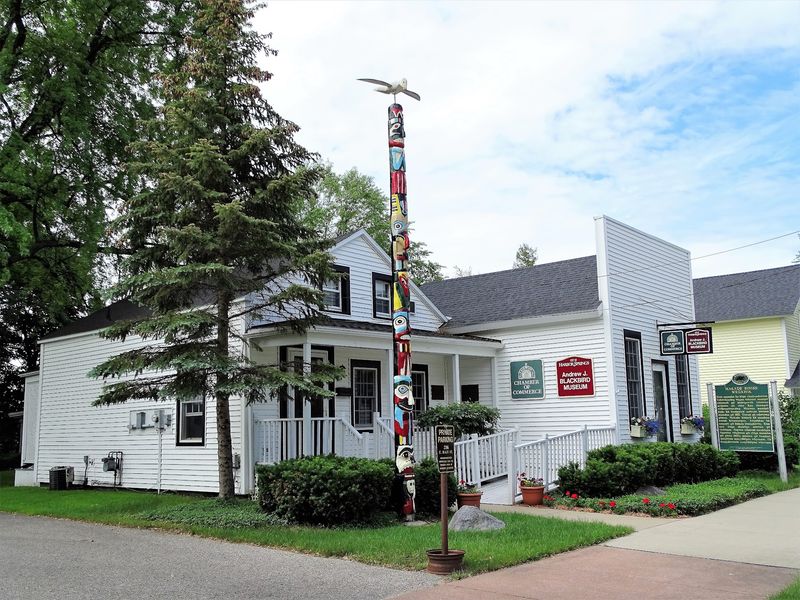
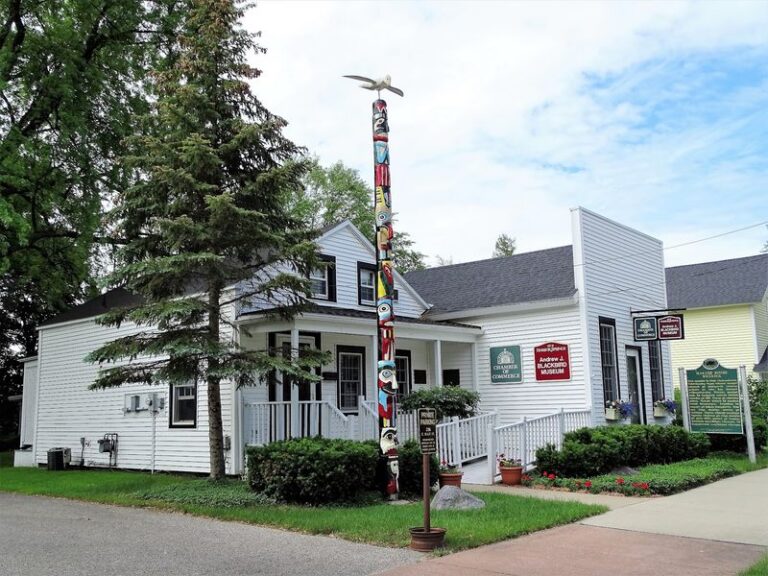
Harbor Springs has boutique storefronts and lake views, yet its most meaningful address might be a modest house from 1858. It once belonged to Andrew J.
Blackbird, a prominent Odawa leader.
Blackbird was also a writer and historian of his people. His book on the Ottawa and Chippewa remains an important early account by a Native author.
Today the home is listed on the National Register of Historic Places. Inside, you’ll find an impressive collection of American Indian artifacts.
The museum covers Michigan’s Native history alongside the settlement era. That pairing helps you see how both stories collided in this exact corner of the state.
Tours are offered, and the guides bring serious knowledge. It’s the kind of place where good questions lead to great conversations.
A small gift shop rounds out the stop. Families are welcome, and on-site parking keeps things simple.
Hours are short, running Thursday through Saturday from 10 a.m. to 4 p.m. Schedule your Little Traverse Bay day around it, and the ice cream can wait.
Address: 368 E Main St, Harbor Springs, MI 49740
8. Native American Memorial Site/Macon Reservation
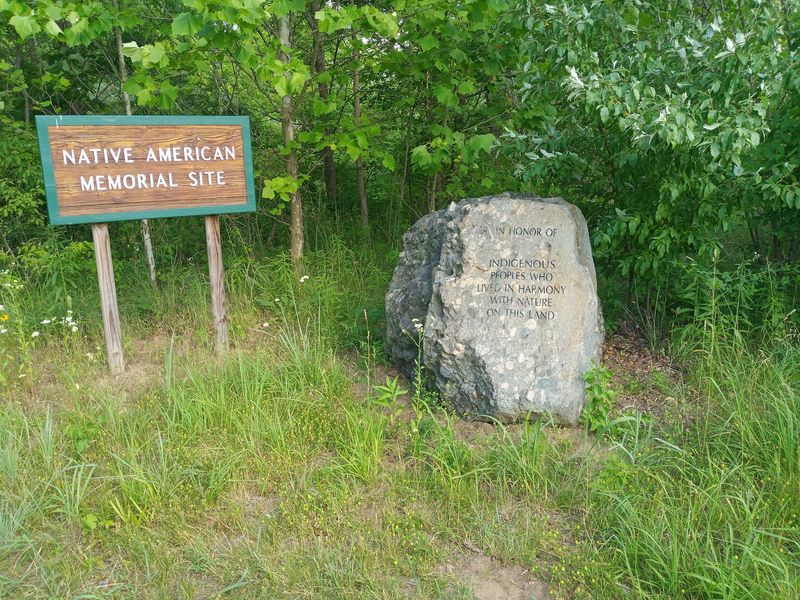
Monroe County farmland hides a chapter of Michigan history that rarely shows up in lesson plans. Near Dundee, a memorial marks the old Macon Reservation.
The site remembers the Potawatomi people who were moved here by the U.S. government. Their lands were taken as the area around Detroit grew.
It’s a quiet place, and that’s the point. There are no flashy exhibits, just space to stop and reflect.
Bringing kids can open up important conversations. The setting is calm, and the story gives families plenty to talk about on the ride home.
Removal is a word many of us skimmed past in textbooks. Standing on the actual ground makes it feel far more real.
No posted hours or visitor facilities are listed, so treat it like a roadside historic stop. Plan a short visit, and be respectful of the land and its neighbors.
Combine it with a drive through southeast Michigan’s small towns. It’s a reminder that the state’s Native history isn’t only up north.
Address: 14003 Rightmire Rd, Dundee, MI 48131
9. Old Indian Cemetery – Michigan Historic Site
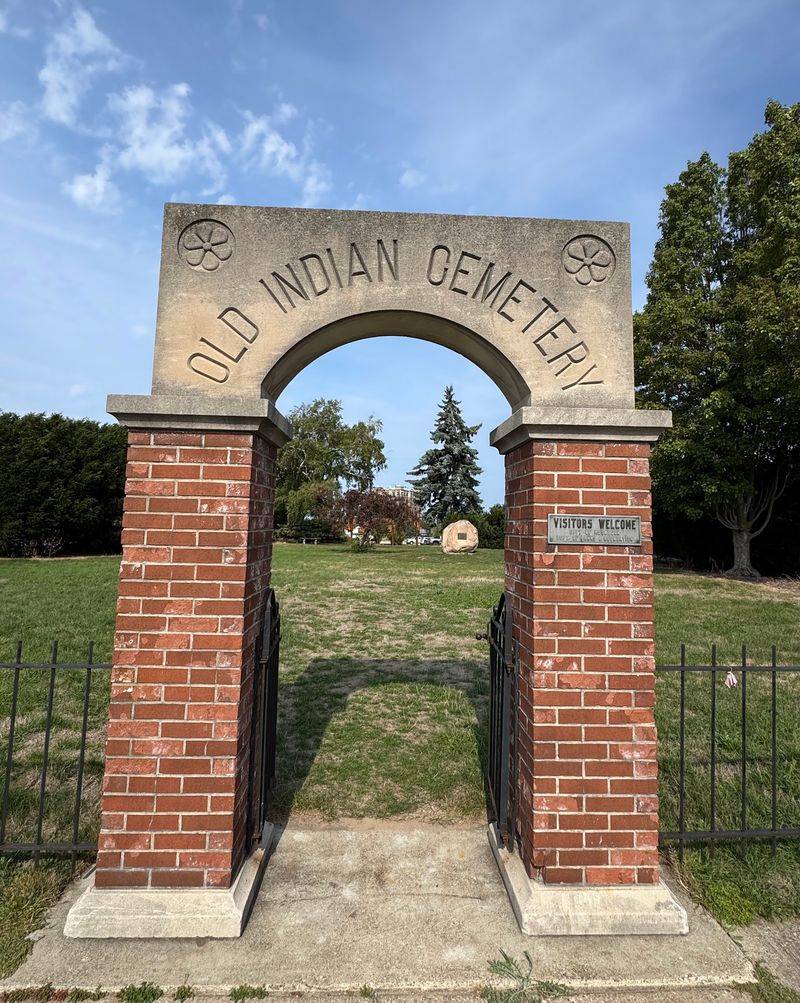
Right in the middle of Muskegon, surrounded by city streets, sits a small burial ground with a big story. It’s easy to drive past without realizing what it is.
The Old Indian Cemetery is a designated Michigan historic site. It serves as an ancestral resting place for Indigenous people of the area.
Long before lumber barons and lakefront shipping, Native communities lived along Muskegon Lake. This ground connects the modern city to that earlier world.
A visit here is about respect, not sightseeing. Walk softly, read the marker, and give the space the quiet it deserves.
The site is listed as open 24 hours, which makes it easy to fit into a downtown stroll. Daylight is still your best bet for reading and reflection.
Kids may have questions, and that’s a good thing. Short answers and honest history can go a long way here.
Pair it with time along the lakeshore or downtown Muskegon. It’s a powerful reminder that Michigan’s cities were built on older, deeper roots.
Address: 298 Morris Ave, Muskegon, MI 49440
10. The Historic Totem Village
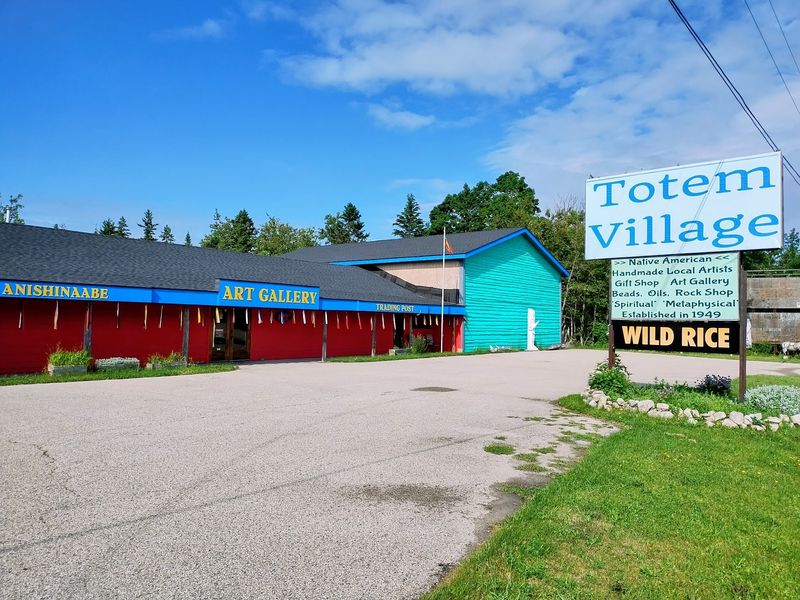
Classic roadside stops along US-2 are part of Upper Peninsula road trip lore. Totem Village adds a Native-owned twist to that nostalgic tradition.
Today it operates as a Native American-owned shop featuring handcrafted artwork and artisan goods. The focus leans toward real work by real artists.
Shelves hold items reflecting several spiritual traditions, with strong Native American representation. Browsing feels more like a gallery than a souvenir aisle.
The owners clearly care about the history of the space. Supporting local Native artisans sits at the heart of the business.
It works well as a quick stop, so you won’t lose half a day. Still, you may linger longer than planned once you start looking closely.
Hours are generous for the U.P. It’s open Monday through Wednesday 9 a.m. to 6 p.m., Thursday through Saturday until 8 p.m., and Sunday 10 a.m. to 4 p.m.
Swing by just west of St. Ignace after crossing the Mackinac Bridge. Pair it with the Ojibwa museum in town for a full afternoon of culture.
Address: W1106 US-2, St Ignace, MI 49781
11. (Historic) Mt. Pleasant Indian Industrial Boarding School
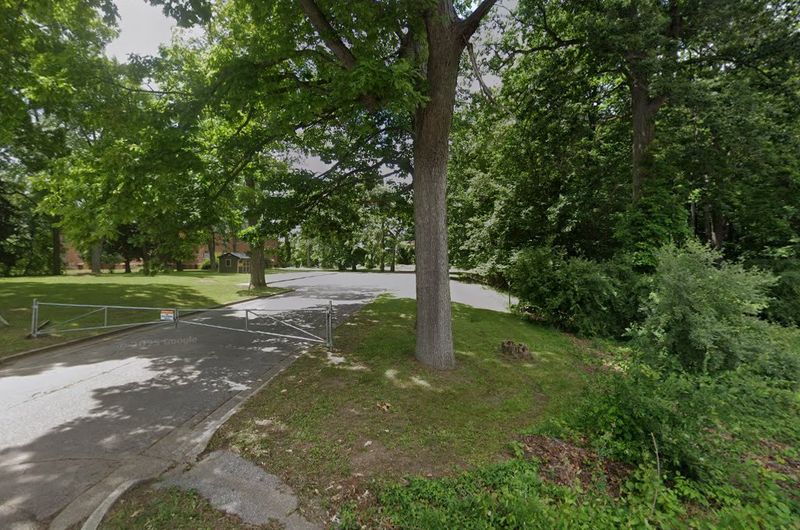
Most field trips skipped this one entirely, and it may be the most important stop on the list. These grounds in Mt.
Pleasant once held a federal Indian boarding school.
The school operated from 1893 to 1934. Native children from Michigan and nearby states were sent here, often far from their families.
Boarding schools aimed to strip away Native languages and traditions. That policy of forced assimilation left wounds that tribal communities still work to heal.
Today the site is preserved as a place of memory. The Saginaw Chippewa Indian Tribe has led efforts to honor the children who attended.
Visit with a respectful mindset. This isn’t a museum with exhibits, but a landmark that asks you to remember.
It’s a heavy stop, and that’s okay. Understanding this chapter makes the resilience you see at other sites even more powerful.
Pair it with Ziibiwing Center across town for fuller context. Together, they show both the harm and the strength of Central Michigan’s Anishinaabe people.
Address: 1111 S Crawford Rd, Mt Pleasant, MI 48858
12. Pokagon Band Community Center
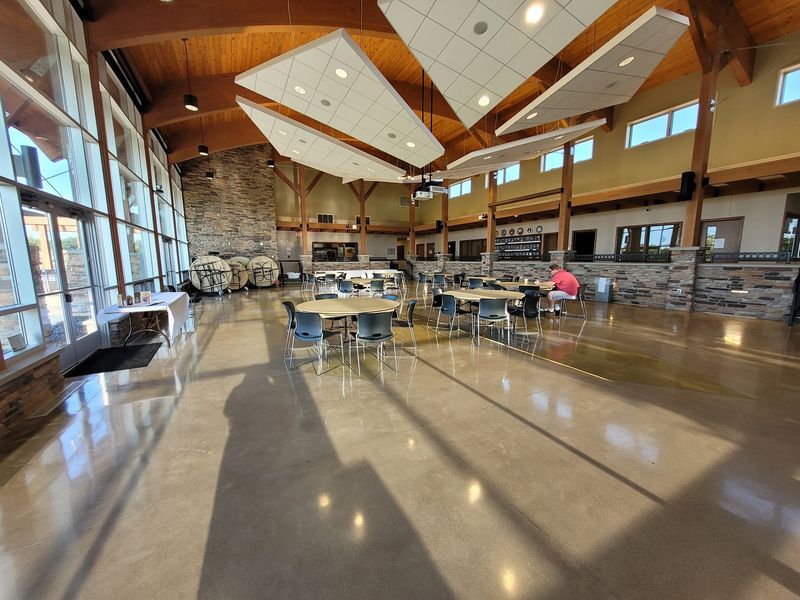
Southwest Michigan’s Potawatomi story didn’t end with removal, and Dowagiac proves it. The Pokagon Band stayed, persisted, and built a thriving modern community.
Their community center is a large, beautiful gathering place. It hosts conferences, events, meetings, and celebrations.
The Pokagon Band of Potawatomi is a federally recognized tribe. Its homelands stretch across southwest Michigan and northern Indiana.
Here’s why it earns a spot on this list. It shows Native culture as a living, present-day community, not just something behind museum glass.
The building itself is spacious and peaceful. Clean facilities make it easy to visit if you’re attending a public event.
Keep in mind that it’s a working community space first. Check for public gatherings or programs before you go, since open events may vary.
Weekday hours run Monday through Friday from 9 a.m. to 5 p.m. It makes a fitting final stop, ending your Michigan journey with a story that keeps moving forward.
Address: 27043 Potawatomi Trail, Dowagiac, MI 49047