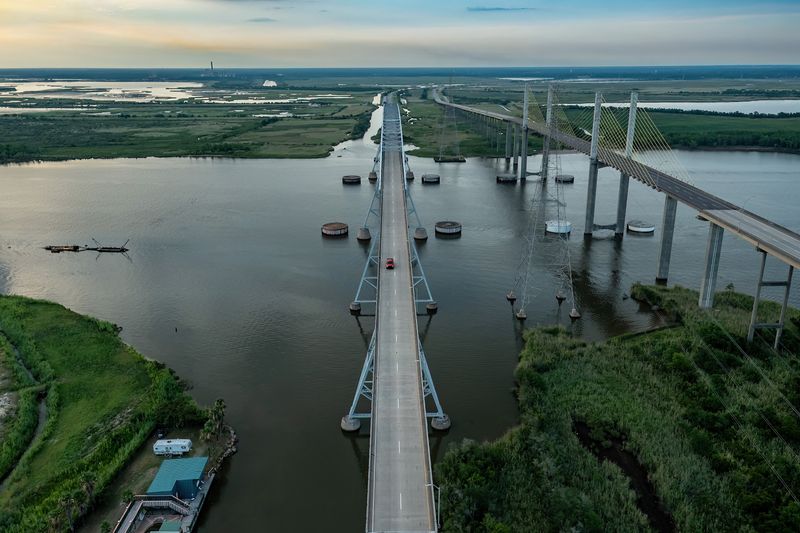
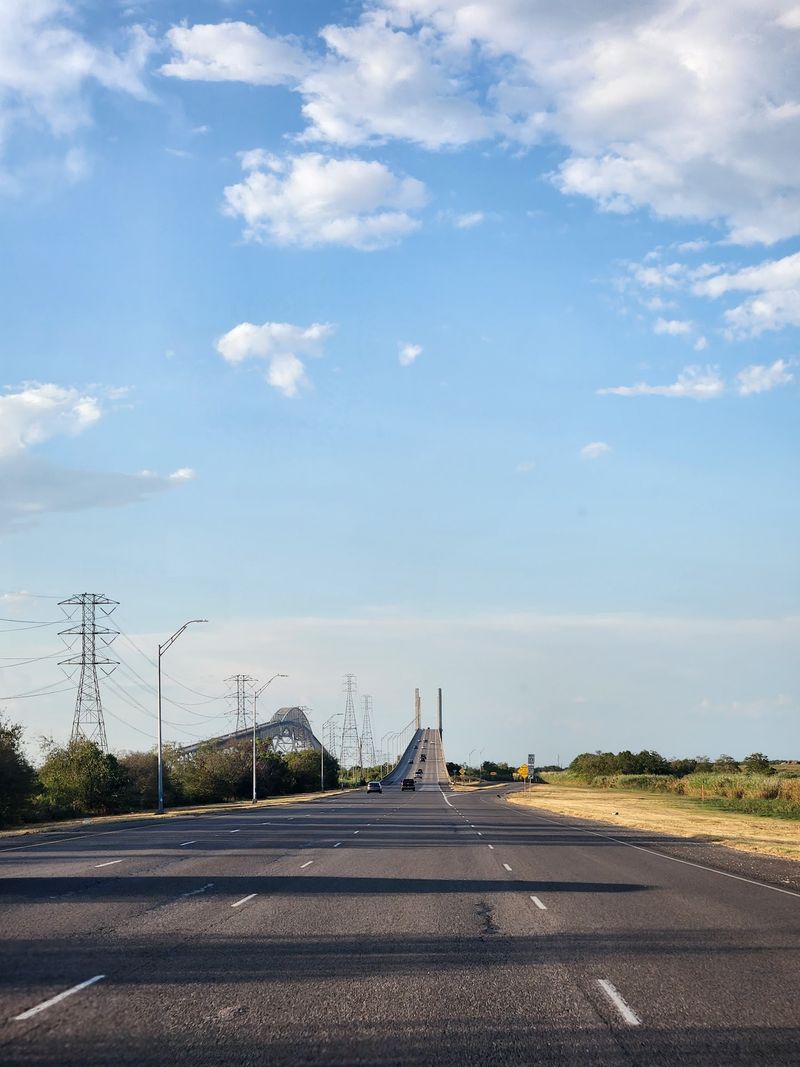
Picture yourself cruising a quiet two-lane highway in Southeast Texas when a steel giant suddenly rises out of the marsh ahead. At first it looks like any old bridge, but then the road tilts up and keeps climbing until all you can see is sky.
It is free, it never closes, and it has been thrilling drivers since the 1930s. If you love the back roads and the old-school wonders that skip the hype, this climb belongs on your list.
A Steel Giant Over the Neches River
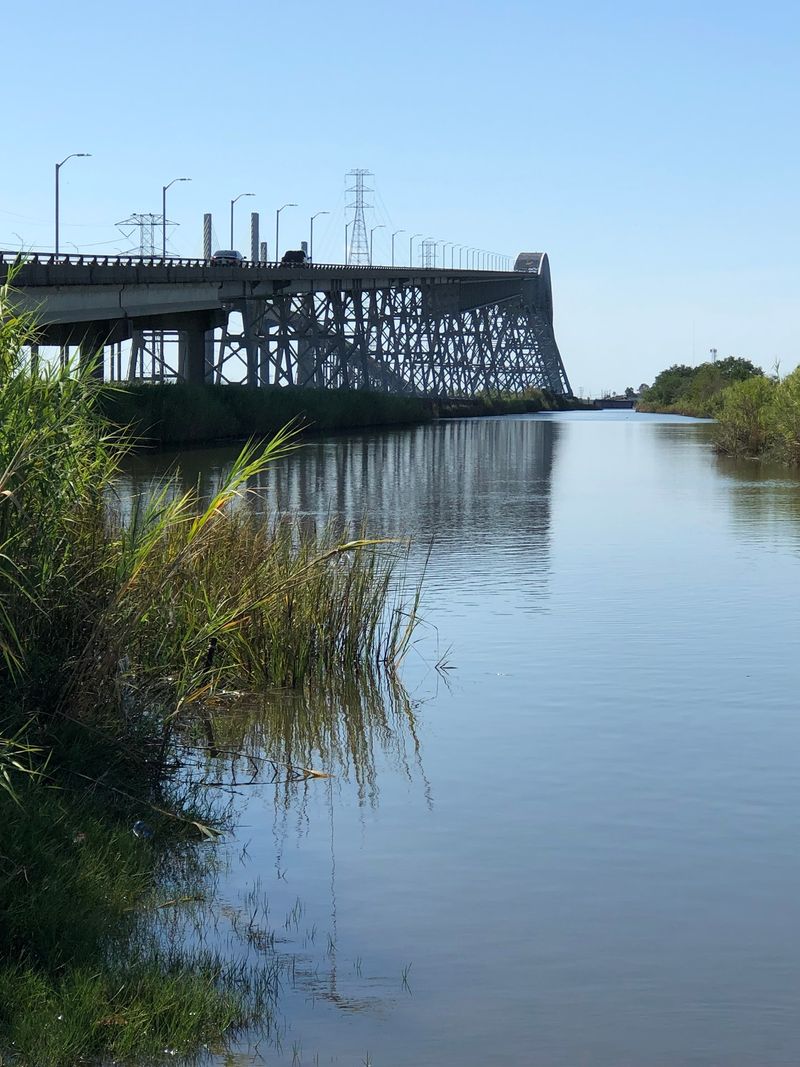
Out where the Neches River slides toward the Gulf, a gray steel hump rises above the flat coastal marsh. Locals call it the Rainbow Bridge, and it links Port Arthur and Port Neches in Jefferson County with Bridge City in Orange County.
You reach it on State Highways 73 and 87, a route many drivers never think to take. That is part of the charm.
It sits off the main interstate path, waiting for people curious enough to find it.
Map apps sometimes list it with a West Orange address on Edgar Brown Drive, but longtime commuters point out that the bridge itself sits on Highway 87/73 between Bridge City and Port Arthur. Set your route for that highway and you will not miss it.
Honestly, you could not miss it if you tried, since the span towers over everything nearby.
The structure stretches about 7,752 feet, or roughly 1.5 miles, from end to end. For a region known for being flat as a griddle, that kind of height feels almost unreal.
Born During the Great Depression
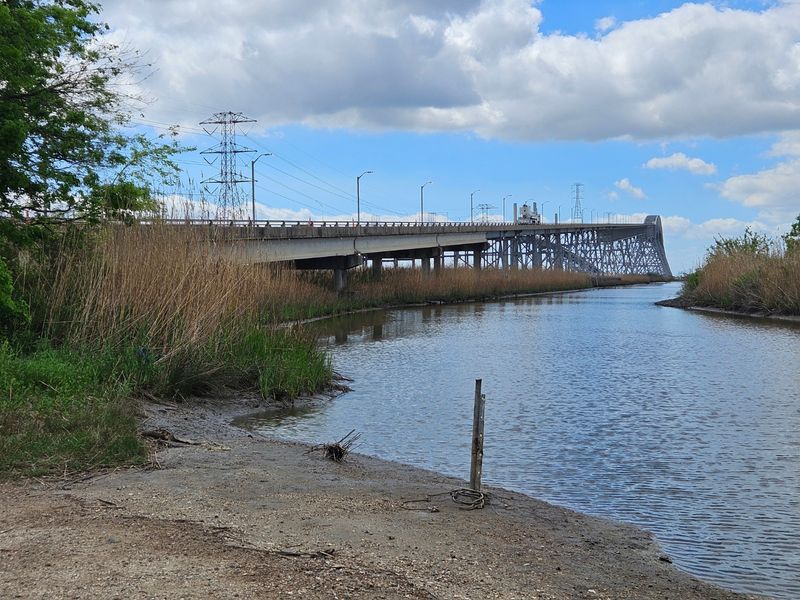
Back in 1936, when jobs were scarce across the country, crews began raising steel over the Neches River. The project was funded through the Public Works Administration, one of the big federal programs that put people to work during hard times.
By 1938 the work was done. At the time, it ranked as the largest bridge ever built by the State of Texas, a huge point of pride for Southeast Texas families.
Picture the scene back then. Most folks still crossed rivers by ferry or low bridges, and suddenly here was a steel ribbon climbing into the clouds.
It must have looked like something out of the future.
That sense of wonder never really went away. Generations of drivers have crossed it, and many still talk about their first trip like it happened yesterday.
One visitor fondly remembers riding over on a motorcycle back in 1971 at age 22 and calling it unforgettable.
From Port Arthur-Orange Bridge to Rainbow
Names matter, and this one has a fun backstory. When the bridge opened, it carried the plain label of the Port Arthur-Orange Bridge.
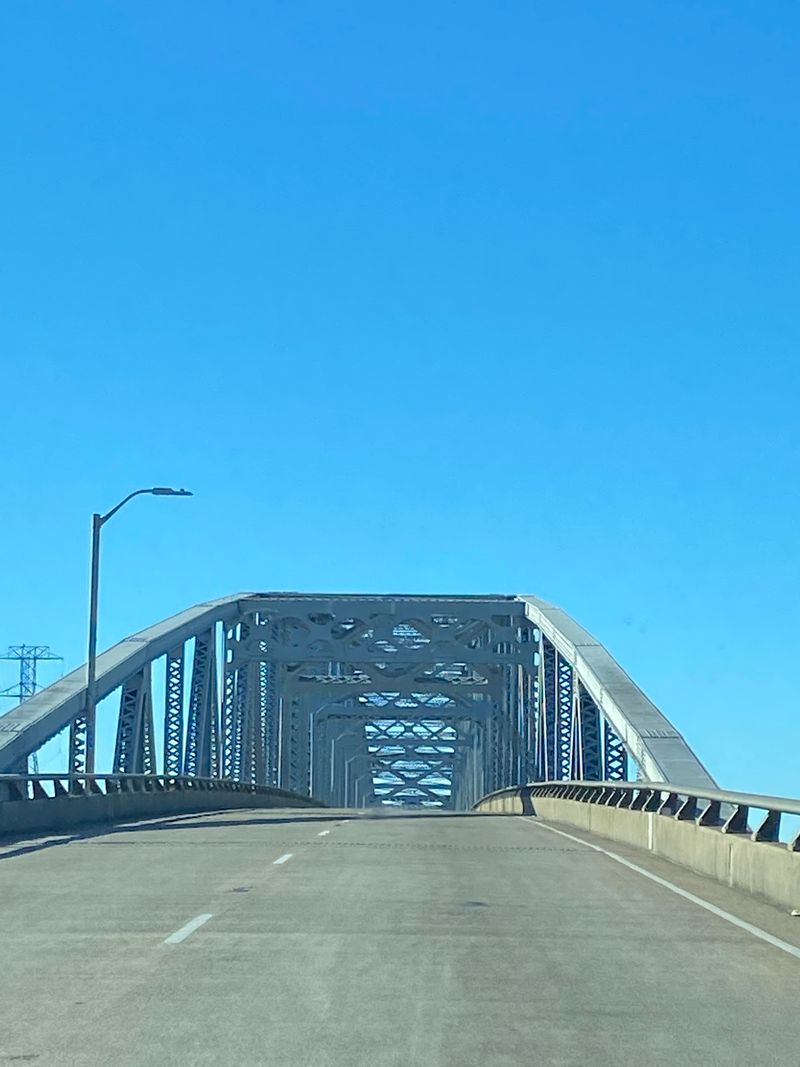
That changed in 1957. A public contest was held, and the winning idea was Rainbow Bridge, a nod to the graceful arching curve of the span.
Here is a quirky bonus fact. Plenty of travelers confuse it with the famous Rainbow Bridge at Niagara Falls, which connects New York and Ontario.
The Texas version has no waterfall mist, but it has a climb the northern one cannot match.
The new name stuck right away, and it fits. From a distance, the arched profile really does look like a steel rainbow stretched over the river, minus the colors.
The Famous Five Percent Grade
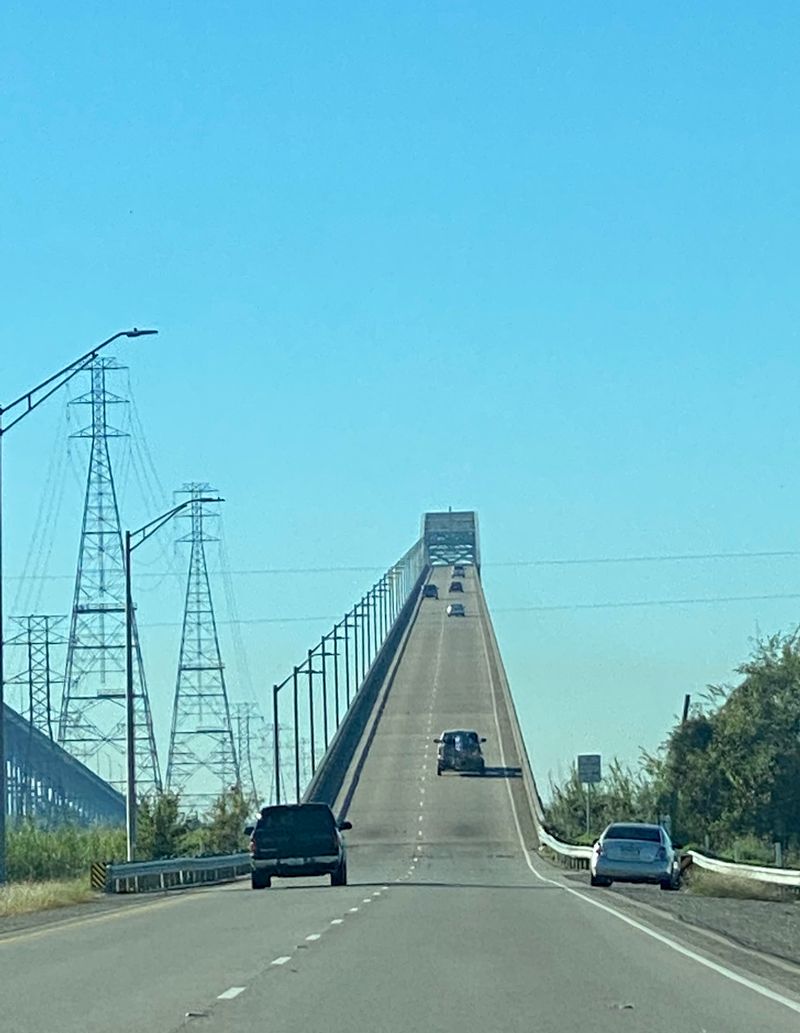
Five percent does not sound like much until your car is pointed at the sky. That number means the road rises five feet for every 100 feet you drive, which is steep for a highway bridge.
The approaches run perfectly straight, so the road seems to stretch forever ahead of your hood. Near the top, the pavement drops out of sight and all you see is open sky.
Many drivers say it feels like driving straight into the clouds.
Reactions are wildly mixed, and that is half the fun. One nervous traveler said her hands got so sweaty she felt like she would never reach the top.
Another happily called it terrifyingly fun.
If you are the anxious type, take a breath before you start up. The climb does end, even when it seems like it never will.
Built Tall for a Navy Ship
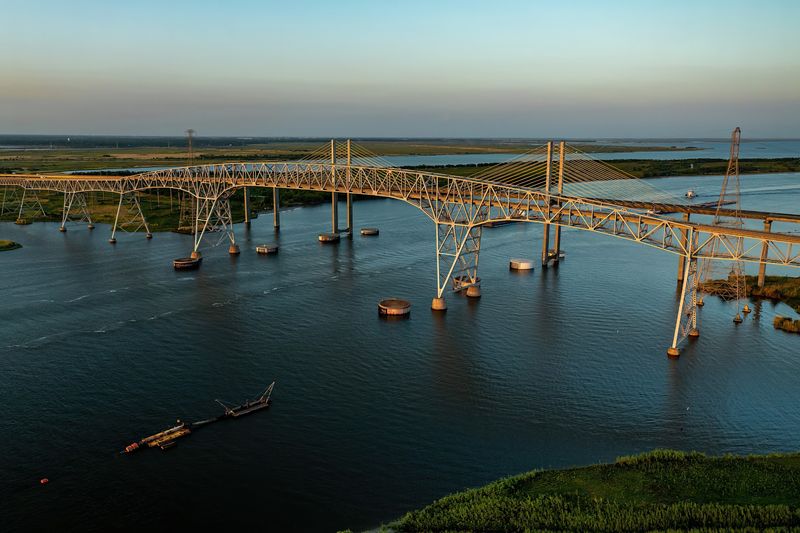
Why build something so tall in such flat country? The answer floats.
Engineers gave the bridge about 176 to 177 feet of clearance over the Neches River so tall ships could pass below.
The goal was the USS Patoka, which was then the tallest ship in the U.S. Navy.
Its towering mast for docking airships needed serious headroom.
Now for the twist. The Patoka never actually made the trip under the bridge.
All that height was built for a ship that never showed up.
Still, the extra room serves the busy shipping channel to this day. From the top, visitors often spot big vessels moving along the waterways below, a great reminder of how important this river is to Texas industry.
Twenty Stories of Height
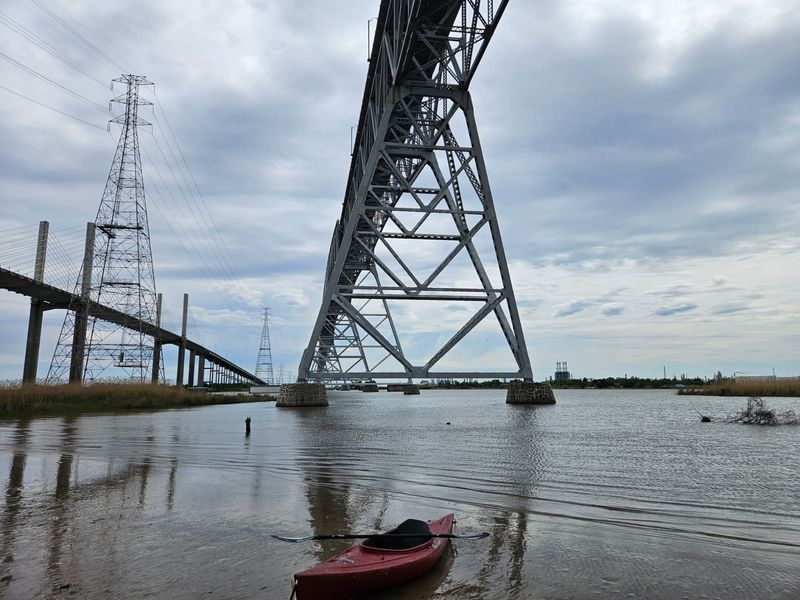
Stand near the riverbank and look up. From roadway to water, the bridge reaches about 230 feet, which is as tall as a 20-story building.
When it opened in 1938, it was called the second-tallest bridge in the entire United States, behind only the Golden Gate Bridge in San Francisco. That is pretty fine company for a Gulf Coast bridge most people outside Texas have never heard of.
Today, many locals proudly call it the tallest bridge in Texas. One daily commuter described it as truly something to experience and nothing to take lightly.
The main cantilevered span is 680 feet long. Put all those numbers together and you get a structure that feels far bigger in person than any photo can show.
Retro Sci-Fi Steel and Arch Cantilever Design
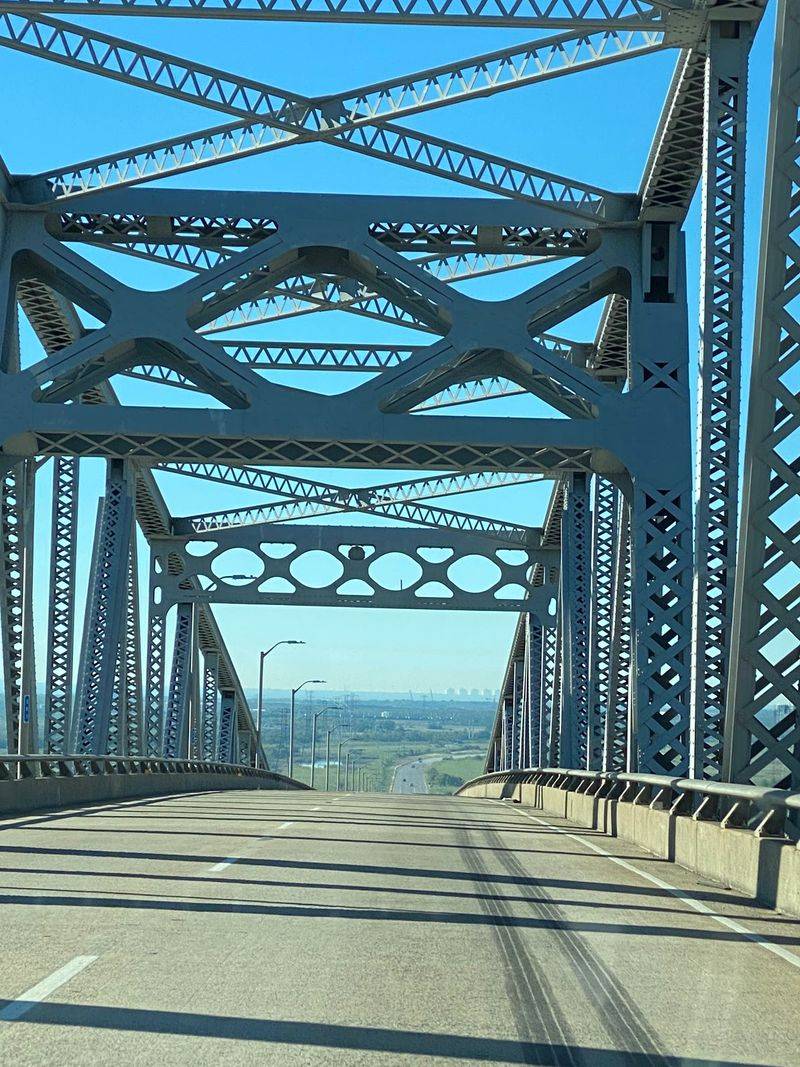
Some fans say it has a Buck Rogers look, like a prop from a 1930s space movie. That vintage sci-fi style was never the plan, but it has earned the bridge lots of love over the years.
The official style is called an arch cantilever design. Gracefully curved trusses sweep across the top, while unusual triangular steel bents hold up the approaches.
Every piece had a purpose. The Gulf Coast gets hit with fierce hurricane winds, so engineers built the bridge to stand up to them.
That mix of tough and pretty is rare. Modern bridges tend to be flat concrete slabs, but this one shows off its steel bones proudly.
In 1994 or 1996, depending on the source, it earned a spot on the National Register of Historic Places.
Views of Ship Channels and Coastal Towns
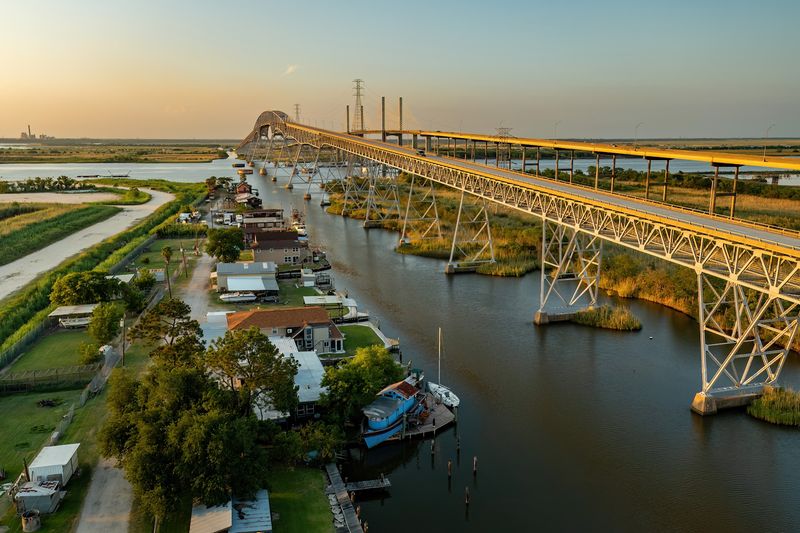
Lucky drivers catch a moment alone near the top. When that happens and you can ease off the gas, the view opens wide in every direction.
Visitors mention sweeping looks at the shipping channels and the towns of Port Arthur and Groves spread out below. Water, marsh, and industry blend into one big Gulf Coast picture.
Photographers love it too. Folks say it is very good for pictures, though they also admit photos never quite capture the height.
A word to the wise: passengers get the best seat. The driver needs eyes on the road, so let someone else snap the shots while you handle the climb.
Thrill Seekers Versus Nervous Drivers
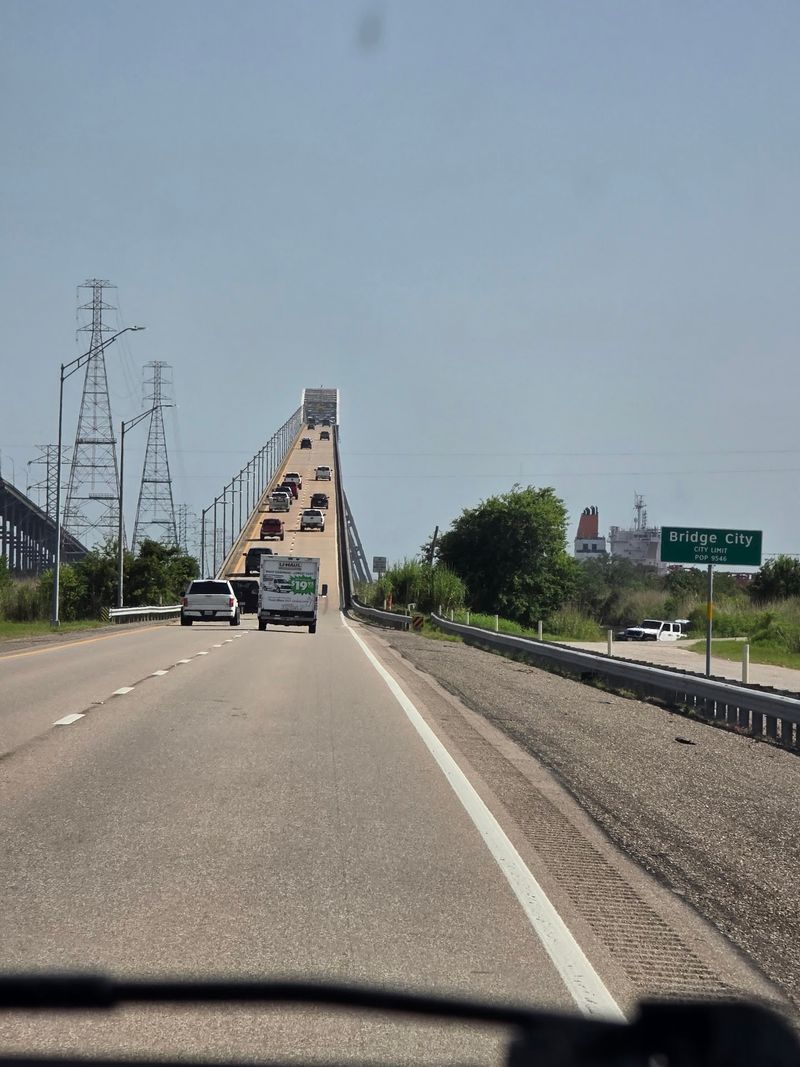
Ask ten people about this bridge and you will get ten different stories. Some laugh the whole way up, and others grip the wheel with both hands.
Thrill lovers adore it. One visitor turned around and crossed four times just for the fun of it.
Another admitted to being afraid of heights yet still loving the huge span.
On the other side, some travelers find it too much. The side rails are low, and one driver said she closed her eyes the whole time as a passenger.
So who will enjoy it most? Adventure-minded families, bridge buffs, and history fans are a great match.
If heights really rattle you, ride along instead of driving.
Driving Tips: Speed, Rails and No Sidewalks
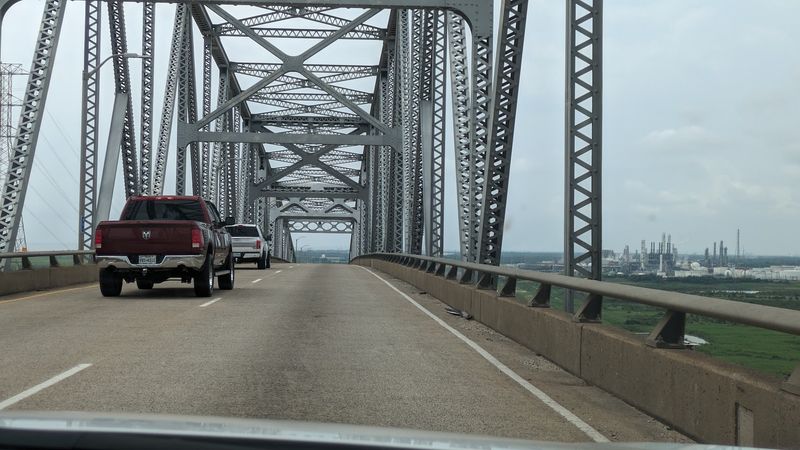
Go in prepared and the ride becomes pure fun. First up, the speed limit is surprisingly fast, and locals who cross daily often drive it like any other road.
Keep a steady pace and stay in your lane. One worried driver tried slowing halfway and felt even more uneasy, so smooth and steady works best.
The rails sit low, which adds to the jitters. Switching lanes will not change the feeling much, according to folks who have tried.
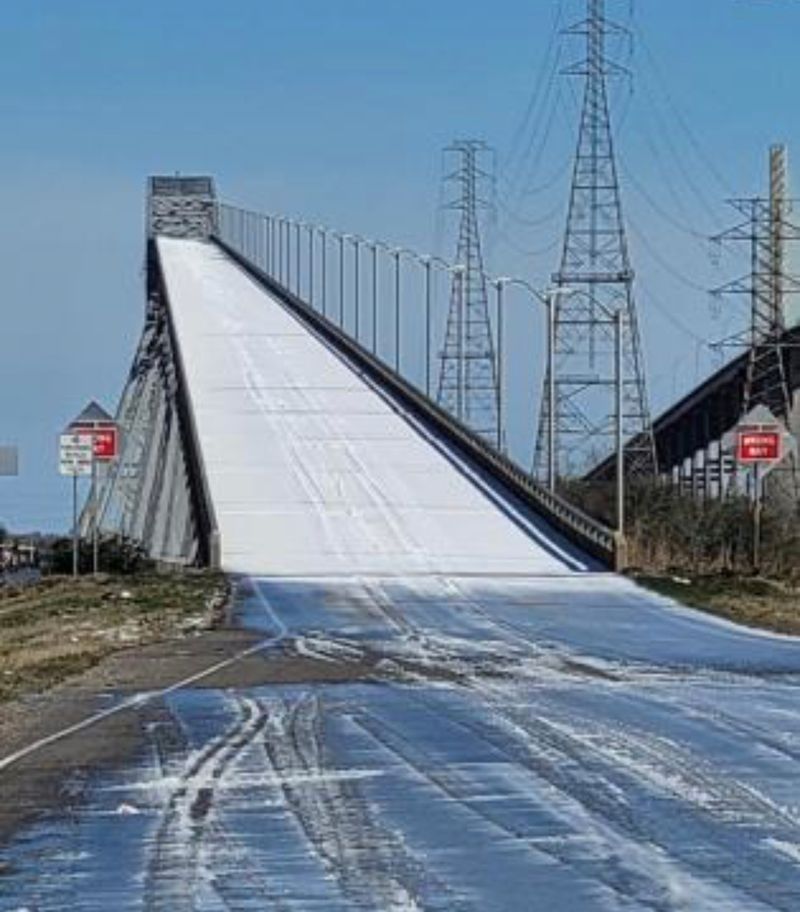
There are no walkways for pedestrians, so this is a drive-only adventure. Also note that crews have done repairs at times, and winter weather can shut it down.
During the February 2021 freeze, it was impassable for a little over a week.
Planning the Trip: Free, Open Around the Clock
Here is the best price in Southeast Texas: zero dollars. The bridge is open 24 hours a day, seven days a week, with no ticket booth in sight.
Many visitors use it as a scenic detour from I-10. One family dodged interstate traffic by looping through Orange, Bridge City, and Port Arthur, and they loved seeing parts of Southeast Texas they had never seen.
Another tip from regulars is to pair it with the nearby Veterans Memorial Bridge, then circle back for another run. Daylight trips give you the best views, especially on cool spring or fall mornings before the summer heat kicks in.
Night crossings are possible too, but one visitor vowed to return in daylight just to see what they missed.
A Climb Worth the Back-Road Drive
Some places earn their fame with billboards and gift shops. This one does it with steel, height, and a road that points straight at the sky.
One traveler first spotted it far off and thought, thank goodness I am not going over that. Then the route led right up it, and the trip became a story told to friends for years.
That is the magic here. It is free, it is historic, and it has barely changed since the days of Depression-era work crews.
So, would you drive over it? If you love old-school Texas wonders, the answer is probably yes.
Just roll down the window, hold steady, and enjoy the moment the road disappears into blue.