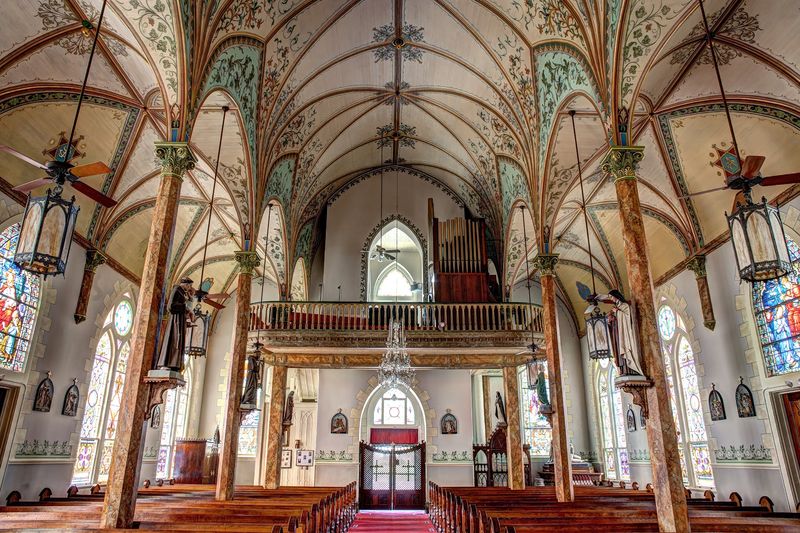
You turn off a quiet Texas farm road expecting a plain little country church, maybe a quick stretch of the legs before lunch. Then you step inside, and the ceiling looks like someone painted the sky and wrapped it in gold.
Every wall, column, and corner is covered in color, made by hand more than a hundred years ago. It is the kind of surprise that makes you forget you were hungry and just stand there staring.
A Brick Church on the Edge of High Hill
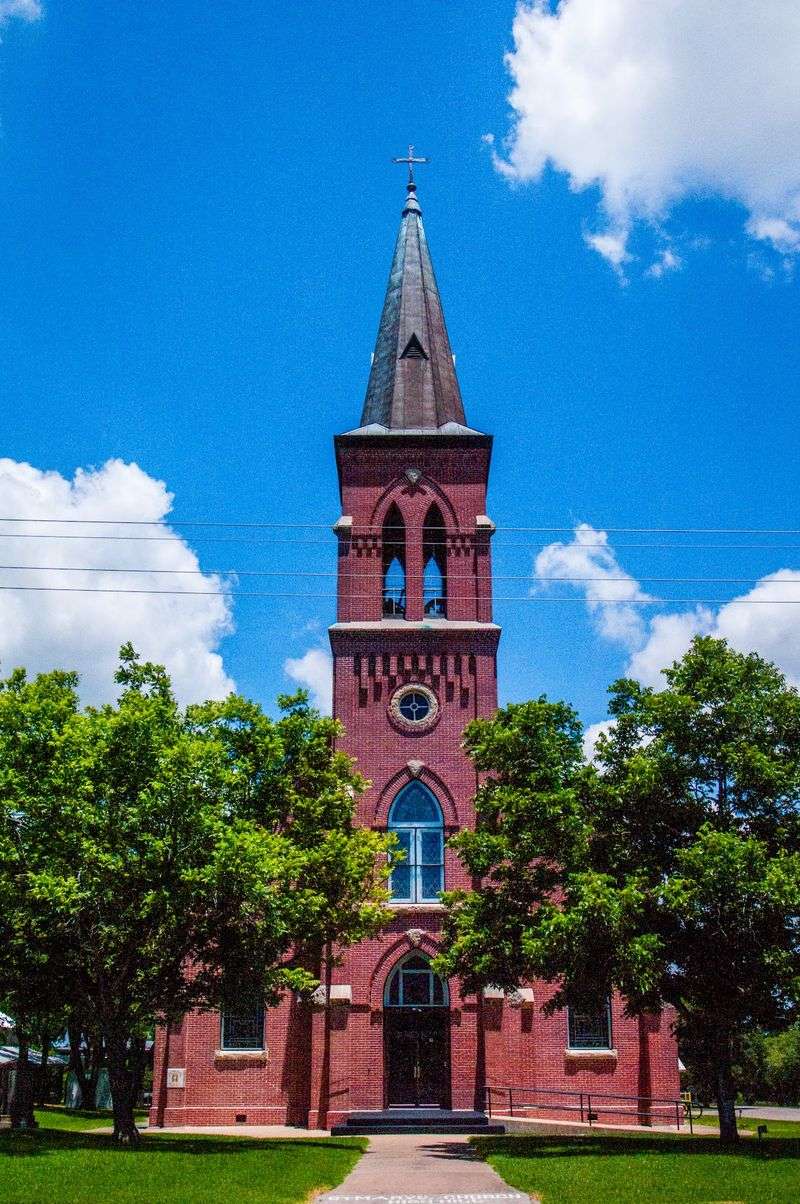
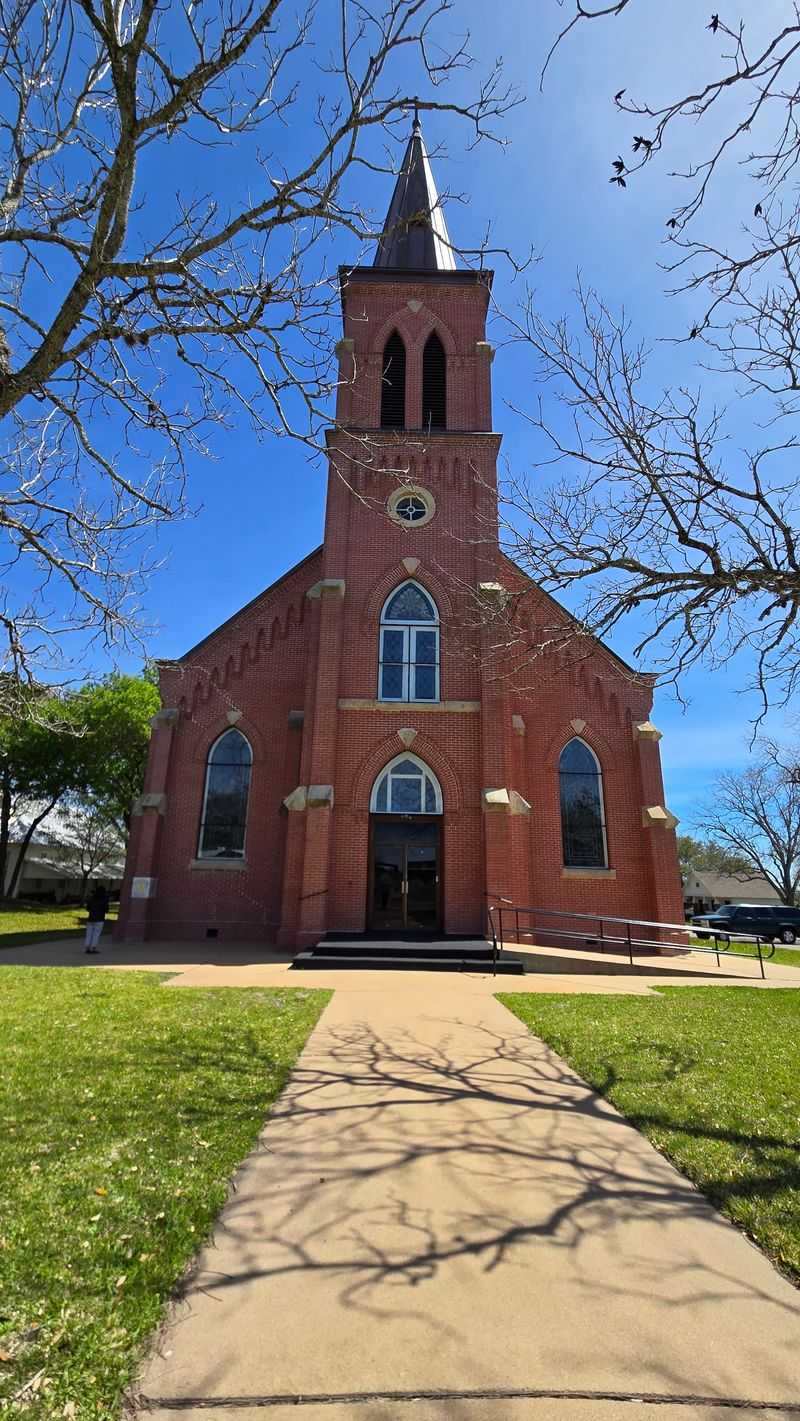
Out on FM 2672, a few minutes from Schulenburg, sits a red brick church that most drivers might pass without a second look. Its official name is the Nativity of the Blessed Virgin Mary Catholic Church, but locals and travelers know it as St. Mary’s of High Hill.
High Hill itself is barely a dot on the map. There is no busy main street, no shopping strip, and no chain restaurant glowing at the corner.
Inside, though, waits one of the most famous interiors in all of Texas. Many people call it the Queen of the Painted Churches, and once you see it, the nickname makes perfect sense.
The church is still an active parish, which means real families worship here every week. That gives the place a lived-in warmth that a museum can never quite copy.
For road-trippers who love finding treasures hidden in plain sight, this is about as good as it gets. The building asks nothing of you from the outside, then rewards you with something unforgettable the moment the doors open.
Immigrant Hands and a Homeland Remembered
Picture families who crossed an ocean, settled on the Texas prairie, and still dreamed of the grand churches back home in Germany and Czech lands. That longing is the real foundation of St. Mary’s.
The settlers of High Hill wanted a house of worship that felt like the cathedrals they remembered. They did not have big city money, but they had faith, patience, and a stubborn streak that would not settle for plain.
Their church became part of a group now called the Painted Churches of Texas. These are 19th and early 20th century churches built by German and Czech immigrants across the region, each one trying to bring a little of Europe to the Texas plains.
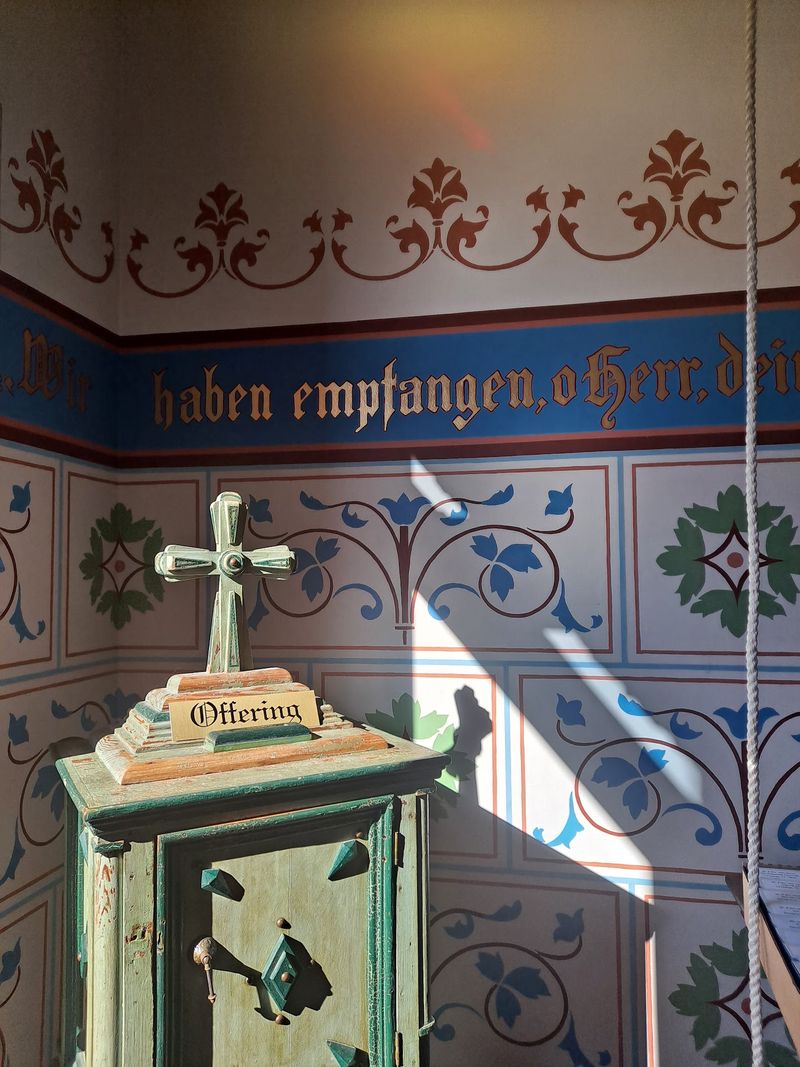
Visitors often notice how deeply that heritage still shows. The stained glass windows carry names of local families and German Vereins, which were community clubs and societies.
Walking through, you are not just looking at art. You are looking at a love letter from people who refused to let distance erase where they came from.
Gothic Revival Bones from 1906
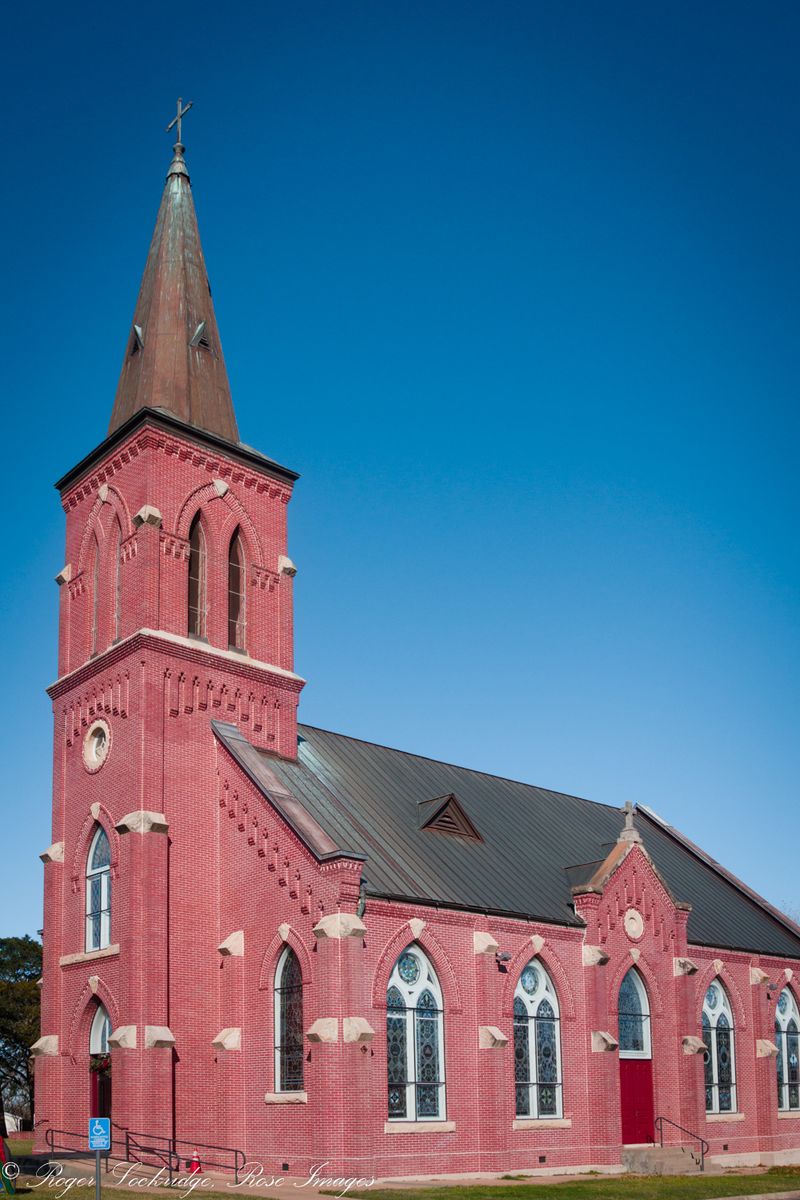
Construction started in 1902 and wrapped up in 1906, a solid four years of work. The design came from Leo M.
J. Dielmann, a well-known architect from San Antonio.
Frank Bohlmann of nearby Schulenburg served as the builder. Together they raised a Gothic Revival church on a concrete foundation, which was a forward-thinking choice for a rural parish at the time.
Look closely at the outside walls and you will spot red brickwork with fine mortar joints. The detailing is restrained, almost modest, with pointed windows and clean lines rather than flashy decoration.
That calm exterior is part of the magic. One visitor put it simply, saying the church might seem somewhat unassuming from outside, while the inside is outstanding.
It is a bit like a family recipe card that looks plain until you taste the dish. The brick shell protects something far richer, and the builders seemed to know exactly what they were doing.
In 1983, the church was added to the National Register of Historic Places, giving official recognition to what the community already knew.
The 1912 Paint Job That Changed Everything
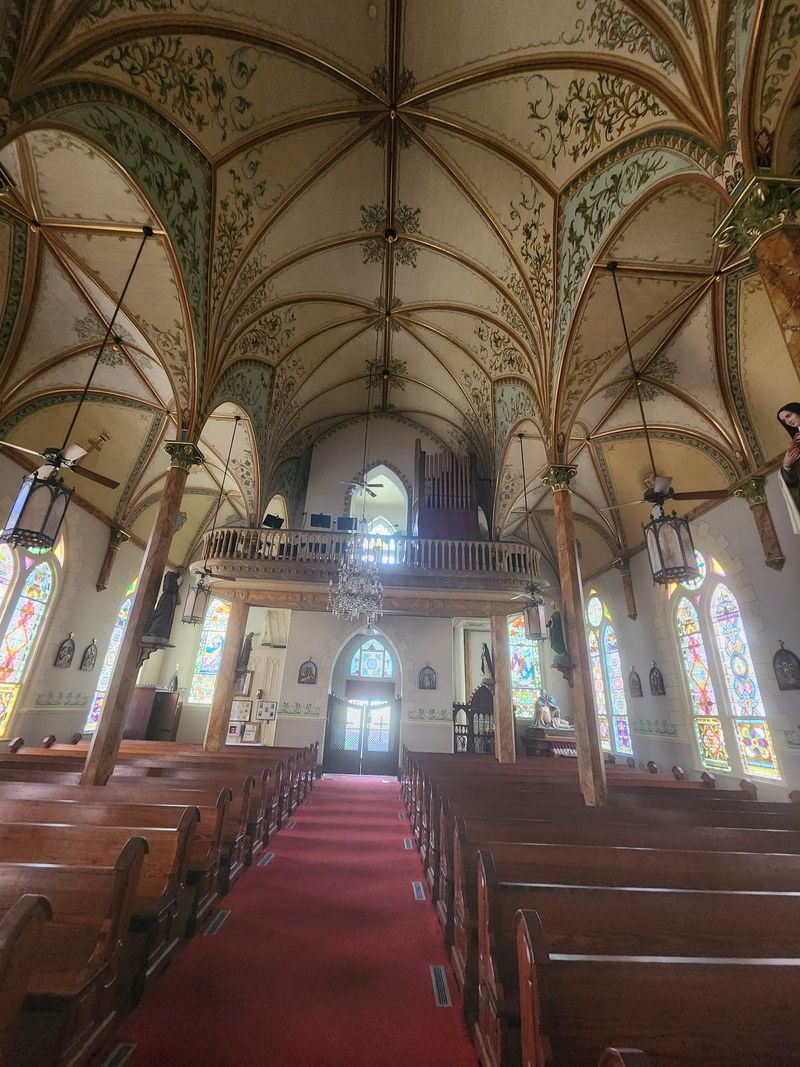
Six years after the bricks went up, two San Antonio painters named Ferdinand Stockert and Hermann Kern arrived with brushes, stencils, and a big vision. In 1912 they began covering the ceilings, walls, and columns in color.
The palette leans soft and heavenly. Think sky blue, off-white, green, and ochre, with touches of gold, rose, and beige that catch the light.
What makes it so impressive is the mix of methods. Stockert and Kern combined freehand painting with stenciling, building layer upon layer of patterns and images.
Visitors often say they cannot stop imagining how many hours it took. Every repeating border had to line up, every flourish had to be steady, all without laser levels or computer printers.
Today, it is still considered one of the most elaborate and sophisticated examples of decorative painting in the state. Modern builders have tools these painters never dreamed of, yet few would attempt anything this patient.
Columns That Fool the Eye
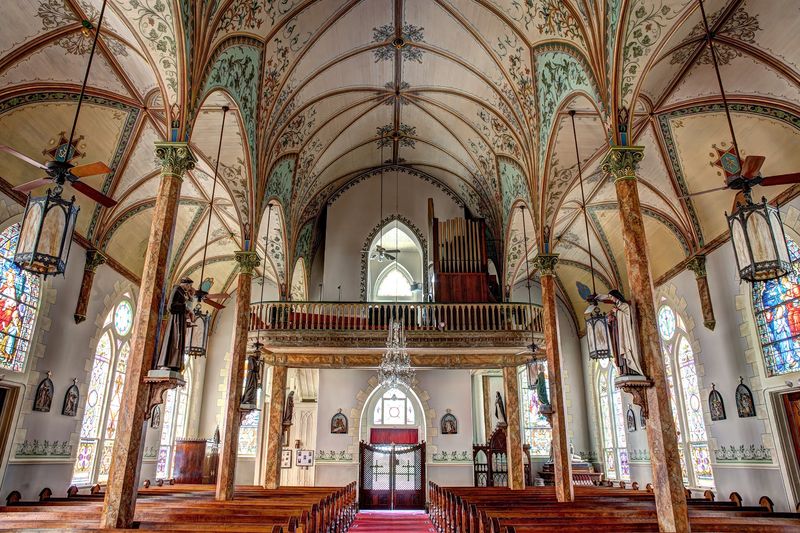
Tap one of those octagonal columns and you might be surprised. They look like costly polished stone, but the marble is entirely painted.
The artists used a technique called marbling to copy burnished ochre and gray-green stone. Swirls and veins were brushed on by hand, so convincing that many people only figure it out when someone points it out.
At the top, Corinthian capitals shine with metallic gold highlights. The leafy details pull your eyes upward toward the ceiling.
Here is the clever part. A rural farming congregation could never afford solid marble columns, so the painters created the look instead.
Visitors also mention several trompe l’oeil touches, a French term for art that tricks the eye into seeing depth. Painted shadows and edges make flat surfaces seem carved and layered.
It is old-school ingenuity at its finest. No shortcuts, no factory parts, just skill and a good eye making a modest budget look like royalty.
Clouds Overhead and a Tapestry Ceiling
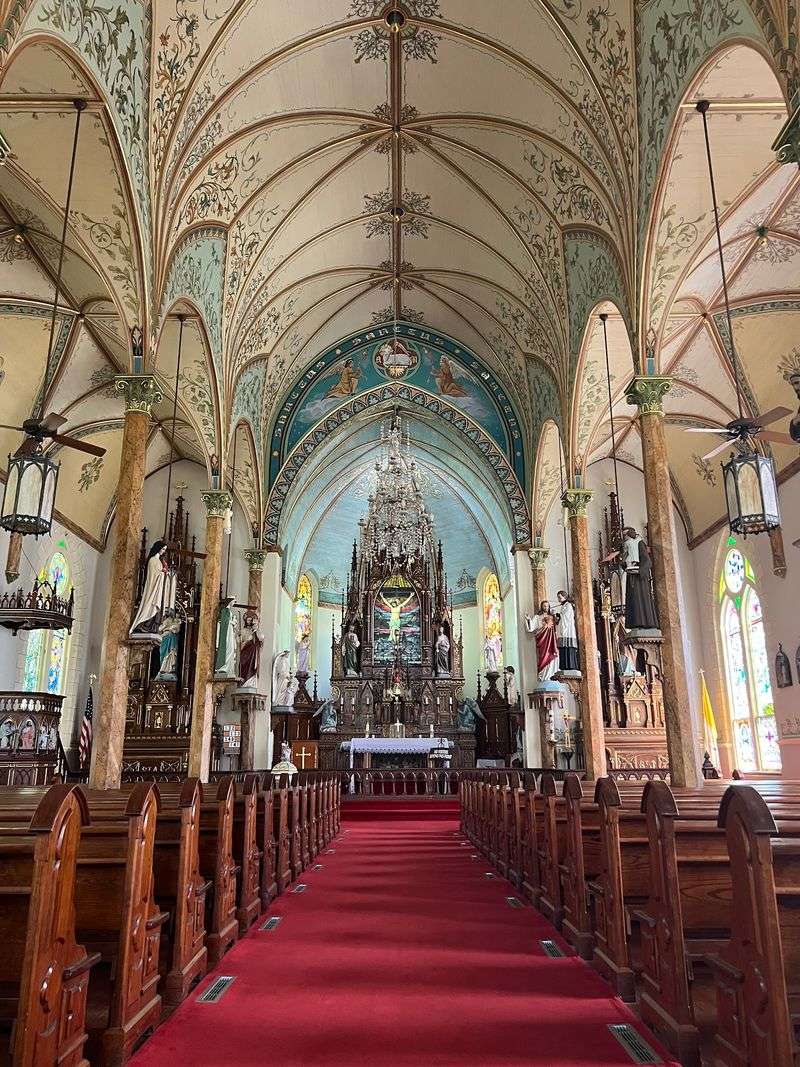
Tilt your head back. Go on, everybody does it.
Above the pews, the ceiling spreads out in a pattern so intricate that visitors compare it to a woven tapestry. Rows of stencils repeat in perfect rhythm, framed with gold lines.
One guest summed the space up in a single happy phrase, calling it a painted church with a dome of clouds. Soft blue and white tones give the feeling that the roof has opened to a calm Texas sky.
Some travelers have even said it reminded them of the Sistine Chapel in Rome. That is a big comparison for a country church on a farm road, but standing underneath, it does not feel silly.
Bring a little patience and maybe a comfy neck. The longer you look, the more tiny details appear, from small flourishes to delicate borders you missed the first time.
Stained Glass Full of Family Names
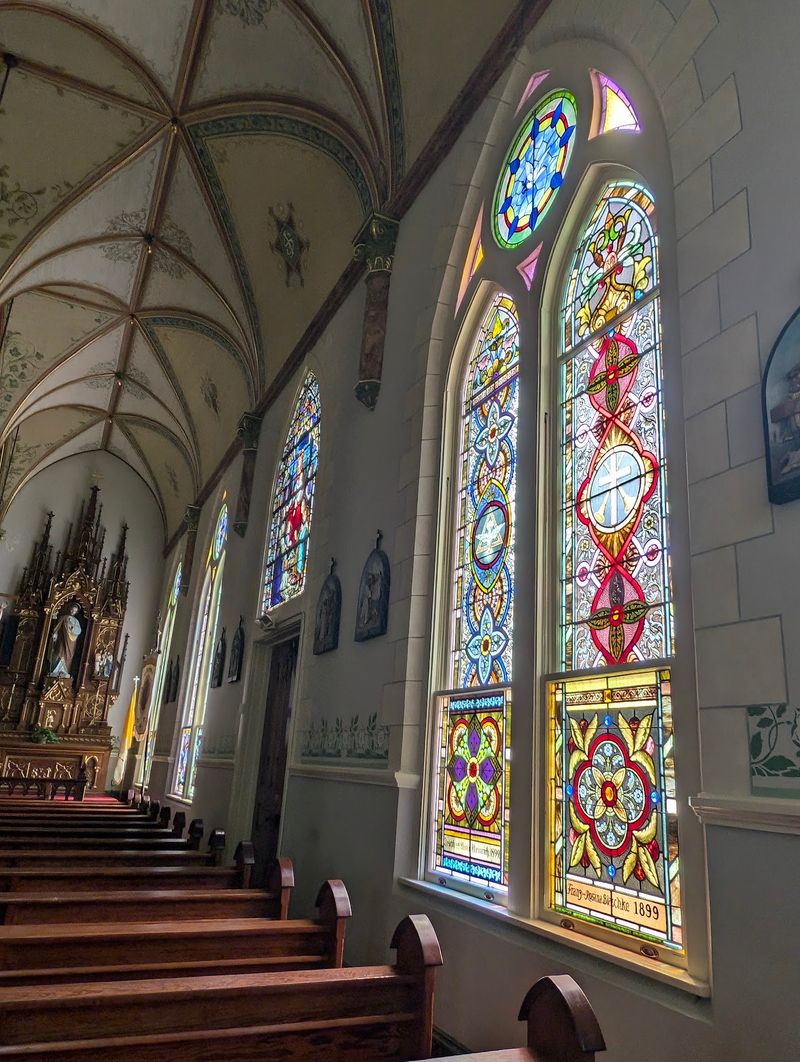
Sunlight does something special here. As it pours through the stained glass windows, bright colors spill across the painted walls and wooden pews.
Visitors talk about these windows almost as much as the ceiling. Many call them breathtaking, and they reward a slow, close look.
The best part is the story they tell. Windows carry the names of local families and German Vereins, linking the glass directly to the people who built and supported the church.
Some features reflect the faith and heritage of the community, too. It feels personal, like flipping through a family album made of light.
If you visit on a bright morning, the colors can be especially vivid. Cloudy days have their own charm, with softer glows that let you read the details more easily.
Altar, Statues, and a Sense of Majesty
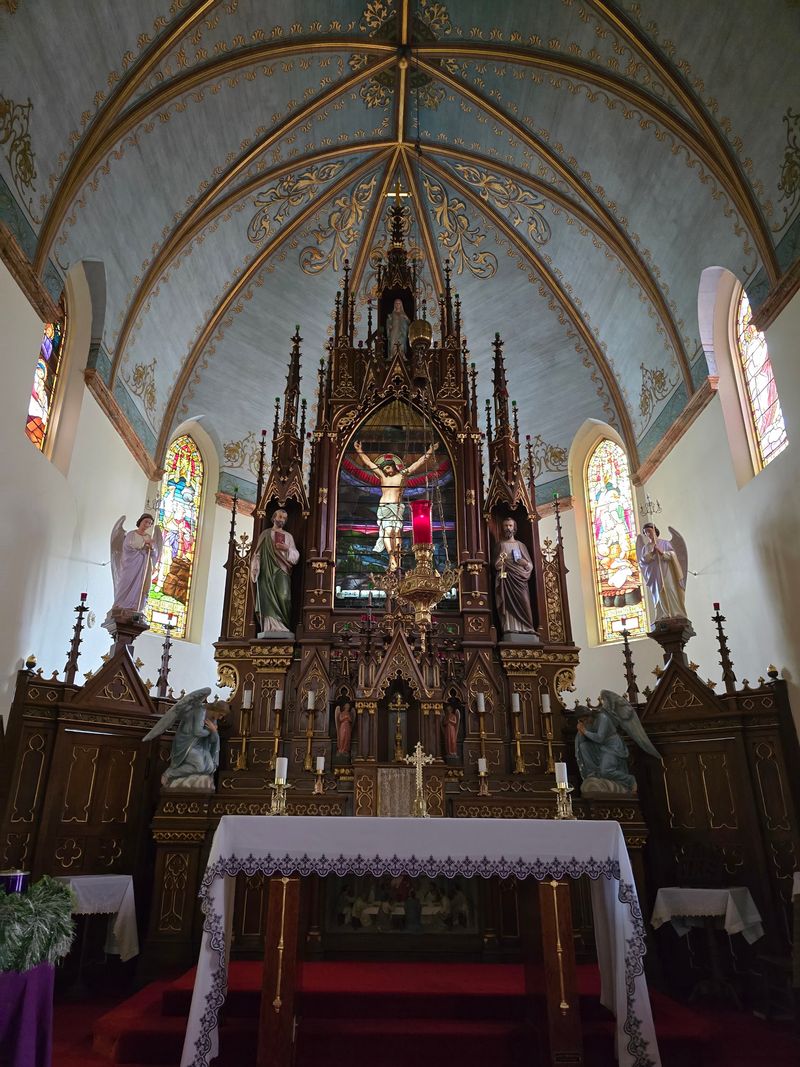
Walk toward the front and the whole room seems to gather around the altar. Visitors describe it as impressive, framed by dramatic sculpture and layers of painted detail.
Statues stand in quiet poses, adding depth to the colorful walls. The effect feels grand without being cold, more like a warm welcome than a show.
Plenty of travelers say their mouths fell open when they first saw it. One person who toured four painted churches in a day said this was the one to pick if you only have time for a single stop.
Remember, the beauty here is first and foremost sacred. Many guests pause to pray, and some say the space feels truly inspired.
Even if you come mainly for the art, you will likely find yourself speaking in a whisper. The room simply has that effect.
Who Will Love a Stop Here
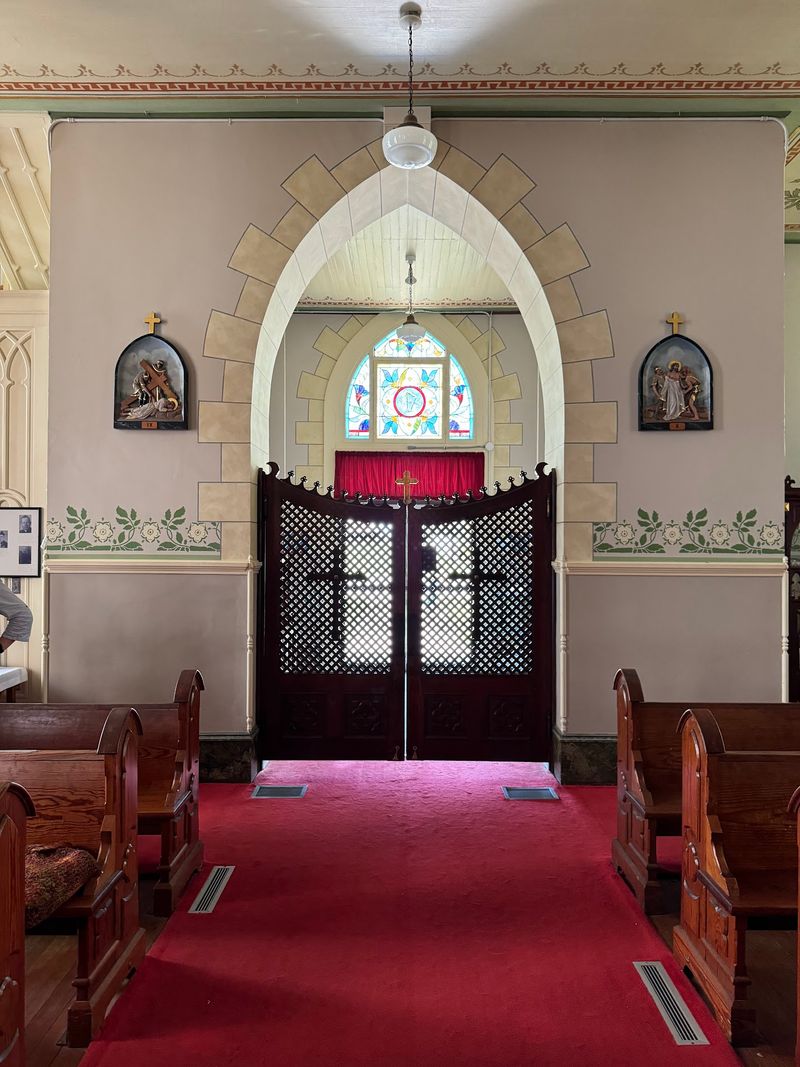
Art lovers, history buffs, and anyone with a soft spot for craftsmanship will be in heaven. So will folks who simply like a good back-road surprise.
Families do well here too. One visitor mentioned bringing visiting relatives and stumbling onto the church almost by accident, then calling it well worth the drive.
Fans of religious art get a special treat. One traveler on the way to San Antonio stopped specifically because of that interest and left amazed.
People of faith often treat the visit as a pilgrimage. Some come because family members were connected to the parish, finding deep meaning in the place.
The atmosphere stays peaceful and respectful. Kids should be ready to use quiet voices, since this is a working church and not a theme park.
If you are the type who prefers a handmade quilt over a store-bought blanket, you will feel right at home.
Pavilion Picnics, Gift Shop, and Country Roads
Pack a sandwich. Seriously, there is a pavilion out back where visitors have enjoyed picnics under the shade.
A gift shop sits in the old rectory house, though its hours may vary. One group found it closed during their visit, while another met a kind, knowledgeable attendant there.
That attendant even shared a scenic reroute so the travelers would not miss the Piano Bridge road. Little local tips like that are part of the charm.
Restrooms are in a side building, and visitors have reported finding them open. That is a welcome bonus on a long day of driving.
The countryside between High Hill and the other painted churches is lovely in its own right. Rolling fields and quiet farm roads make the drive part of the fun, especially in spring when wildflowers can pop up along the way.
Hours, Cost, and Tour Options
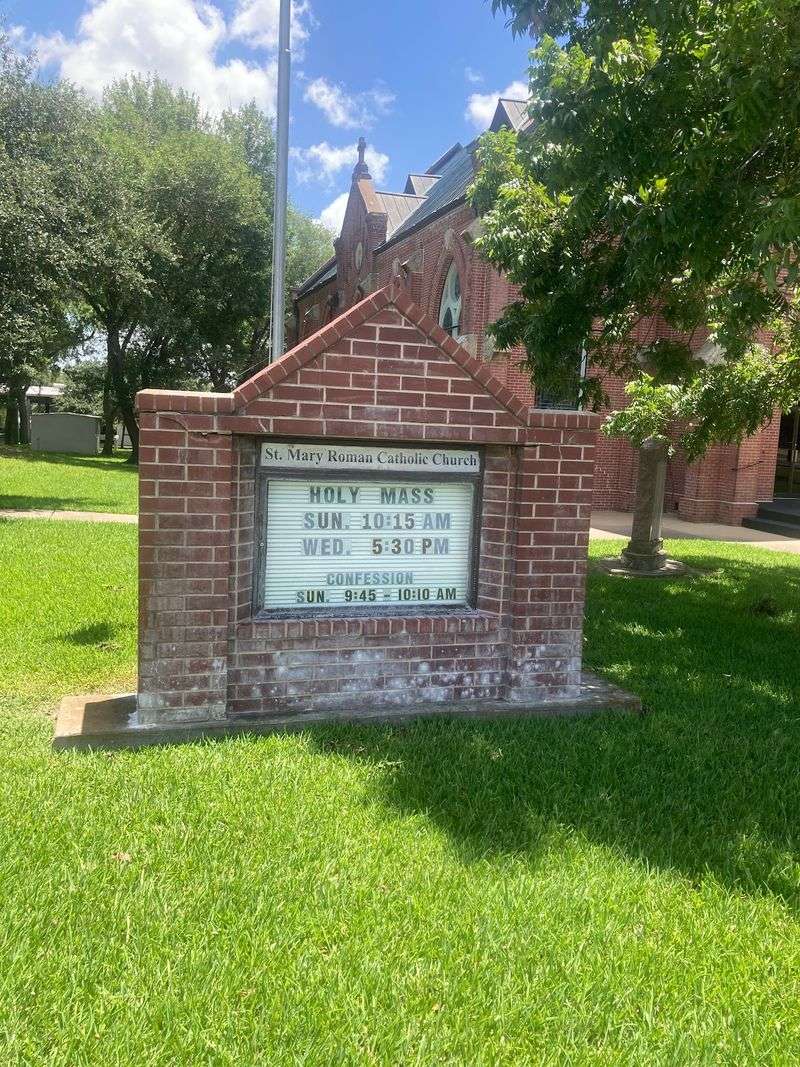
Good news for budget-minded travelers: visiting is free. The church is listed as open from 8 AM to 5 PM most days, with Monday starting earlier at 6 AM.
Hours can change, so it is smart to call ahead at 979-743-3117 or check the parish website. Since this is an active church, try to avoid arriving during Mass.
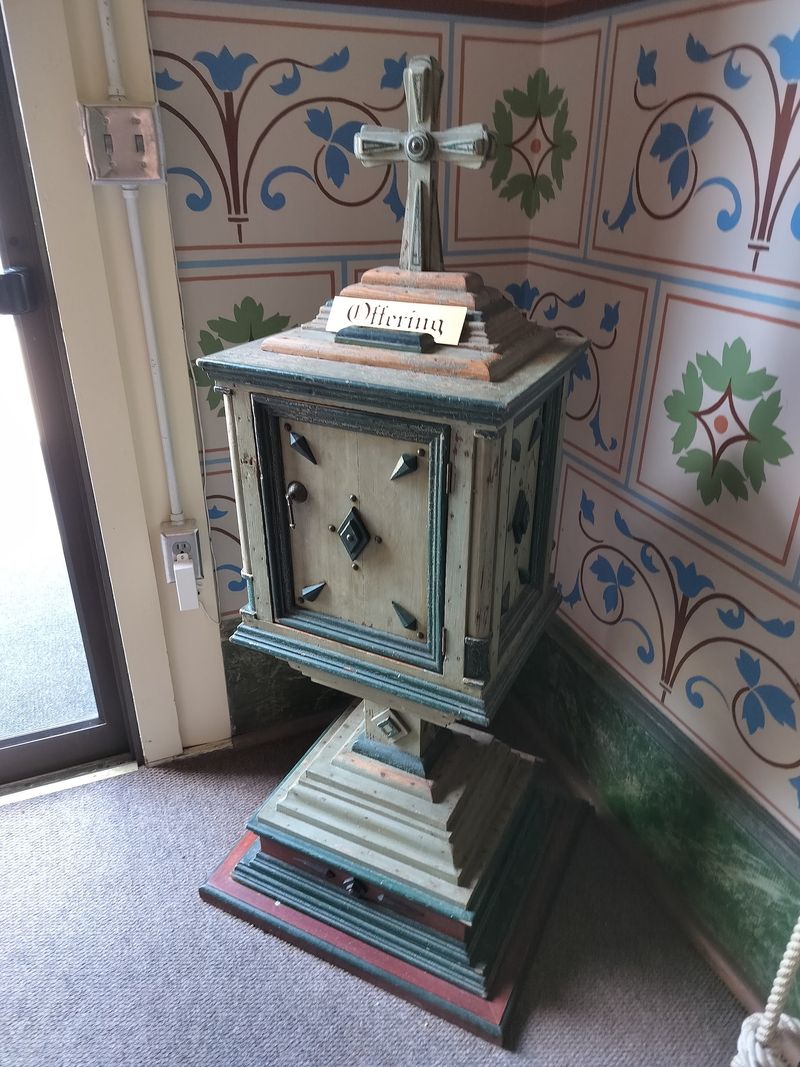
Donations are warmly encouraged. Visitors frequently suggest leaving something to help the parish keep the artwork preserved and the doors open to day travelers.
Want the full story? Guided tours are often available through the Greater Schulenburg Chamber of Commerce for a fee.
Opinions vary on the paid tour. Some guests loved their top-notch docent, while one traveler felt a self-guided drive between churches worked just fine.
The address is 2833 FM 2672, Schulenburg, TX 78956. Summer heat can be fierce, so morning visits are a cool choice.
A Quiet Queen Worth the Detour
Some places shout for attention. St. Mary’s does not need to.
For more than a century it has stood on a country road, keeping its painted ceiling, marbled columns, and family-named windows safe for anyone curious enough to stop. The parishioners and community have cared for it with obvious devotion.
Travelers have driven two hours just to see it and called the trip worthwhile. Others found it by chance and left wondering how they had never heard of it.
In an age of quick builds and bare walls, this church is a gentle reminder of what patience can create. Nobody rushed these brushstrokes, and it shows.
So next time your weekend drive points toward Fayette County, leave room for High Hill. Bring a picnic, a small donation, and plenty of time to look up.