Some of the best road trip stops in Texas are the ones you almost drive right past. I was hungry, a little road-weary, and only half curious when a sign pointed me toward an old stone fort, and I figured it would be a quick stretch of the legs.
Instead, I found thick walls, a chapel still in use after nearly three centuries, and a story bigger than the whole afternoon I had planned. For about the price of a fast food combo, this humble spot hands you a front-row seat to the Spanish frontier, and it never once tries to be anything flashy.
A Stone Fortress Beside US-183
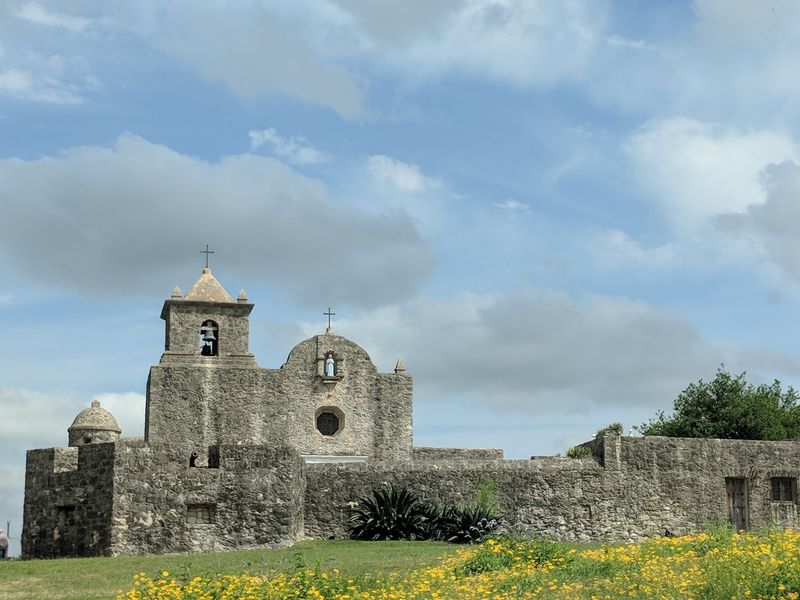
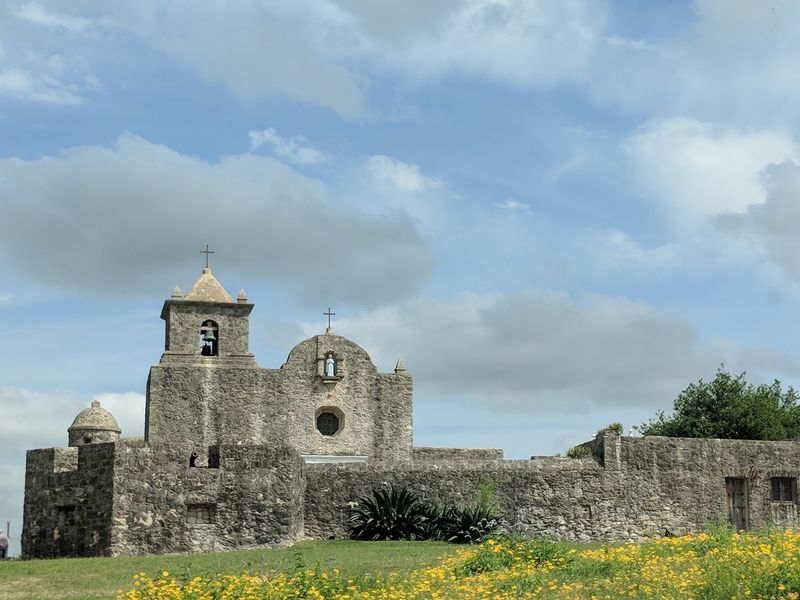
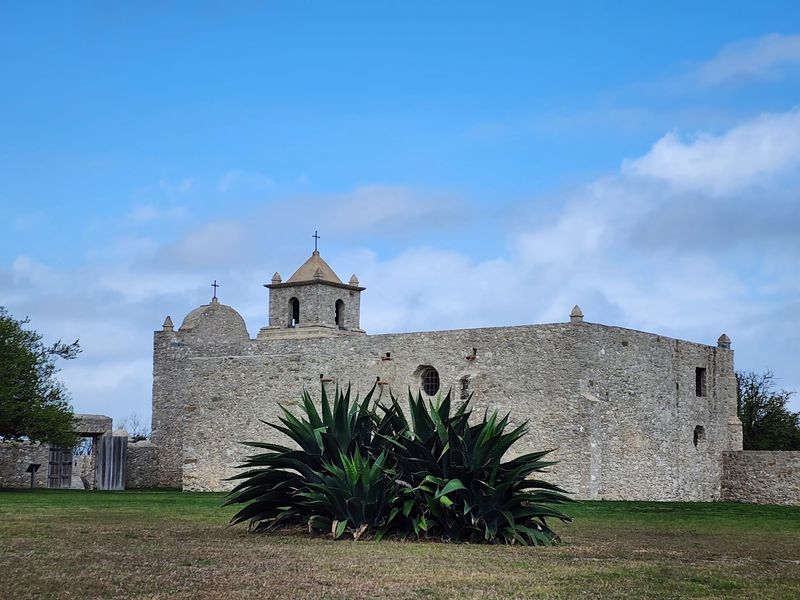
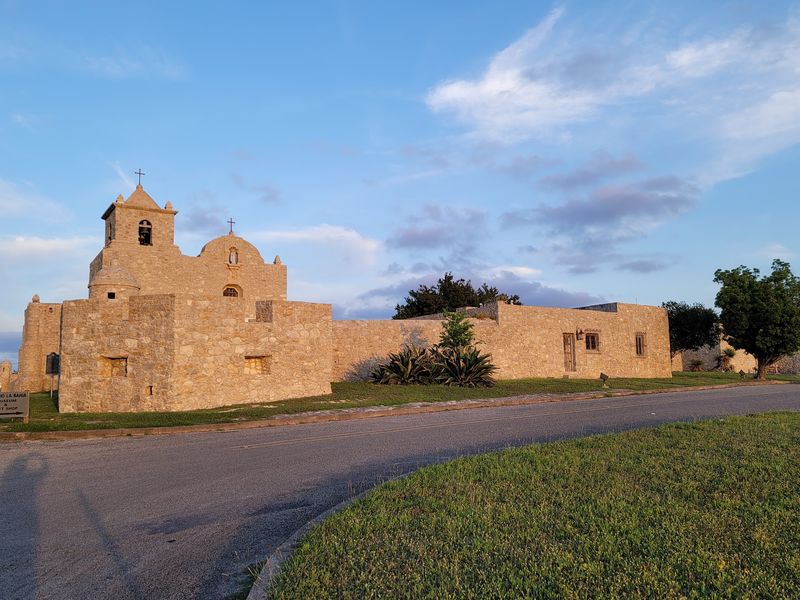
Right off US-183, just south of downtown Goliad, a set of pale stone walls rises out of the coastal prairie like something borrowed from another century. That is Presidio La Bahía, and it holds a title no other spot on the continent can claim: it is the only fully restored Spanish Colonial presidio in North America.
A presidio, in plain terms, was a Spanish military fort built to guard missions and settlements on the frontier. Experts widely call this one the finest surviving example anywhere in the world.
Better yet, it sits on the exact footprint of its 1749 layout, so the ground under your boots is the same ground Spanish soldiers paced nearly 300 years ago.
The address is 217 US-183, Goliad, TX 77963, and you will not need a fancy app to find it. The bell tower of the chapel pokes above the walls, and the whole compound feels refreshingly unbothered by modern trends.
No light shows, no glossy entry plaza, just honest stone and a whole lot of Texas history.
Today it operates as a State Historic Site and carries the rank of National Historic Landmark. For travelers who love places that never bothered to modernize, it is about as authentic as a Lone Star day trip gets.
Roots Reaching Back to 1721
Long before Texas had a flag of its own, Spain was nervously eyeing its northern frontier. French explorers were poking around the Gulf Coast, and the Spanish crown wanted a strong outpost to protect its missions and its land claims.
So in 1721 the first version of the fort went up near the coast. Its full name, often translated as the Fort of the Bay of the Holy Spirit, hints at those seaside beginnings.
After a couple of moves, the garrison settled on its current hilltop near the San Antonio River in 1749, and that is where it has stood ever since.
Fun fact for the road: a fort like this was never just soldiers. Families, craftsmen and ranch hands gathered around the walls, and that civilian community slowly grew into the town of Goliad you drive through today.
In other words, the presidio is not just a landmark in town, it is the reason the town exists.
By the late 1700s it had become one of the most important settlements in all of Spanish Texas. Supplies, news and people flowed through its gates, and its stone walls watched Spanish rule give way to Mexican rule and, eventually, to the Texas Revolution of 1836.
The 1960s Rescue That Brought It Back
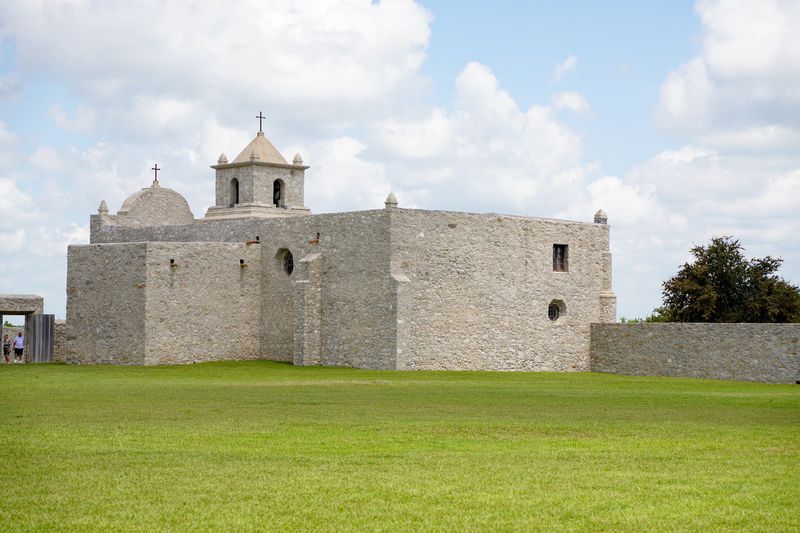
Picture a grand old fort left to the weather for about a hundred years. Walls crumbled, roofs fell in, and much of the compound faded into rubble and prairie grass.
Then along came Kathryn O’Connor, a local champion with deep affection for the site. She backed a full restoration, and architect Raiford Stripling took on the job of bringing the presidio back to life.
Work ran from 1963 to 1967, and the results are still the reason people drive out here.
What makes the effort special is how carefully it was done. Stripling’s team followed the original layout and building methods as closely as they could, and the project is widely praised as one of the most authentic restorations in the United States.
Nothing here feels like a theme park version of history.
Walk the grounds and you can sense that patience in the details. The walls have the heft of real stone, the rooms keep their old proportions, and the compound reads like a working frontier fort rather than a museum diorama.
It is a quiet thank-you note to a small group of people who refused to let the place slip away.
Plenty of Texas landmarks were bulldozed in that era. This one got a second chance instead.
Our Lady of Loreto Chapel
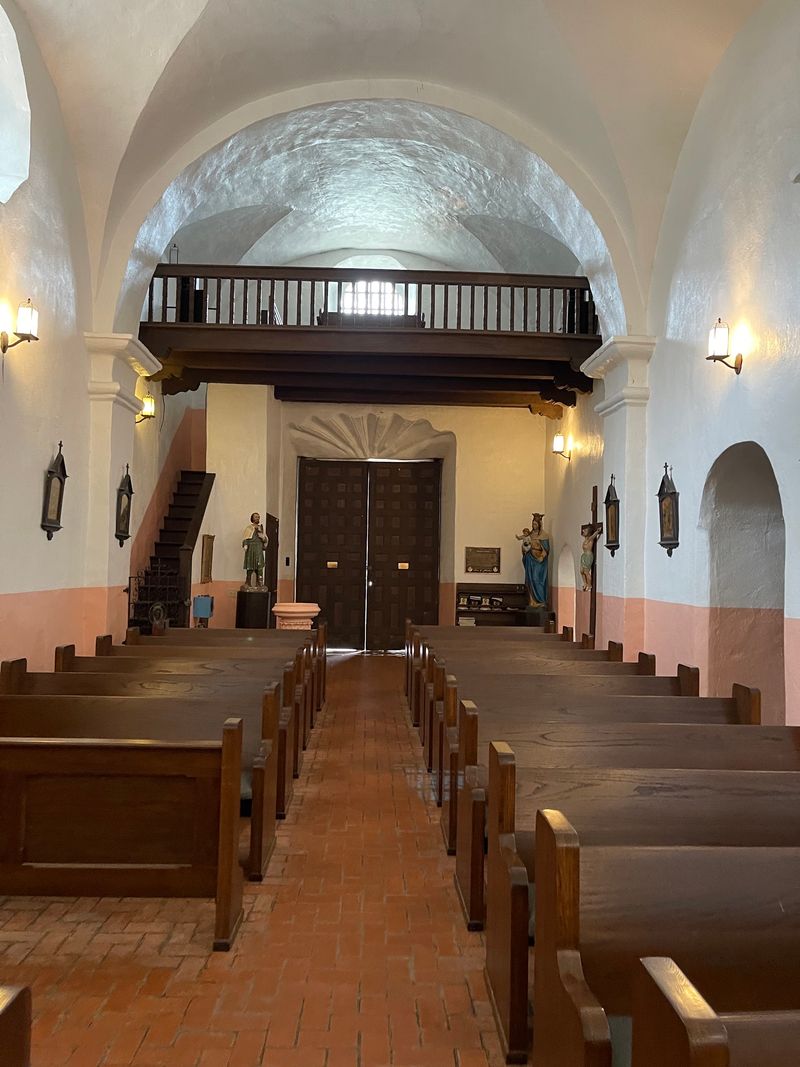
Step through the chapel doors and the temperature seems to drop along with your voice. Our Lady of Loreto Chapel is the oldest building on the compound, and it has been in continuous use since the 1700s.
That makes it one of the oldest churches in America, which is a pretty remarkable thing to stumble upon in a small South Texas town. Look up and you will spot the original groin vaulted ceiling, where curved arches meet and cross overhead.
It is a rare architectural feature, and it gives the room a calm, sheltering feel.
Visitors often say the chapel ranks among the prettiest they have ever seen, and it is easy to understand why. The space is simple, bright and unfussy, with none of the gilded clutter you might expect.
That plainness is exactly its charm.
Because the chapel is still a sacred space, it is worth moving through quietly and keeping kids at an indoor voice. A few unhurried minutes on a pew may end up being the part of the trip you remember most.
Photographers, take note: the soft light inside can look lovely in the late morning, when the sun is up but the South Texas heat has not fully settled in.
Birthplace of the First Texas Declaration of Independence
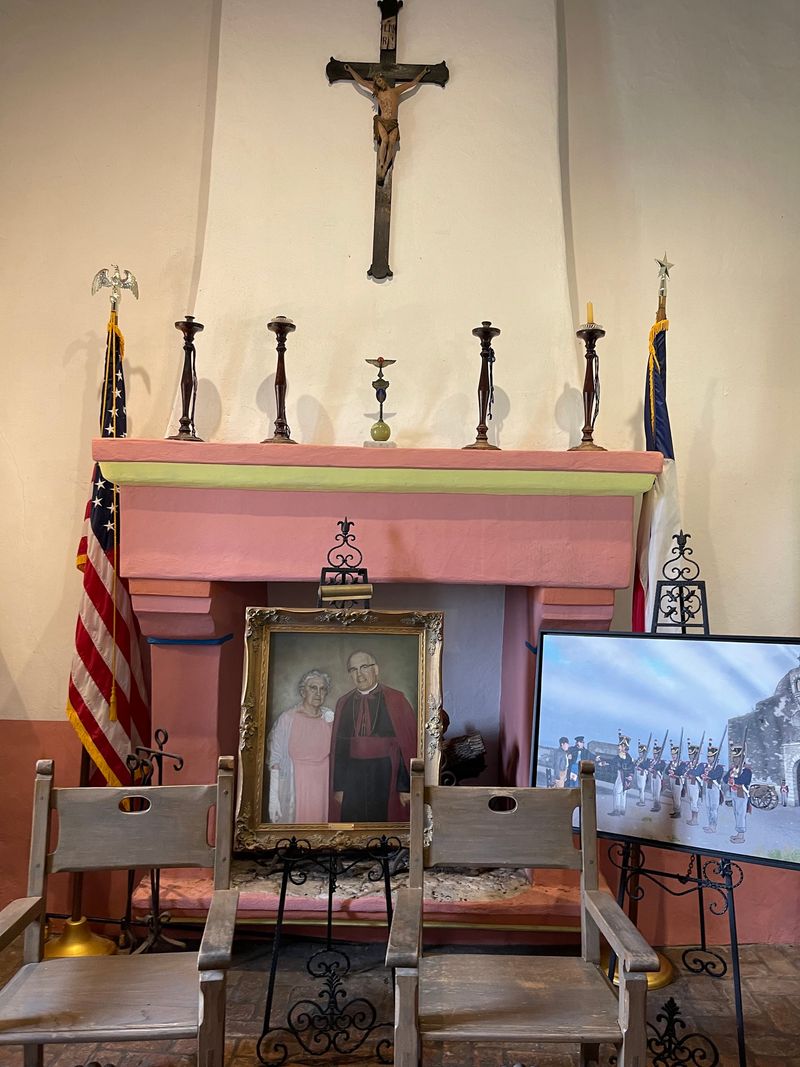
Ask most folks where Texas declared independence and they will name Washington-on-the-Brazos. Here is the twist: the first Declaration of Texas Independence was actually signed right inside the chapel at Presidio La Bahía.
That early document came in December 1835, months before the more famous declaration in March 1836. It is a detail that surprises plenty of lifelong Texans, and it adds real weight to an already historic room.
Standing where those signatures were made is a goosebump moment for any history fan.
The presidio played a big role in the Texas Revolution overall, and many visitors argue it deserves the same attention as the Alamo. It may be less famous, but its story is just as central to how Texas came to be.
Exhibits on site help connect the dots between Spanish rule, Mexican Texas and the fight for independence.
Bring that bit of trivia to your next family gathering and watch the eyebrows go up. It is the kind of fact that makes a quiet small-town stop feel like a secret only the back-road crowd knows.
Teachers, this is also why the site makes such a strong field trip. Few places let students stand in the actual room where a turning point happened.
Officers’ Quarters Turned Museum
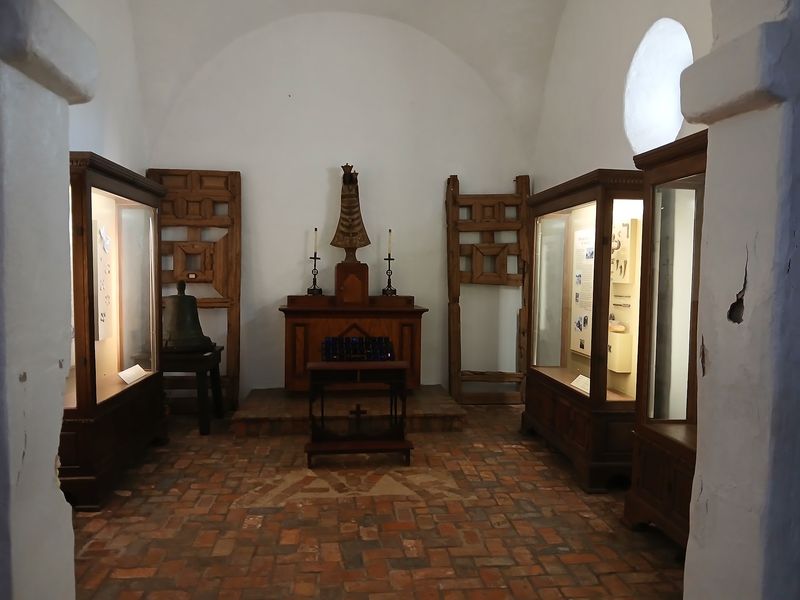
Where Spanish officers once slept and planned, glass cases now hold the small, surprising leftovers of frontier life. The old officers’ quarters have become the presidio’s museum, and it is packed with items dug up right on the grounds.
You will find uniforms, everyday tools, pottery and military gear spanning several eras. Seeing objects that were actually used inside these walls makes the history feel far less abstract.
A button or a buckle suddenly tells you something about the person who wore it.
Visitors regularly mention that the museum is bigger and more detailed than they expected. Panels walk you through Spanish, Mexican and Texas chapters in a clear order, so even history newcomers can follow along without feeling lost.
Period pieces placed throughout help paint the picture.
Families with younger kids may want to ask about the scavenger hunt, which turns the exhibits into a bit of a game. It is a smart way to keep little ones looking closely instead of drifting toward the exit.
On the way out, the gift shop is worth a peek. It carries souvenirs at a wide range of price points, so you can grab a keepsake without blowing the road trip budget.
Walls, Courtyard and a View Worth Imagining
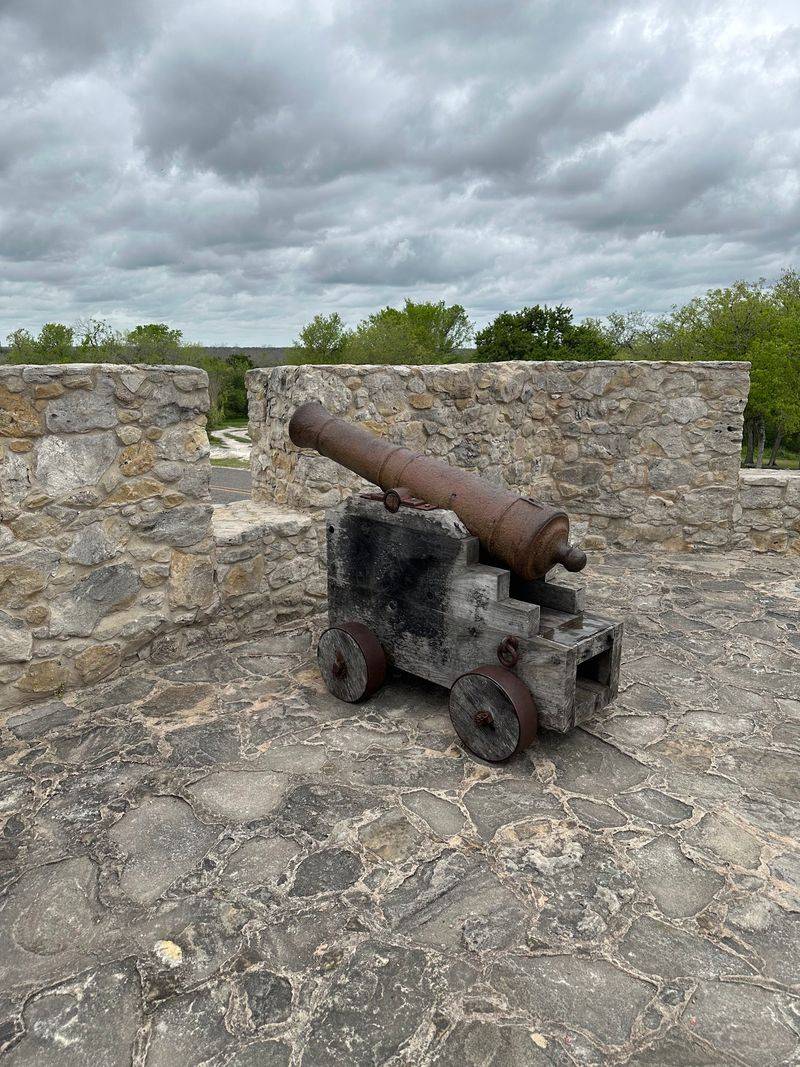
Climb onto the walls on a clear day and something funny happens. The traffic noise fades, the prairie stretches out, and it is very easy to imagine a Spanish sentry squinting at the horizon for riders.
Guests love that simple experience of standing up there and letting their minds wander. The walls themselves are thick and sturdy, built to keep a frontier garrison safe, and they give you a sense of just how serious life out here once was.
Down below, the courtyard is a wide, open heart for the whole compound. It is beautiful in its own plain way, framed by stone buildings and the chapel tower.
On event weekends, this is where camp scenes and period tents pop up.
Many people are surprised by the scale. The presidio is much larger than it looks from the highway, so give yourself time to wander the full loop instead of rushing.
Summer tip: South Texas sun can be intense, and the courtyard has limited shade. Morning visits right at the 10 am opening tend to be the most comfortable, and a hat and water bottle go a long way.
In spring, the surrounding countryside can be especially pretty during wildflower season.
Reenactment Weekends and Candlelight Tours
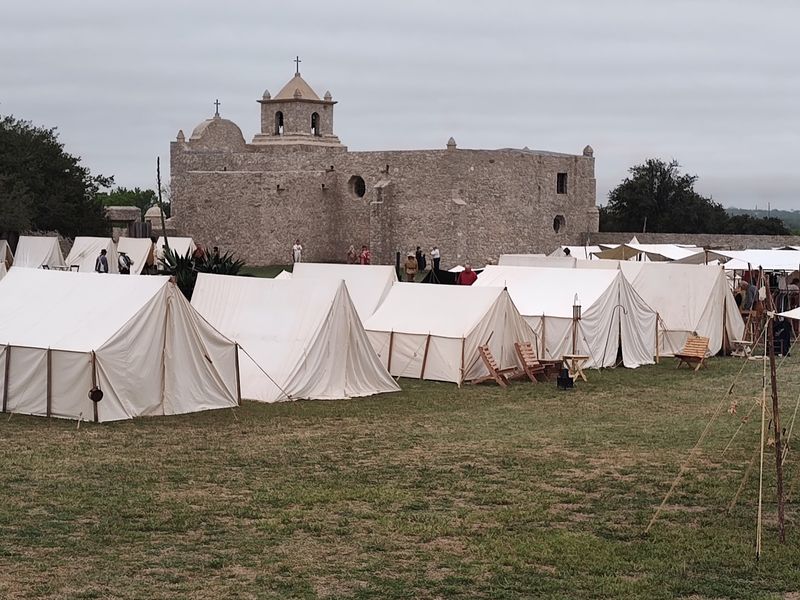
Once a year the courtyard fills with canvas tents, cook fires and folks dressed head to toe in 1830s clothing. Reenactment weekend is the presidio’s biggest event, and it brings the Texas Revolution chapter vividly to life.
Inside the walls, period-correct camps show what daily routines looked like for soldiers and settlers. Reenactors are usually eager to chat, answer questions and explain their gear, which makes it a fantastic hands-on lesson for curious kids.
History buffs tend to circle the date on their calendars well in advance.
Saturday evenings have featured candlelight tours, and walking the old stone halls by flickering light is unforgettable. Sunday programs have included a solemn memorial service at the nearby Fannin monument, honoring those connected to the 1836 events here.
Some of the scenes are serious in tone, so parents of very young children may want to read up on the schedule ahead of time. Still, the overall feeling is one of respect and remembrance rather than spectacle.
One veteran tip: pack folding chairs and a simple sack lunch to enjoy on the grounds. Parking is free, but event days get busy, so arriving early may save you a hunt for a spot.
Guides Who Know Every Stone
Here is something you will not find at a big-box attraction: staff who genuinely light up when you ask a question. Friendliness comes up again and again when people talk about their visit here.
The tour guides are known for being deeply knowledgeable, and plenty of guests say they learned more about early Texas in one hour than they did in years of school. One visit might include a guide who has a story for every doorway.
Another might feature the warm welcome at the front counter that makes first-timers feel right at home.
Your visit usually starts with a short educational film, and it is well worth sitting through. It sets the stage for everything you are about to see, so the chapel, museum and walls all click into place faster.
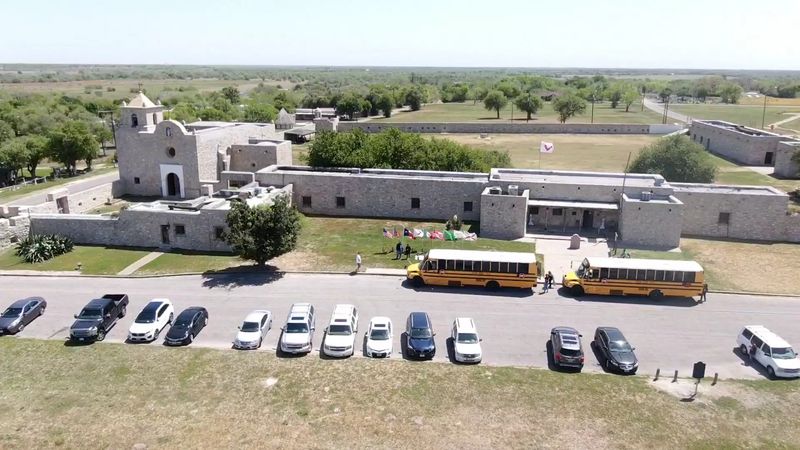
Groups are handled with real skill too. Visitors have watched guides calmly manage busloads of teenagers without missing a beat, which says a lot about the team’s patience.
For a deeper experience, ask about self-guided or interpretive tour options when you arrive. Either way, do not be shy about chatting with the staff.
Their enthusiasm is half the fun, and it turns a simple walk-through into a real conversation with the past.
A Night Inside The Quarters
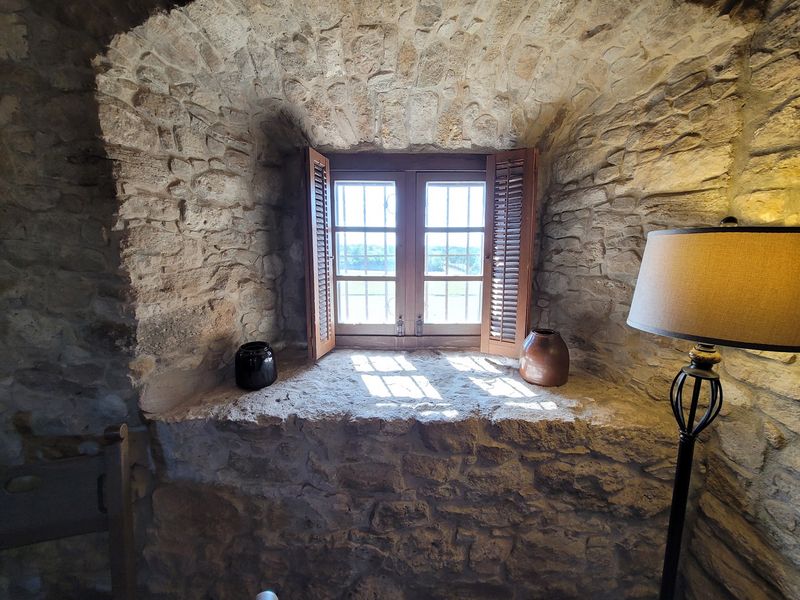
Most historic sites shoo you out at closing time. Presidio La Bahía does something far more charming and lets a few lucky guests stay the night.
The lodging is called The Quarters, and it was once the priest’s living space within the compound. After the gates close, overnight guests may have the whole fort practically to themselves.
Imagine strolling the moonlit courtyard with nothing but crickets and old stone for company.
Here is the part that might make you grin or gulp: guests note there is no TV, no WiFi and no phone. For anyone craving a true unplugged weekend, that is a feature, not a flaw.
It is about as far from a cookie-cutter chain hotel as a Texan can get.
The experience suits couples, history lovers and families who want a story to tell for years. Waking up inside a 1749 fort beats a bland lobby breakfast any day.
Availability is limited, so booking well ahead makes sense, especially around holidays and event weekends. Reach out through the official website or call 361-645-3752 to ask about rates and open dates, since details may change from season to season.
Hours, the $5 Ticket and Getting There
Five dollars. That is roughly what adult admission has run here, and visitors happily call it dirt cheap for everything included.
Prices can change, so it is smart to check the website before you go.
Doors open daily from 10 am to 5 pm, seven days a week, which makes weekend drives easy to plan. Give yourself at least a couple of hours, and more if you love reading every museum panel.
Questions can go to 361-645-3752 or visitpresidiolabahia.com.
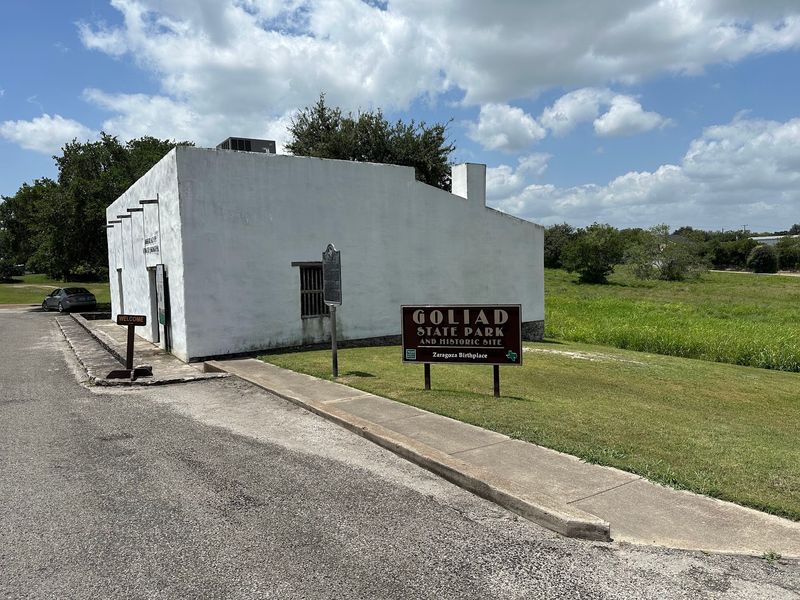
Bonus savings may be waiting next door. If you buy admission to Goliad State Park the same day, guests report getting a discount here.
Ask about the history passport too, a nifty booklet you can carry to other historic sites for stamps.
The fort sits at 217 US-183 in Goliad, an easy drive from Victoria and a reasonable day trip from San Antonio or Corpus Christi. The on-site parking lot is small, but street parking usually fills the gap, and parking has been free.
Accessibility is another plus. Visitors note that the site is wheelchair accessible, so grandparents and family members with mobility needs can join the adventure.
Mission Espiritu Santo and the Fannin monument are close by for a full day of exploring.
Why Goliad Earns a Spot on Your Route
Sometimes the best stops are the ones that never tried to impress anybody. Presidio La Bahía has no flashy marketing and no gimmicks, yet it quietly delivers one of the richest history experiences in the state.
Think about what that small ticket gets you. A world-class restored Spanish fort, a chapel in use since the 1700s, the room where the first Texas independence declaration was signed, and a museum full of real artifacts.
Add friendly guides and the chance to sleep inside the walls, and the value is hard to beat.
Who will love it most? History buffs, school groups, curious kids, motorcycle crews cruising the back roads and anyone who prefers authentic places over polished ones.
Many guests say they enjoyed it even more than they expected, and some had it on their bucket list for years.
Pair it with Goliad State Park and Mission Espiritu Santo, pack a sack lunch, and you have an easy, affordable family day out. Spring drives and cool fall mornings are especially pleasant.
So next time US-183 points you toward Goliad, take the turn. Those old stone walls have been waiting nearly three centuries, and they still have plenty of stories to share.