Ninety-five feet above the floor, an open oculus crowns a painted dome that sends people reaching for Pantheon comparisons. Bands of gold, blue, and pink tracery wrap the geometric designs climbing toward it.
Four painted angels watch from the dome’s base. They quietly echo an angel theme carved on the building’s exterior, which feels like a secret handshake between inside and out.
I love that this sits in Michigan, built by Polish immigrants who saved, planned, and dreamed it into stone. It holds a papal honor no other church in the state can claim.
I believe most of us walk through beautiful places with our eyes locked straight ahead. We check our phones, find a seat, and never tilt our heads back.
So what happens when you finally do look up?
Michigan’s One And Only Minor Basilica Lives On The West Side
Only one church in the entire state carries the title of Minor Basilica, and it’s the Basilica of Saint Adalbert in Grand Rapids. That’s a rare honor granted by the Pope himself.
Pope John Paul II gave the church its basilica status in 1979. A solemn dedication followed on February 16, 1980, timed to the parish centennial.
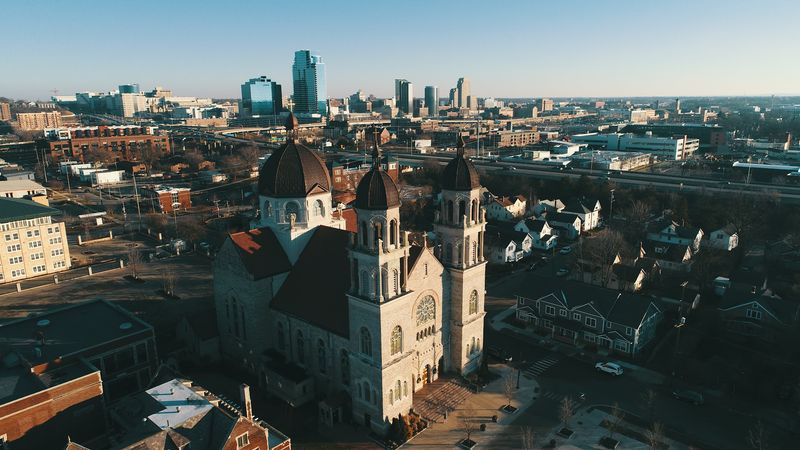
The building rises on Grand Rapids’ west side, in the historic Polish neighborhood once known as Wojciechowo. The name comes from Wojciech, the Polish form of Adalbert, which is a fun bit of neighborhood trivia.
It isn’t a museum, either. The basilica serves as an active parish in the Catholic Diocese of Grand Rapids, with Mass, Confession, and Adoration offered regularly.
That living quality matters. You’re stepping into a real house of worship, so a respectful, quiet visit fits the space best.
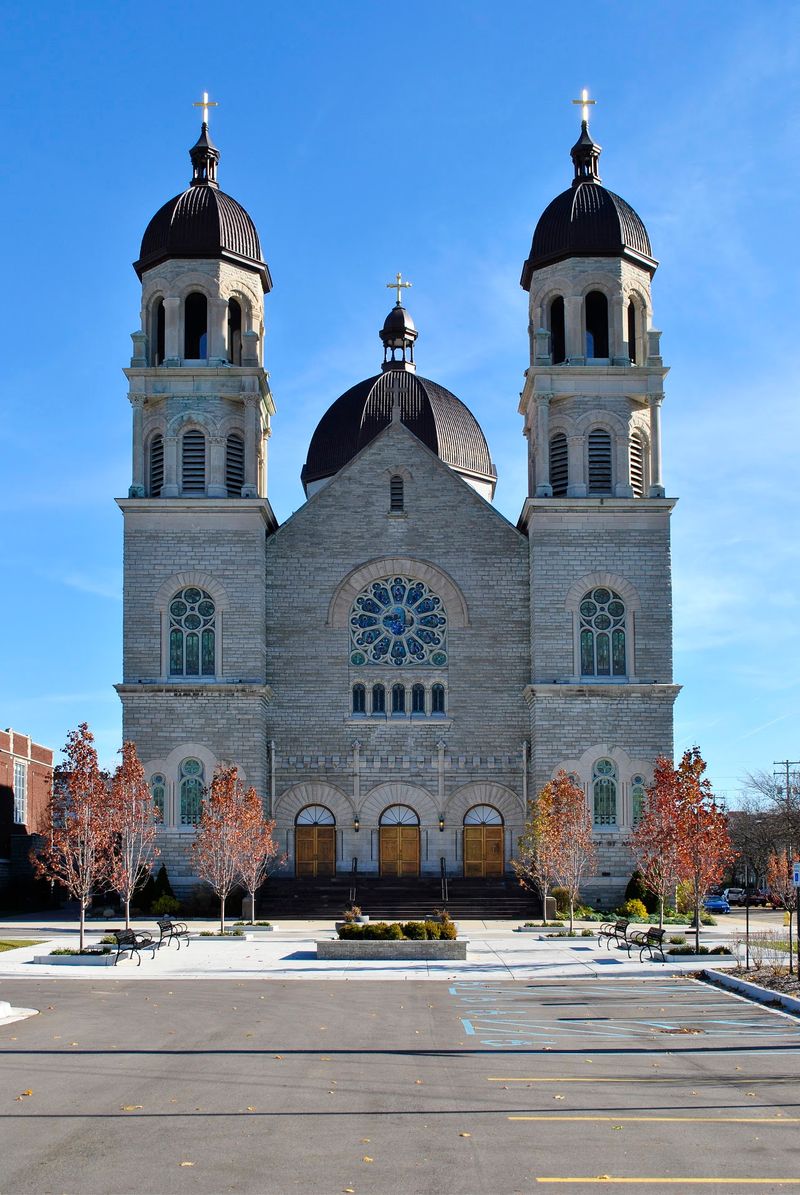
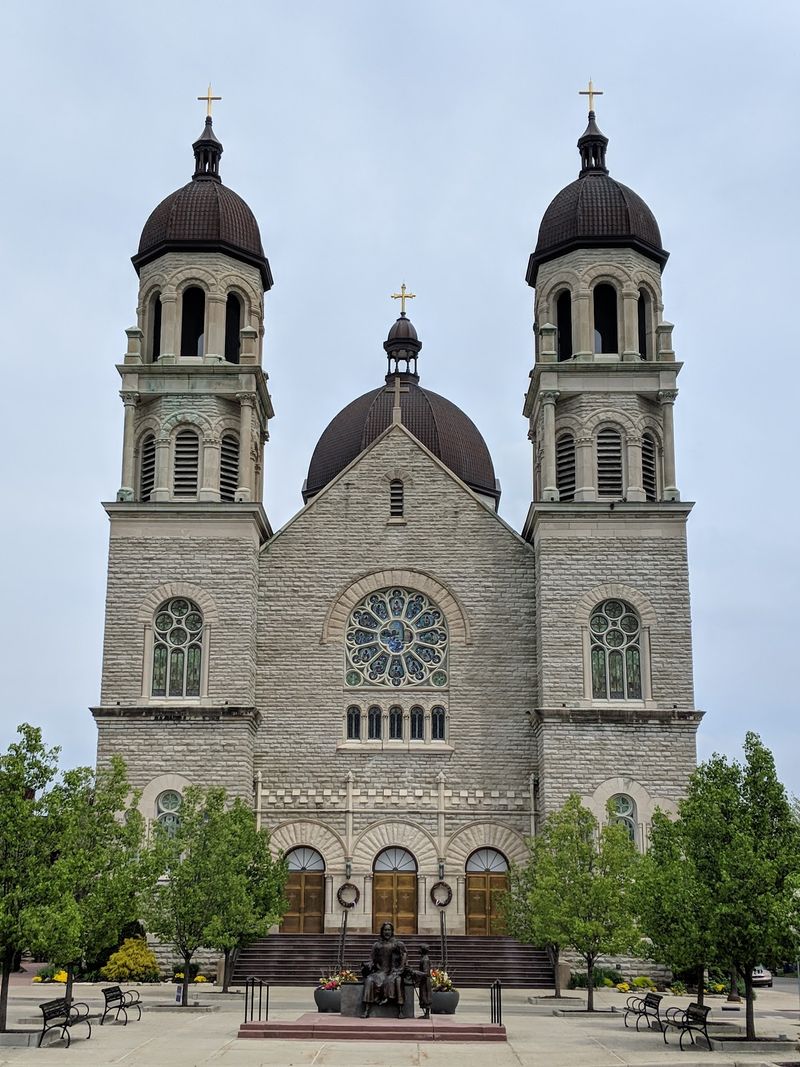
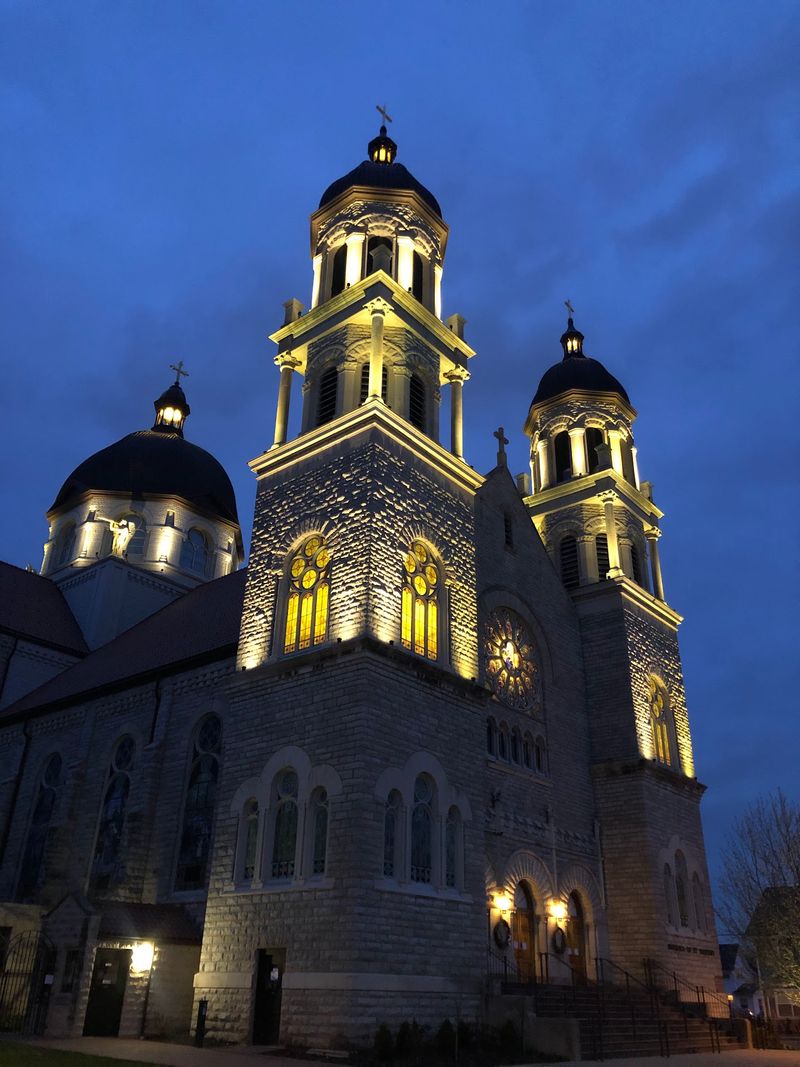
The exterior alone tends to stop drivers mid-street. Twin towers and copper domes loom over the surrounding homes like they’ve been keeping watch for over a century.
Honestly, the outside is a strong opening act. Still, the real headliner waits inside, high overhead, where most people forget to aim their eyes.
Polish Immigrants Built This Dream One Dollar At A Time
Back in 1872, Polish newcomers in Grand Rapids formed the Saint Adalbert Aid Society. Its mission was practical: help new arrivals find homes and work.
That society grew into a parish. By 1881, the community had raised a small wooden church to gather in.
Families kept arriving, and the wooden building couldn’t keep up. So the parish set its sights on something far grander.
Construction on the current church ran from 1907 to 1913. Think about that for a second, six years of steady work by a community that started with an aid society.
I can’t imagine the pride those first parishioners felt walking through the finished doors. Many had crossed an ocean with very little, and now their faith stood in limestone.
The neighborhood around it became the heart of Polish life on the west side. The basilica still anchors that heritage today.
For Michiganders with Polish roots, this place may feel like a family story told in stone. For everyone else, it’s a powerful reminder of what immigrant communities built across our state.
Earned nostalgia, no filter required.
Twin Towers And A 150-Foot Dome Own The Skyline
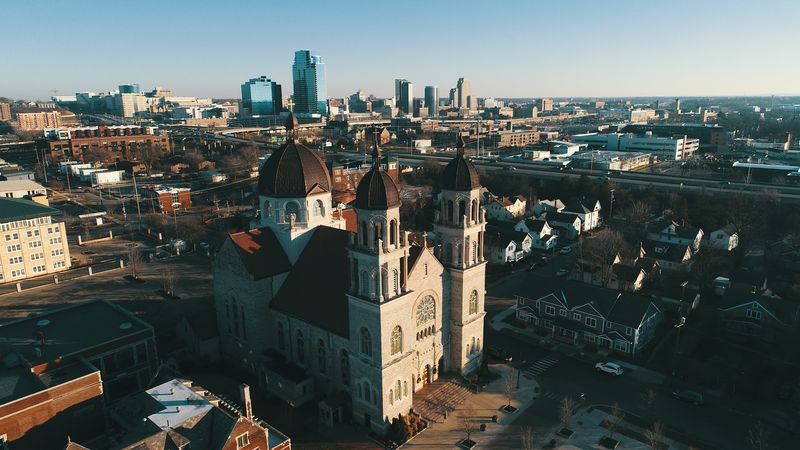
Cleveland architect Henry J. Harks drew up the Romanesque Revival design.
Local architect Chris Vierheilig oversaw construction right here in Grand Rapids.
The walls are Sandusky limestone, trimmed with Bedford limestone. The result looks solid enough to outlast all of us.
Now for the numbers. Each of the twin towers climbs 134 feet, while the central dome tops out at 150 feet above the ground.
That height places it among the tallest buildings in Grand Rapids. Good luck missing it from the surrounding streets.
A rose window on the facade adds a touch of Gothic flair to the rounded Romanesque style. It’s a lovely little plot twist in the design.
The basilica also gets lit up at night, which makes it a favorite for evening photos. Snowy evenings may add an extra layer of quiet beauty.
Residents on the nearby blocks live with this giant as their neighbor. It towers over modest homes like a stone guardian with excellent posture.
Bring a camera and back up a bit. Fitting both towers and that dome into one shot takes some sidewalk strategy.
Look Up, Way Up, At The Painted Dome
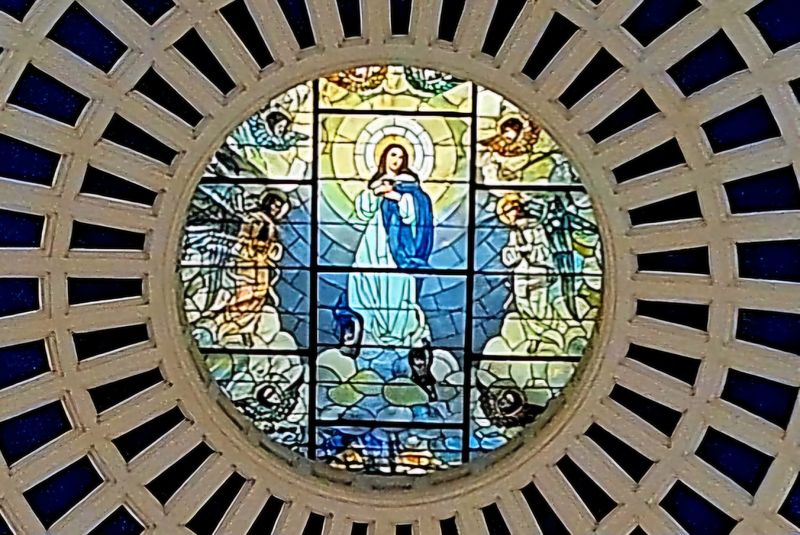
Tilt your head back. That’s the whole instruction, and it’s the best advice for this visit.
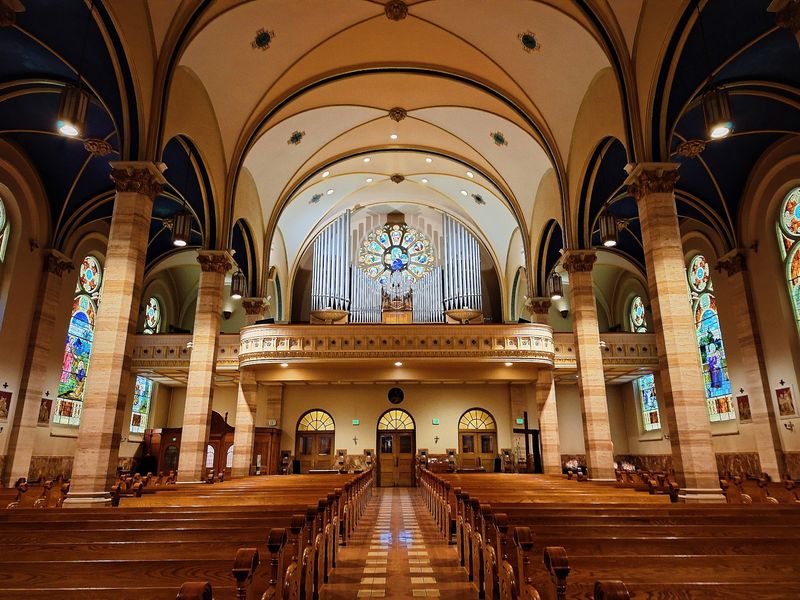
The interior dome is covered in geometric designs outlined with bands of gold, blue, and pink tracery. The patterns climb upward in a way that pulls your eyes toward the center.
At the dome’s base, four murals of angels hold their posts. They repeat an angelic theme that also appears on the building’s exterior.
Then comes the top. Ninety-five feet above the floor, the dome rises to an oculus, drawing comparisons to Rome’s ancient Pantheon.
A circular stained-glass oculus in the ceiling also portrays the Assumption of Mary. So the ceiling isn’t one surprise, it’s several stacked together.
Below it, the main altar sits beneath a beige ceiling flecked with gold. The overall effect leans Byzantine, warm and glowing rather than stark.
The interior dome was renovated as part of major restoration work, so the colors have been cared for. I like knowing someone fussed over every band of tracery.
Plan to sit in a pew and just look. Your neck may complain, but your eyes won’t.
Munich Stained Glass That Tells Polish Saints’ Stories
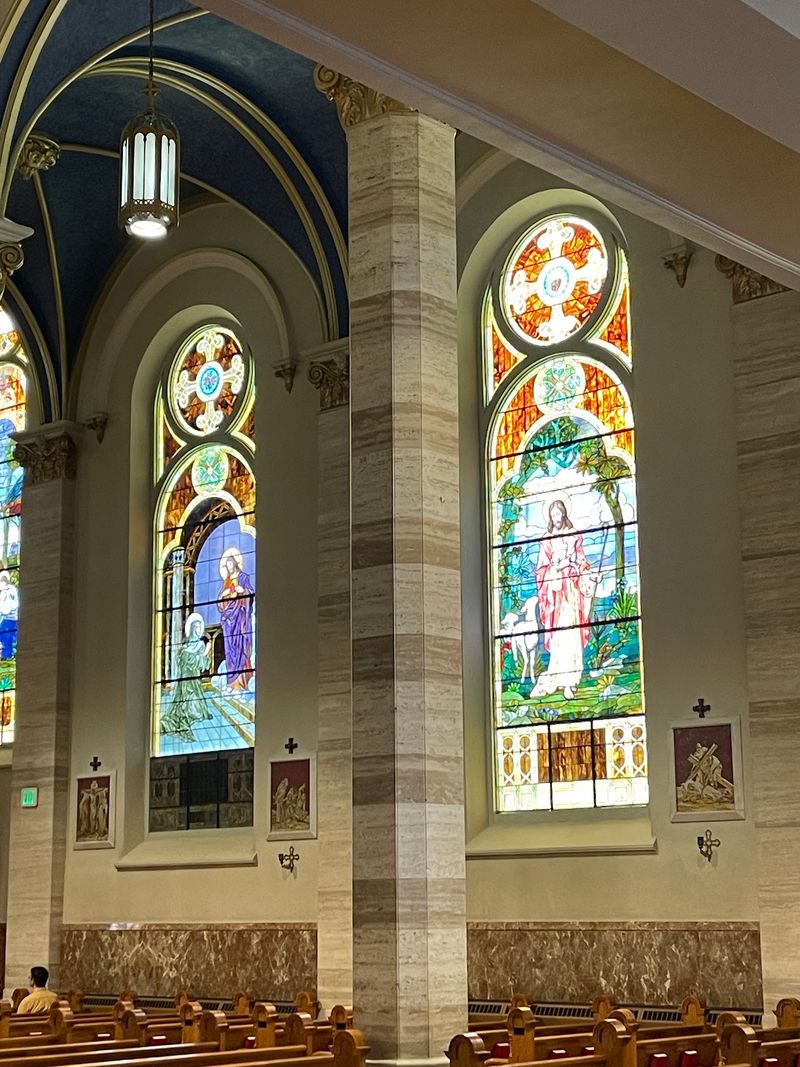
Sunlight gets a passport here. The stained glass windows were designed by A.
Artmaier and crafted by artisans in Munich, Germany.
Their subjects include Polish saints and Catholic traditions. Each window links the congregation to its spiritual and cultural roots.
You’ll also find figures such as Jesus, Mary, and St. Joseph glowing in color. On a bright day, the effect can feel almost like the walls are speaking.
The craftsmanship stands out even to people who don’t know much about glass. Rich colors, careful detail, and clear storytelling make every panel worth a slow look.
I believe stained glass was one of history’s best teaching tools. Long before printed books were common, windows like these told sacred stories to anyone who looked up.
There’s something fitting about German artisans creating windows for a Polish parish in Michigan. It’s a small picture of how communities crossed borders to build beauty.
Try visiting at different times of day if you can. Morning and afternoon light may shift the colors in surprising ways.
Just don’t rush. These windows reward patience more than a quick glance.
Marble, Carved Altars, And Pews With A Hometown Story
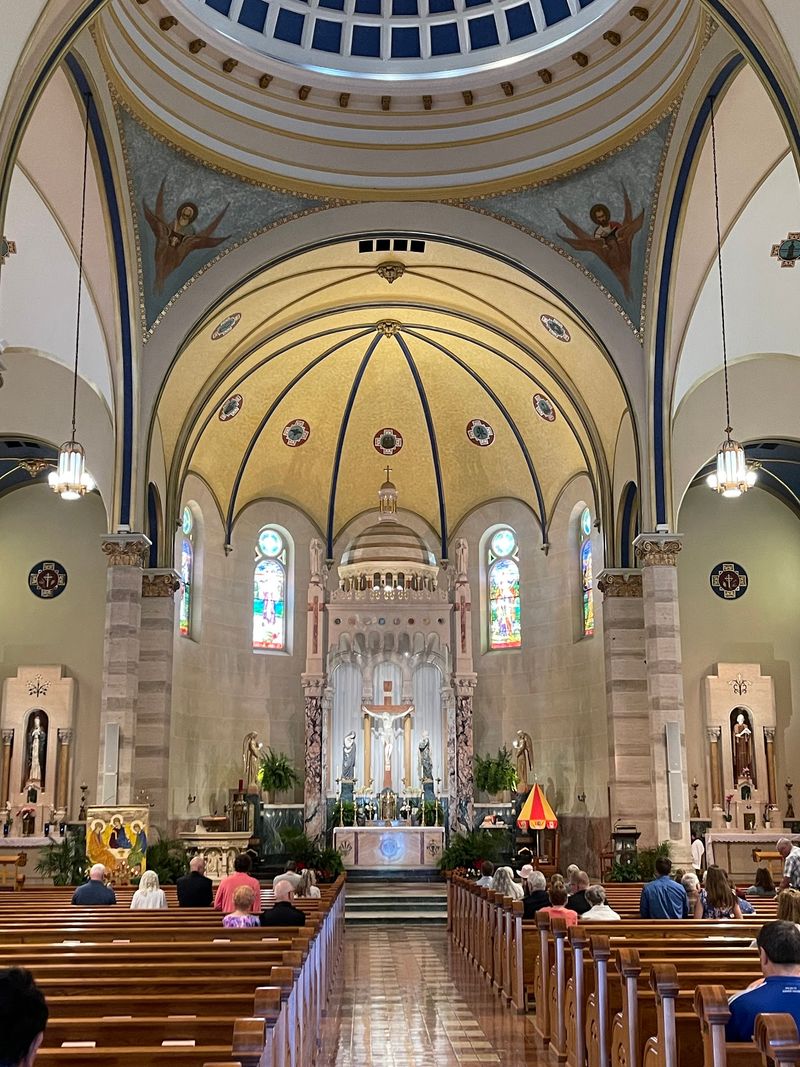
Grand Rapids was once called Furniture City, and the basilica proves it. The pews were made by the American Seating Company, a nod to the city’s famous industry.
That detail makes me grin. Even the seating carries local pride.
Matched marble paneling and columns line the interior. The polished stone gives the whole space a dignified, timeless feel.
Edmund Verlinden carved the original altars, pulpit, baptismal font, and confessionals. Those pieces show the kind of handwork that’s rare to find anymore.
Don’t skip the mosaic Stations of the Cross either. They’re a standout detail, made from countless small pieces that come together into sacred scenes.
Statues appear throughout the church as well. Paintings add even more color between the marble and glass.
All that stone and the domed shape also shape the sound. The acoustics can take people by surprise, especially when music fills the room.
Walk slowly along the sides when the church is open to visitors. Every corner seems to hold another carved or painted detail waiting for attention.
Millions Went Into Keeping The Copper Domes Shining
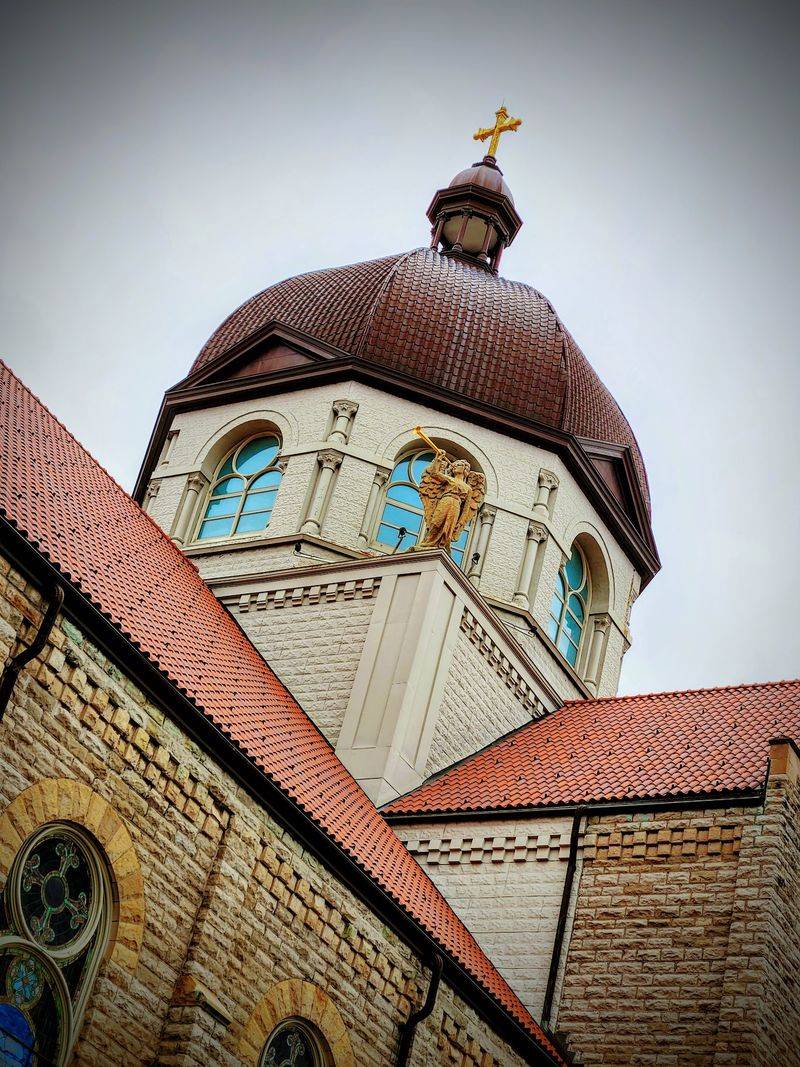
Over $8 million. That’s how much recent restoration work has poured into keeping this landmark standing strong.
Crews replaced the vast clay tile roof. They also restored the three distinctive copper domes and renovated the interior dome.
The original copper had topped the skyline for nearly a century. Replacing it was a careful job, meant to protect the building for generations ahead.
Old buildings don’t maintain themselves, sadly. Weather, time, and Michigan winters all take their toll on roofs and domes.
I find this part quietly inspiring. Generations of parishioners have kept choosing to care for what their ancestors built.
It also means today’s visitors see the basilica in strong shape. Those painted ceilings and domes get to keep shining instead of fading.
Preservation rarely gets headlines. Still, every repaired tile and restored dome is a love letter to the neighborhood.
Next time you spot those domes from a distance, remember the effort behind them. That gleam took serious commitment, and it shows.
Sacred Music And A Lively Parish Fill The Space
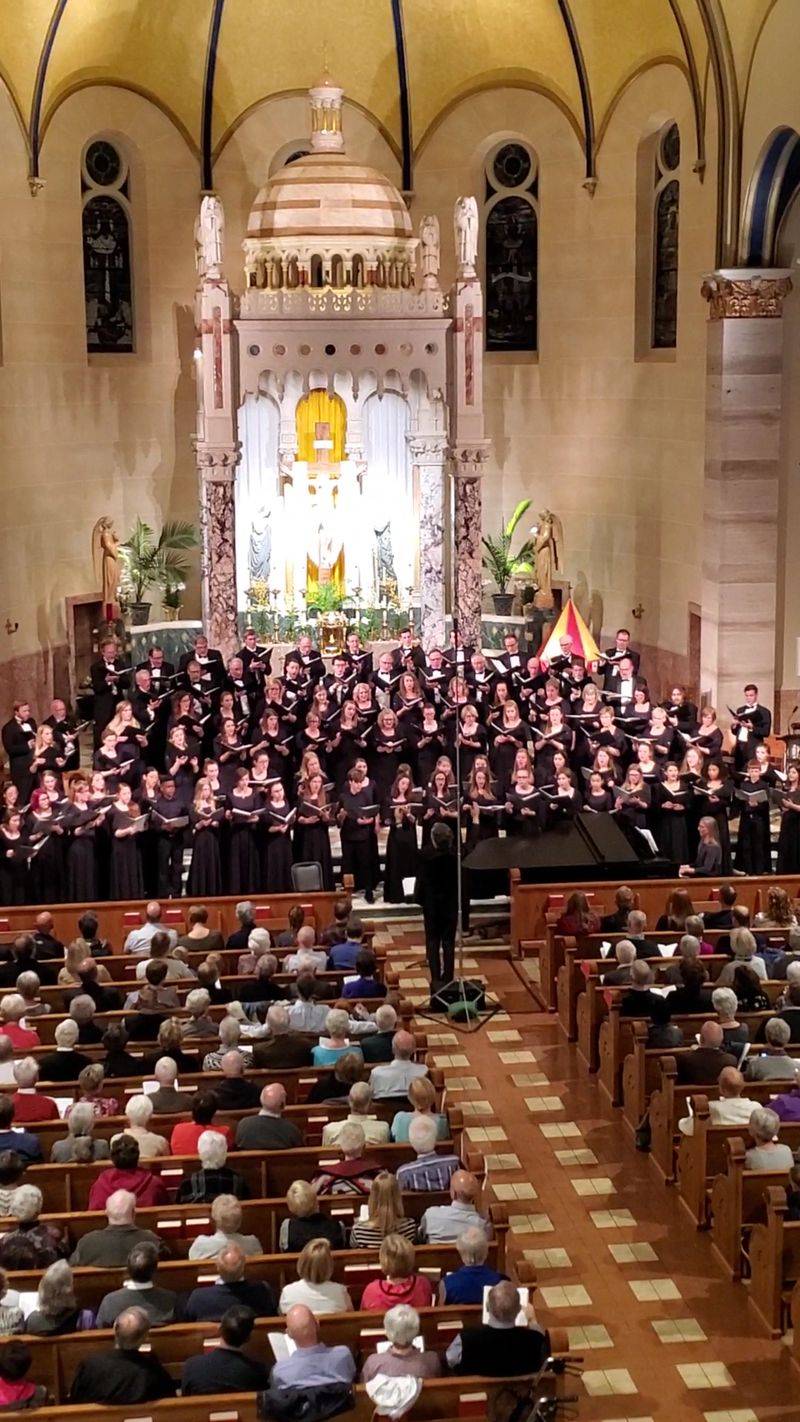
Sound behaves differently under a dome. Music here can rise and linger thanks to the marble and curved ceilings.
The parish is known for sacred music at Mass. Chanted and sung parts of the liturgy fill the space in a traditional style.
The basilica also hosts live concerts and holiday performances. Past events have included a performance of the St. John Passion with combined choirs.
The parish community includes many young families. That energy gives an old building a very present-day pulse.
Confession is offered daily, according to the parish. A weekday evening Mass has also been offered, which can help working folks attend.
Schedules can change, so it’s smart to check the parish’s current listing before going. Mass times on weekends and weekdays may vary by season.
Non-Catholic visitors are welcome to sit quietly and soak in the atmosphere. Just follow the lead of those around you during services.
Even if you come only for the ceilings, consider hearing the music once. The room was practically built to hold it.
Planning Your Day Trip To Davis Avenue
Mark your map for 654 Davis Ave NW, Grand Rapids, MI 49504. The basilica sits a short trip from downtown Grand Rapids.
Getting there works by car or public transportation. That makes it an easy add-on to a West Michigan city day.
The parish office keeps hours Monday, Tuesday, Thursday, and Friday from 8:30 a.m. to 4 p.m. On Wednesdays, it’s open from 8:30 a.m. to 2 p.m.
Church access outside of Mass may vary. Calling the parish office or checking its schedule ahead can save a wasted drive.
The facility is fully handicapped accessible. Everyone can explore the interior and take in those ceilings.
Historical tours are offered occasionally, sometimes tied to events like Polish Heritage Month. A guided tour may be the best way to catch details you’d otherwise miss.
Since it’s an active parish, plan around services if you’re visiting as a sightseer. Quiet voices and modest photo habits go a long way.
Wear comfortable shoes and give yourself time. Rushing through here would be like skimming a great book.
A Michigan Treasure Worth Tilting Your Head For
Some landmarks shout for attention. The Basilica of Saint Adalbert simply waits for you to notice what’s above.
Its story starts with Polish immigrants helping each other find work and homes. It ends, for now, with Michigan’s only Minor Basilica standing tall in Grand Rapids.
In between come Munich stained glass, carved altars, mosaic Stations, and Furniture City pews. Then there’s that painted dome, crowned by an oculus 95 feet up.
History lovers will find a deep heritage story. Architecture fans get limestone, copper, and marble at their finest.
People of faith find an active, reverent parish. Curious road-trippers simply find something beautiful they didn’t expect.
I believe this is exactly the kind of place Michiganders should brag about. It’s homegrown, handmade, and still cared for by its community.
Visit by day for the glowing windows, or swing by at night when the building is lit. Either way, you’ll leave with a new respect for Grand Rapids.
Just promise one thing. When you step inside, look up before you look anywhere else.