More than 100,000 ancient objects sit inside one modest campus building, and you can see them without paying a cent. Egyptian mummy masks, Roman frescoes, Greek pottery, and centuries-old jewelry all share the same address.
The treasures didn’t arrive from some faraway auction house. University expeditions dug many of them up, starting nearly a century ago.
Some display cases even include old postcards from those excavations, which makes the whole story feel surprisingly close.
I like how easy this place is to reach. You can park, stroll a short block, and stand face to face with objects older than most countries.
That’s a pretty great trade for a free afternoon in Michigan.
I believe most people drive past it without realizing what’s inside. So what exactly is waiting behind those doors, and why does a painted room steal the show?
An Ancient World Parked Right On Campus
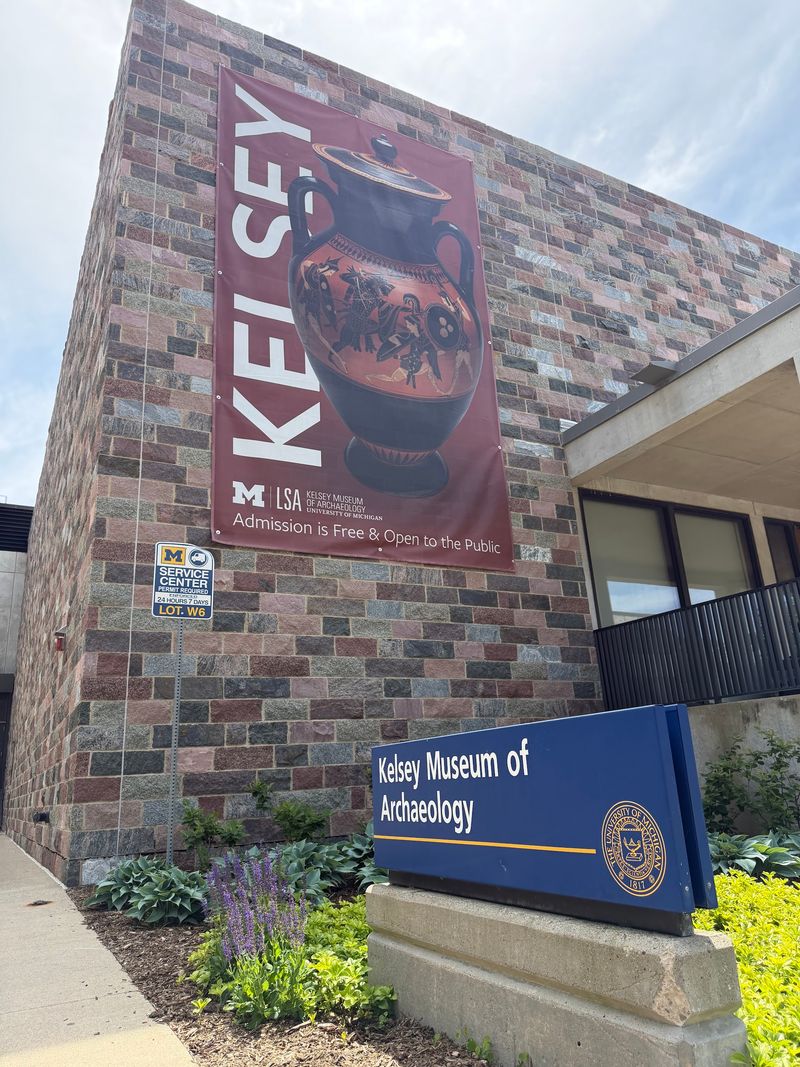
Campus walks don’t usually end in ancient Egypt, but this one can. The Kelsey Museum of Archaeology sits on the University of Michigan’s central campus in Ann Arbor.
It’s an archaeological museum focused on the ancient Mediterranean, North Africa, and the Middle East. The collection tops 100,000 objects, which is a staggering number for such a manageable building.
Admission is free for everyone. Donations are welcome and help support exhibits and programs, so tossing a few dollars in is a nice gesture.
The galleries span two floors. You’ll find Egyptian, Greek, Roman, and Near Eastern pieces arranged so you can wander without feeling buried in information.
Most people can explore it comfortably in one to two hours. Curious types who read every label might stretch that a bit longer.
Here’s what makes it special for Michigan travelers. You can see artifacts like these without booking a flight to Chicago, Washington, or New York.
That’s a serious perk for anyone who loves history but hates airport security lines.
A Latin Professor Who Started Digging
Francis W. Kelsey taught Latin at the University of Michigan.
He also helped organize the university’s early archaeological excavations, which turned out to be a very big deal.
Those expeditions brought back an enormous collection of ancient objects. The university needed somewhere to keep them, and the museum was established in 1928 to do just that.
Naming it after Kelsey made perfect sense. Without his push, these artifacts likely would have ended up scattered elsewhere, or still underground.
The story didn’t freeze in the 1920s. In 2009, the museum expanded with the William Upjohn Exhibit Wing, giving the collection much more room to shine.
I love that the museum’s roots connect directly to real fieldwork. These aren’t random purchases gathered for decoration, but finds tied to university research.
That connection shows up in the displays too. Some cabinets include postcards about the excavations themselves, which adds a personal, behind-the-scenes layer.
Seeing how an object traveled from a dig site to a Michigan gallery makes each piece feel less like a museum prop and more like a clue.
Old Stone Walls With A Modern Wing
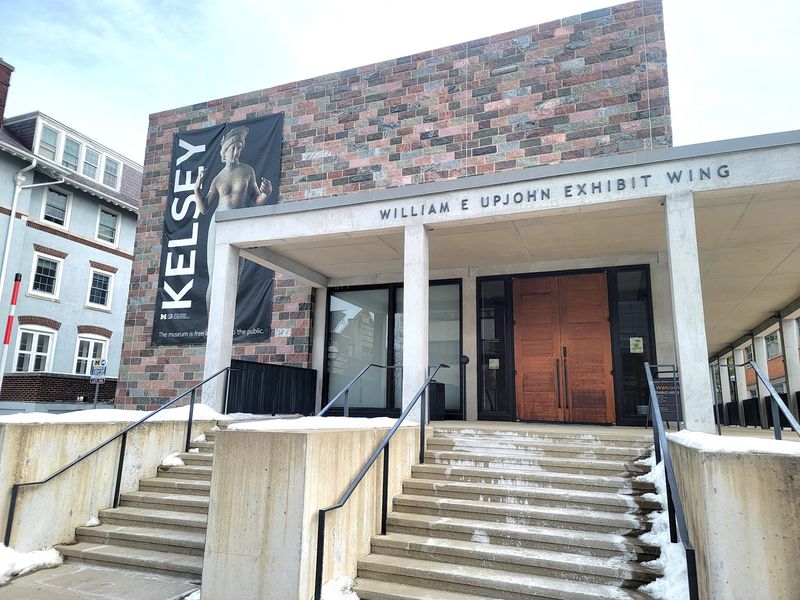
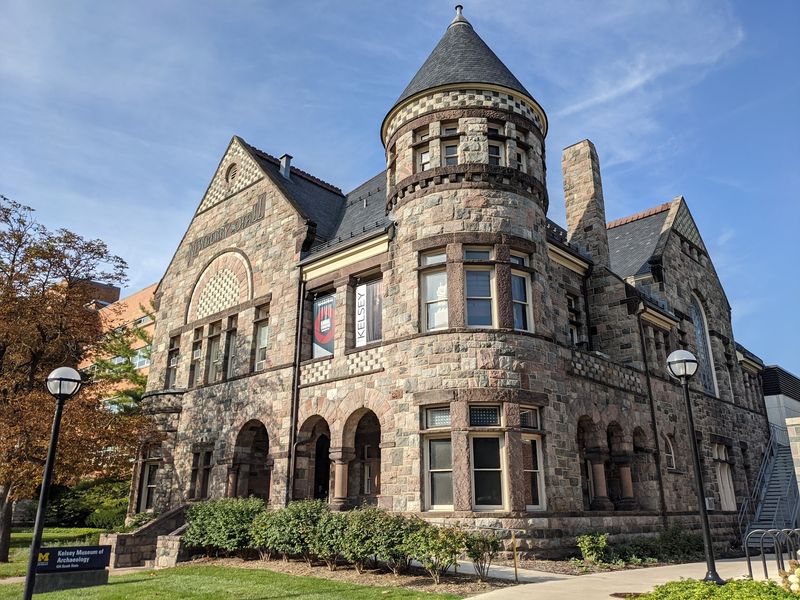
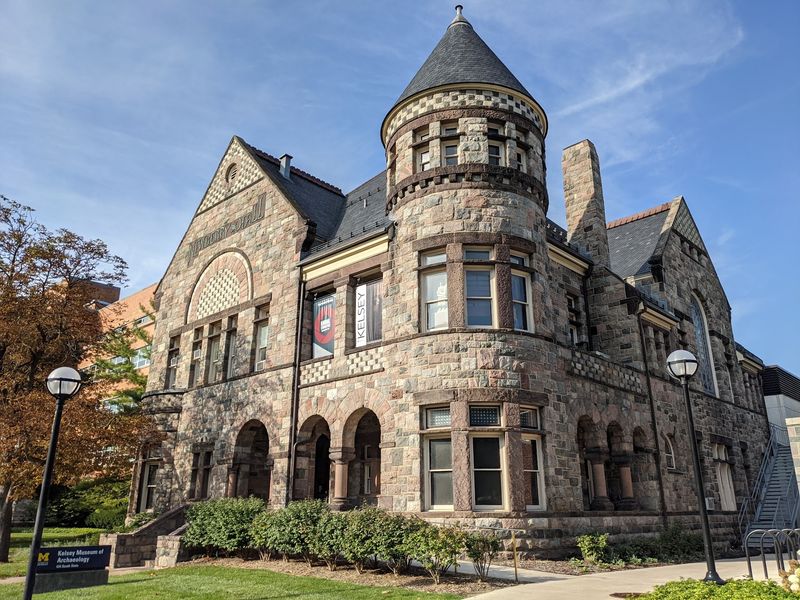
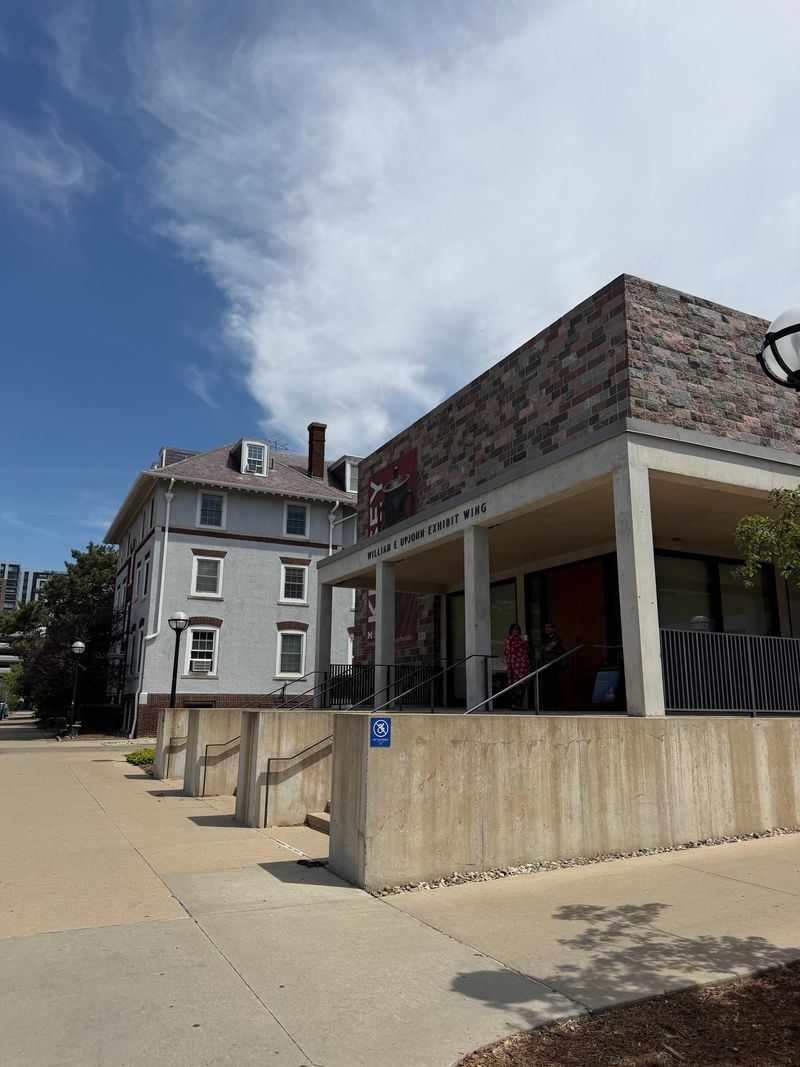
Some first-time visitors say the building looks a bit like an old church. That impression fits the historic stone exterior along State Street.
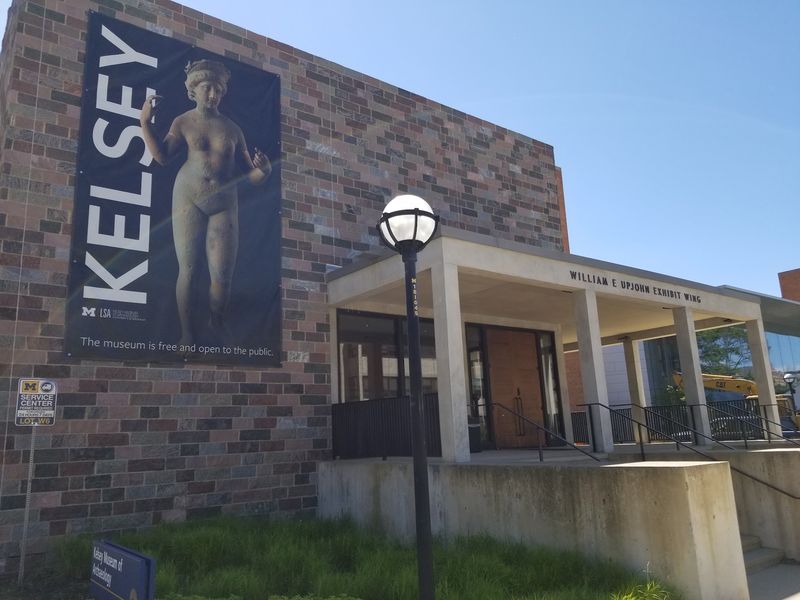
Behind it sits the William Upjohn Exhibit Wing, added in 2009. The pairing gives the Kelsey Museum of Archaeology a mix of old character and newer gallery space.
Accessibility gets real attention here. The public entrance on Maynard Street has ramp access and power-assist doors, which makes arriving with a stroller or wheelchair much easier.
Inside, an elevator reaches the second-floor galleries. Wheelchair-accessible restrooms are available on both floors, so nobody has to skip half the collection.
Keep in mind that galleries occasionally change. One upstairs area was recently under renovation, though plenty remained open to explore.
It’s smart to expect some shifting displays. Museums rotate objects, refresh exhibits, and rethink layouts over time.
That’s part of the fun, honestly. A return visit to this Michigan museum might show you something you completely missed before, which is a pretty good excuse to come back.
Egyptian Treasures That Steal The Spotlight
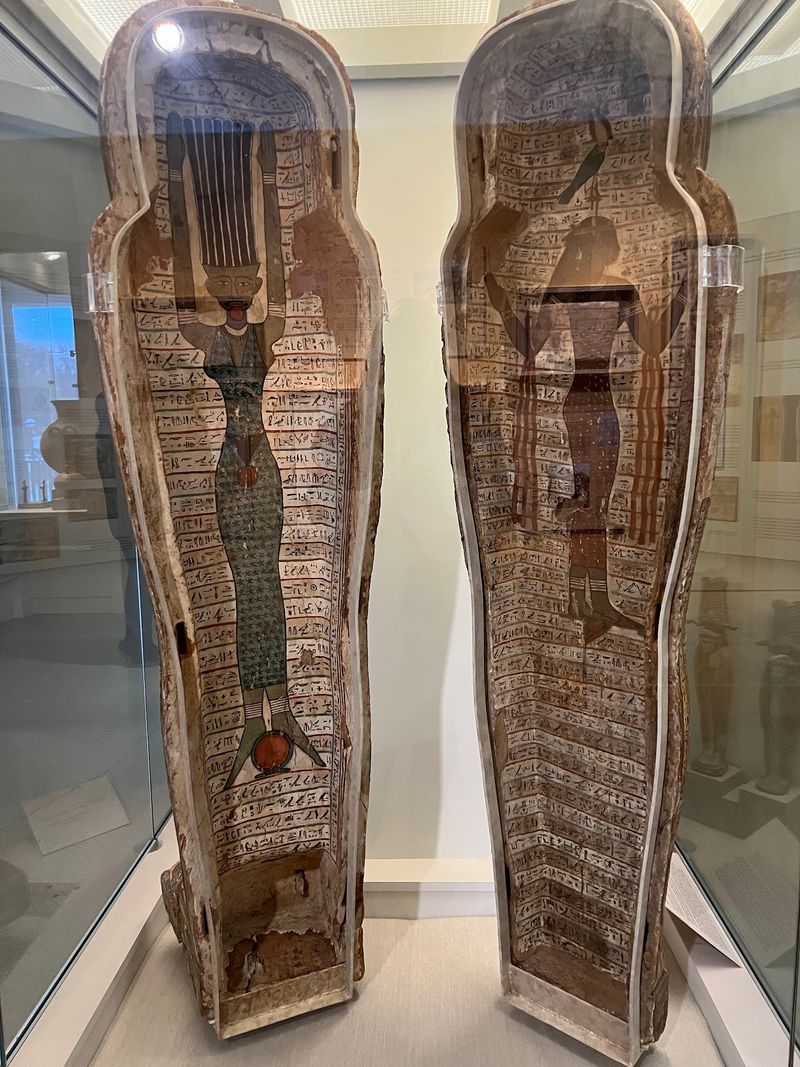
Gold-toned faces stare out from behind glass. Egyptian mummy masks rank among the most striking pieces at the Kelsey Museum of Archaeology.
The Egyptian galleries draw plenty of attention, and for good reason. Late Egyptian artifacts, painted coffin pieces, and a sarcophagus give you a strong sense of ancient craftsmanship.
One fun favorite is a cat mummy. Yes, a cat, and it tends to win over younger visitors almost instantly.
Here’s a thoughtful note before you go. The museum community has been debating the ethics of displaying human remains, and a human mummy may not be on view.
Don’t let that change your plans. The masks, coffins, and everyday objects still tell rich stories about how ancient Egyptians lived and what they valued.
The colors often surprise people most. Painted surfaces remind you that ancient history wasn’t beige or dusty at all.
It was bright, bold, and full of personality. Spending a few extra minutes at these cases is time well spent, especially if Egypt was your favorite school unit.
The Painted Pompeii Room You Can Stand In
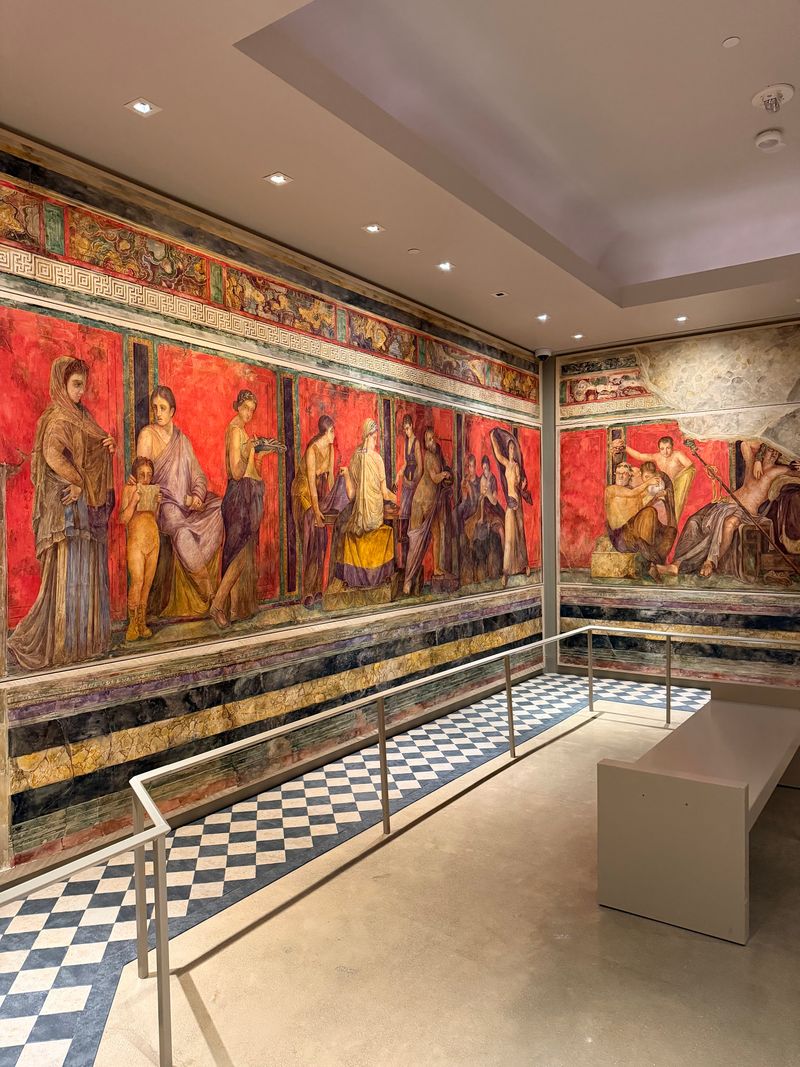
Deep red walls covered in life-size painted figures. That’s the scene inside one of the museum’s most memorable displays.
The Kelsey Museum of Archaeology features a large re-creation of a famous painted room from Pompeii. It’s based on the Villa of the Mysteries, one of the best-known Roman fresco rooms anywhere.
The scale is what grabs you. Standing beside it, you get a feel for how Romans actually experienced decorated spaces, rather than squinting at a small photo.
The story behind the re-creation adds another layer. The process of remaking the room ties into the history of color in Rome, which turns out to be fascinating.
Ancient paint wasn’t just decoration. It reflected trade, skill, and status, so the walls quietly reveal a lot about the people who commissioned them.
I can’t imagine a better spot for a family photo. Pictures are allowed in the museum, and this room practically begs for one.
Just be ready for kids to ask why anyone would paint a whole room red. Good question, actually.
Roman Frescoes, Coins, And Everyday Life
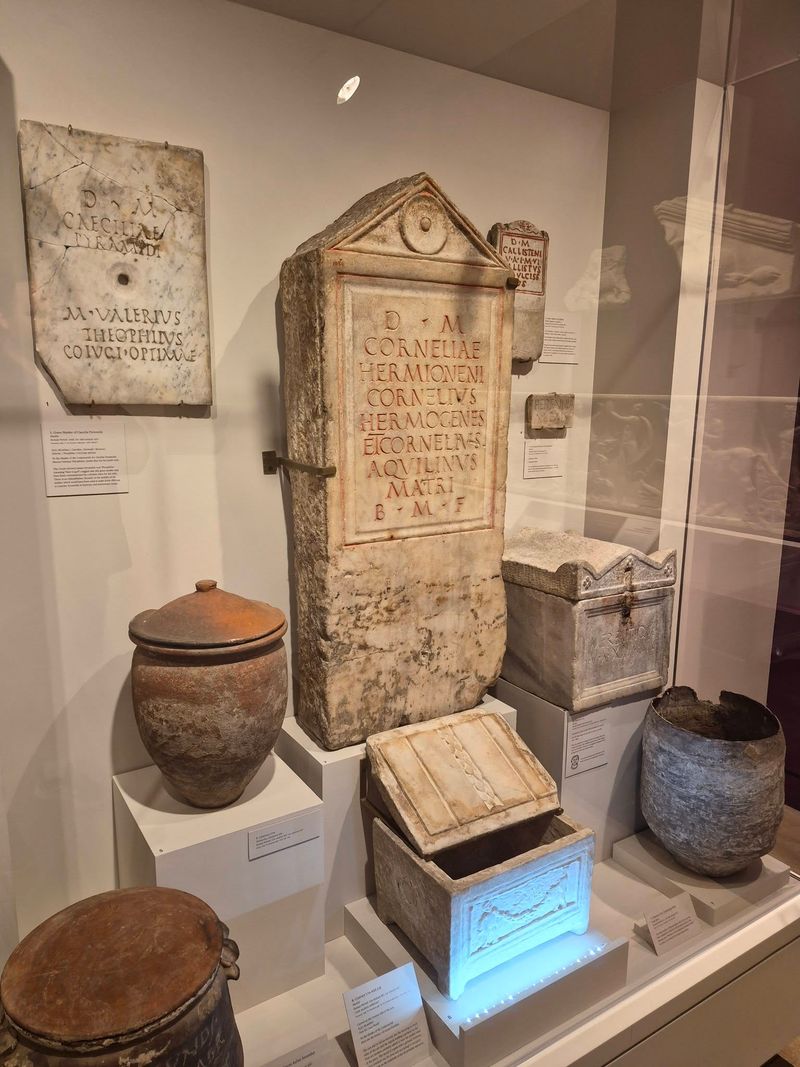
Emperors get the headlines, but regular Romans left behind the better stuff. Their everyday objects fill a good chunk of these galleries.
Roman frescoes, coins, and household items help explain how people actually lived. It’s history at kitchen-table level, which is often the most relatable kind.
Coins are especially fun to study. Tiny portraits and symbols pressed into metal served as ancient advertising, and they still look sharp today.
Fresco fragments add splashes of color. They pair nicely with the larger Pompeii room, showing how wall painting appeared in smaller pieces too.
One family favorite is a set of ancient toys from Roman Egypt. Kids light up when they realize children two thousand years ago also liked to play.
That connection is the real magic here. You’re not just looking at objects behind glass, you’re looking at somebody’s spare change, wall decor, or favorite plaything.
It turns ancient Rome from a textbook chapter into something human and surprisingly familiar. Expect a few conversations about what your own stuff might say someday.
Greek Pottery And Glass Worth A Slow Look
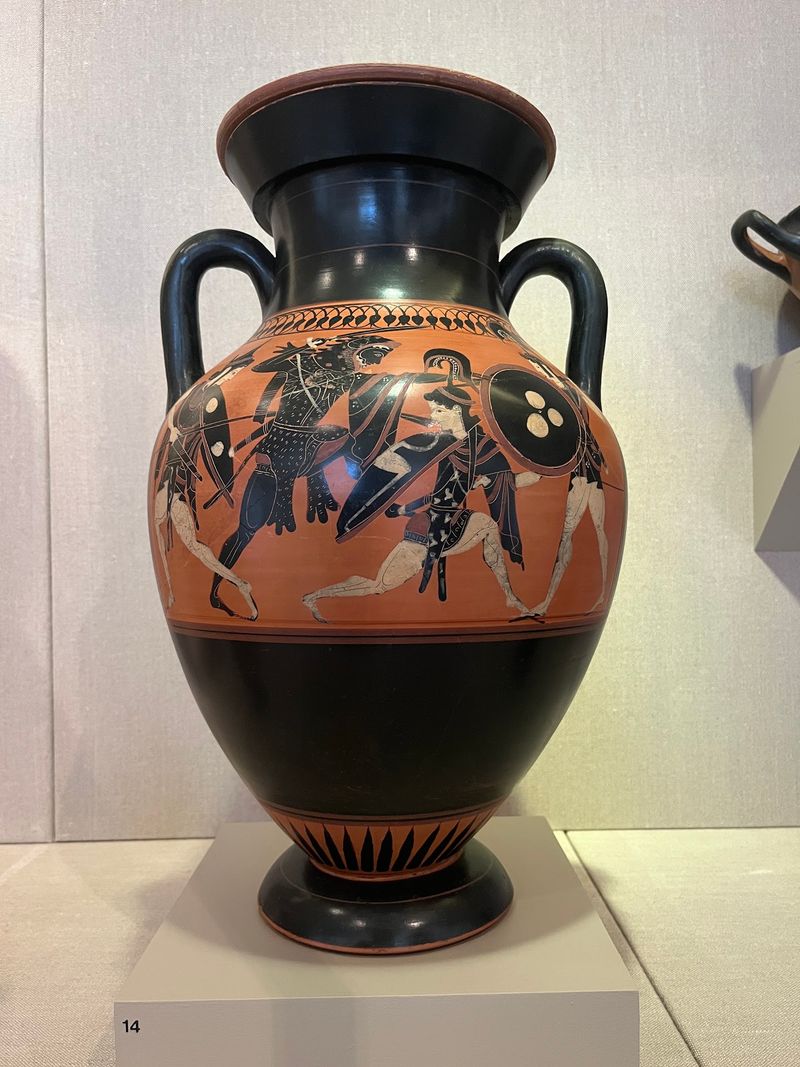
Anyone who’s tried pottery class knows how hard a perfect vase is. Ancient potters made it look easy, and their work fills several cases here.
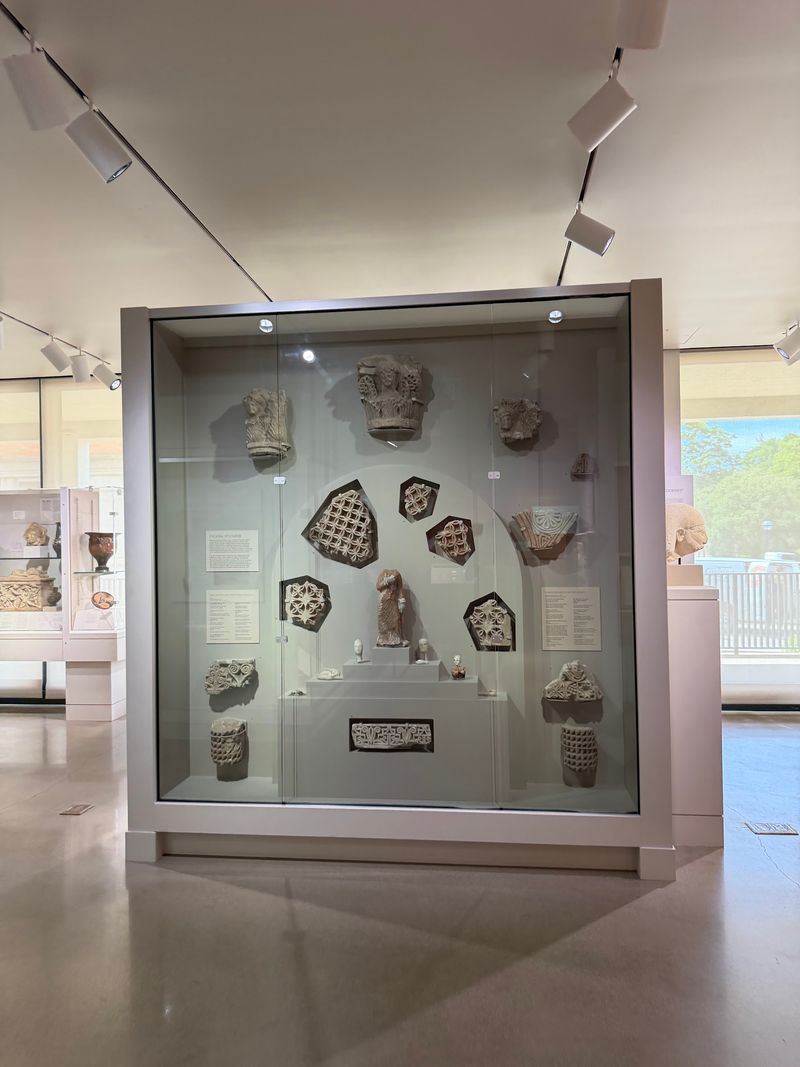
Greek pottery sits alongside a large range of ancient glass. The glasswork alone can hold your attention, with shapes and colors that feel surprisingly delicate.
Craft lovers will find plenty to examine. Flintknapping, glassblowing, earthenware firing, carving, and metalwork all show up across the collection.
Jewelry and sculpture round things out. Fine details like gem settings reward anyone willing to lean in close and look carefully.
I like that the museum doesn’t rush you. Since it’s small, you can linger at one case without feeling like you’re missing a giant wing elsewhere.
Ancient textiles also appear in the collection. Fabric surviving this long is remarkable on its own, and it adds texture to the story of daily life.
Taken together, these pieces show that ancient artisans were problem-solvers. They worked with limited tools and still produced things people admire centuries later.
Drawers That Hide Extra Surprises
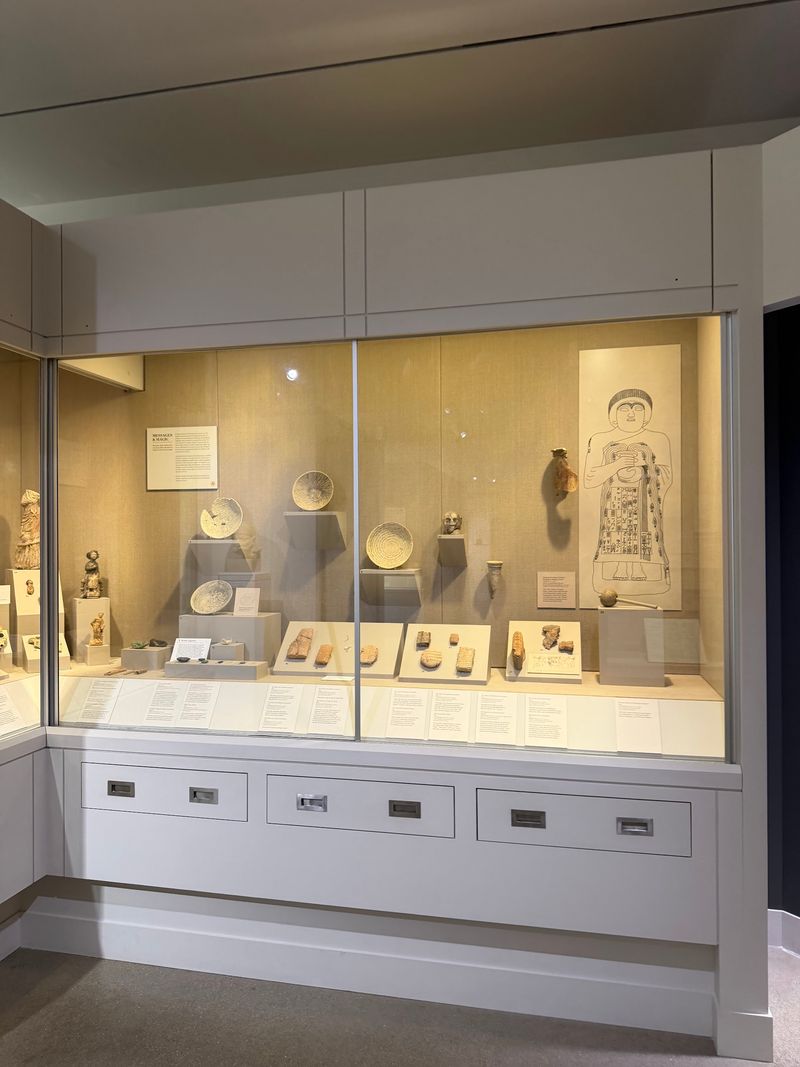
Opening drawers in a museum feels a little rebellious. At the Kelsey Museum of Archaeology, it’s actually encouraged.
Interactive display drawers let you discover more objects tied to the main cases. It’s a clever way to fit more of that massive collection into limited space.
Kids especially love this feature. Each drawer becomes a mini reveal, like a treasure hunt built right into the furniture.
Speaking of hunts, scavenger hunts come up as a fun way families explore. They give younger visitors a mission, which helps keep attention spans happy.
The labels and info panels deserve credit too. They explain pieces clearly without drowning you in academic jargon.
The museum also stands out for being open about where items came from. Transparency about origins feels refreshing, especially as more people ask thoughtful questions about how collections were formed.
Those excavation postcards tucked into some cases reinforce that honesty. You leave with a better sense of the objects, plus the story of how they ended up in Michigan.
Small Enough For Kids, Rich Enough For Grown-Ups
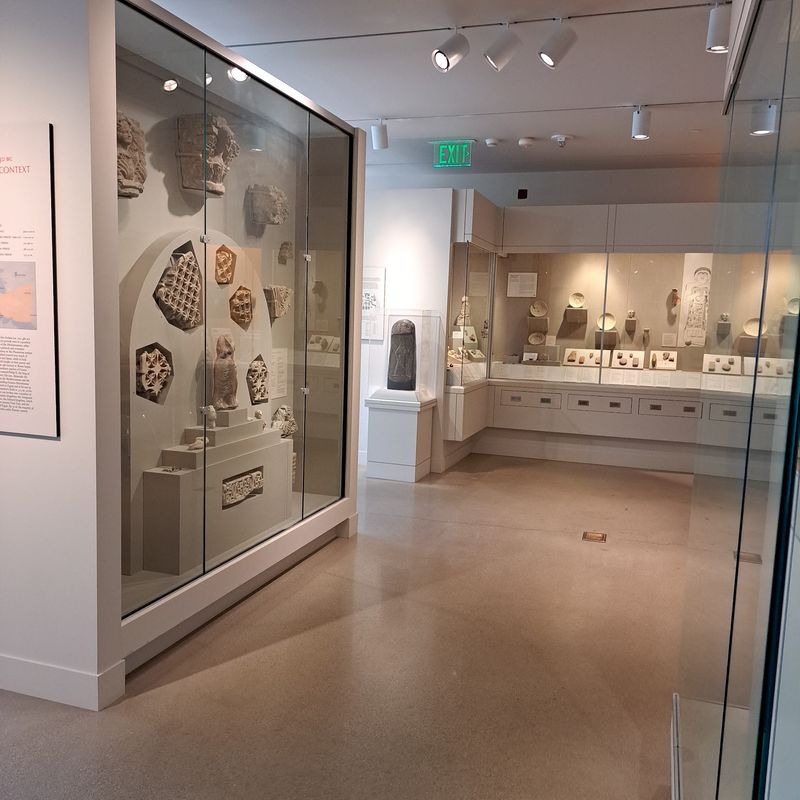
Big museums can wear out little legs fast. This one hits a sweet spot in size.
The galleries feel manageable without being skimpy. Families with young children and teenagers alike tend to find enough to stay interested.
A five-year-old can enjoy Roman toys and a cat mummy. Meanwhile, adults can study craftsmanship, inscriptions, and the story behind each excavation.
History buffs get plenty of depth here. Babylonian, Egyptian, Greek, and Roman pieces give a broad refresher on the ancient world.
Students and lifelong learners will feel right at home. The university connection gives the whole place a curious, academic energy without feeling stuffy.
Taking photos is allowed, which helps kids document their favorite finds. It also makes a great homework helper for anyone studying ancient civilizations.
The friendly, helpful staff add to the welcoming mood. A quick question at the front desk can open up a great conversation.
For a casual outing, this Ann Arbor stop delivers big learning in a small package.
Free Tours, Lectures, And Late Thursdays
Wandering solo is great, but a guide can change everything. The museum offers free public tours that add context to what you’re seeing.
Lectures and events also pop up throughout the year. They’re a chance to hear deeper stories about ancient cultures and current research.
Here’s a handy scheduling trick. On the third Thursday of each month, hours stretch until 7:30 PM.
That later window is perfect for working adults. You can swing by after your shift without racing the clock.
Evening visits also pair nicely with dinner downtown. Ann Arbor has plenty of spots within walking distance, so you can build a whole night around it.
Checking the event calendar before you go is a smart move. Topics change, and some programs fill up.
Even if you just catch a regular tour, you’ll likely notice details you’d otherwise walk past. A good guide turns a pot into a story, and that’s what makes the Kelsey Museum of Archaeology so rewarding twice over.
Hours To Know Before You Head Out
Nothing stings like arriving to a locked door. A quick look at the schedule saves the day.
The Kelsey Museum of Archaeology is open Tuesday through Friday from 10 AM to 4 PM. Saturday and Sunday hours run from 11 AM to 4 PM.
Mondays are closed. The museum also closes on University holidays, so double-check if your visit lands near one.
Remember those extended third Thursday hours. They push closing time to 7:30 PM once a month.
Admission stays free on every open day. Donations are always appreciated, and they directly support the programs and exhibits you’re enjoying.
The official address is 434 S State St, Ann Arbor, MI 48109. Just remember the public entrance sits on Maynard Street, not State Street.
That small detail saves a lot of confused circling. Plan for one to two hours, depending on how closely you study each case.
Arriving earlier in the day gives you a relaxed pace before the 4 PM close.
Parking Really Is Just Steps Away
Campus parking has a scary reputation. Here, it’s actually pretty painless.
Metered spaces line Maynard Street and East William Street near the museum. Those meters go free after 6 PM Monday through Saturday and all day Sunday.
Sunday visits get a nice bonus because of that. Free street parking plus free admission makes for a wonderfully cheap afternoon.
The Maynard Parking Structure is another easy option. It sits just 0.1 miles north of the museum on Maynard Street.
Accessible spaces are available in the structure. That short distance to the ramp entrance makes things simpler for anyone with mobility needs.
Keep in mind that museum admission is free, but daytime parking usually isn’t. Budget a little for the meter or garage on weekdays and Saturdays.
Once you’re parked, the walk is quick and easy. Within minutes, you can go from your car to a painted Roman room.
That might be the shortest trip to ancient history anywhere in Michigan.
A Free Afternoon That Punches Way Above Its Size
Small museum, huge payoff. That’s the simplest way to sum up this Ann Arbor favorite.
The Kelsey Museum of Archaeology holds a 4.8-star rating on Google from more than 300 reviews. That’s an impressive score for any attraction, let alone a free one.
It won’t fill an entire day. But for an hour or two, it delivers a remarkable sweep of the ancient world.
Pair it with a stroll around campus to make an outing of it. The famous Cube sculpture sits about a block away, perfect for a quick spin and photo.
I believe this is one of the best-value stops in Michigan. Ancient Egypt, Rome, Greece, and the Near East are all under one roof, and the doors open for free.
Bring curious kids, a history-loving friend, or just yourself. Leave a donation if you can, because it keeps the galleries growing.
And next time you drive through Ann Arbor, maybe don’t just drive through. A painted Roman room is waiting a few steps from the curb.